
Poplars and willows are put together because they are both members of the Salicaceae family. So is the Boxleaf azara so it is included here too.
Black poplar
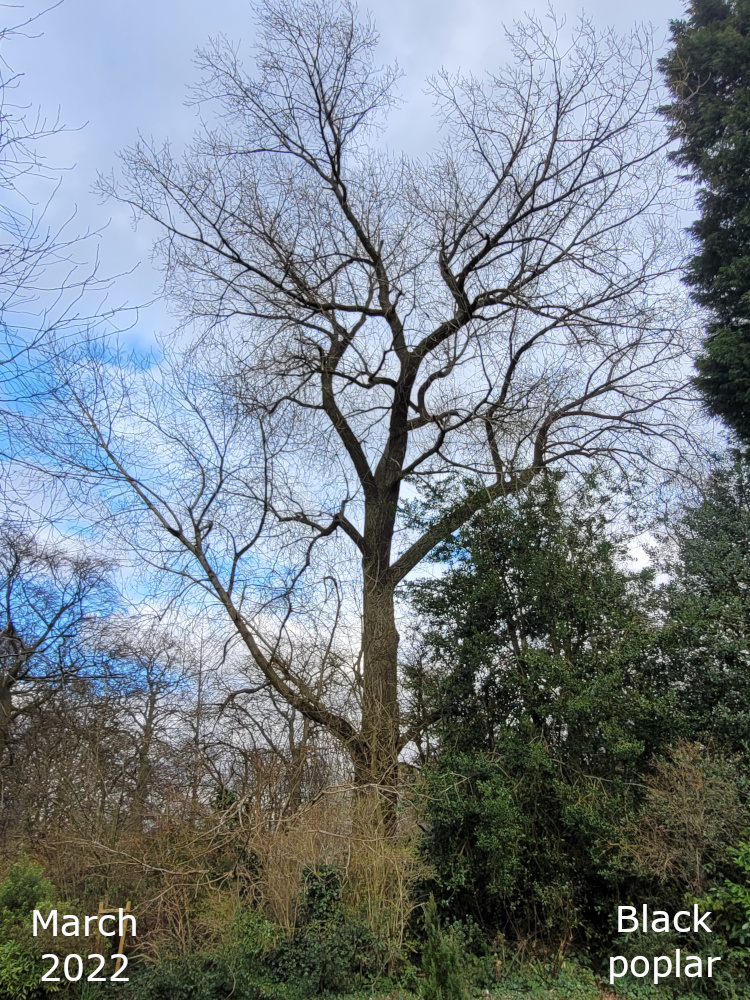
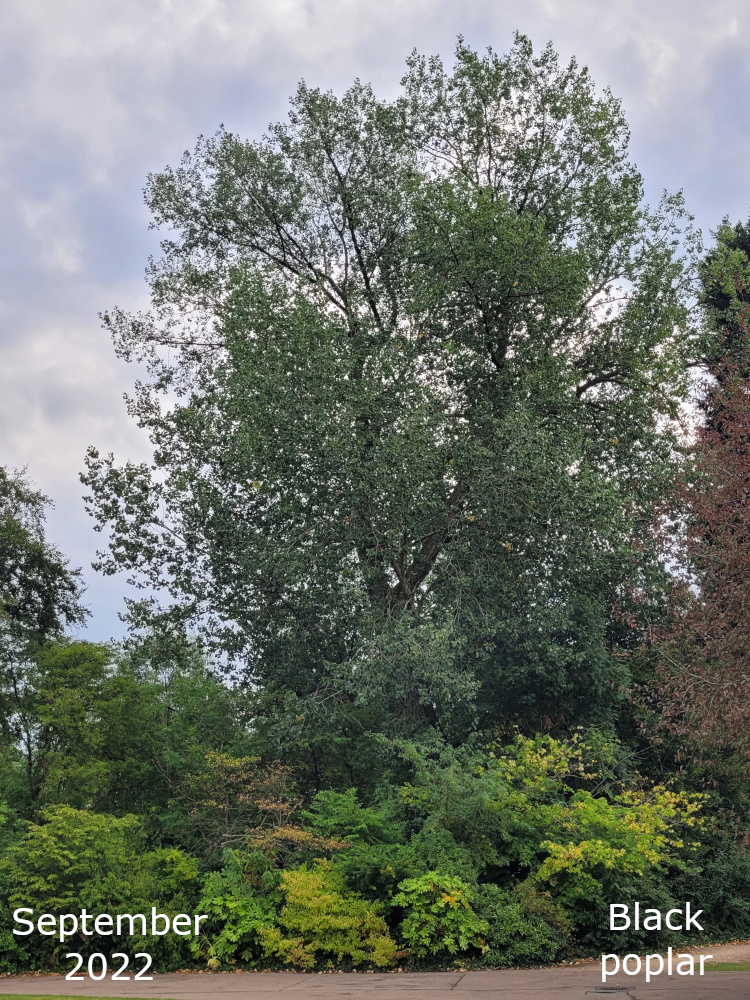
There are at least six poplars recorded in the park, so far I’ve found one. This huge Black poplar is in the pond area and is best seen from the path near the old tennis courts. It’s not far from the car park near Grange road.
Willows
There are two types of willow in the park, Goat willow and Weeping willow. Of the two, Goat willow (Salix caprea) is a native tree, whereas the Weeping willow (Salix babylonica) was introduced, to Britain in the eighteenth century from Syria, and originates from China.
Weeping willow
Weeping willows are dioecious, which means that there are distinct male and female flowers on separate trees. The flowers of a willow are in the form of a catkin. All the trees that were introduced to Britain in the eighteenth century were female trees and have been reproduced by taking cuttings. Consequently the entire population of Britain’s weeping willow trees is female. They can not reproduce in type by seed – they can not produce new Salix babylonica – but they could hybridize with other willows such as Goat willow or Crack willow.
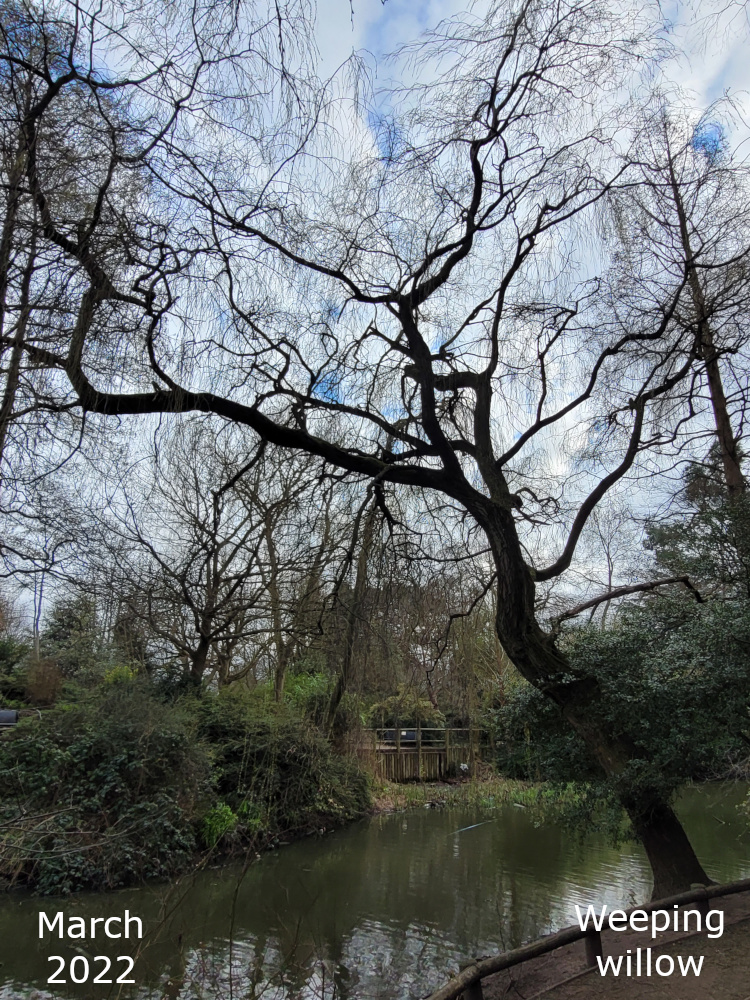
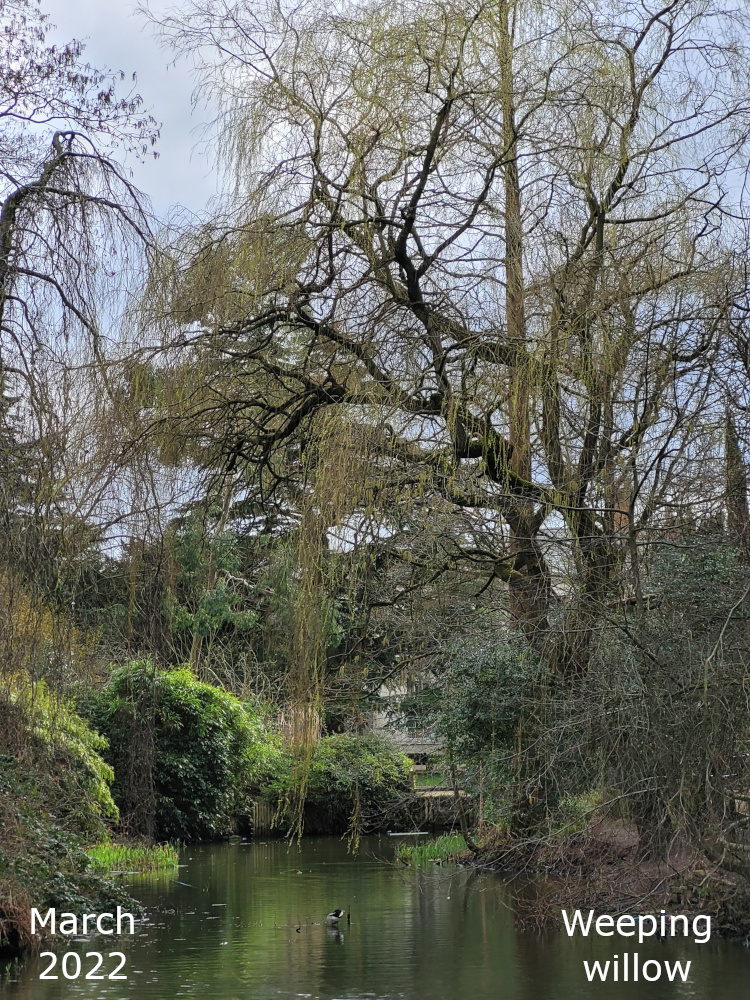
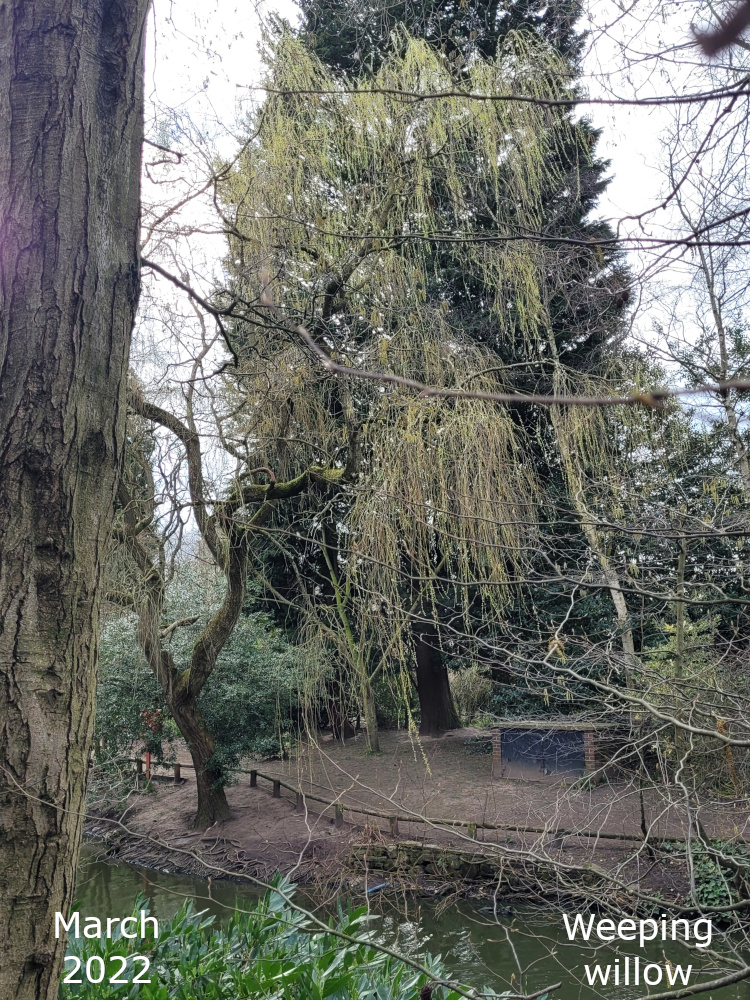
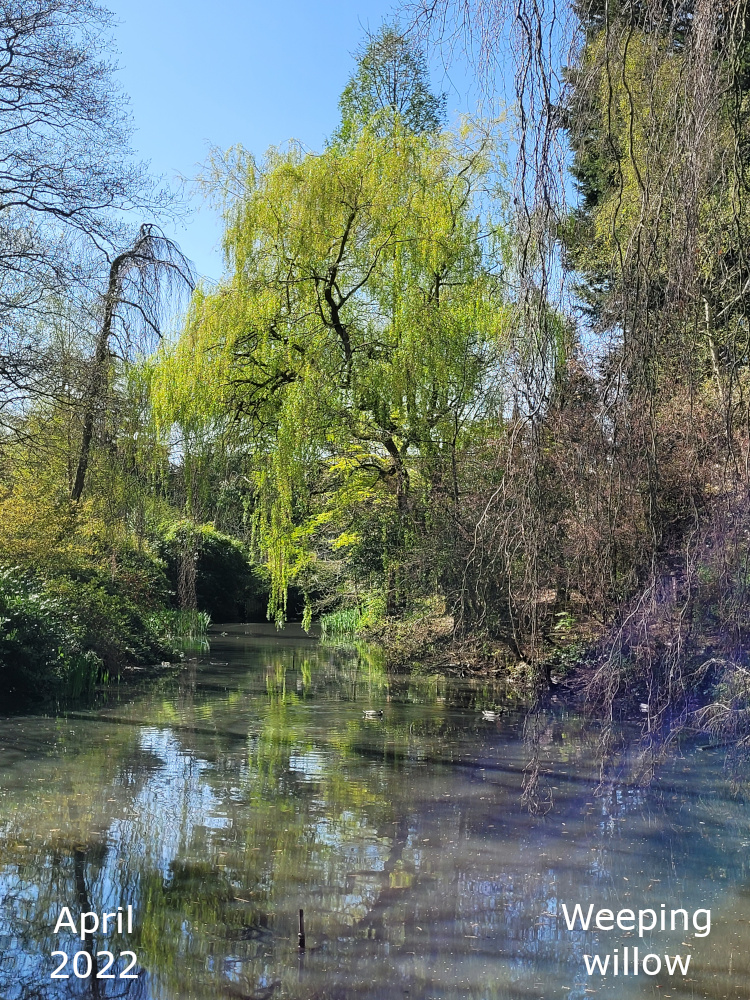
The Weeping willow overhanging the pond has to be one of the most striking examples of willow tree in the park. It is about half-way along the pond and hangs almost all the way across, with some of the branches almost touching the water. These photos show it in March and April just as the leaves are coming out.


Goat willow
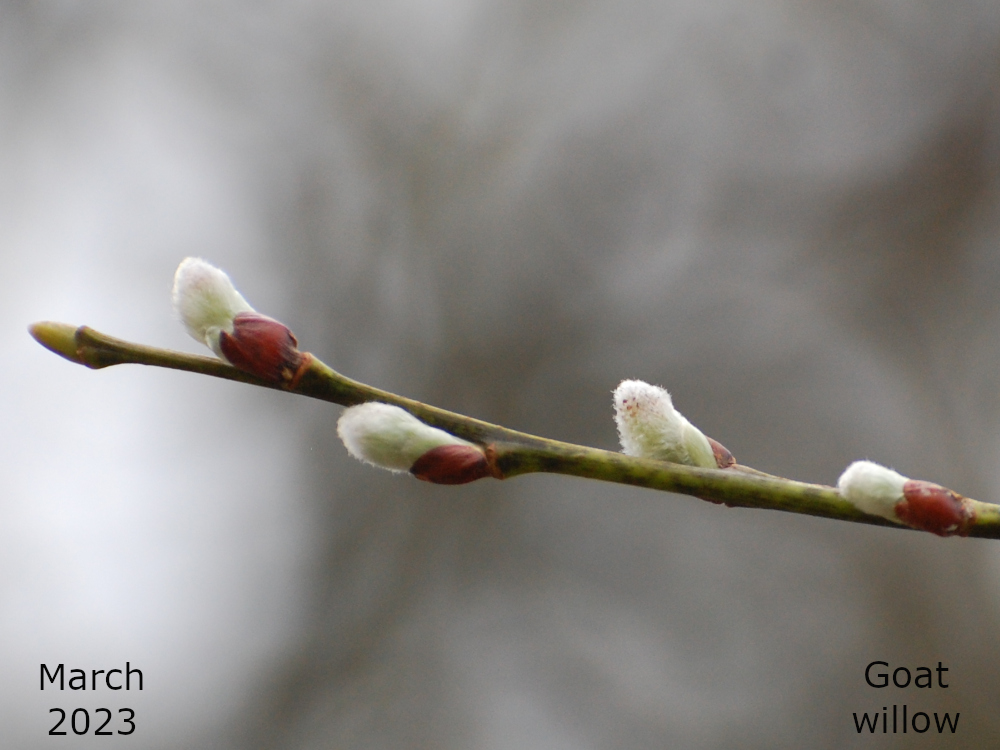
Goat willow bark has been used, in the past, as fodder for goats and may be the reason the tree has this name. Other names include Great sallow and Pussy willow. Unlike most willows the leaves of a Goat willow are oval, rather than the long thin pointed leaves. Being a native tree, the Goat willow is of great benefit to wildlife and is host to a wide variety of insects and birds. Goat willow leaves are eaten by a number of caterpillars which in turn are eaten by birds. The male catkins produce pollen which is a source of food for bumble bees early in Spring. The catkins also produce small drops of nectar at their base which is another source of food for bees and even small birds such as Tits.
There are seven species of willow native to Britain and in total they can support 450 species of insects and mites. This is the greatest number of any native species in Britain so willows are an important part of our biodiversity. No single tree is likely to have that many species of insects and mites living on it but collectively they do. It would be interesting to find out how the willows in the park fare compared to this statistic in their urban setting.
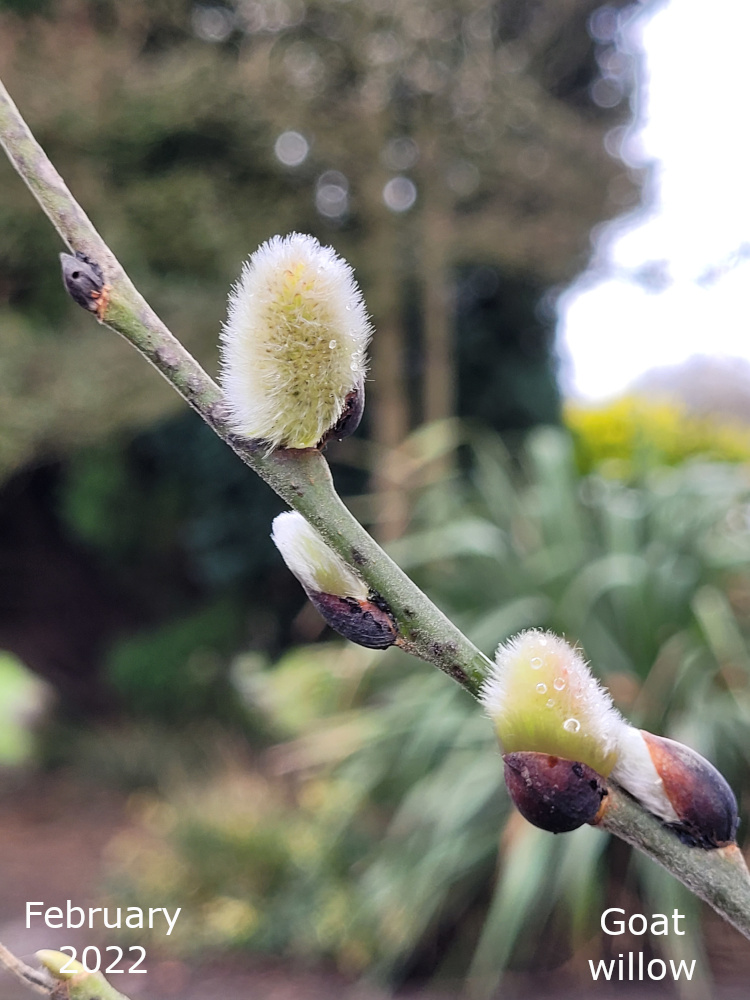
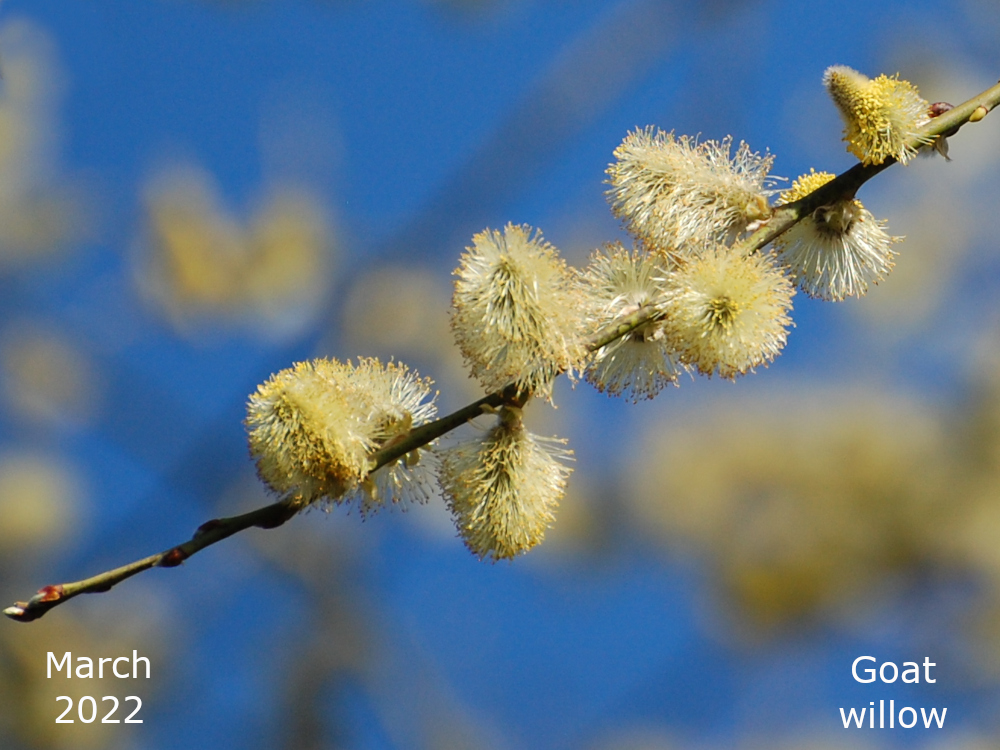
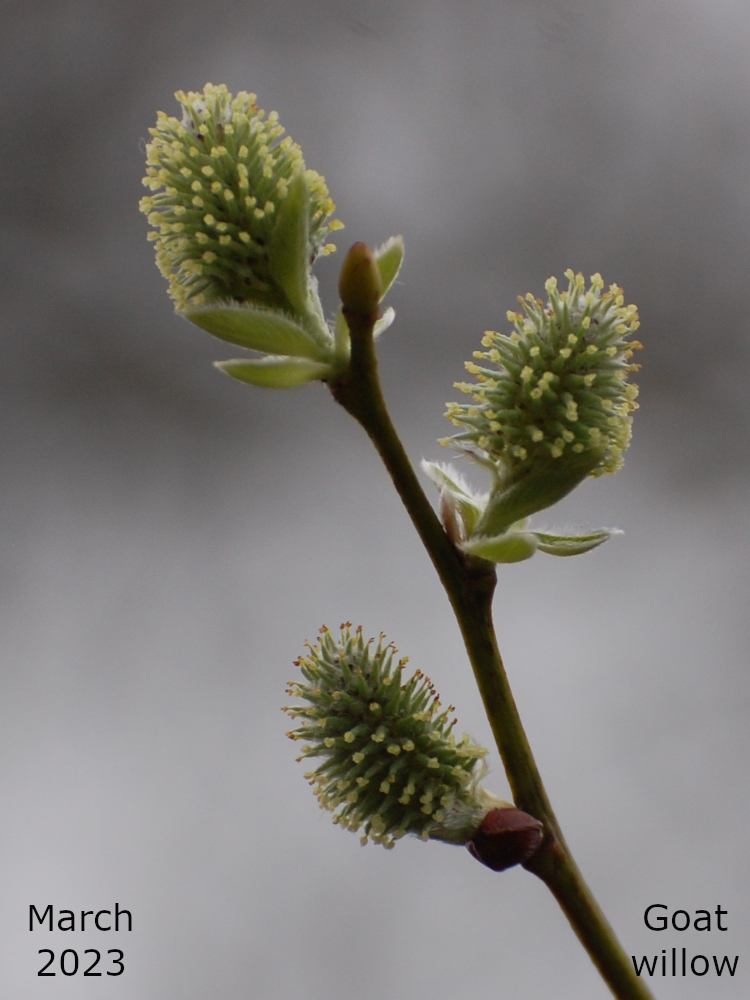
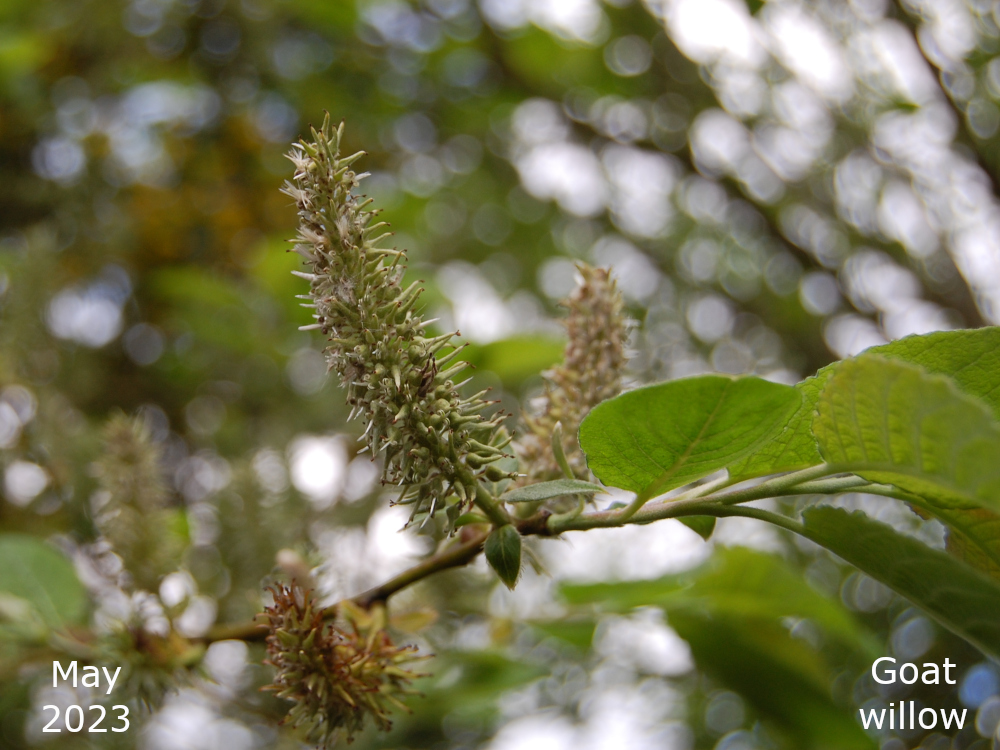
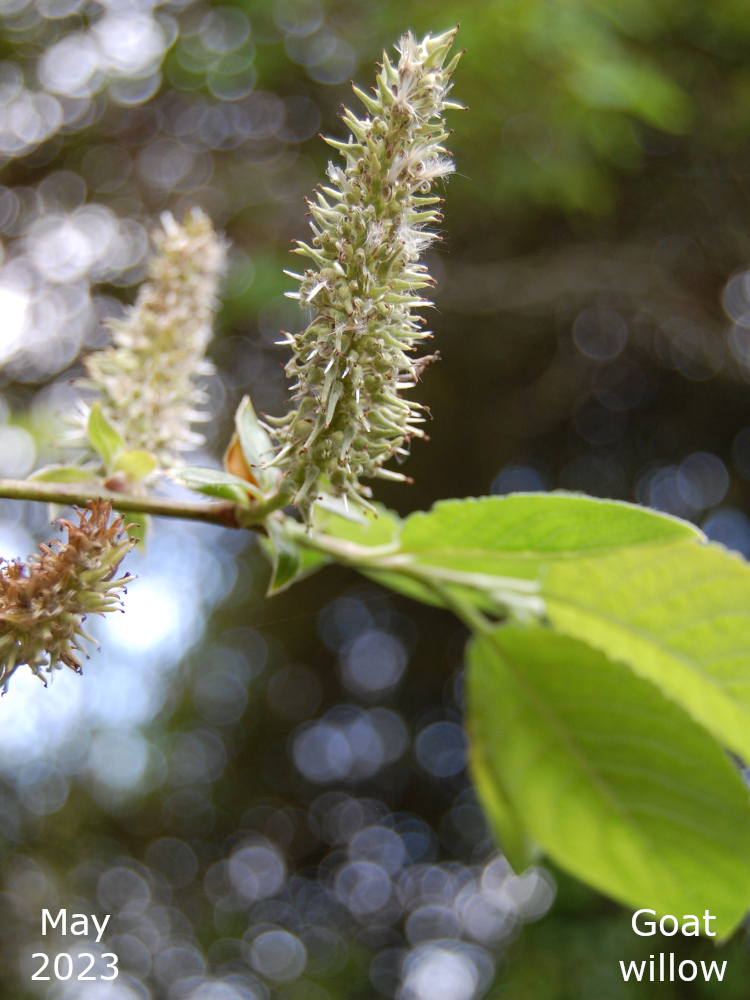
Of the seven species of willow, four of them are large shrubs and three are proper tree size – Bay willow, Grey willow and Goat willow. There are at least five Goat willows in the park and like Weeping willows they are dioecious. Male and female trees can be identified by the type of catkins they produce, although, to begin with, both catkins appear like cat’s paws giving the tree its alternative name of Pussy willow. The male catkin goes on to produce a fluffy yellow catkin with delicate filaments (until it rains). The female catkin has a greenish fairly solid centre with many slender green styles topped by a yellow to orange stigma – the part of the flower that receives the pollen. In late April the male catkins are likely to have finished spreading their pollen and will finally drop off or be blown off the tree, leaving it devoid of catkins by early May. The female catkins, meanwhile, will have been fertilised and the ovaries will begin swelling. The colourful stigma will fade into a brownish speck, the whole catkin will grow in size and by mid to late may there will be signs of the white fluffy seeds beginning to emerge. Eventually, the ovaries will burst and the seeds will be set loose into the air.
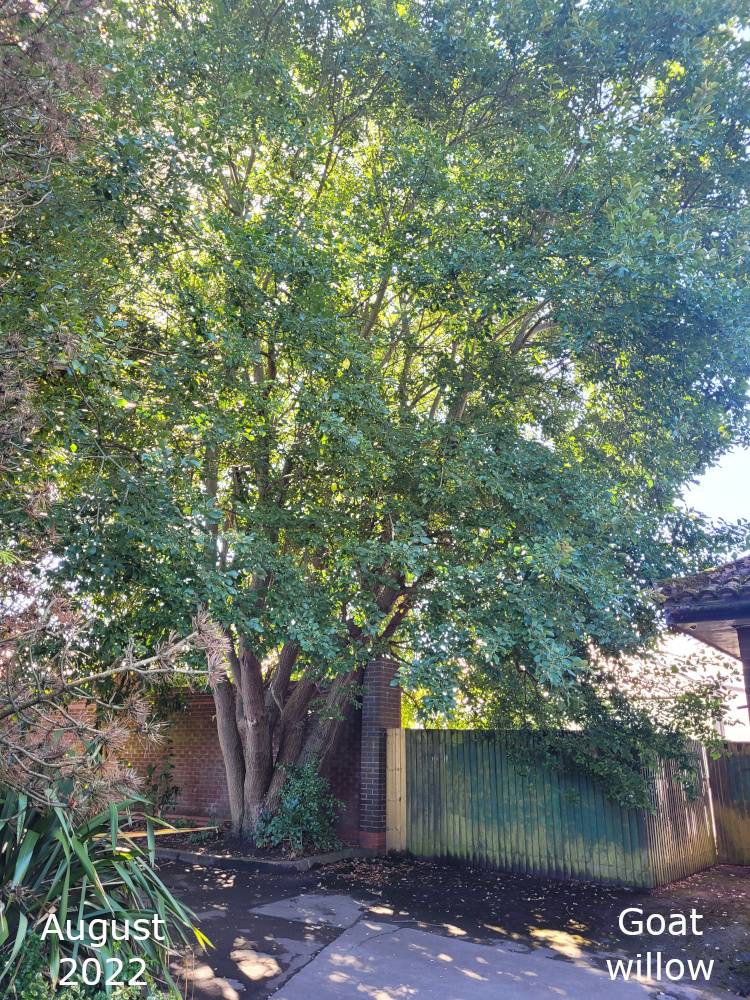
This tree is a male Goat willow, the only one in the park, all the rest are female. It is shown here in late summer, long after all the catkins are gone. This tree is next to the thrive pavilion on the path beside the bowling green. Its catkins come out in February, looking like cat’s paws, but don’t fully open until around mid March when they burst open into fluffy yellow pom-poms.
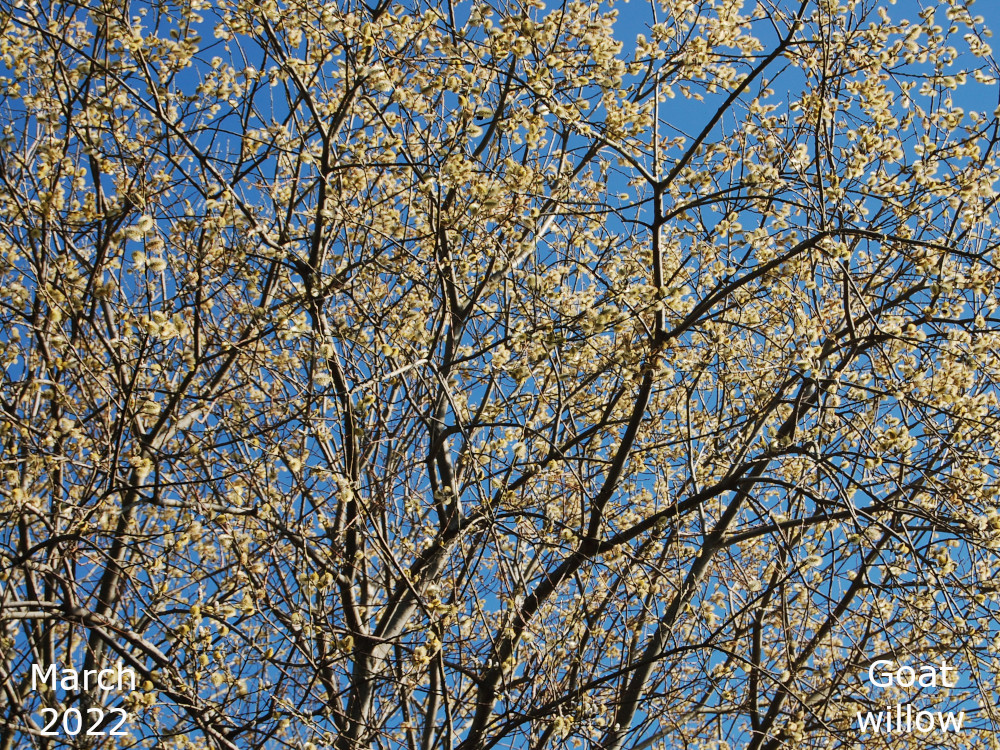
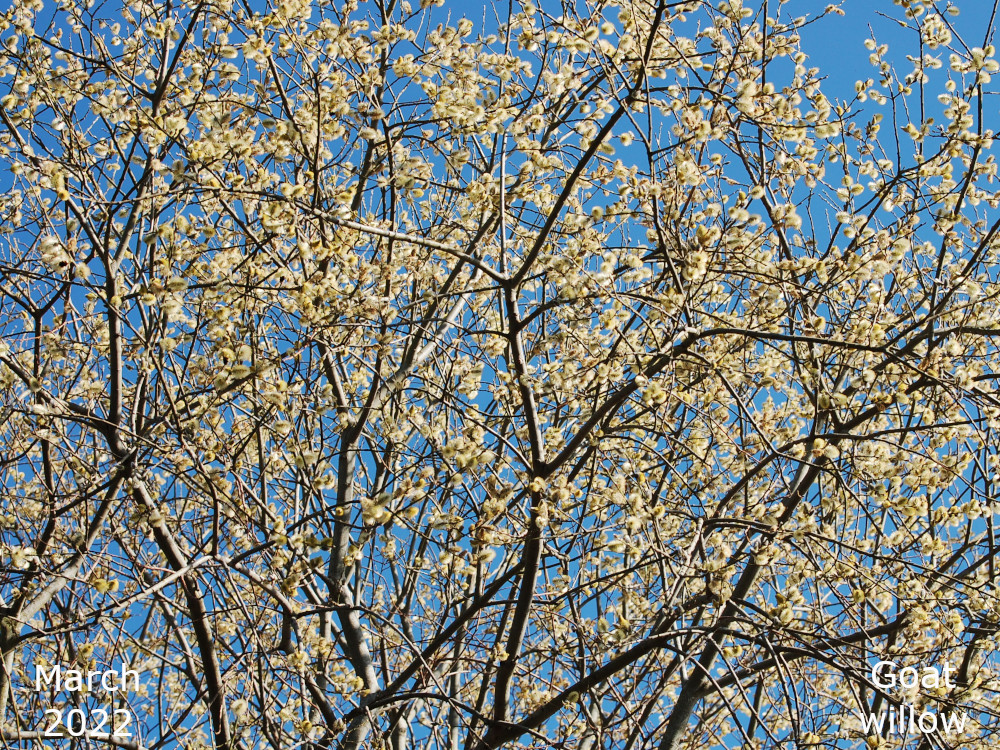
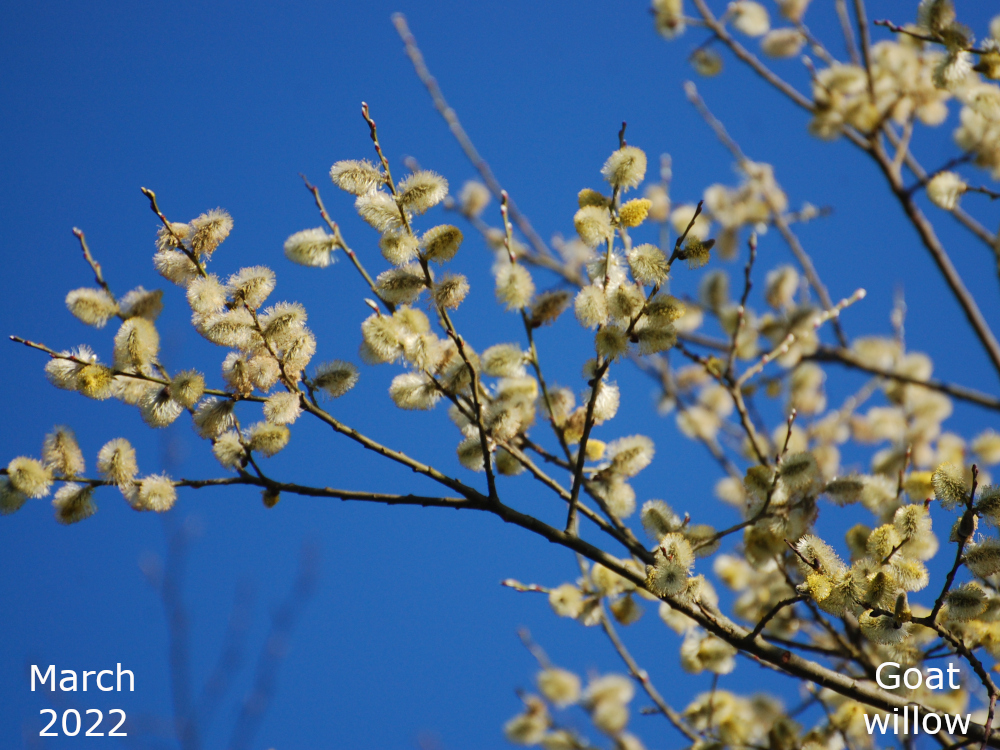
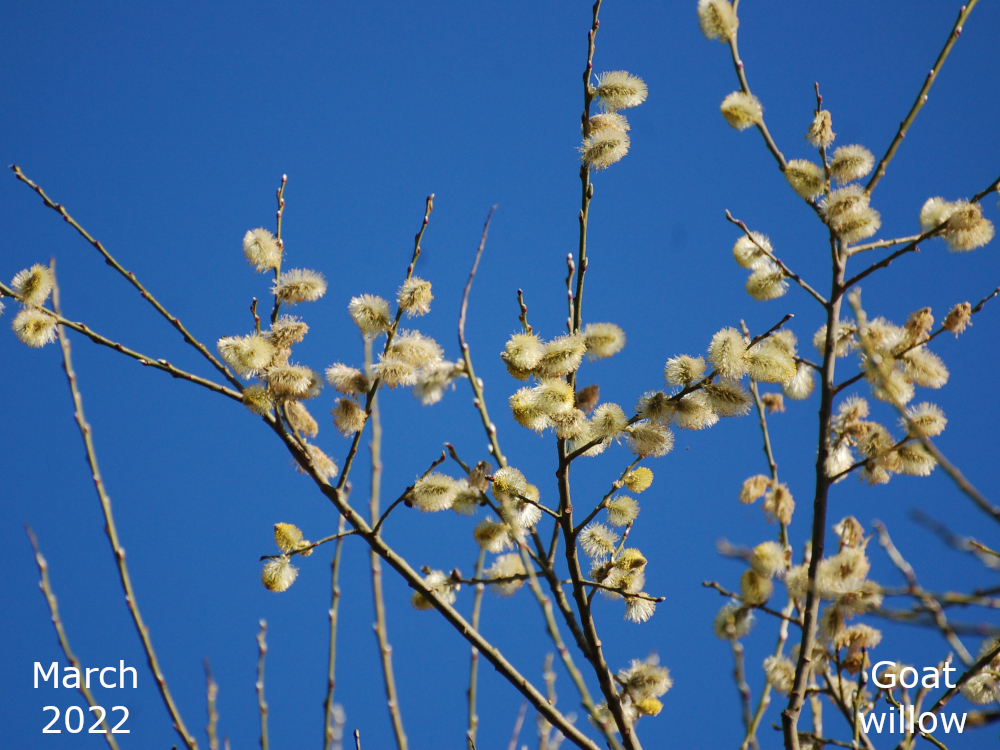

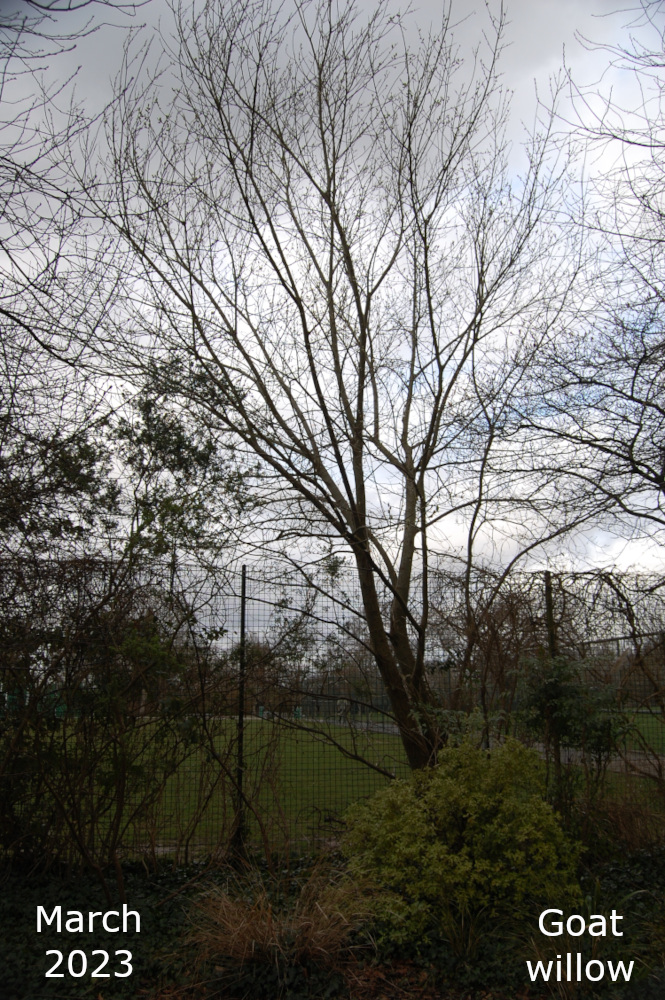
This tree is a female Goat willow, one of four in the park. It is not far from the vehicle entrance on Vicarage Road, off the corner of the path.
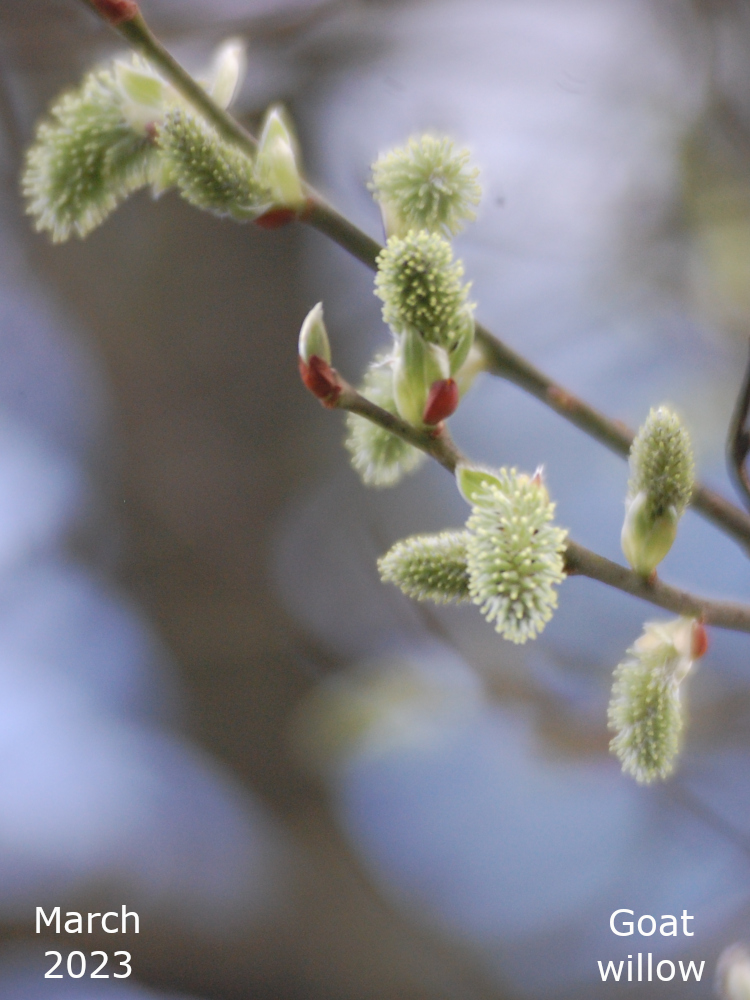
This female Goat willow is quite a small tree near the old tennis courts on the path alongside the heather beds. There is another female tree on the other side of the basket basketball court, near the corner.
These are the sort of catkins that will grow and develop into seed. The following pictures show them near to ripening.

Boxleaf azara
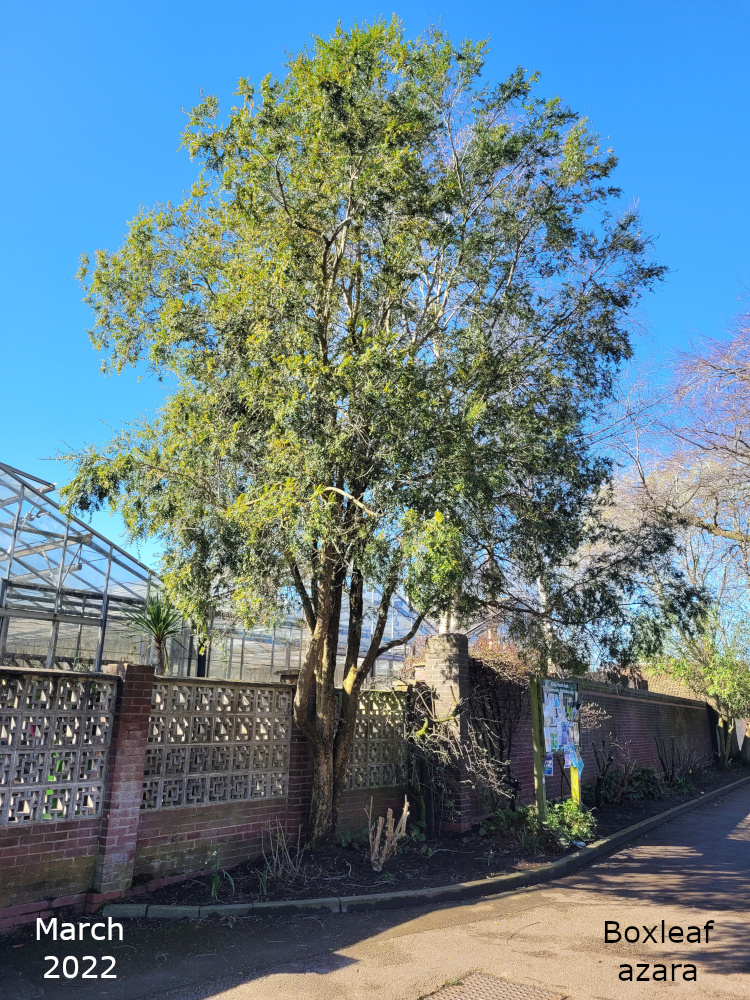
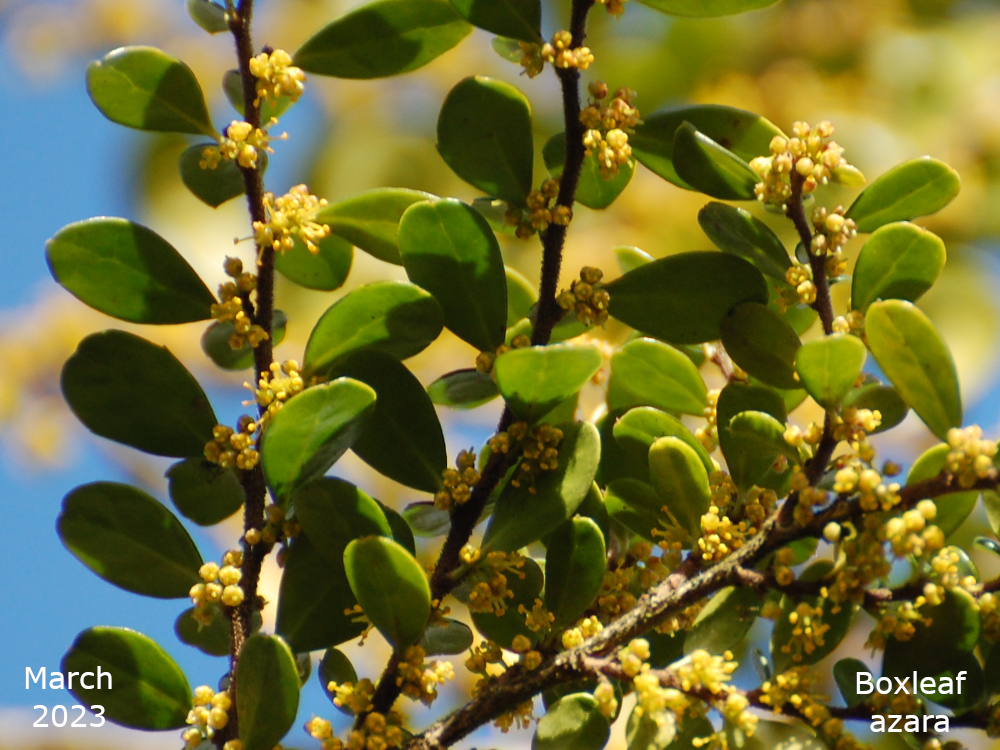
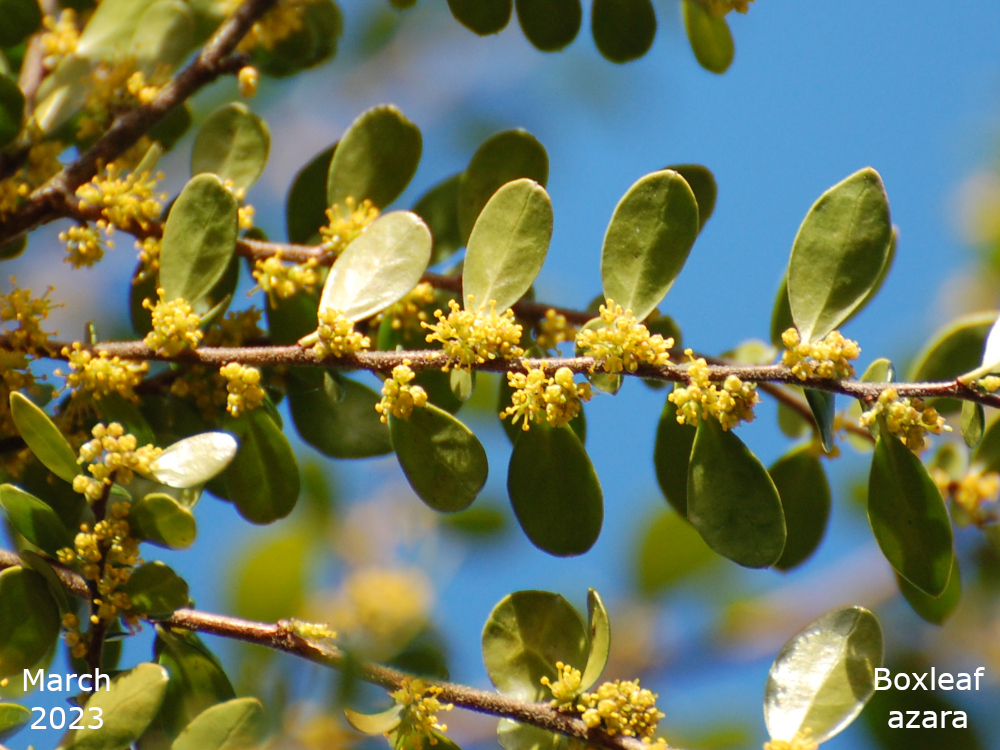
The Boxleaf azara has to be one of the more notable trees in the park. It is next to the notice board by the plant nursery. It probably does not draw much attention visually, it is just a medium sized, evergreen tree up against a wall, but in March it let’s its presence be known as it produces the most delightful aroma of vanilla or chocolate, whichever you feel it most resembles. The source is a myriad of small yellow flowers covering the tree. The flowers are followed by red to pale purple berries which, apparently, rarely develop in this country. It is a native of Chile and Argentina.

 Kings Heath Park Trees