- Oak 361 – colour garden
- Oaks 366 & 367 – colour garden
- Oak 310 – Thrive garden
- Hillside path
- Oak 518 – Pond / car park
- Oak 638 – Avenue Road , small playground
- Oak 647 – Avenue Road , small playground
- Oak 656 – Avenue Road
- Oak 663 – Avenue Road
- Oaks 708 & 709 – Avenue Road
- Gnarly oak – Thrive garden / basketball area
- Large play area
- Below basketball area
- Oak 735 – Avenue Road
- Twisted oak – Thrive garden
- Oaks 690, 691 & 694 – Avenue Road
- Oak 696 – Avenue Road
- Oak 644 – Avenue Road
- Oaks 672 & 673 – Avenue Road
- Oaks 697, 700 & 703 – Avenue Road
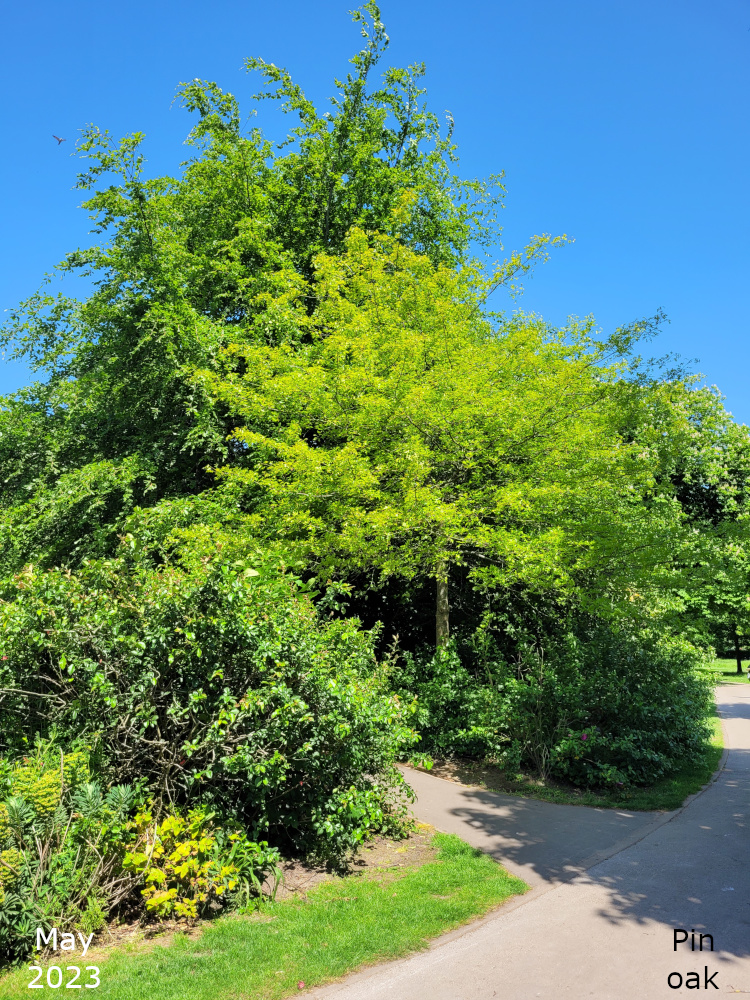
- Pin oaks, main field
- Trio of Pin oaks
- Main field, near triangle
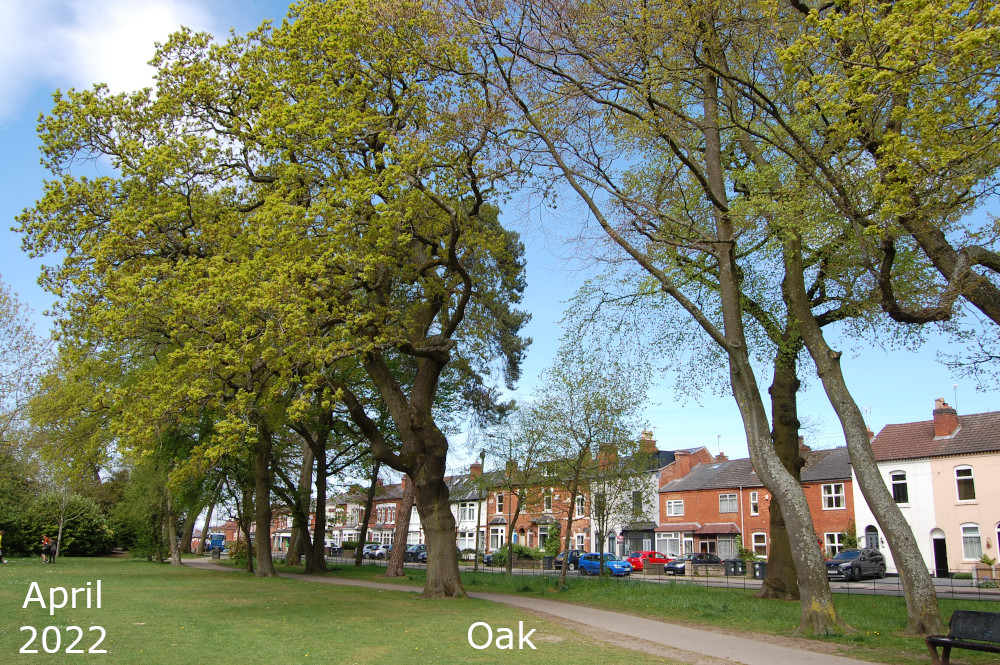
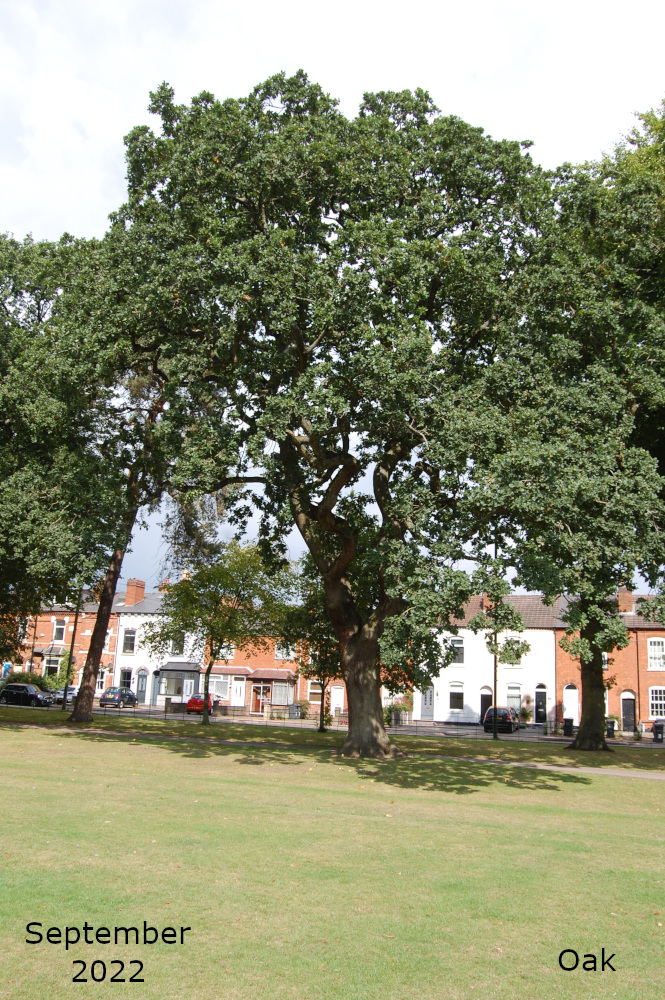
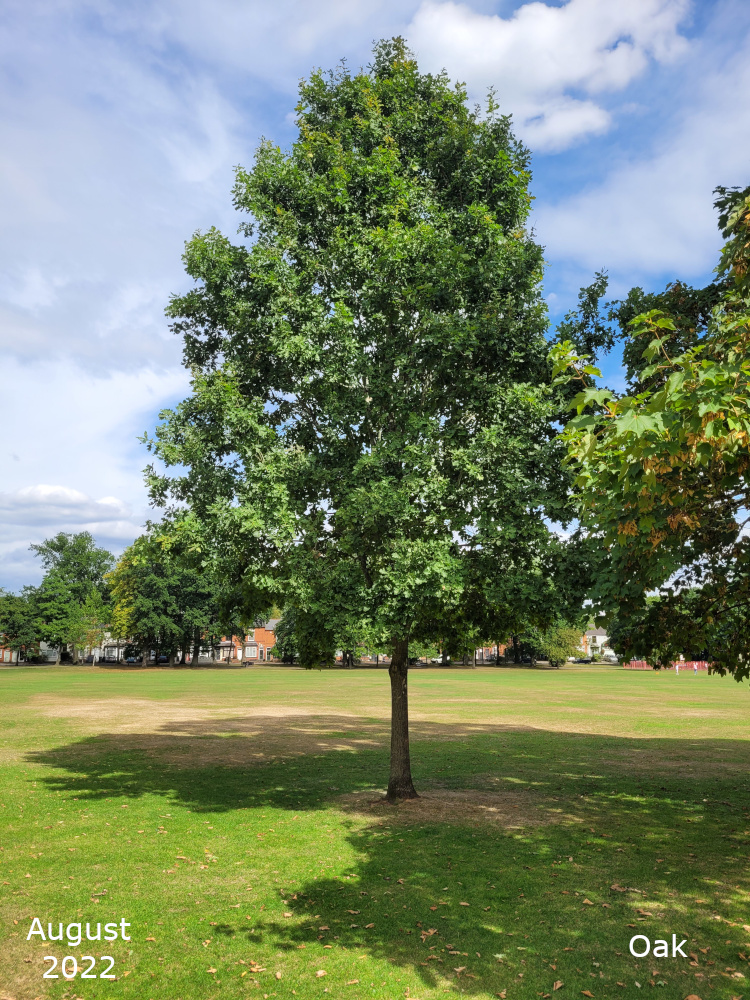
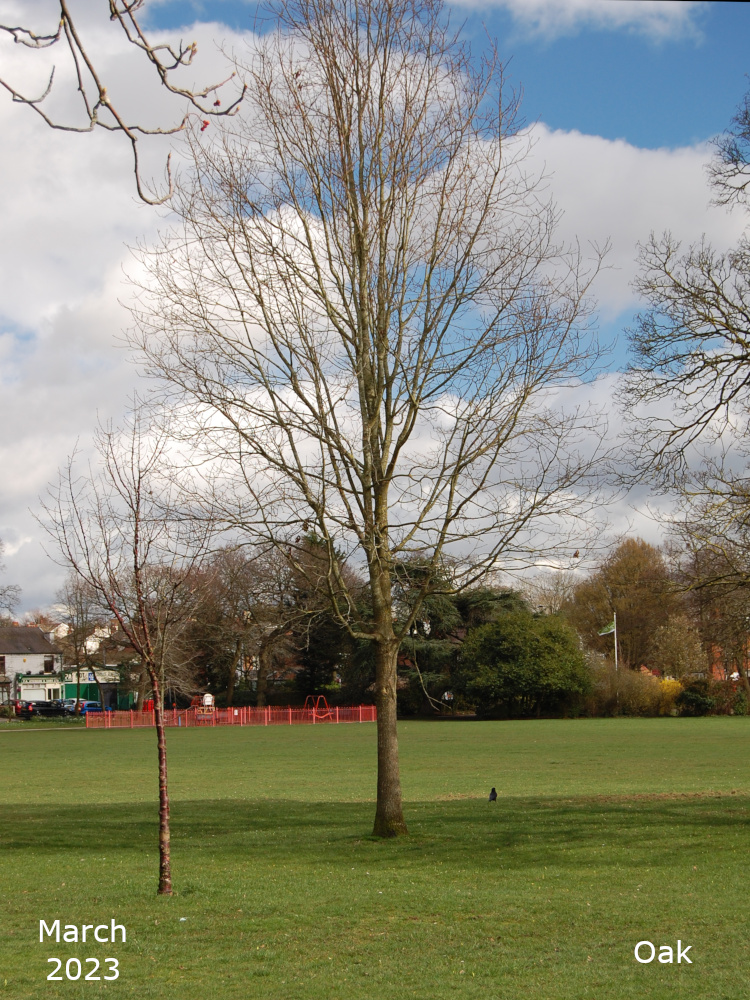
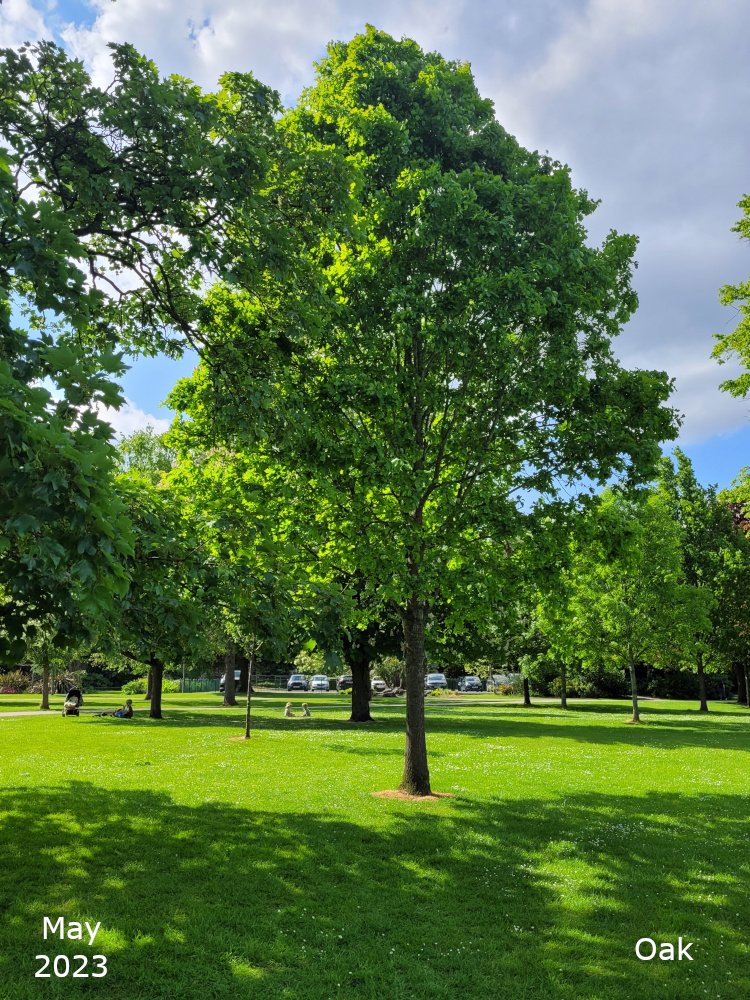
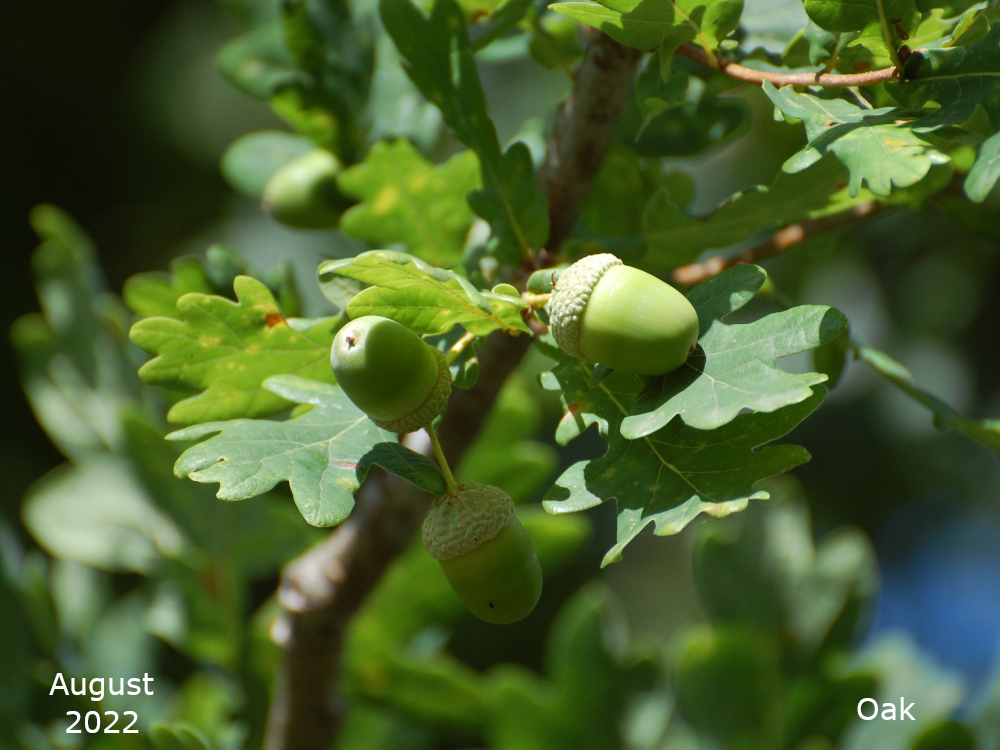
Quercus robur, the English oak, is the most common species in the park but there are other species of oak, too, such as Quercus rubra (red oak) and Quercus palustris (pin oak).
Oak 361 – colour garden
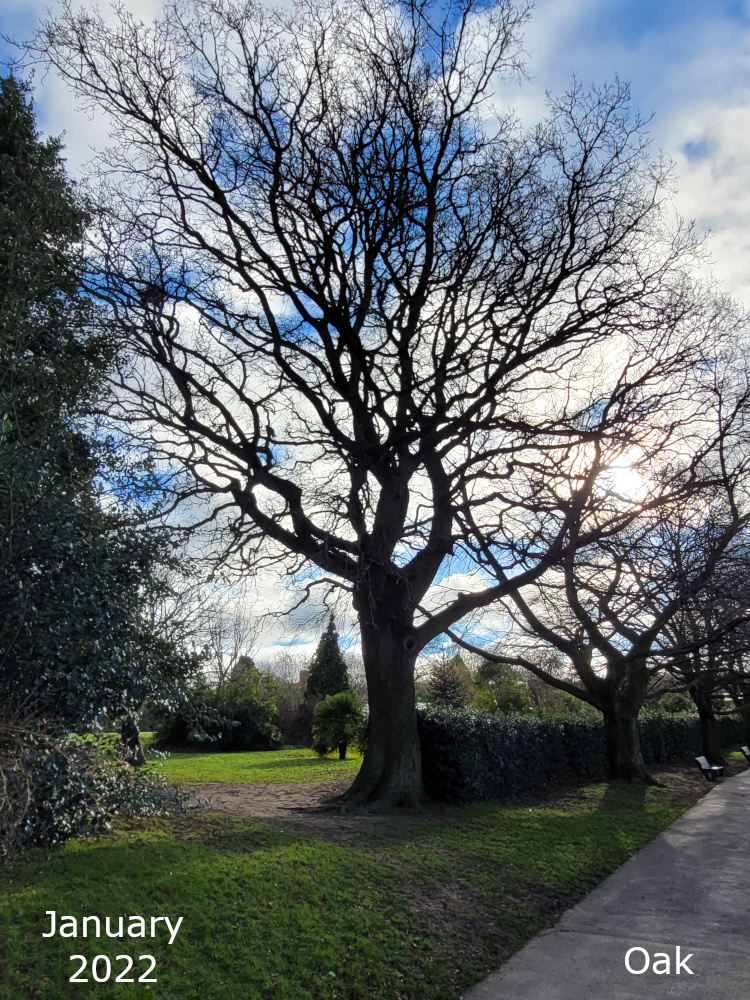
If you walk past the basketball court and take the left fork to go down the hill but then turn left, you will find yourself on this path. This English oak is on the left of this path, just below the basketball court. Number 361
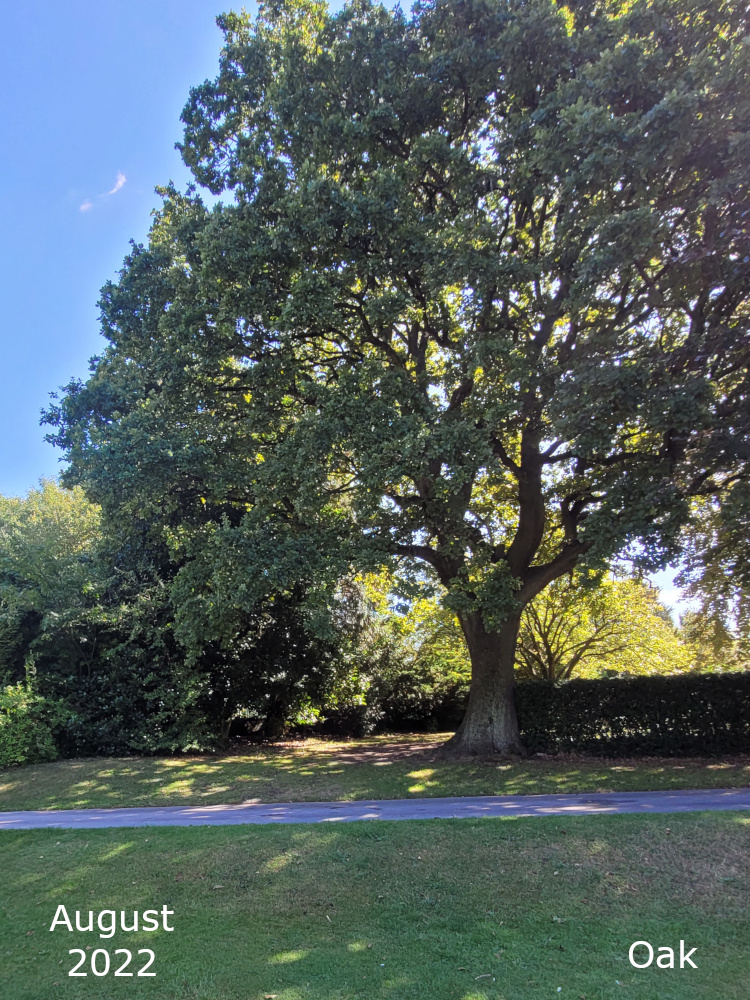
Oaks 366 & 367 – colour garden
Keep on walking to the end of the path, above and you will reach two English oaks at the opposite end, by the green gates. Or you could walk down from the white house, past the bowling green and the Thrive pavilion and just past the fruit garden one is on the corner of the two paths and the other is just on its left.
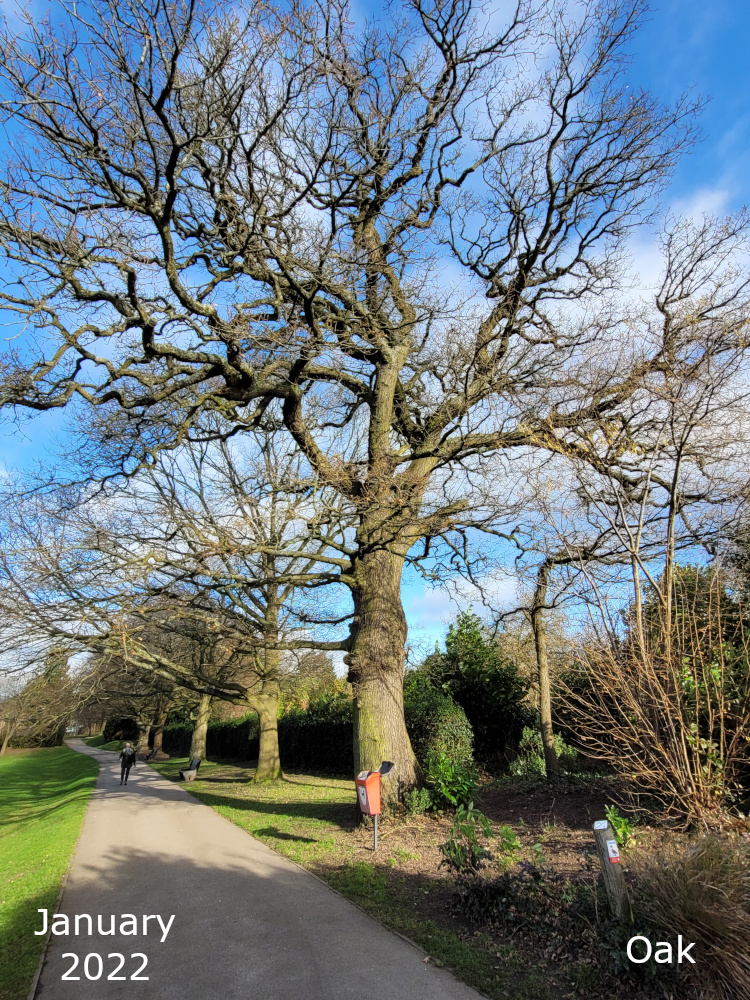

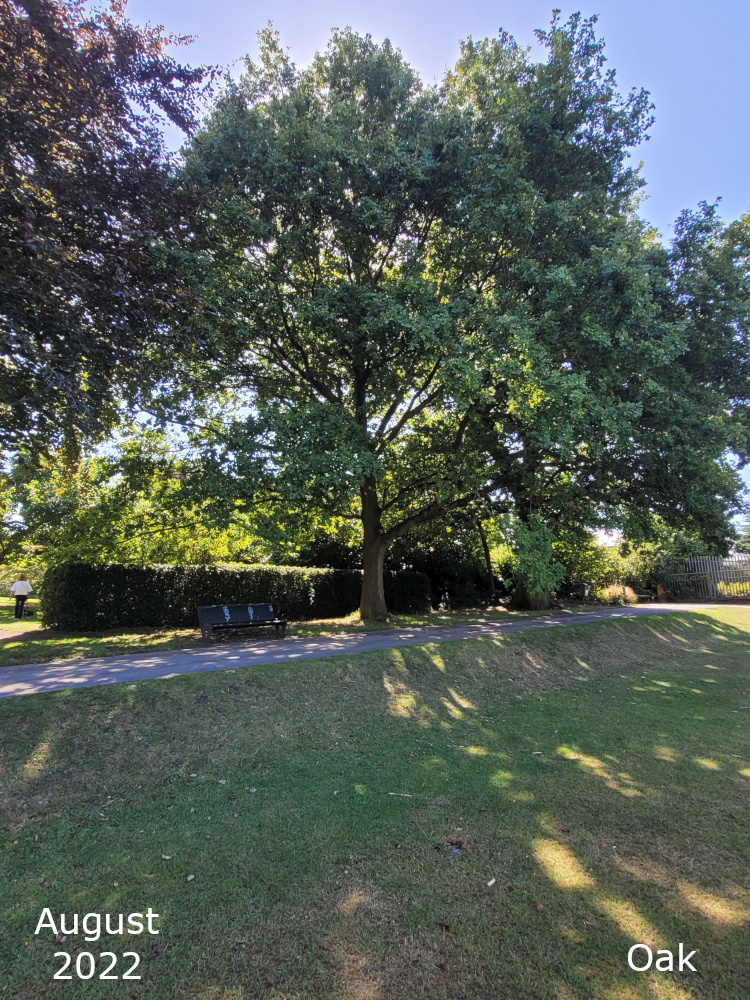
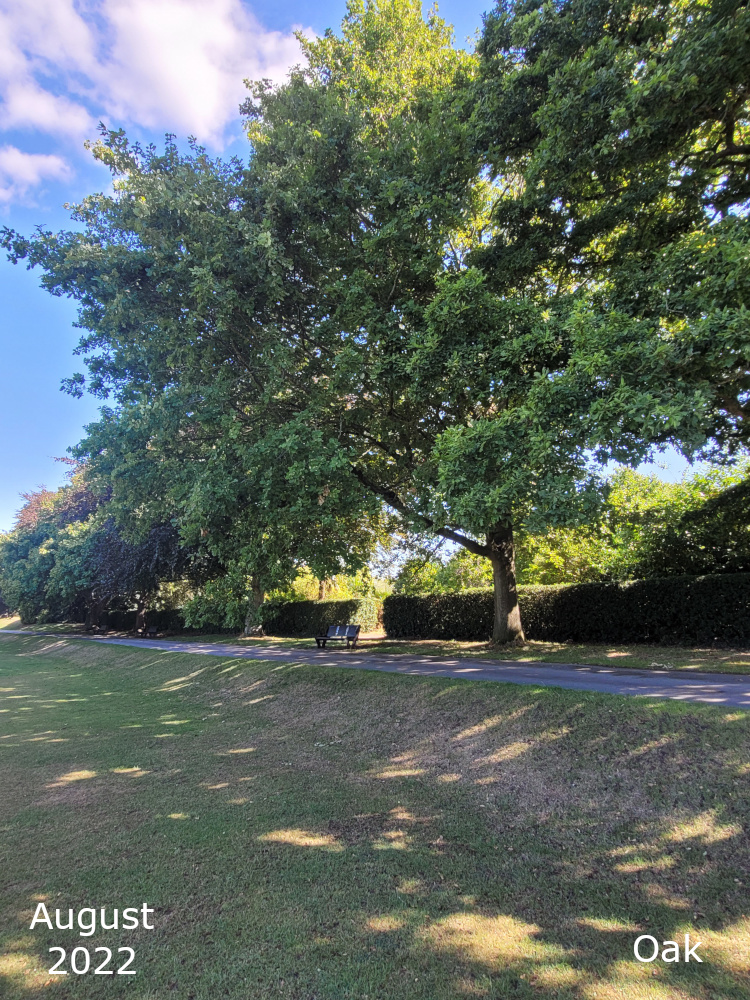
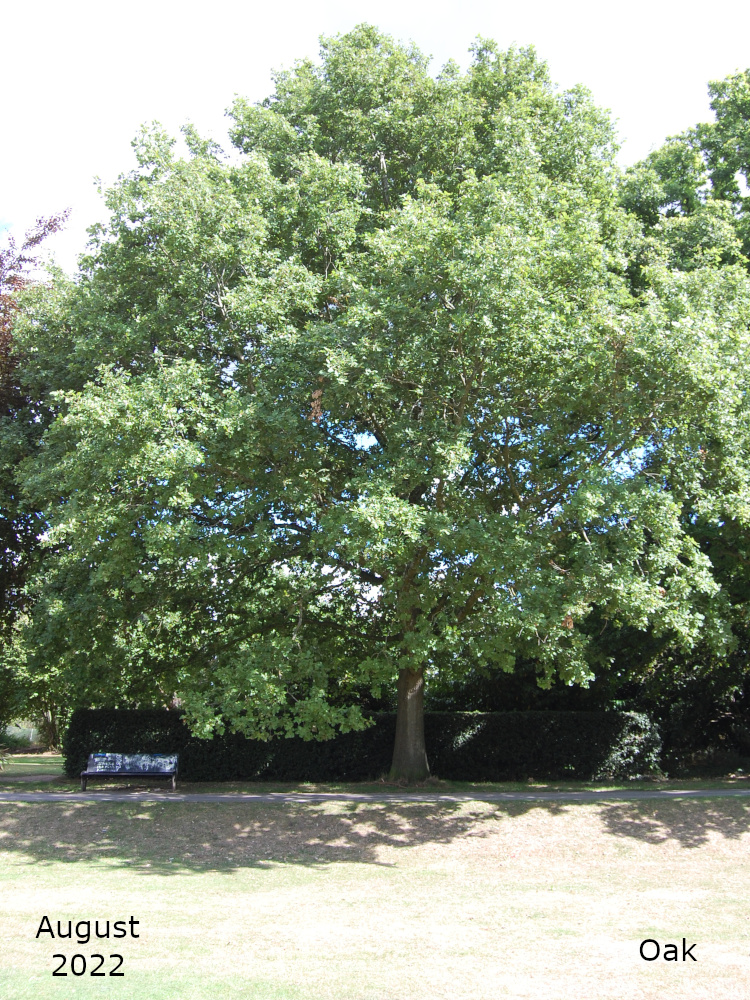
Oak 310 – Thrive garden
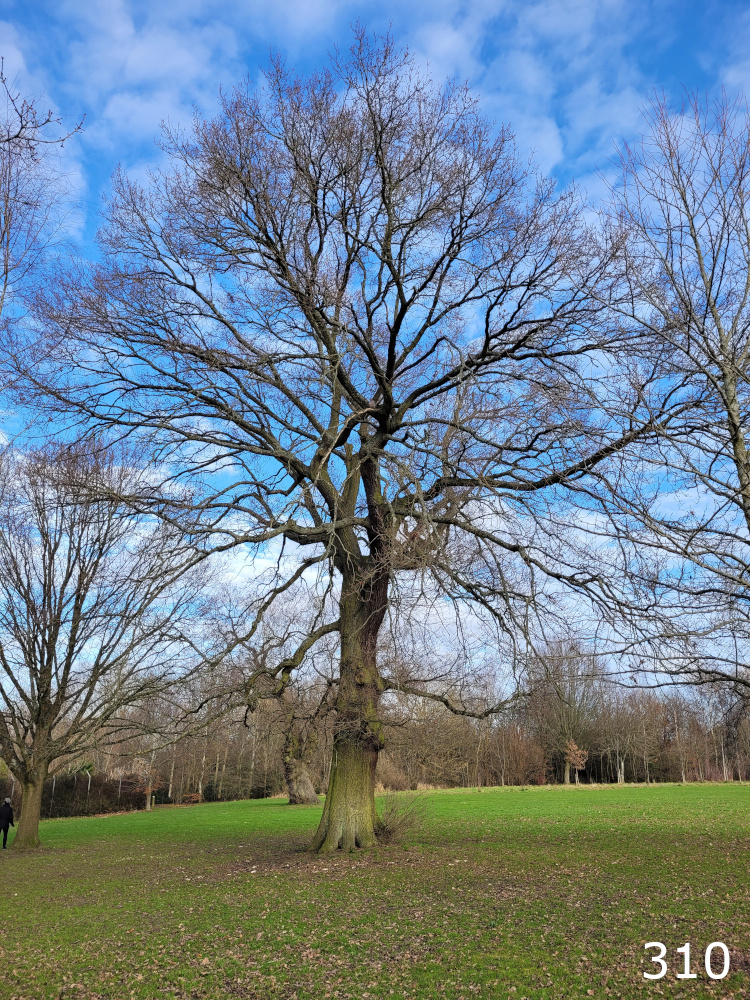
This English oak is just past the basketball court to the right of the fork in the path. Just off to the right of the path going towards the Thrive gardens (what was the ATV gardens)
Hillside path
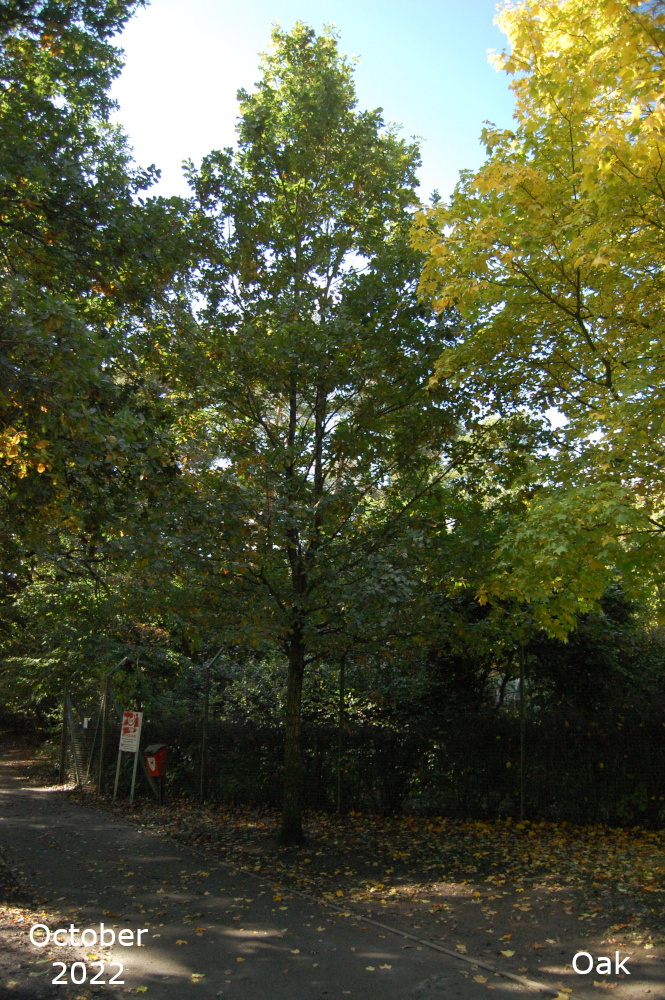
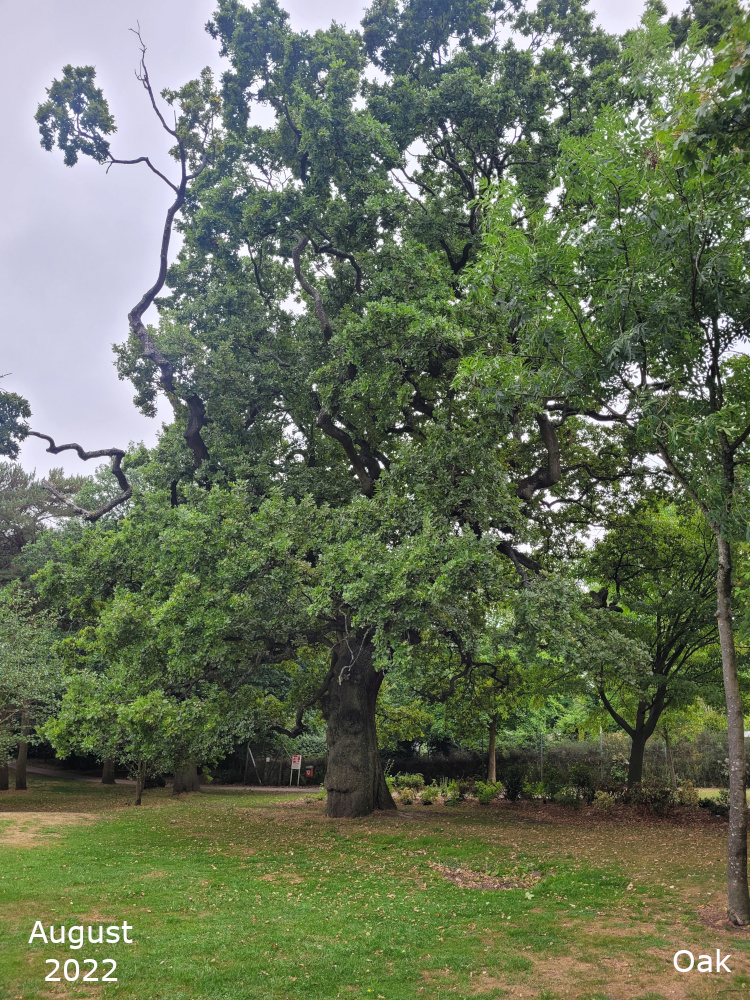
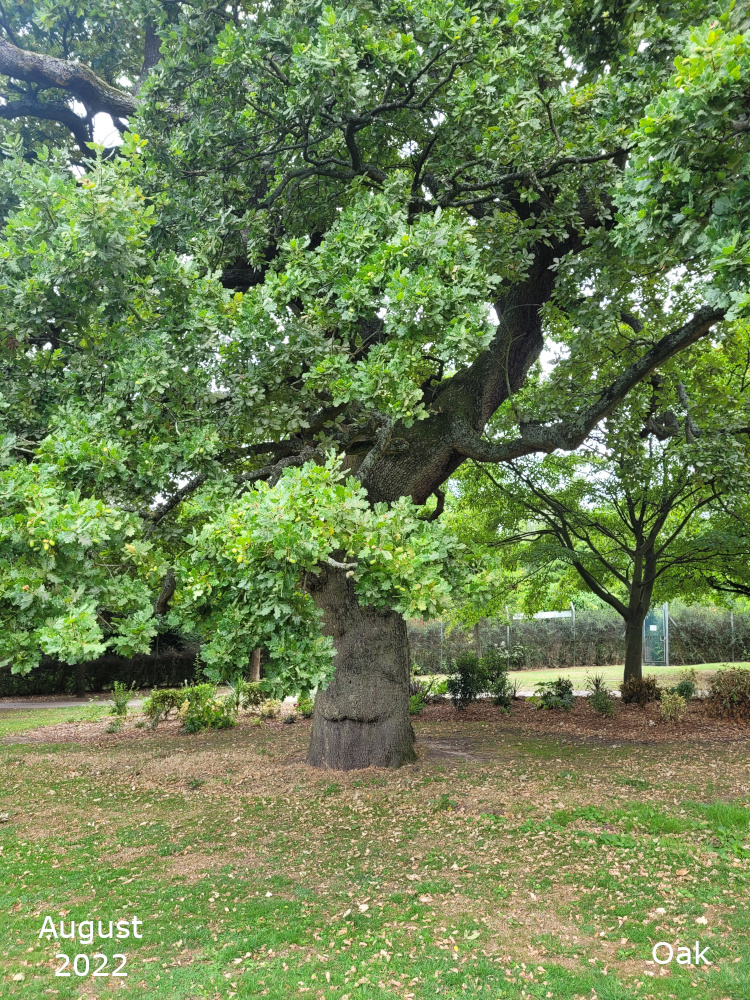
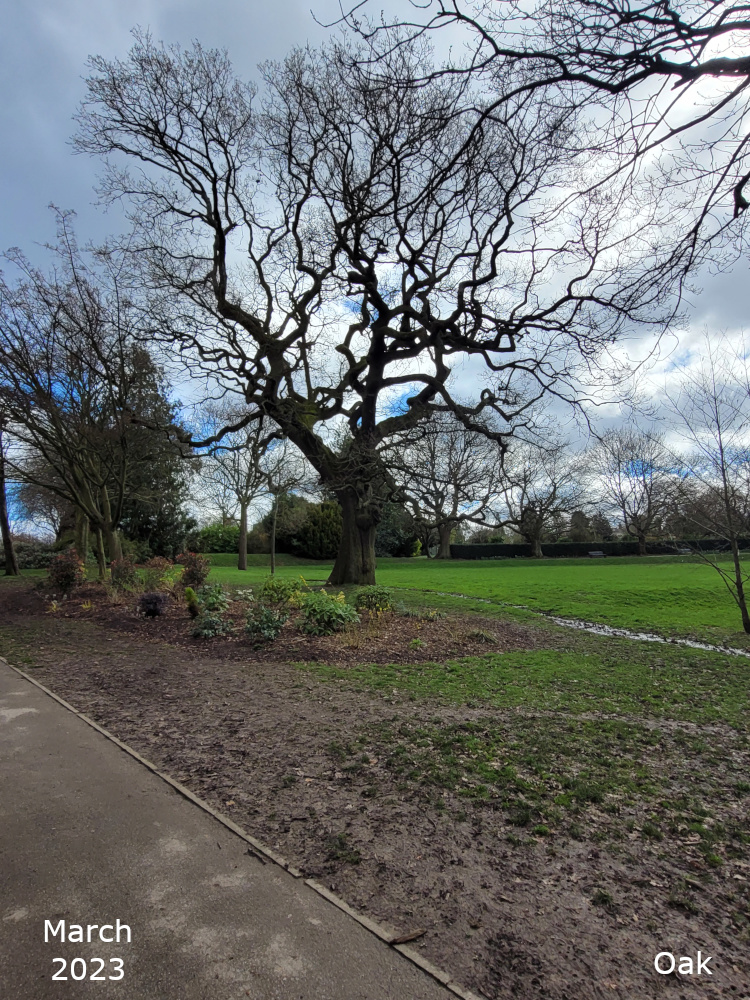
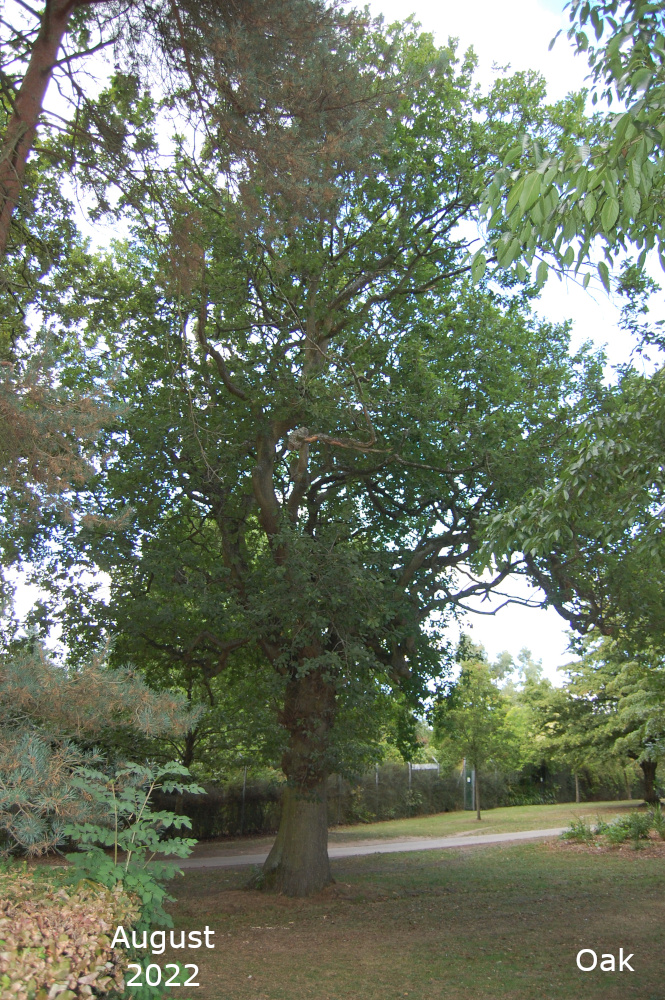
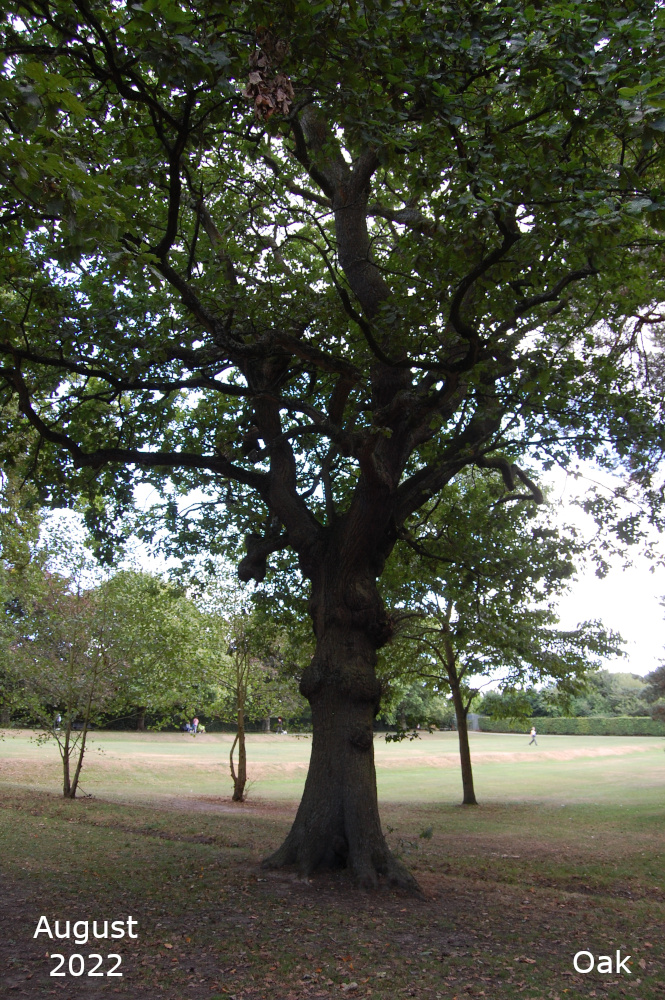
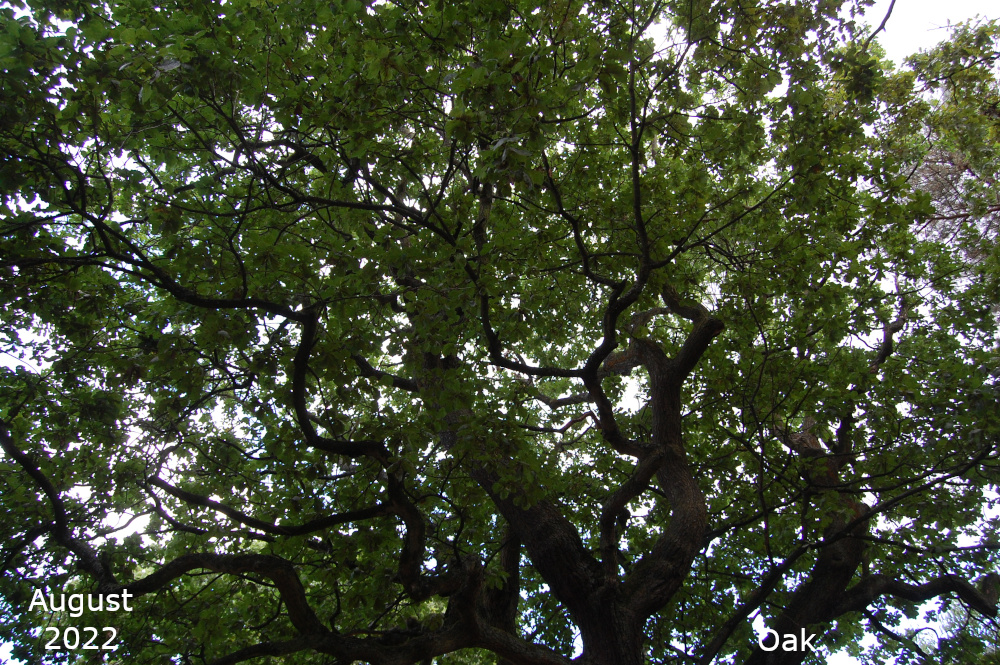
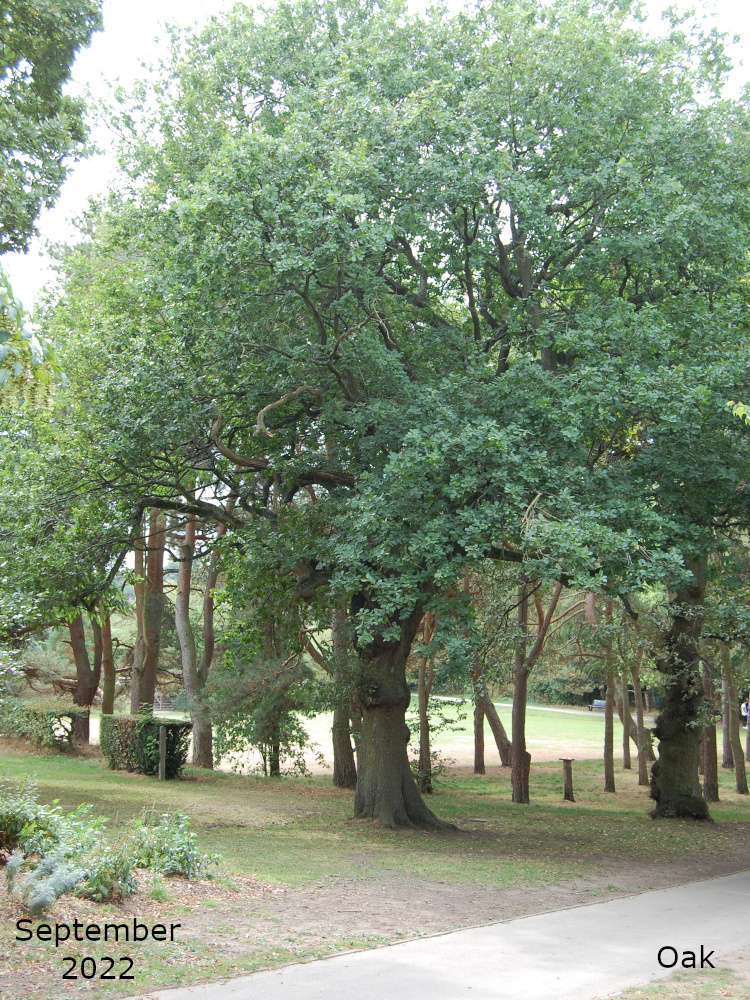
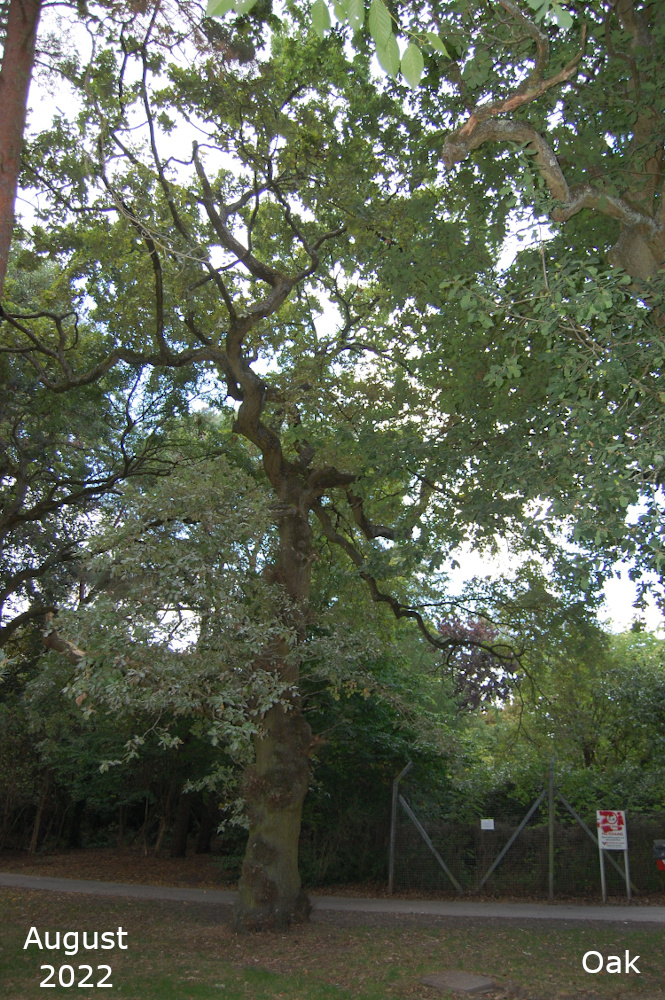
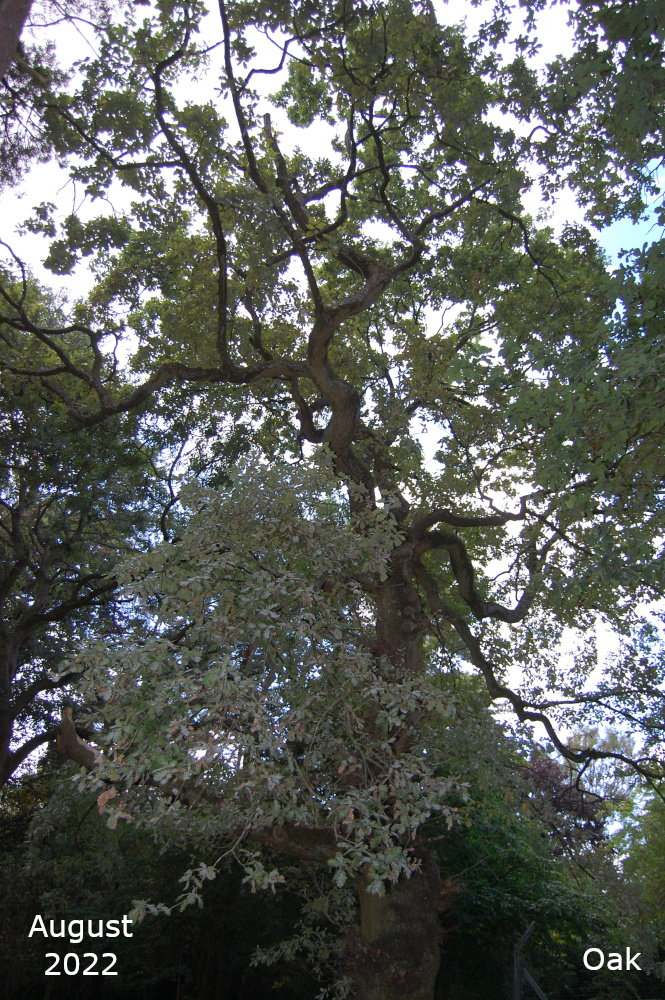
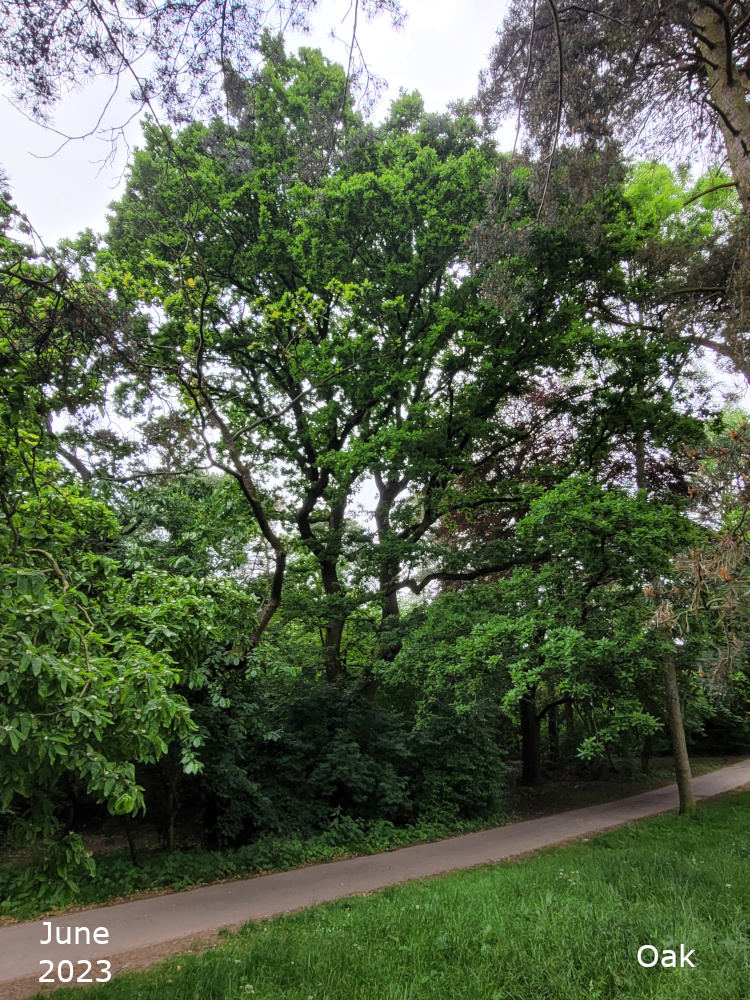
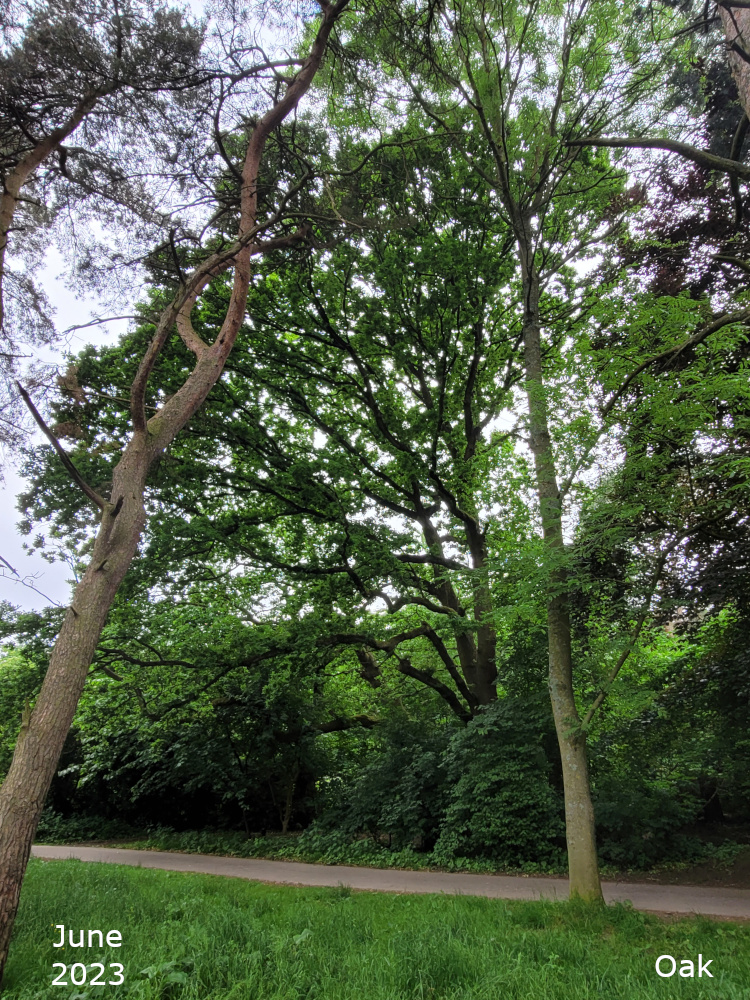
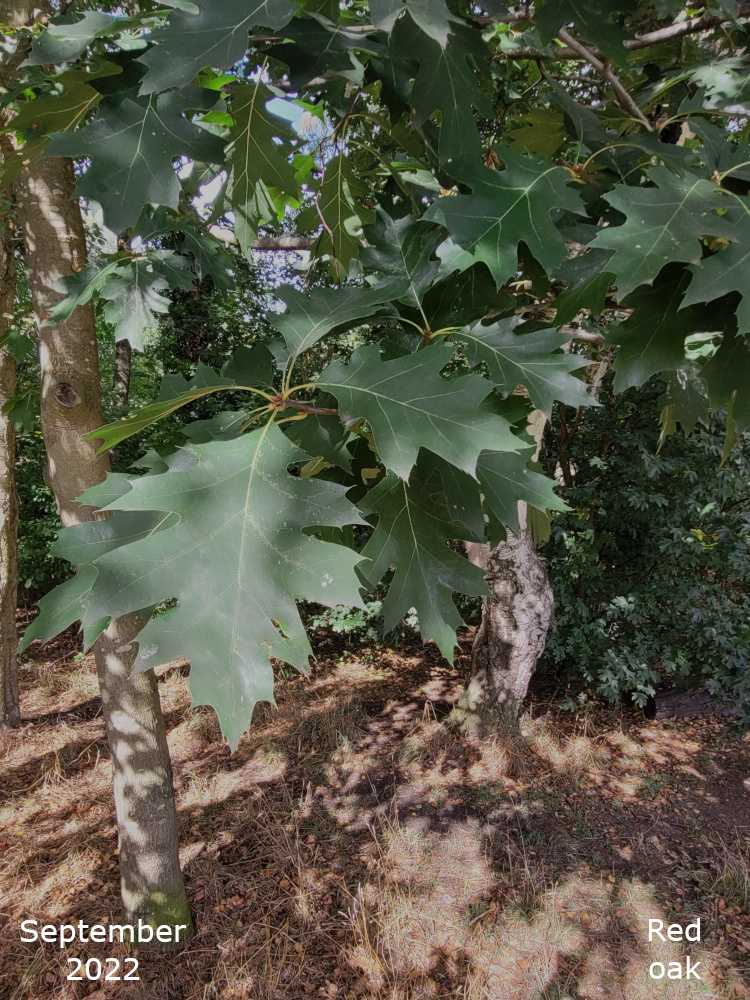
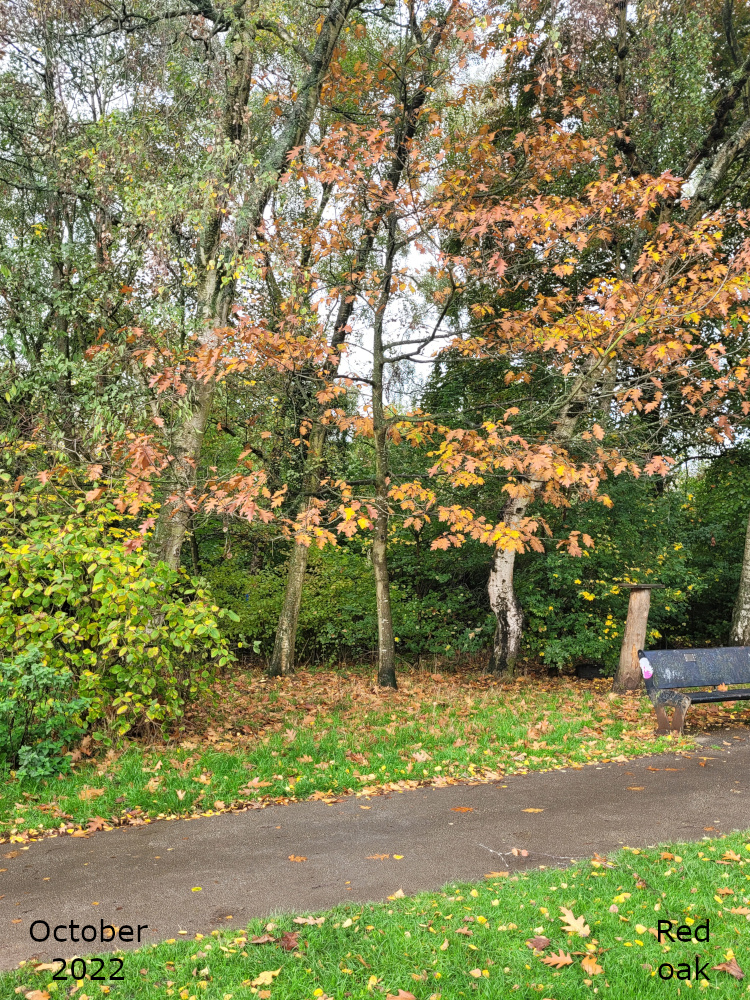
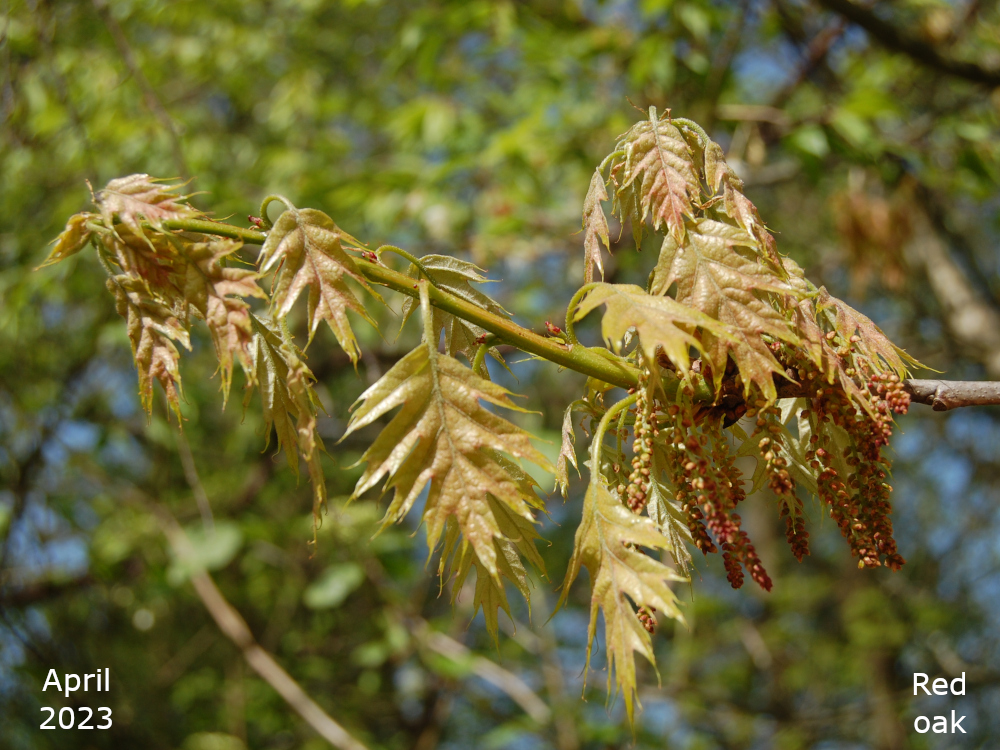
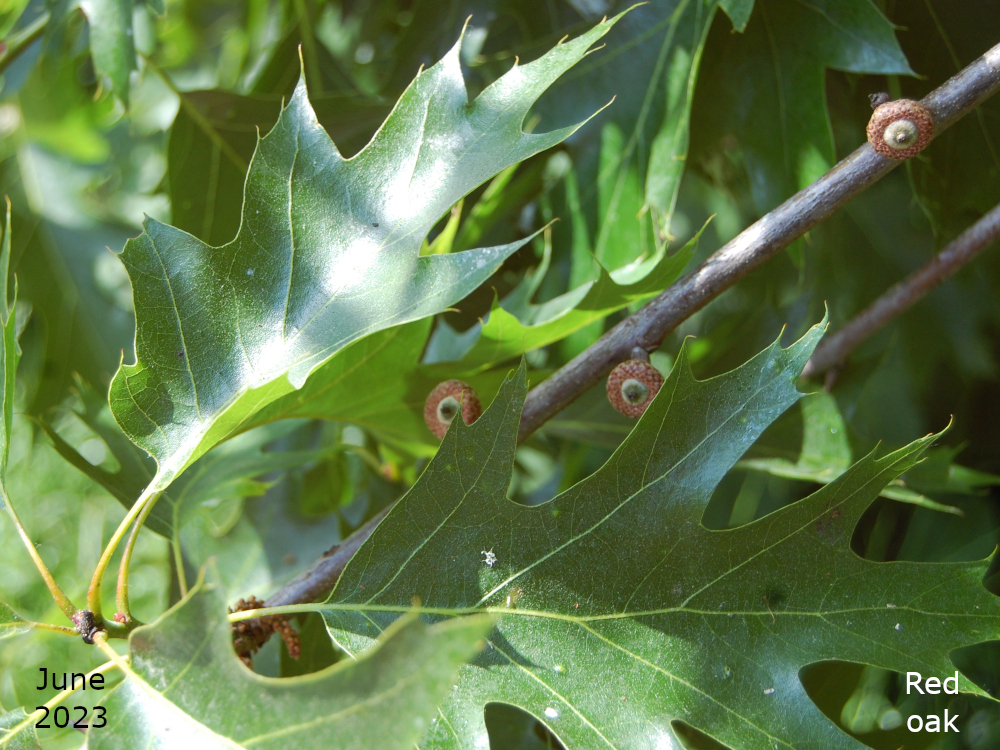
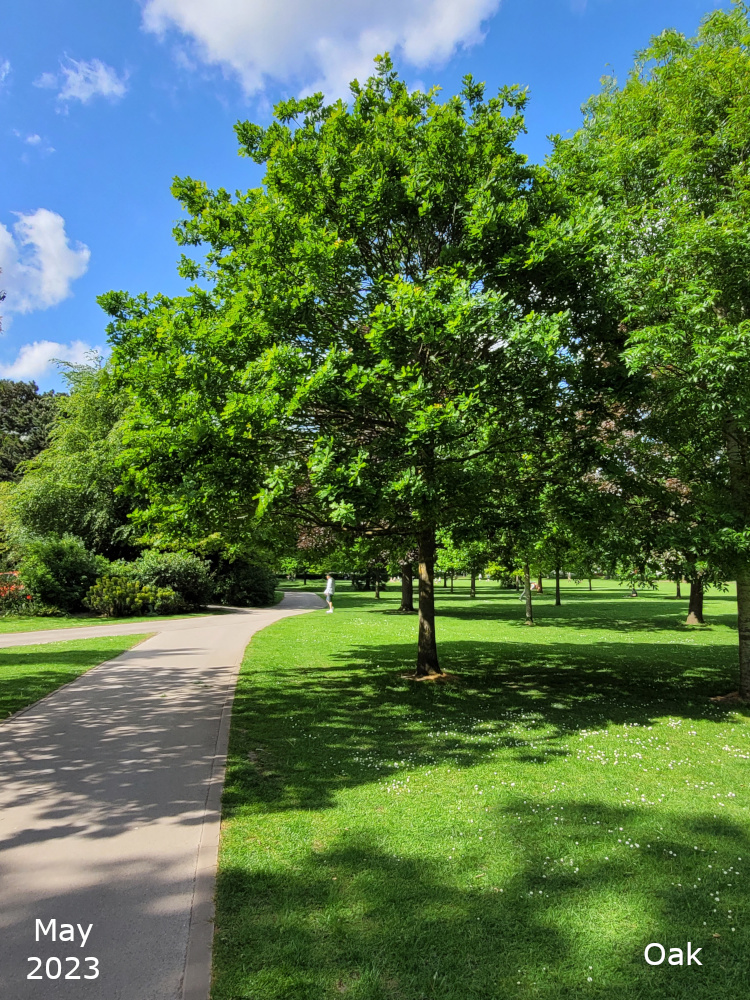
The path going down the hill, alongside the Thrive garden, has several oaks on either side of it. One is a small tree near the bottom of the triangular area right next to the Thrive garden fence. All the others are much bigger, the largest of which is on the opposite side of the path and overlooks the field above the ha-ha. Its full splendour can be appreciated from the opposite end of the field, especially in Spring when the leaves are fresh and their colours vibrant green. It looks equally impressive from directly underneath when you get a sense of how big it is. Two slightly smaller oaks are on the same side of the path but lower down the hill. The next one is at the bottom of the hill, over the path again, The last one, in this group, is not on the hillside path but is off the path running along the bottom. It is a small red oak, just behind the left-most bench.







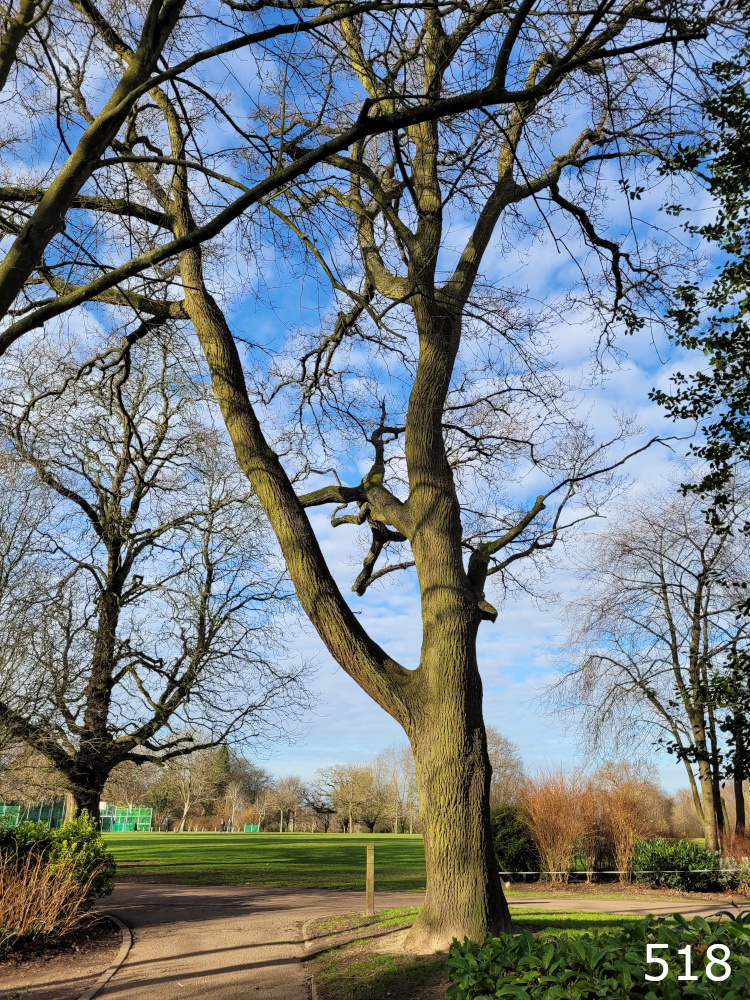
Oak 518 – Pond / car park
If you walk out of the Grange Road car park past the end of the pond, you will pass this English oak, on your right.

Oak 638 – Avenue Road , small playground
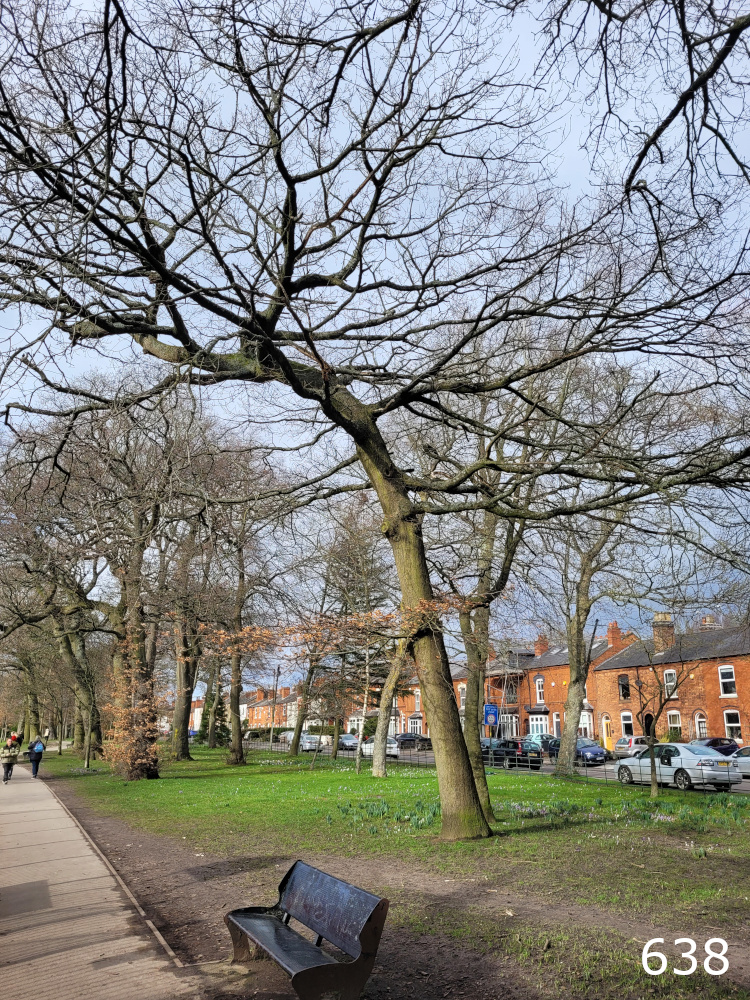
More or less opposite the entrance to the small children’s playground this Oak is still clinging on to the last of its leaves in the lower branches even after all the high winds this February.
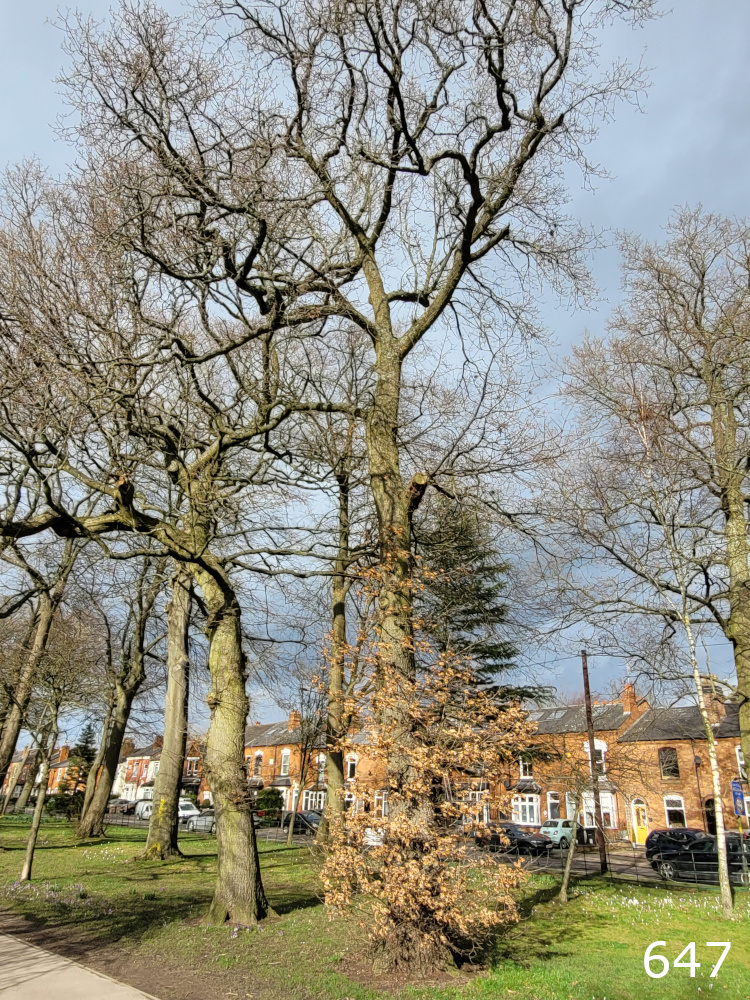
Oak 647 – Avenue Road , small playground
A lot of leaves still remain on all the shoots from the lower part of the trunk on this Oak just along the path from the small children’s playground.
Oak 656 – Avenue Road
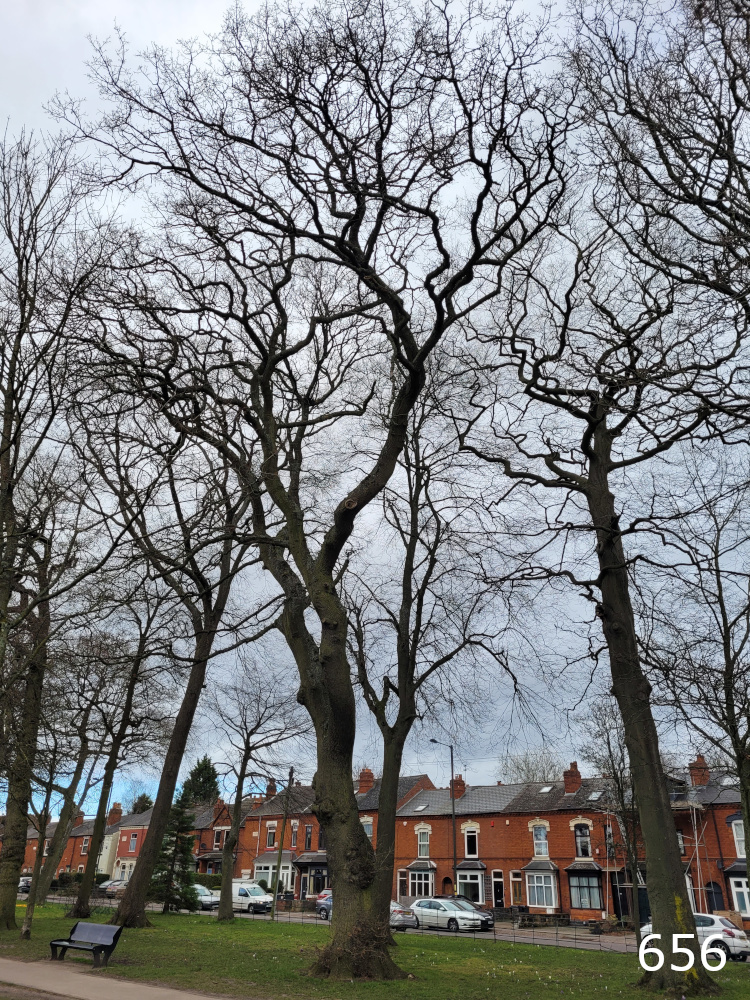
Almost a third of the way along the path from the playground towards the car park this Oak is just by one of the metal benches.
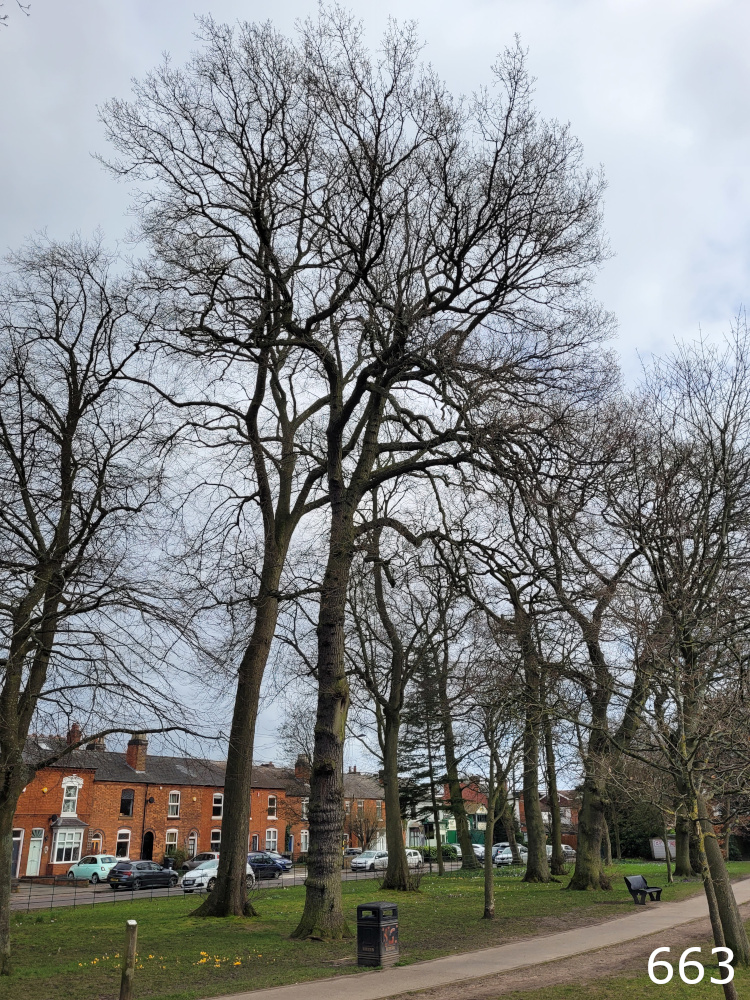
Oak 663 – Avenue Road
Just a bit further along the path, the other side of the bench, another Oak close to the path.
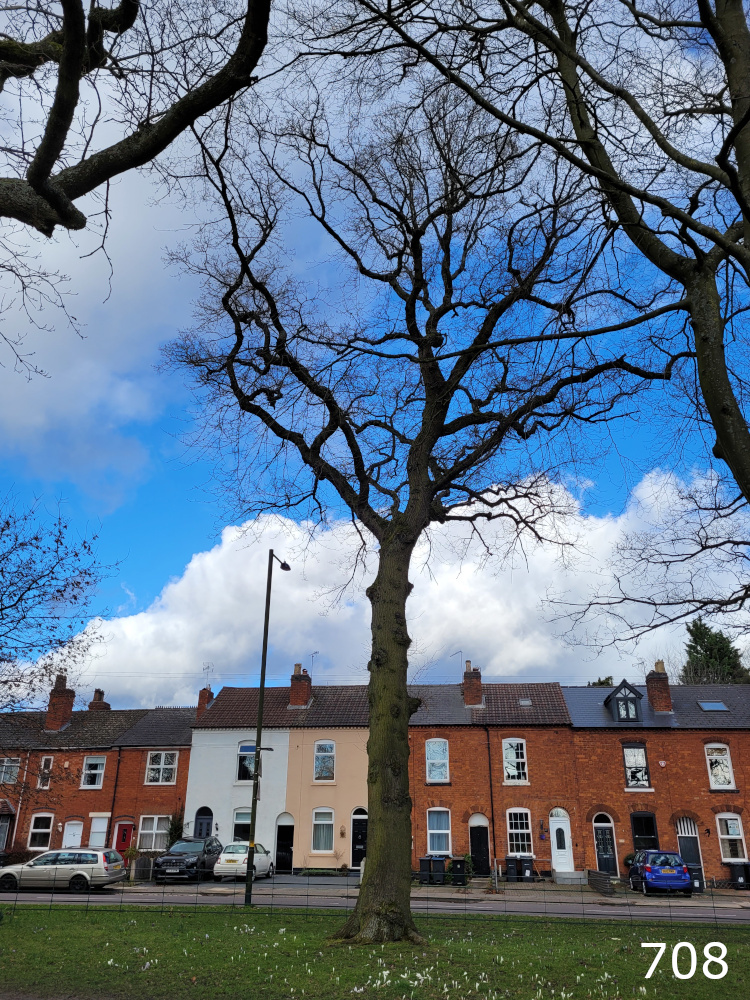
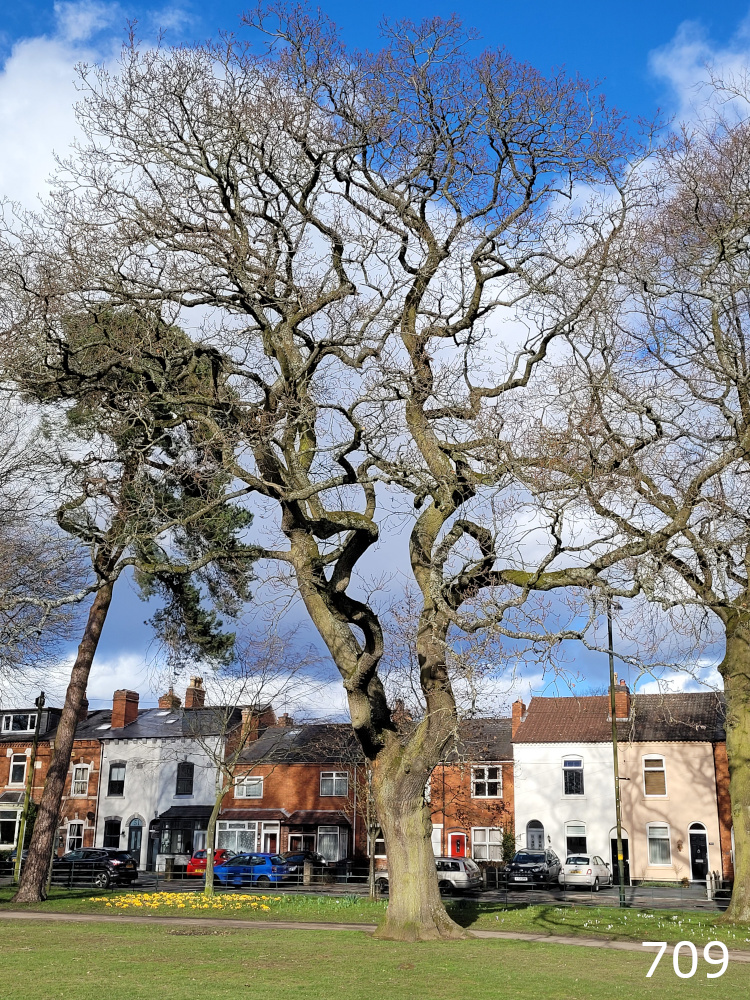
Oaks 708 & 709 – Avenue Road
About three-quarters of the way from the playground to the car park these two Oak trees are diagonally opposite each other across the path. The larger of the two oaks has a distinctive v shape, with two large boughs growing up from its huge trunk.
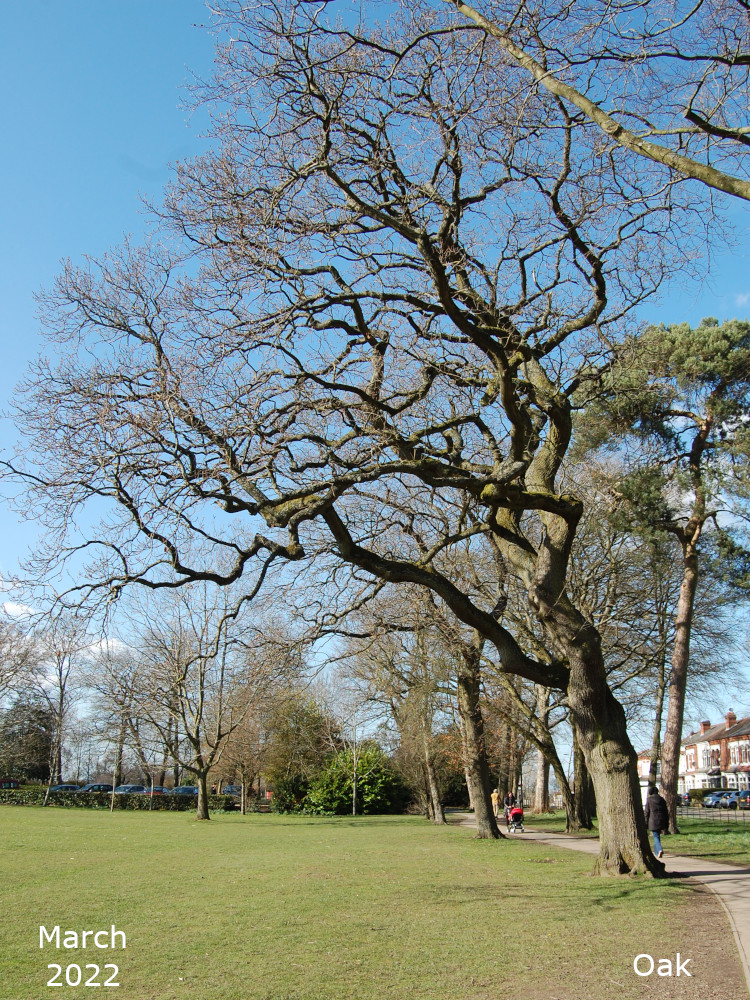
Gnarly oak – Thrive garden / basketball area
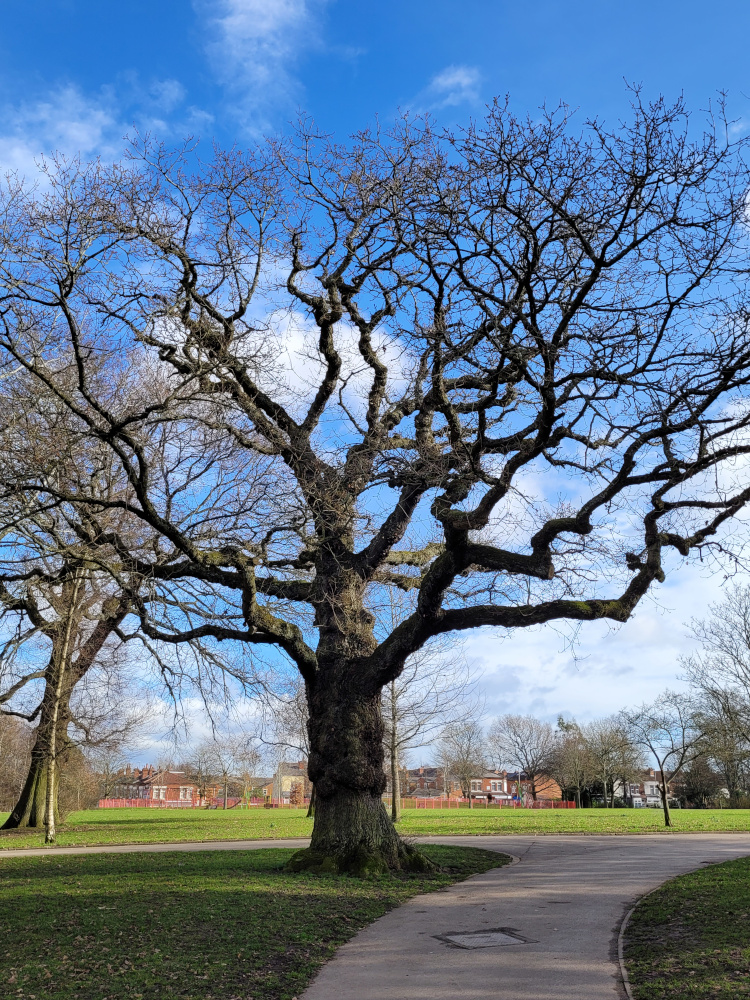
There is no number to go with this tree but it is a magnificent oak with a gnarled trunk, covered in burrs. Its just past the basketball court where the path forks off to go down the hill and the right hand side goes to the Thrive gardens.
Large play area
This is a small tree next to a medium-sized Ash tree and it starts off a line of trees going alongside the large play area.
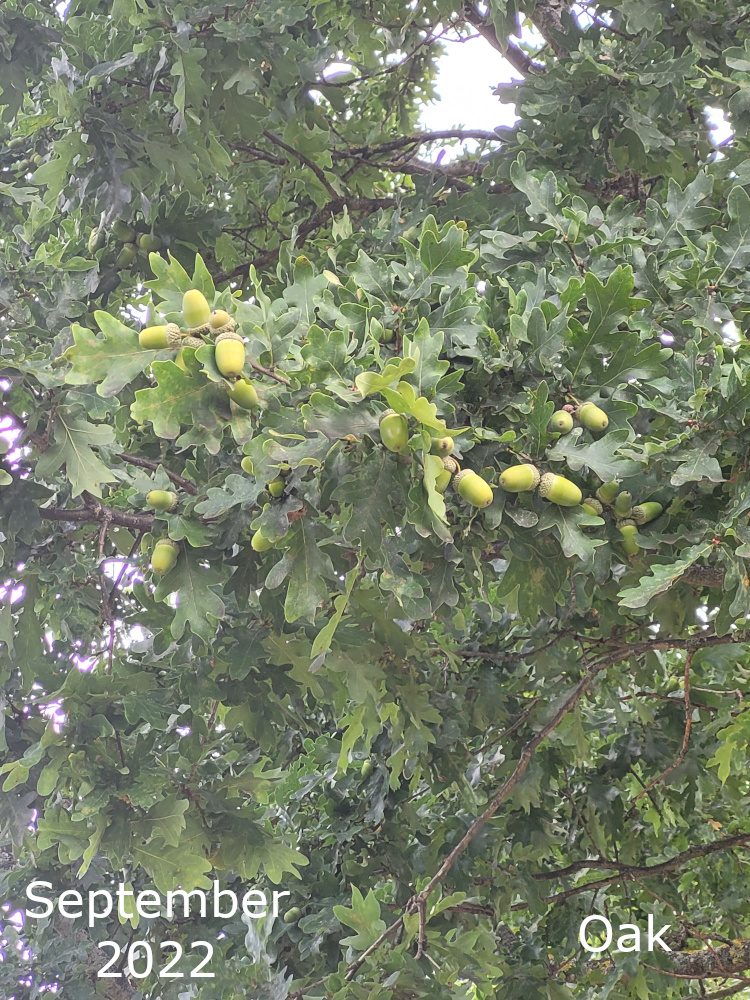
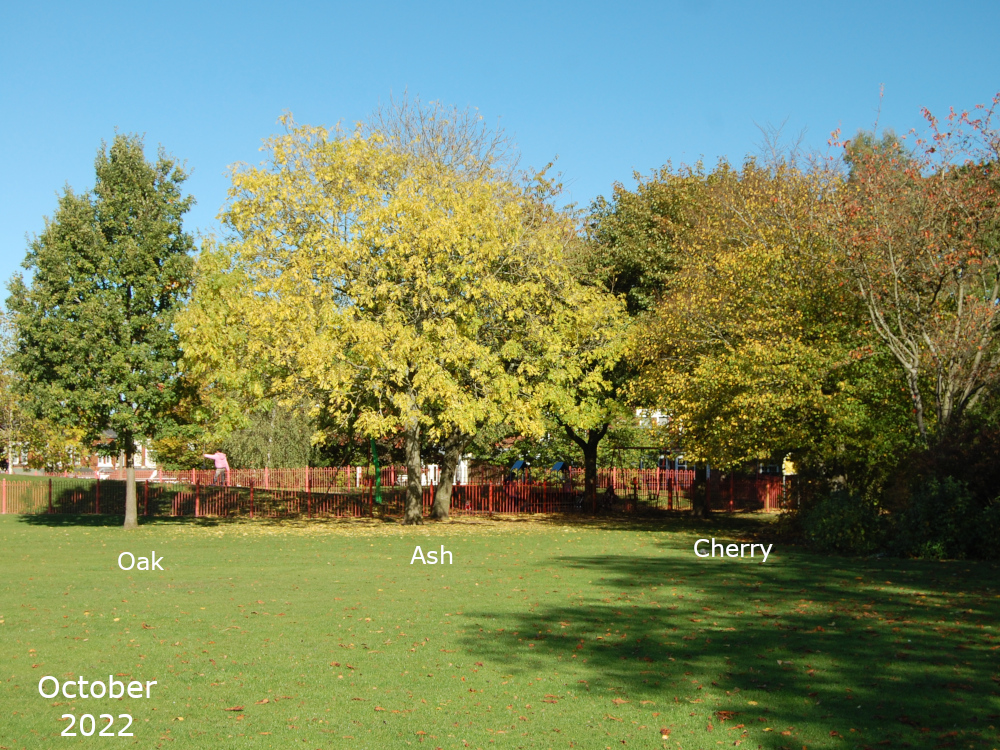
Below basketball area
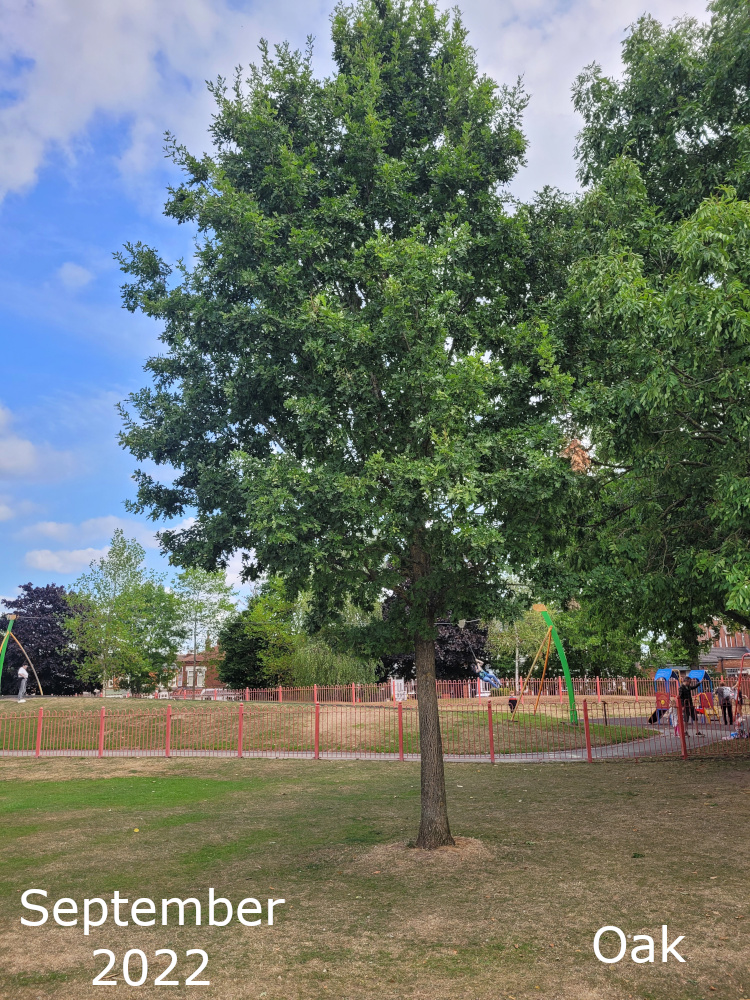
There are three oak trees on the corner below the basketball court, the largest of them looks as though it’s had a hard time in the past but it seems to have recovered well and is flourishing. The other two are small to medium sized trees on the edge of the path

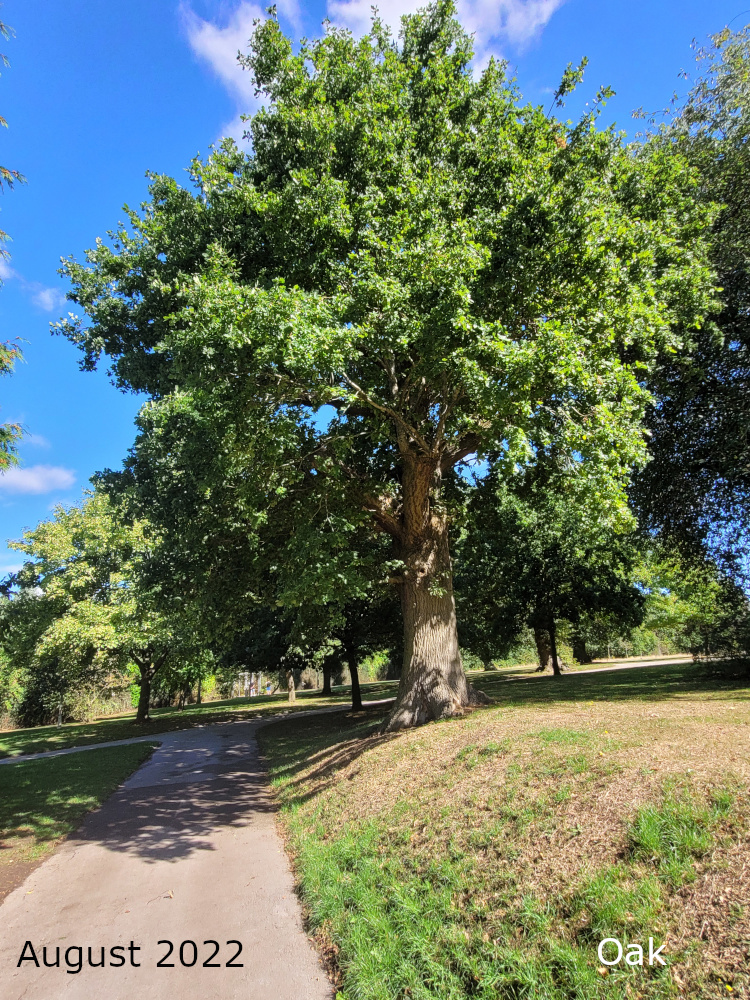
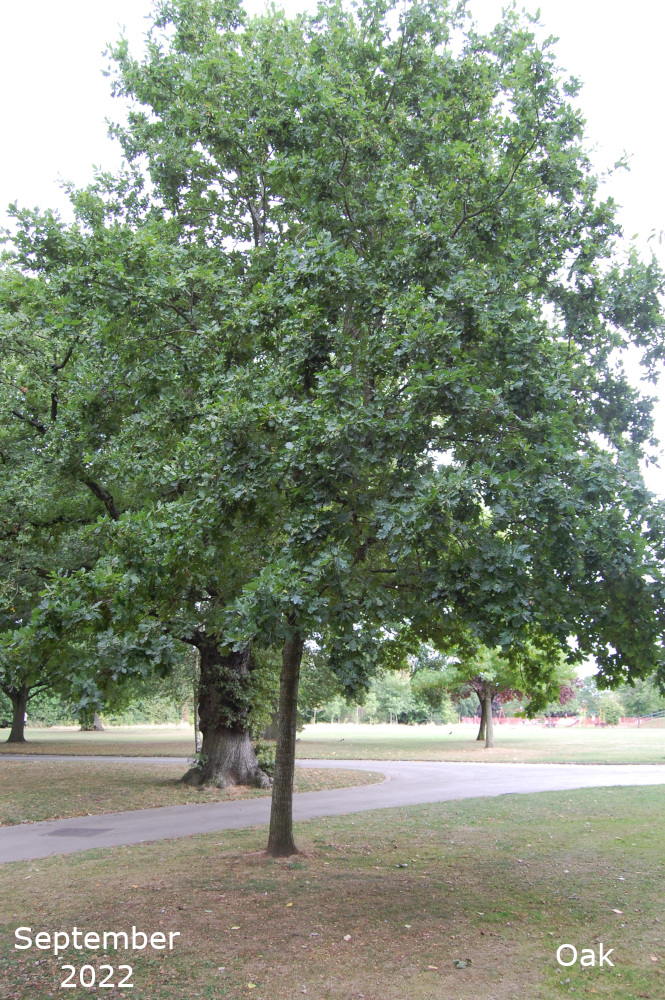
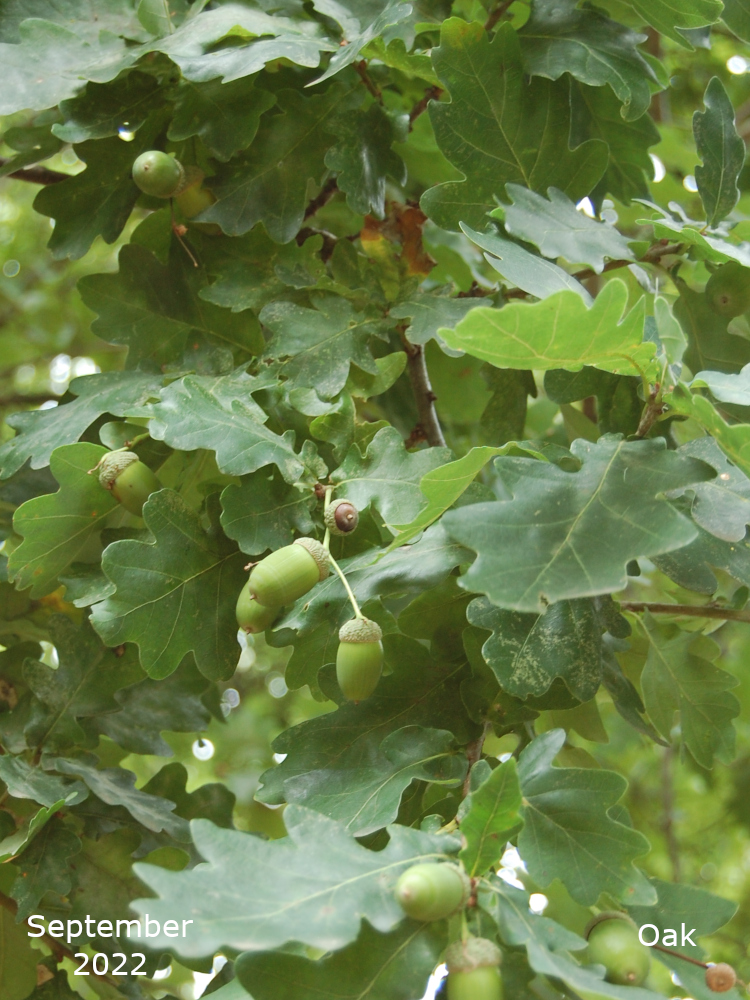

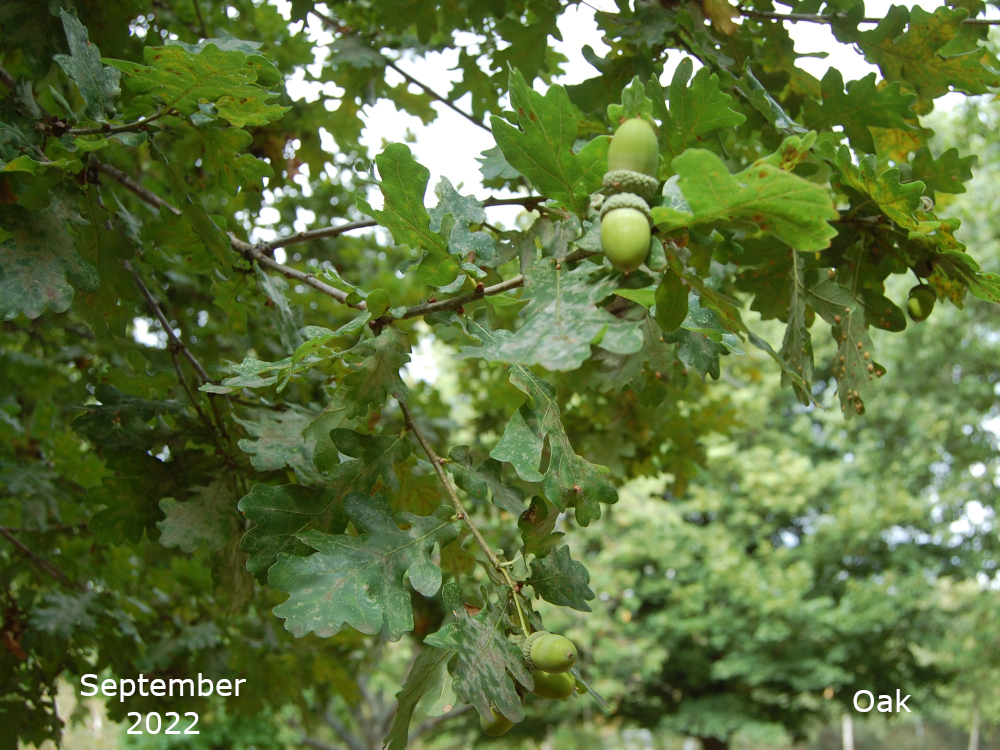


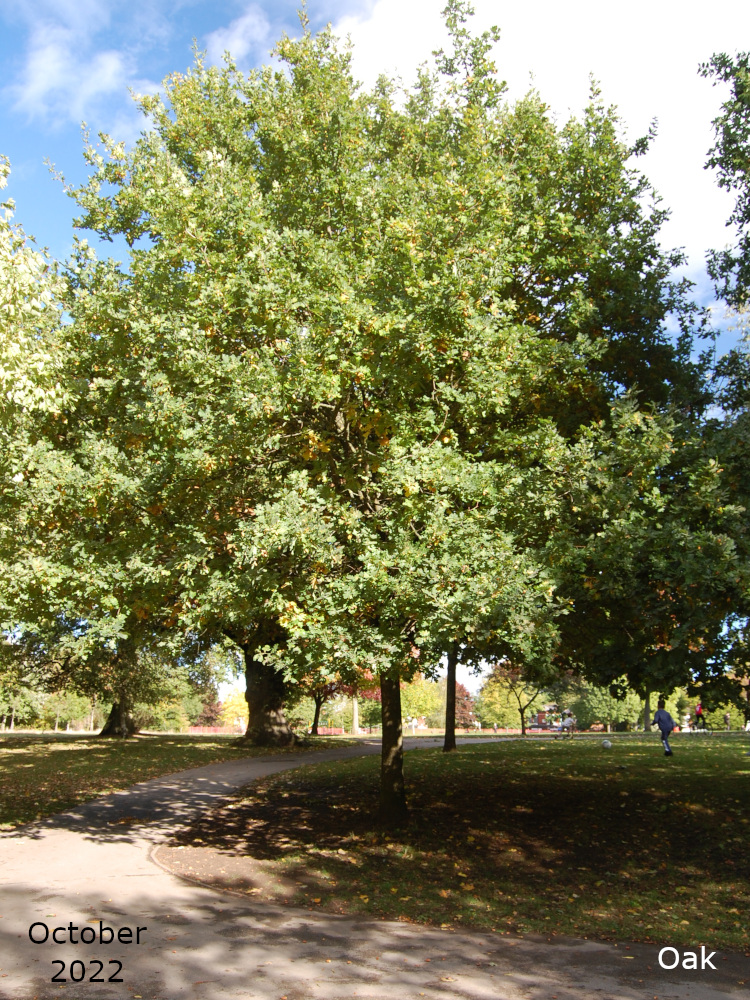
Oak 735 – Avenue Road
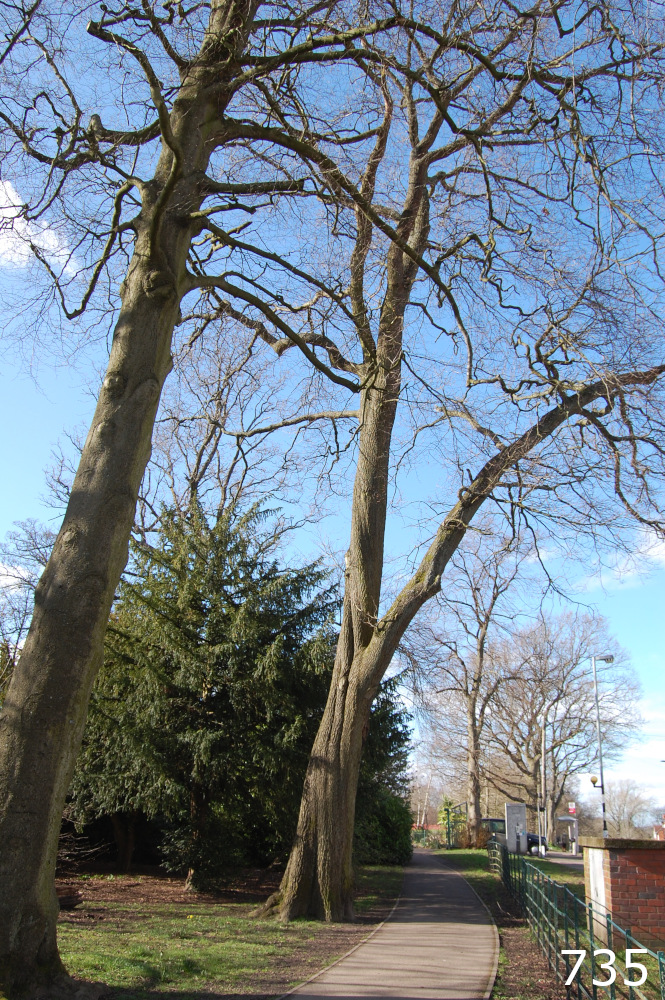
Just twenty metres from the entrance by Grange road this Oak leans over the path running alongside Avenue Road.
Twisted oak – Thrive garden
Not far from the Thrive gardens or the larger children’s playground stands this impressive oak. It’s twisted shape is full of character and it is covered in burrs.
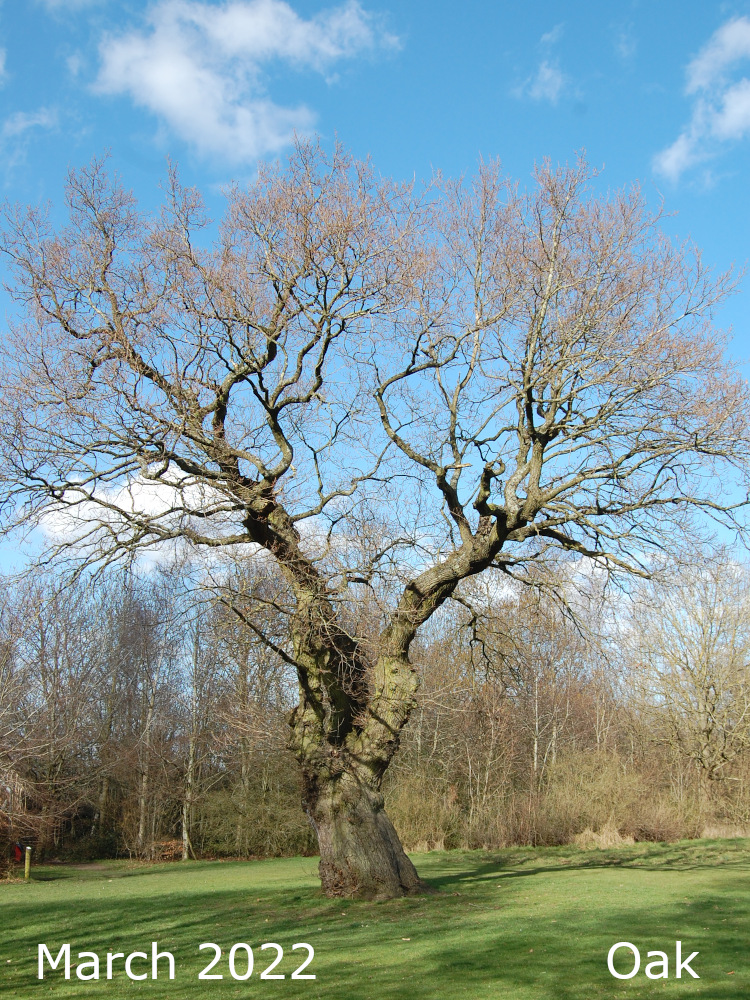
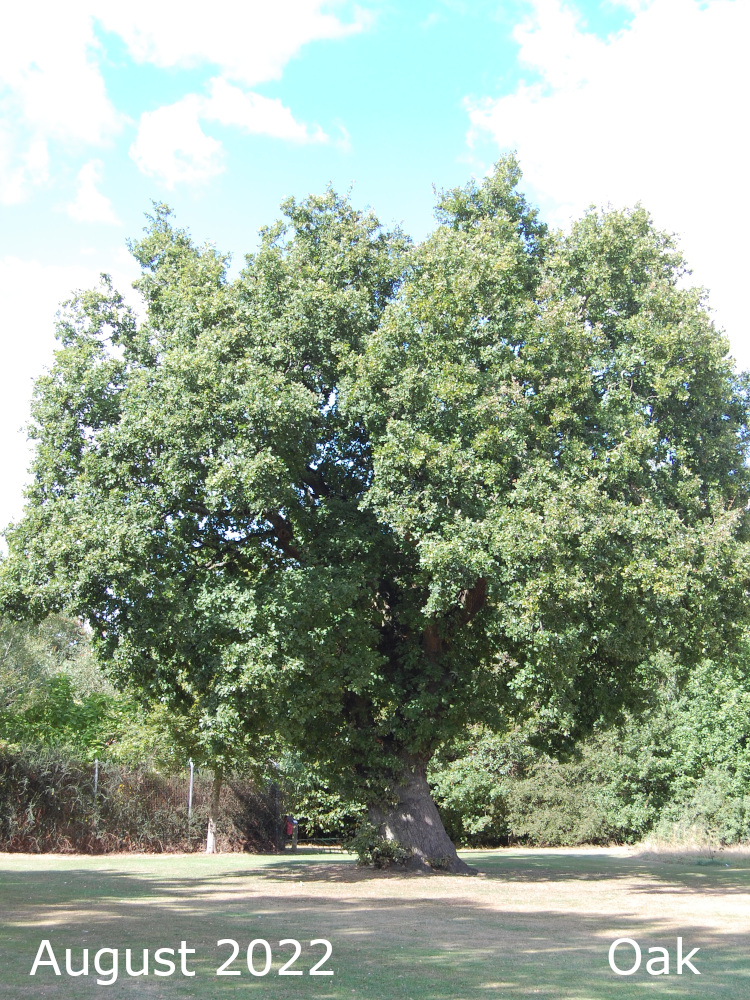
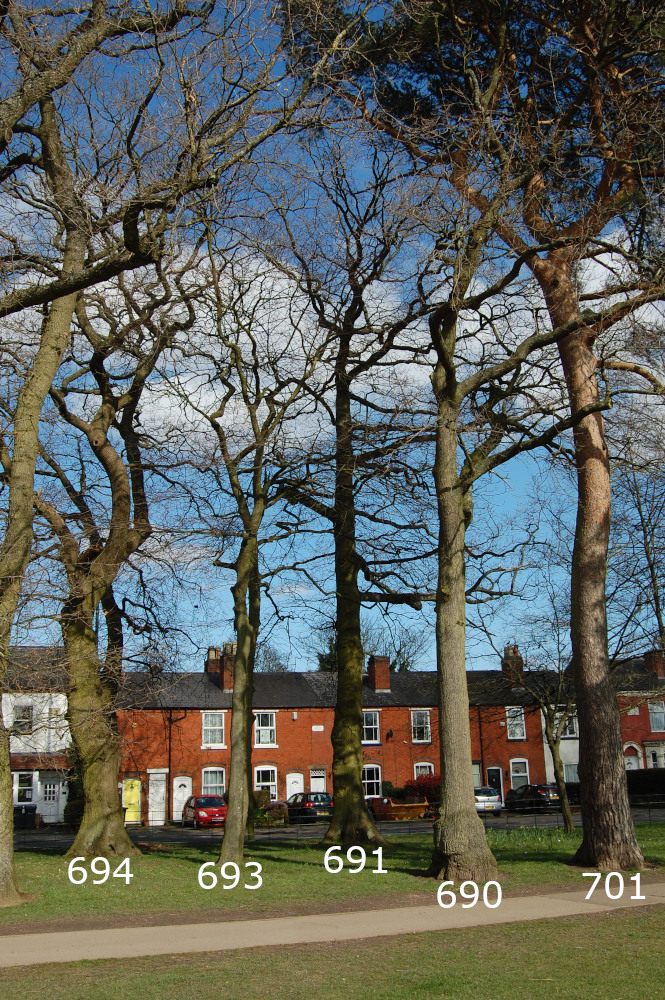
Oaks 690, 691 & 694 – Avenue Road

There are two medium sized English oaks close together here (690, 691) and a third larger one just a bit further along, to the left (694). 693 is a Sycamore and 701 a Scots pine.
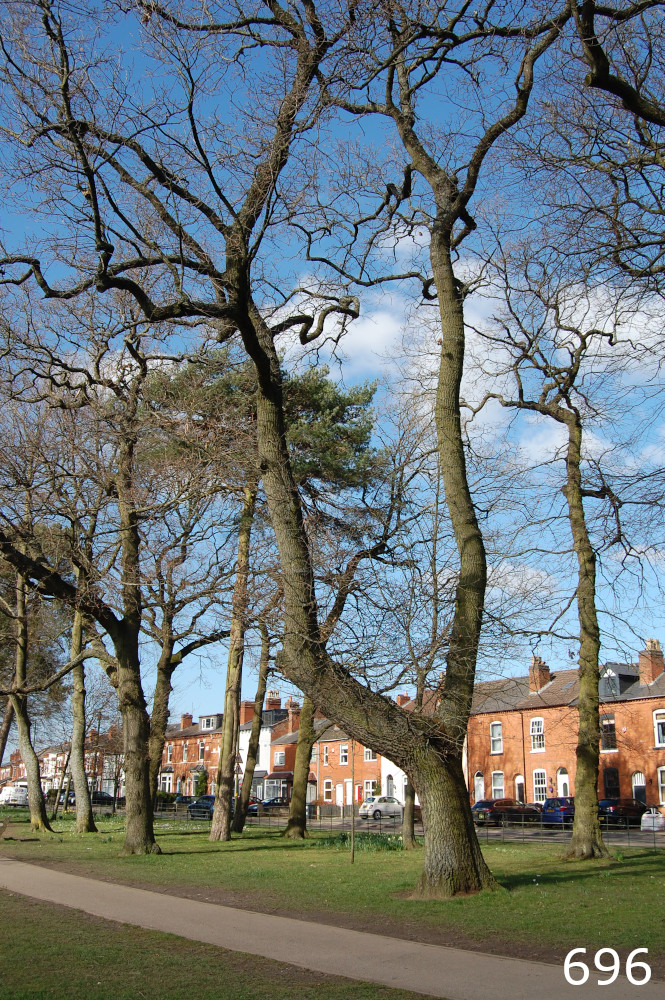
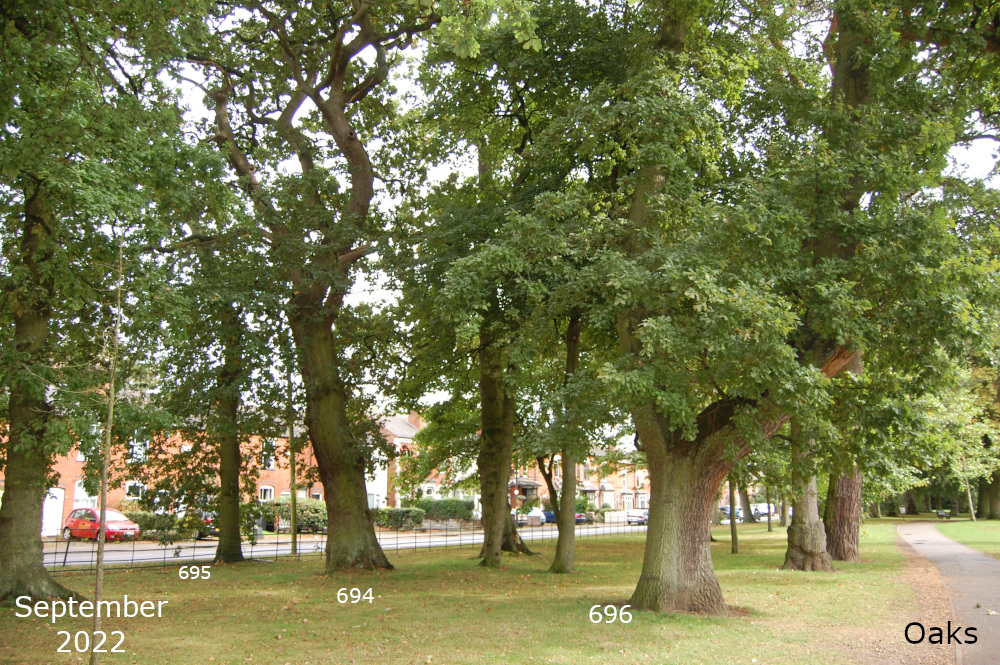
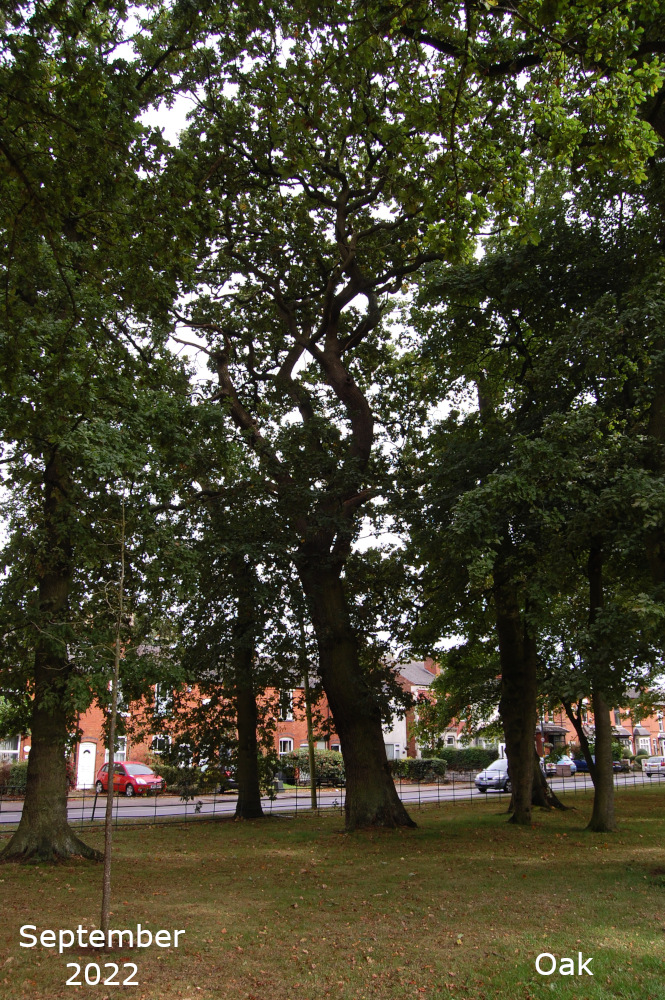
Oak 696 – Avenue Road
There is a particular Oak tree close to the Avenue Road path that has a distinctive shape. It is in a sort of group of three that form a line towards the fence, the third being just over the fence. The one near the path has the number 696, then 694 in the middle and the smallest of the three is 695, just over the fence-line.


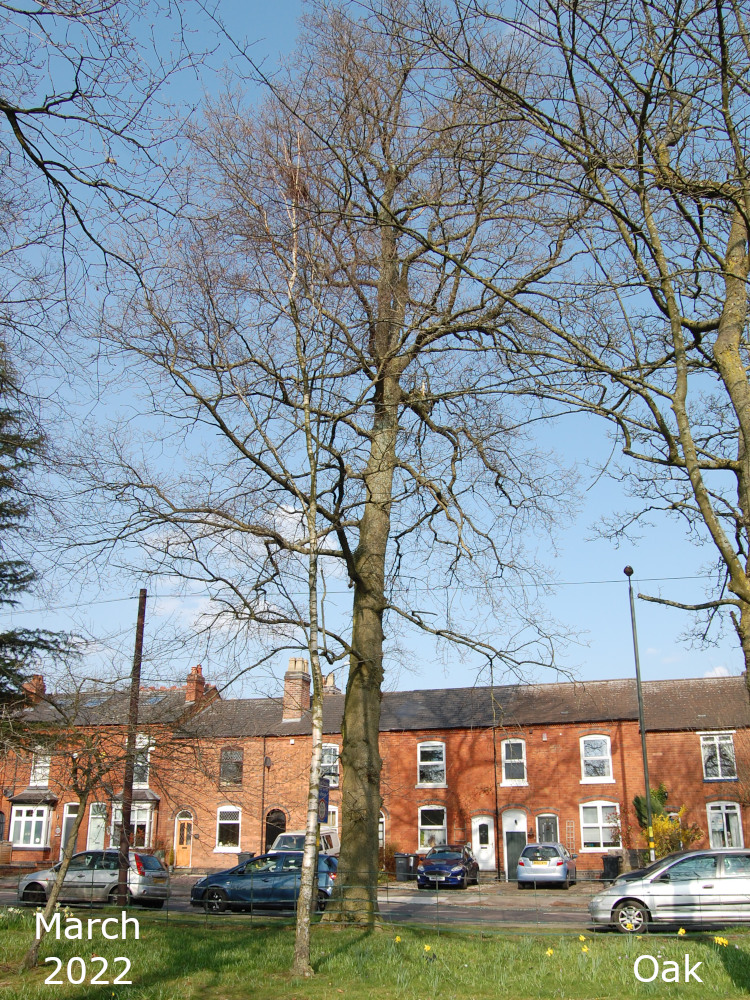
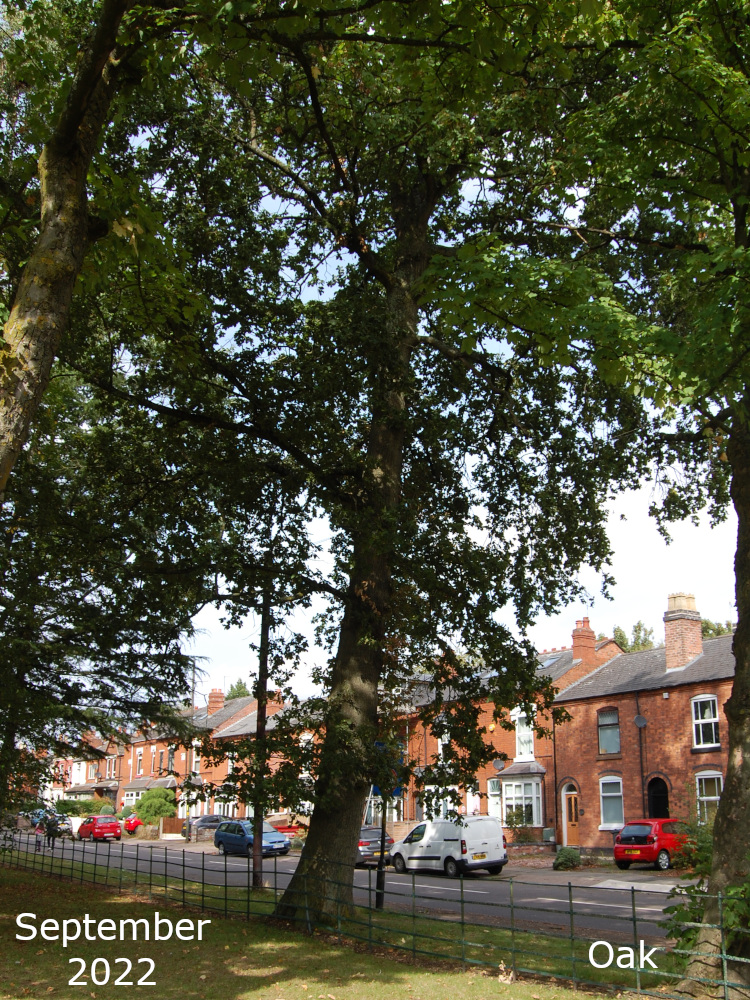
Oak 644 – Avenue Road
There are quite a lot of Oak trees along the stretch of grass running parallel with Avenue Road. This is one of them, just over the fence but still within the park apparently.
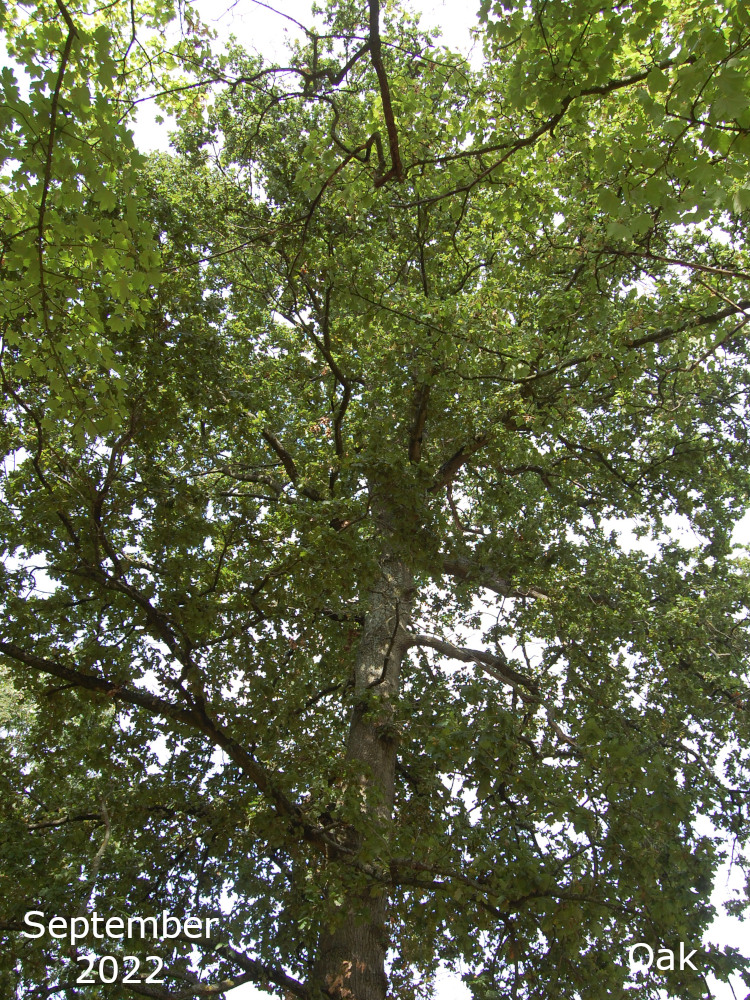
Oaks 672 & 673 – Avenue Road
This group of trees is about half way along the path running parallel to Avenue Road. There are two Oak trees and a Horse chestnut very close together, with their canopies merging.
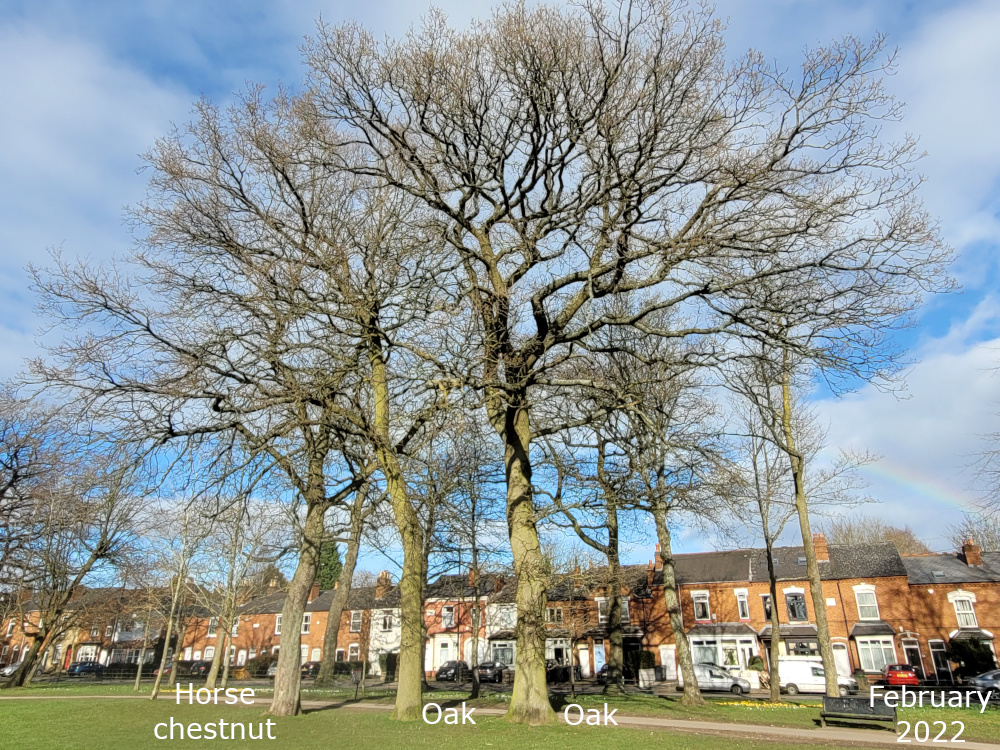
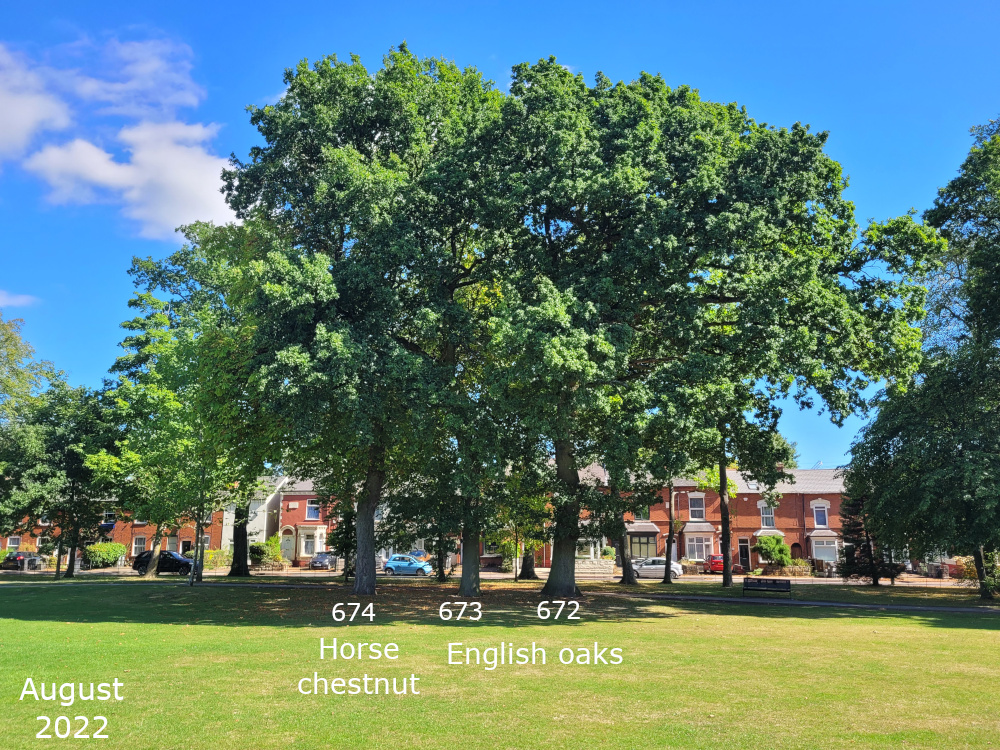
Oaks 697, 700 & 703 – Avenue Road
A lot of the trees along Avenue Road seem to be crowded together and appear to jostle for light. Some seem to reach out sideways, towards the road, for light. Some of the oaks are not as large as some of their neighbours, maybe because they are younger, maybe because they don’t get as much light in amongst the other trees.
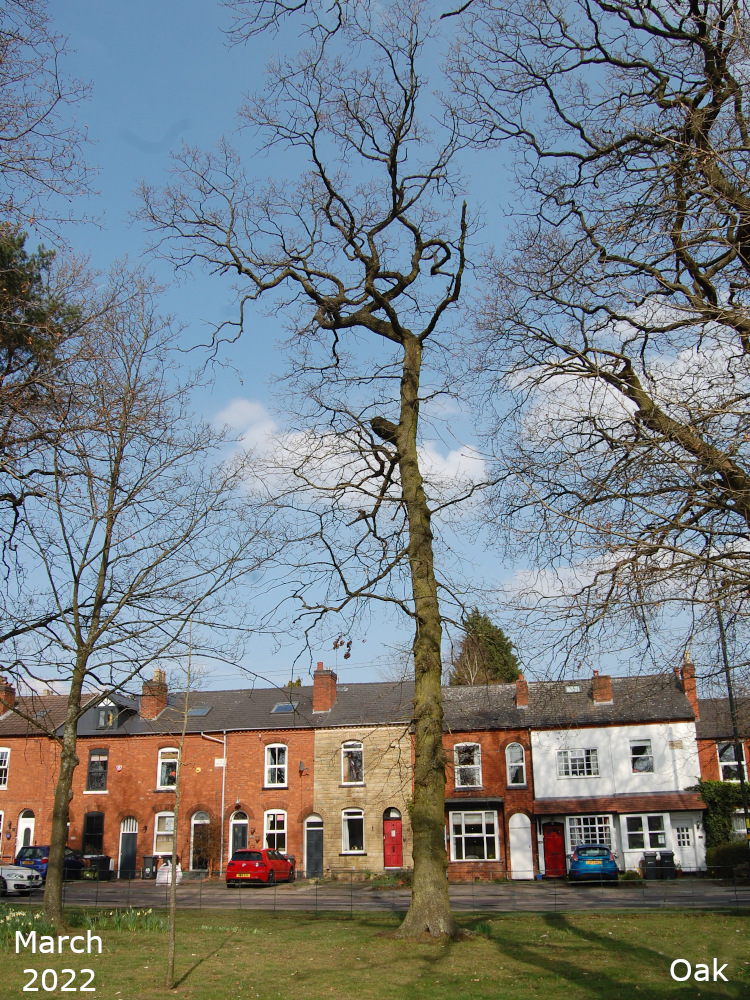

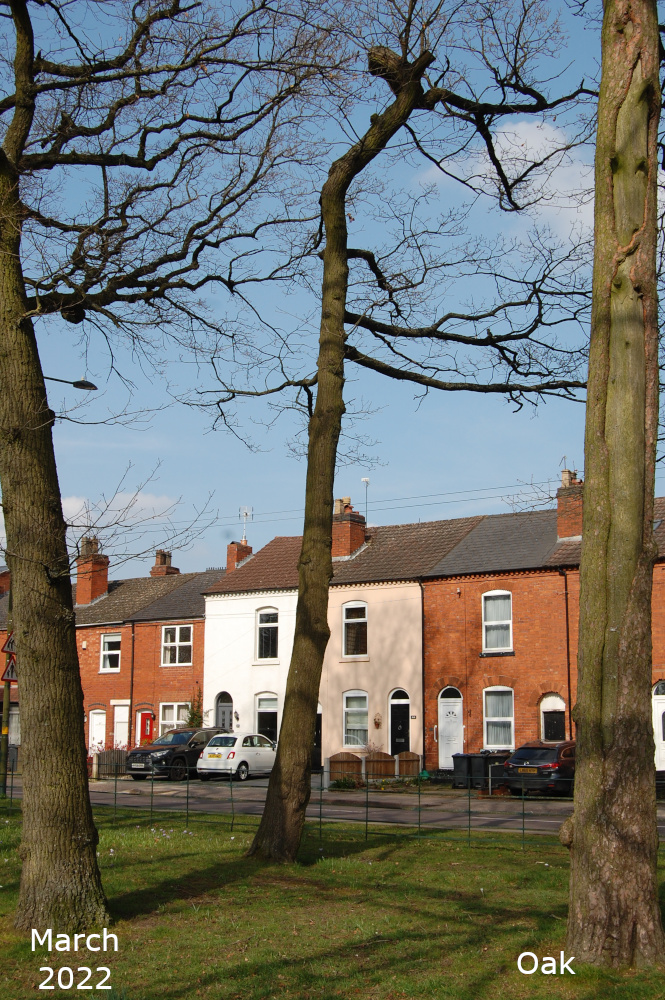
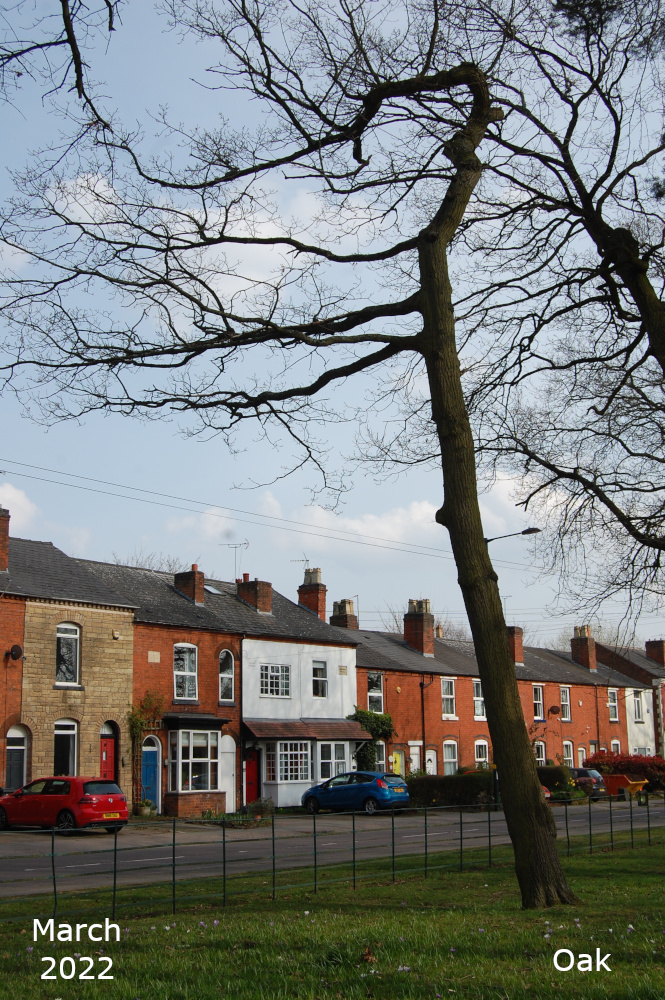
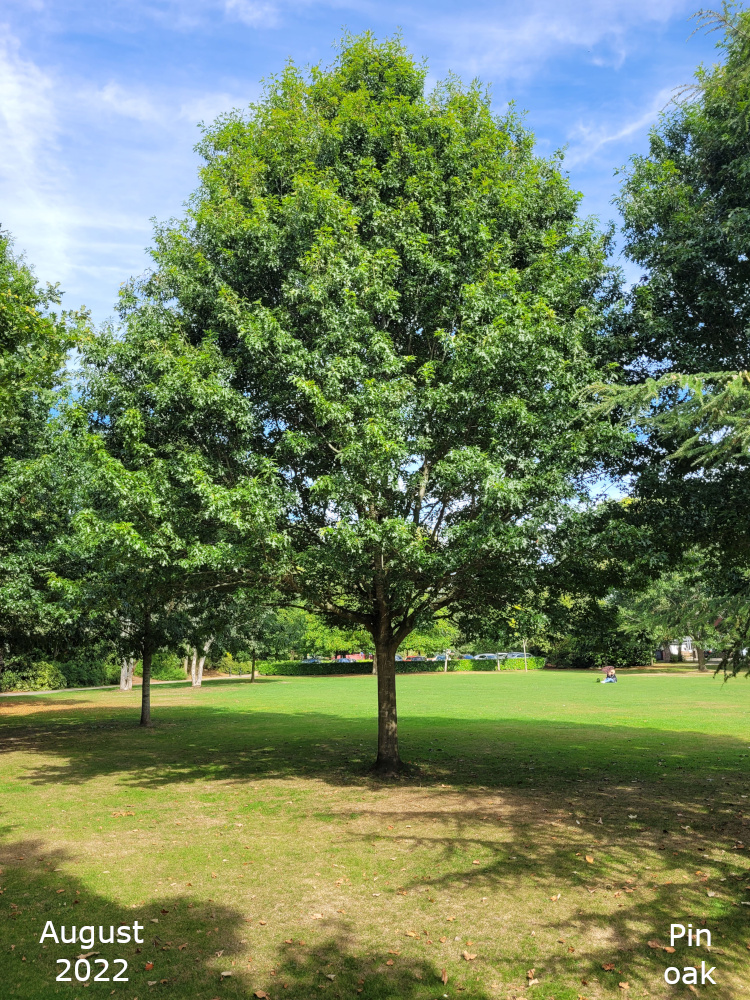
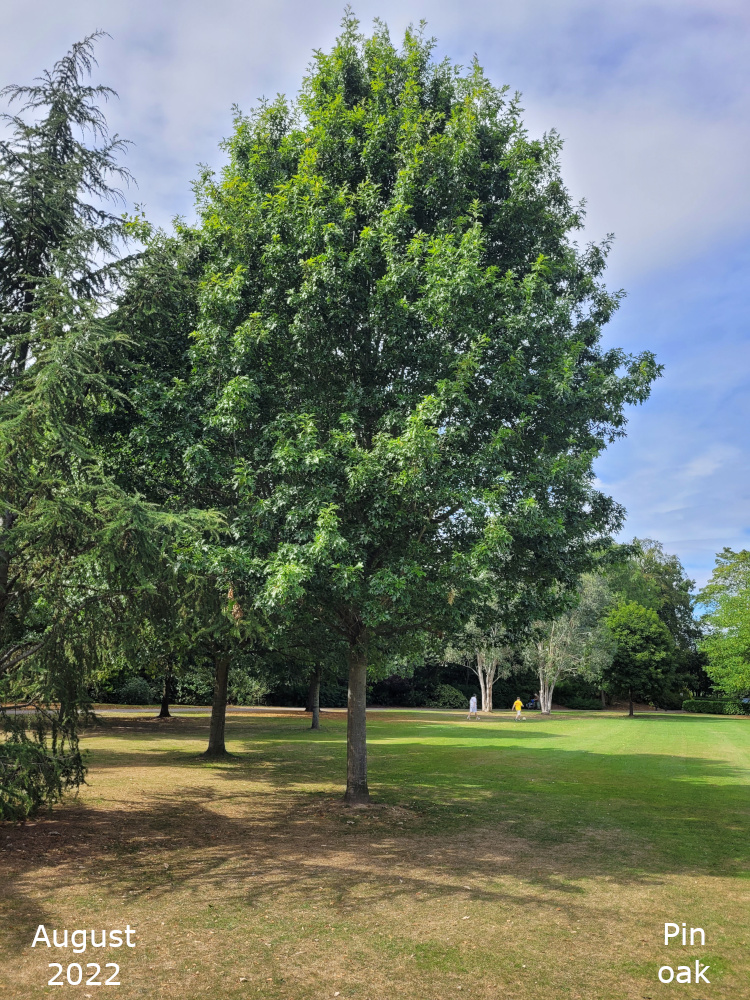
Pin oaks, main field
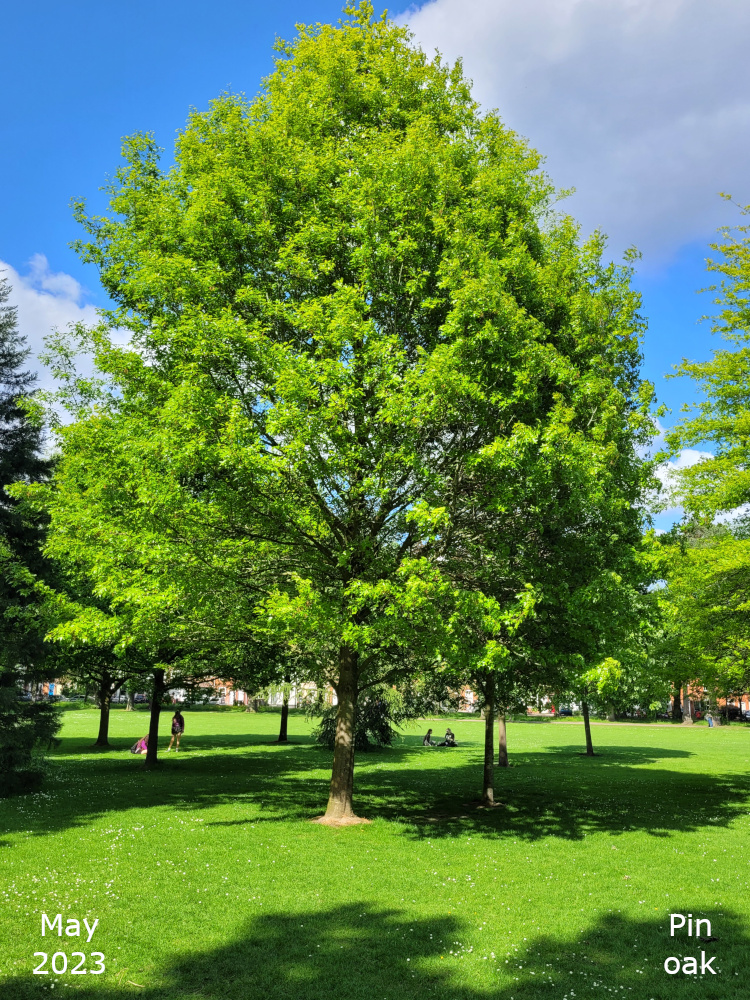
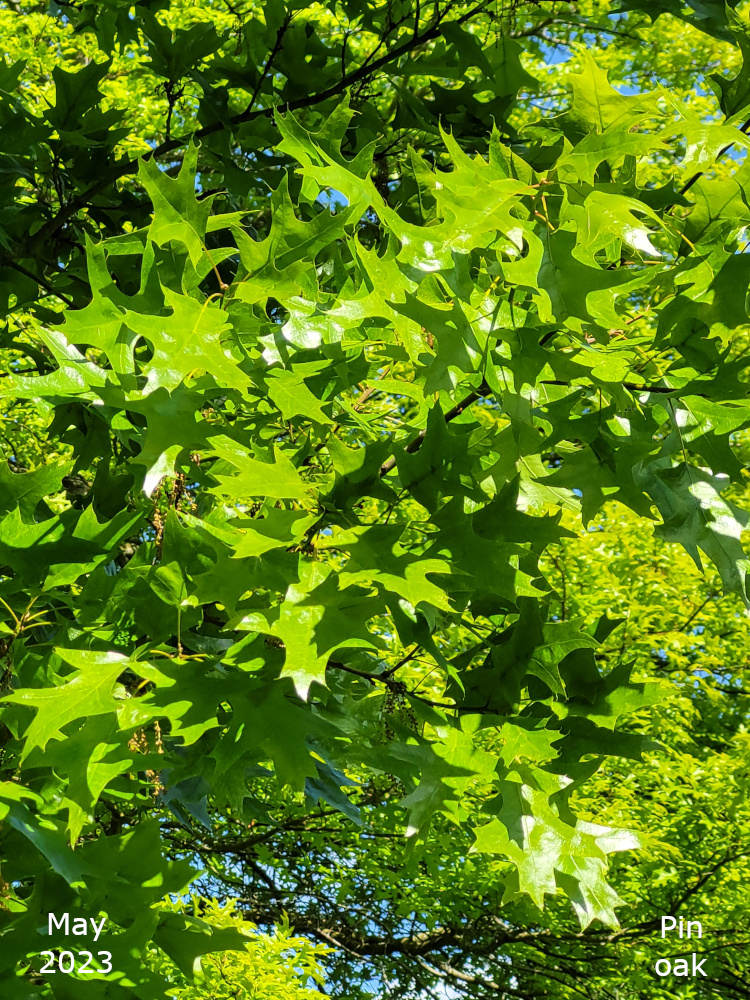
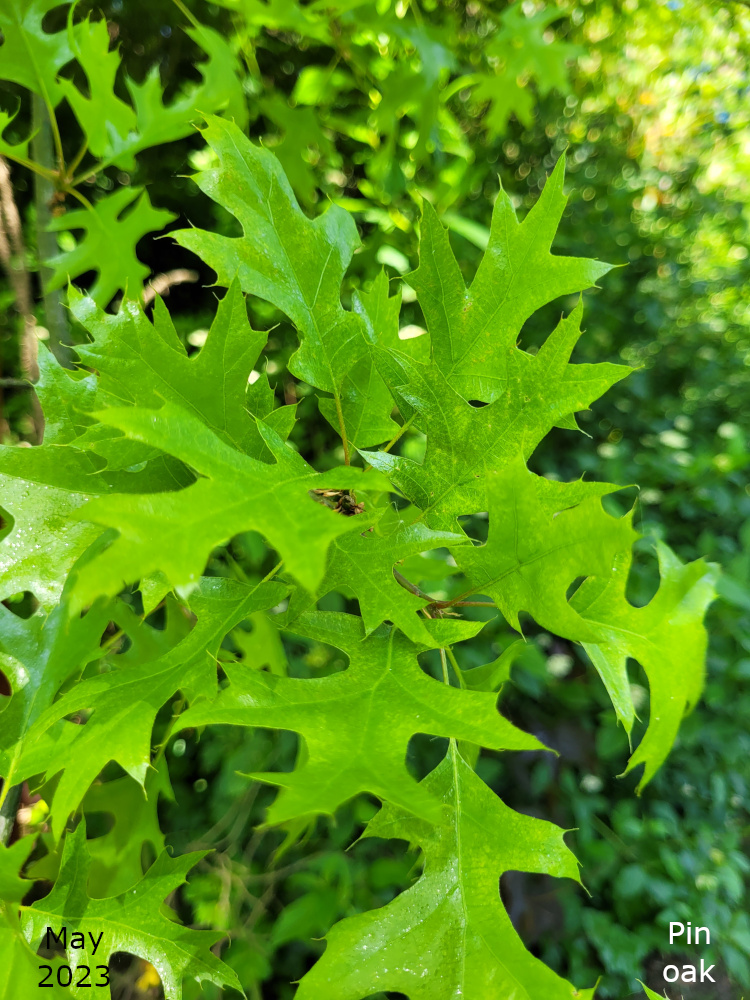
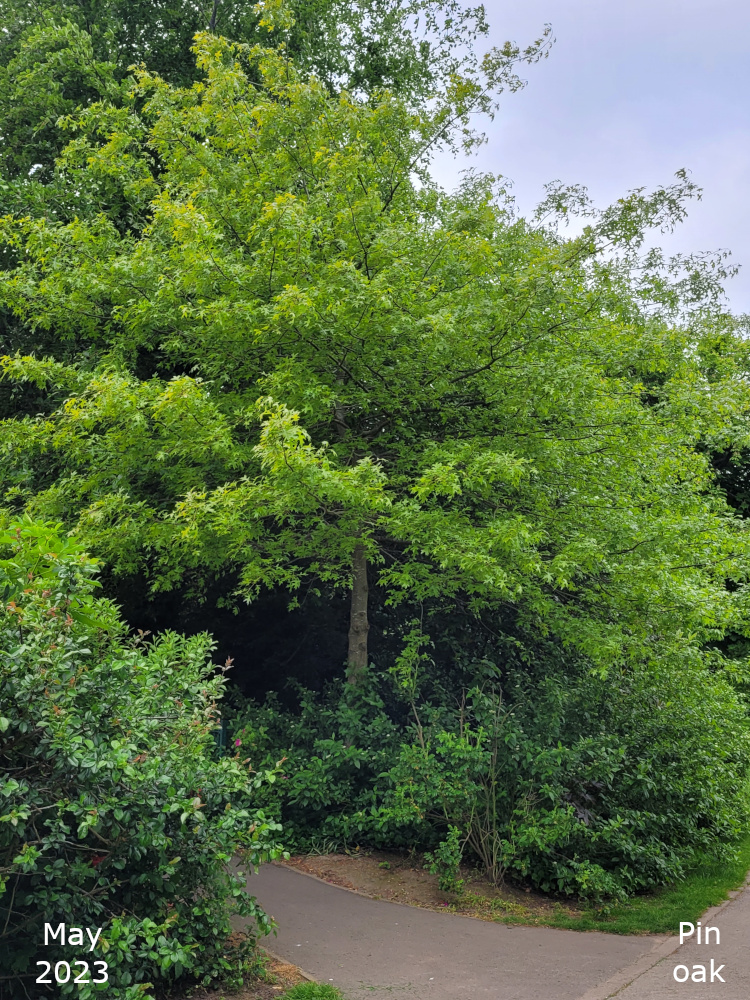
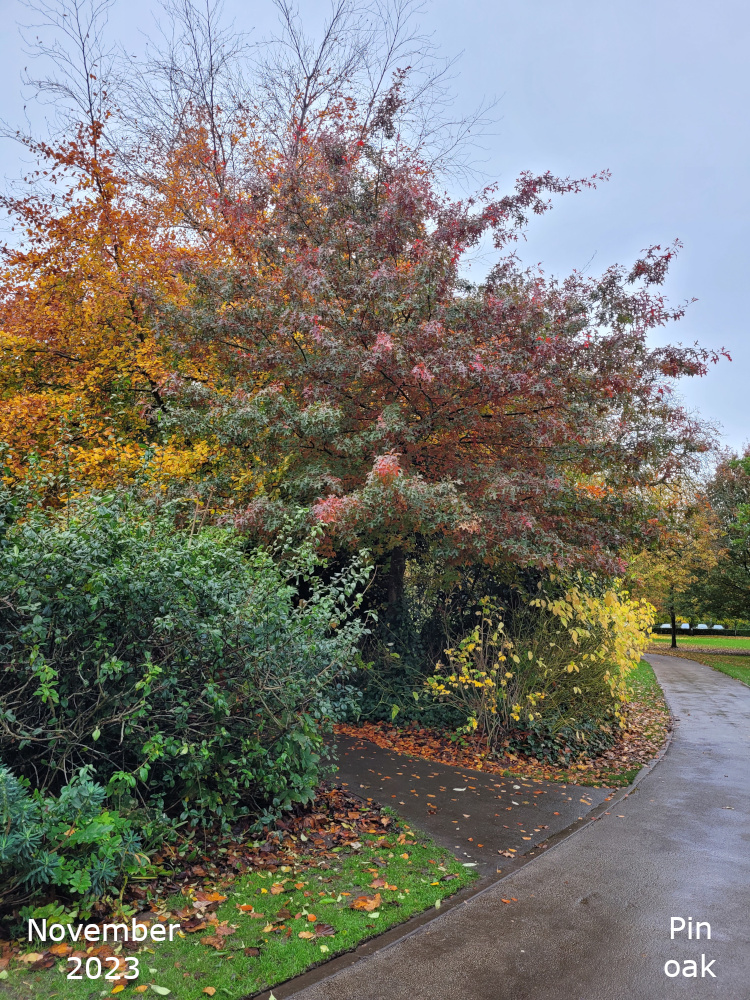
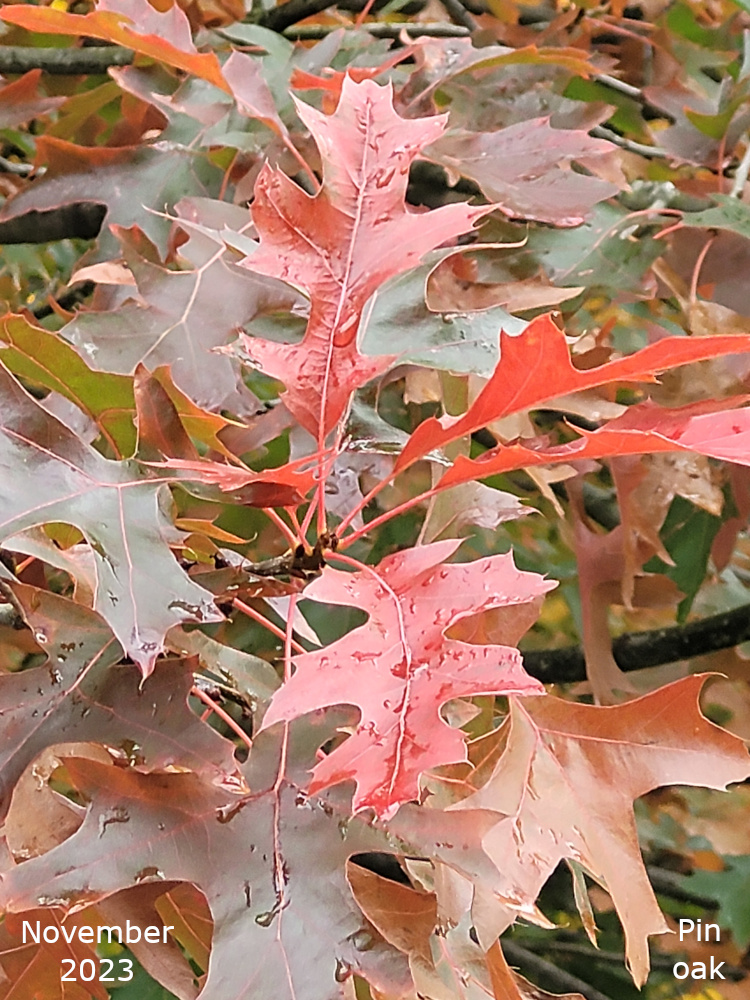
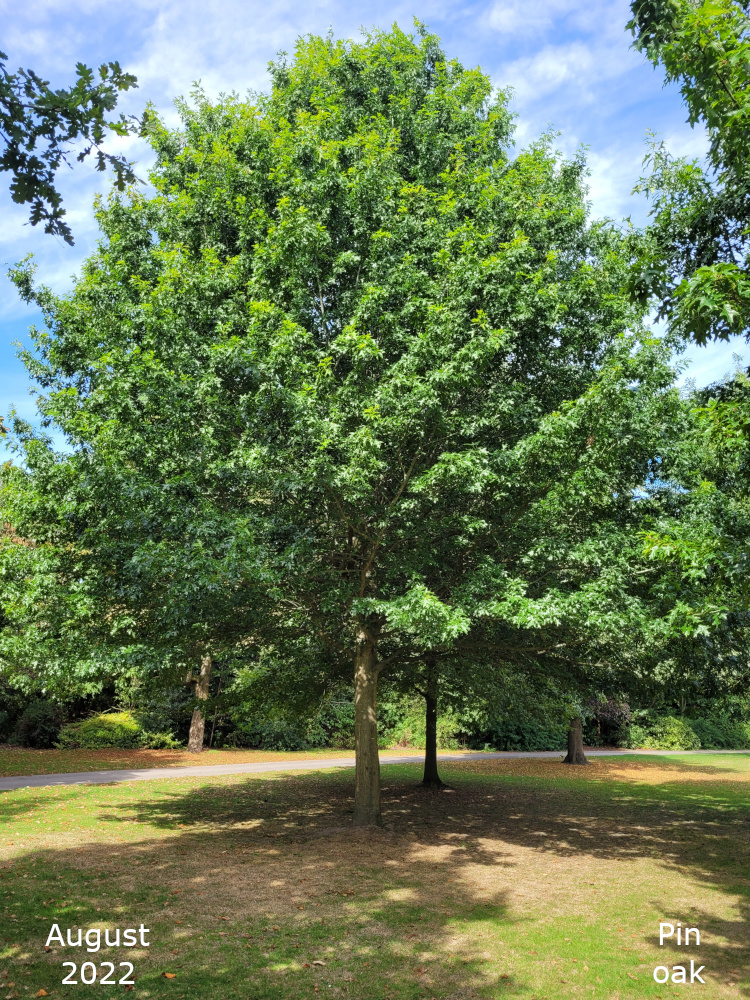
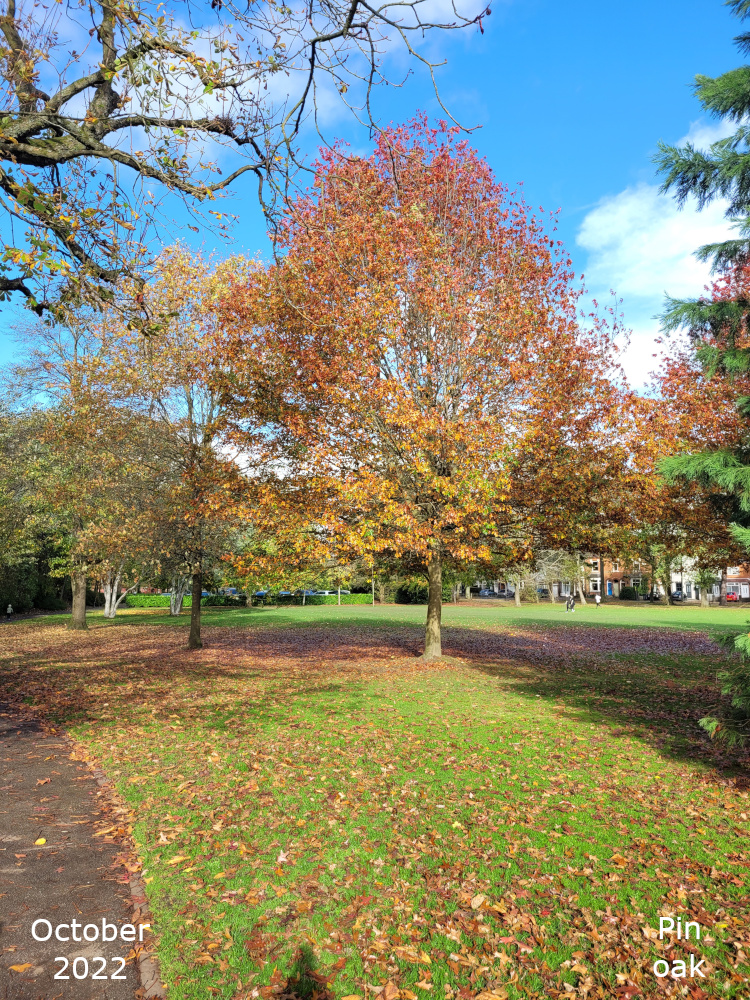
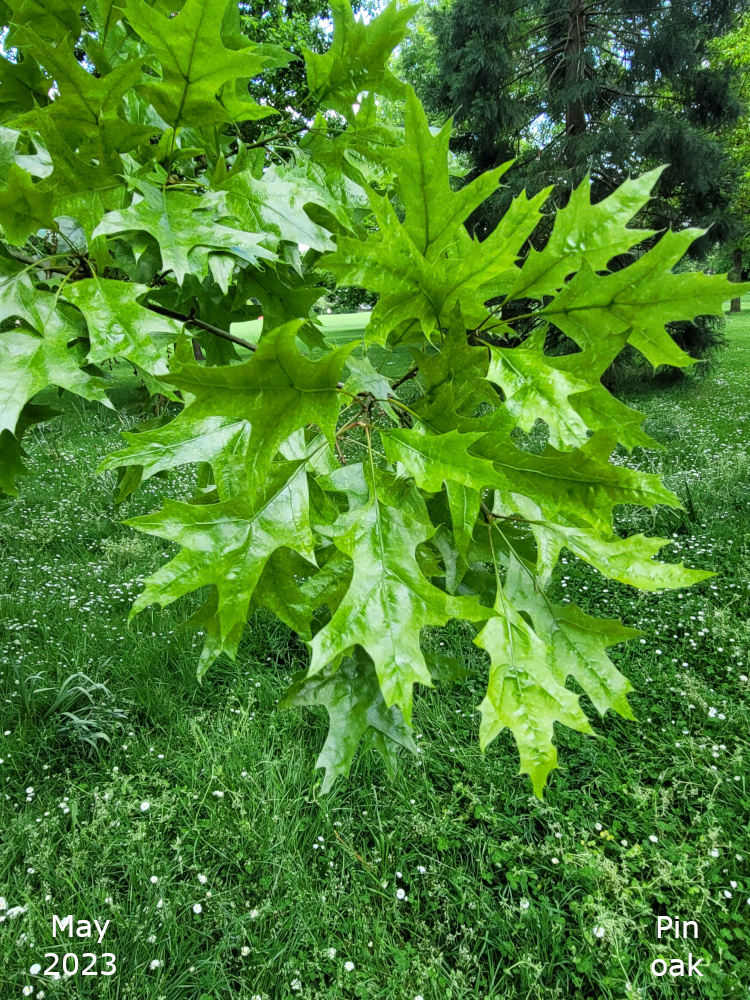
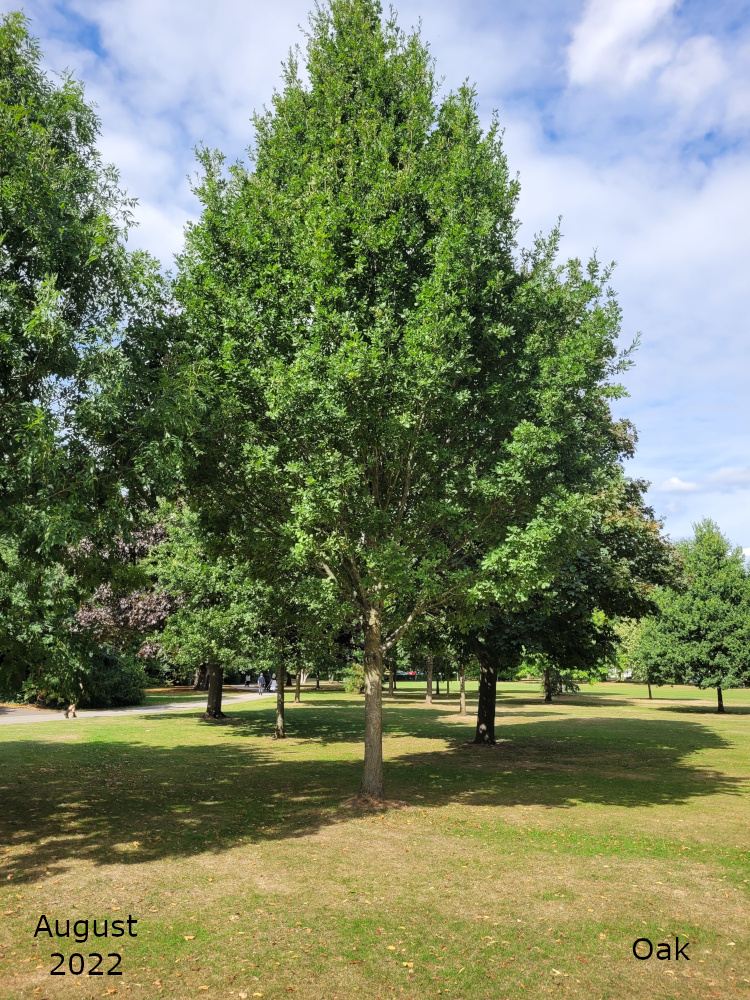
The Pin oak, Quercus palustris, is in a subgenus of Quercus and in a further subdivision called a section. This is the Lobatae section and is broadly speaking the Red oaks. There are about 125 species of Red oak in North America, Mexico, Central America and Columbia. The red oaks in the park tend to be classified as Q. palustris or Q. rubra, the Northern red oak. Pin oaks are also known as Swamp oaks as they like wet ground and are often found alongside rivers and in wetland areas. They have a distinct growth pattern with an upright trunk, branches at right angles but the lower branches pointing slightly downwards – so they have a Christmas tree appearance. The first Pin oak in the slide show fits this pattern exactly. Not all the pin oaks, in the park, do. The pin oaks have leaves that are deeply cut with five or seven lobes. The middle lobe tends to be longer making the leaf look like a cross sometimes. The acorns take two years to develop and are more rounded than the usual acorn.
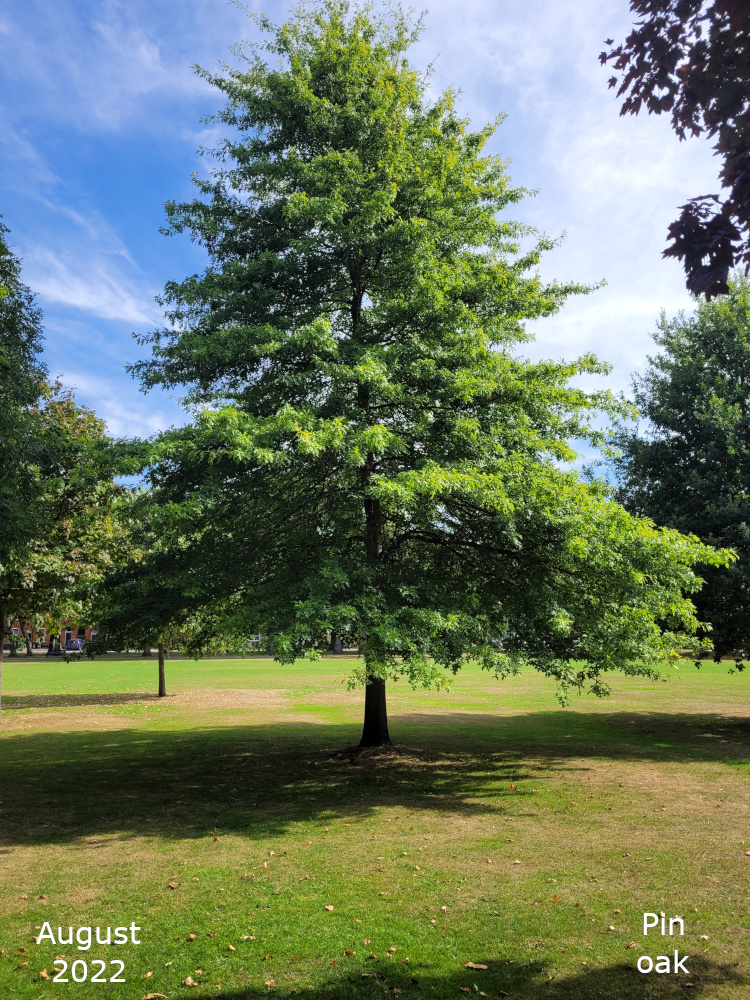
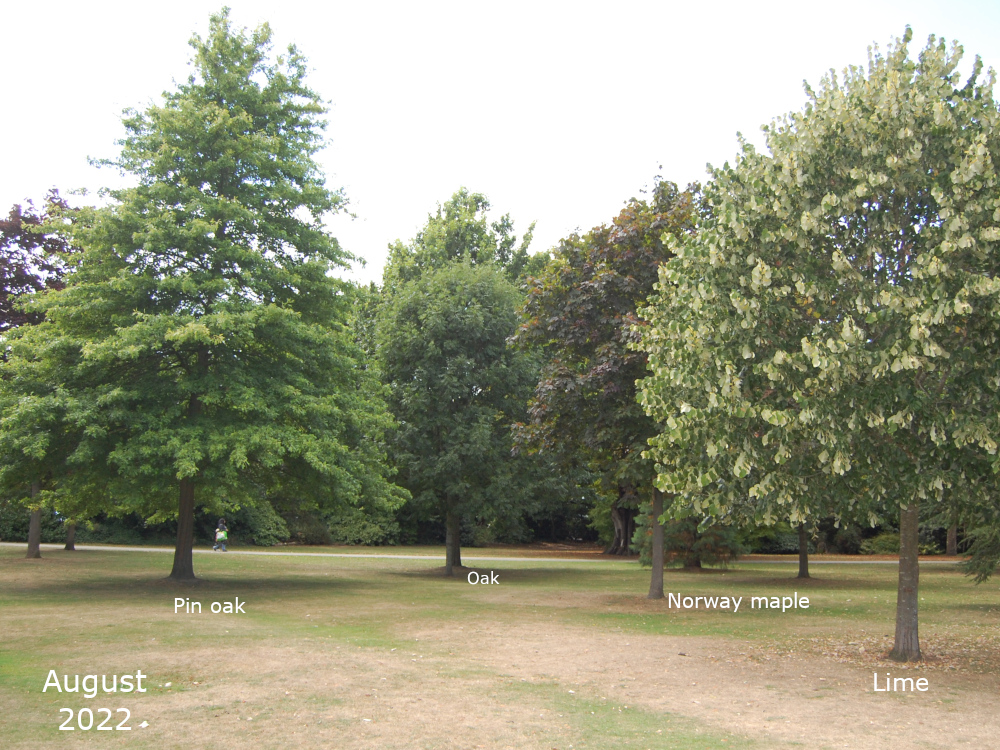
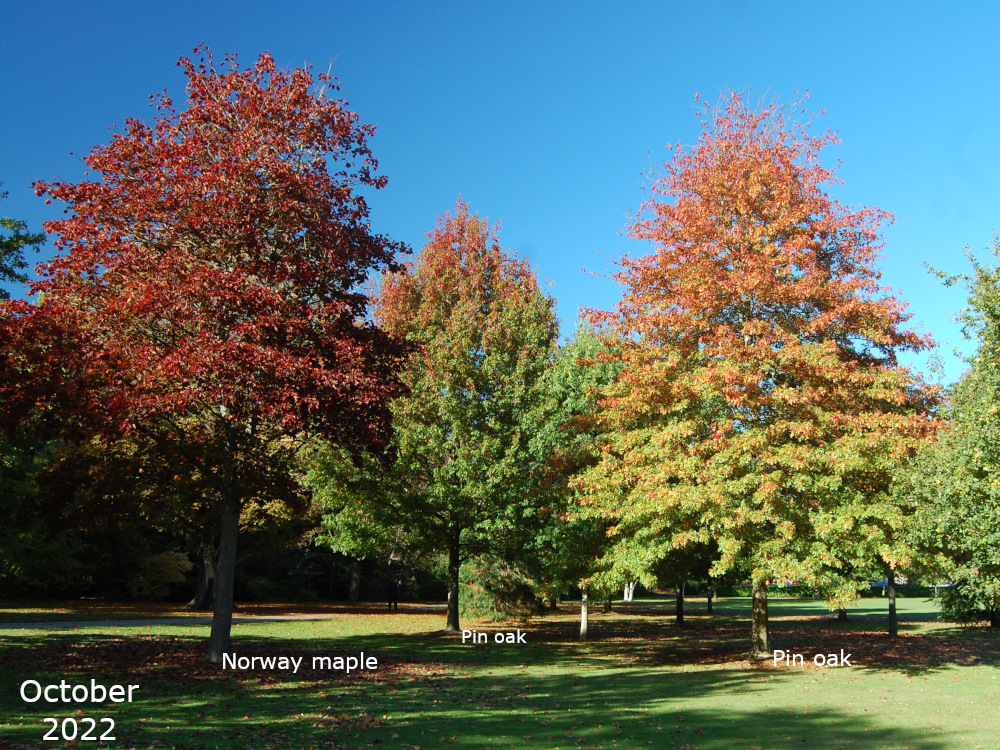
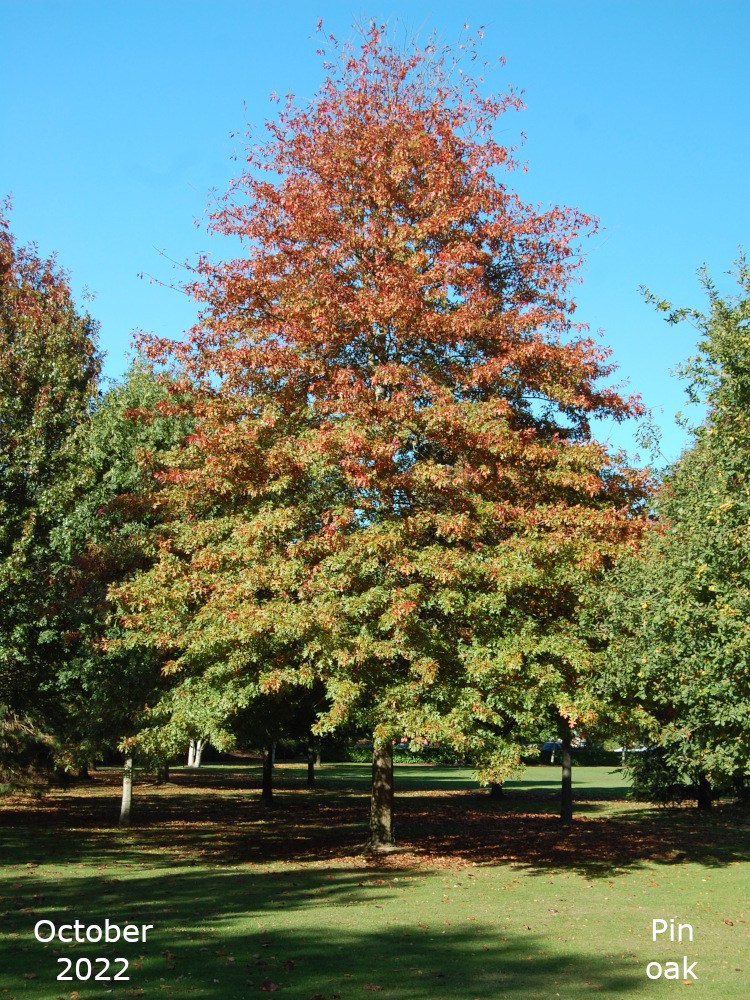

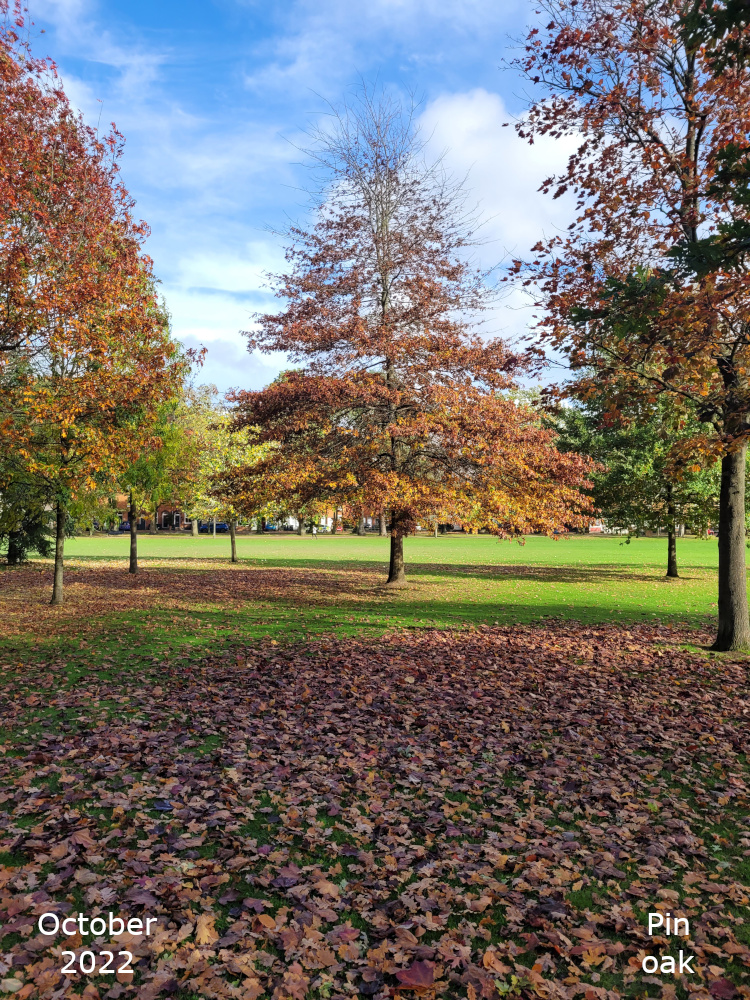
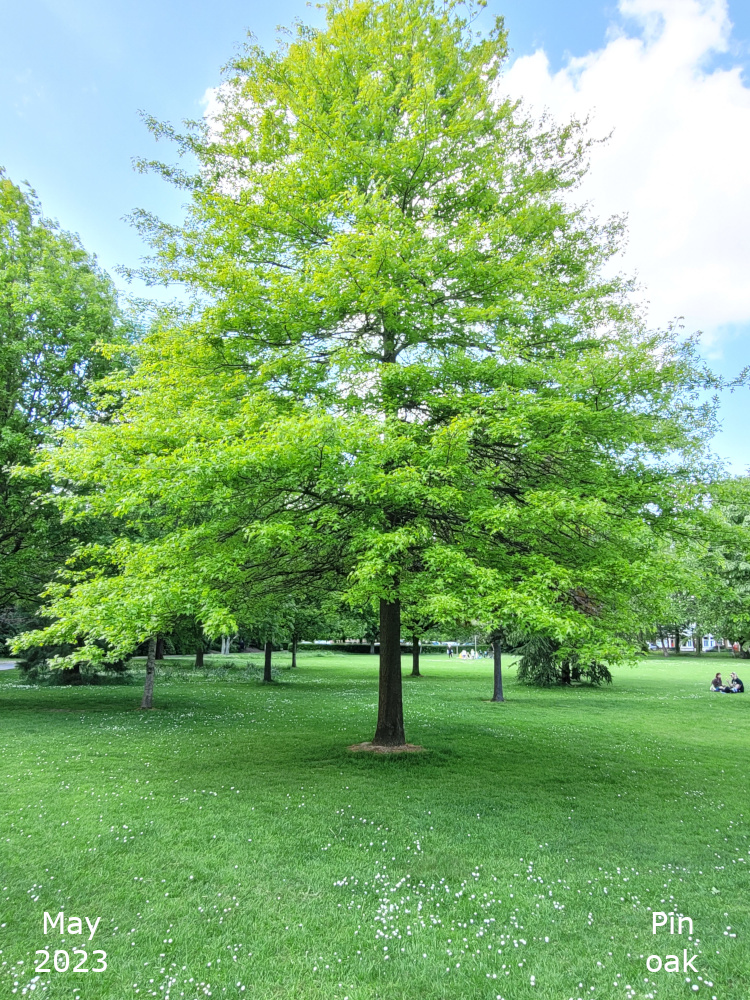

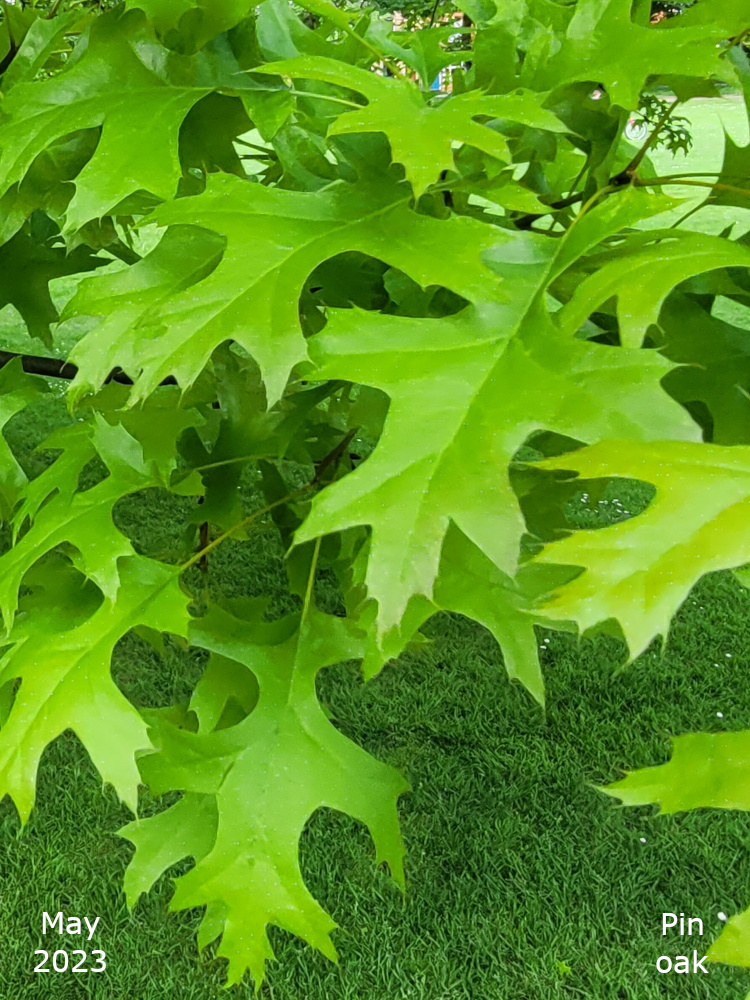

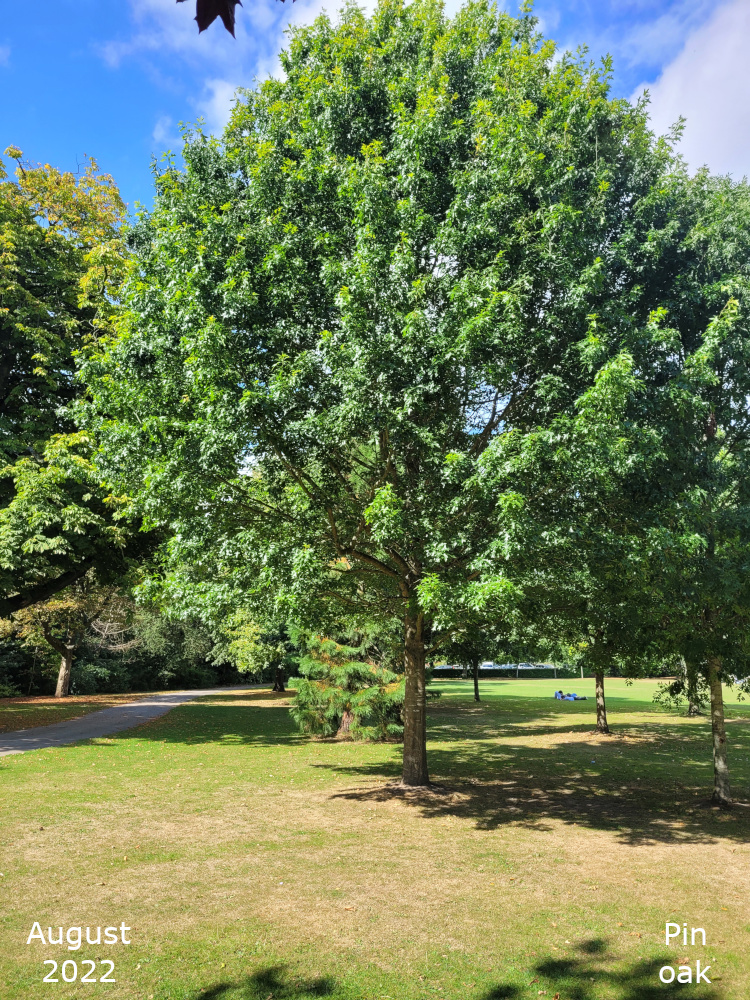
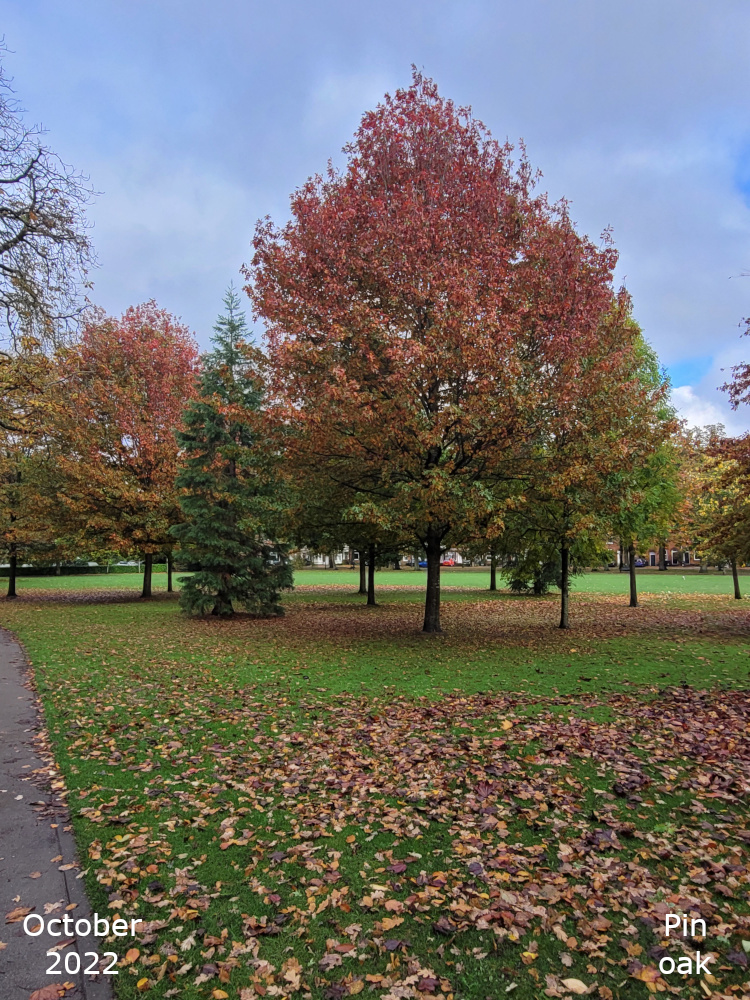
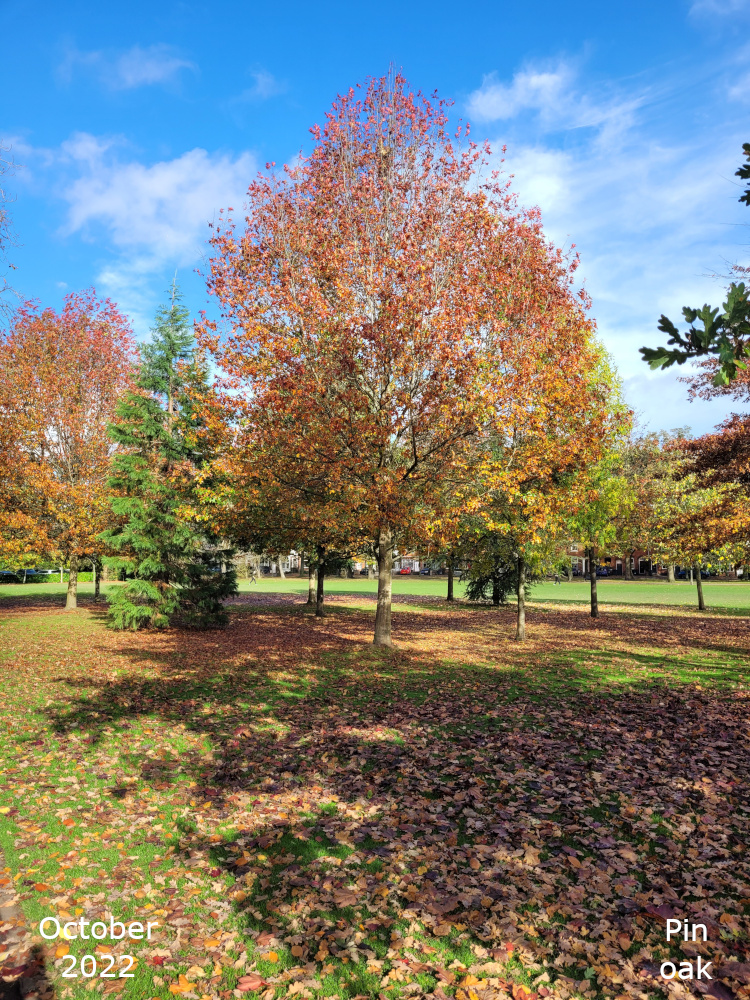


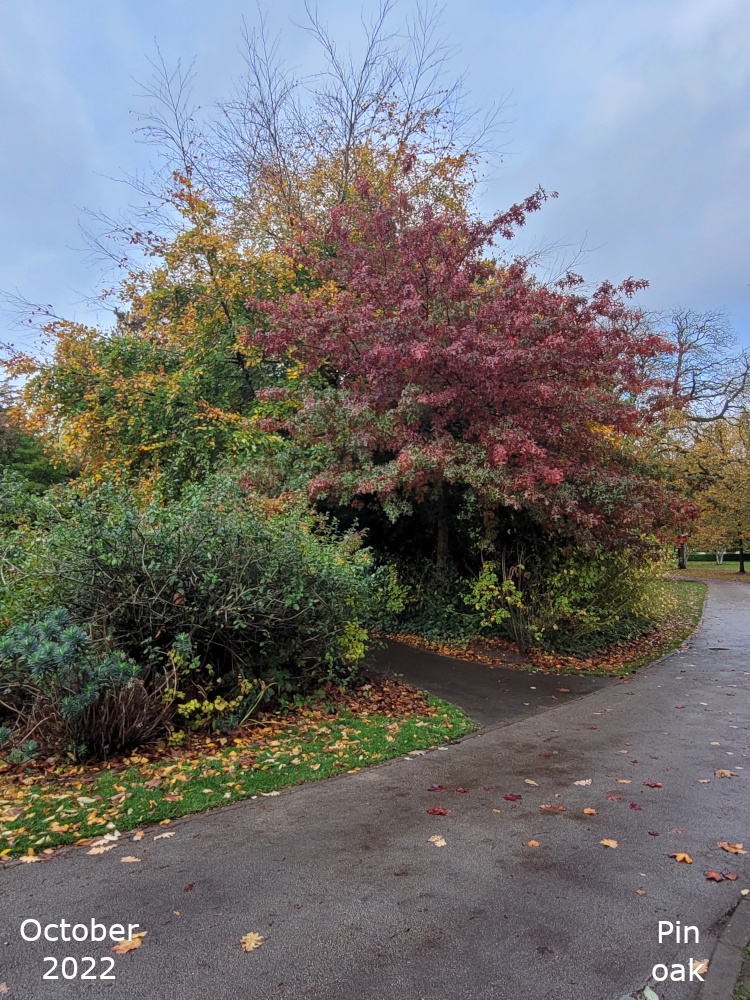
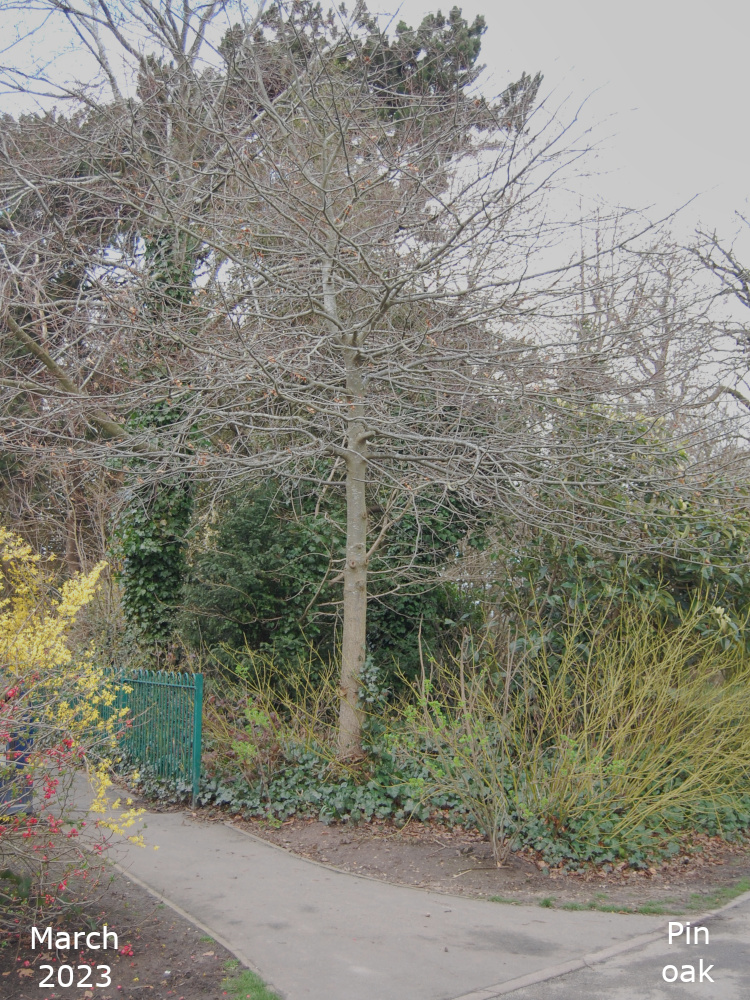
There is another pin oak near the corner of the car park where the pedestrian exit comes out onto the main field area.




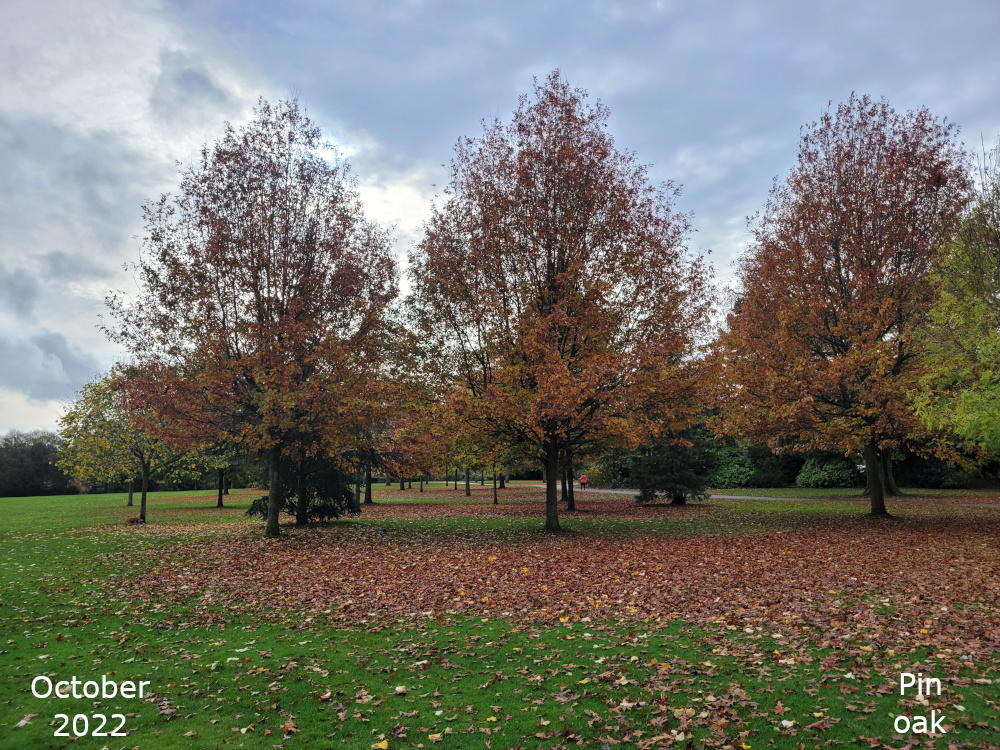
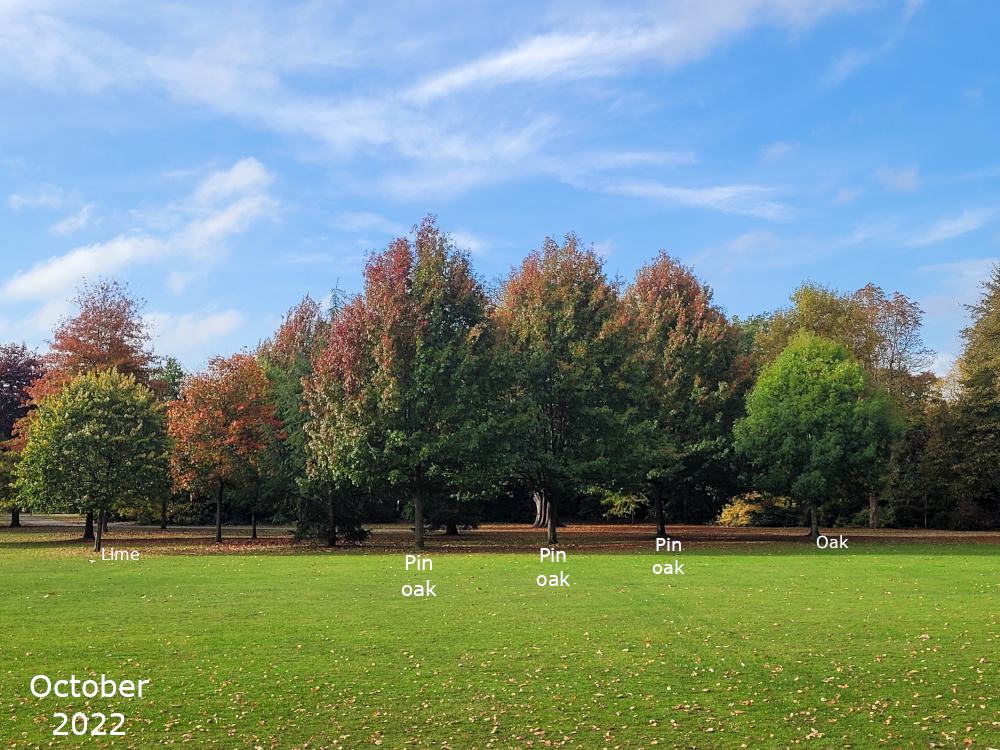
Trio of Pin oaks
These three trees don’t follow the typical growth pattern of Pin oaks but they are pyramidal in shape, even though their branches are not perpendicular to the trunk. They may be Q. palustris or a hybrid of some sort. At the moment I am happy to say they are Q. palustris until any new information comes to light.







Main field, near triangle
Three ordinary pedunculate oaks, all small to medium sized trees in the area of the main field opposite the triangular shaped patch.






 Kings Heath Park Trees