Saturday, 1st. The Cornelian cherries are starting to flower. These are the tiny yellow flowers that I first noticed back in 2022 and I had no idea what they were – Cornus mas.
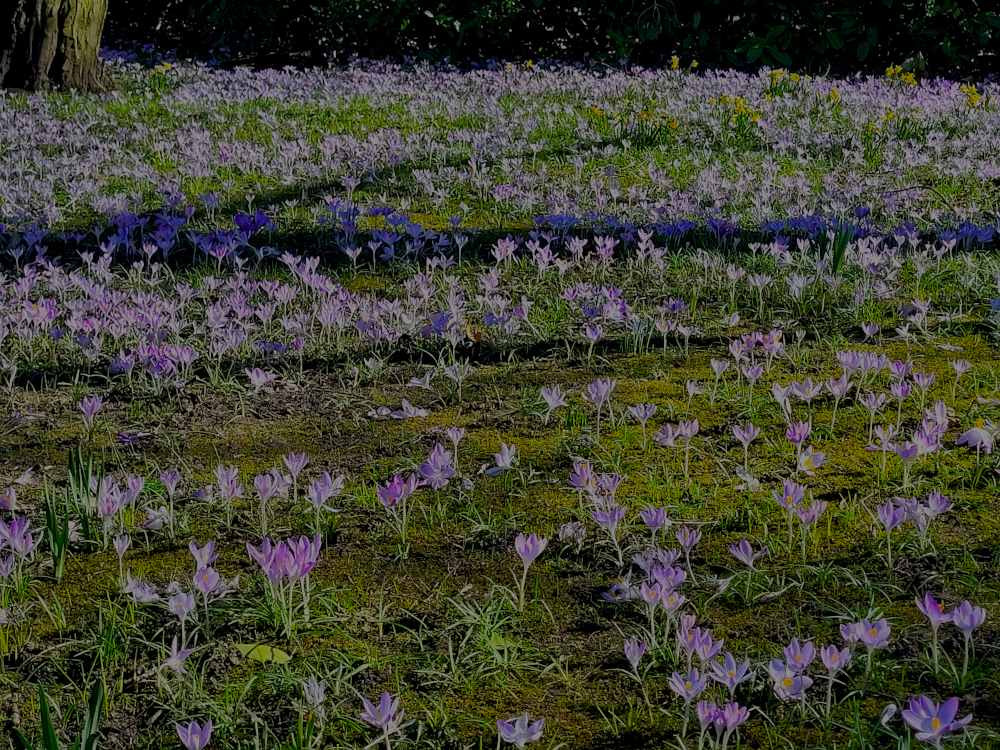
Tuesday, 4th. Not trees, but still related to the park, lots of crocuses. They have been out for days, now, but this particular bunch next to the car park look rather nice.
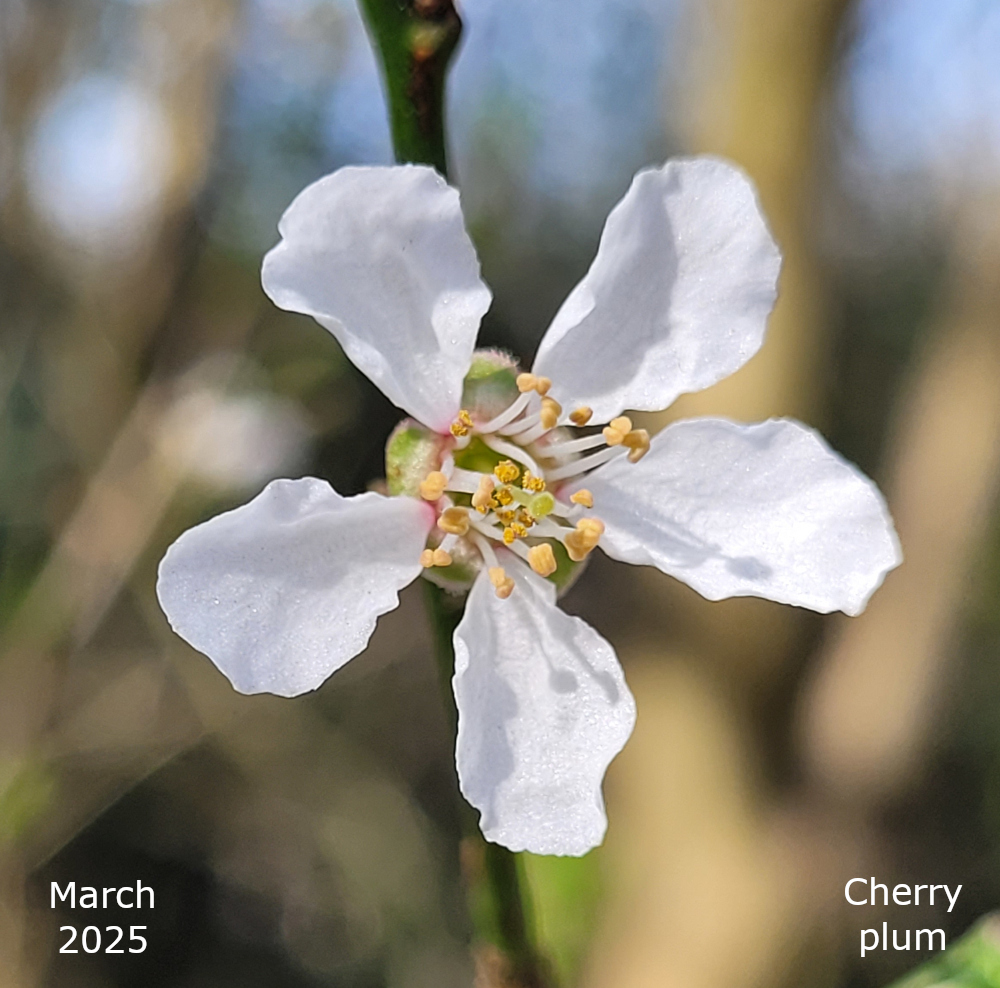
Sunday, 9th. The Cherry plum, near the Thrive garden, is flowering. This is often the first tree to flower, in the park.
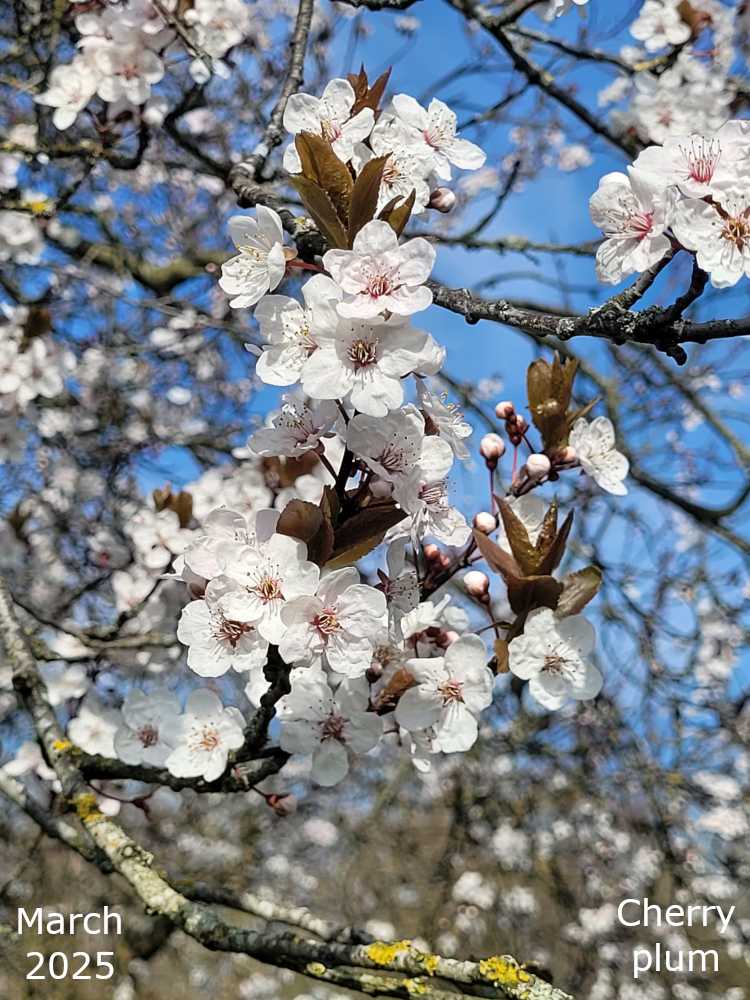
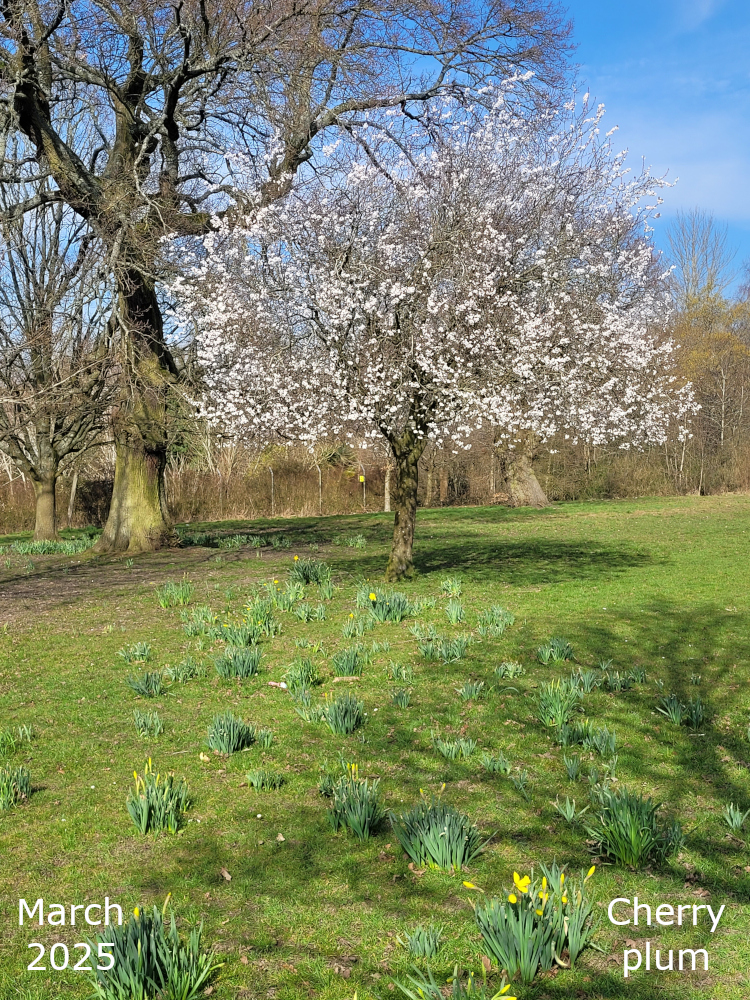
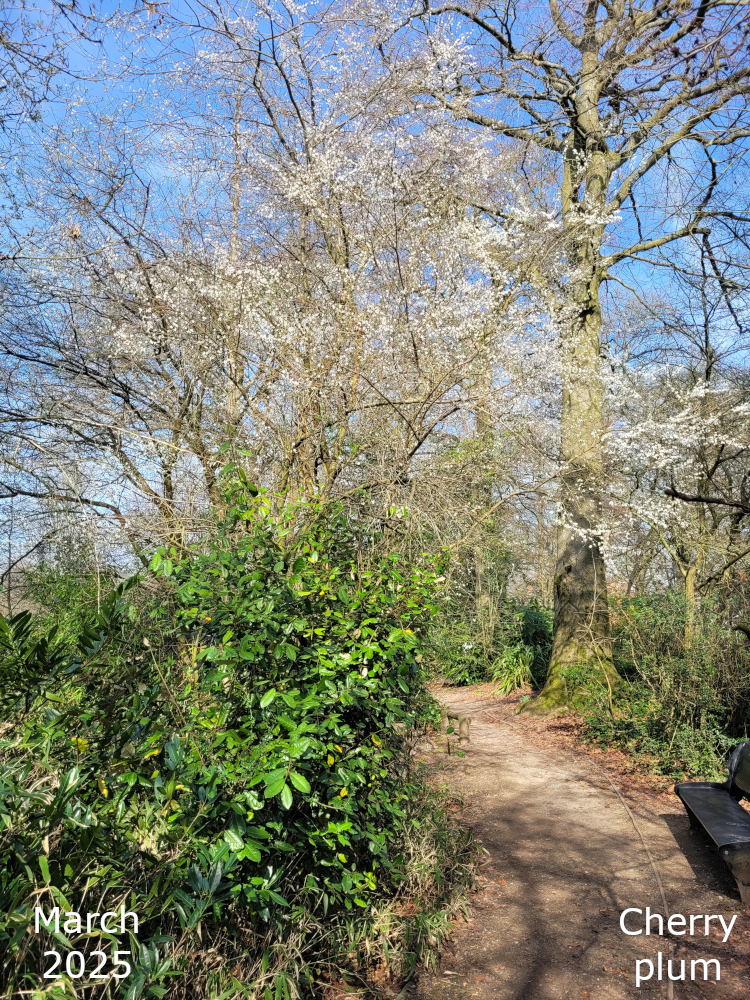
Sunday, 9th. The white Cherry plum alongside the pond is in flower. This is also an early flowering tree and although it is the same species, Prunus cerasus, as the one near Thrive, its petals are different.
Sunday, 9th. There are lots of yellow Dogwood flowers – Cornelian cherry. They are quite impressive shows but photographs do not do them justice as they seem to get lost in the background.
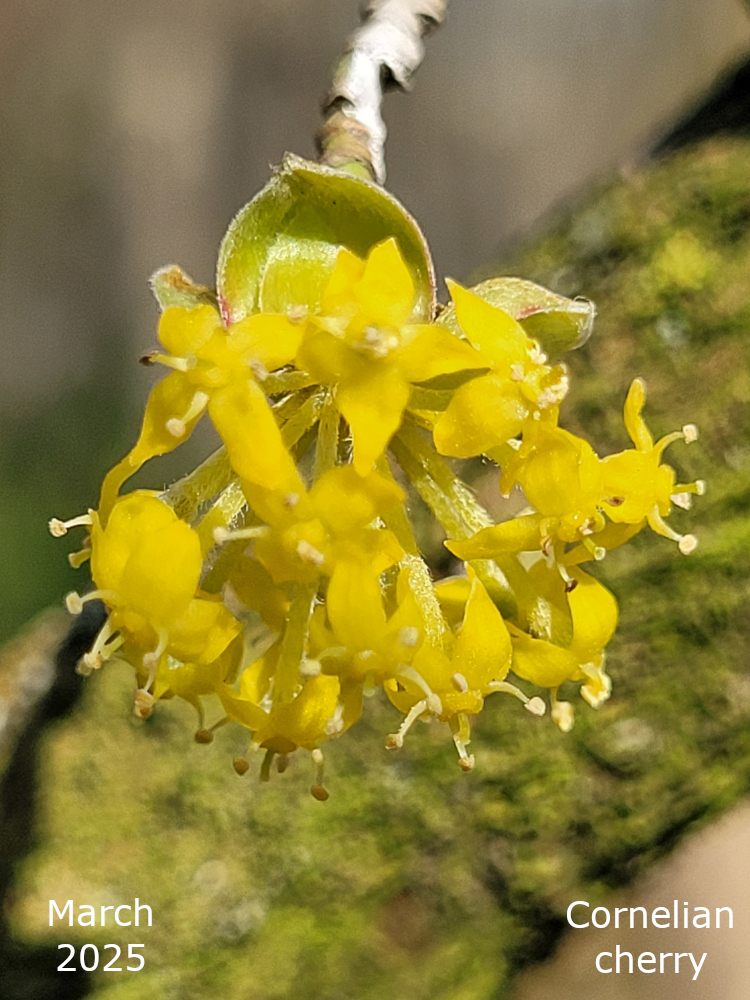
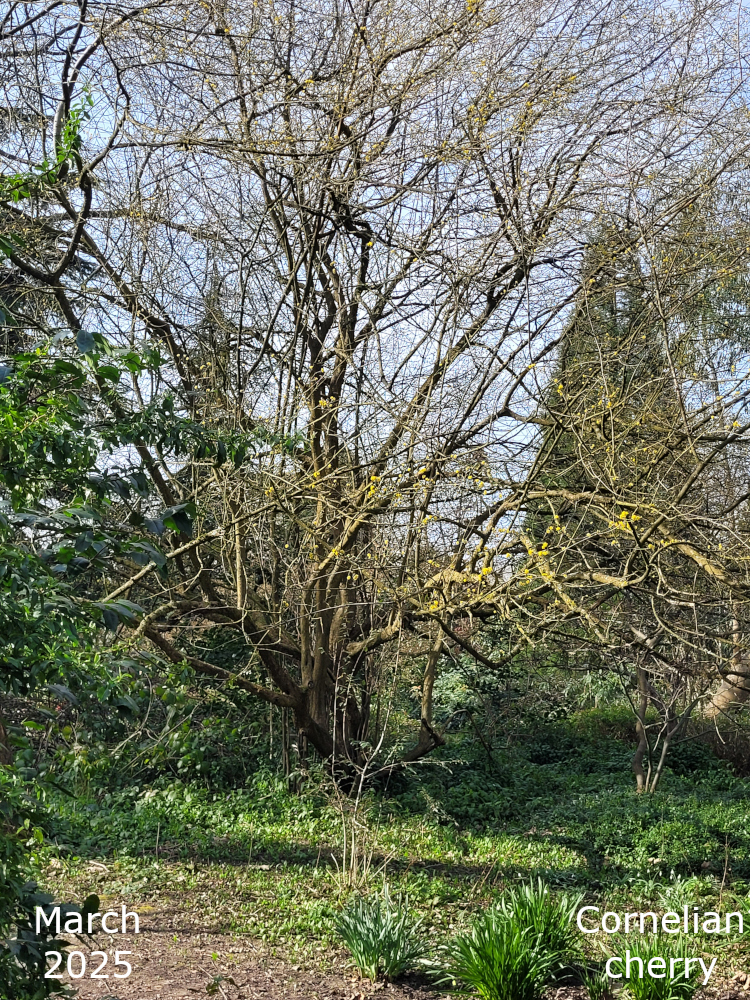
There really were a lot of bright yellow flowers in the tree pictured on the right.
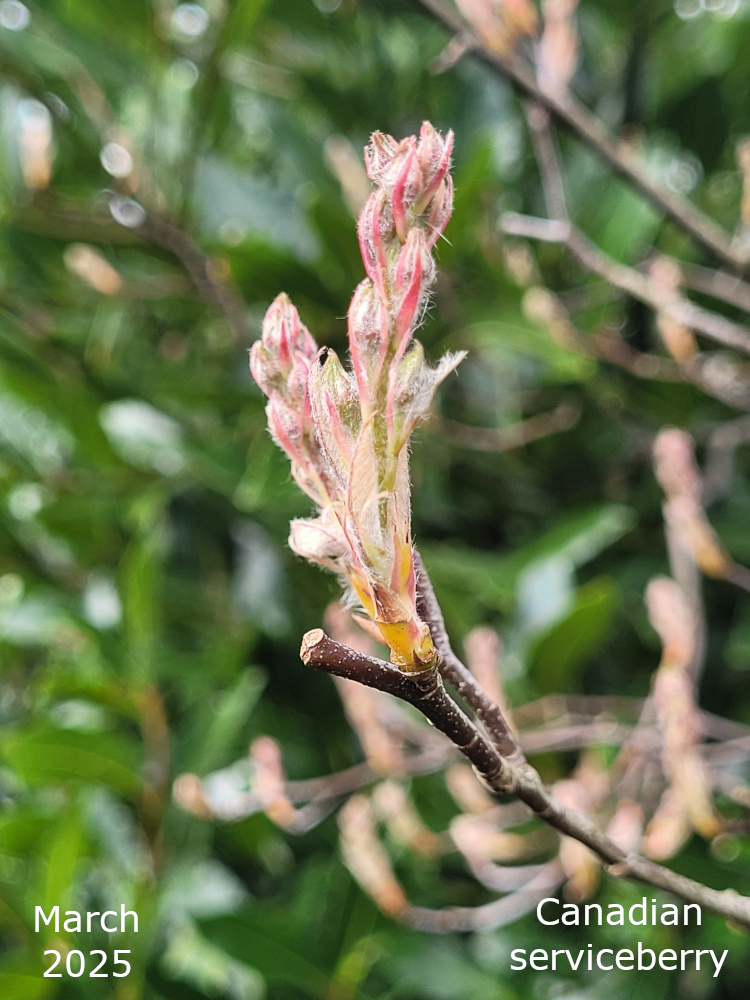
Saturday, 15th. The Canadian serviceberry bushes, Amelanchier canadensis, are looking very good this year with an abundance of flower buds. They are quite eye-catching at the moment with their slender red sepals. These will drop off, I believe, as the buds start to open.
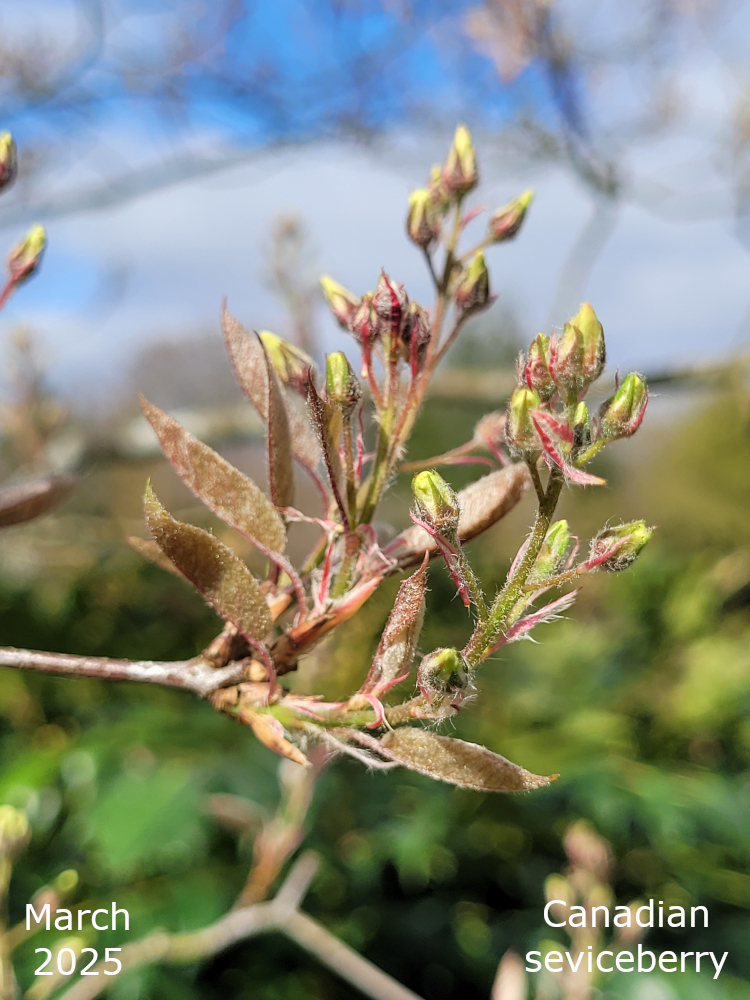
Wednesday, 26th. The Canadian serviceberry flowers buds are swelling, losing their red sepals and the white petals are showing through. They should open up in early April.
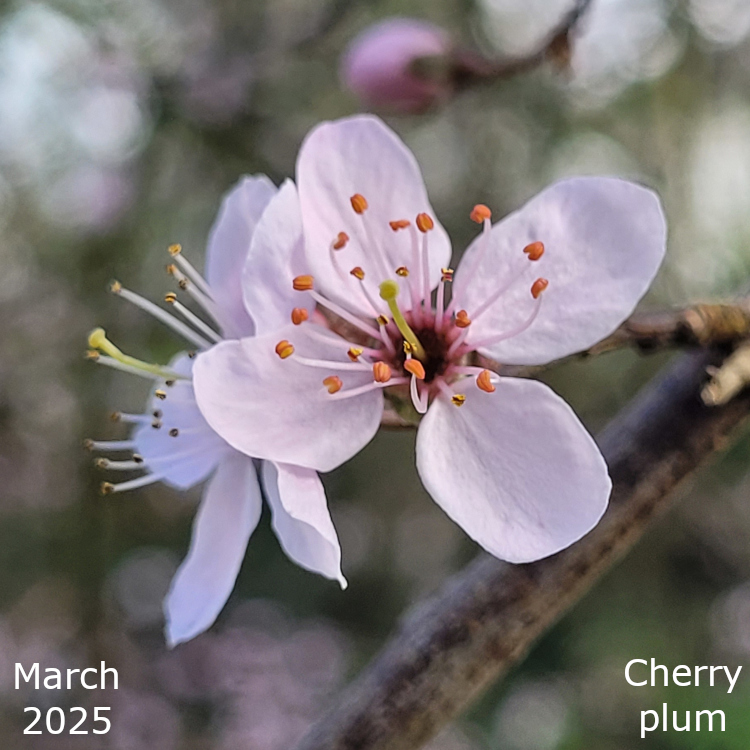
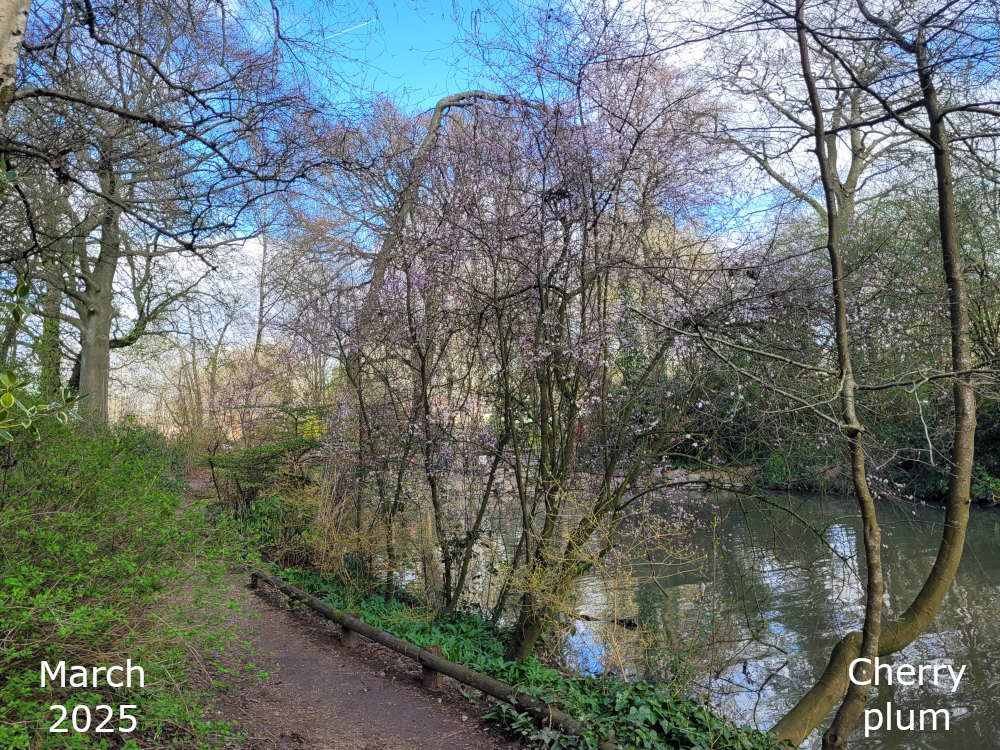
The Cherry plum along the side of the pond has come out in flower. This one is a pale pink and the petals are different to the white cherry plum on the opposite side of the pond.
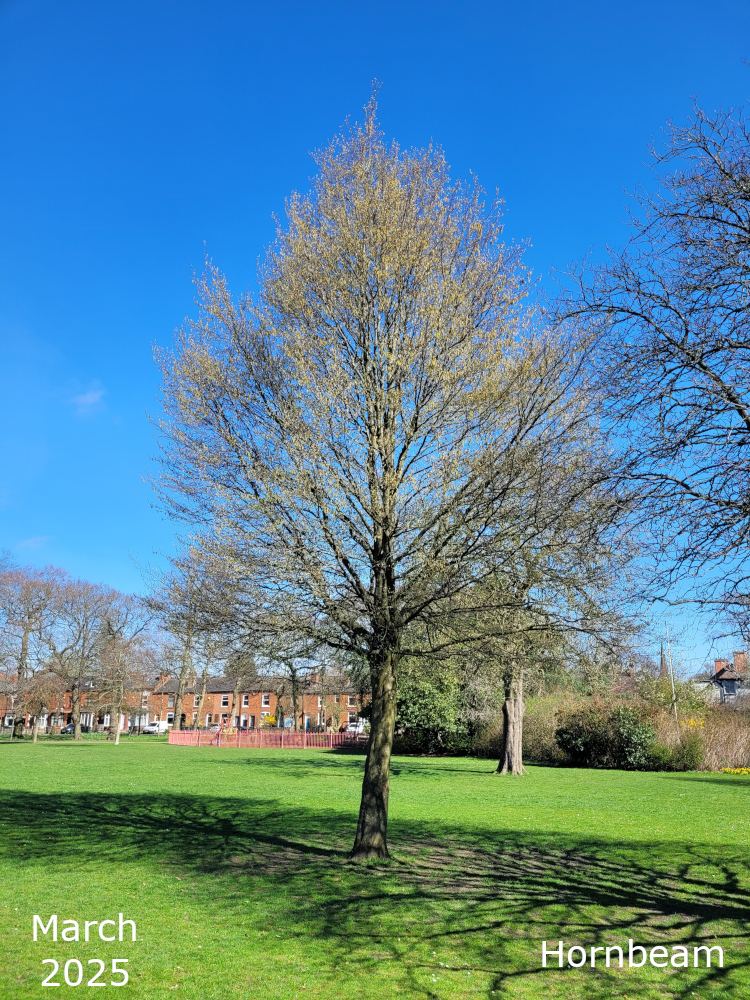
Thursday, 27th. There are lots of Hornbeams around the park looking quite bright, full of buds which will soon become catkins.
This tree is just one of many that caught my eye.
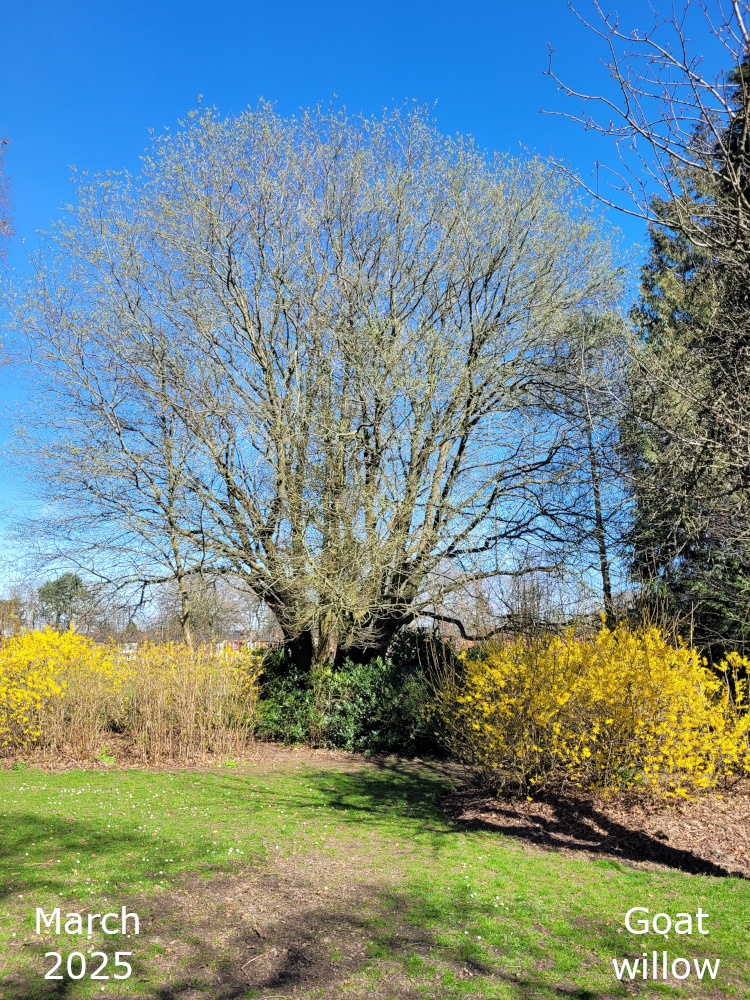
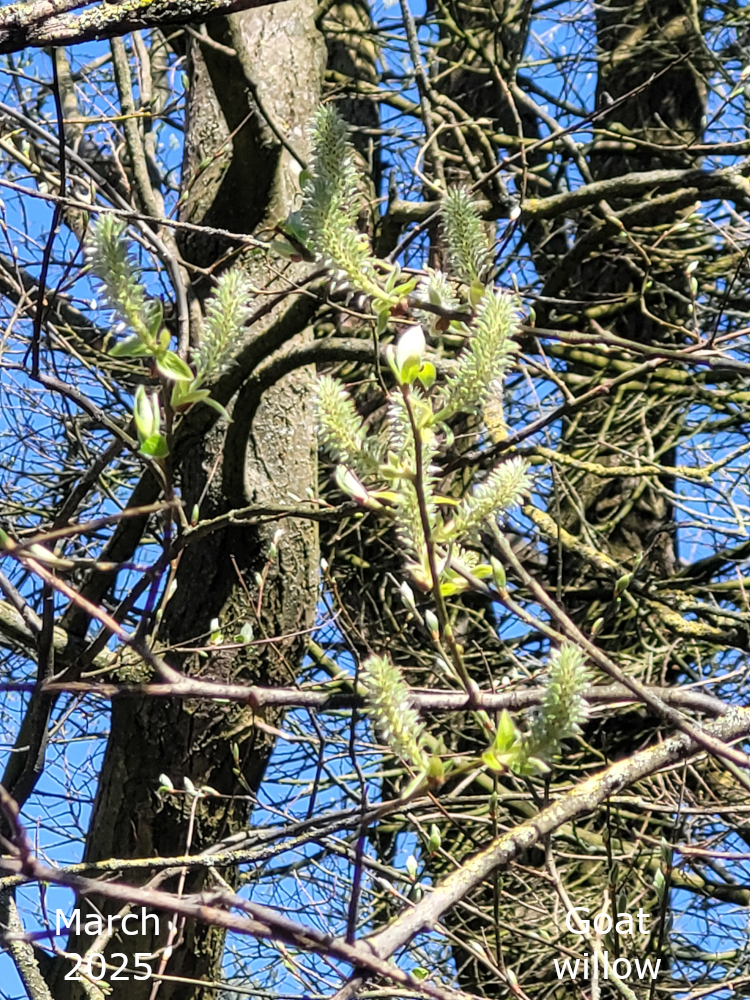
This big Goat willow, flanked by Forsythia, is looking quite green, but not because of leaves. The colour is due to a mass of catkins – female catkins in this instance. They are quite mature now so they’ve been developing for some time, well past their pussy willow stage.
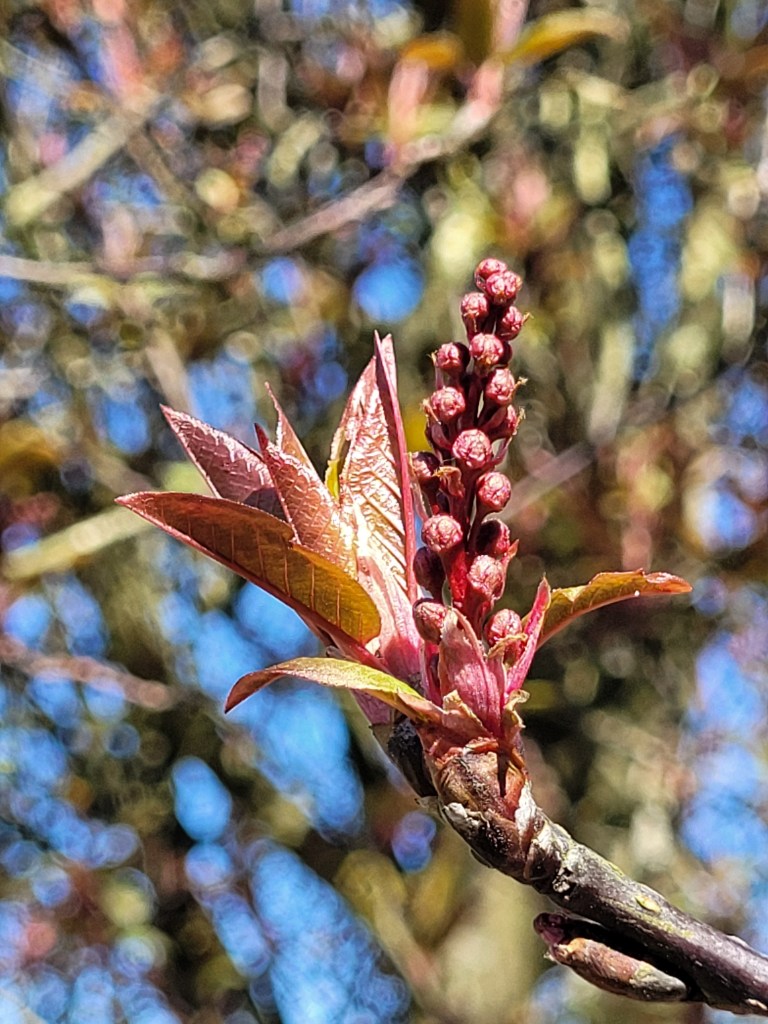
There are a number of Bird cherries alongside the old tennis courts. They are unusual in that they have pink flowers, whereas most Bird cherries are white. They are full of flower buds at the moment and should be putting on a good display in early April.
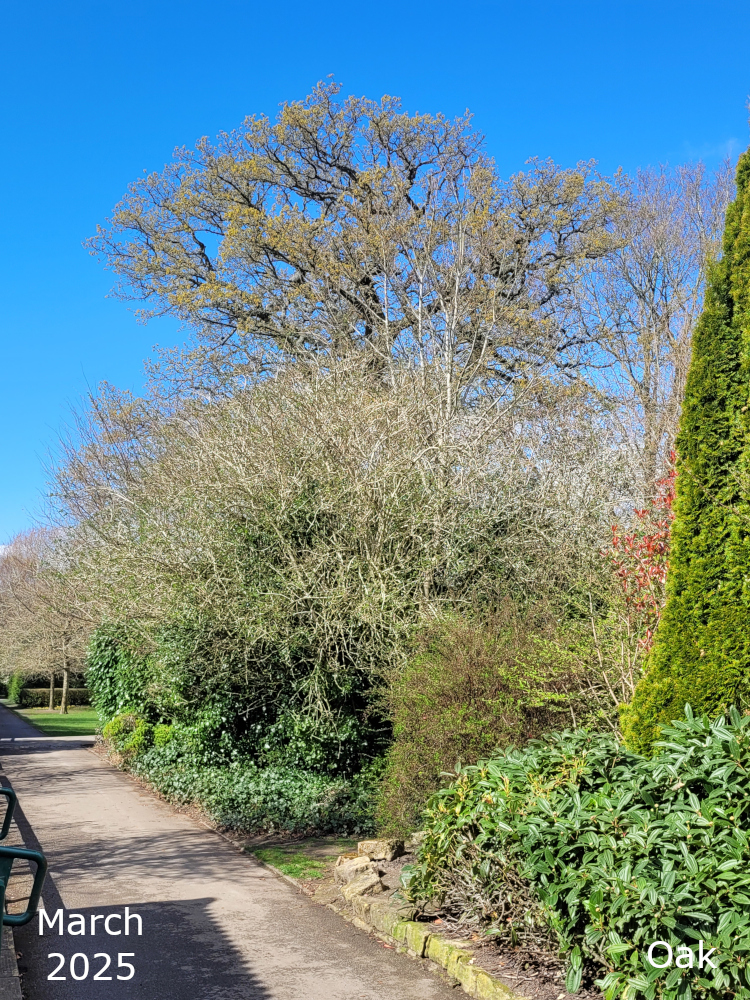
Friday, 28th. It’s a sunny day today and the aroma from the Boxleaf azara was so strong it spread all the way over to the Thrive garden. It’s amazing how much you notice on a sunny day, with clear blue sky. Such as the top of the Oak tree, on the corner of the path, just below the Colour garden.
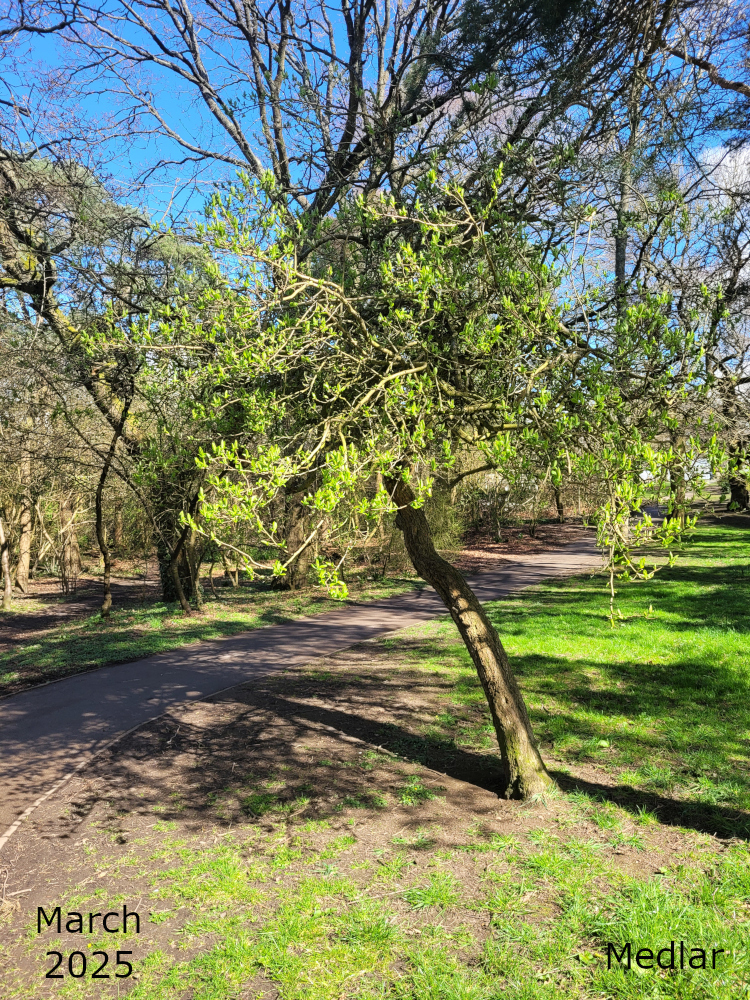
Further down the park, one of the Medlars is already well into leaf.
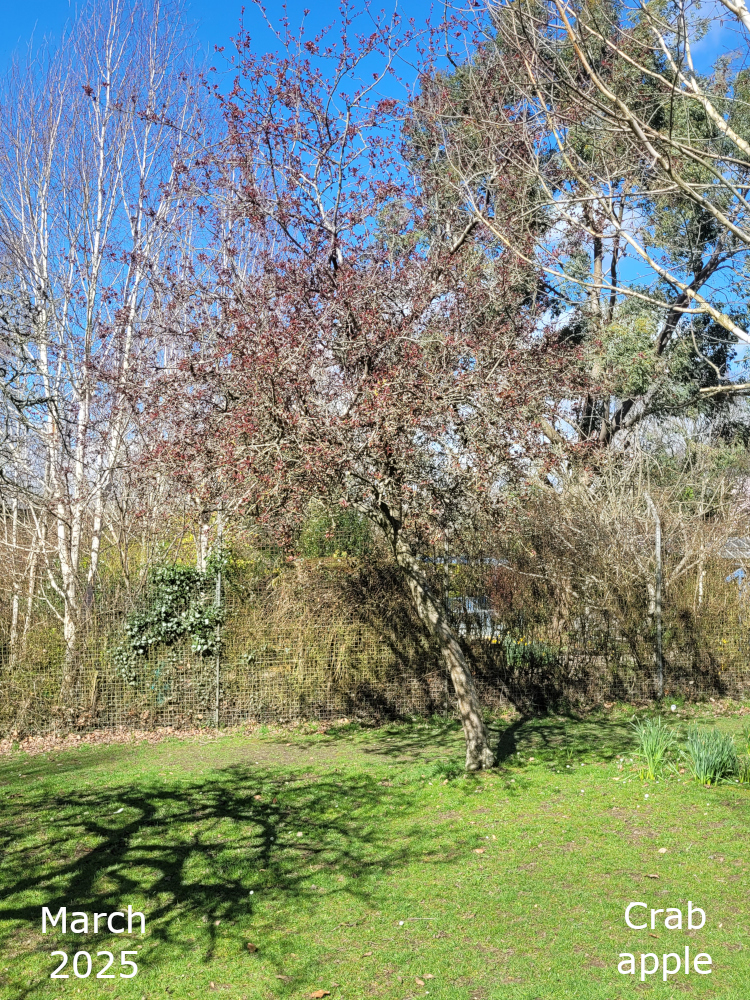
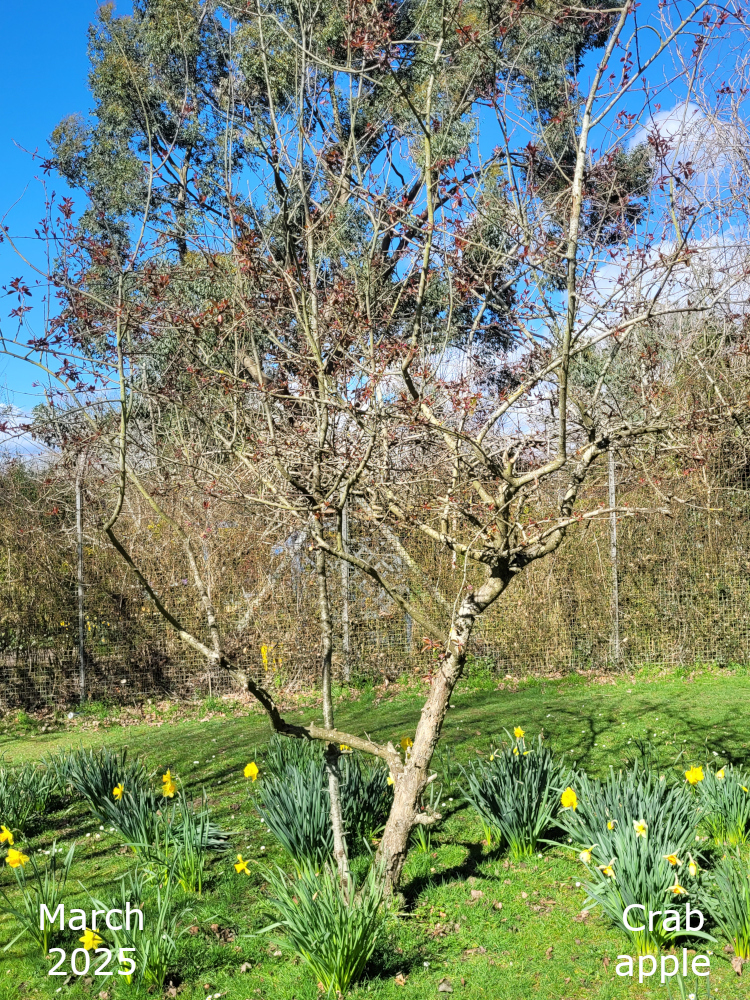
Just up the path, from the Medlar, there are Callery pear and Magnolia in flower and two Crab apple trees in leaf and ready to start producing flower buds.
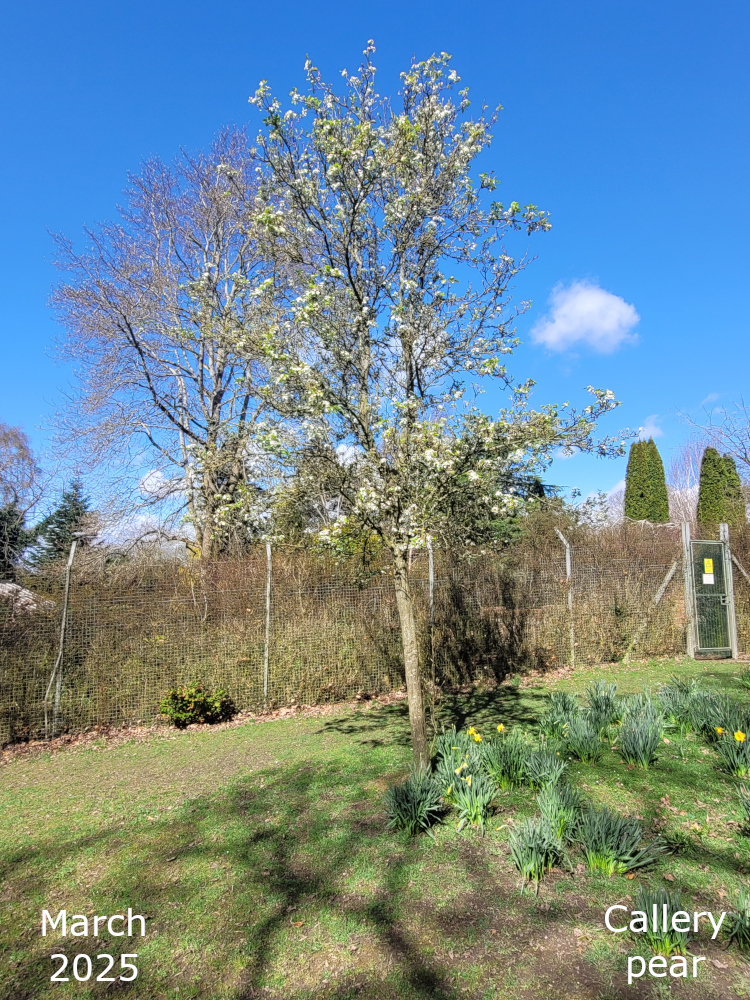
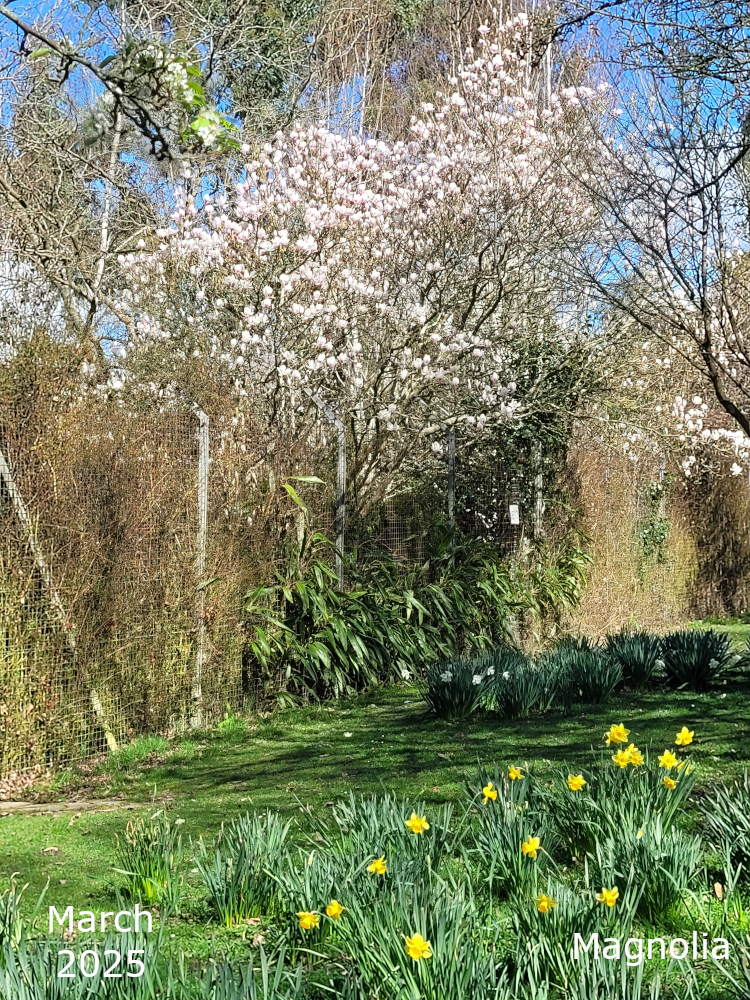
Over towards the large playground, on the edge of the wooded area, there is another Callery pear.
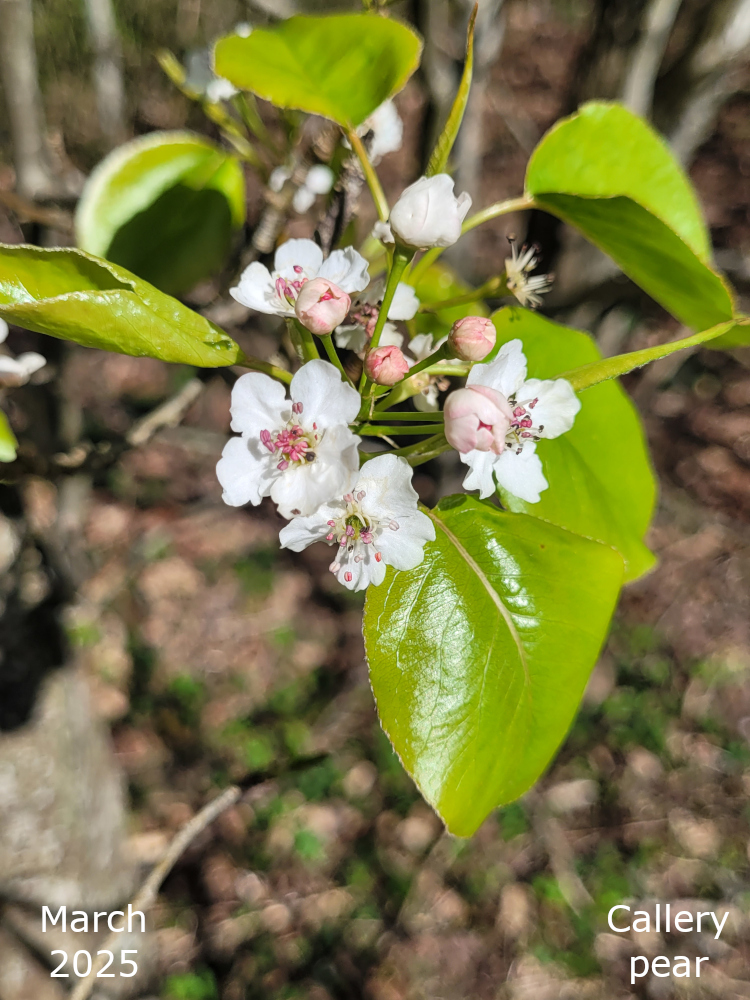
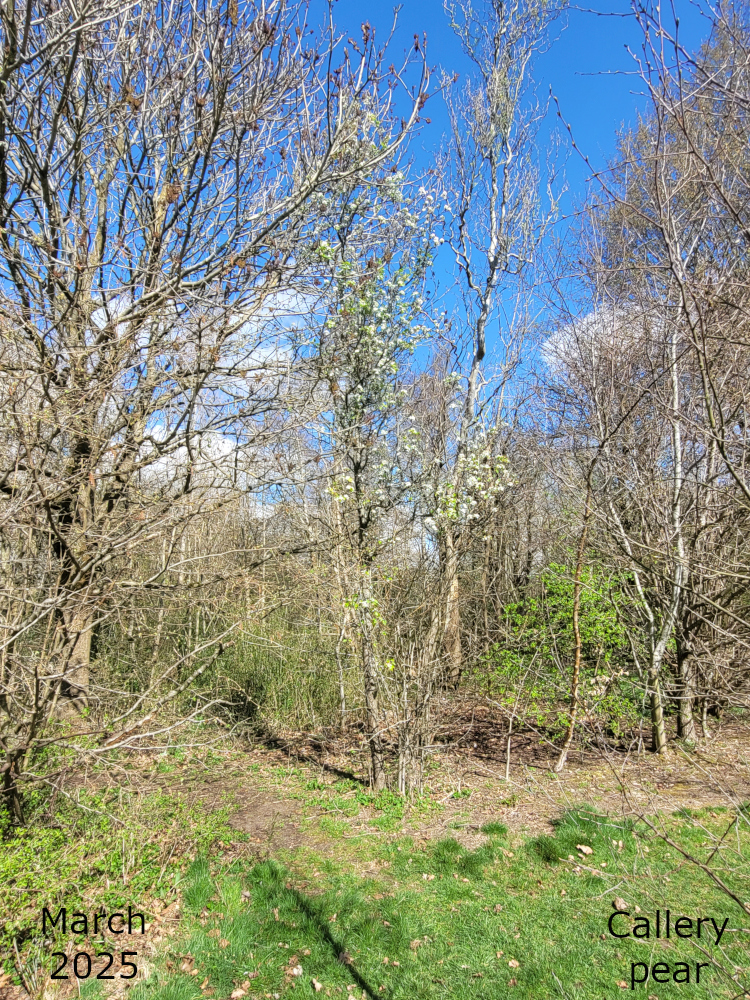
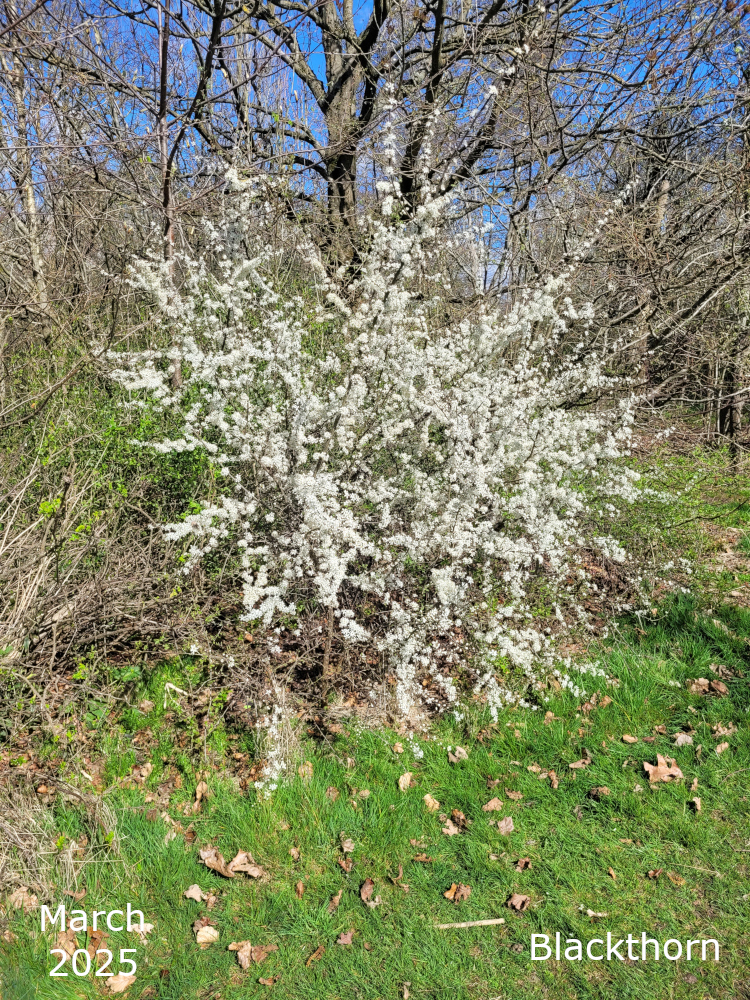
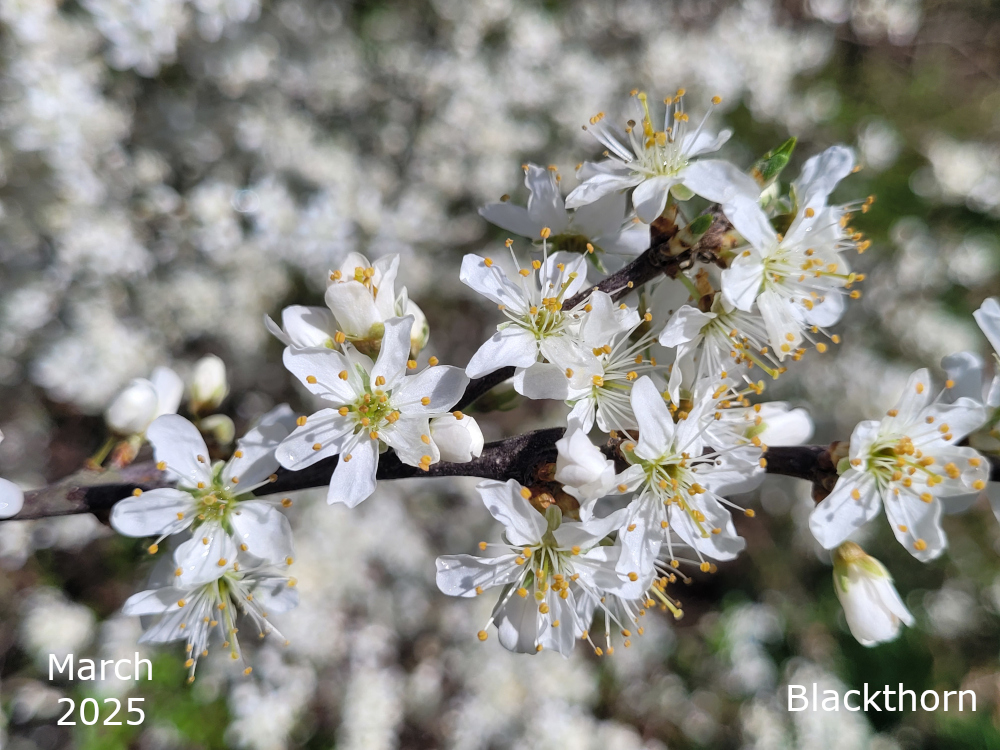
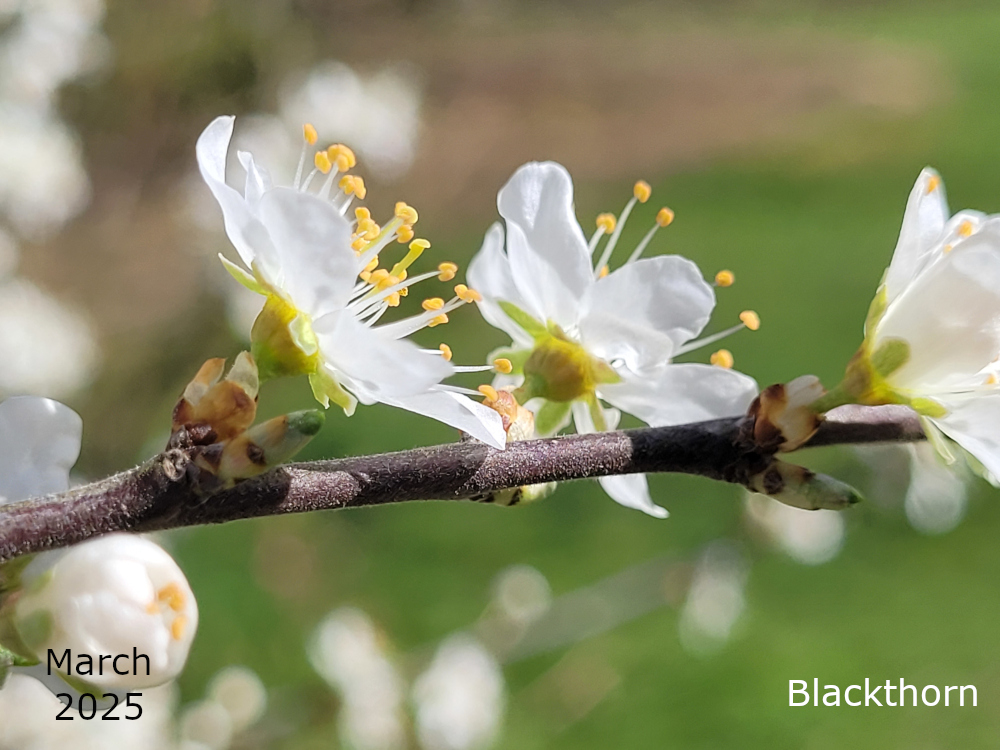
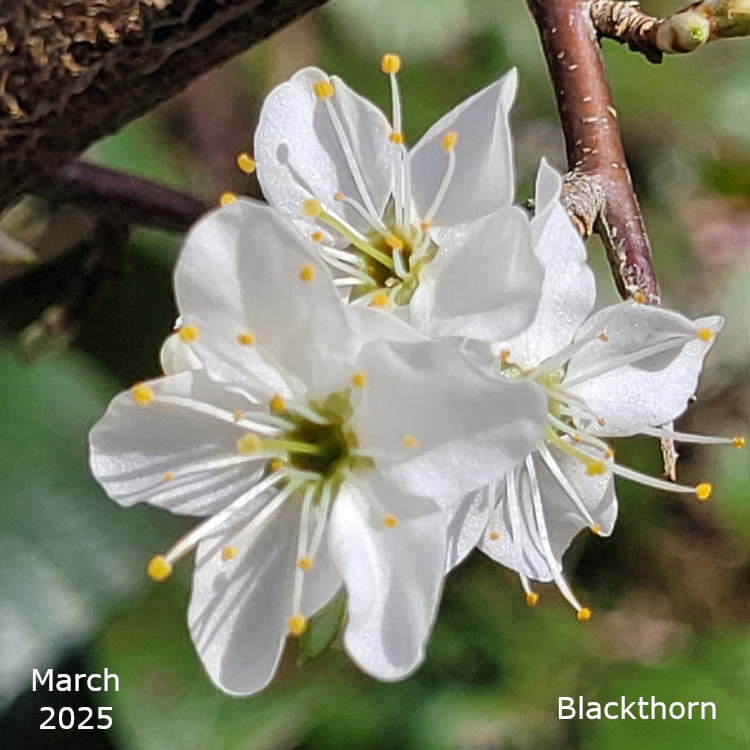
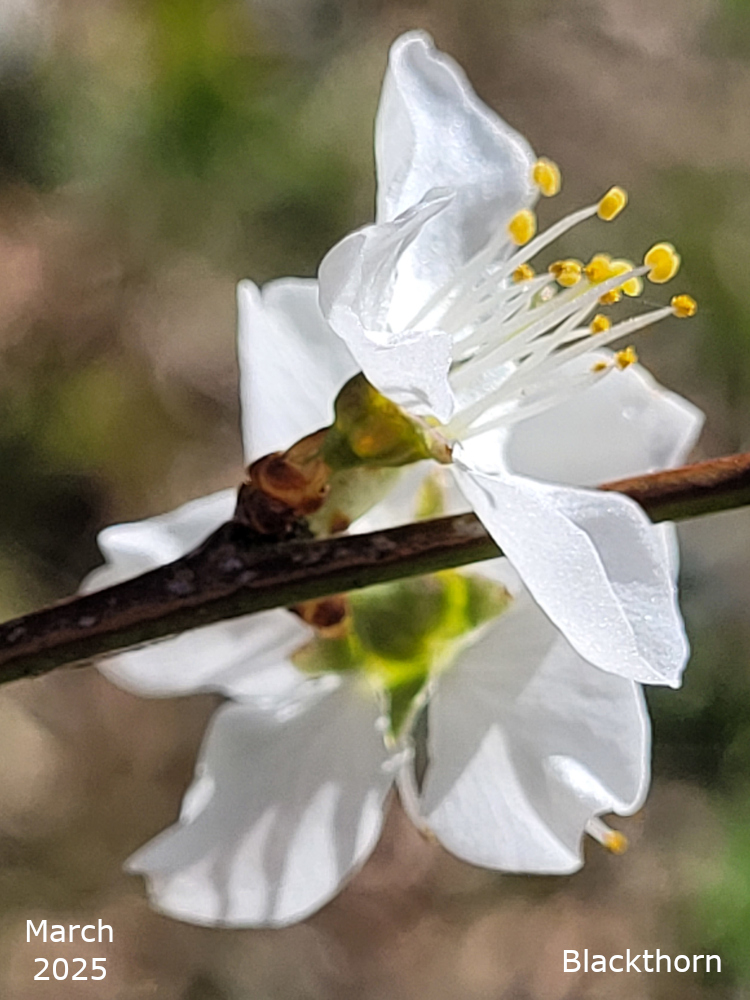
This Blackthorn, Prunus spinosa, is not far from the Callery pear, just to its left. The blossom looks very much like that of a Cherry plum but Cherry plum blossom has sepals that are bent back and point down the flower stem. Blackthorn sepals are flat against the petals, cupping them.
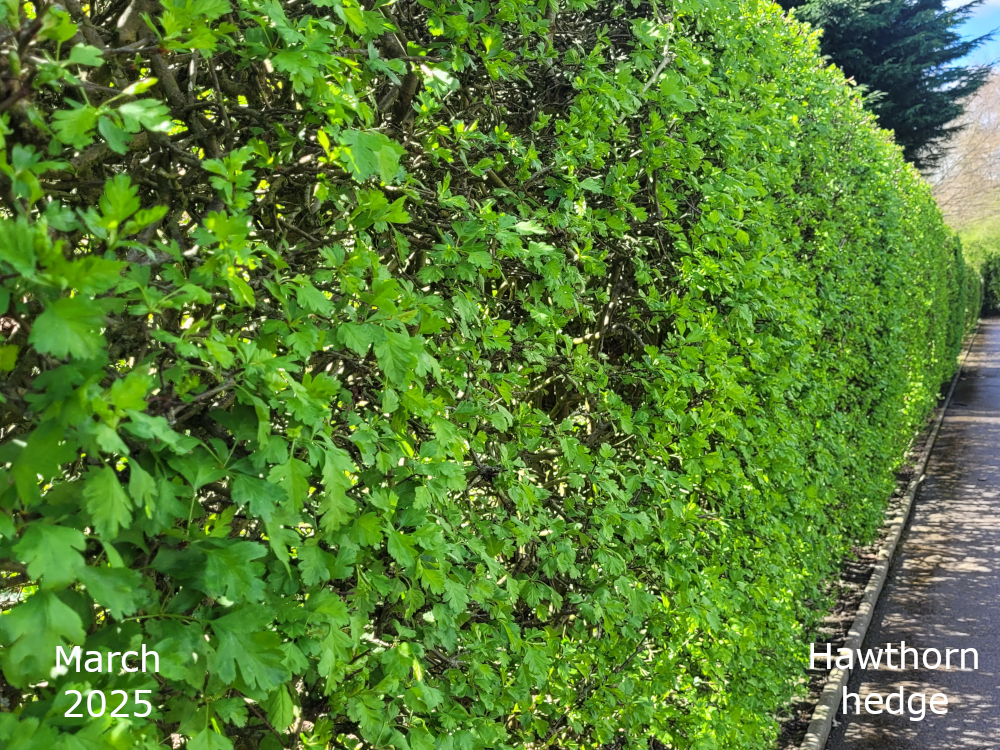
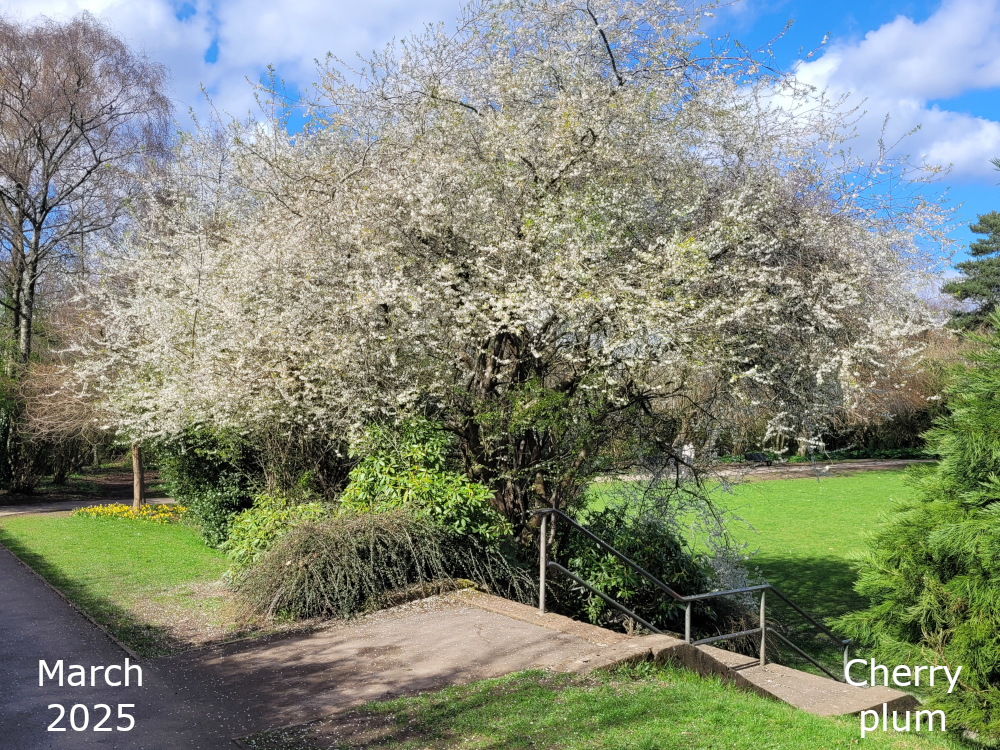
Back on the other side of the park there is a lovely Hawthorn hedge going down the hill and it has been coming out into leaf over the past few weeks. Towards the bottom of the hill there is a Cherry plum that has been flowering for most of the month and is probably at its peak right now.
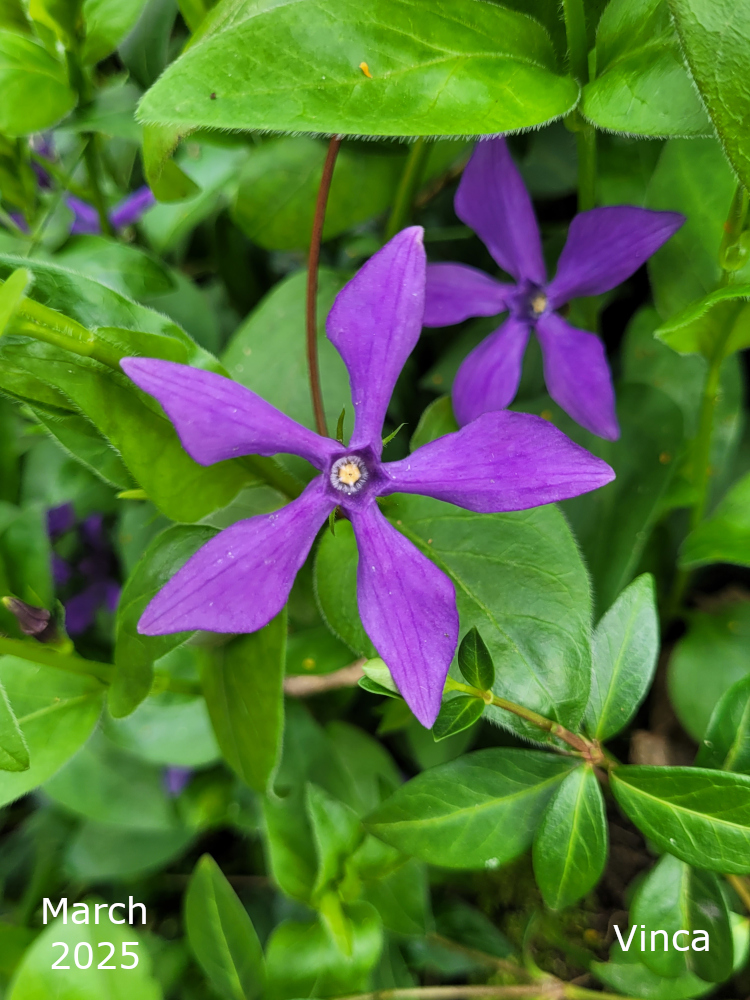
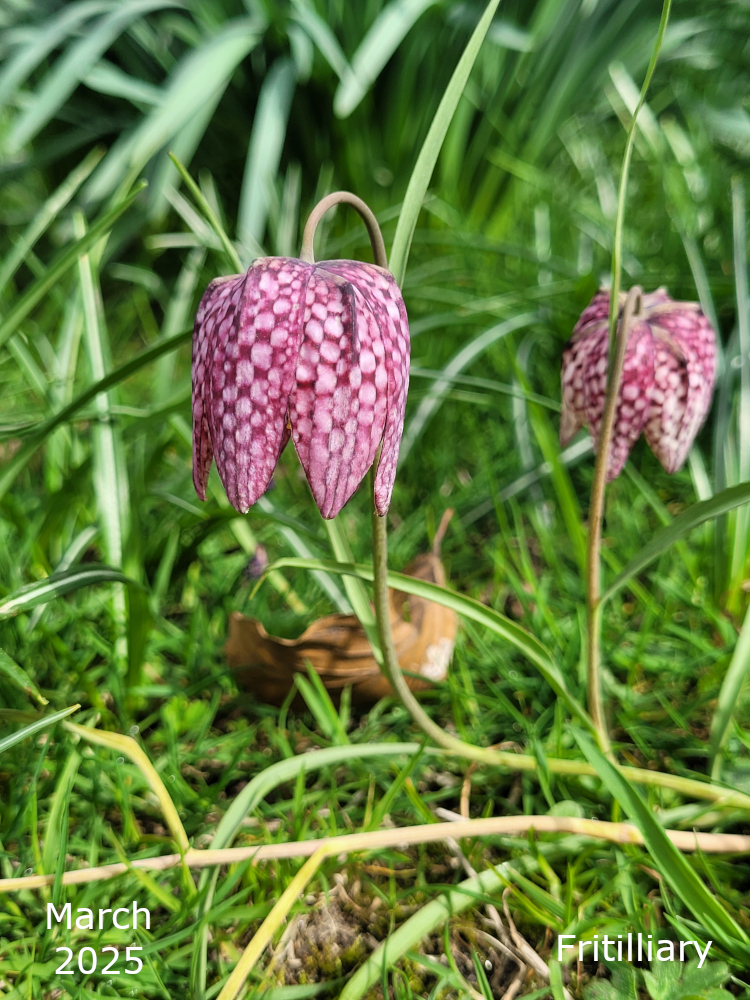
Near the pond, behind the large Cedars of Lebanon, there is an area that is carpeted with Vinca and at this time of year they produce beautiful purple flowers. Not far from there, next to the car park, there is a triangular area that is covered in crocuses and in amongst them the Fritillaries are now in flower.
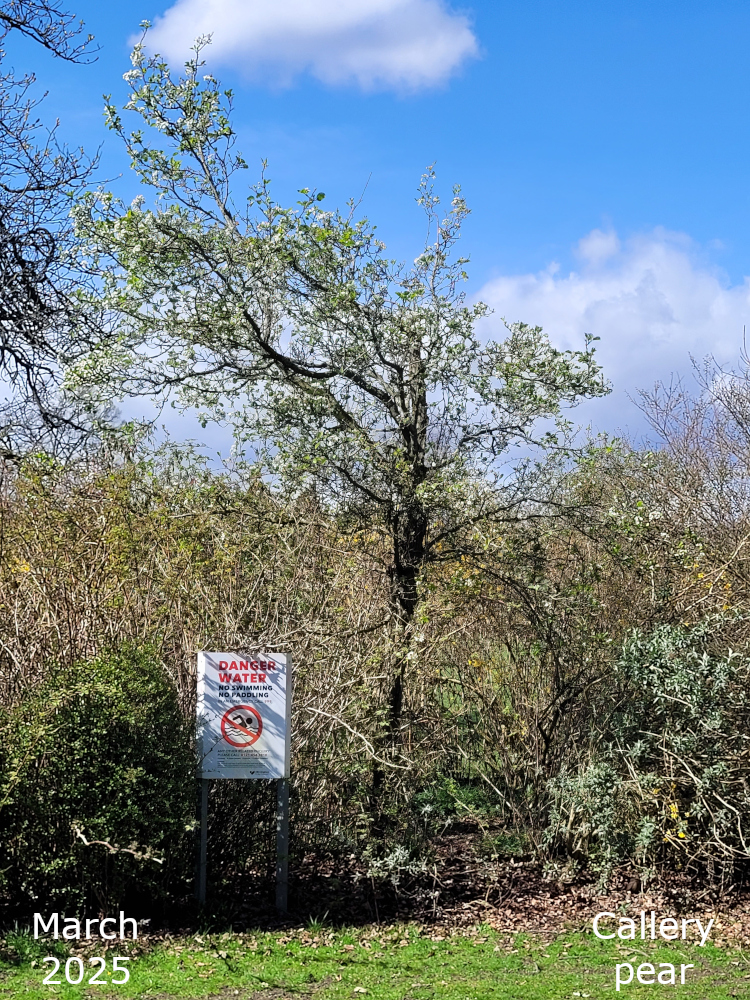
Saturday, 29th. Another sunny day, but windy, which made it difficult when trying to take photographs of Ash flowers. However I started with a picture of another Callery pear where wind, again, has played a part. This pear, near the Lodge entrance, was damaged by wind over the winter and is now several feet shorter compared to a similar time two years ago.
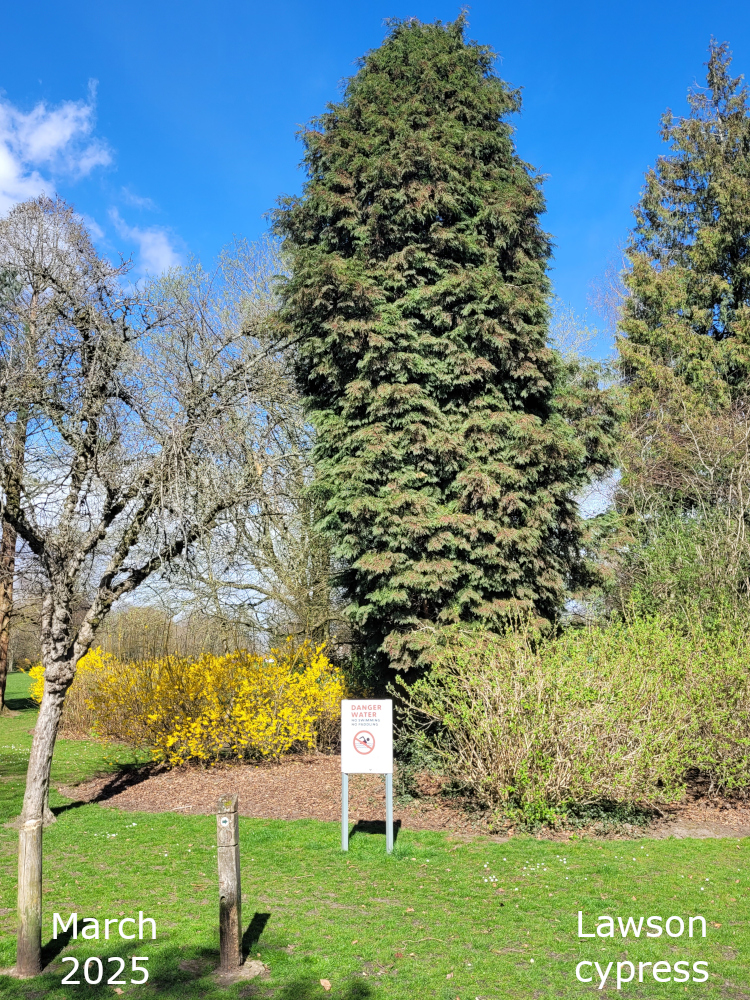
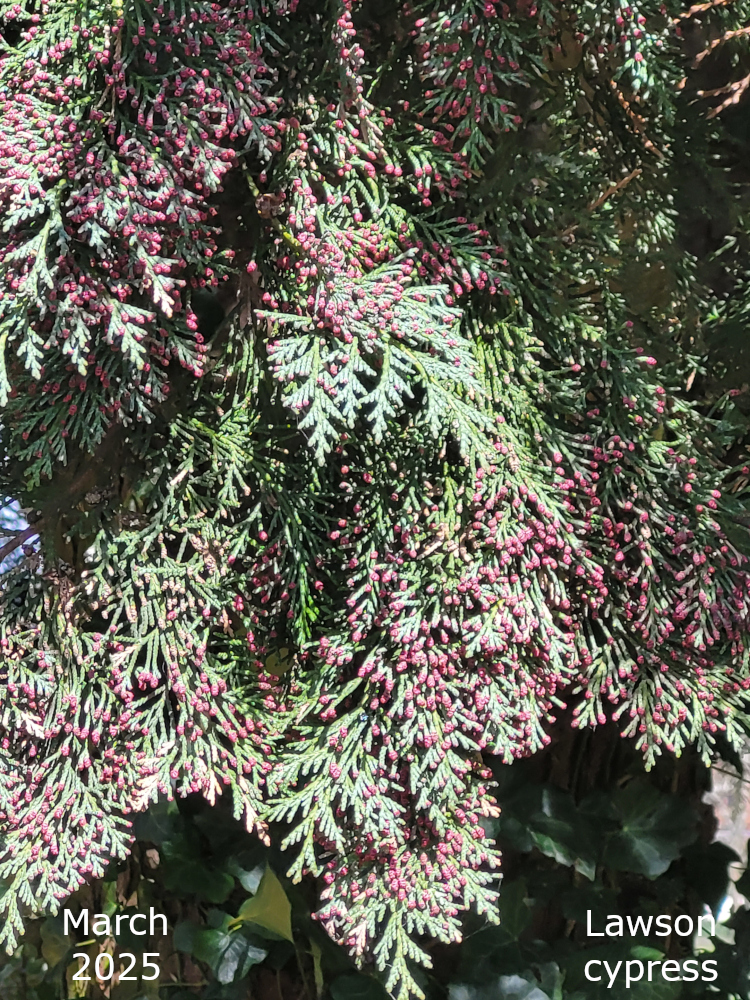
The various Lawson cypress, around the park, are full of red male strobili. These are the pollen producing parts of the tree. Although these are in the conifer group of trees the reproductive parts are technically not cones. The female strobili are larger, round green structures.
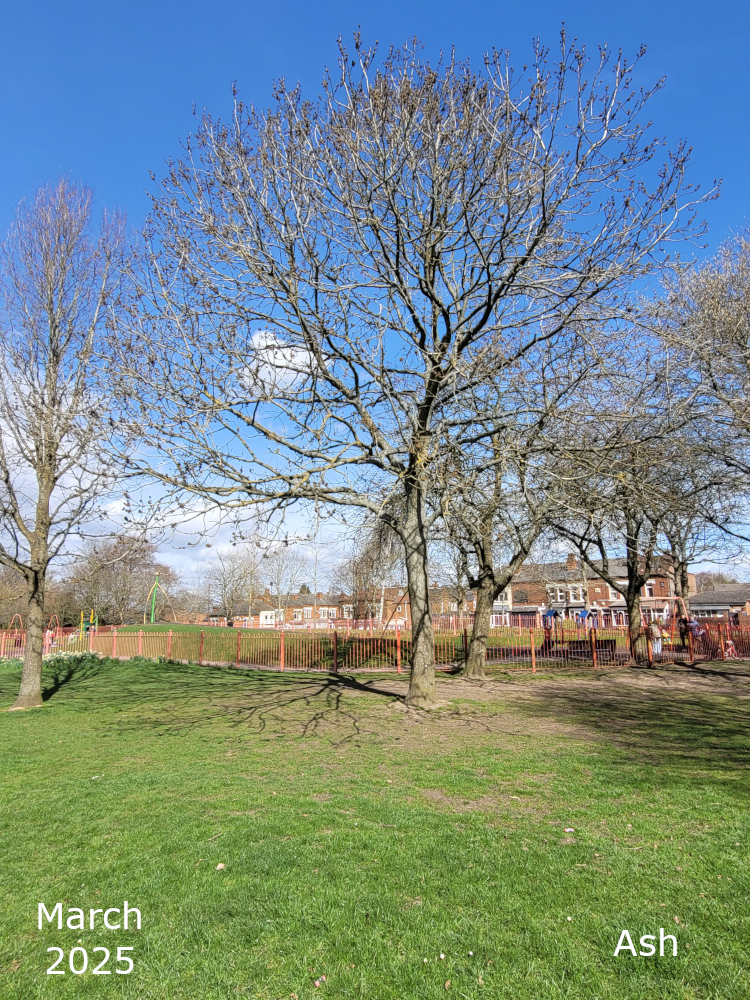
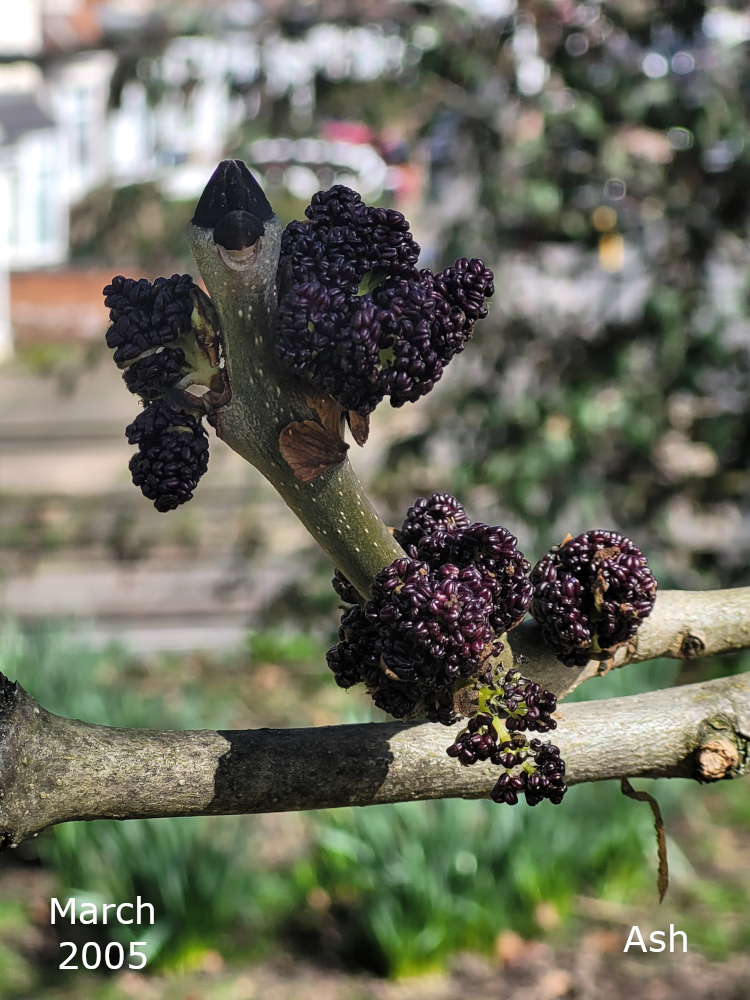
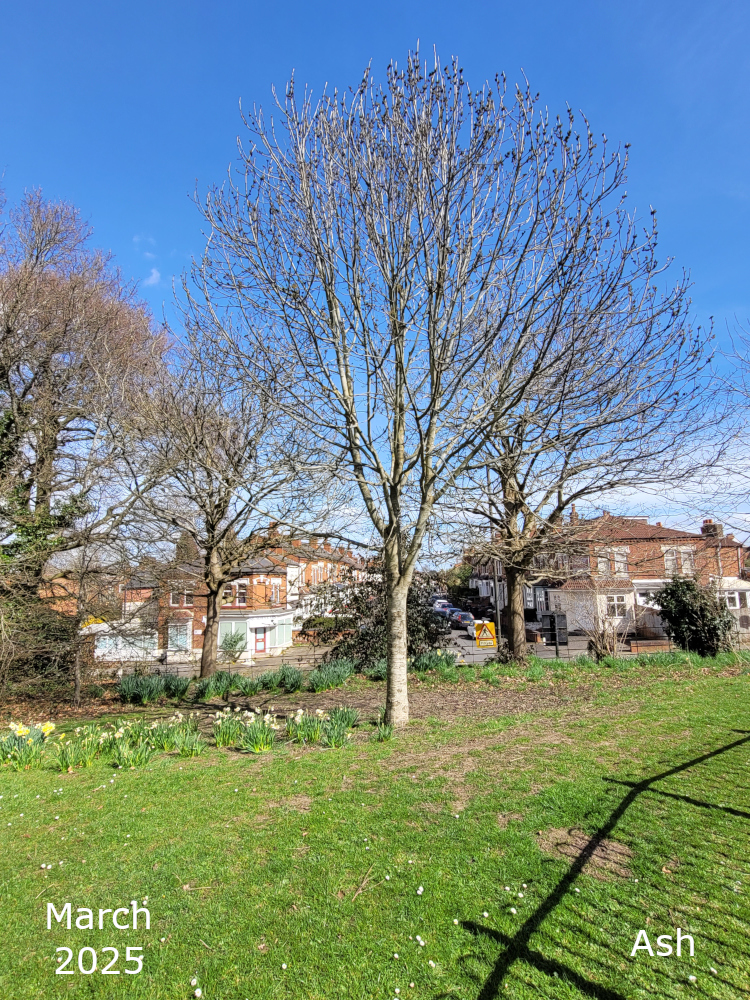
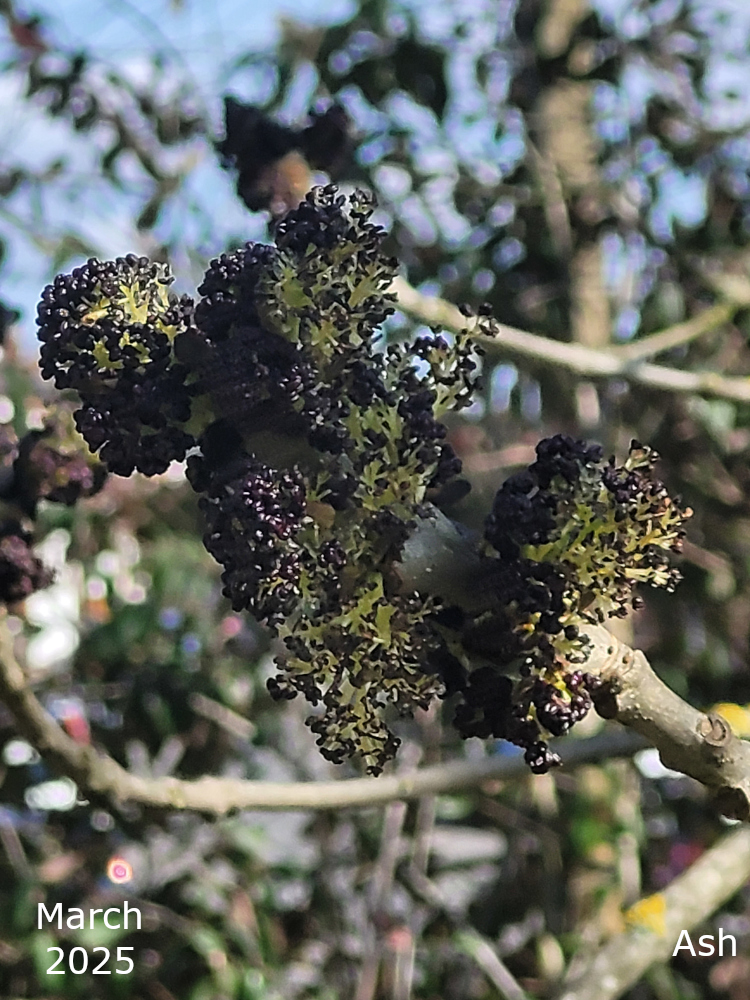
The Ash trees are flowering, now, and like many trees the flowers come out before the leaves. The flowers are most noticeable in the male trees and they do look rather odd. I don’t think I’ve ever noticed a female flower although it is easy to tell which are the female trees as they end up with the seeds. There seems to be more male than female Ash trees.
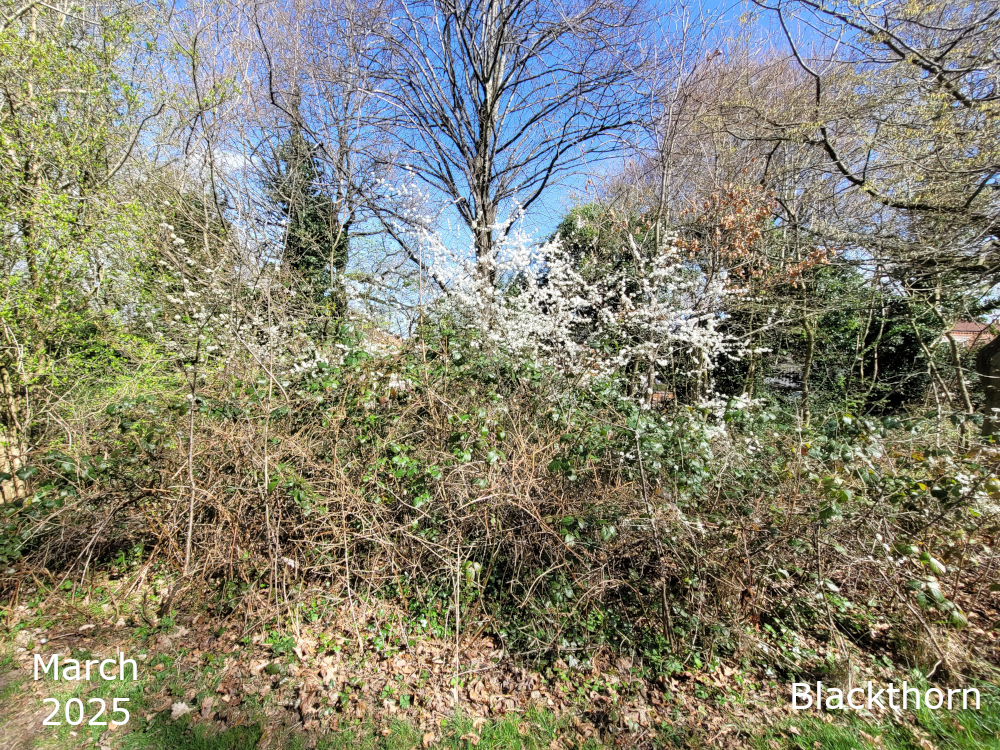
My wife and I came across another patch of Blackthorn alongside the path going down into the wooded area. It was probably made up of about half a dozen small bushes, mixed in with brambles.
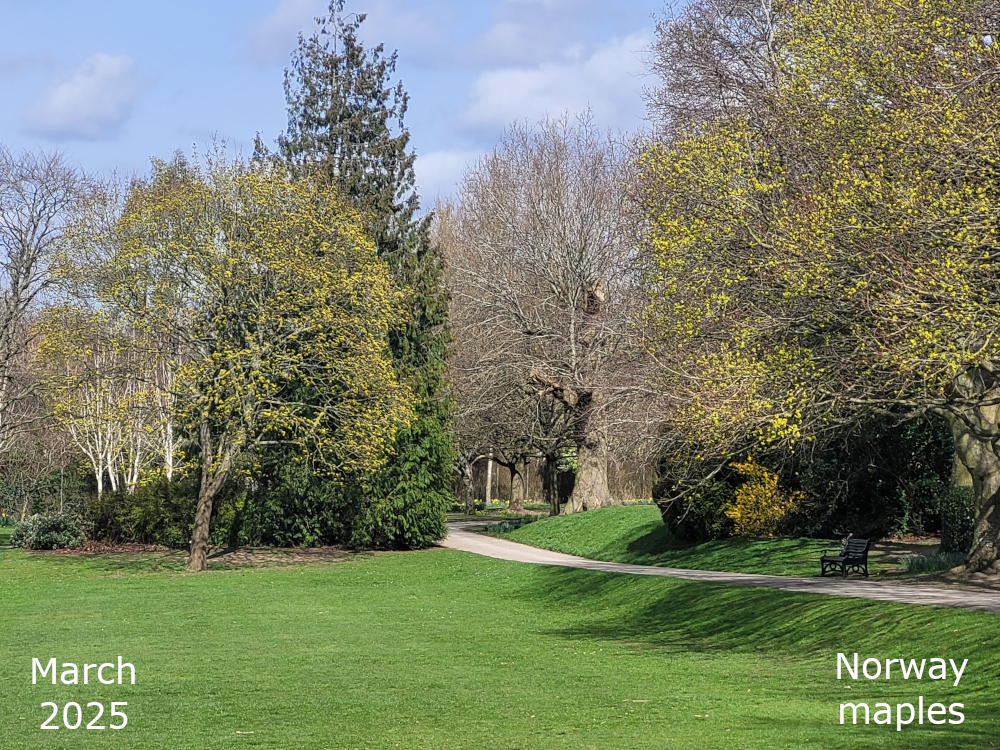
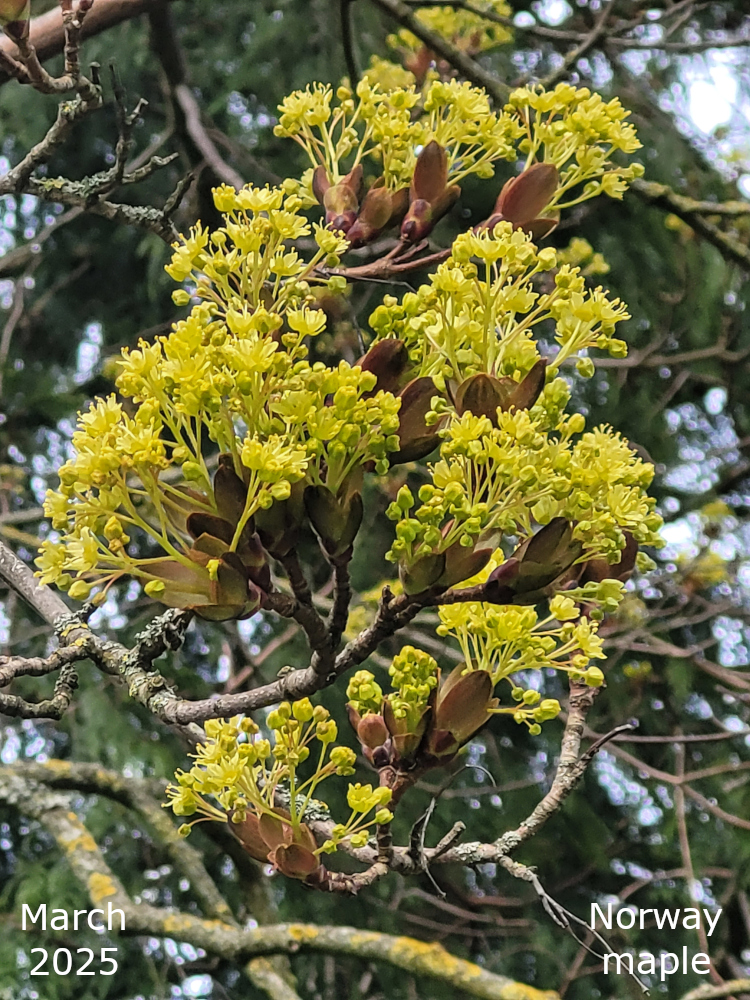
One of my favourite types of tree that comes out at this time of year is the Norway maple and two particular trees that I like are down below the colour garden – which is the garden below the bowling green. It looks like the trees have come out in leaf but this is all down to the masses of lime green flowers arranged in corymbs – stalks get longer on the outer sections so the flowers all come together in roughly the same level.
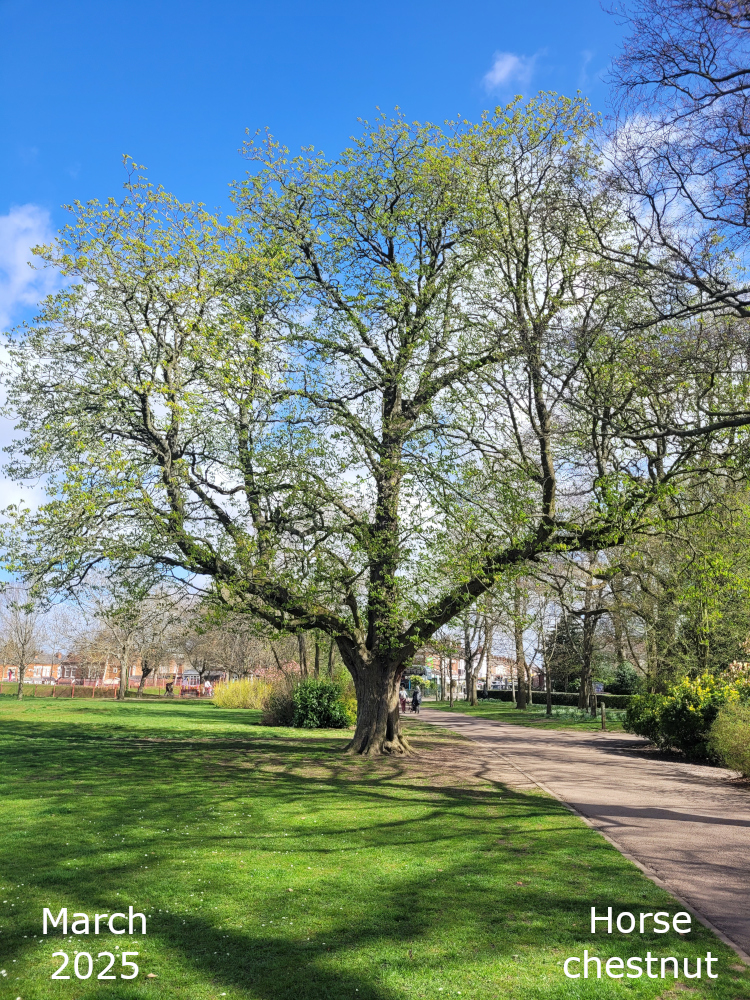
Sunday, 30th. One of the things that has often intrigued me is the timing of events with respect to trees and flowers. Trees do not stick to a hard and fast schedule that is clung to rigidly. There is a degree of latitude in when things occur and this is also true of one tree compared to another. There is one Horse chestnut tree that is usually the first to put out leaves and another that is usually the last and they differ by a week or so. These photographs were taken on the same day with one tree well into leaf and showing flowers emerging and the other is barely getting buds going.
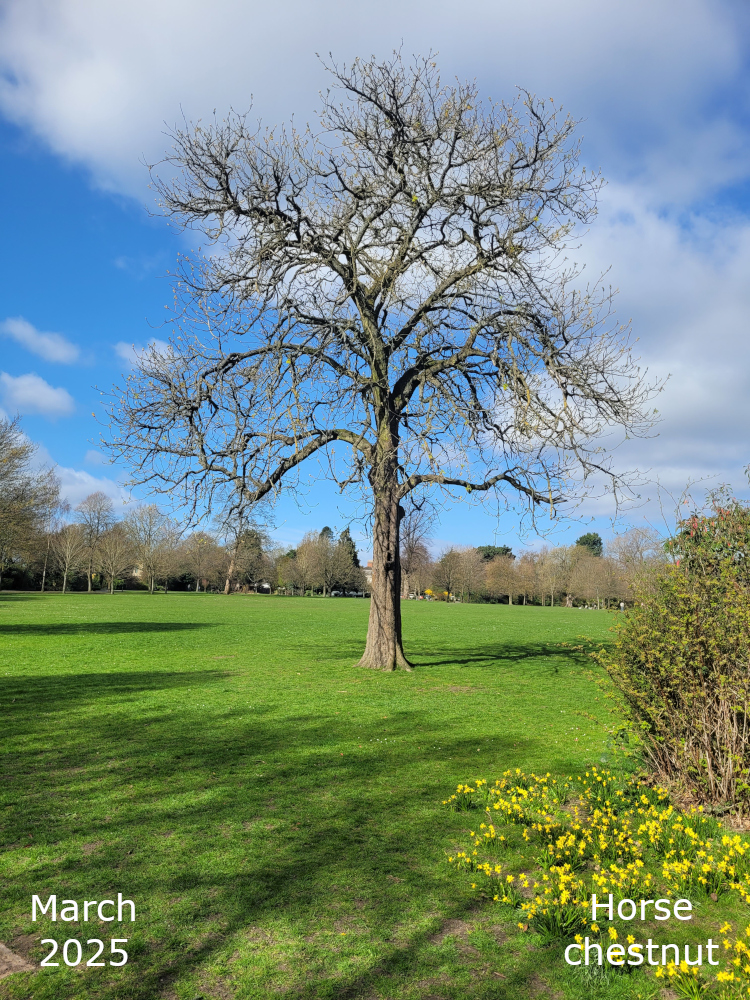
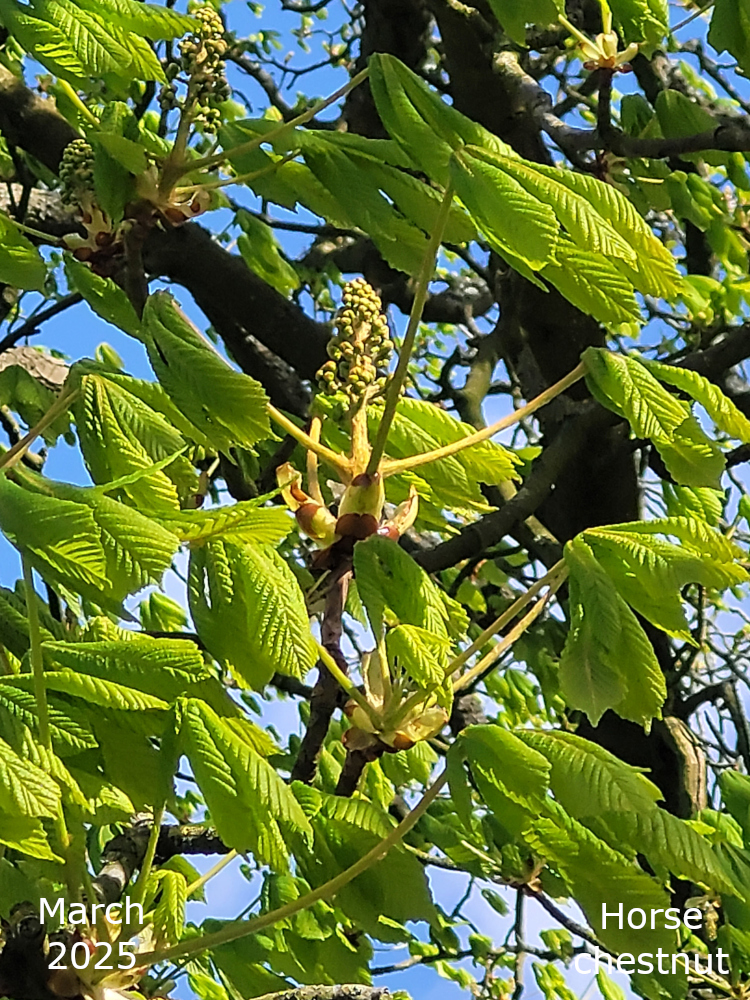
It isn’t only the Horse chestnuts that show this individuality. There is a Norway maple on the far side of the field to this tree and it too is rather bare still, whereas the Norway maples below the colour garden are well into flower.
I don’t think this is unusual – I don’t see why trees can’t behave individually, much the same as people do.
Another really nice tree is the Dawn redwood (Metasequoia glyptostroboides) Everything about it is elegant – it has a pleasing outline shape, its trunk spirals gracefully and it has delicate feathery leaves. Despite it being a coniferous tree it is deciduous and its new leaves are beginning to emerge.
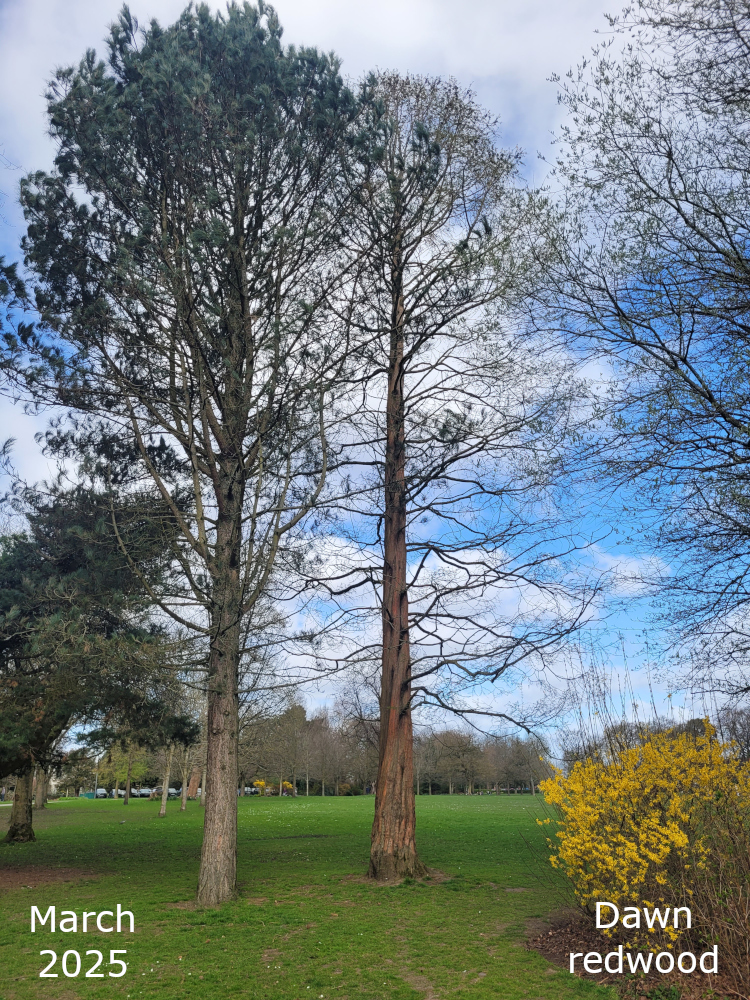
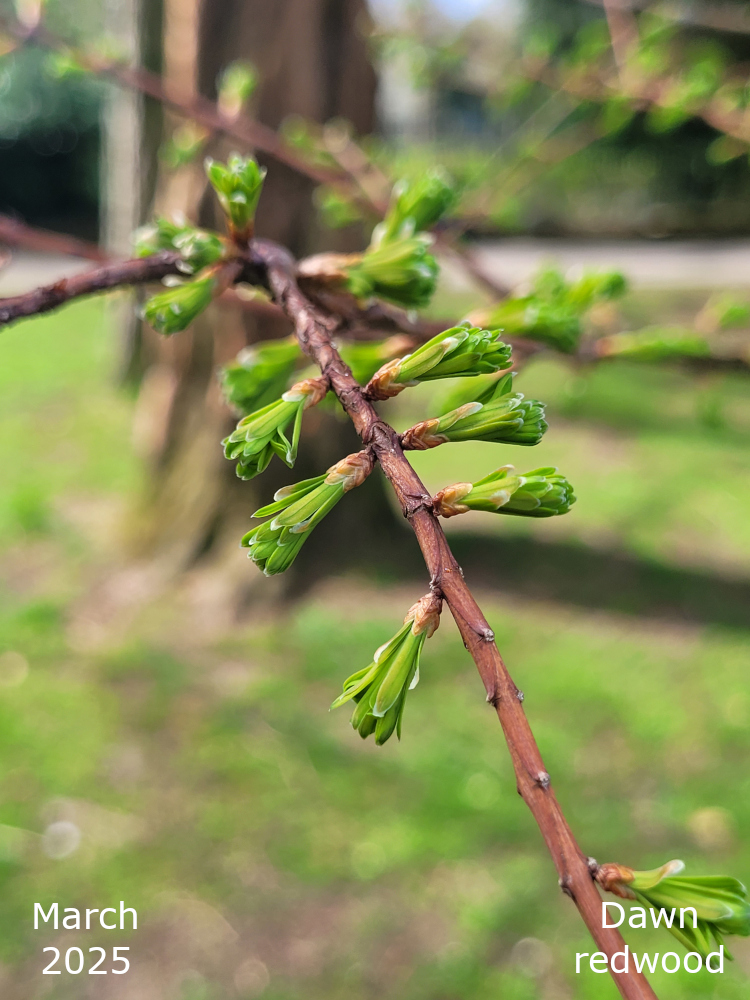
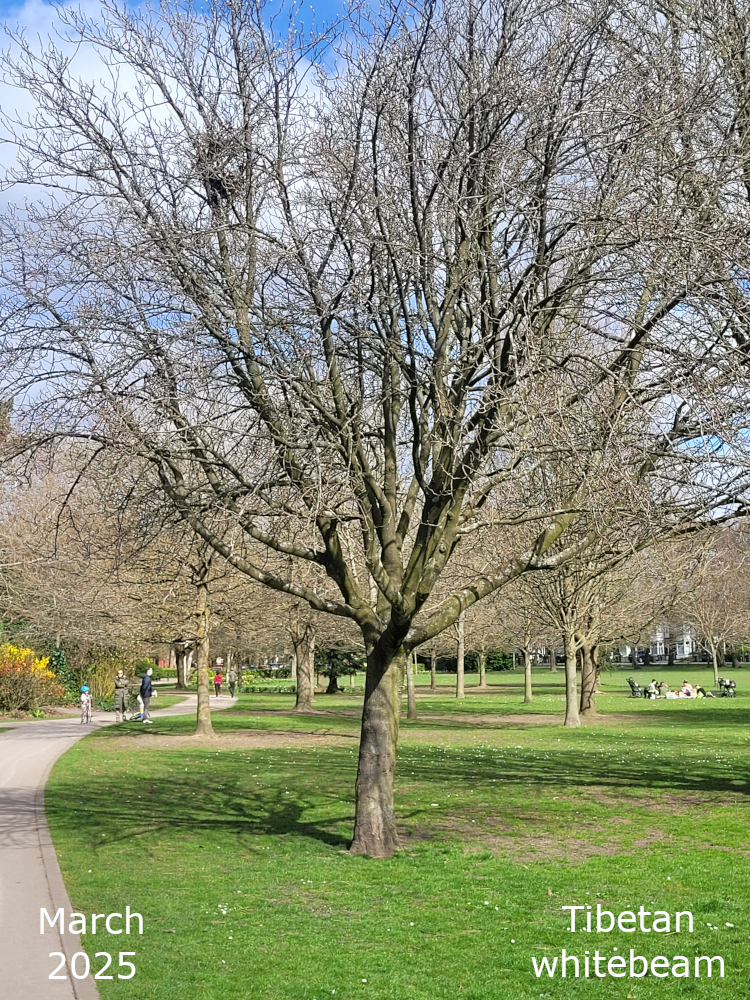
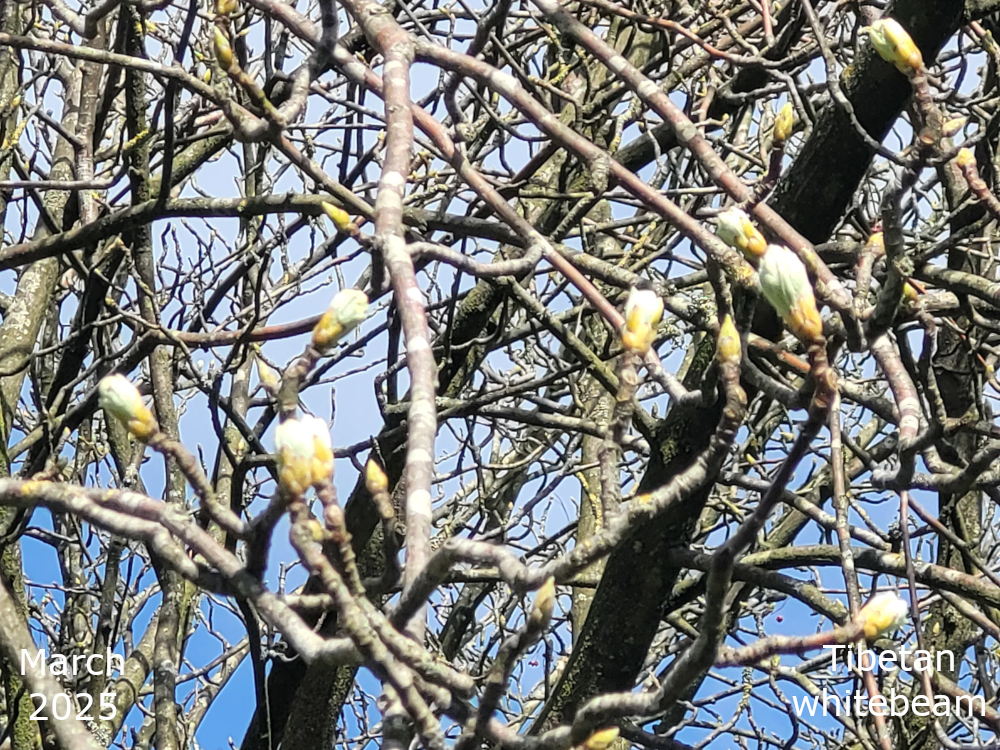
The thing I like about this next tree is that when the buds emerge they show the bright underside of the leaves and they look like pinpoints of light, from a distance, as though the tree had been decked out with fairy lights. Unfortunately, the effect is not easy to capture in a photograph.
 Kings Heath Park Trees