There are a wide variety of maples (Acer sp.) within the park from commonly known sycamore trees to field maples, sugar maples and then lesser known varieties such as paperbark maples and snake bark maples.
- Paperbark maple, conservatory
- Snakebark maple, bowling green
- Paperbark maple, pond
- Sycamore, car park
- Sycamore, stump
- Sycamore, Avenue Road
- Sycamore, Grange Road
- Sycamores, Avenue Road
- Basketball area
- Thrive area
- Norway maple, colour garden
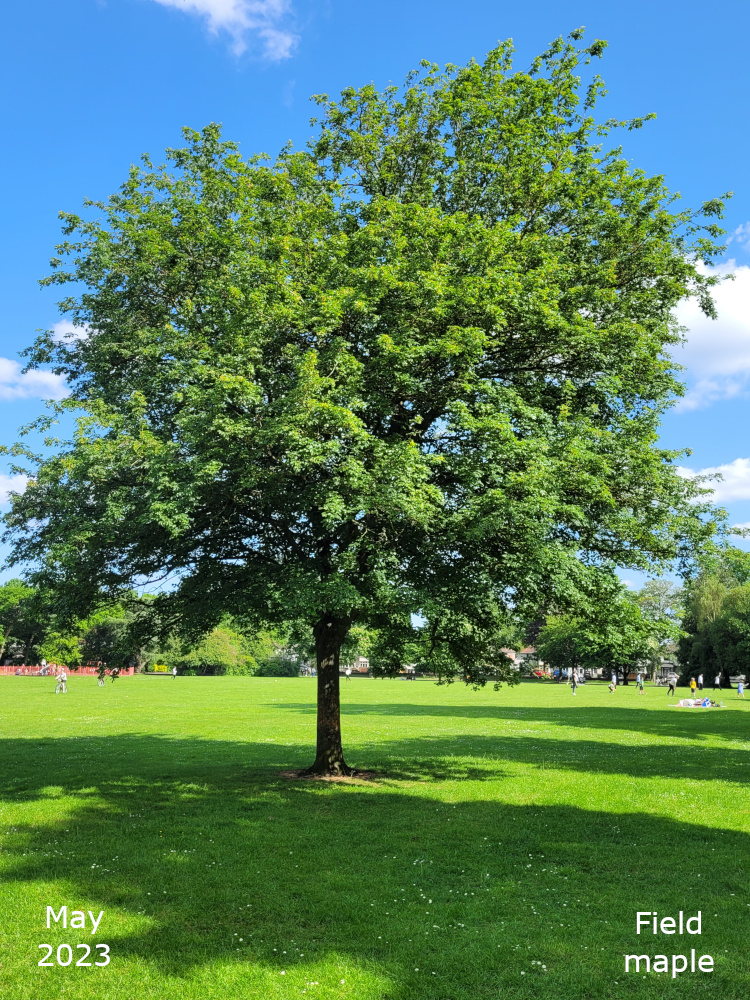
- Field maples, main field
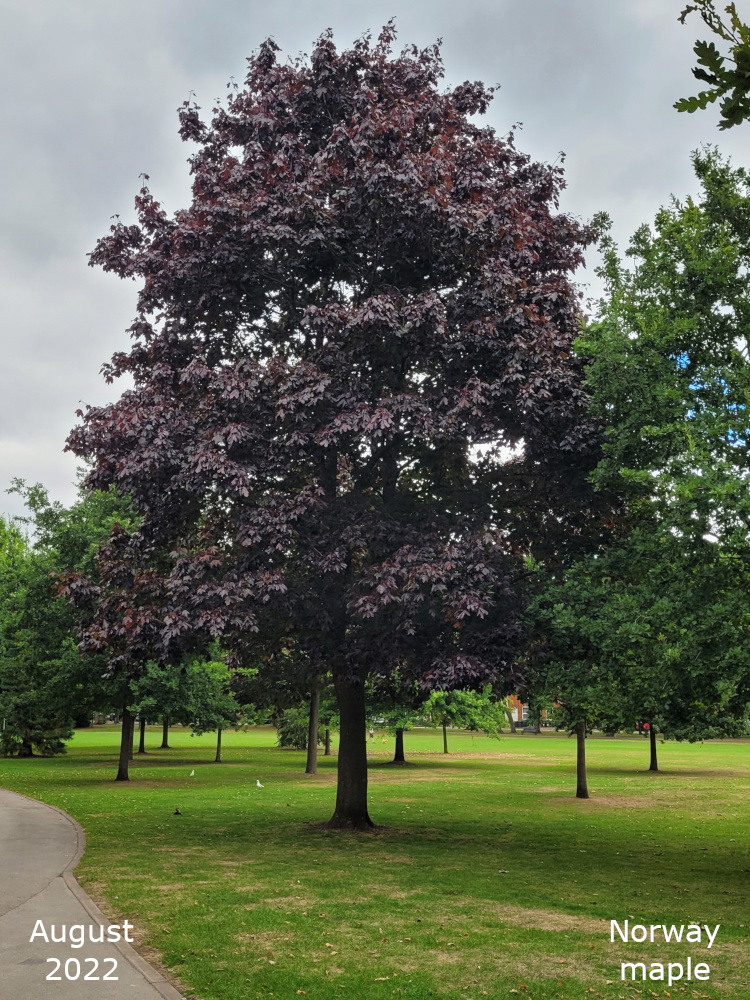
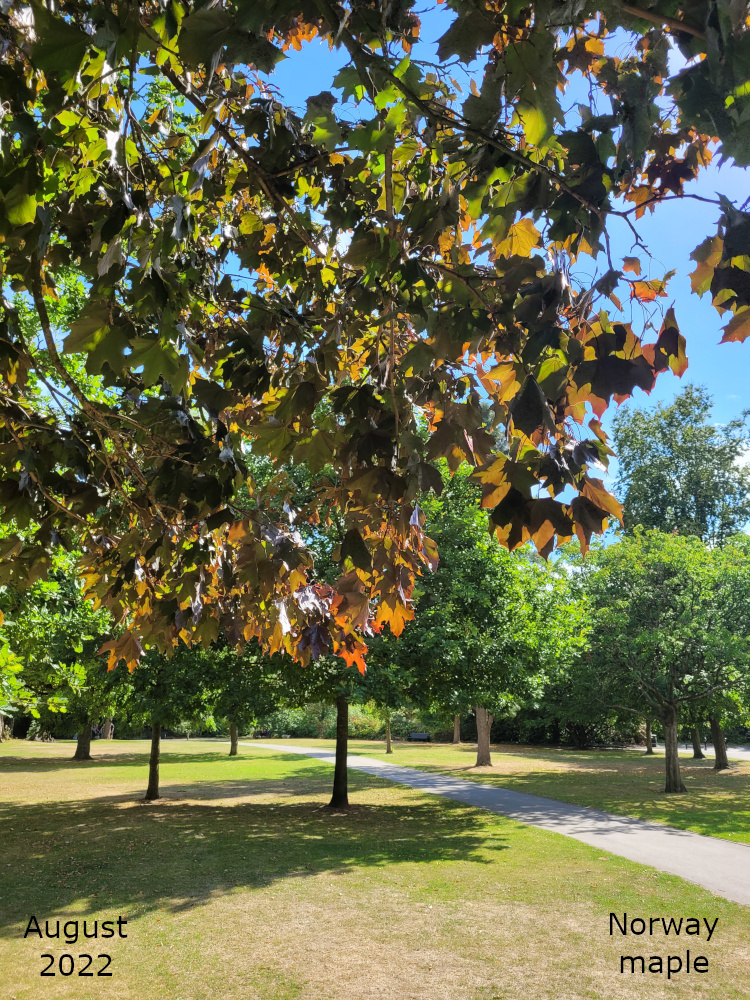
- Norway maples, CK
- Sycamore, main field
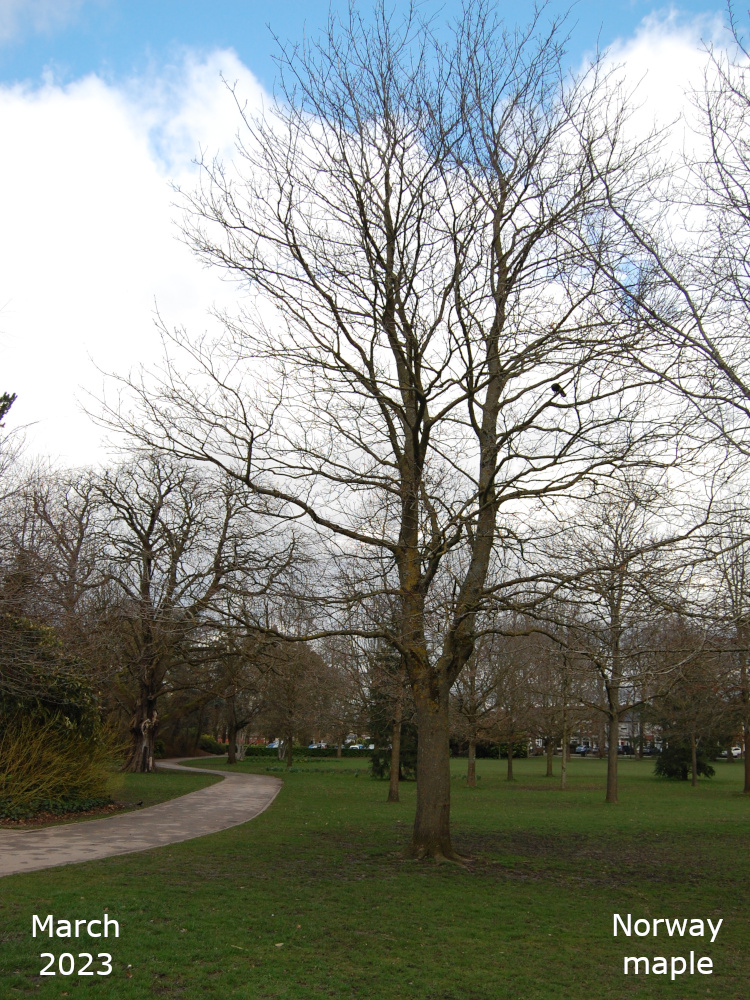
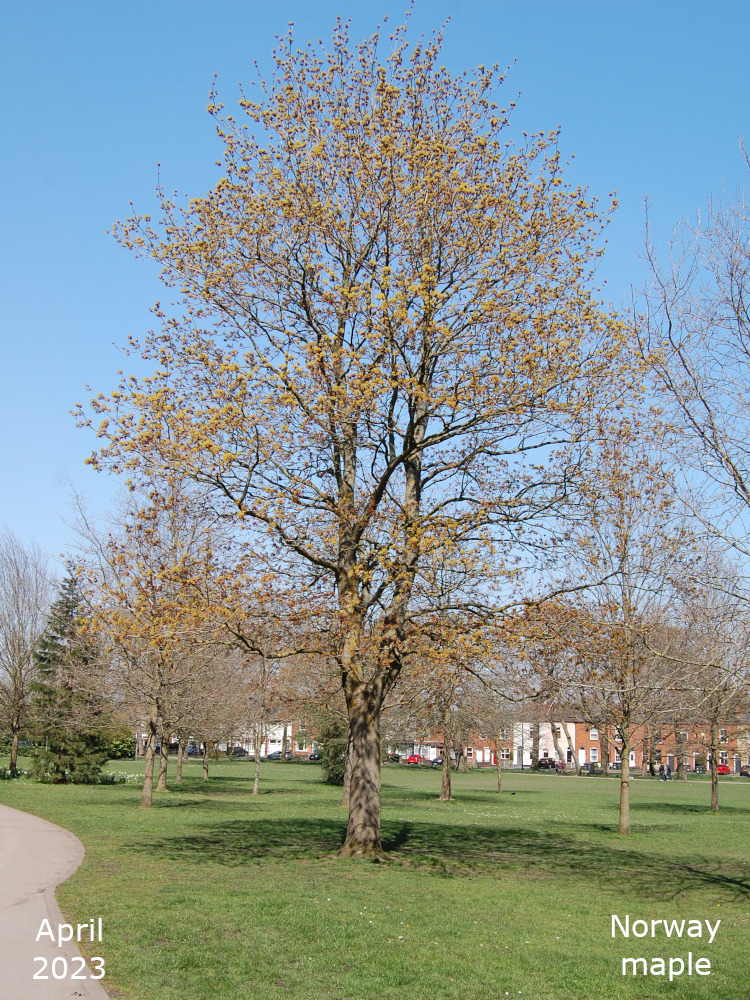
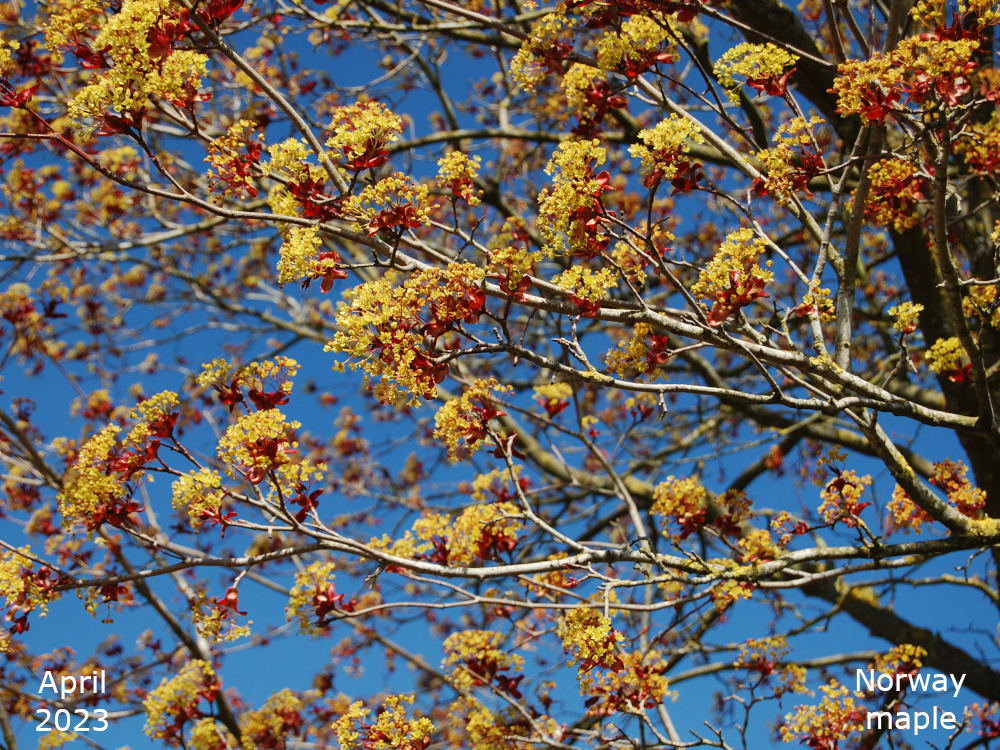
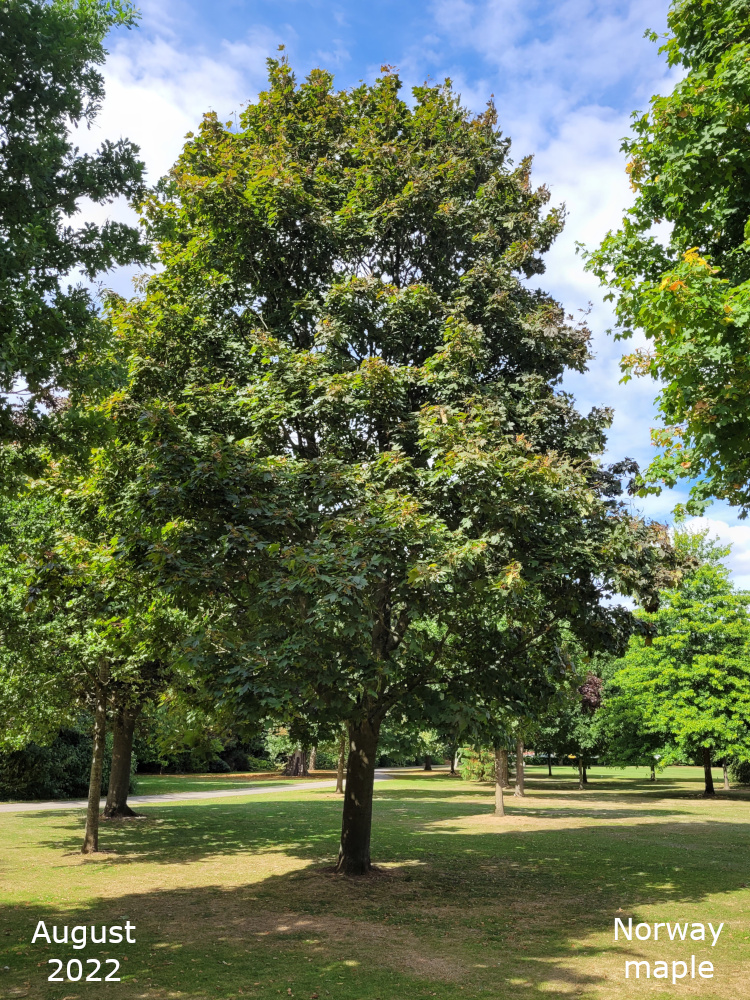
- Norway maples, main field
- Silver maples
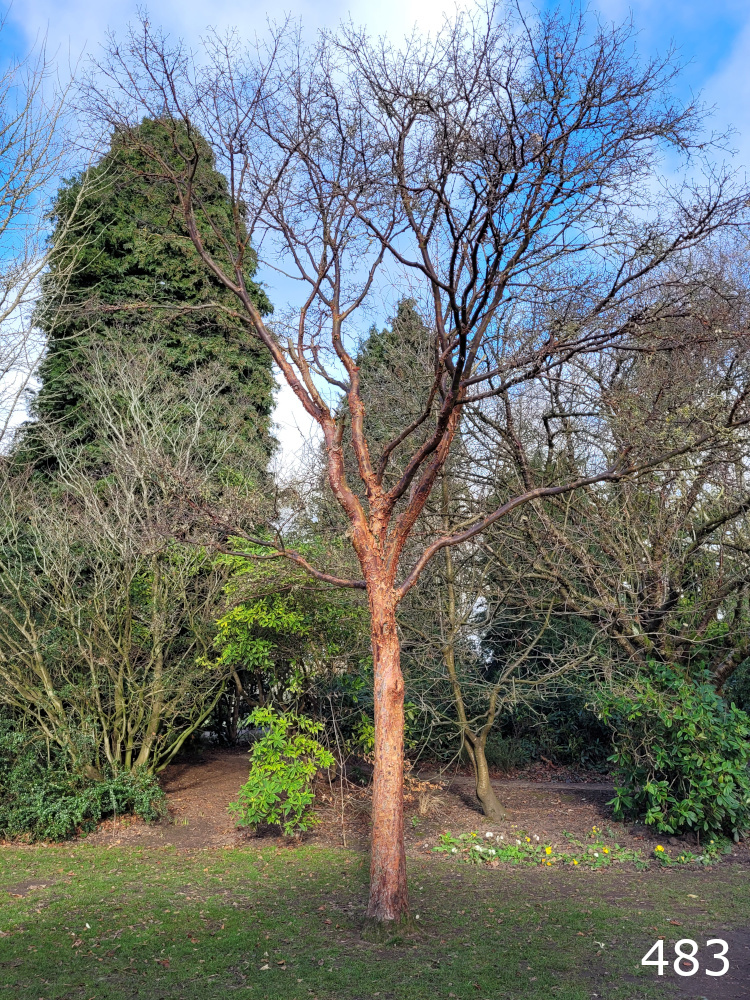
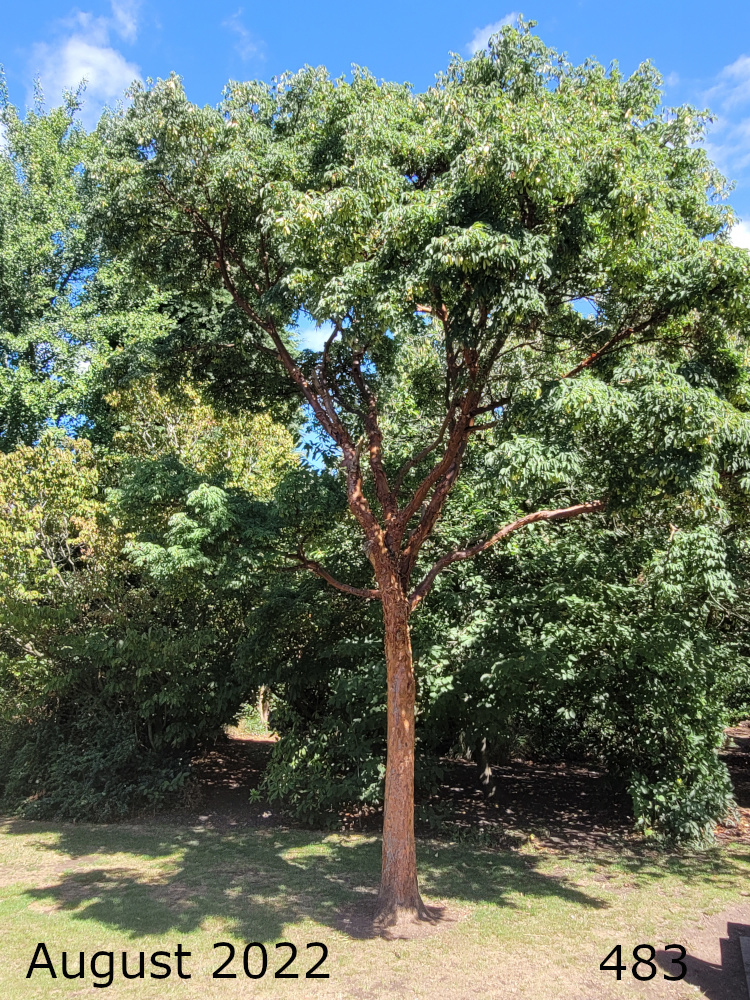
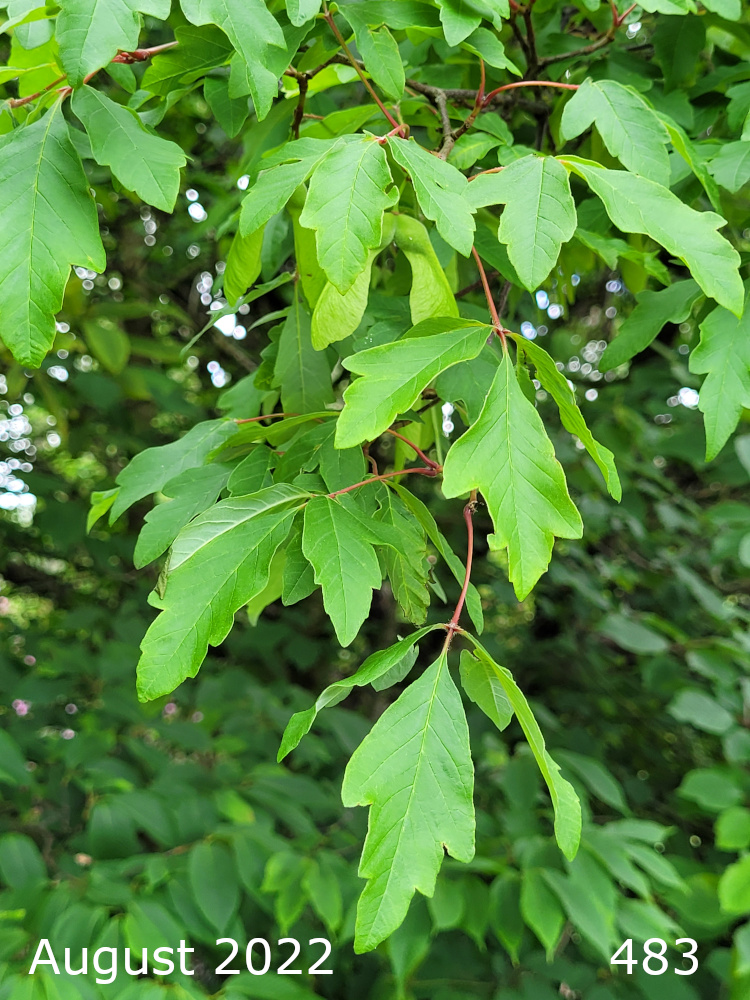
Paperbark maple, conservatory
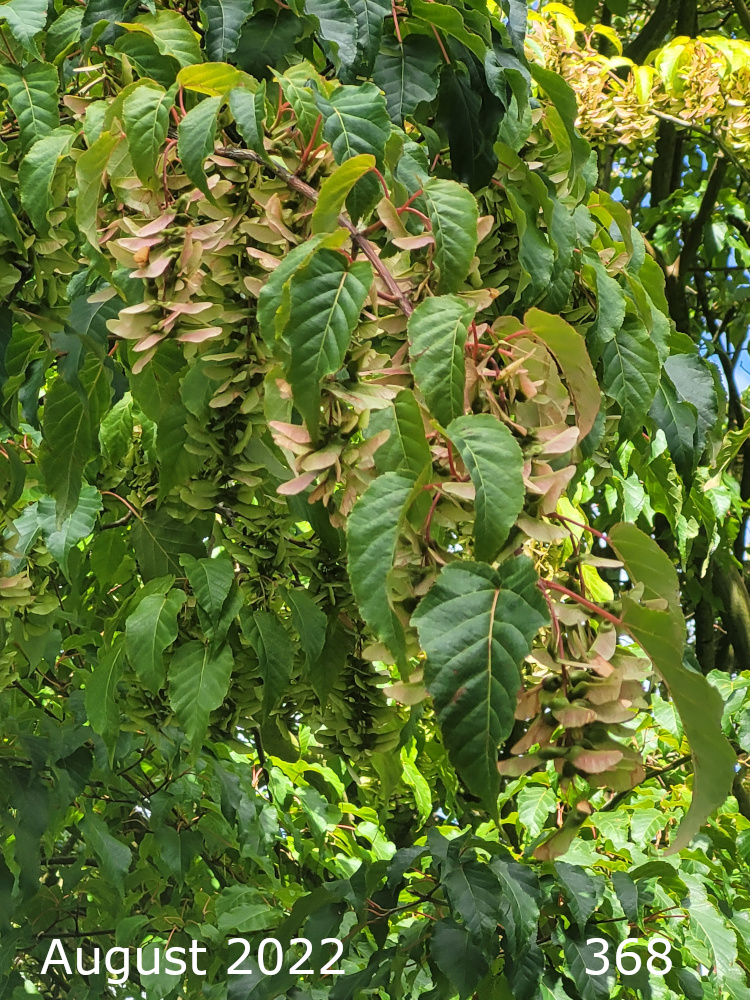
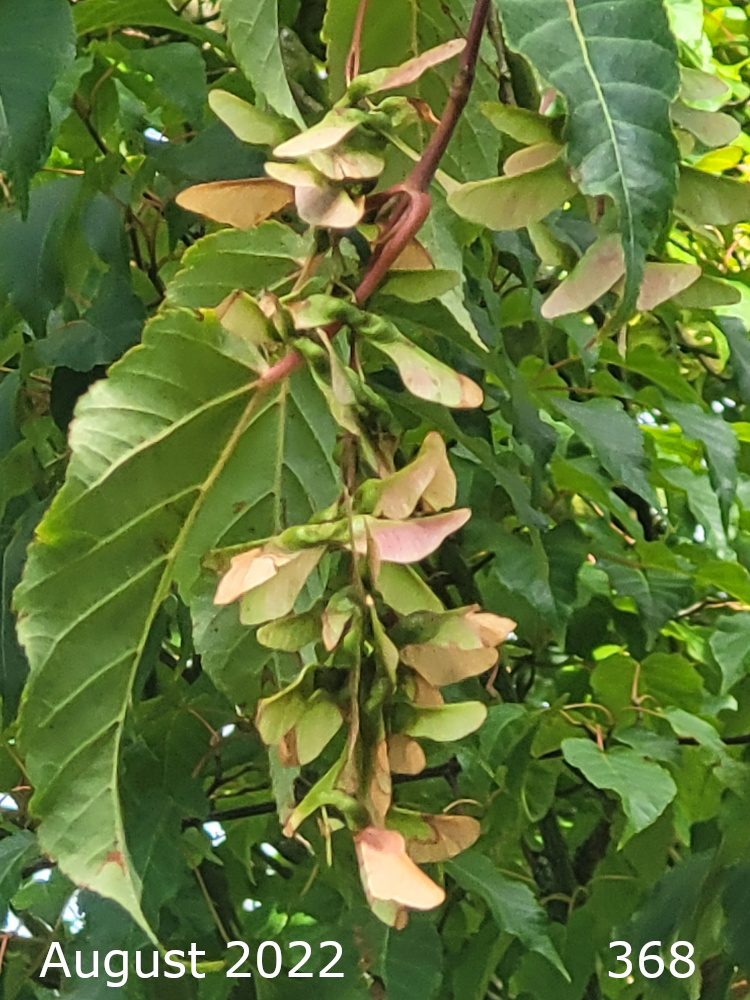
If you are by the white house just by Cartland’s conservatory, near the entrance to the plant nursery, then this Paperbark maple, Acer griseum, will be on the grassed area by the picnic tables. The leaves are not the typical shape of a maple tree but instead is a three-lobed leaf. In the picture of the leaves you can see the typical winged seed of a maple, known as a samara.
Snakebark maple, bowling green
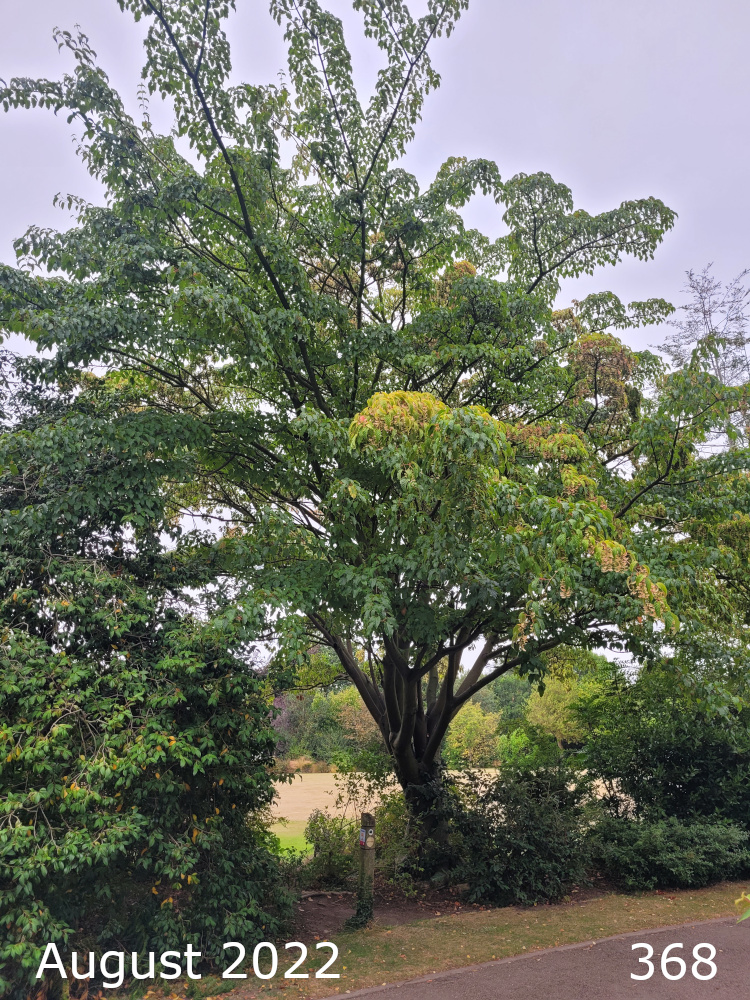
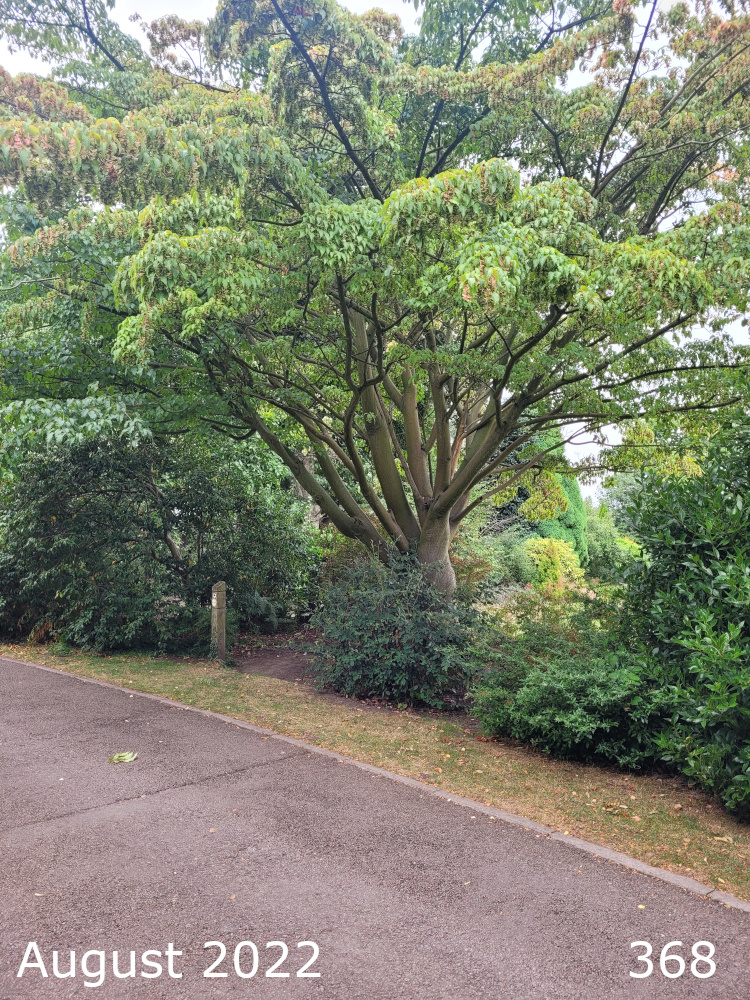
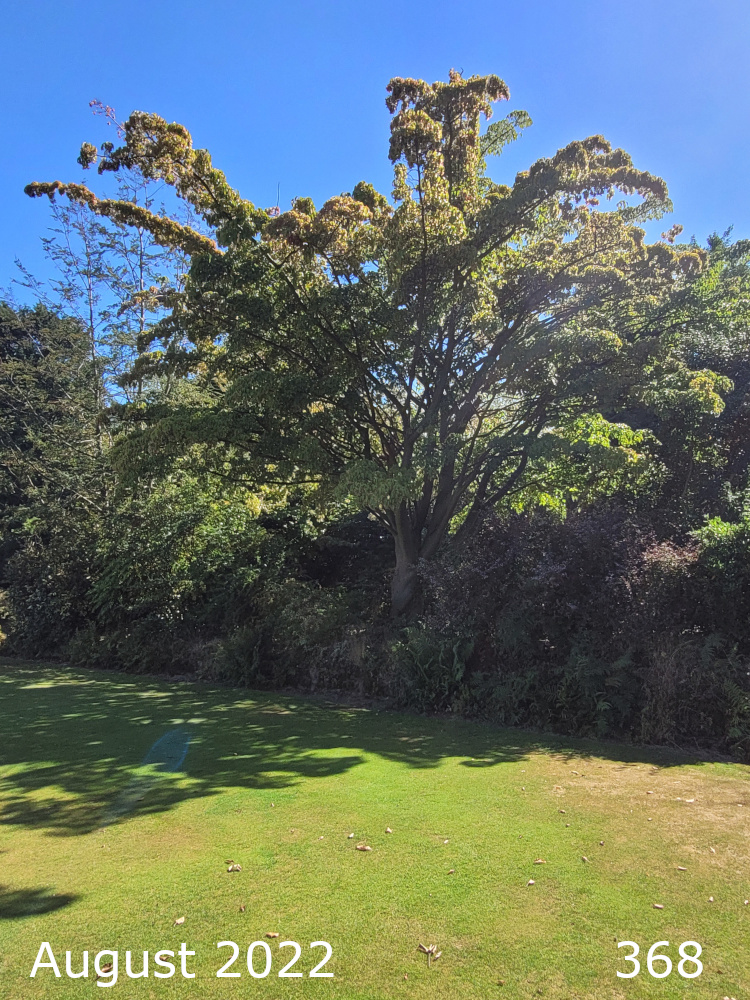
As you walk away from Cartlands and turn right there is a maple tree on the left hand side of the path. It is in the space between the path and the bowling green. At first glance it does not look like a maple tree as it does not have the typical three pointed leaf that you would see on a Canadian flag or a sycamore tree. However, when the seeds start to form they have the same samara form as all other maples.
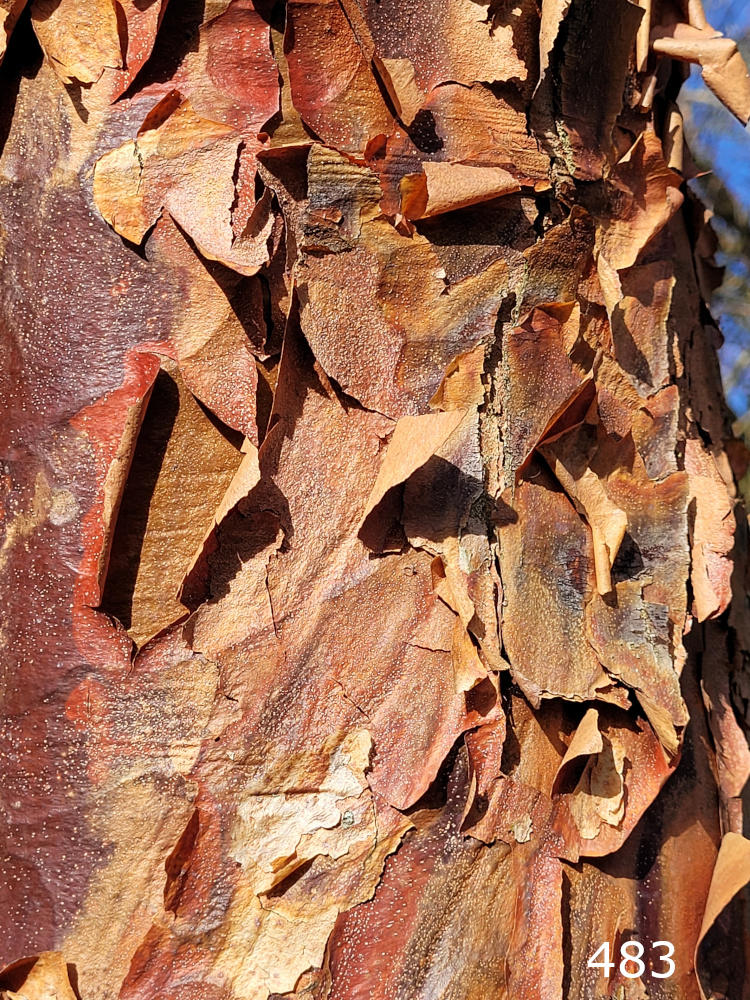
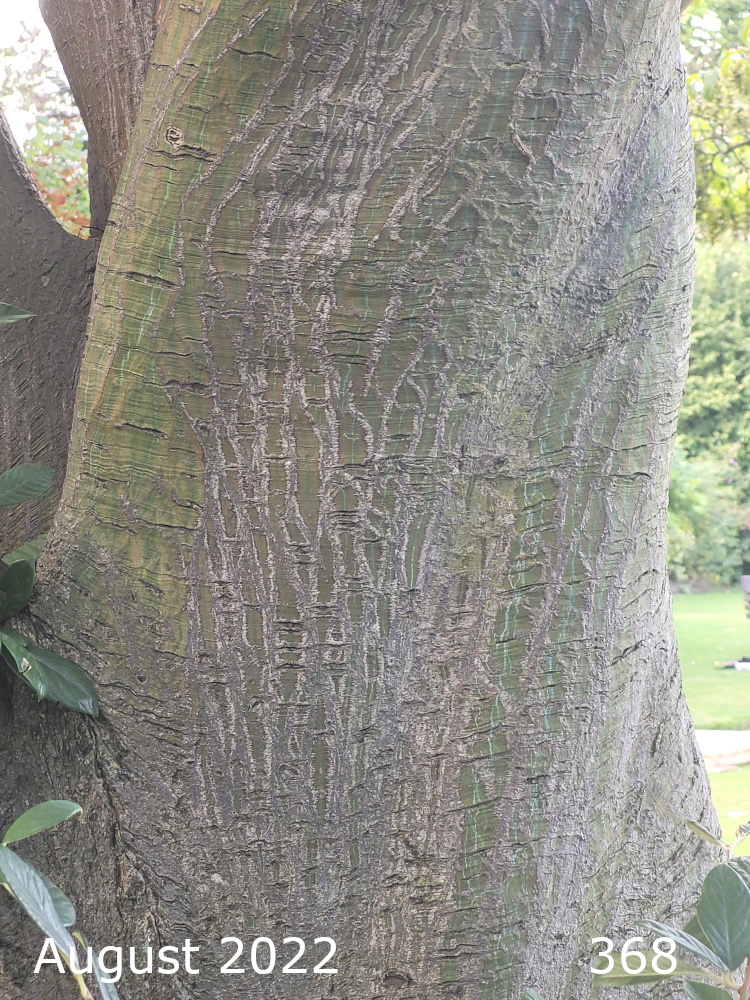
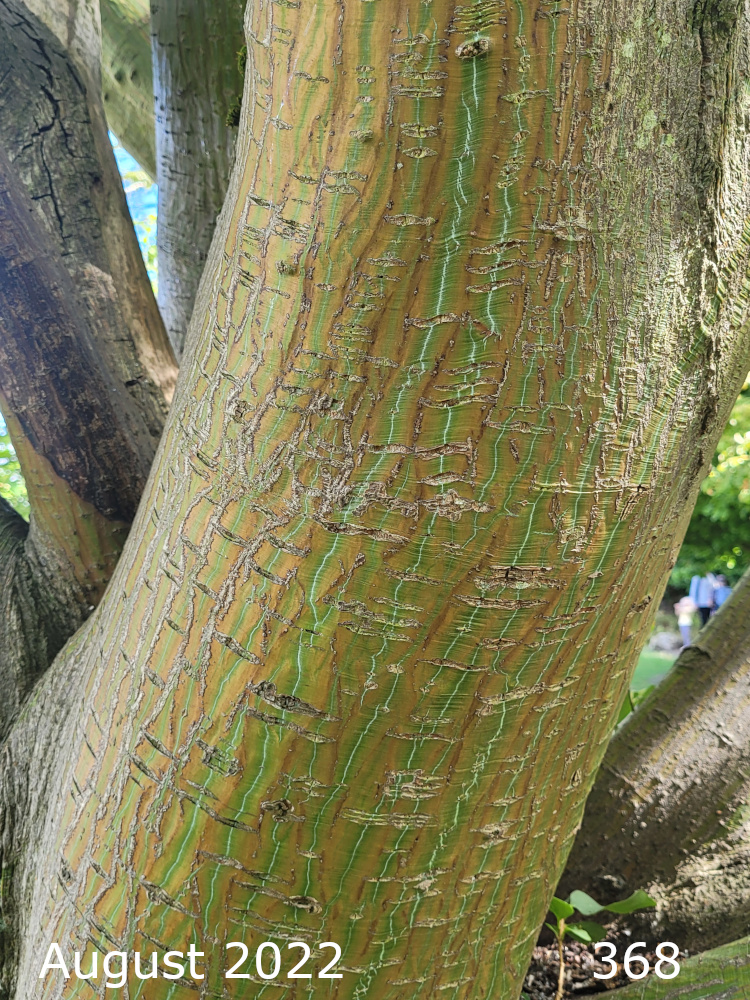
The tree is not just unusual in the shape of its leaf, for a maple; it is a snakebark maple, Acer davidii, and has distinctive markings on the bark. The older bark looks dull grey but the newer bark has green, red and white stripes running down it. It is well worth stepping off the path to have a closer look.
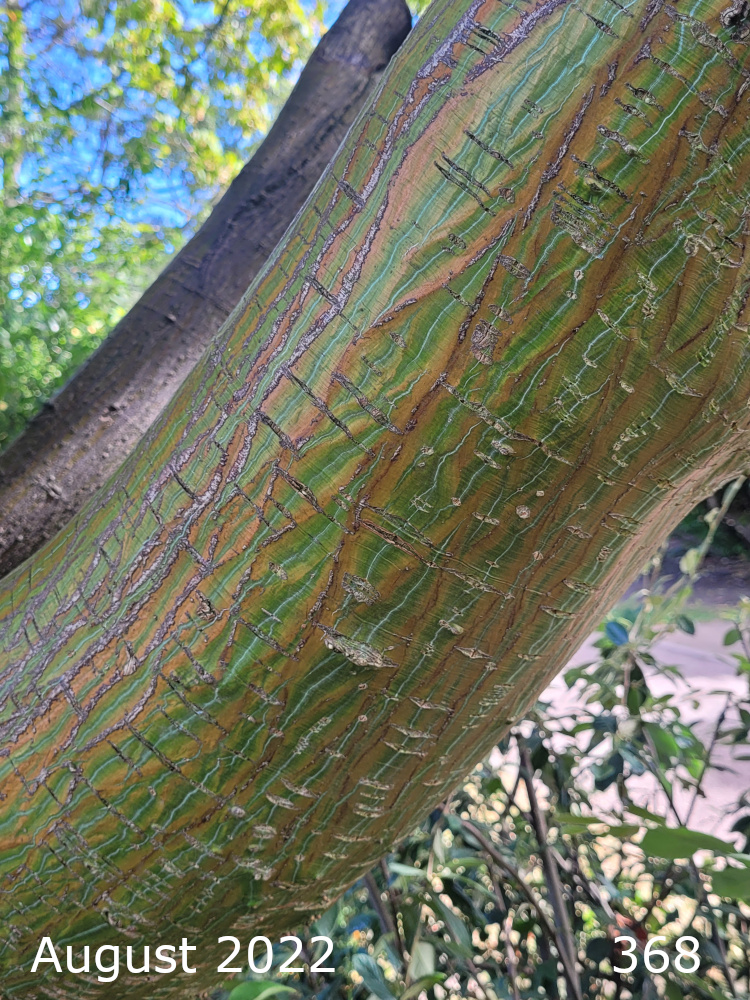
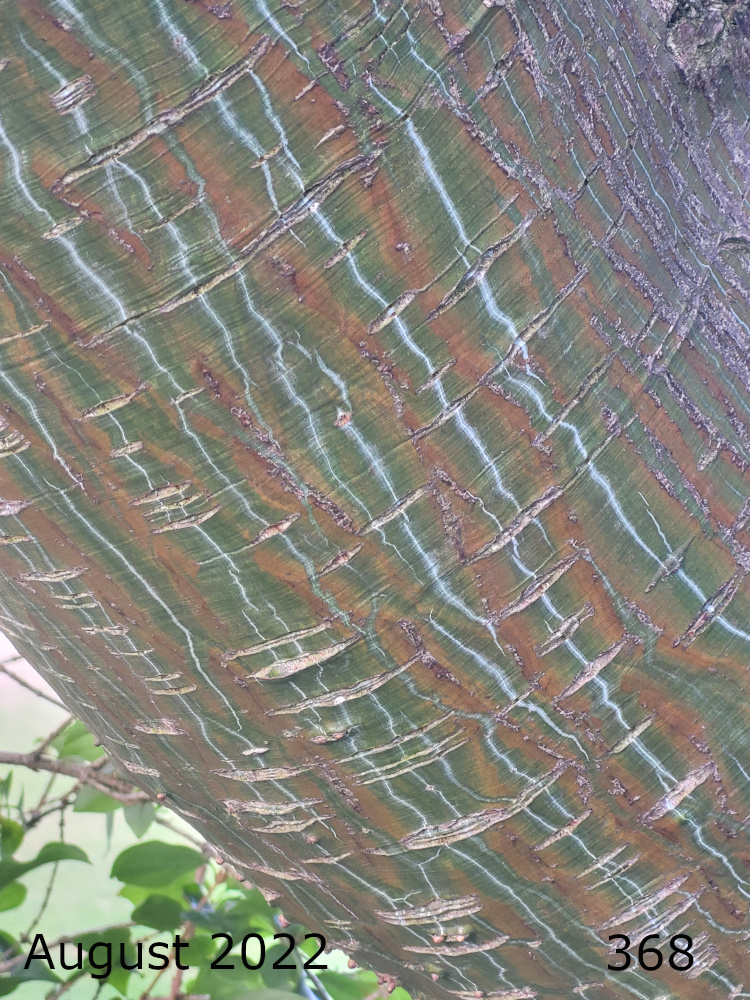
Paperbark maple, pond
This is a paperbark maple somewhere in the pond area – on the right hand side as you look away from the white house . . .
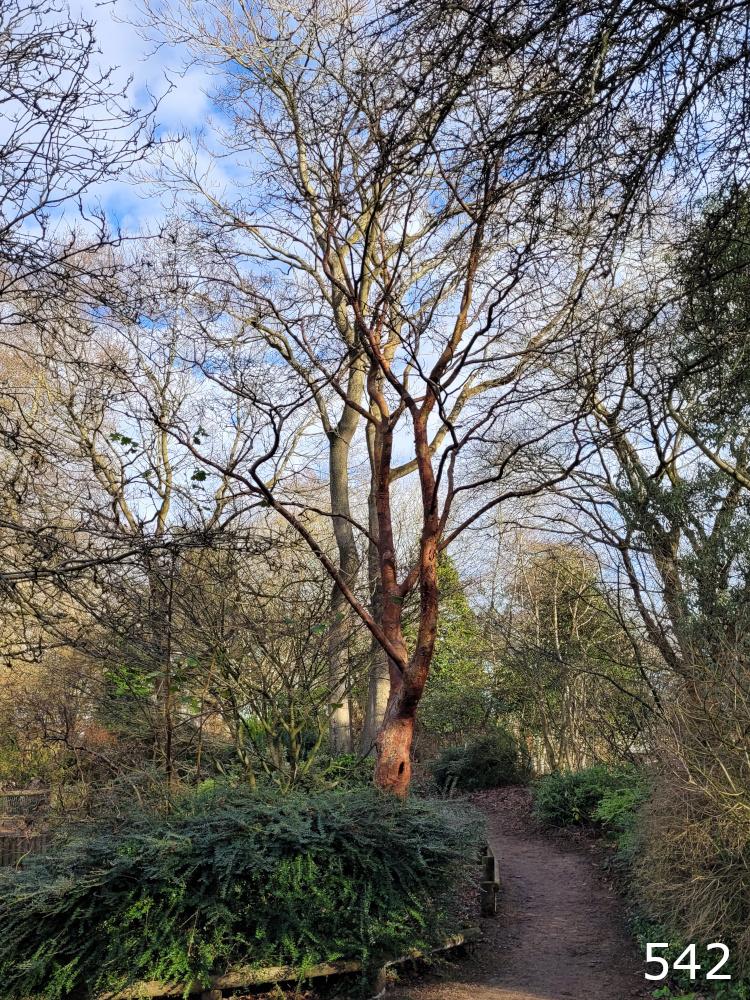
Sycamore, car park
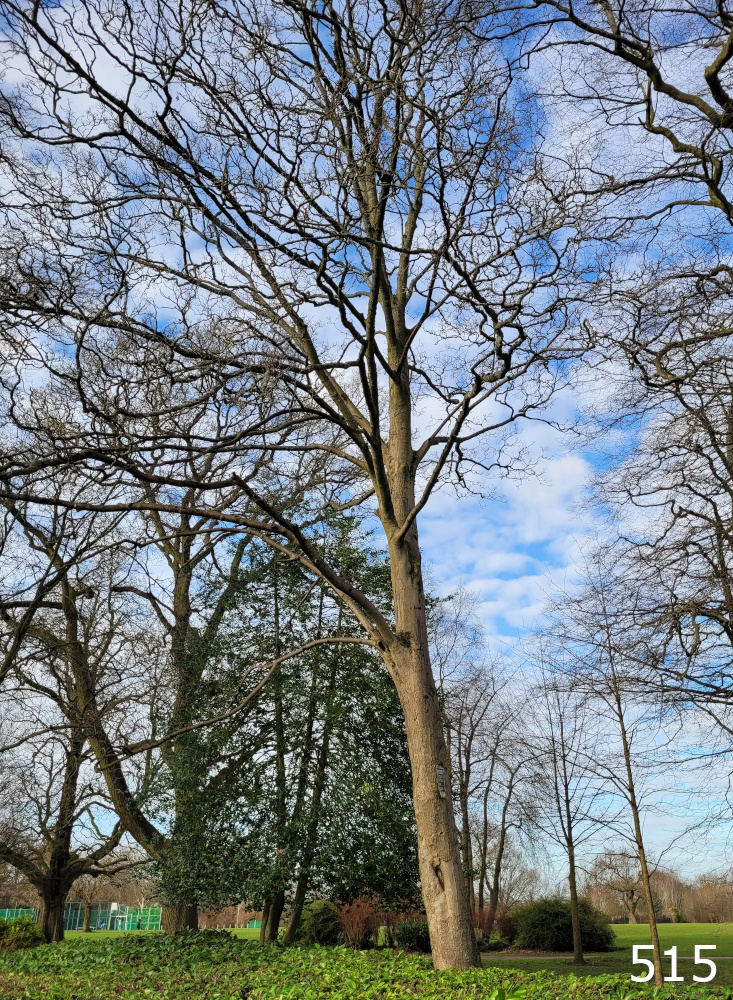
The most common maple in the park is the Sycamore, Acer pseudoplatanus, being the third most common species of tree altogether. This one is in a group of four trees along the hedge of the car park by Grange Road along with two Hornbeams and a Horse chestnut
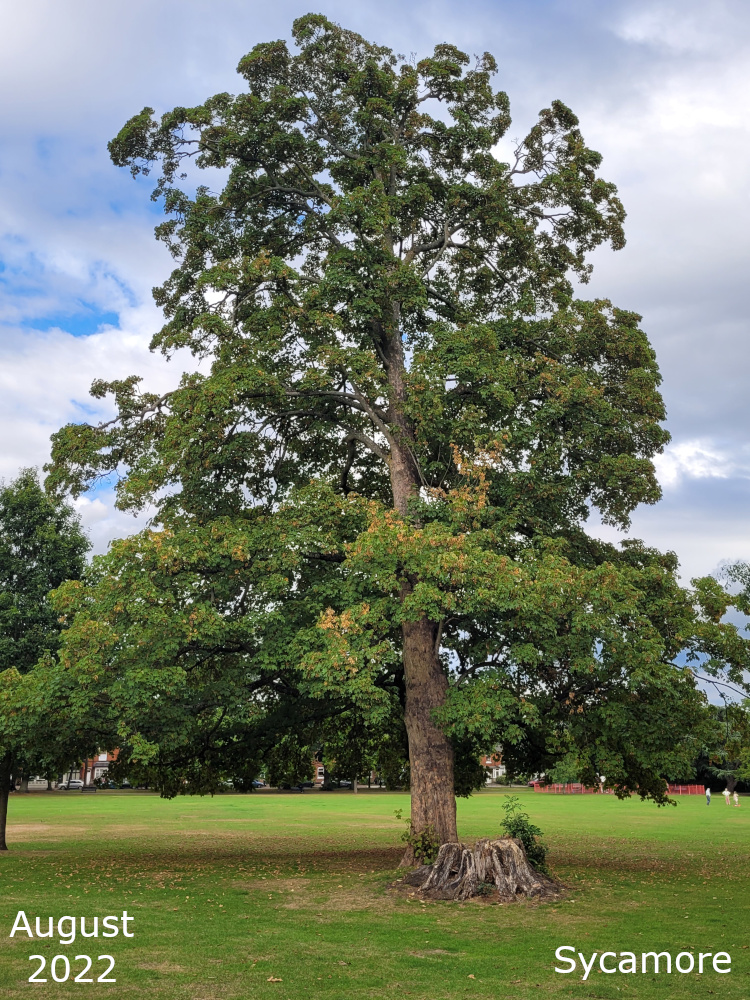
Sycamore, stump
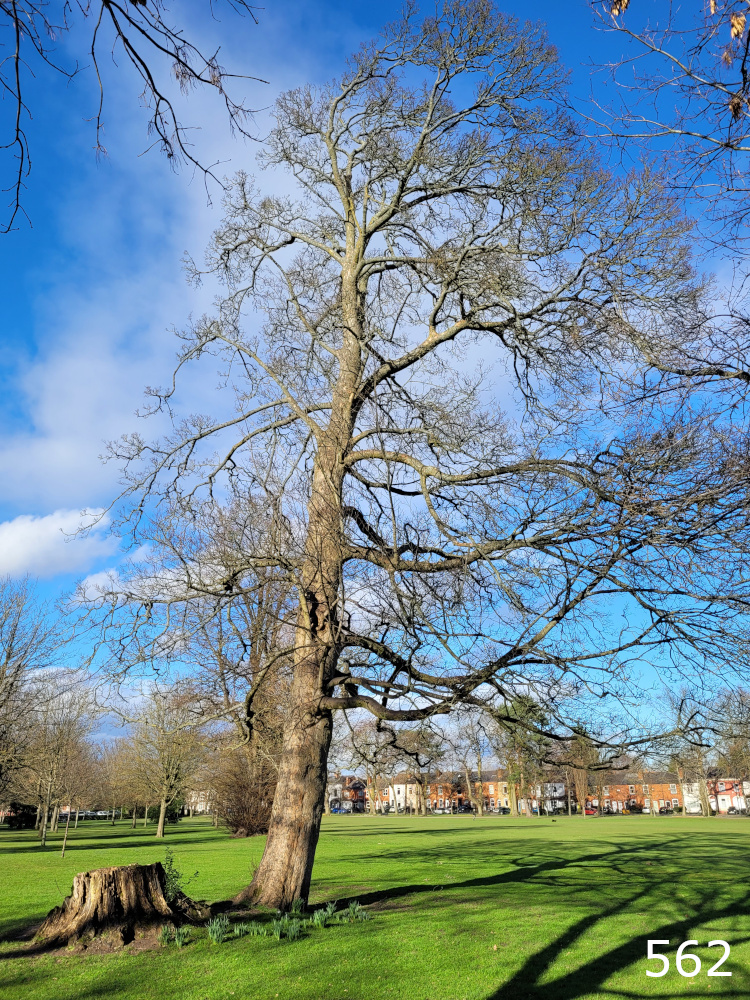
The path running parallel to the main drive splits into two as you walk away from Vicarage Road, towards the white house. If you take the right hand fork and look over to the right you’ll see this tree and the unmistakeable stump alongside it. The tree is a Sycamore. I don’t know what the tree was that stood beside it but countless children have loved climbing and playing on that huge stump.
Sycamore, Avenue Road
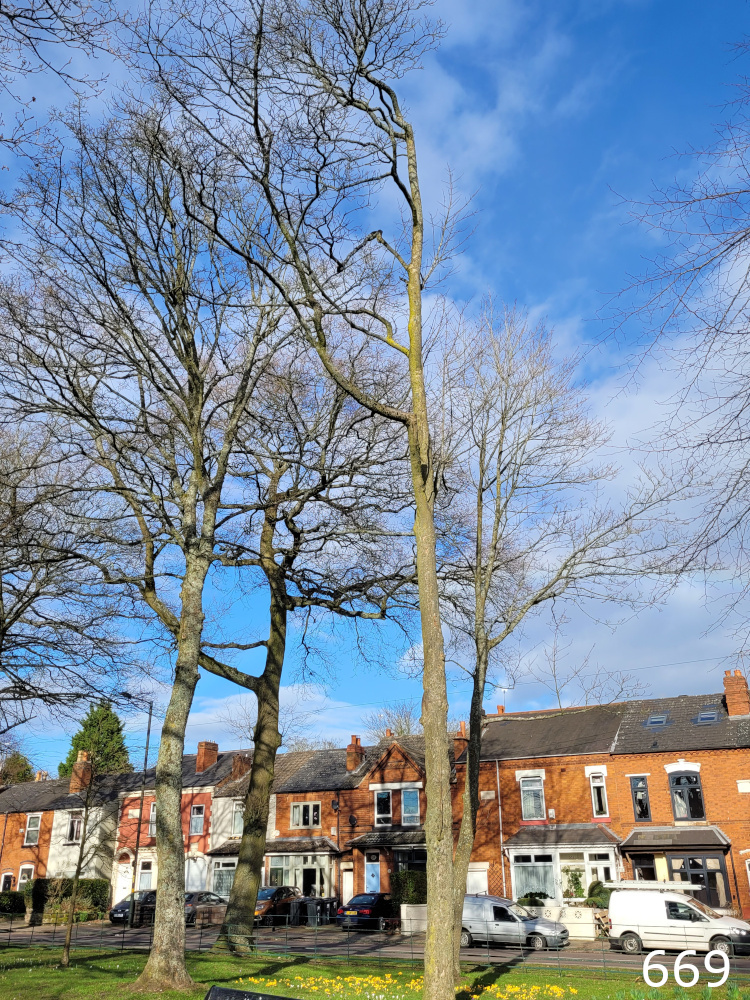
Almost half-way between playground and car park along the Avenue Road path, this Sycamore is just behind one of the metal benches.
Sycamore, Grange Road
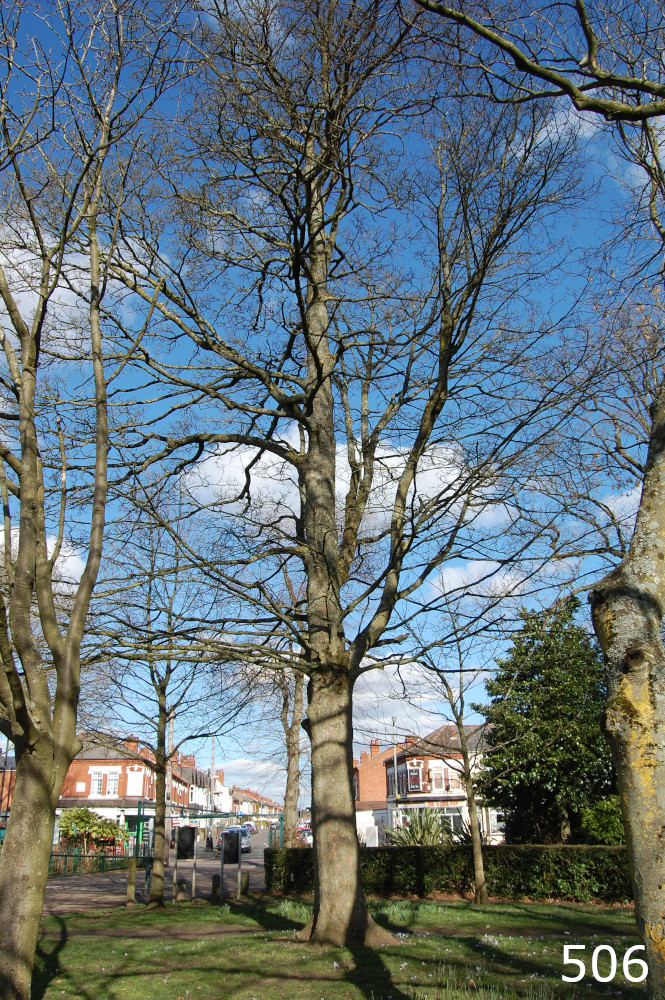
This Sycamore is in a group of trees just by the car park near the Grange Road entrance.

Sycamores, Avenue Road
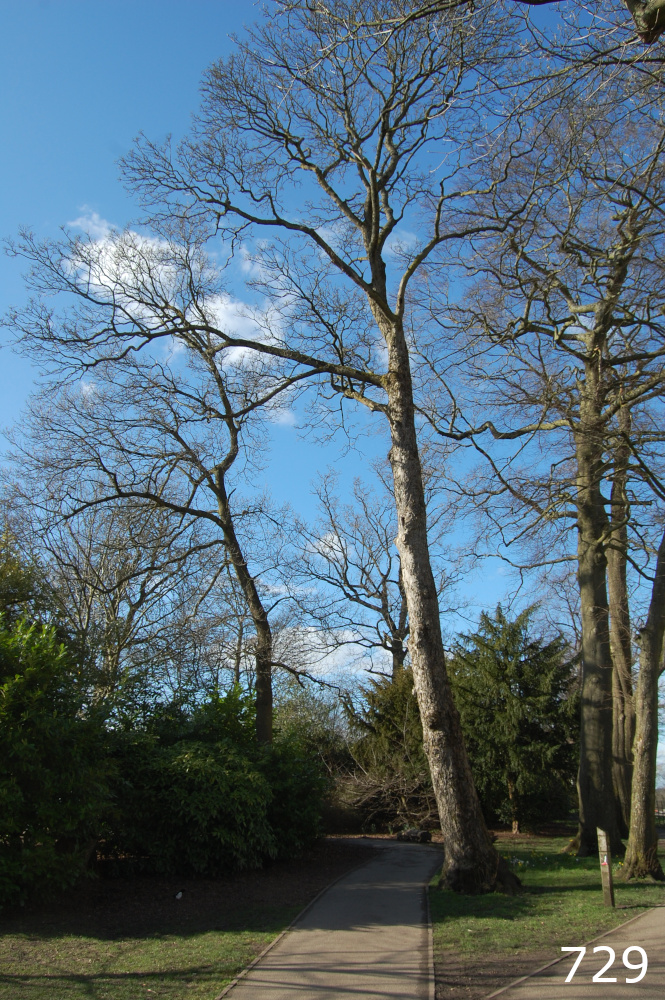
If you walk out of the Grange Road car park to walk alongside Avenue road then you will come across two Sycamore trees. Firstly, tree 729 on the left of the path then 726 on the opposite side just after the fork in the path.
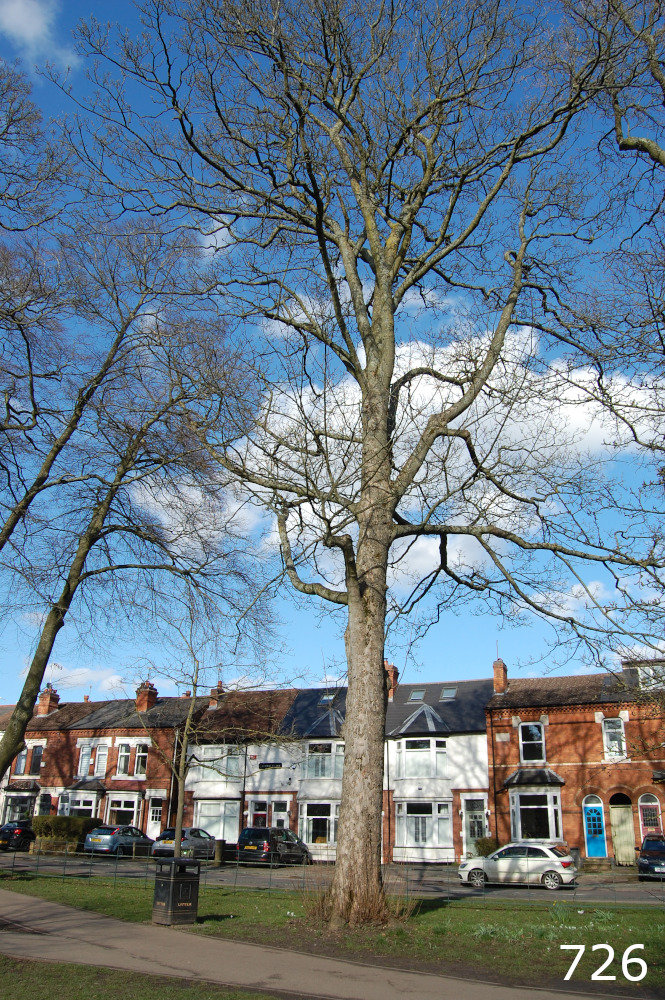
Although this Sycamore is just over the fence it still counts as a park tree – probably all of those on the verge along Avenue Road do too.
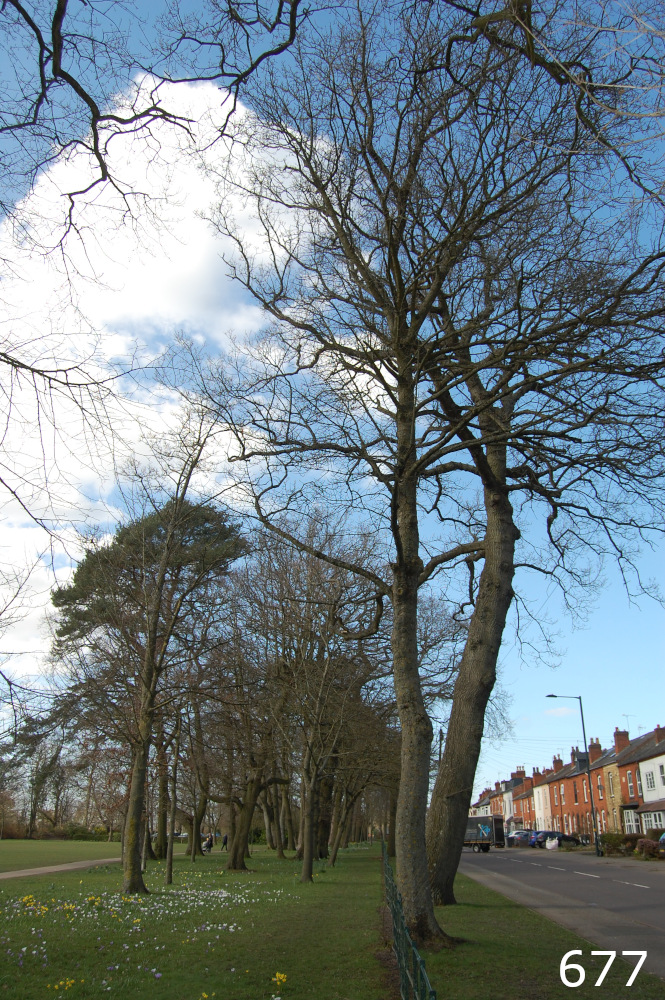
Basketball area
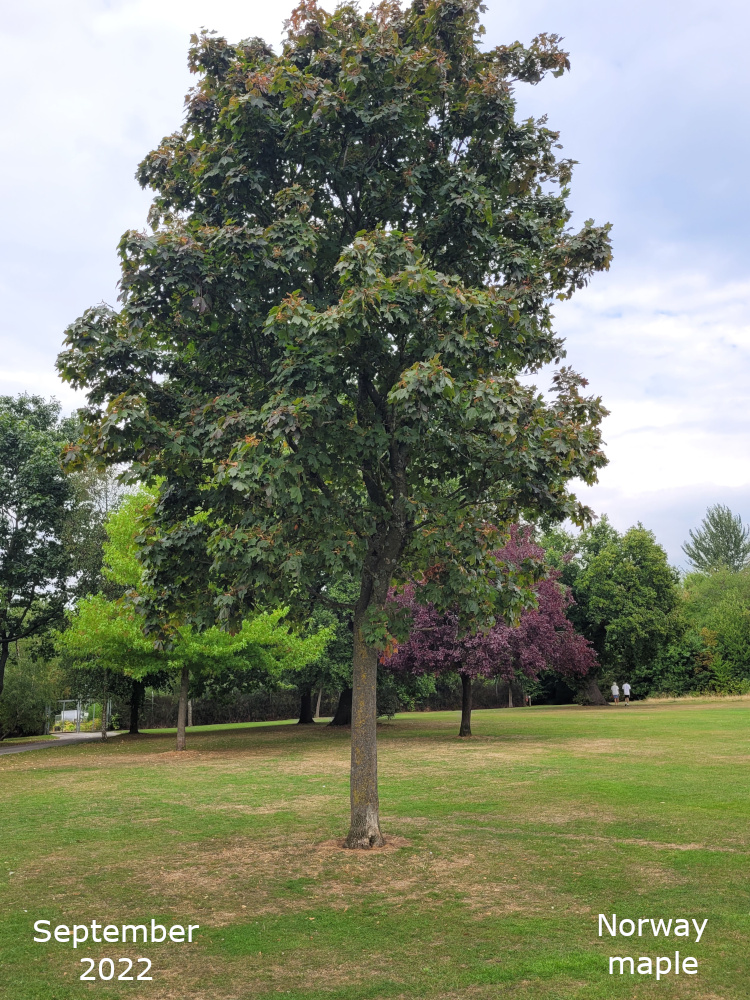
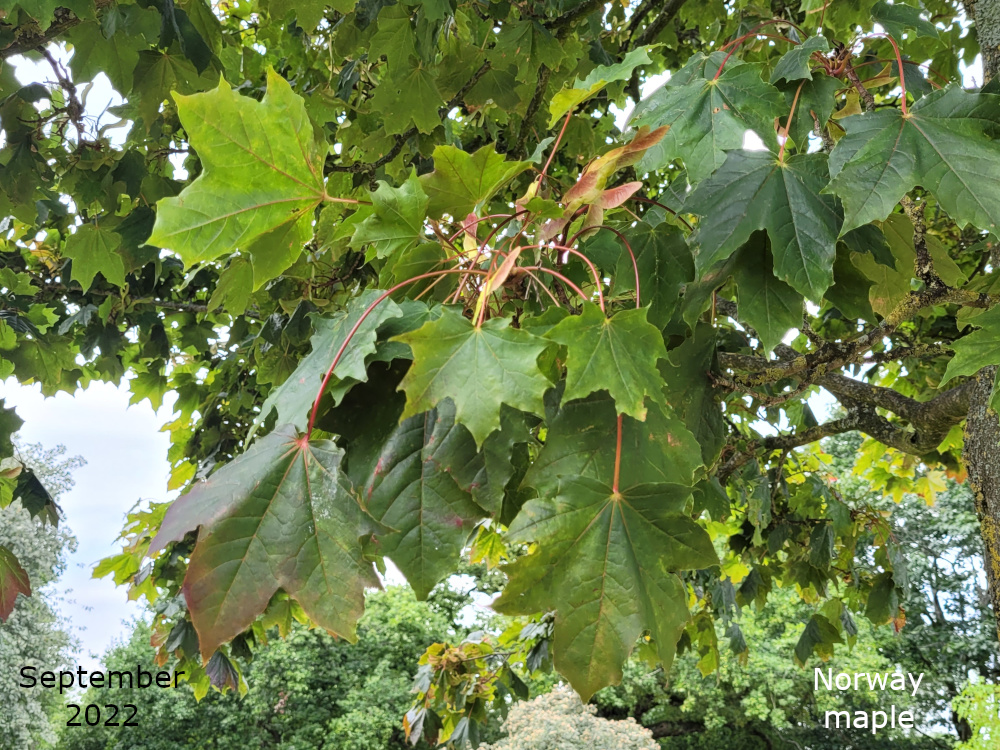
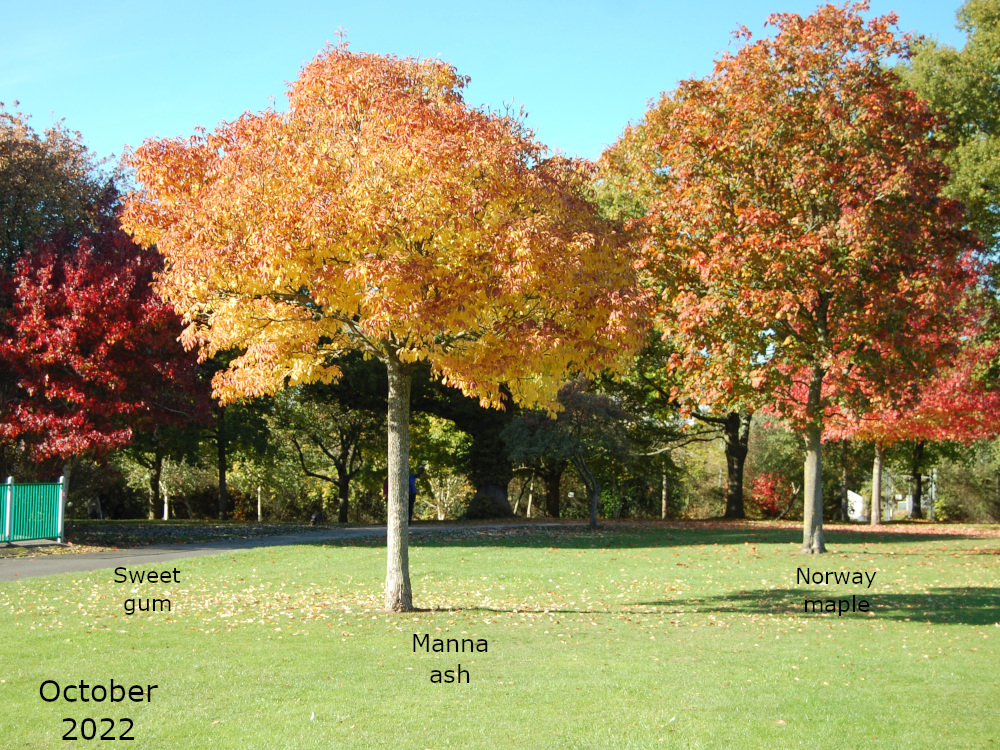
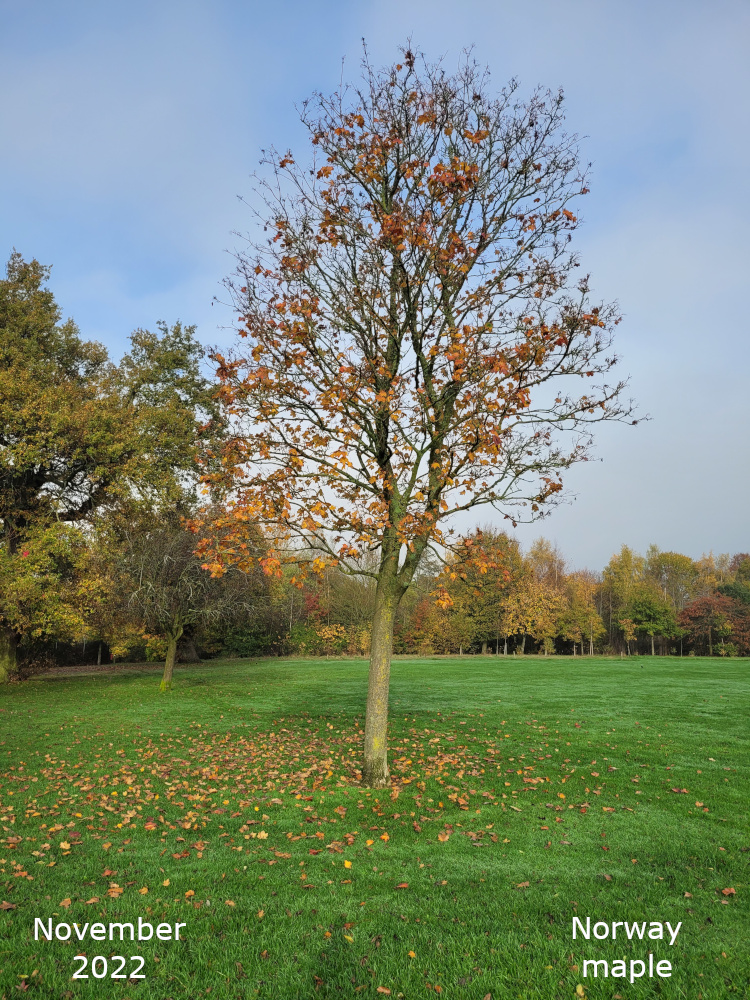
This tree, which stands on its own a small distance from a group of other trees, is a Norway maple. It has a tendency to look a bit on the purple side but not so much that I’d definitely say it was a Crimson King. Maybe it is, maybe it isn’t.
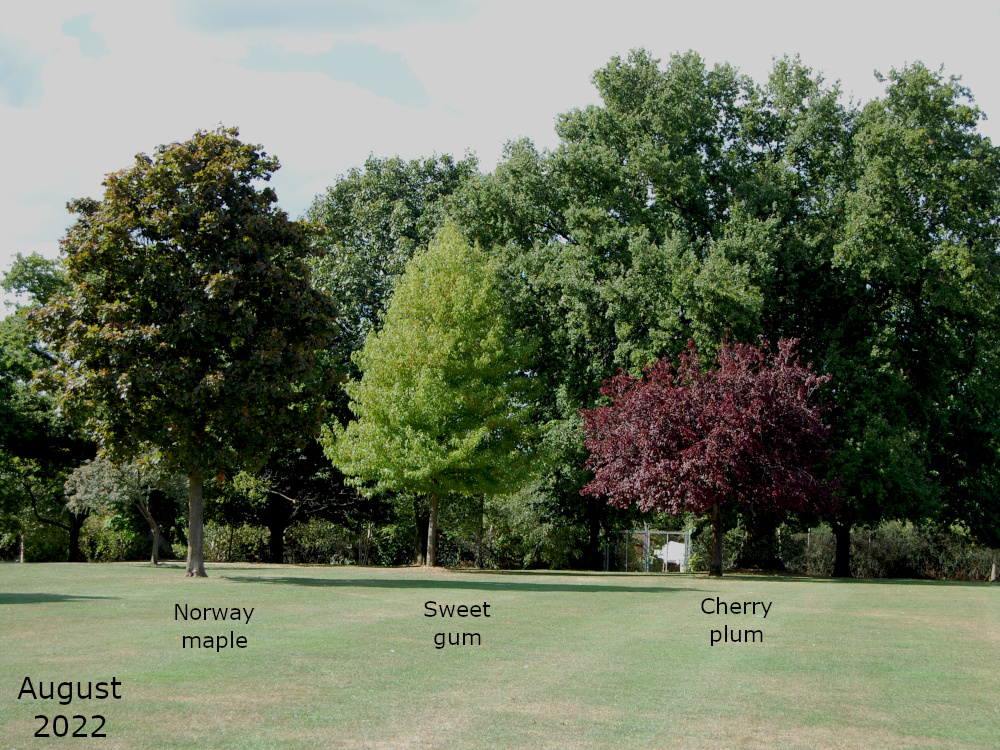
Thrive area
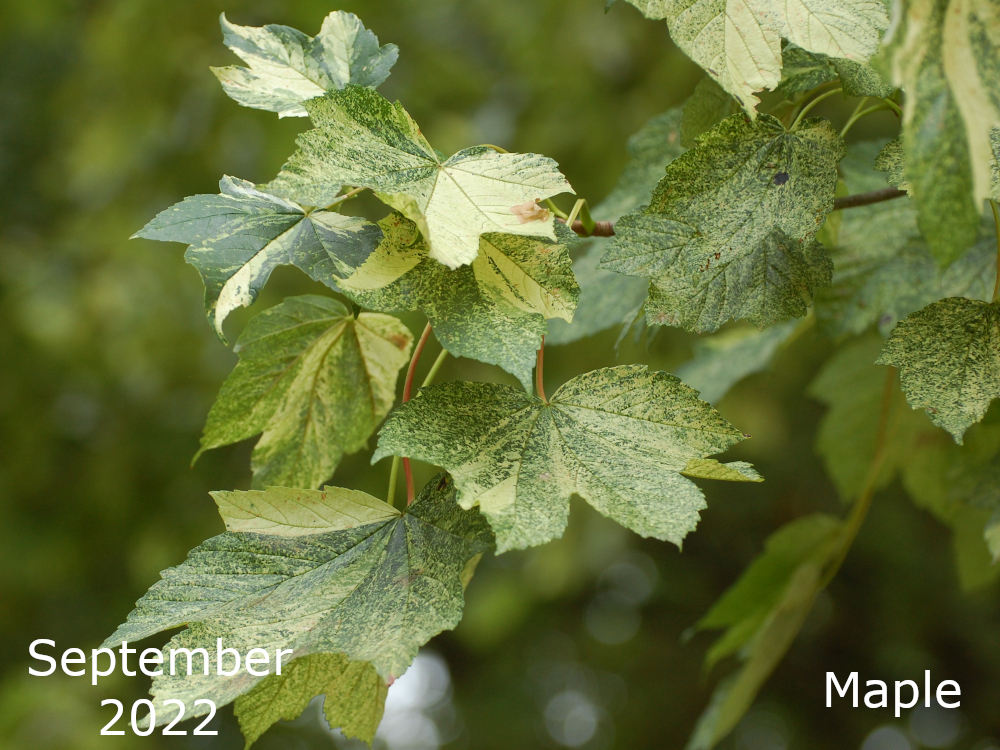
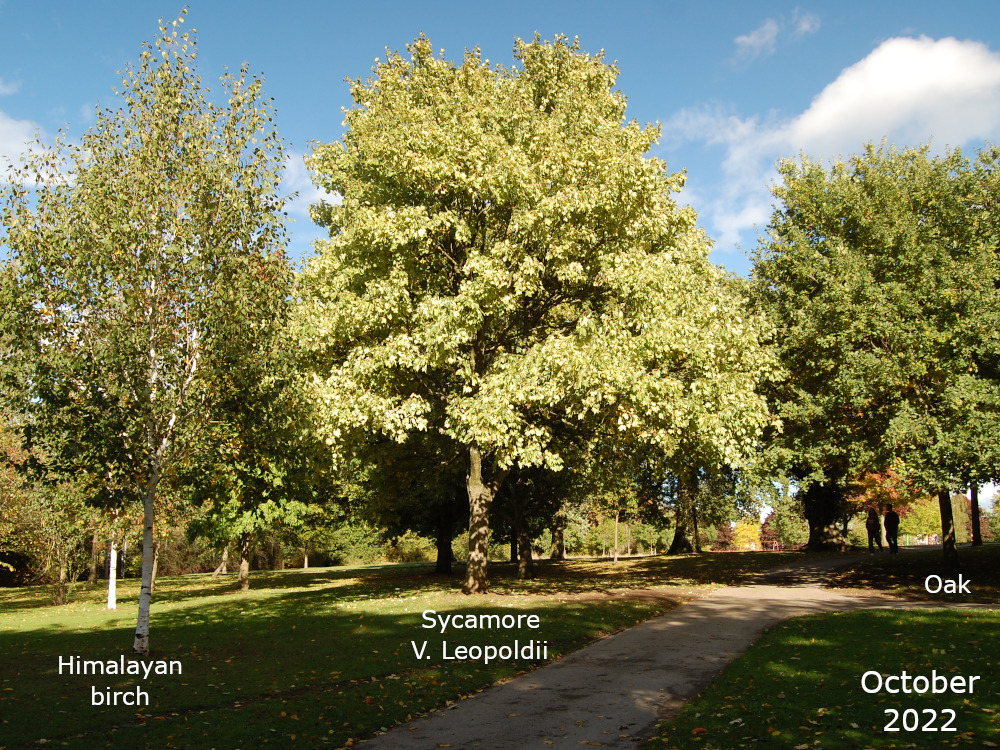
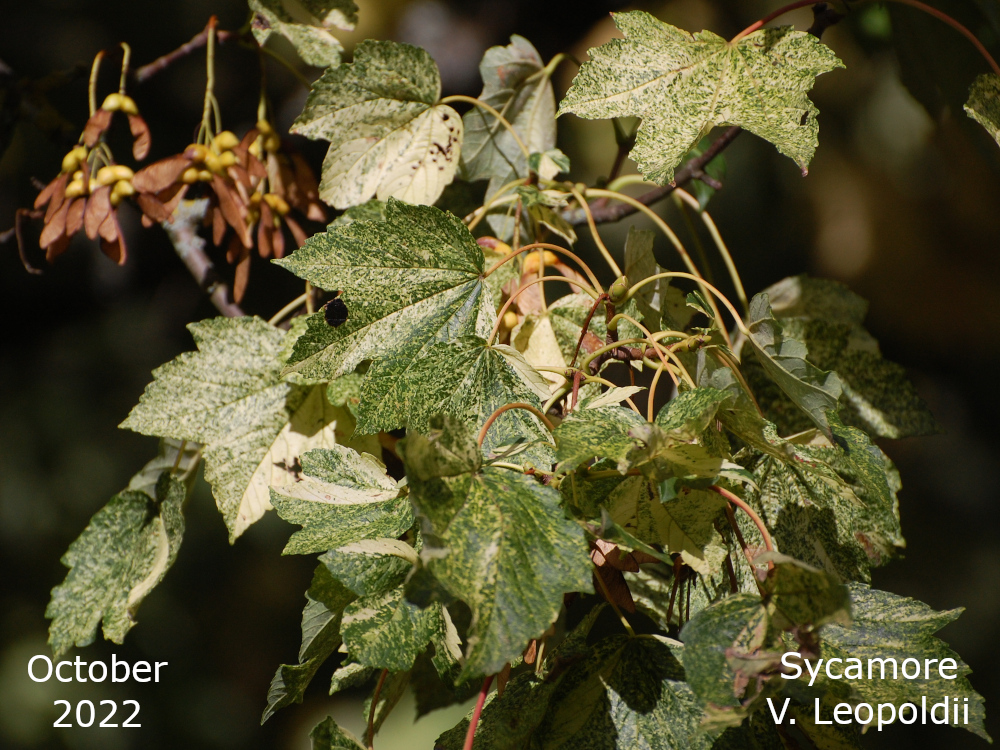
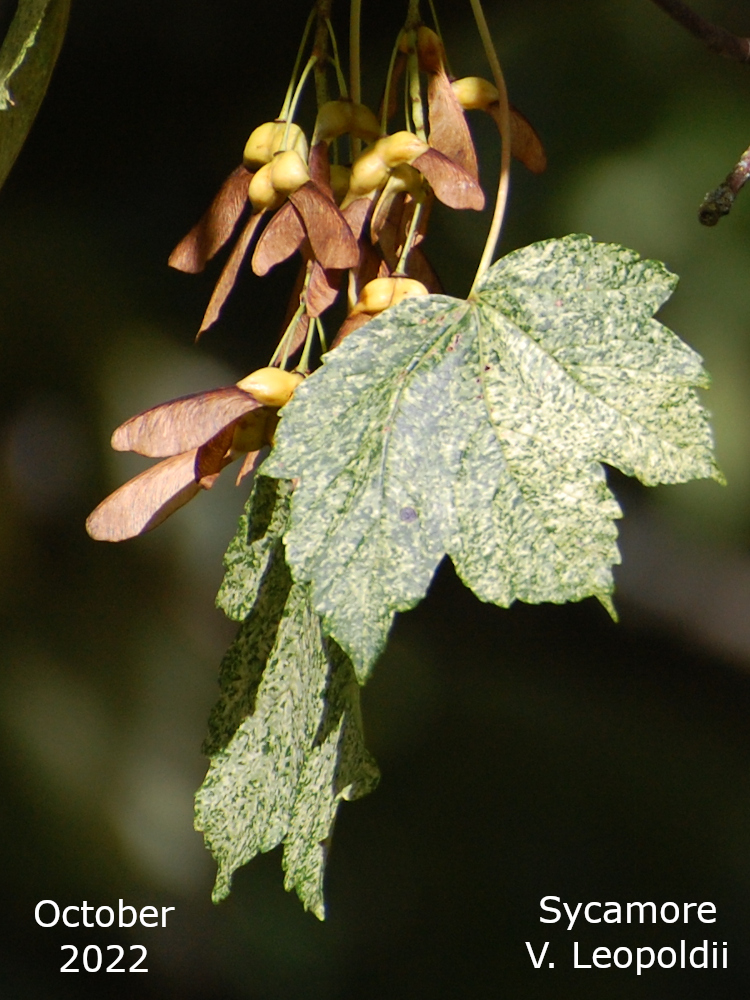
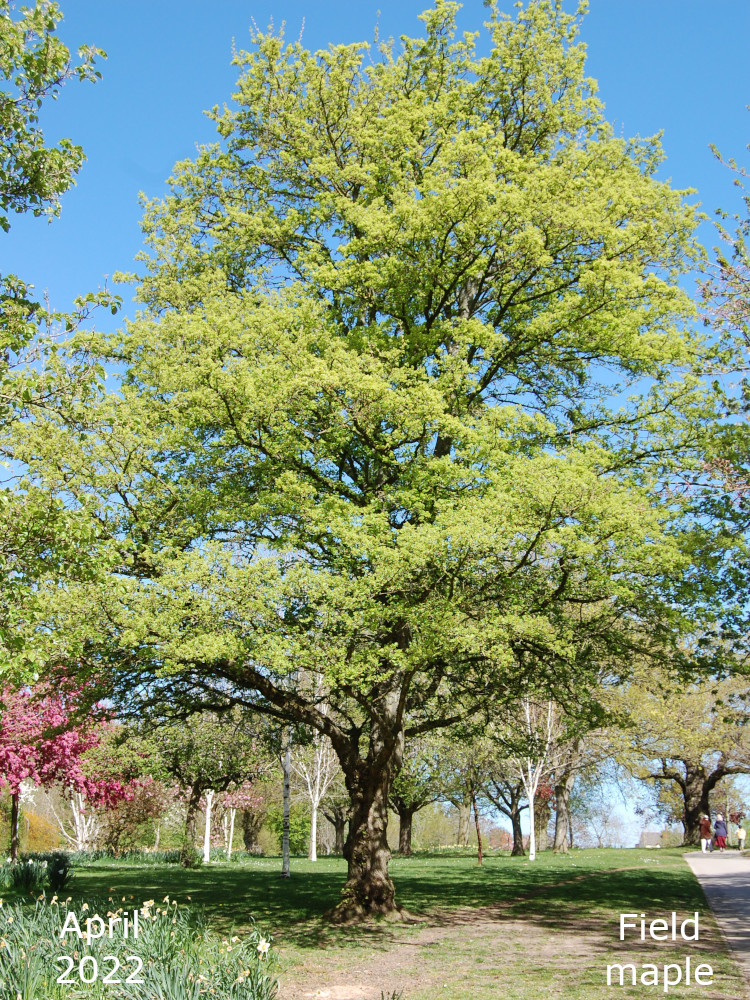
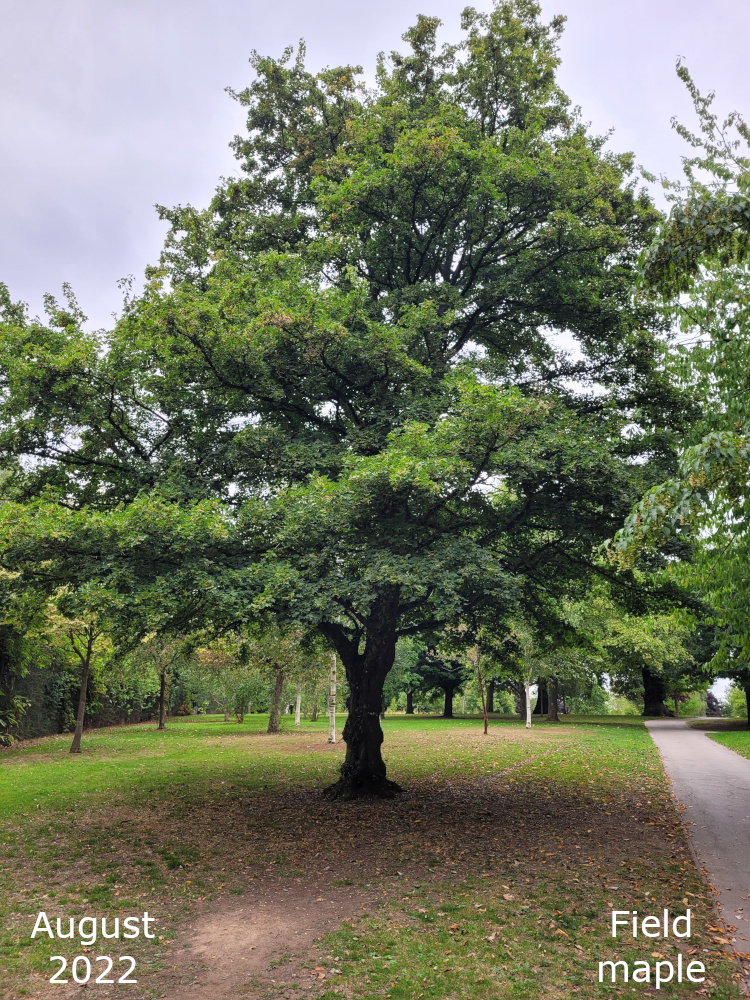
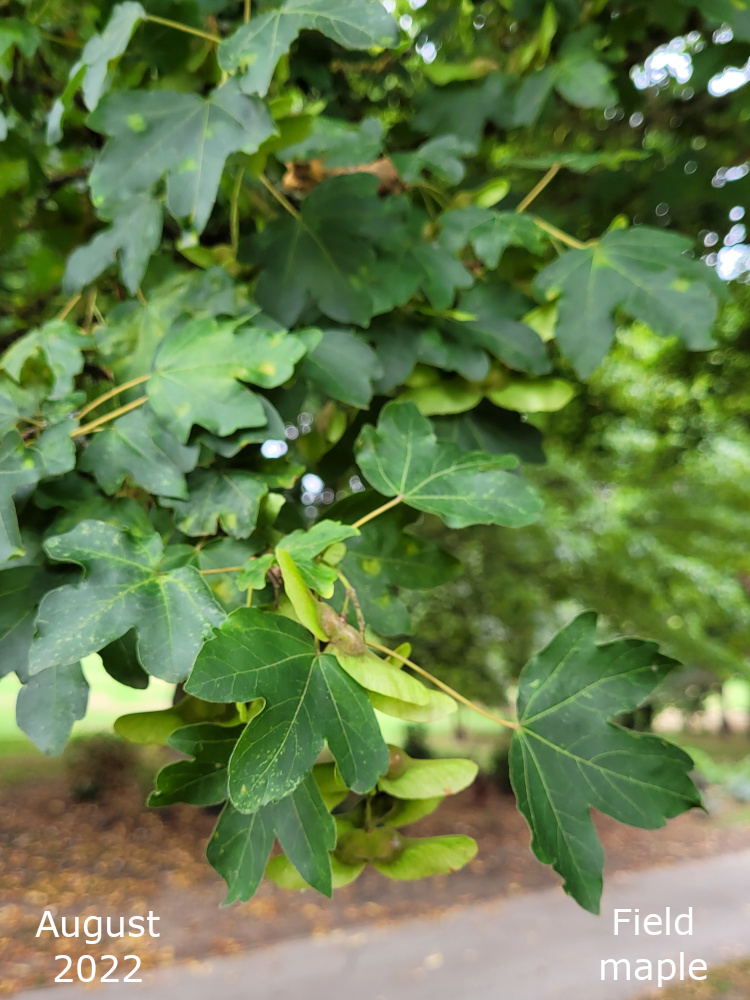
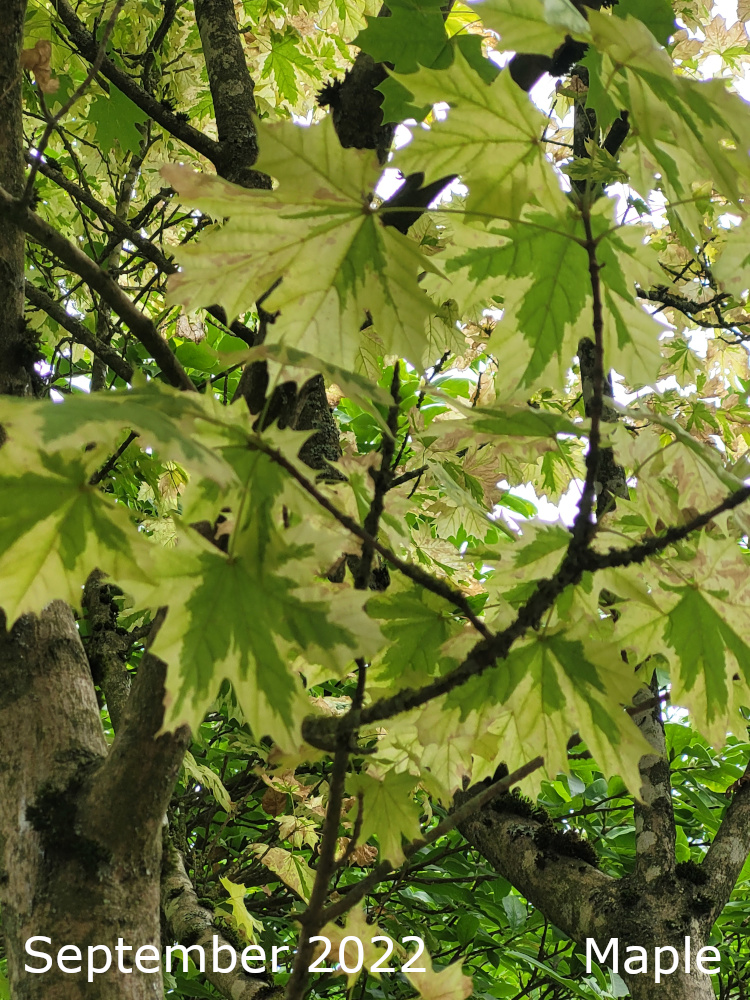
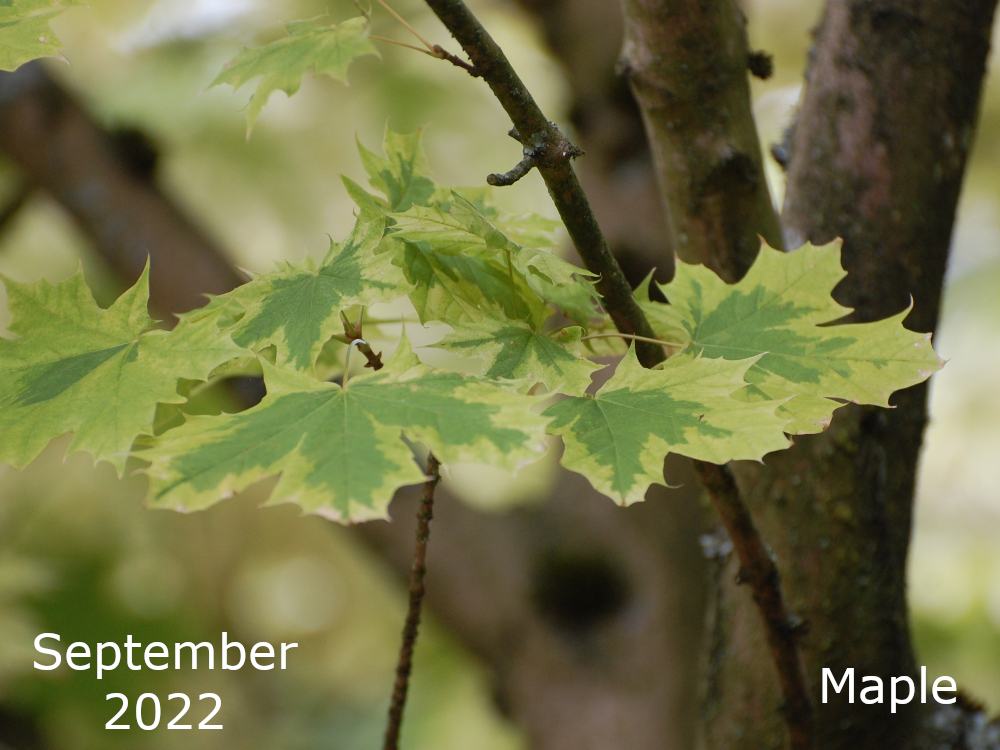
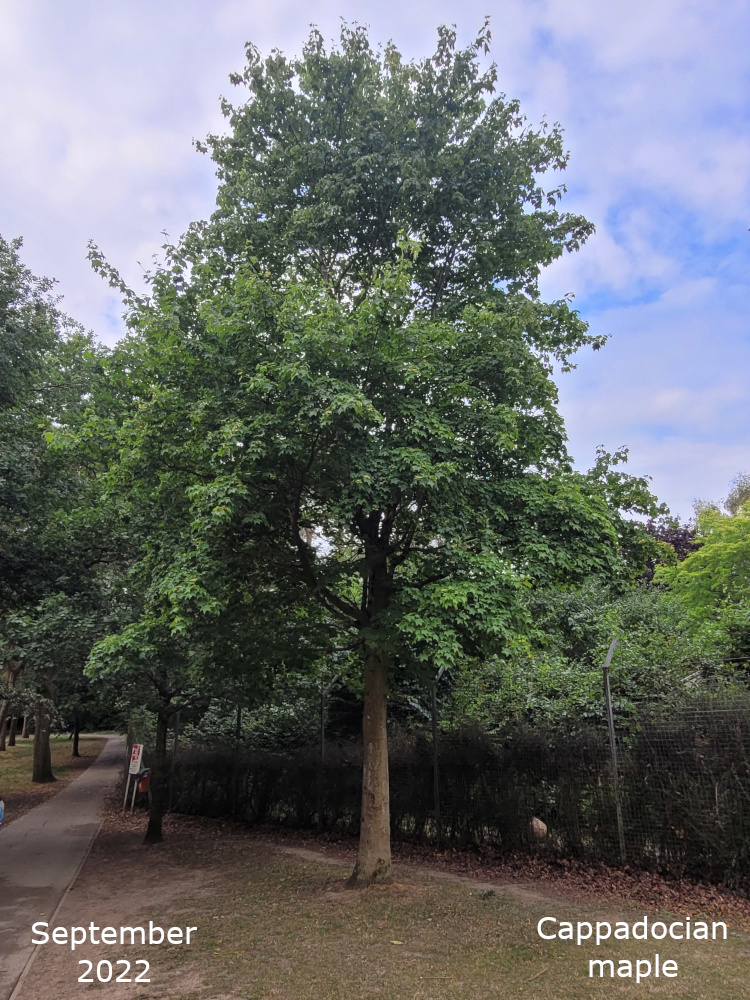
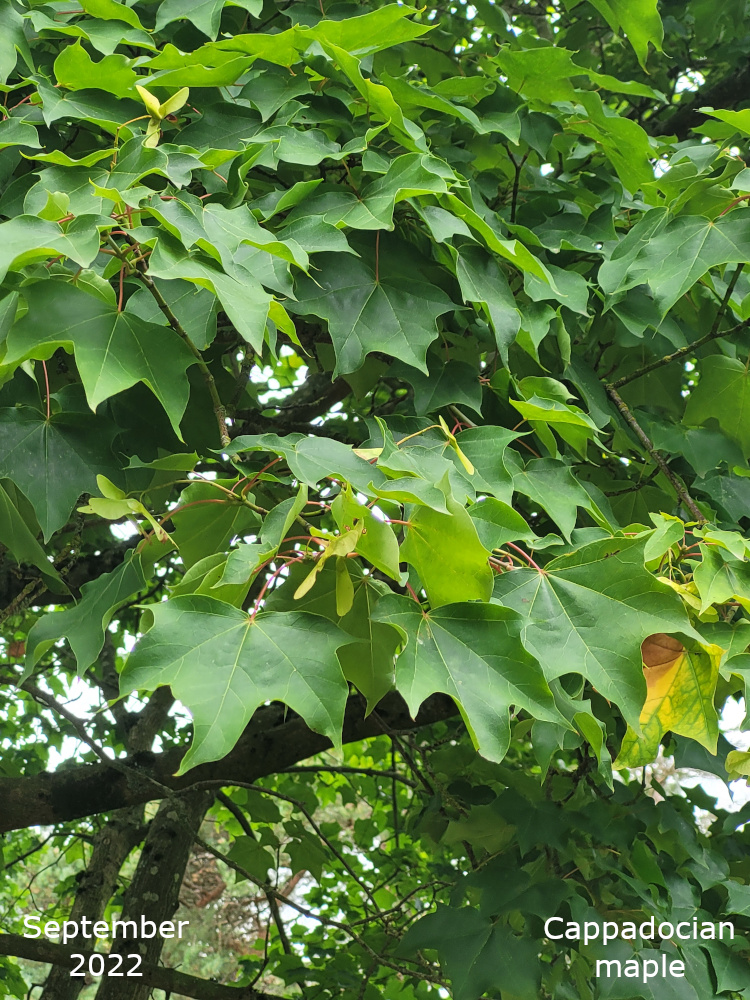
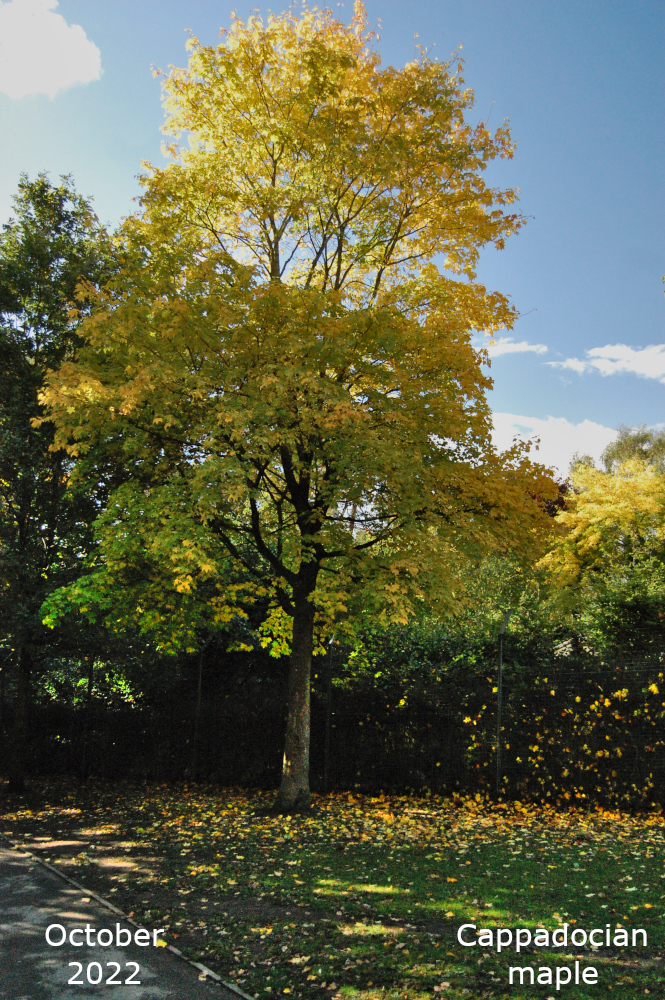
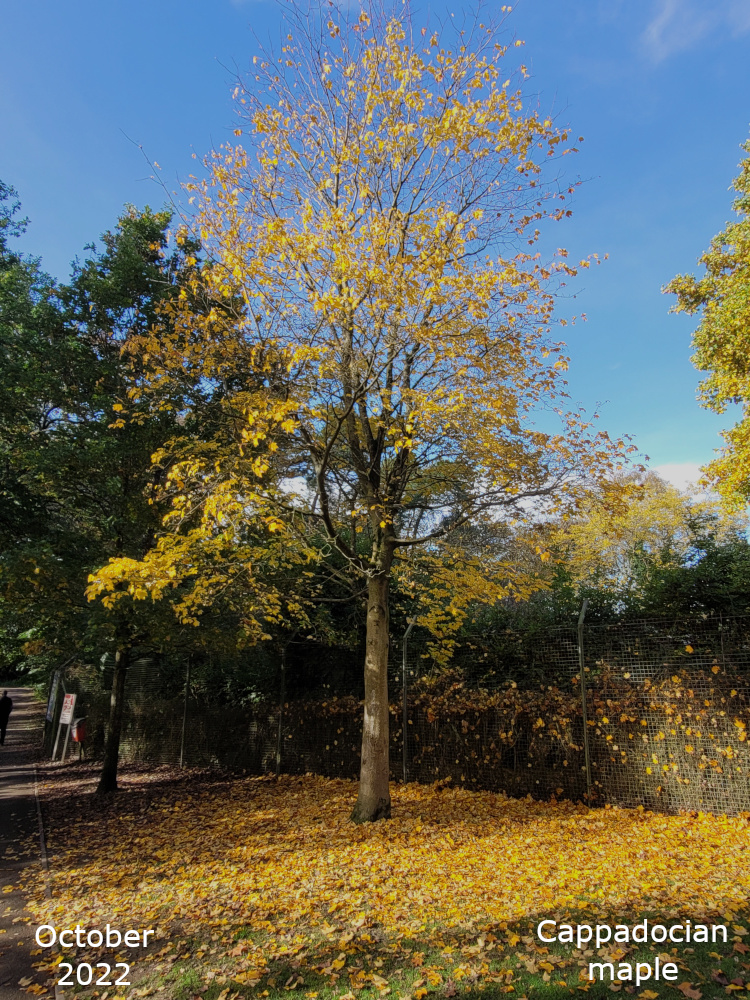
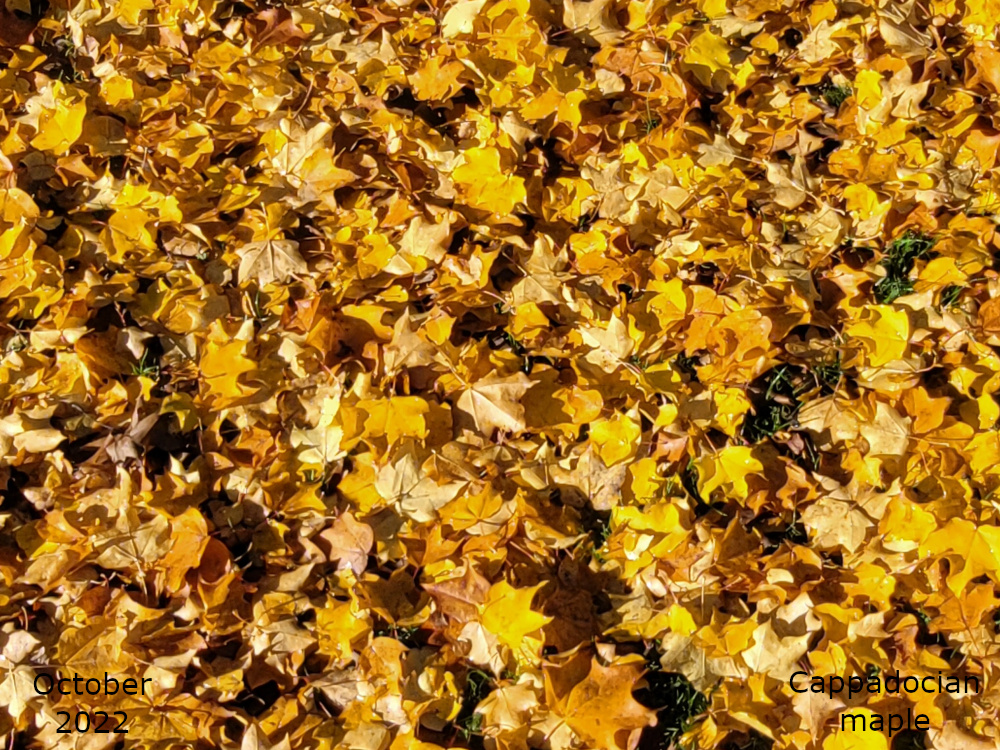
There are four maples of interest in the triangular area between the path and the fence of the Thrive garden, as you walk down the hill. The one nearest the top, opposite the junction in the paths is a Sycamore, but it is not a regular Sycamore. It is a variegated variety and the variegation gives the leaves a mottled effect. I believe the variety is called ‘Leopold’. One more is another sizeable tree about two thirds the way down the triangle, a Field maple. It has a gnarled trunk with quite a few burrs on it but it looks lovely in Spring. Field maples are usually quite easy to spot from other maples as their leaves are less pointy, more rounded. A third tree is smaller than the others and is close to the fence almost alongside the Field maple. This one is a Norway maple but I don’t know what the variety is. The final tree is nearer the bottom of the triangle and is a Cappadocian maple. Its leaves are the usual five pointed lobes but they have particularly long, wispy tips. This is not always evident though!



Norway maple, colour garden
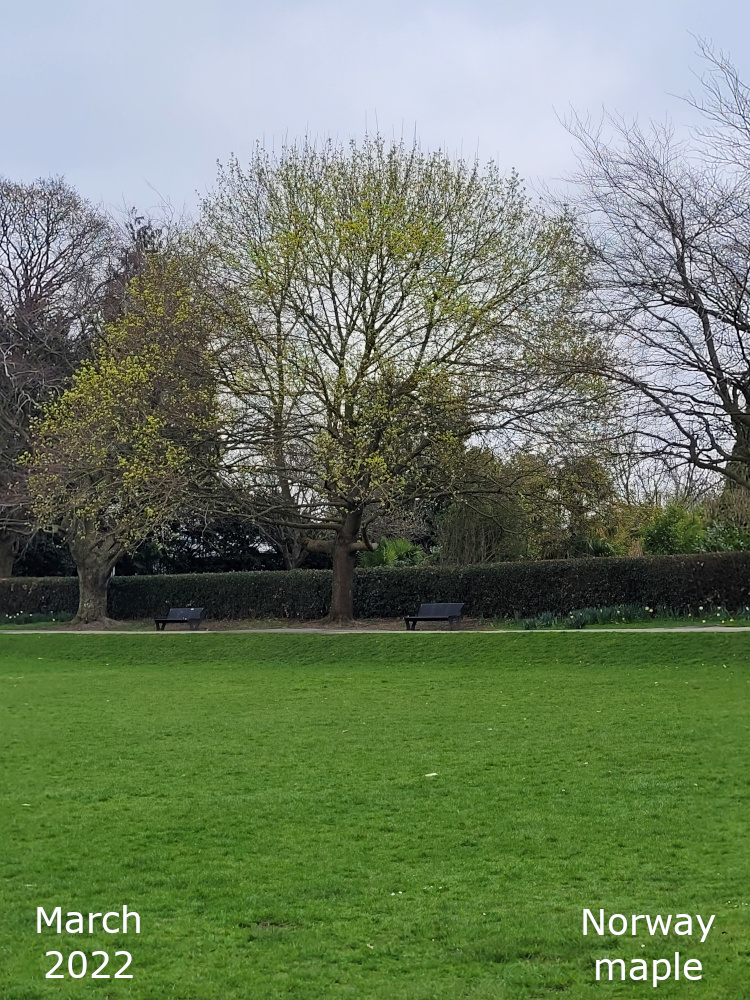
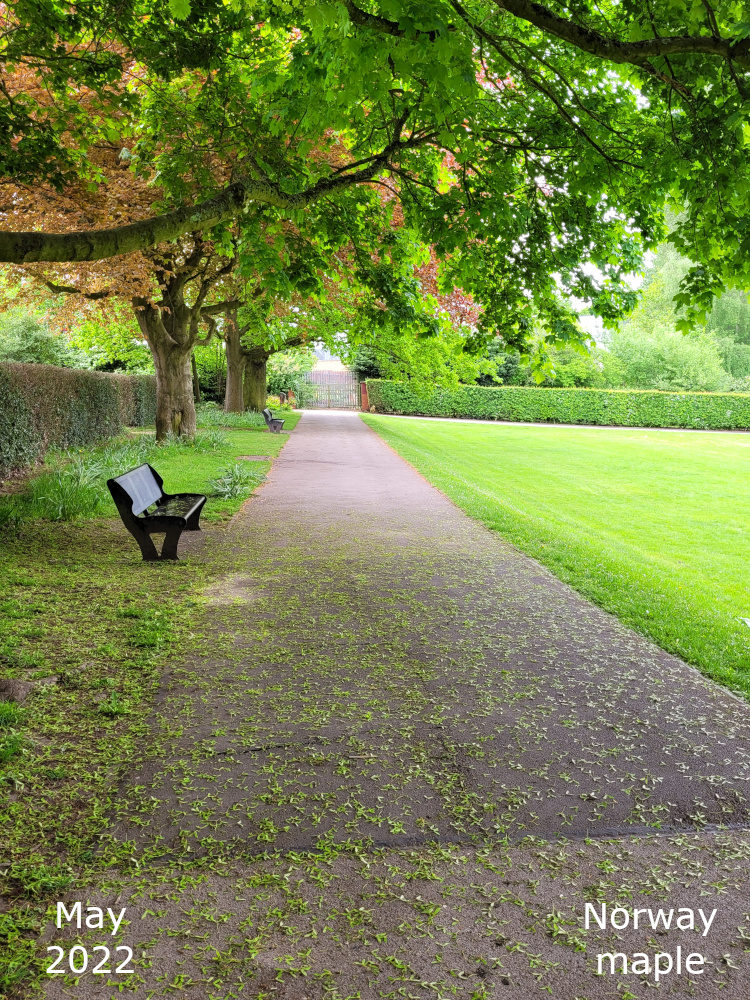
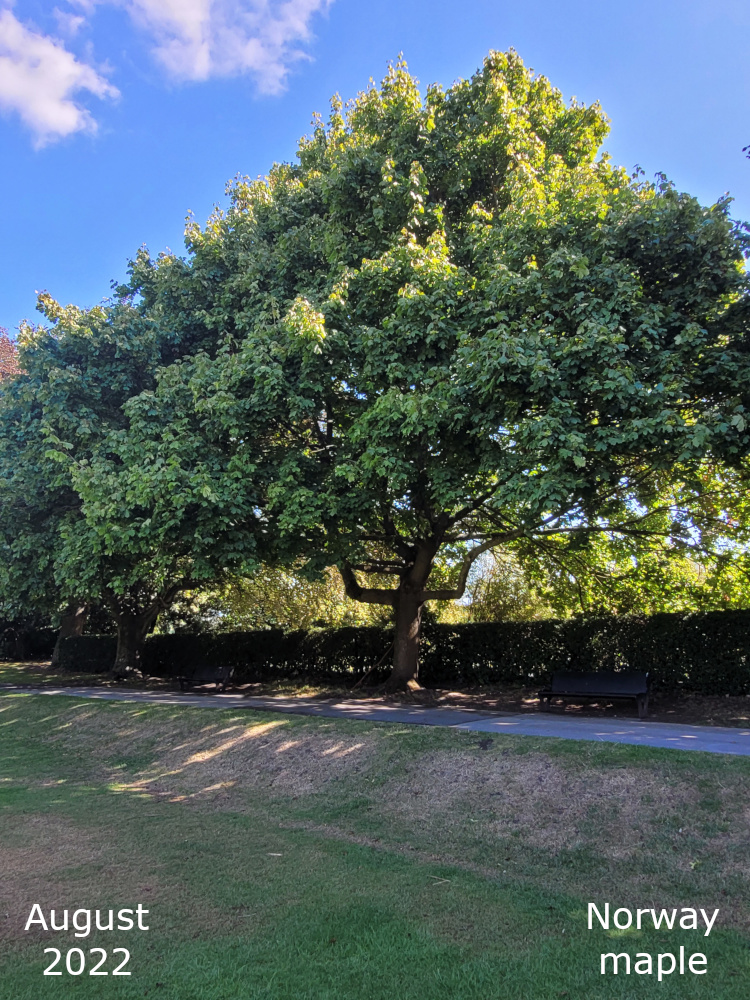
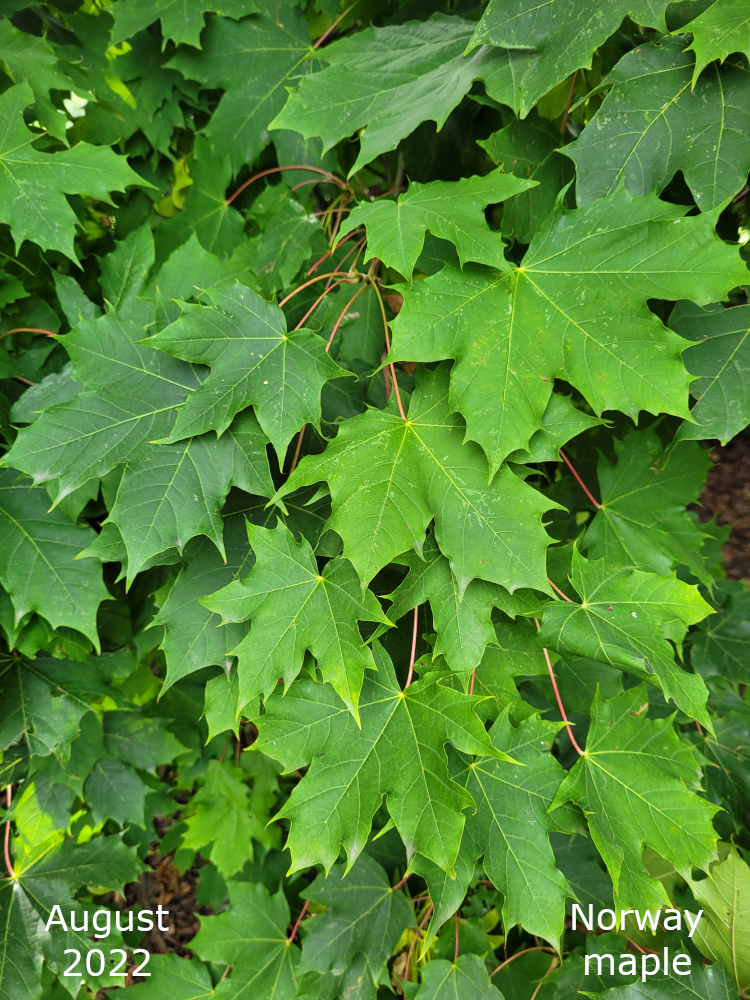
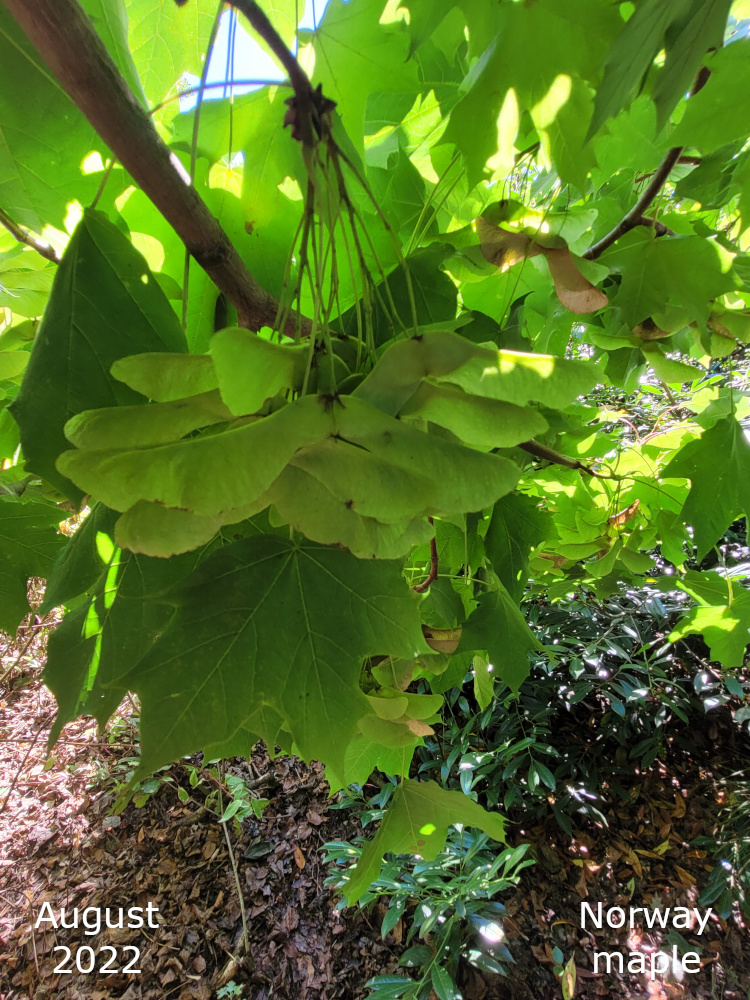
Walking away from the triangular area by the Thrive garden, along the path below the colour gardens, there are seven large trees, six of them all together. These six trees share a canopy that spreads over the path. The third one along, from the Thrive garden end, is a Norway maple. It has two short, horizontal boughs, looking like outstretched arms. In the Spring and Early Summer of 2022 it produced so many keys / samaras that they were covering the path.

Field maples, main field
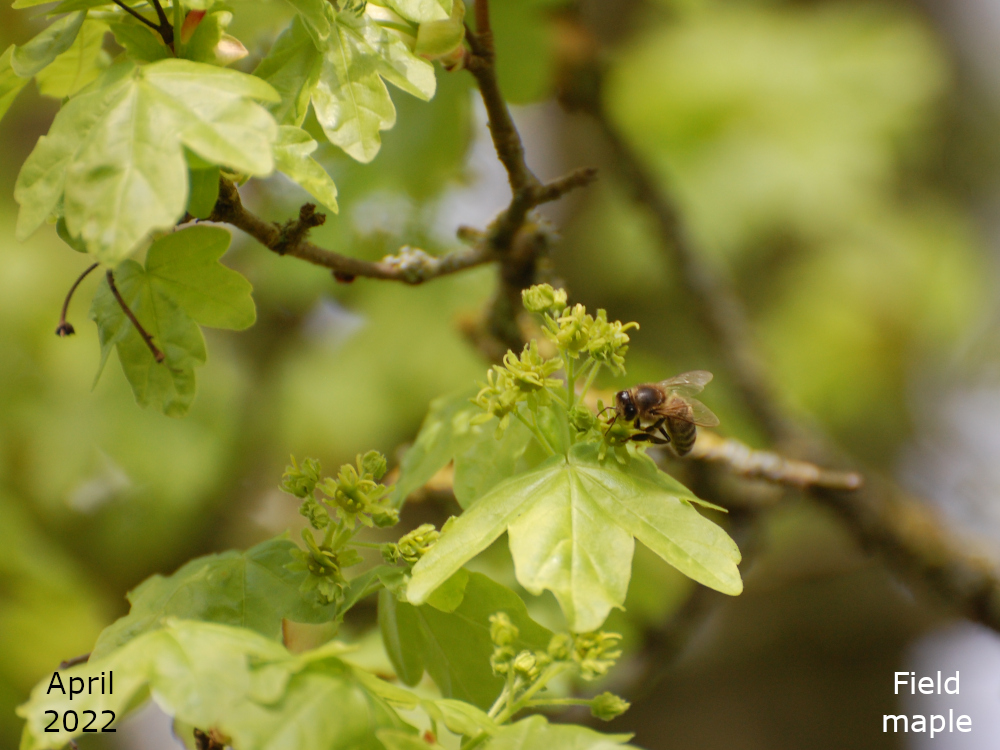
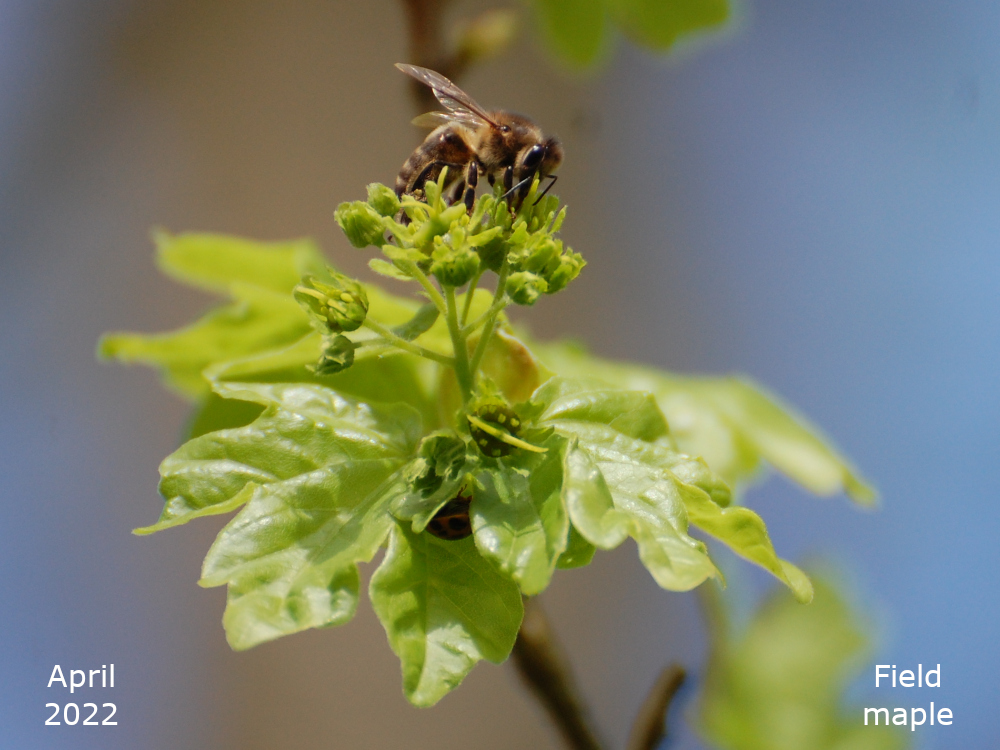
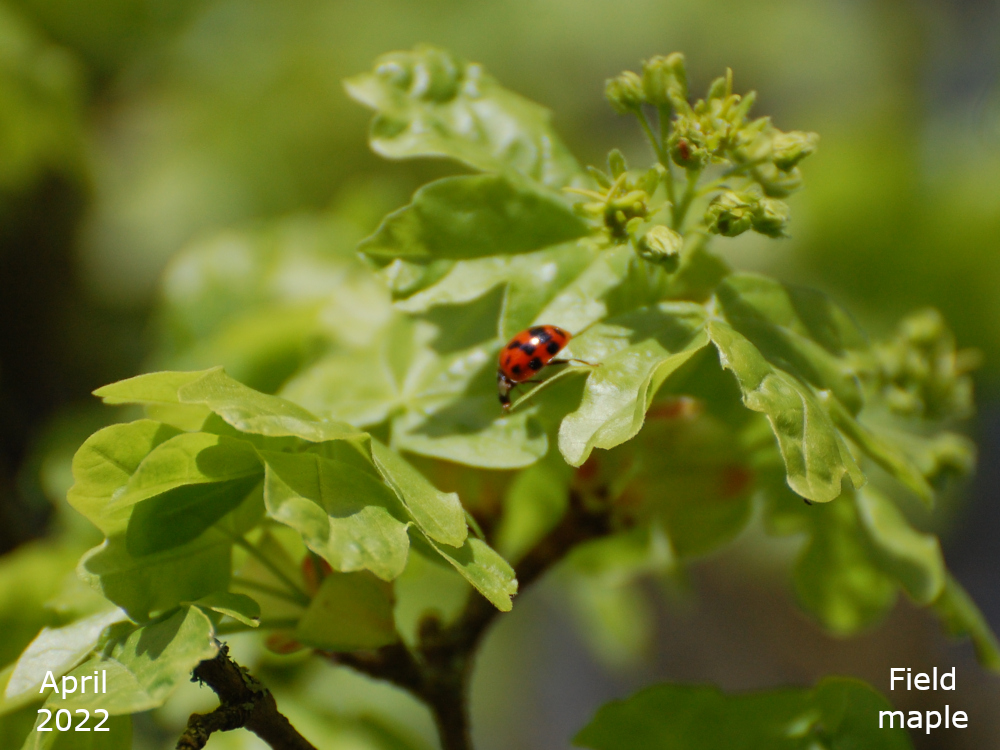
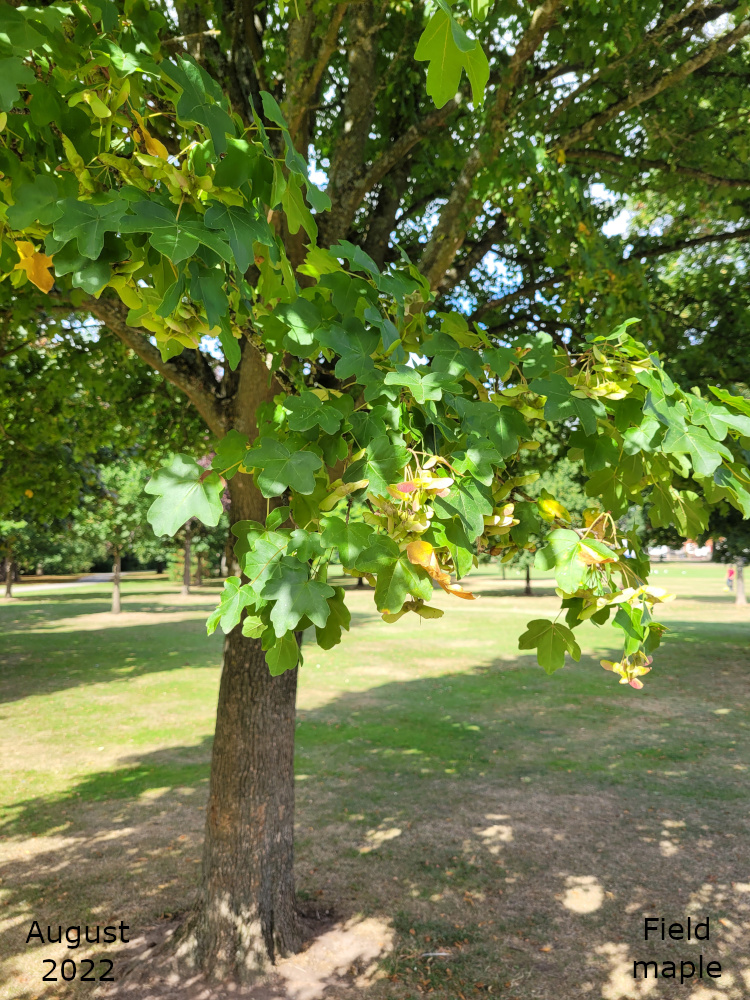
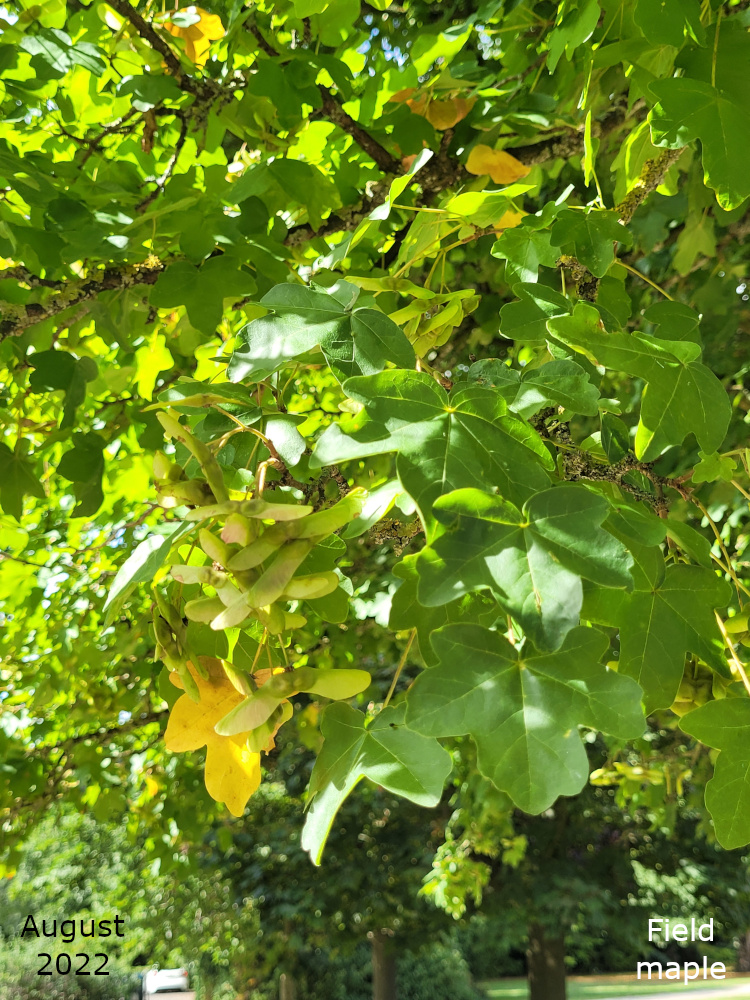
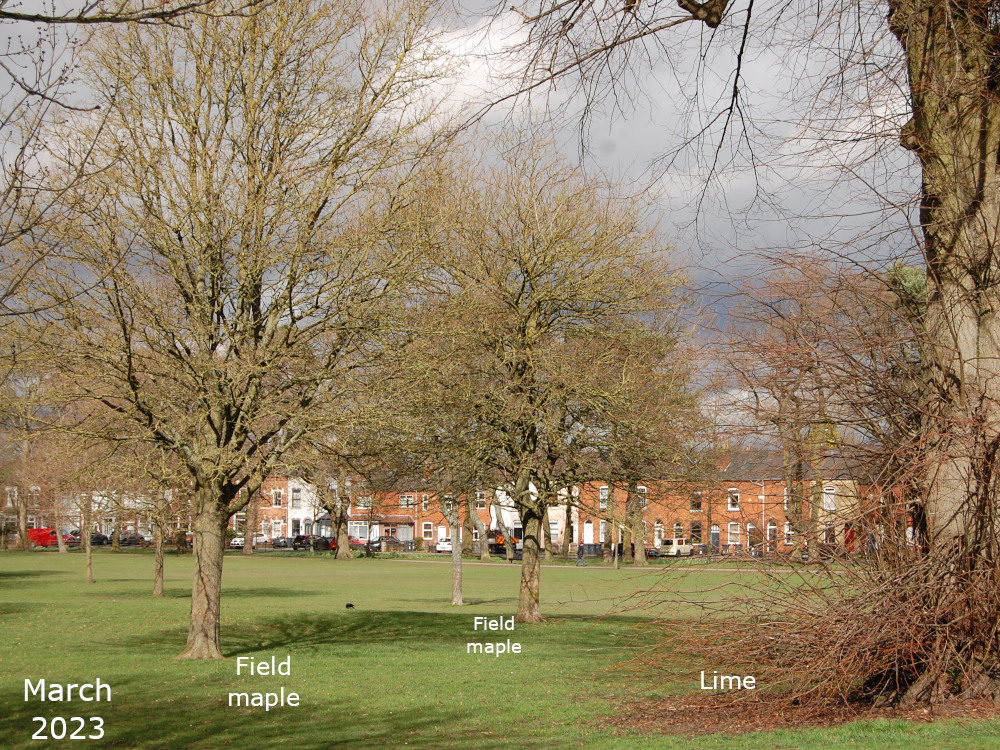
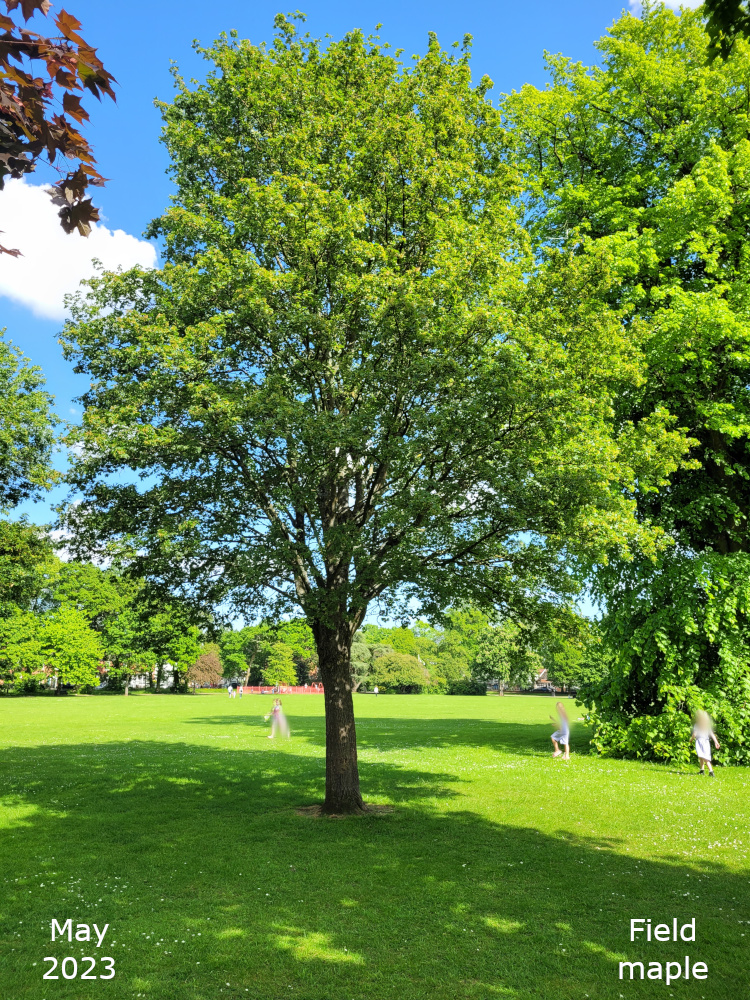
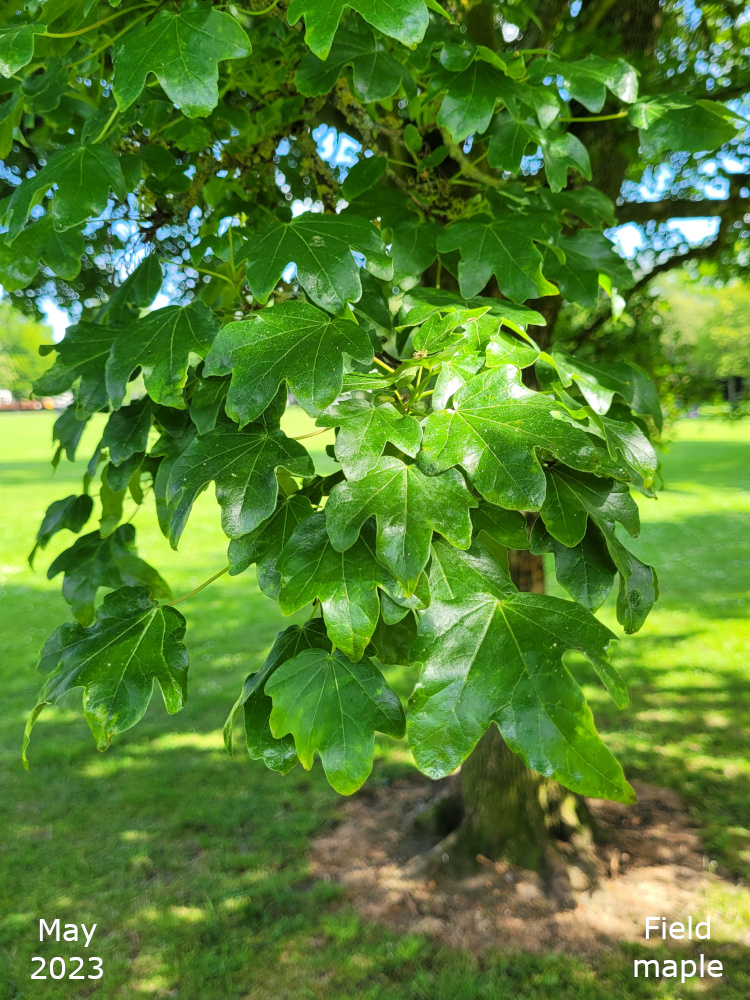
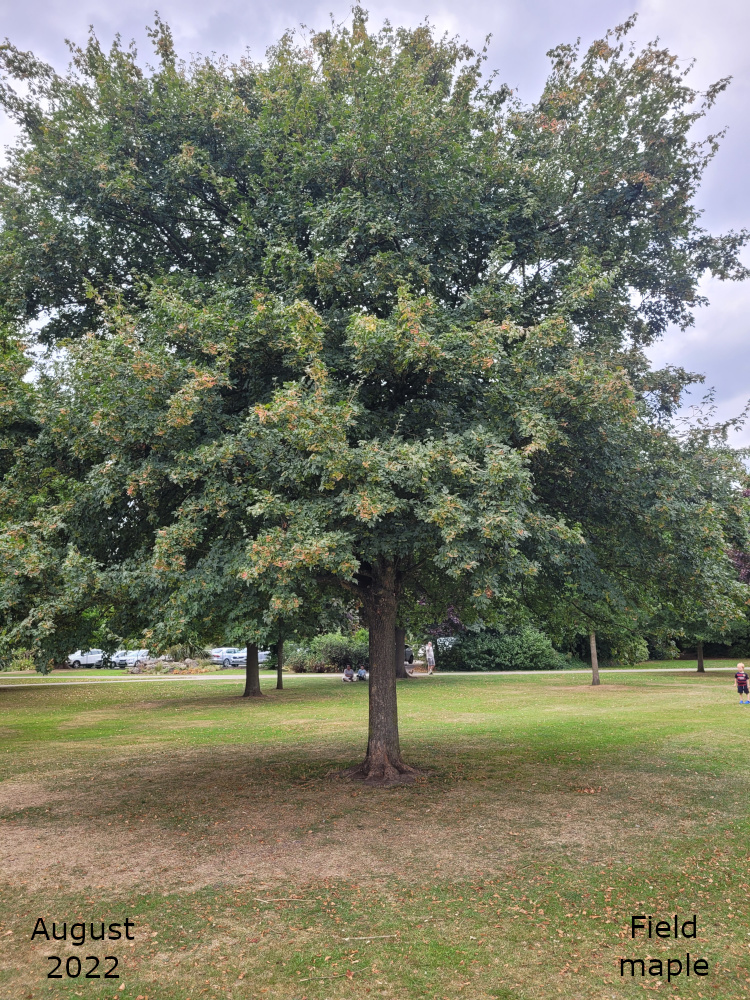
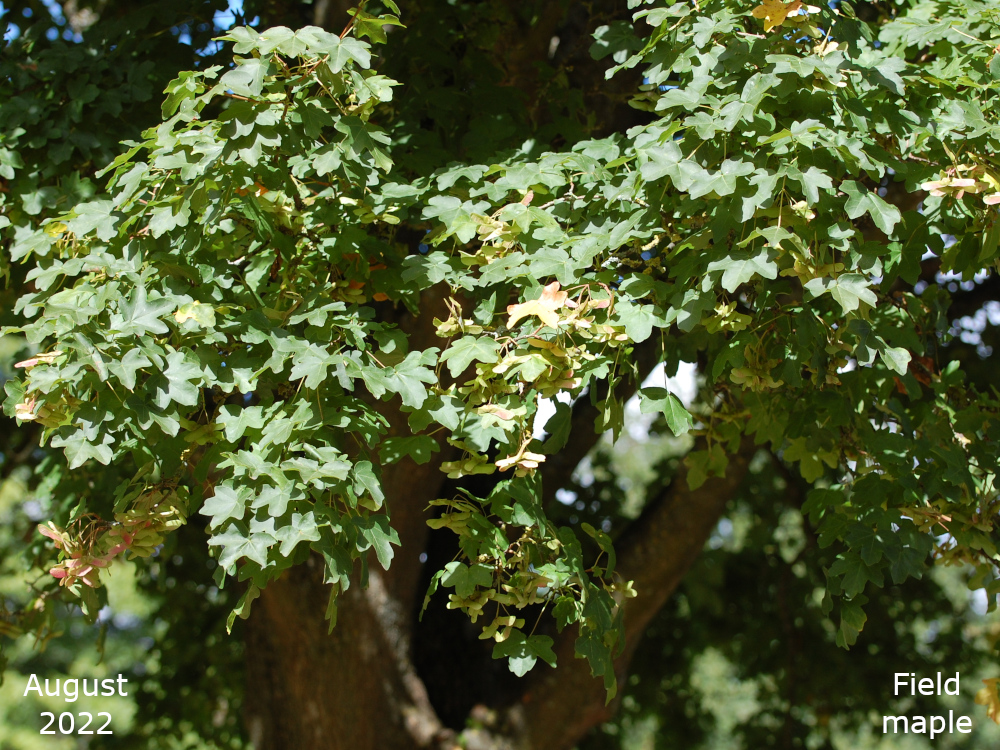
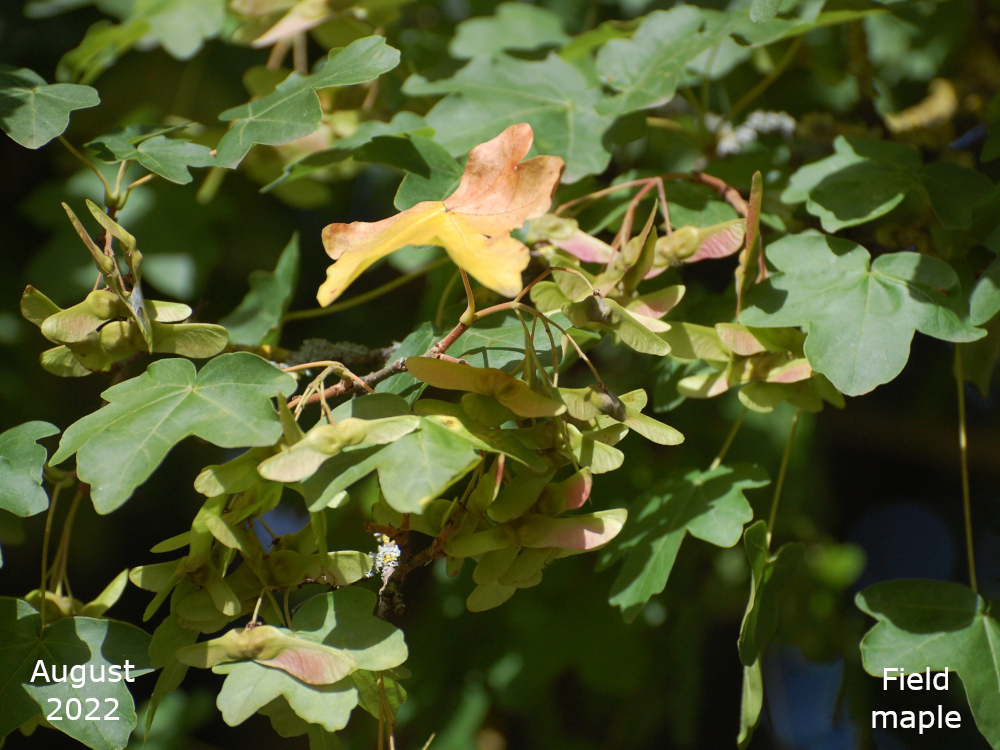
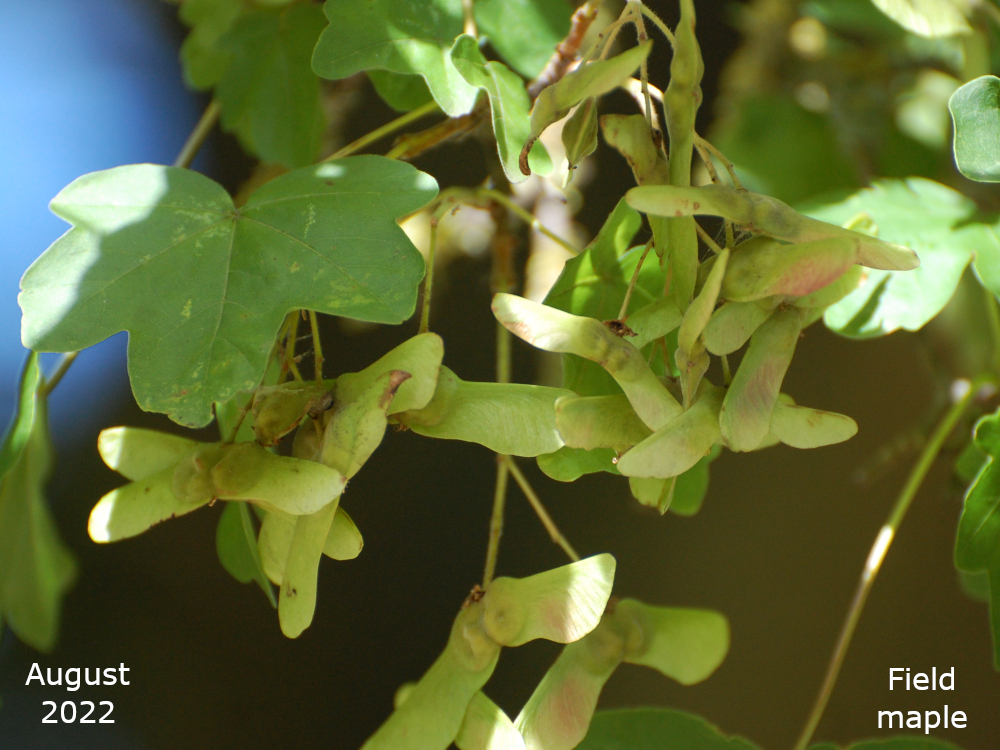
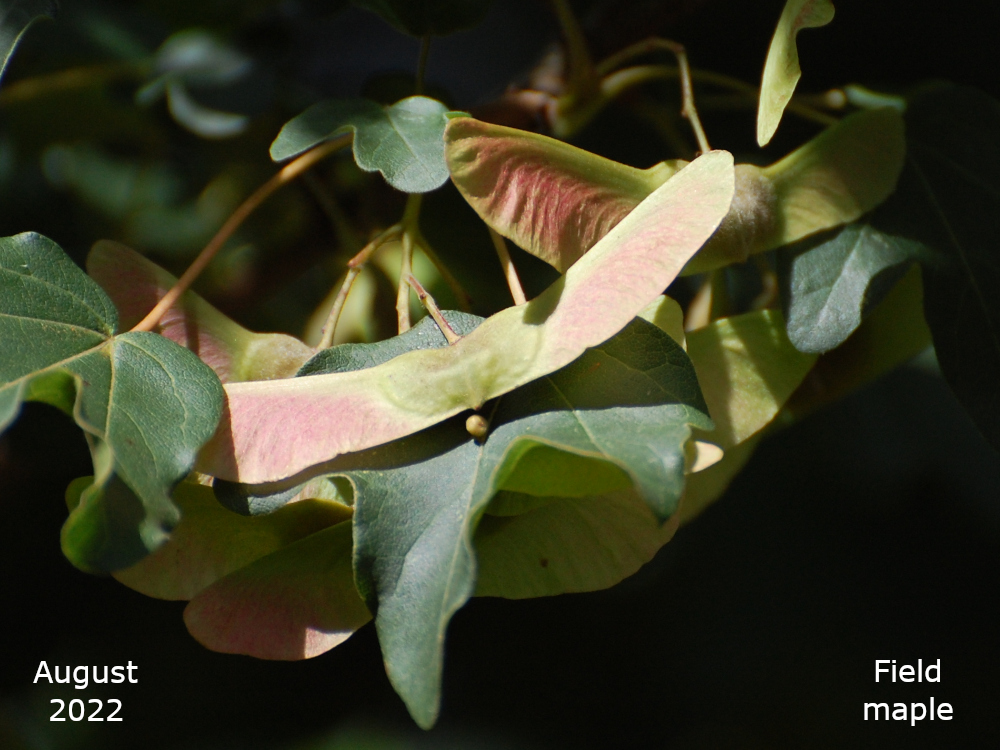
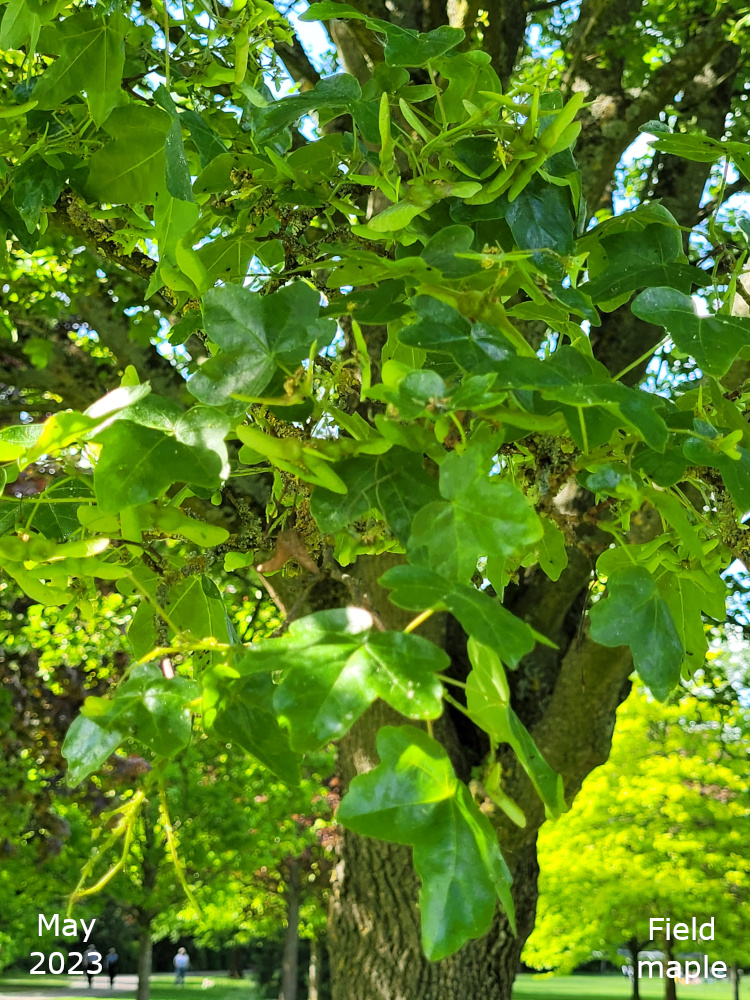
There are a lot of trees that follow the perimeter of the main field, from the front of the park along Vicarage Road, up alongside the drive and then diagonally across to the Grange Road car park. These two Field maples are in amongst them. The field maple, Acer campestre, is our only native maple species. Native species are important as they support native wildlife and the Field maple can support up to 51 different species of insects and mites. The five pointed leaves, typical of maples, is more rounded in the Field maple.
The yellowy-green flowers come out in April and attract insect pollinators. By August the winged seeds are well formed but many will have fallen by the wayside.

Norway maples, CK
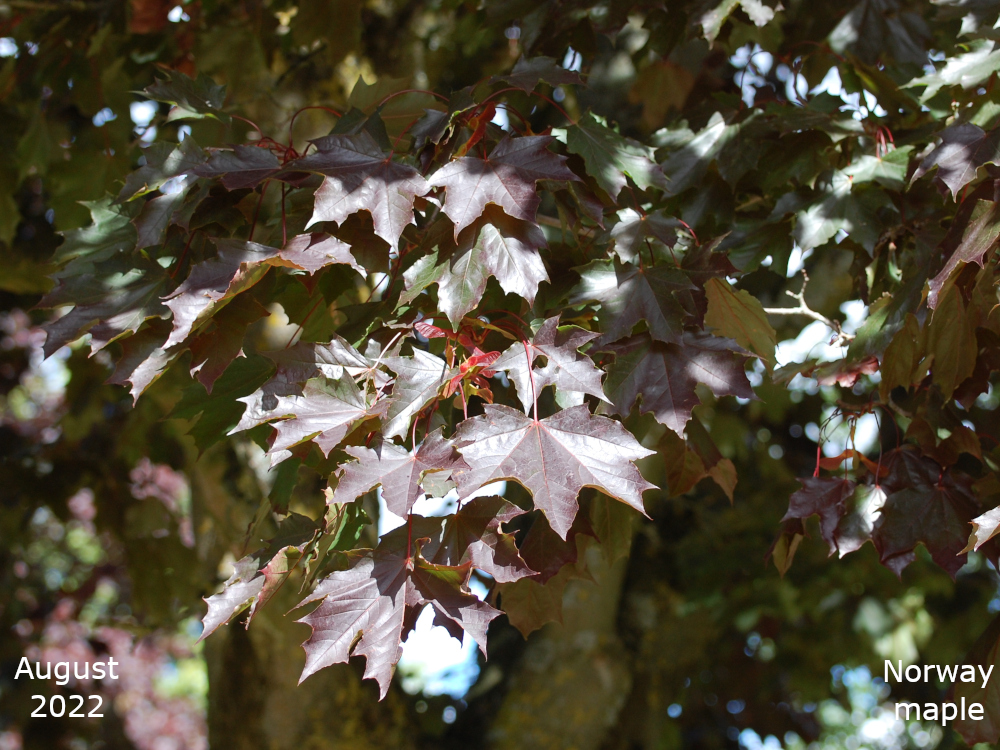
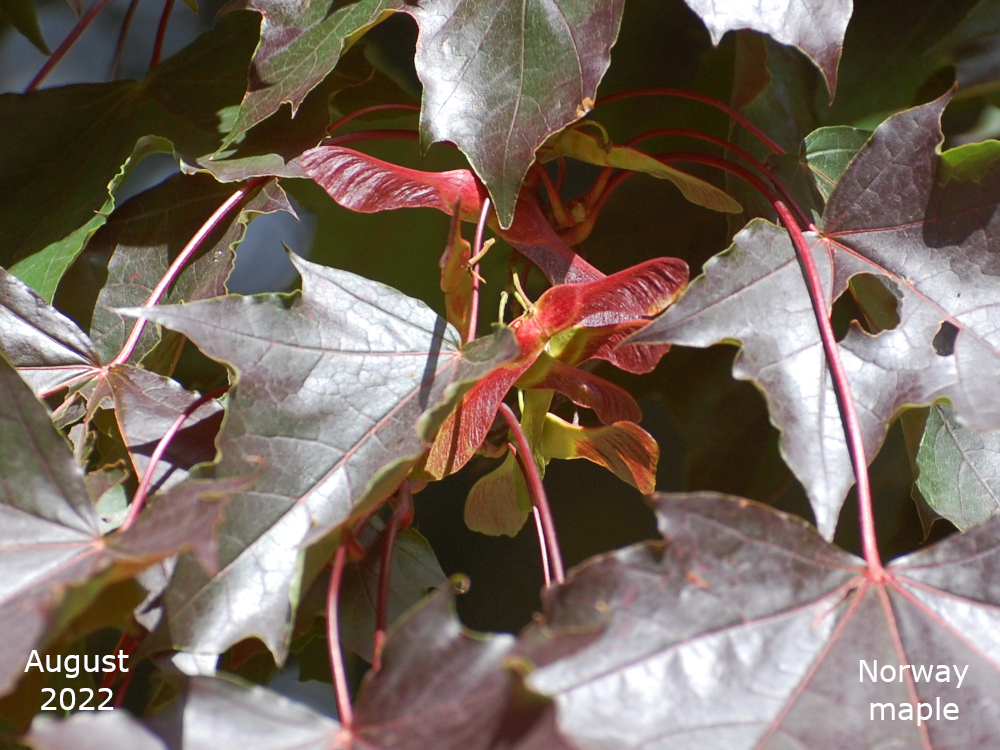
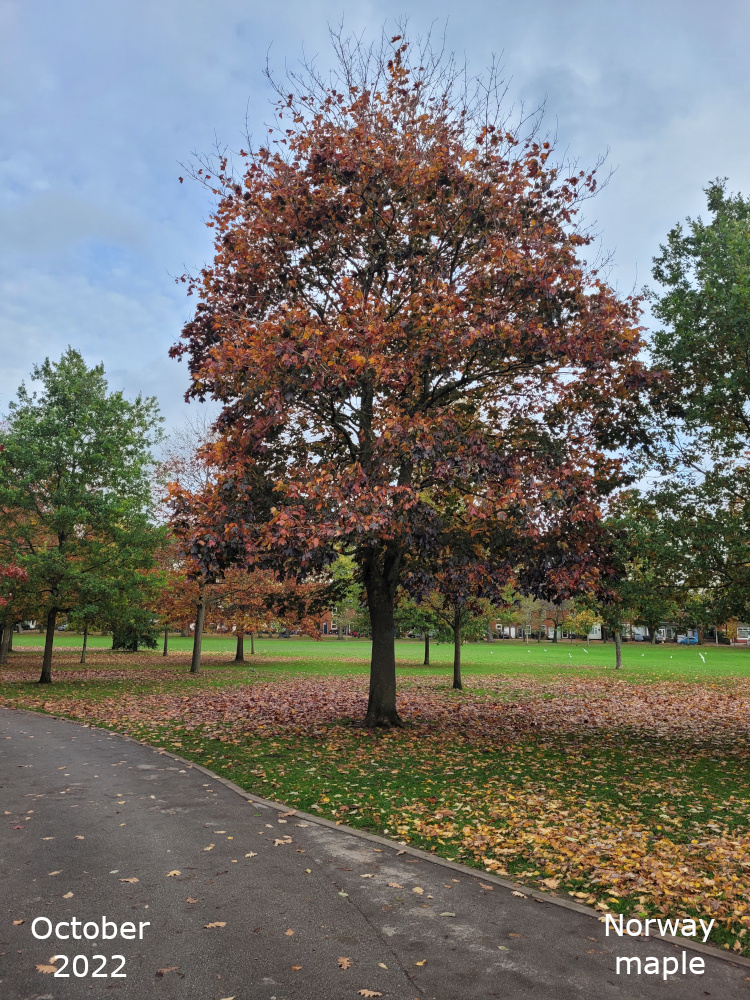
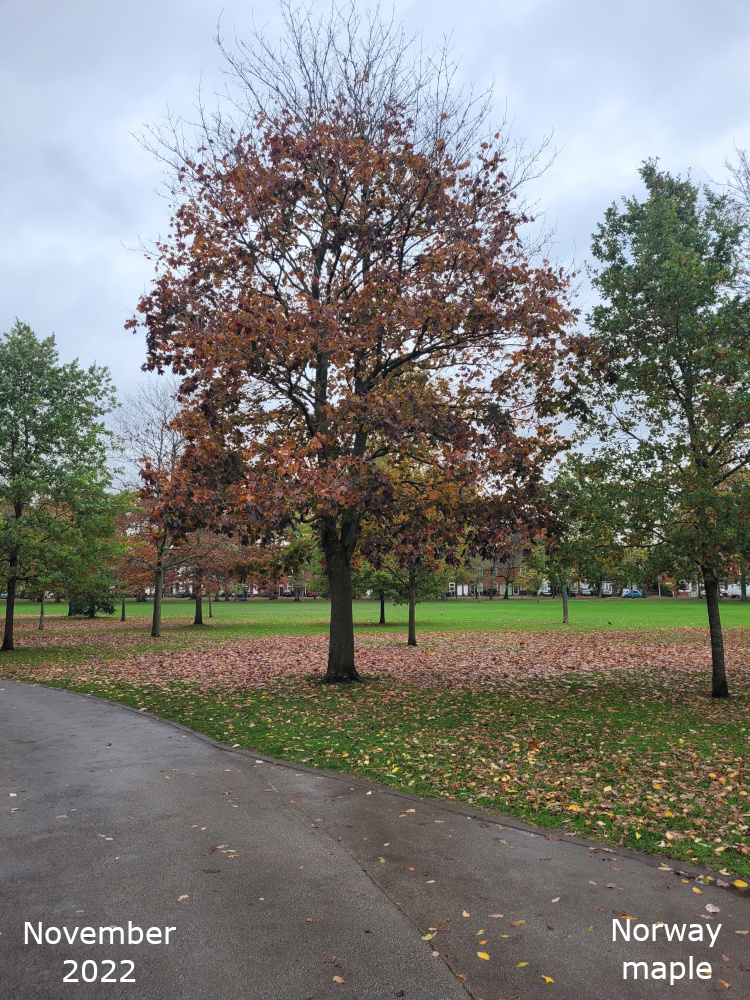
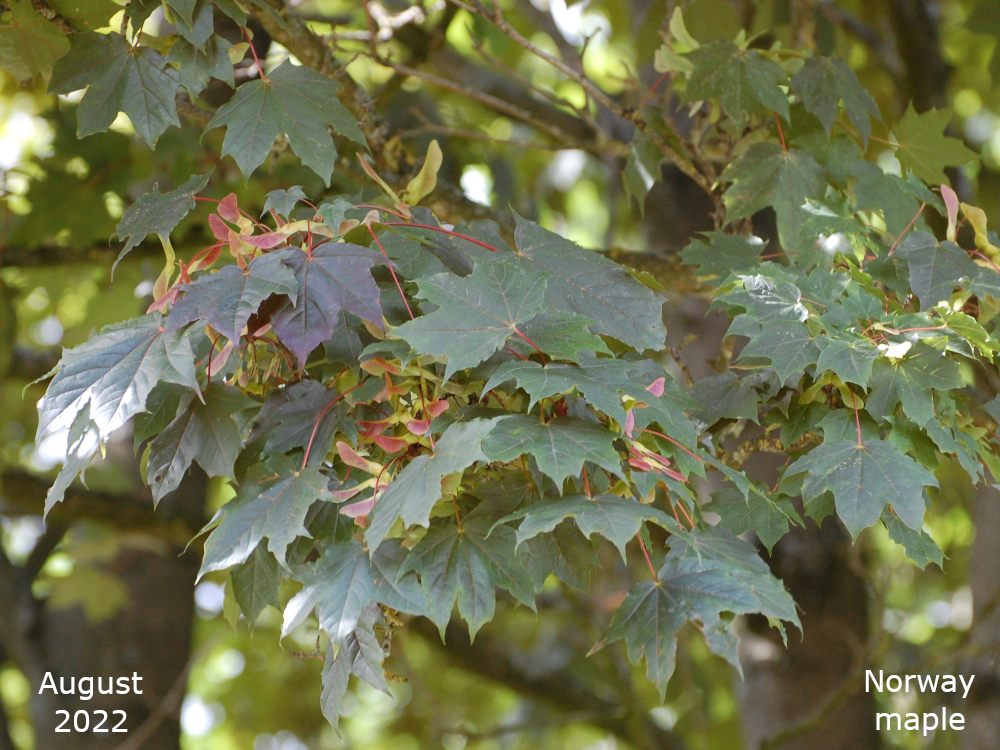
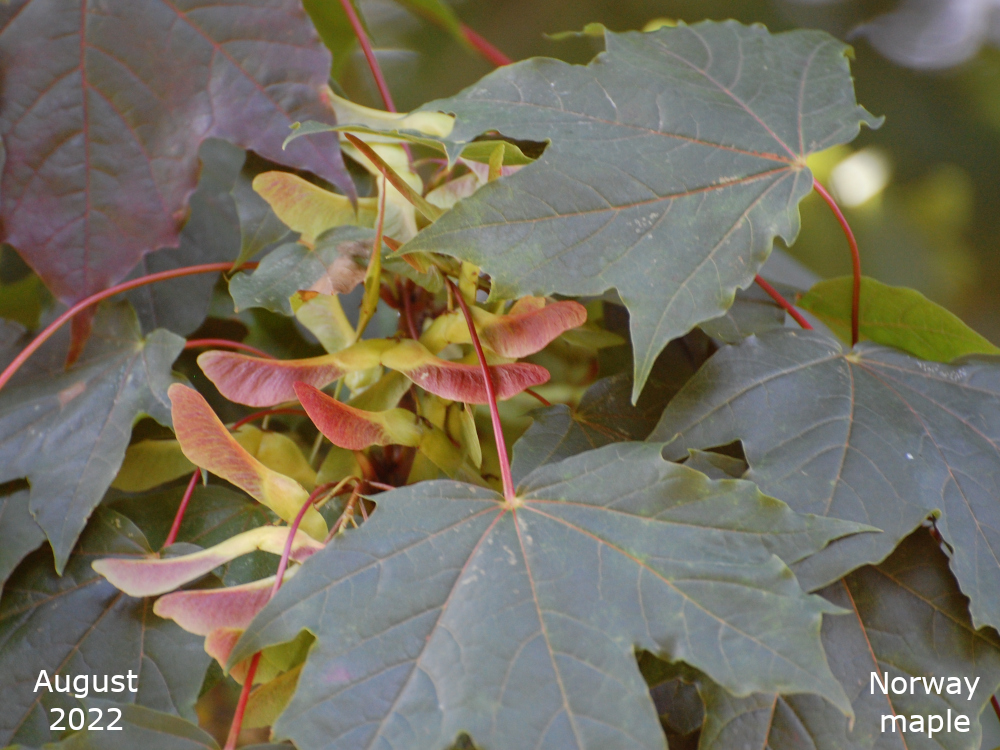
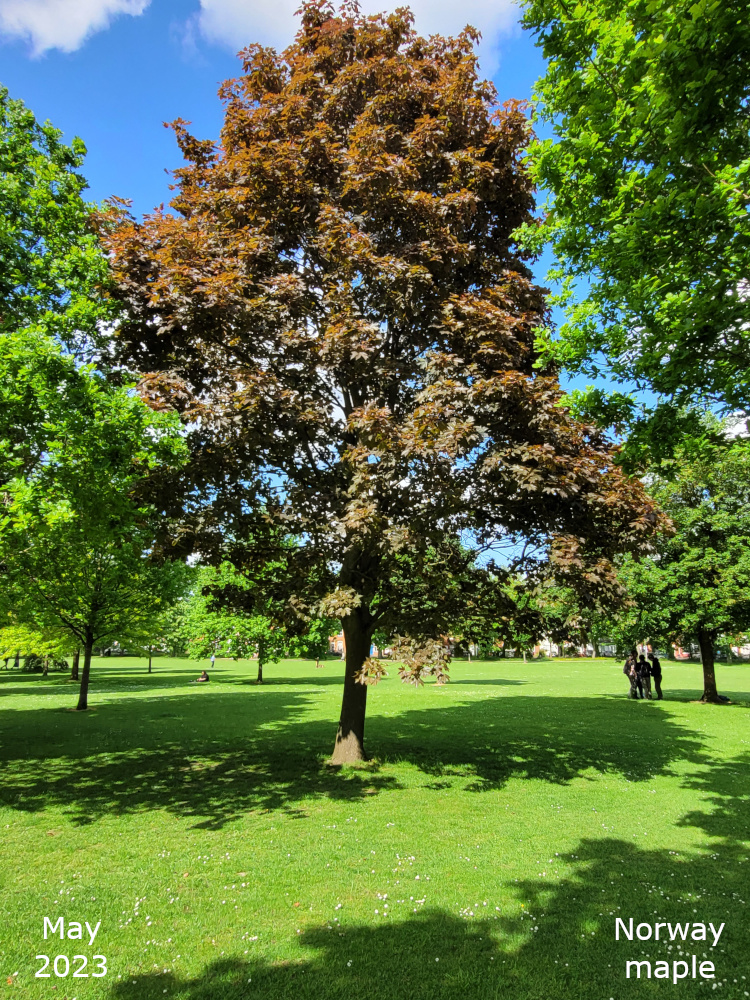
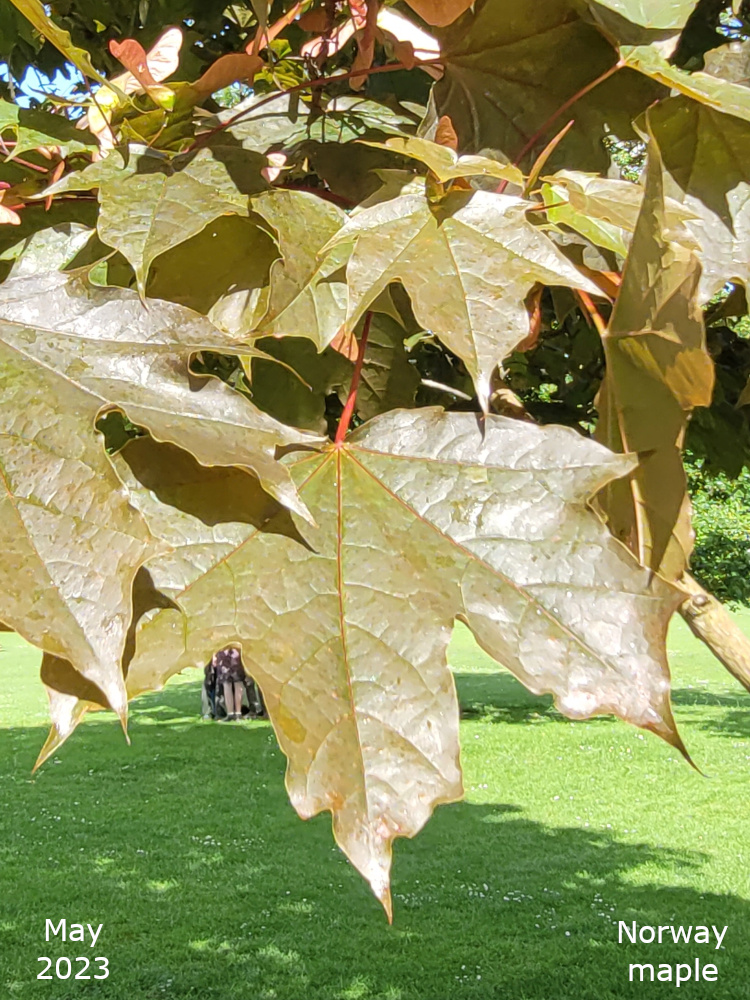
The CK stands for Crimson King. It is a cultivar selected for its deep purple leaves. Other than that the trees have the same characteristics as other Norway maples. The five lobed leaves are pointy and supposedly toothed, having one to three teeth per lobe. These are not always obvious as far as I can tell, with the leaf margin sometimes looking wavy at best. They do show up on slide 16.



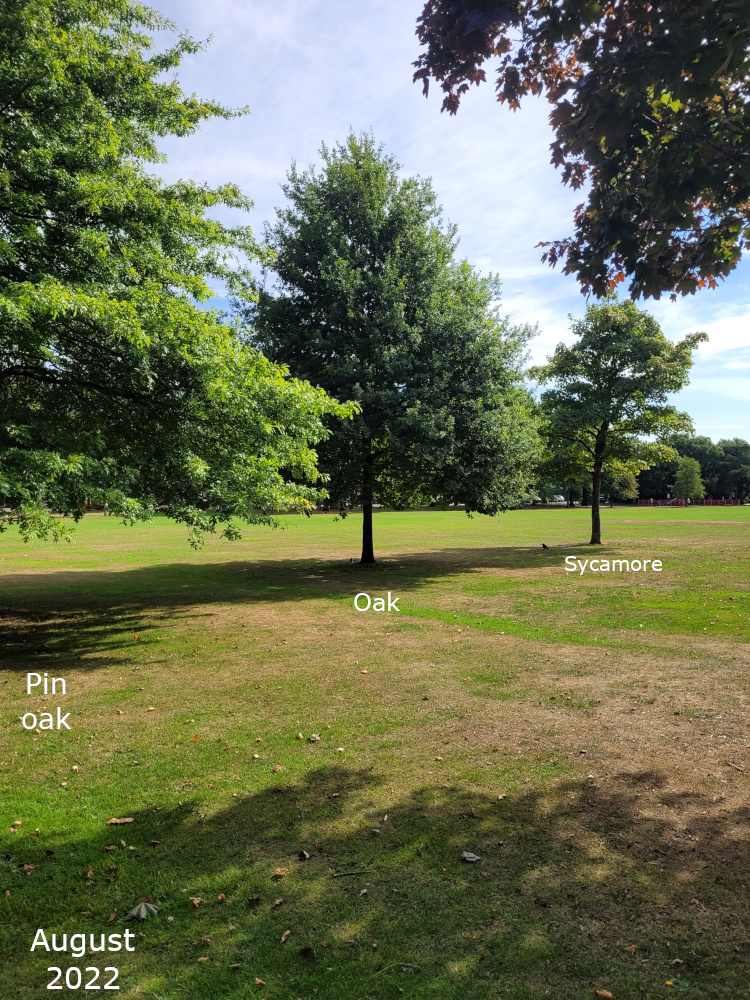
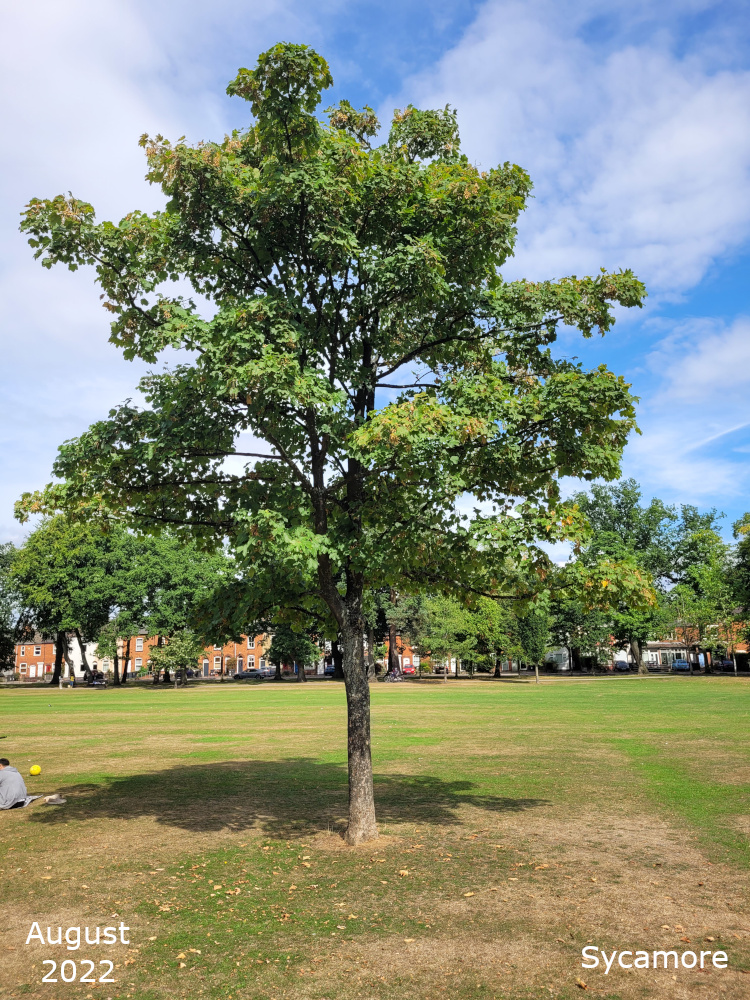
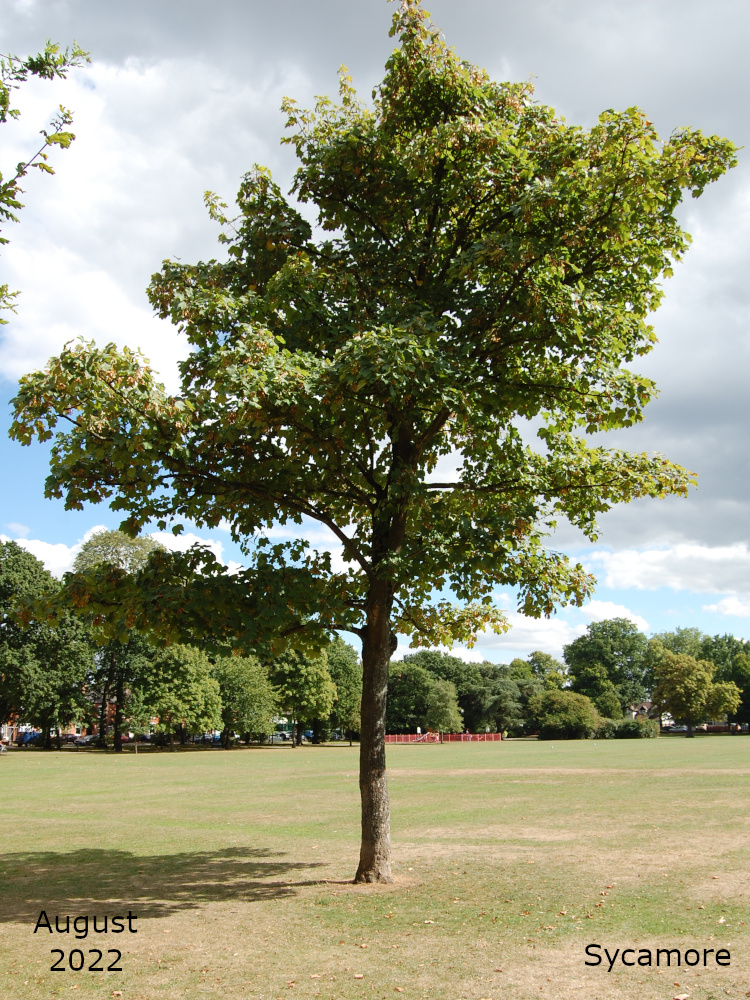
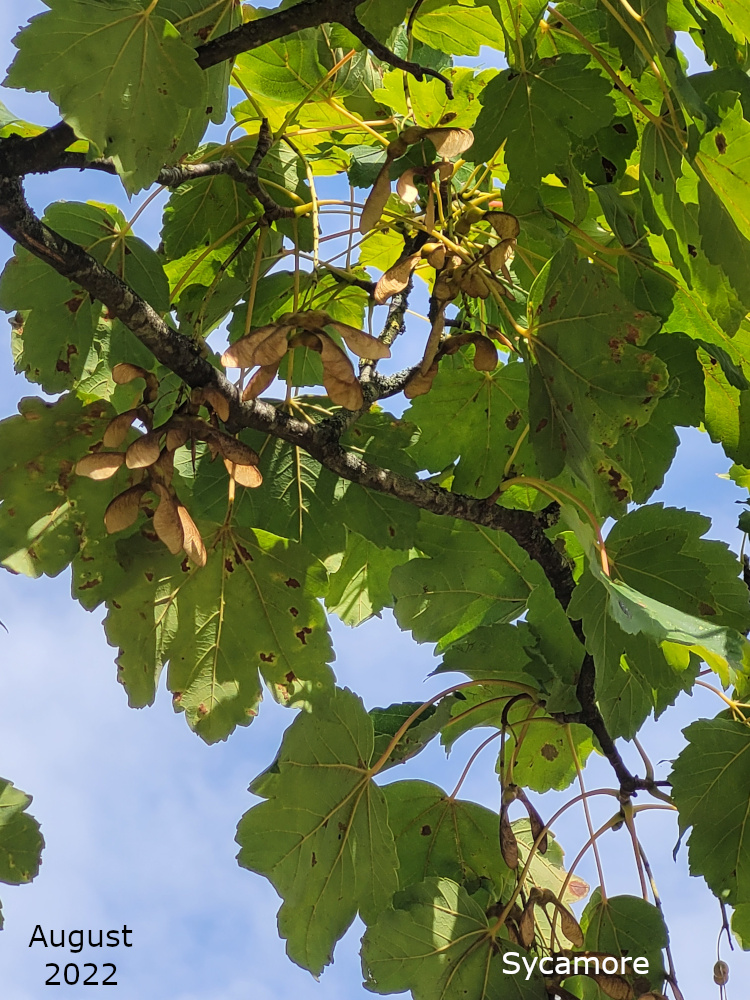
Sycamore, main field
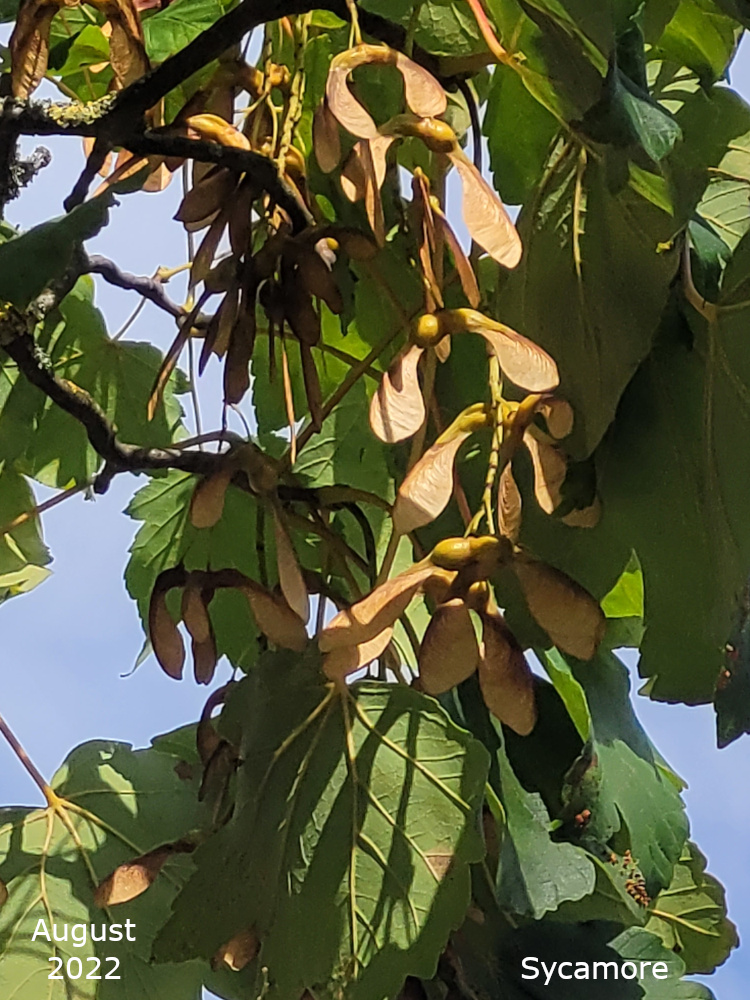
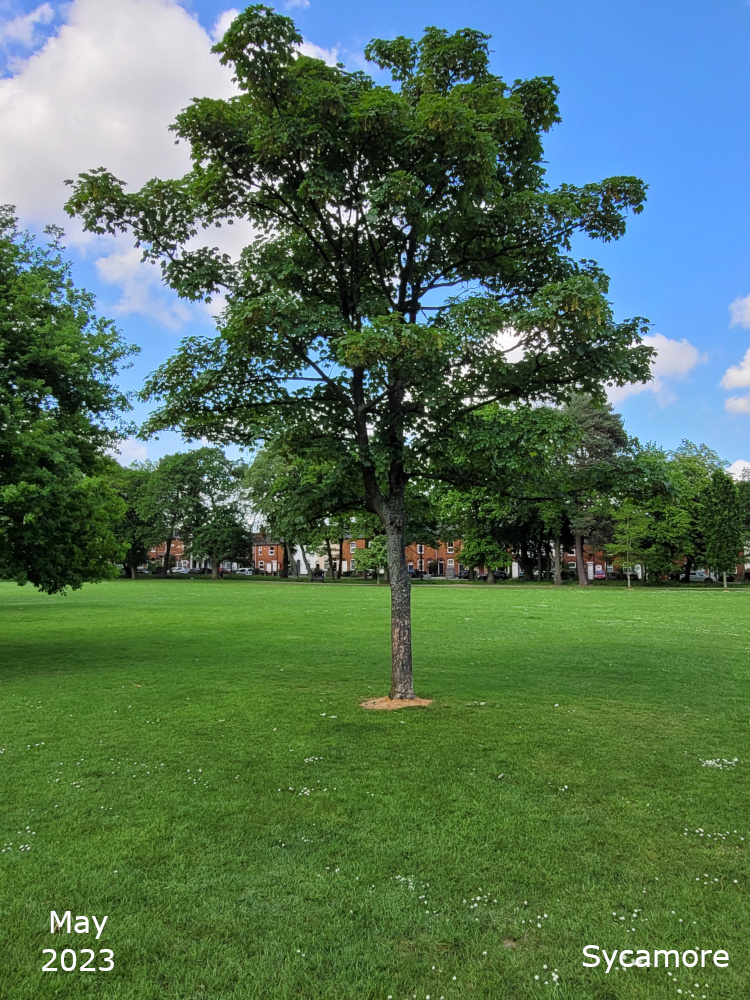
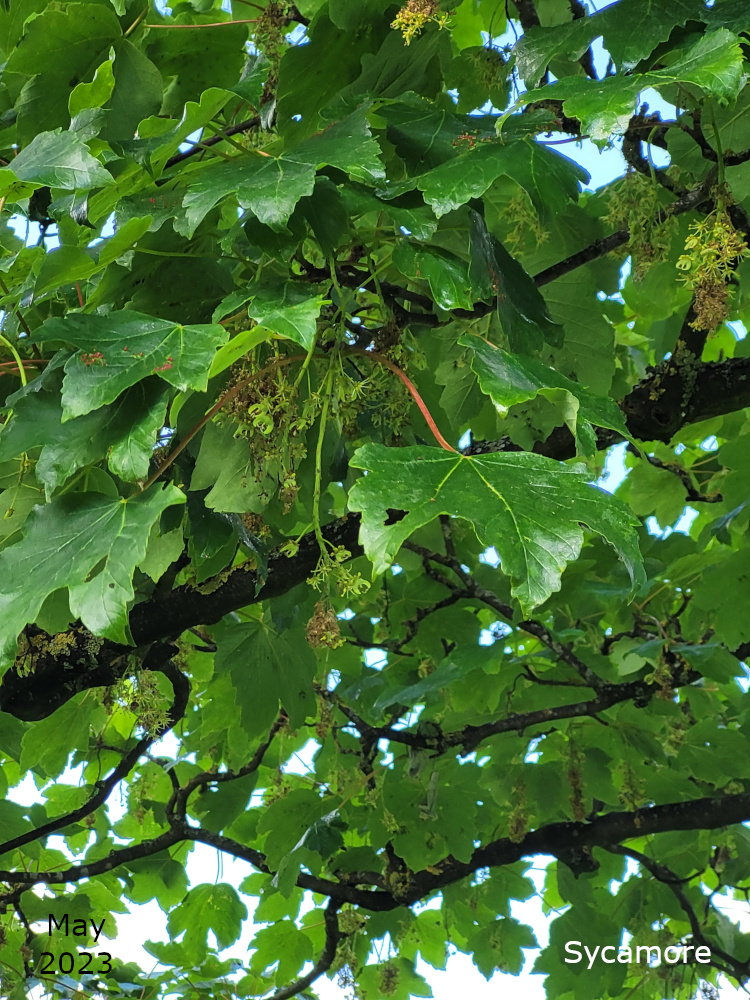
Despite the fact that the Sycamore, Acer pseudoplatanus, is an introduced species it is well established and it is not far behind the Field maple in the number of species of insects and mites it can support. The leaves have the usual five lobes and are describe as coarsely toothed but this is not always uniform – the leaves often have a ragged appearance. The winged seeds are produced in pairs and they join at a right angle, whereas the Norway maple and Field maple pairs are almost a straight line.
Norway maples, main field
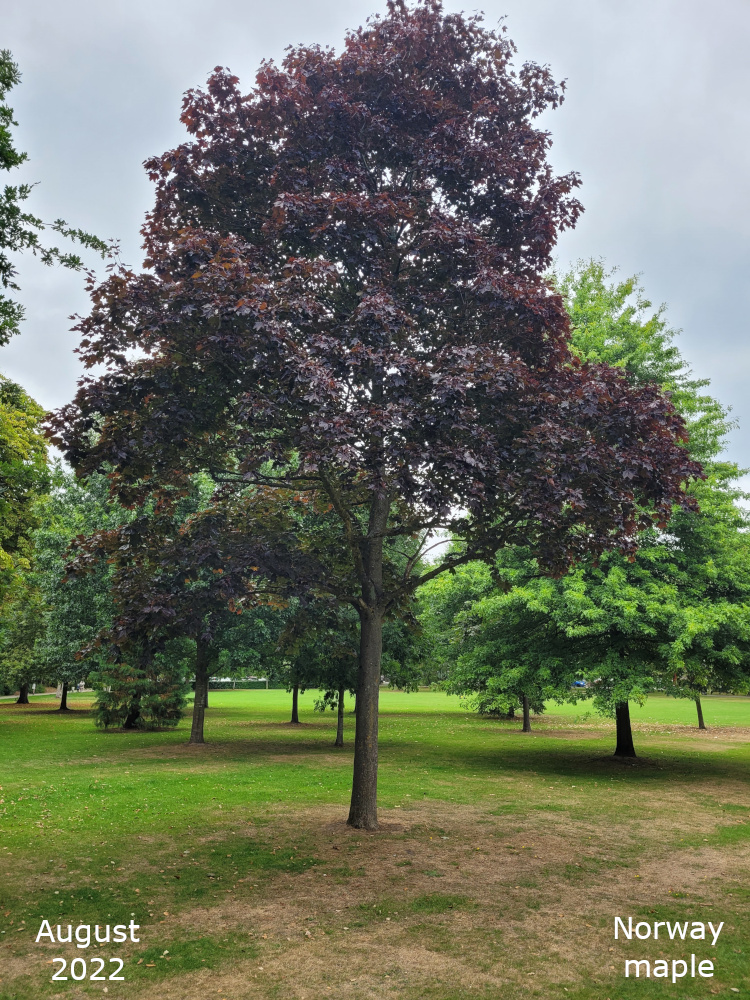
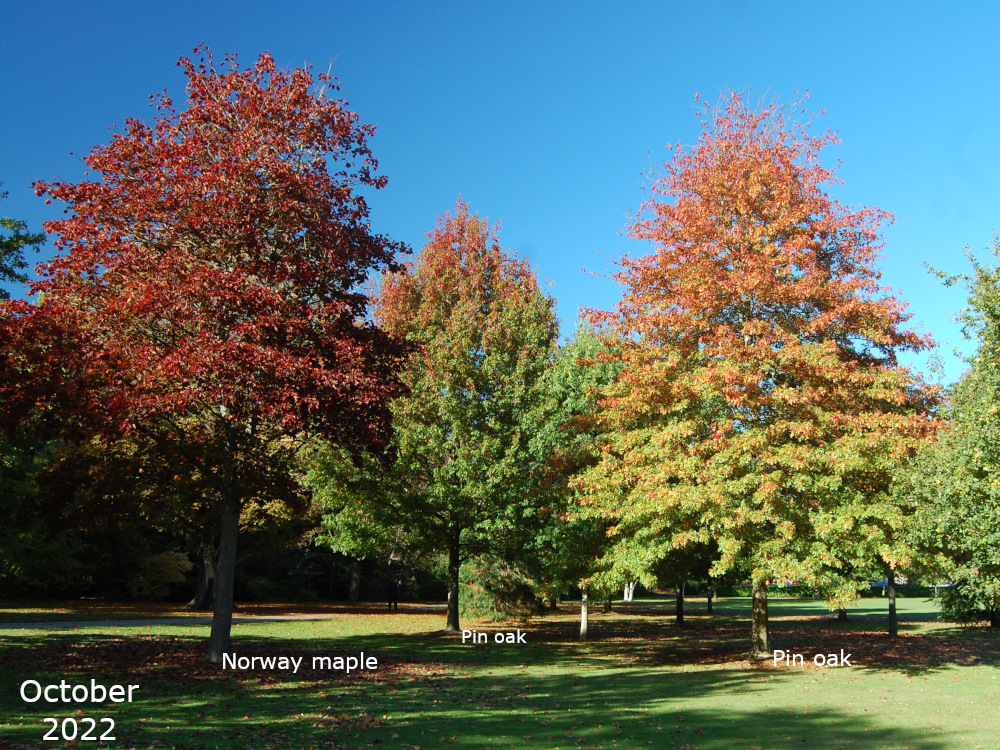
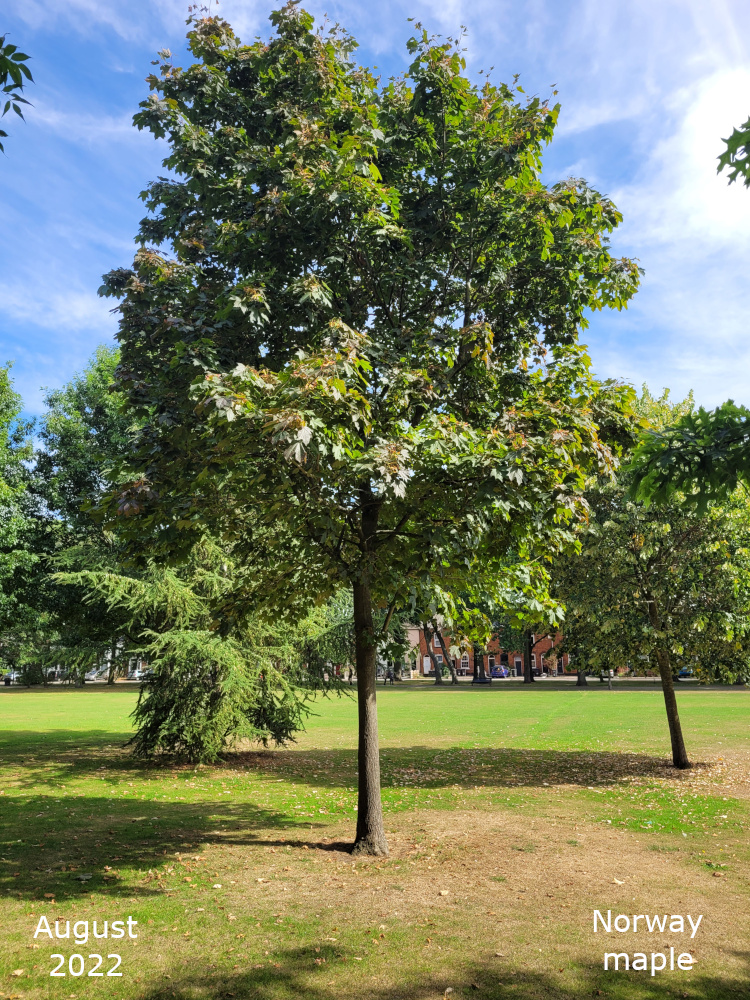
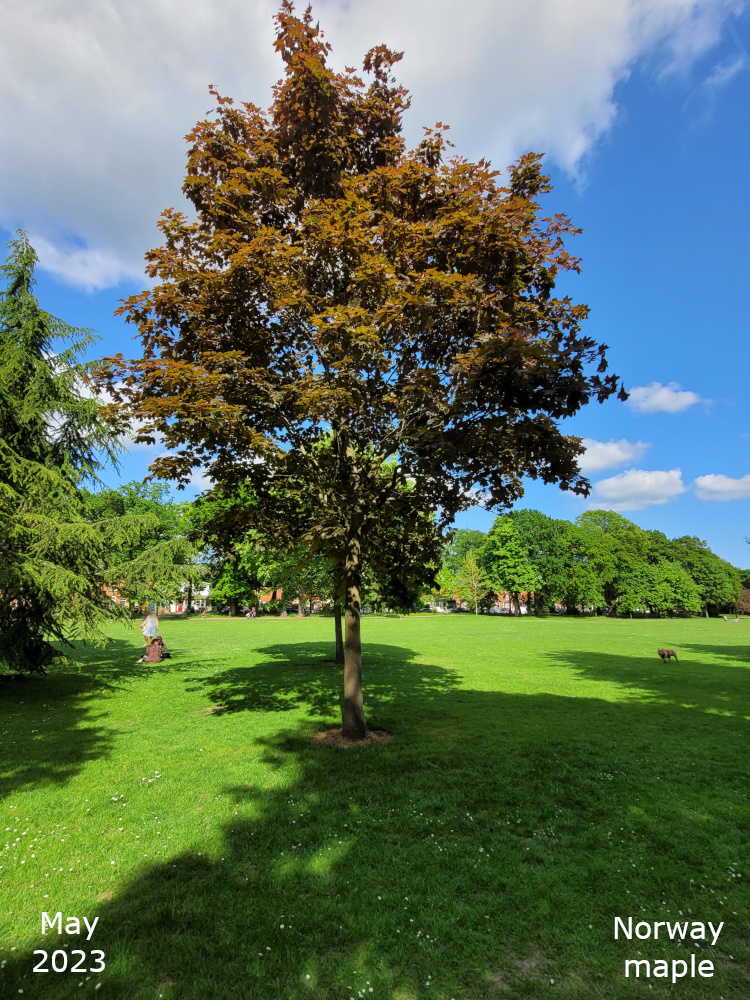
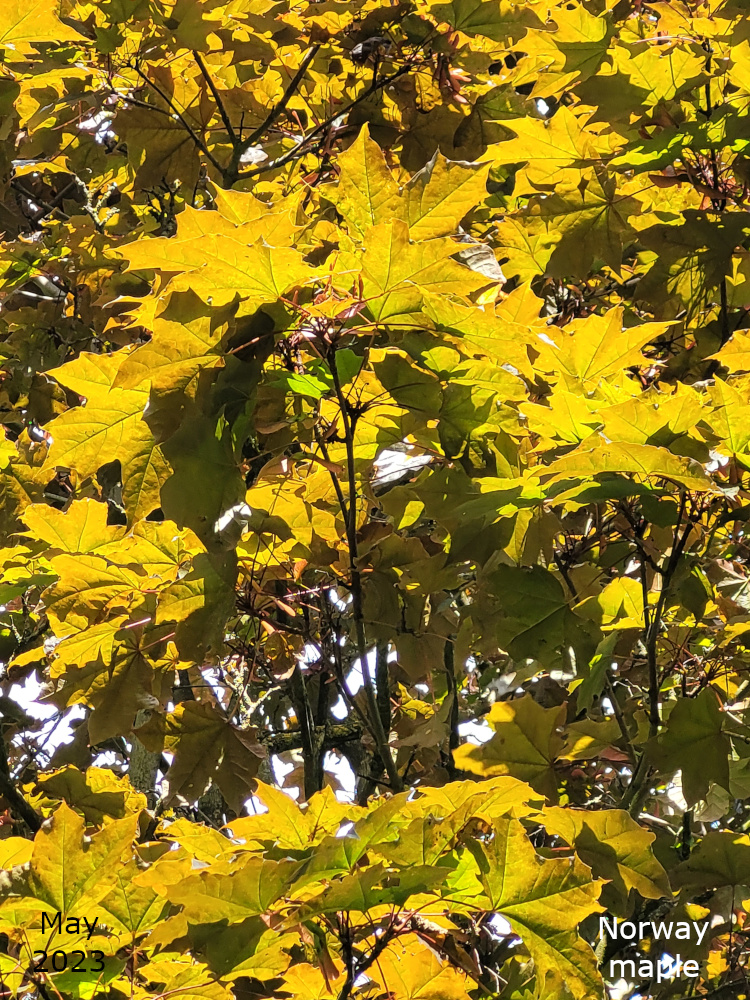
There are two Norway maples quite close to each other in amongst a bunch of Oaks and other trees. One of them has deep purple leaves and is very likely to be a cultivar called Crimson King. The other I’m undecided about as there seem to be a few maples that have some purple colour but then revert to green. They are both Norway maples, though, and they are in the group of trees alongside the path leading up to the Grange road car park.

Silver maples
There are three Silver maples grouped together at the bottom of the park. Two of them are sizeable trees that overhang the path and in Spring their branches are covered in tiny bright red flowers, before the leaves come out. Their leaves have the usual five lobes of a maple but are more deeply cut.
 Kings Heath Park Trees