All the trees on this page are in the Cupressaceae family. This includes the Cypress trees, as this is the Cypress family, but it also includes False cypresses, Giant sequoia, Dawn redwood, Cunninghamia and Western red cedar, which arn’t cedars at all.
Typical cypress trees have leaves which look more like fronds than needles but there is a wide variety in their appearance. Each frond is made up from scaly leaves. Atypical members of the Cupresaceae family have more delicate leaves such as the Dawn redwood and the Swamp cypress.
- Dawn redwoods
- Giant sequoia
- Swamp cypress
- Hinoki cypress
- Sawara cypress
- Arizona cypress
- Western red cedar
- China fir
- Lawson cypress
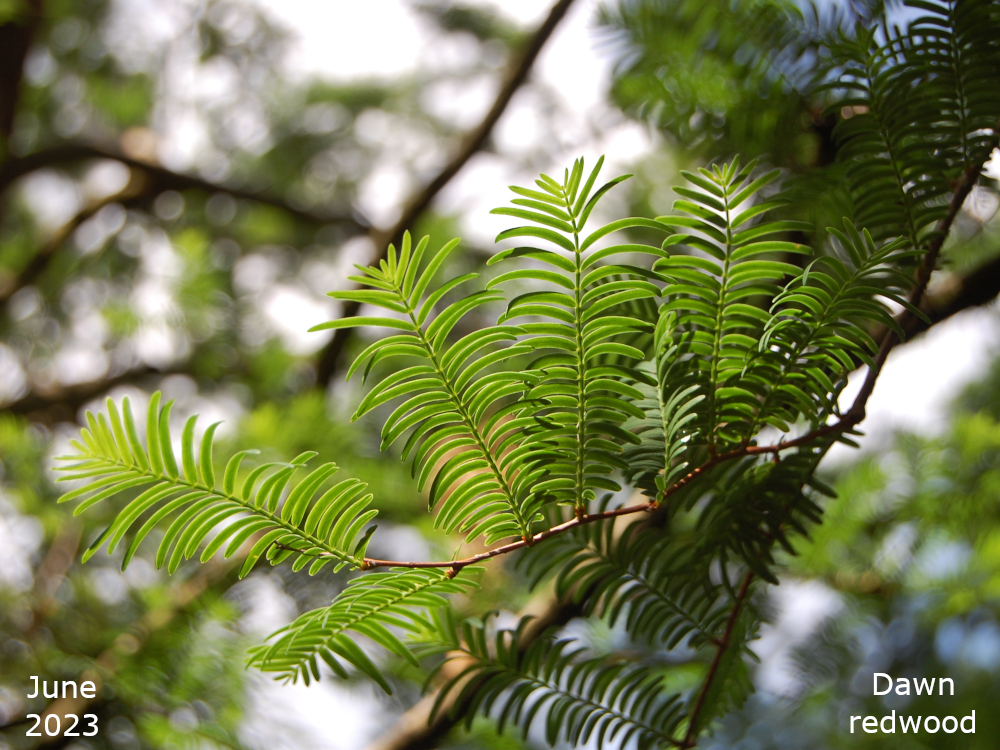
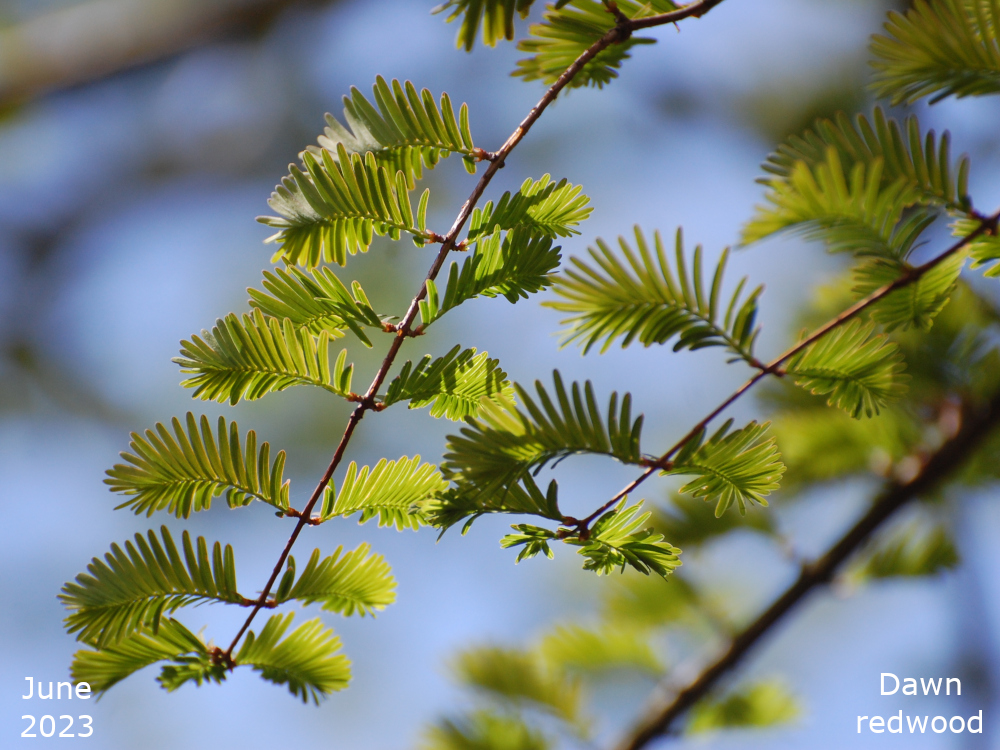
Dawn redwoods
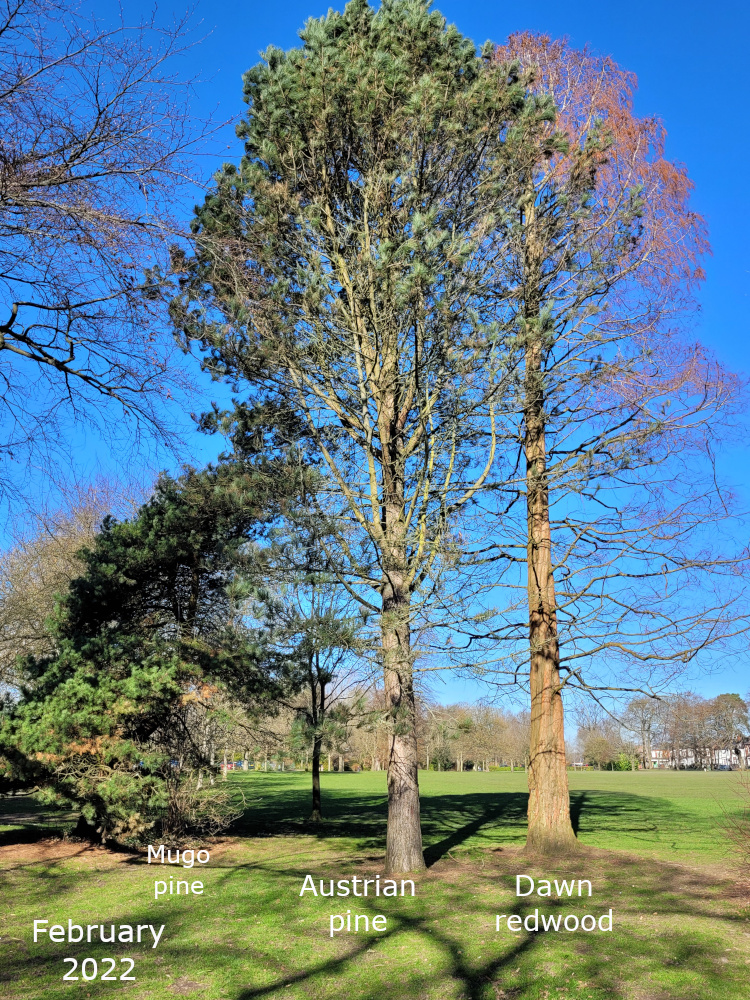
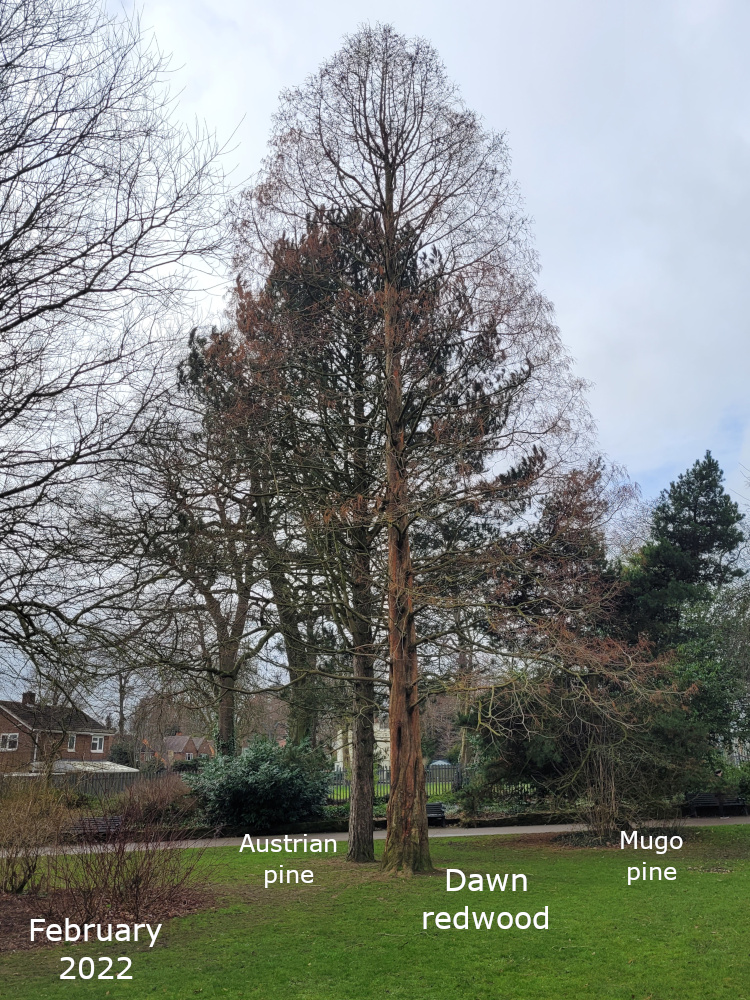
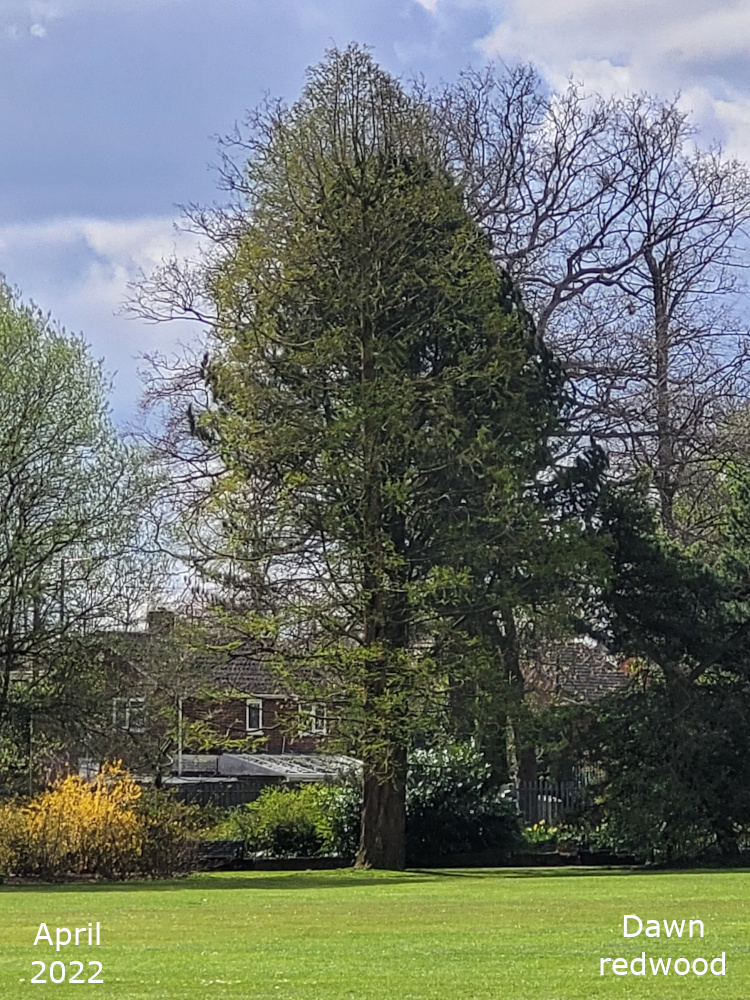
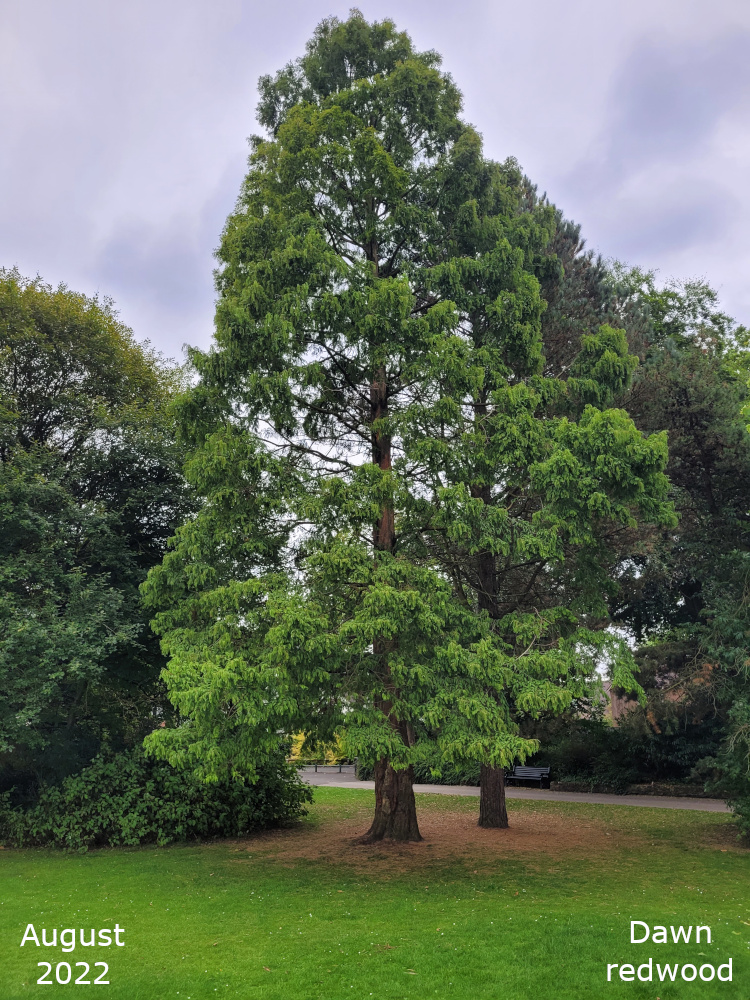
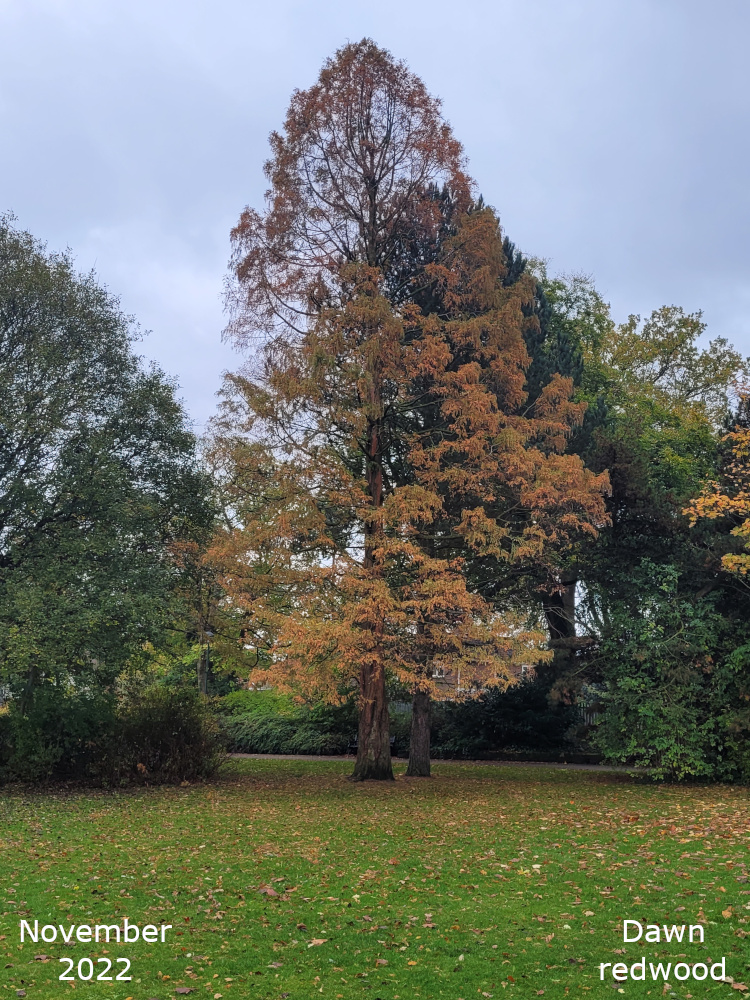
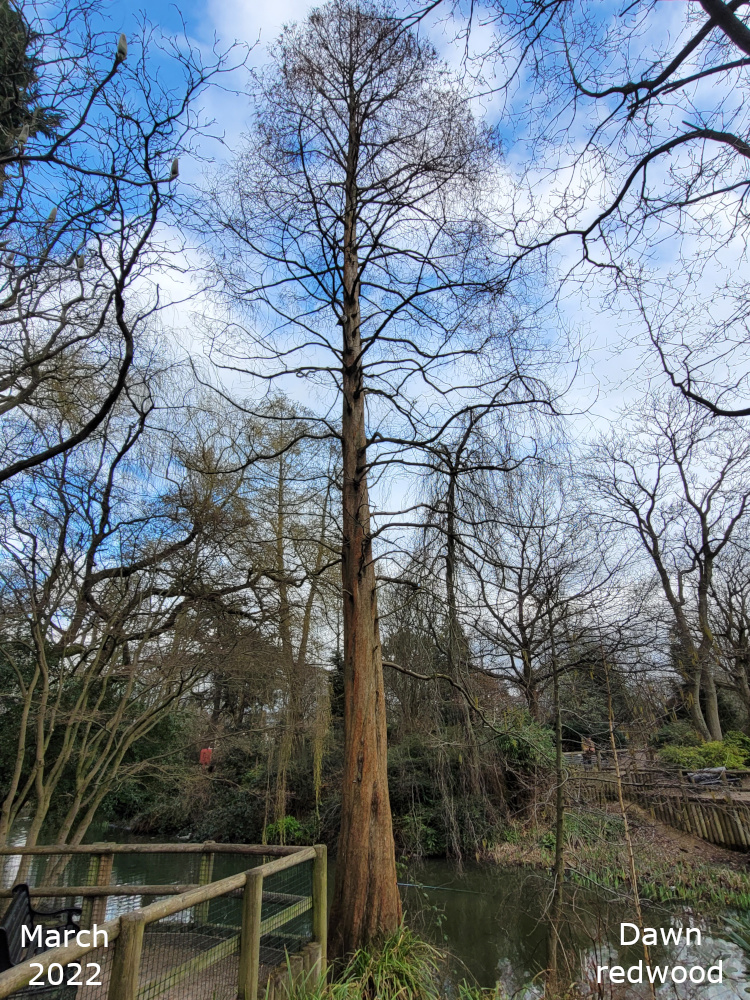
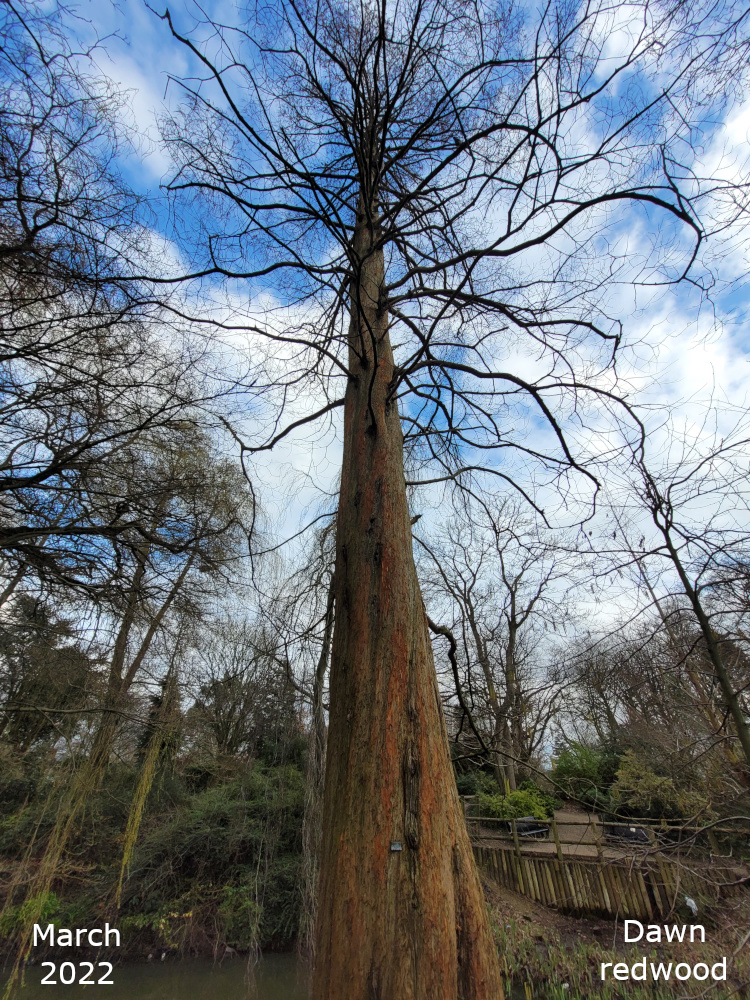
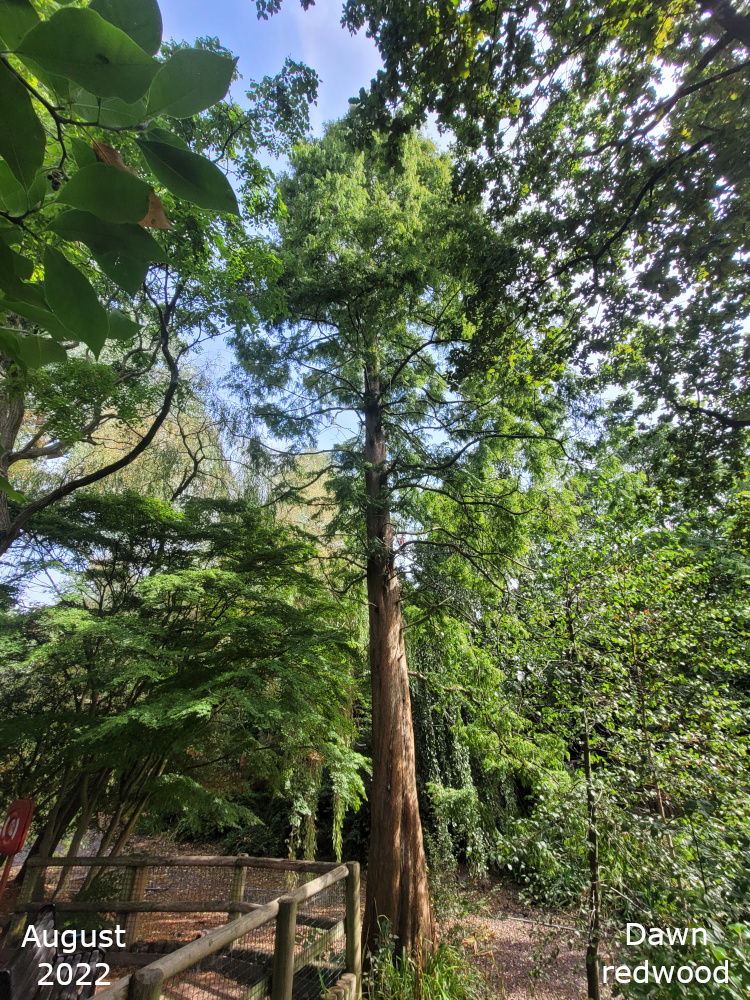
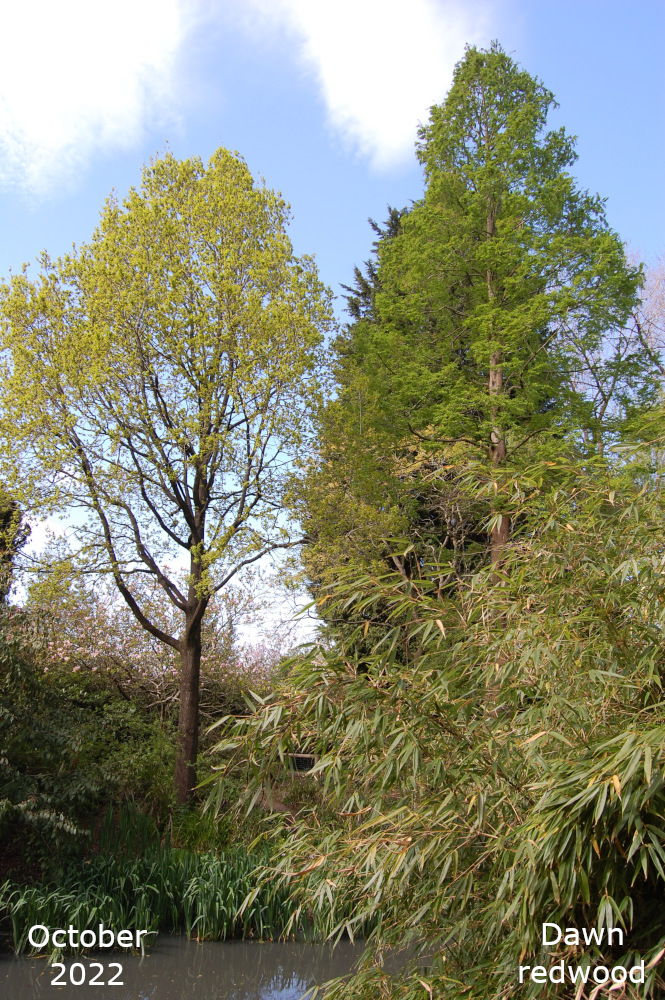
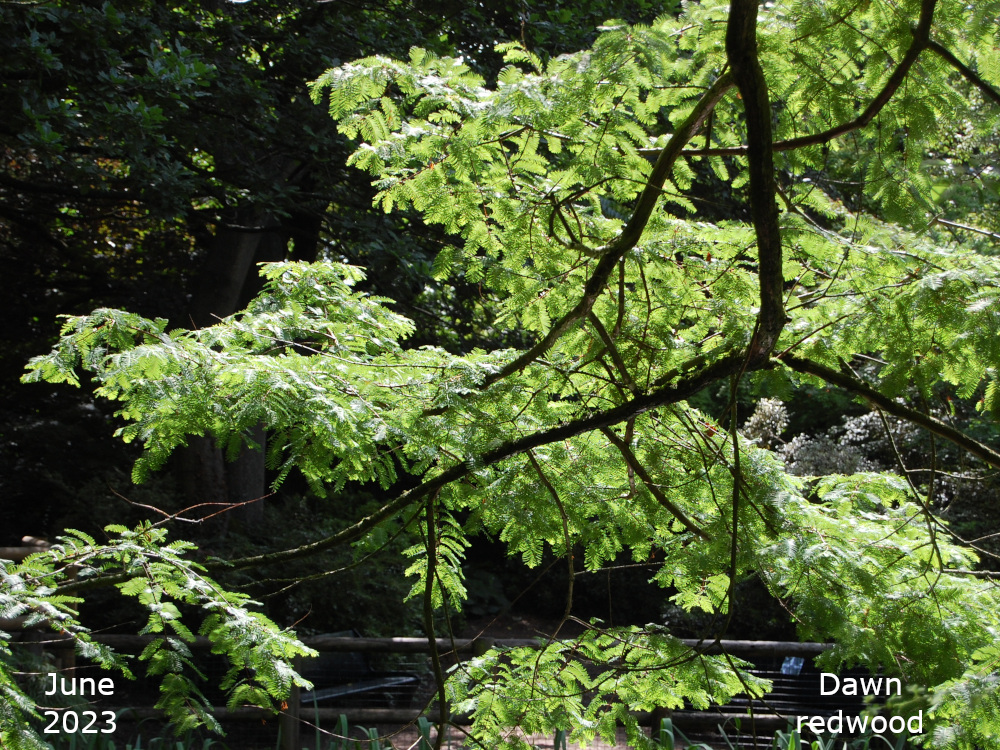
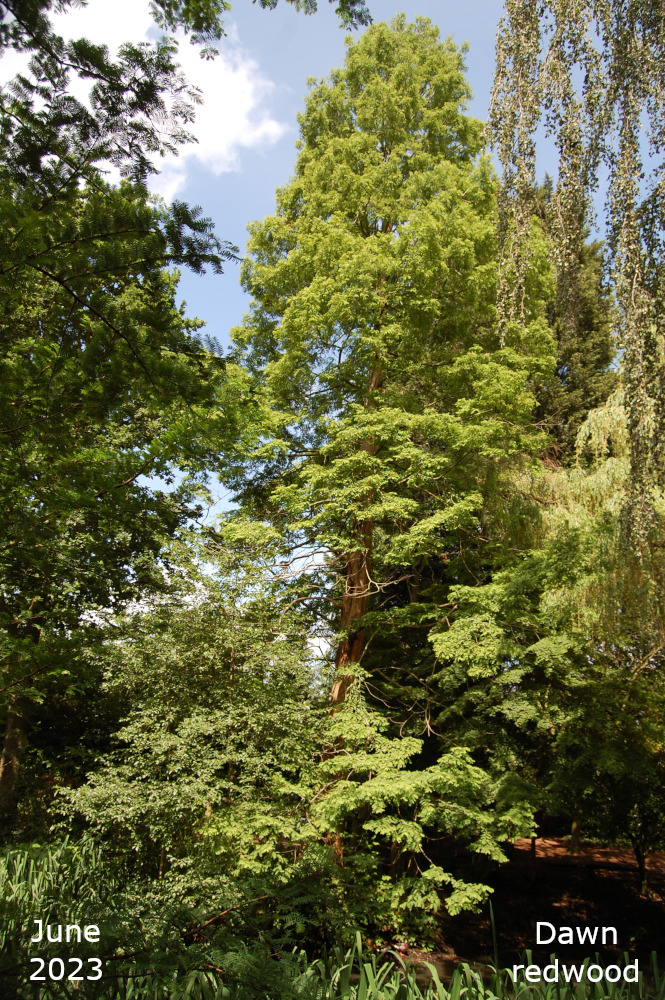
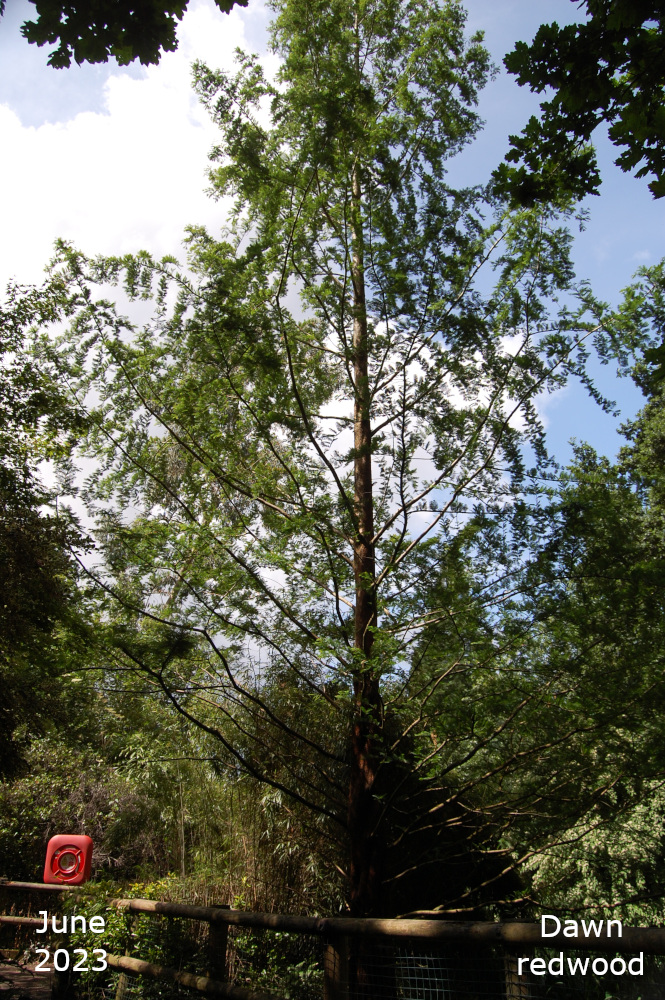
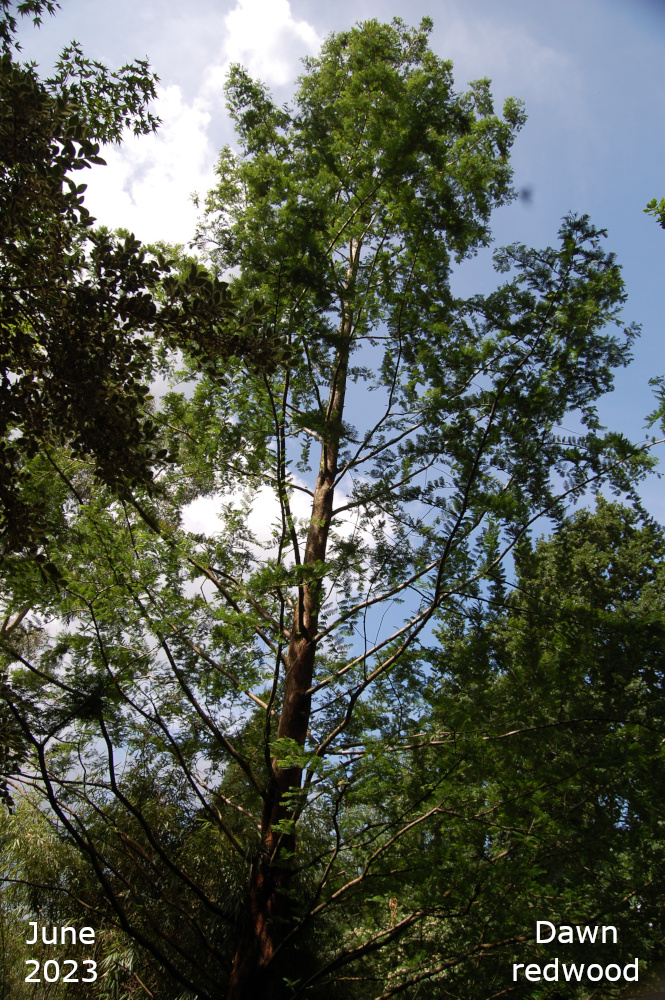
There are three Dawn redwoods, two of them by the pond on opposite banks. The third one is near the vehicle entrance on Vicarage Road, just off the corner of the path.
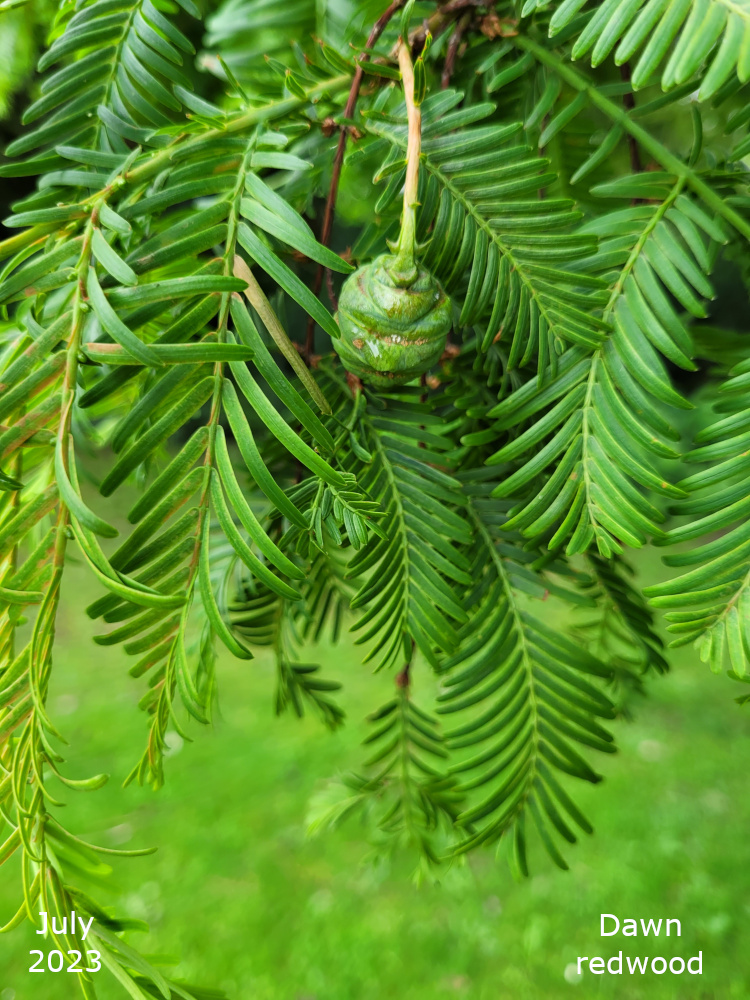
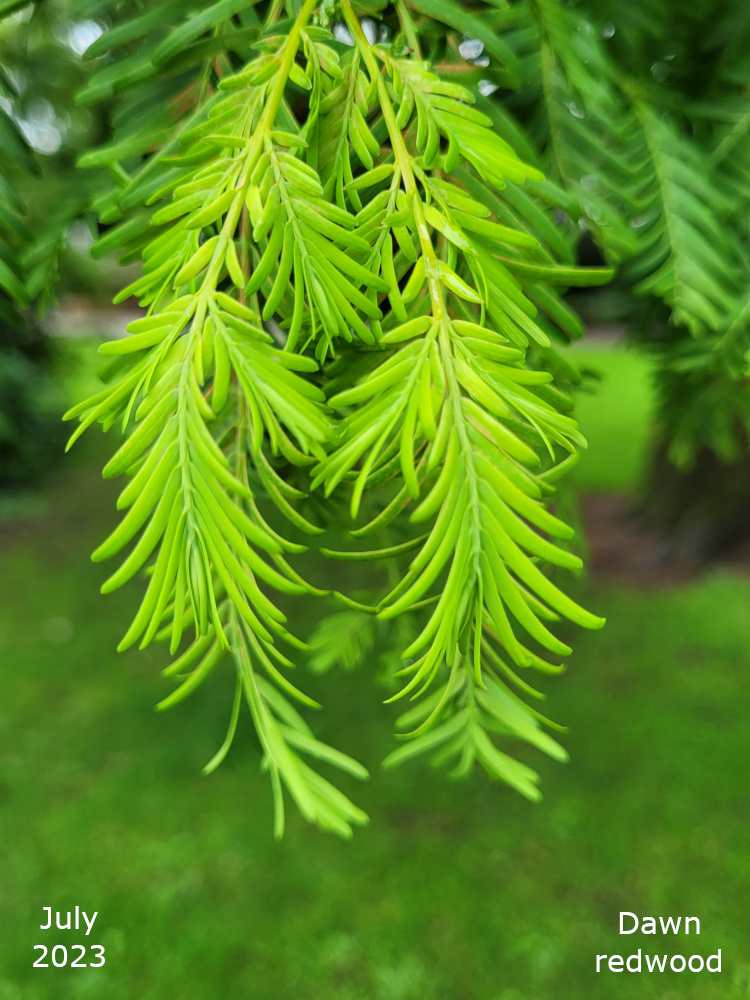
The dawn redwood is a deciduous conifer and has flat needle like leaves in opposite pairs along long stalks also produced in opposite pairs. The leaves are a delicate pale green in Spring, turning darker over the summer.
The tree is the only member in the genus Metasequoia and at one time was thought to be extinct. It still is in danger of becoming extinct due to deforestation in its native regions in China.



Giant sequoia
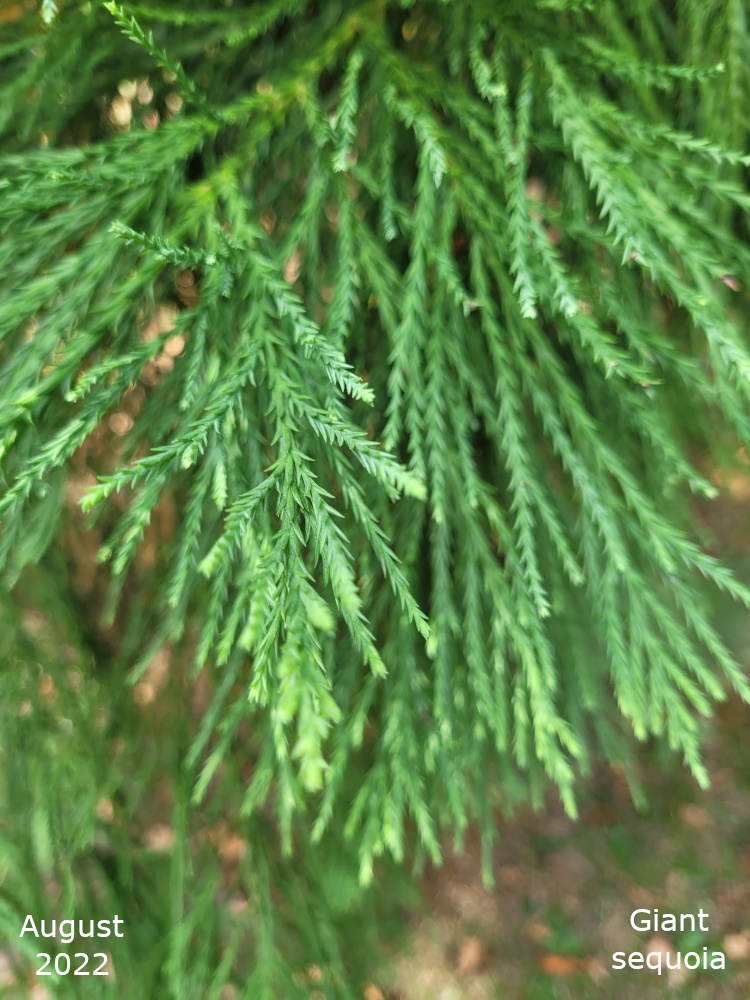
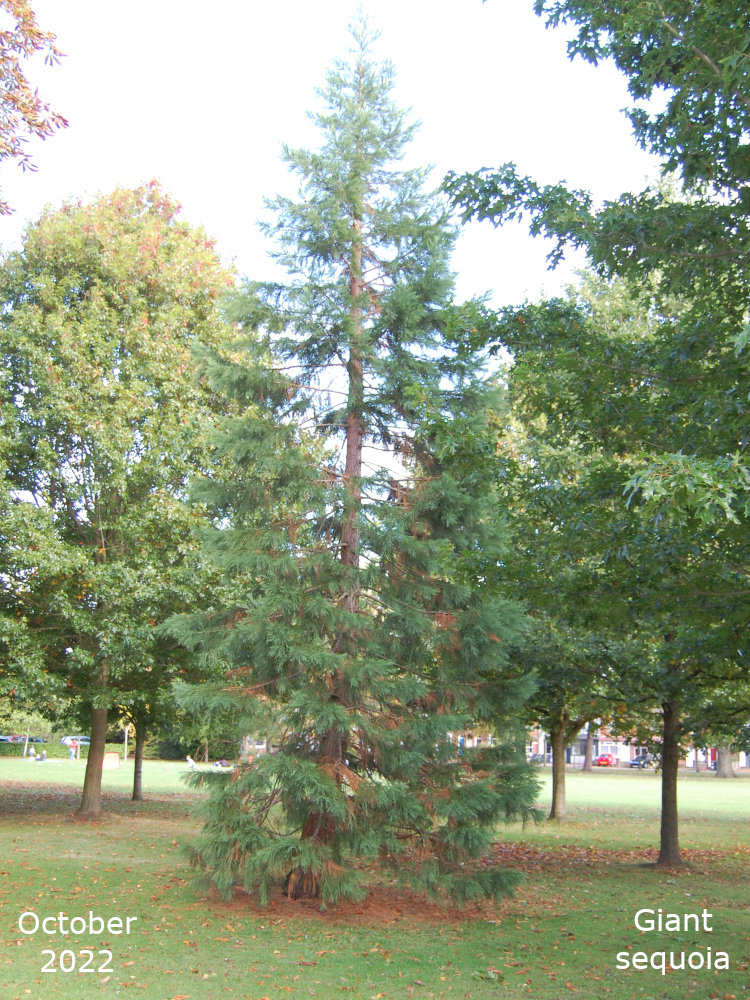
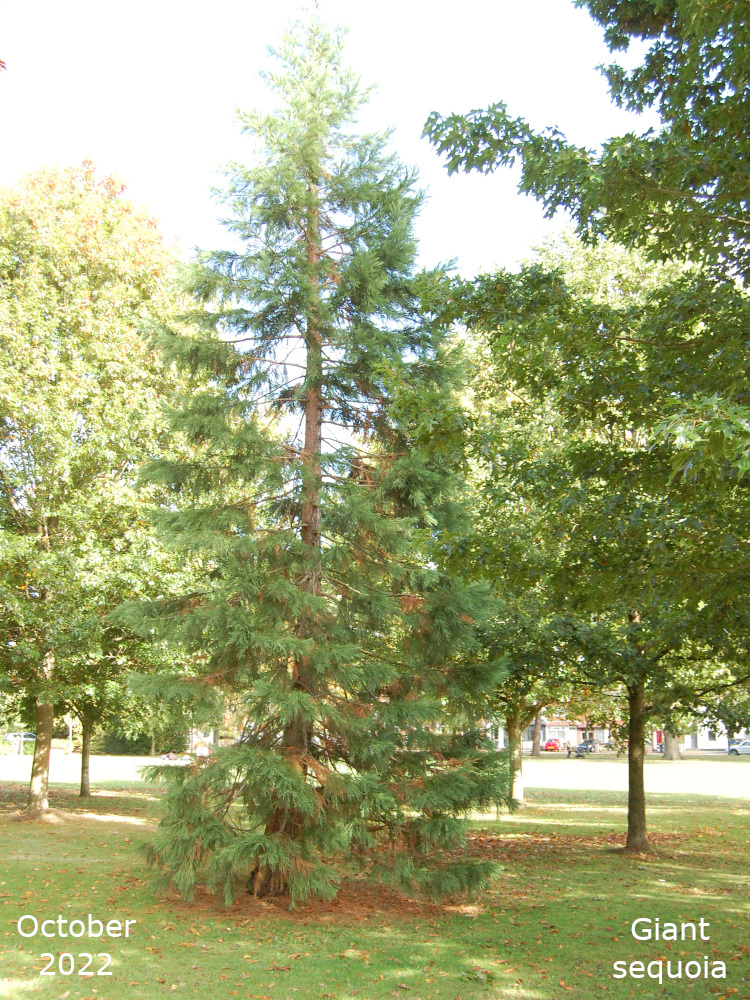
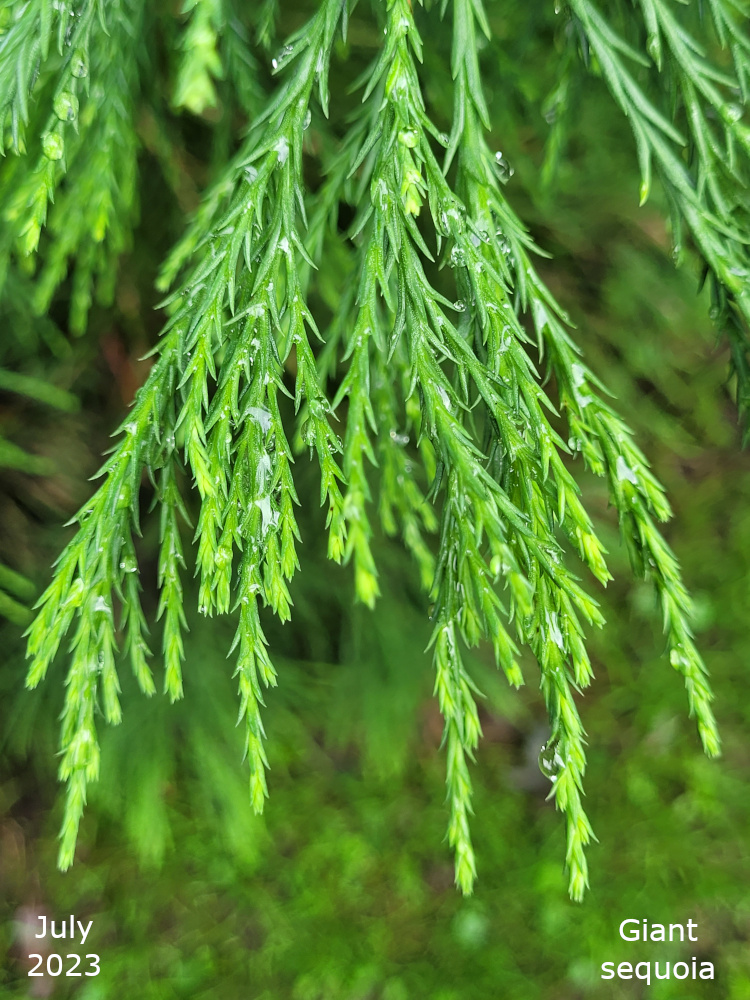
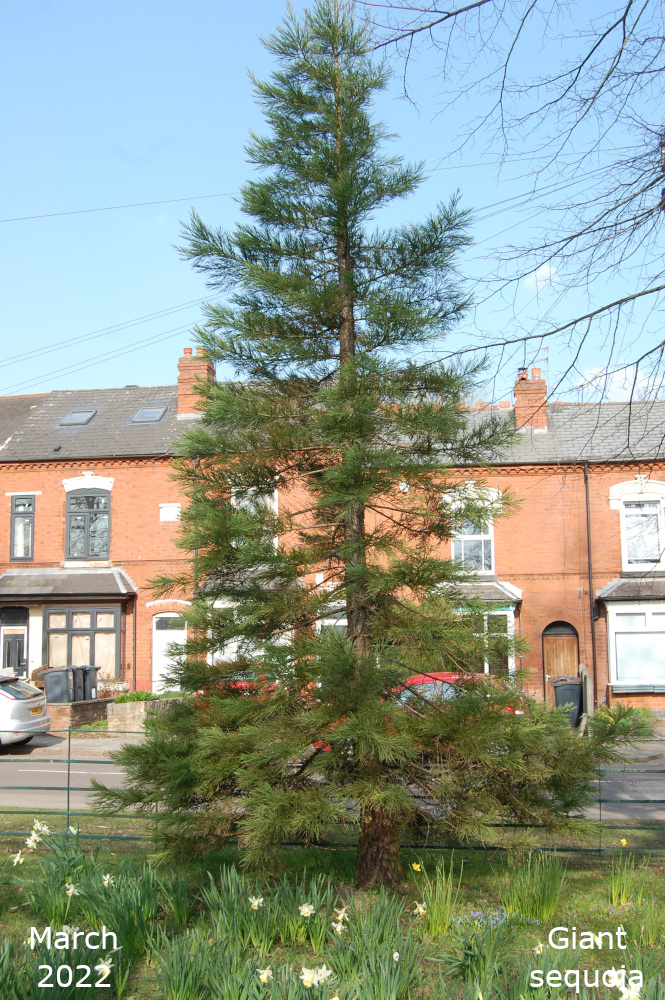
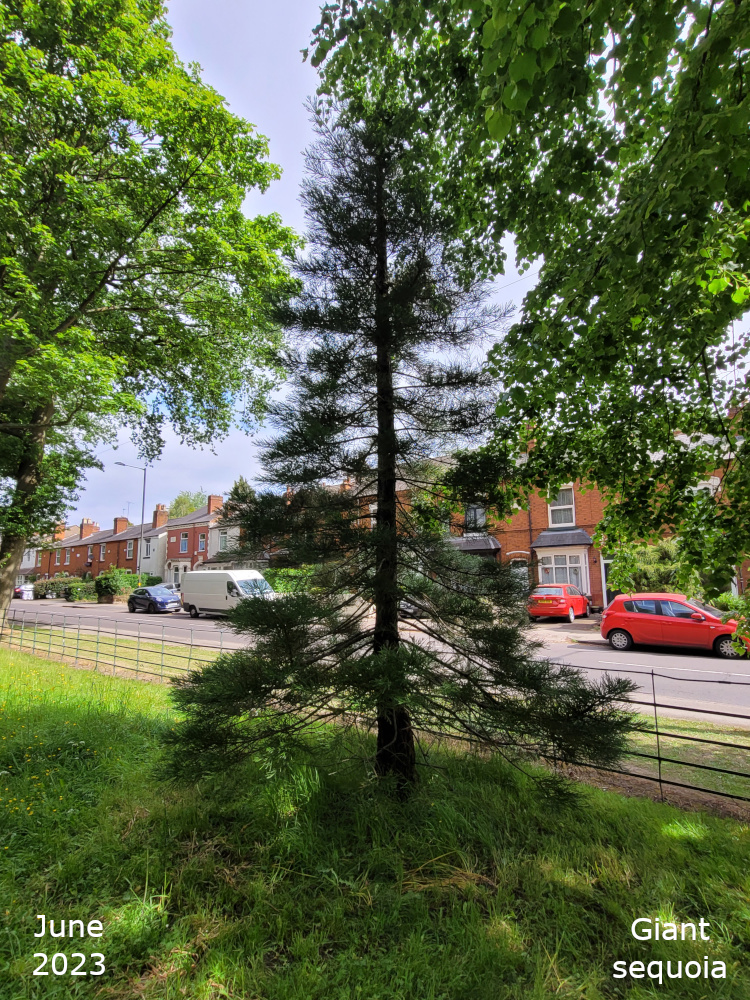
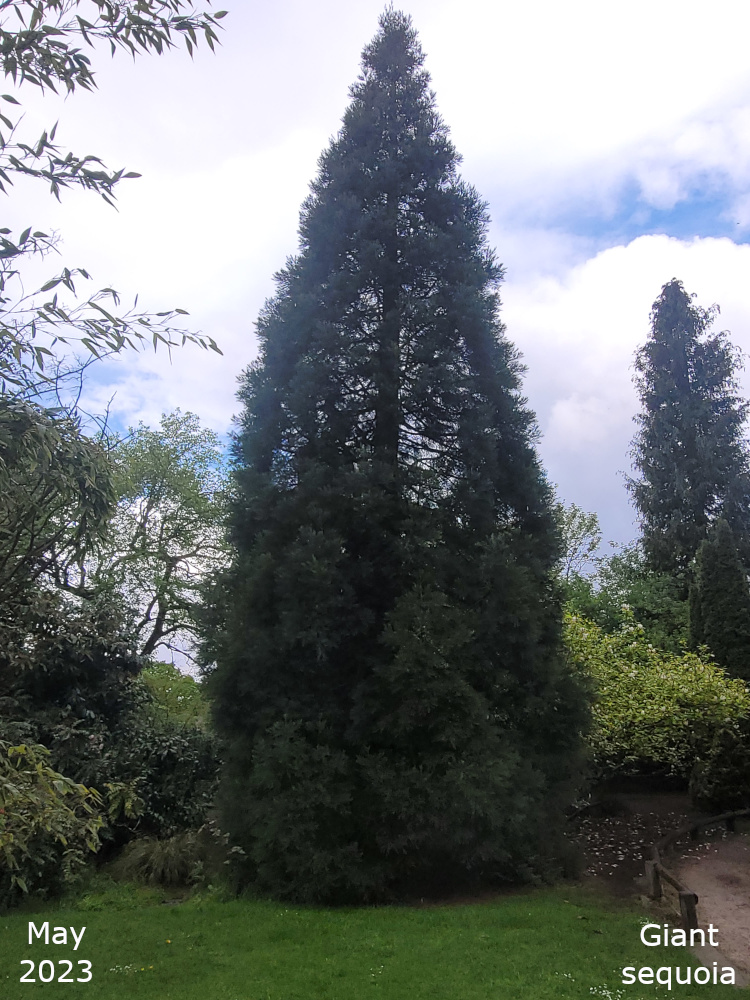
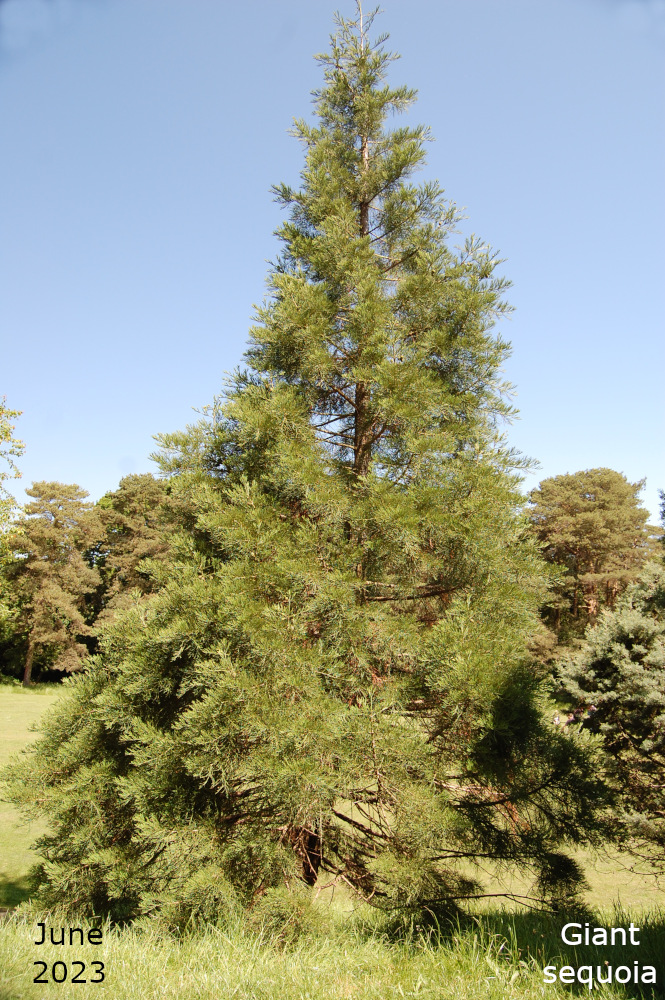
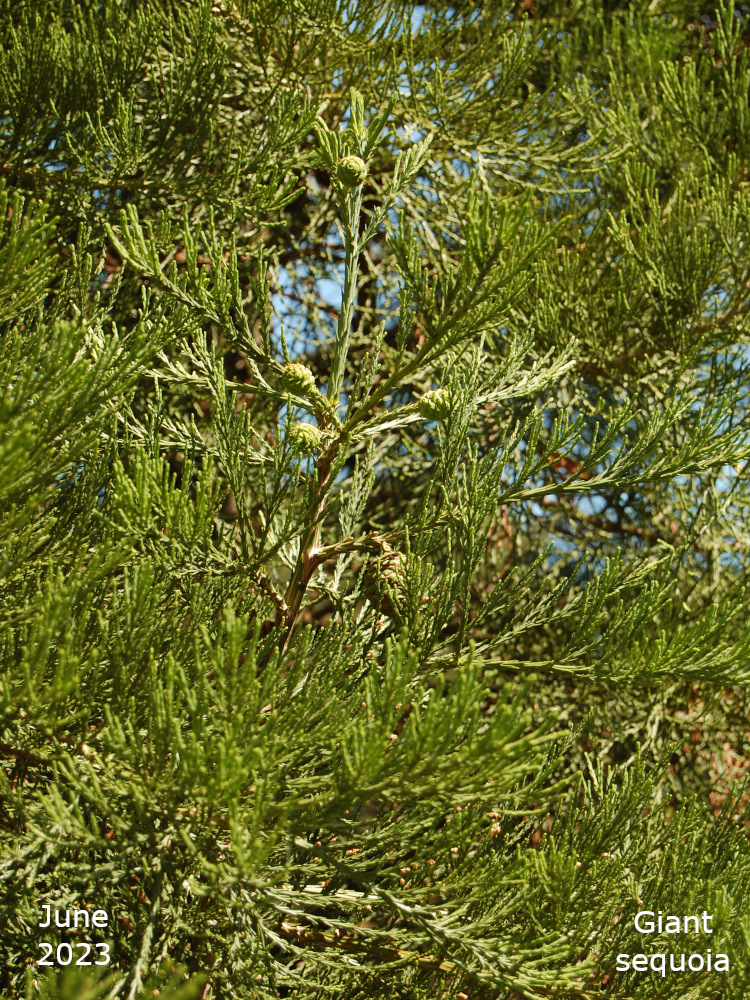
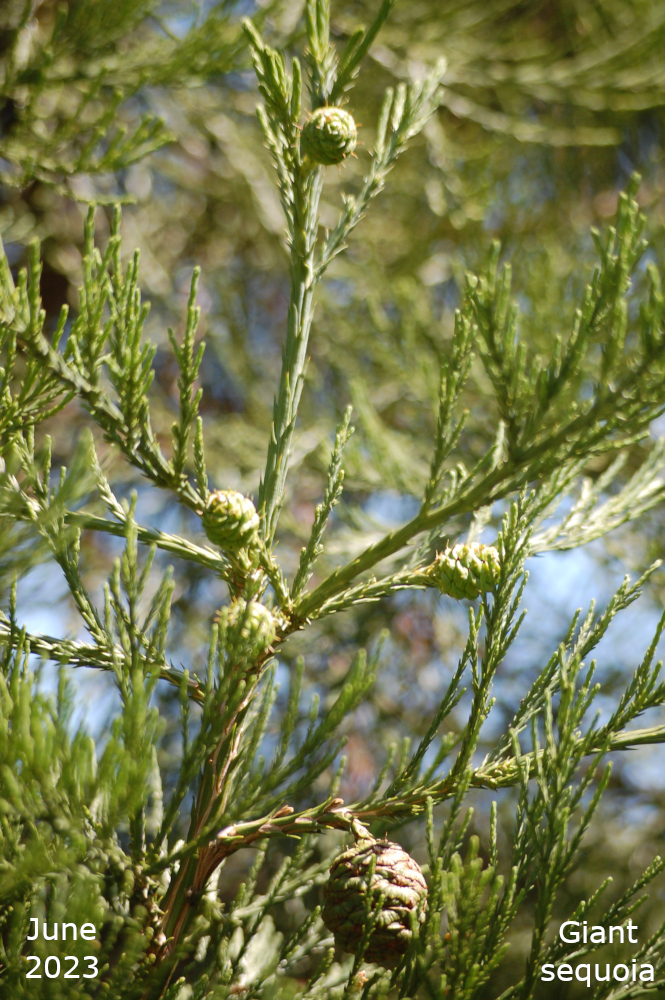
None of the Giant sequoias, in the park, are of a giant size but they are still Sequoiadendron giganteum. Even though they are all small trees they have still grown thick enough bark to feel its sponginess that gives the tree fire protection that is useful in its native habitat to survive forest fires. Giant sequoias are the most massive trees on the planet and the four in the park are tiny by comparison to the ones in the Sierra Nevada mountains of California.






Swamp cypress
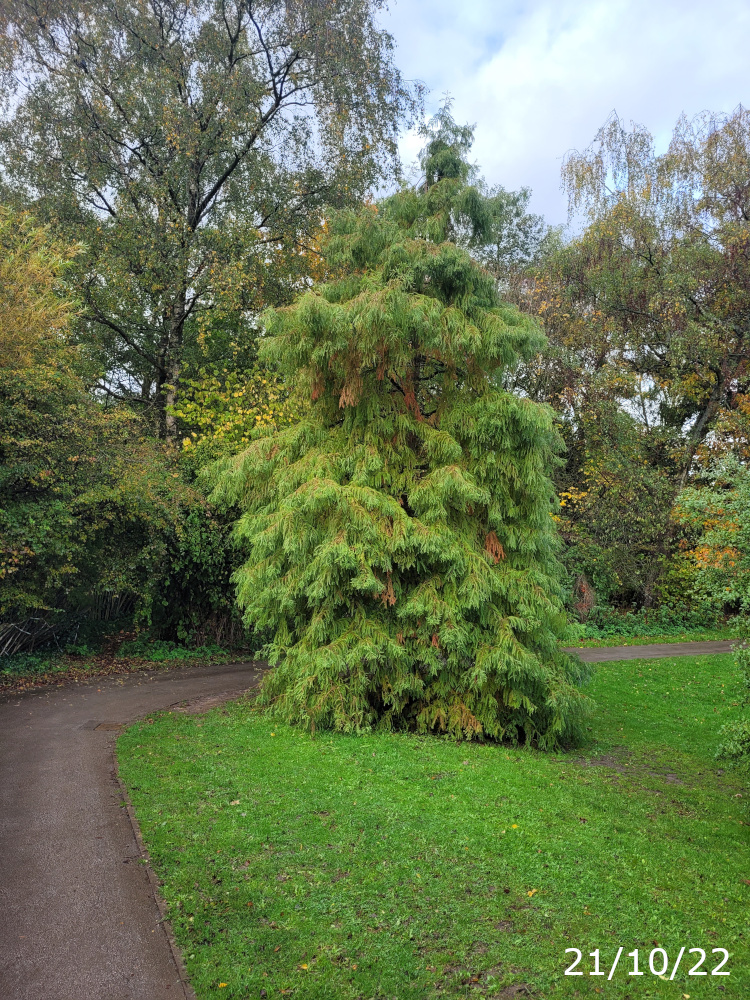
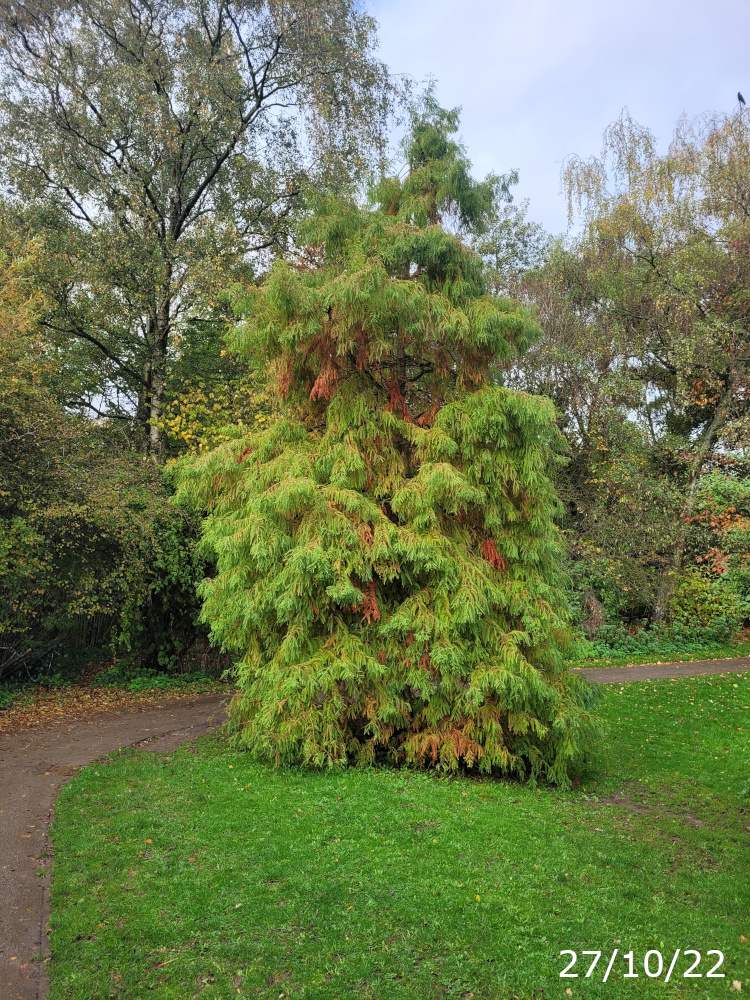
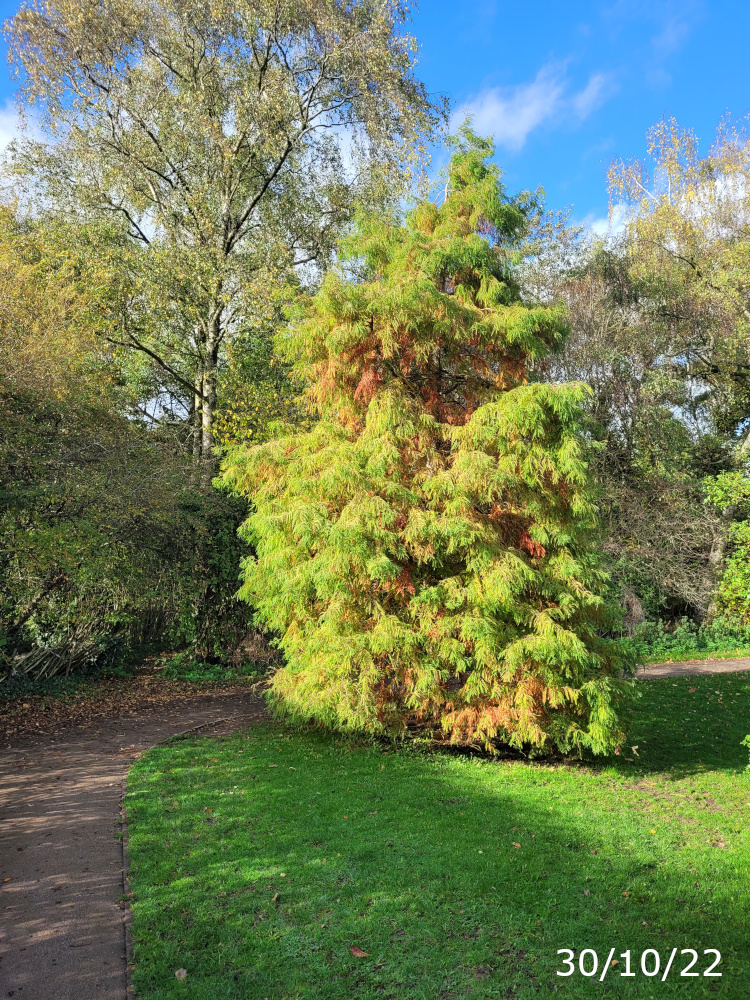
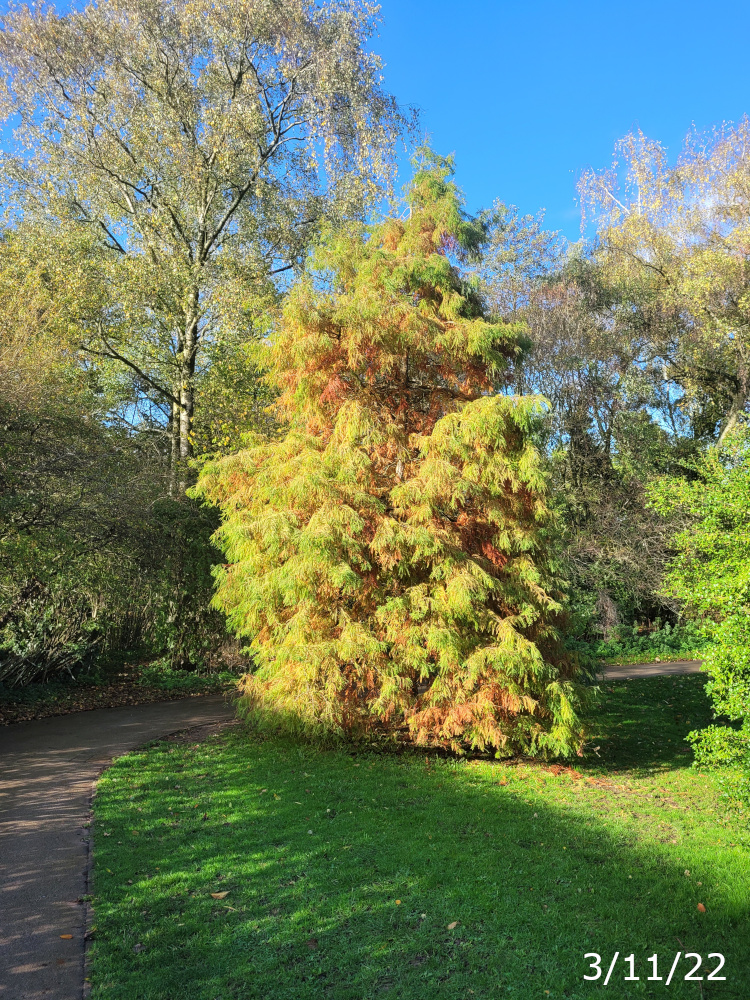
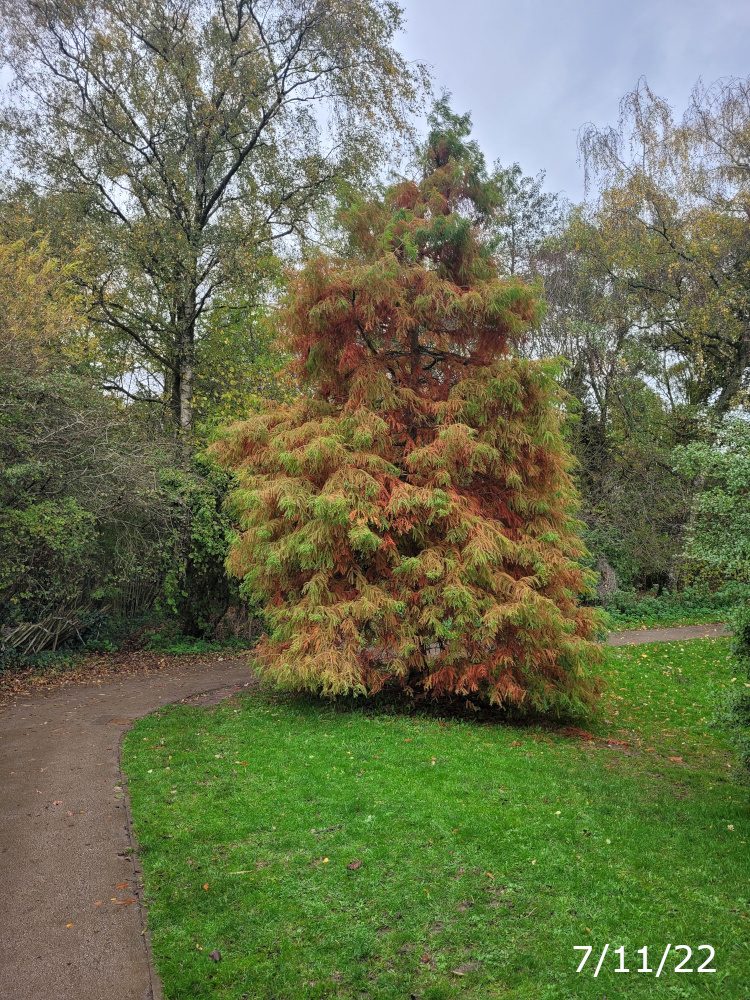
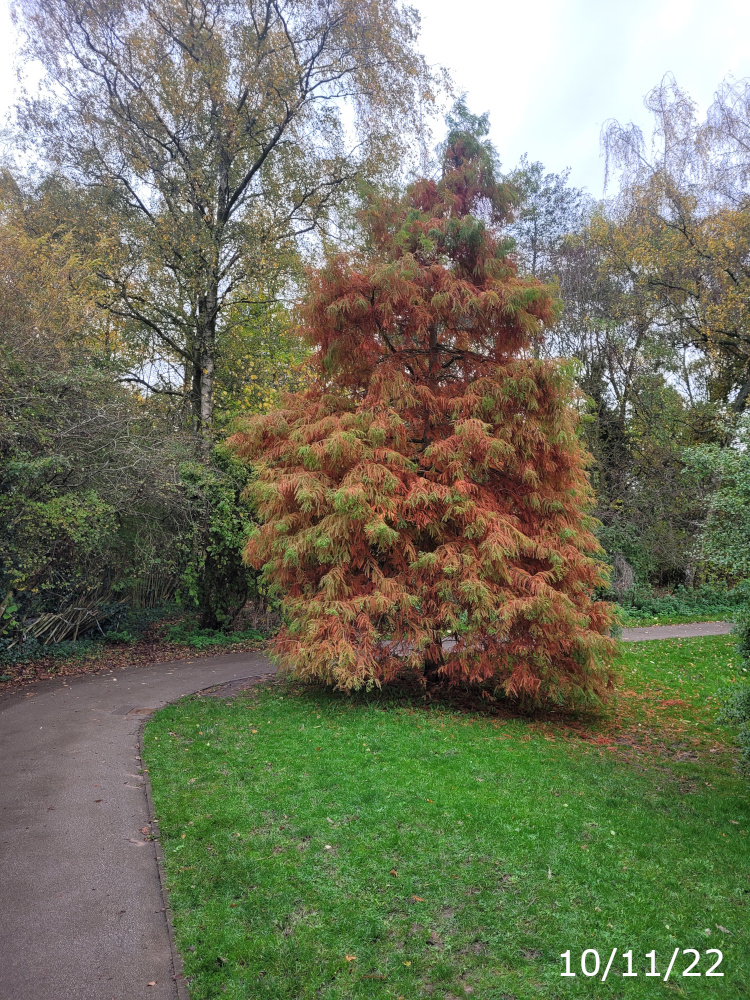
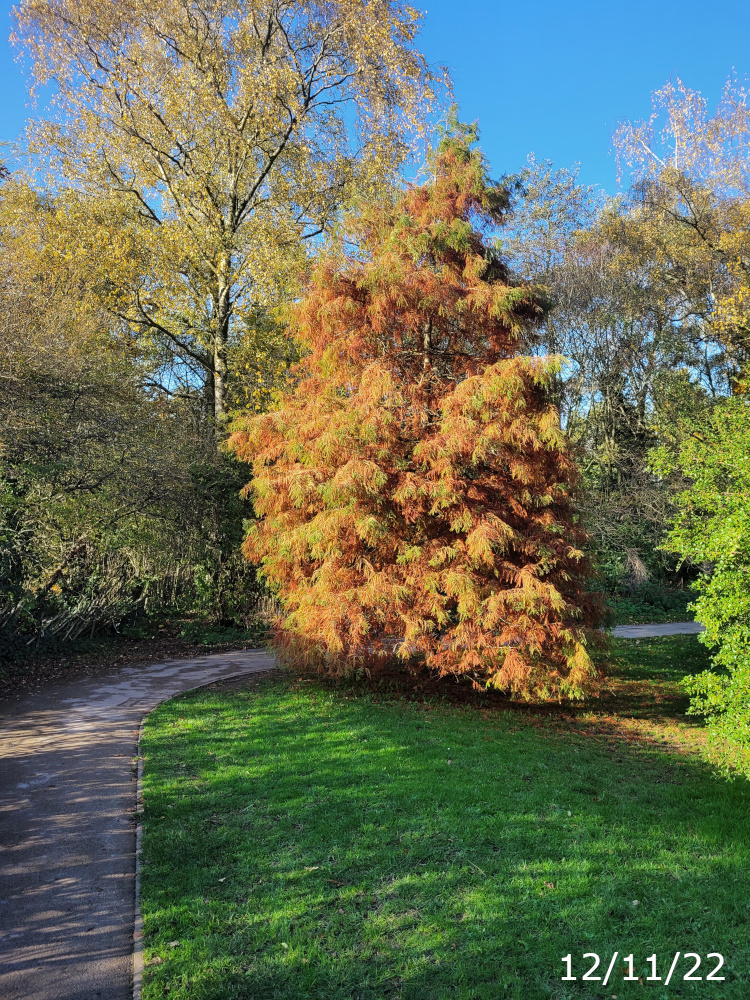
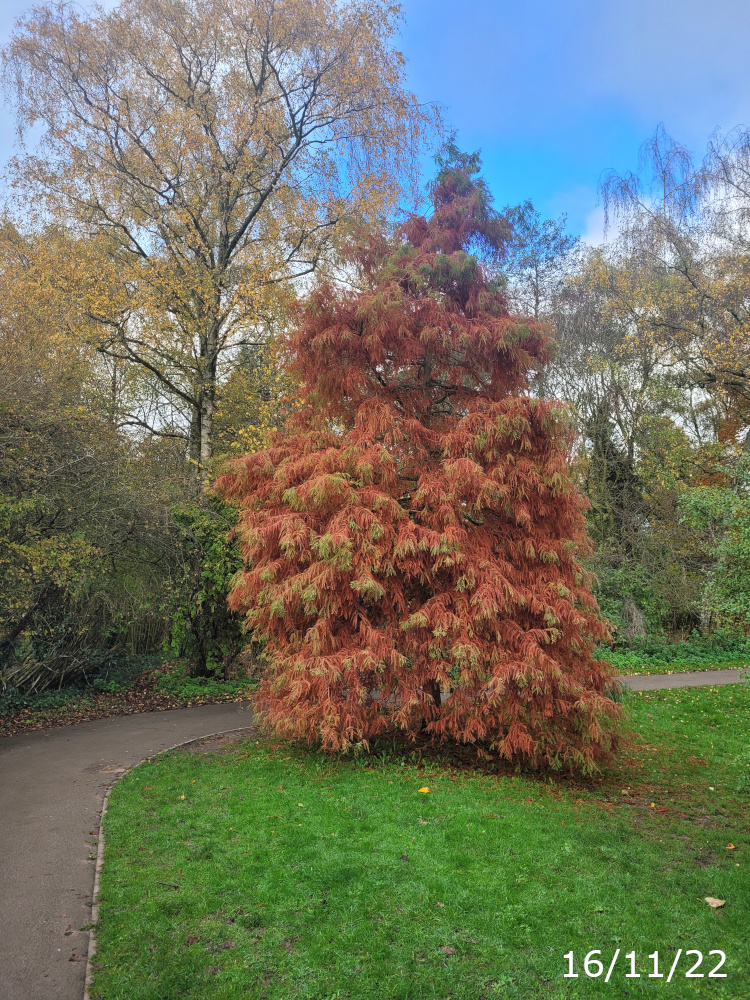
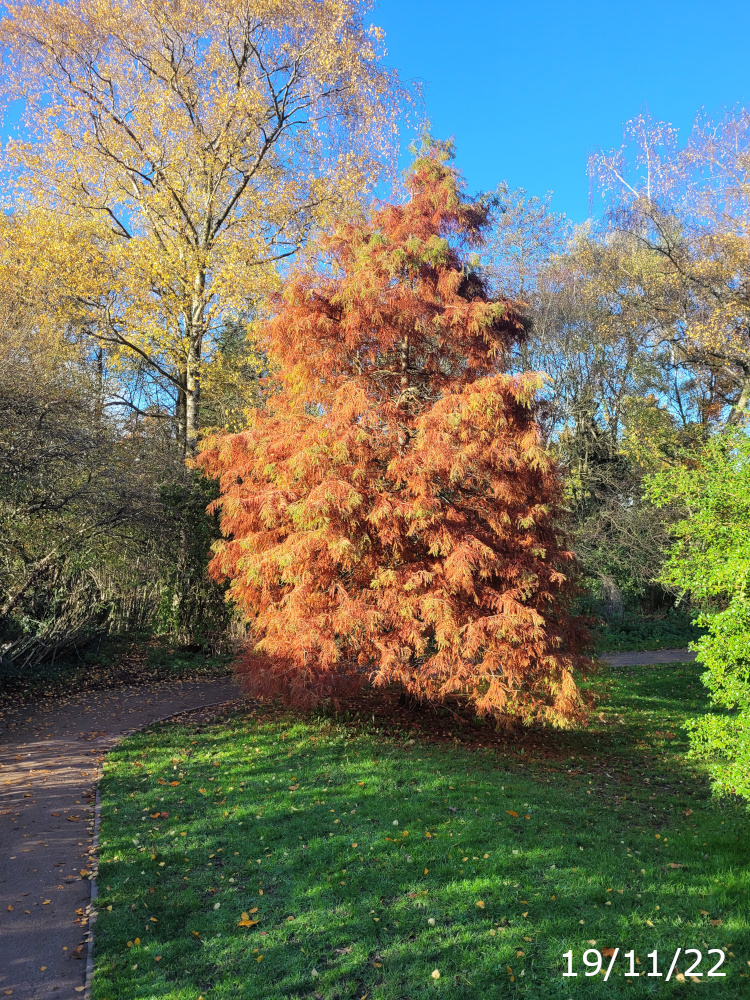
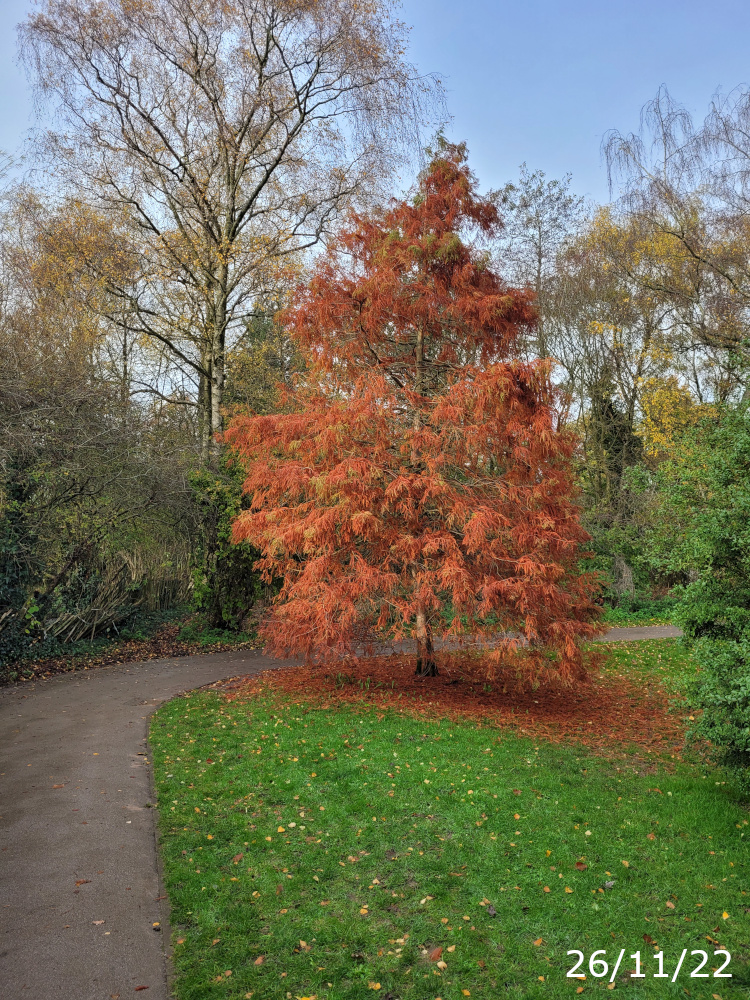
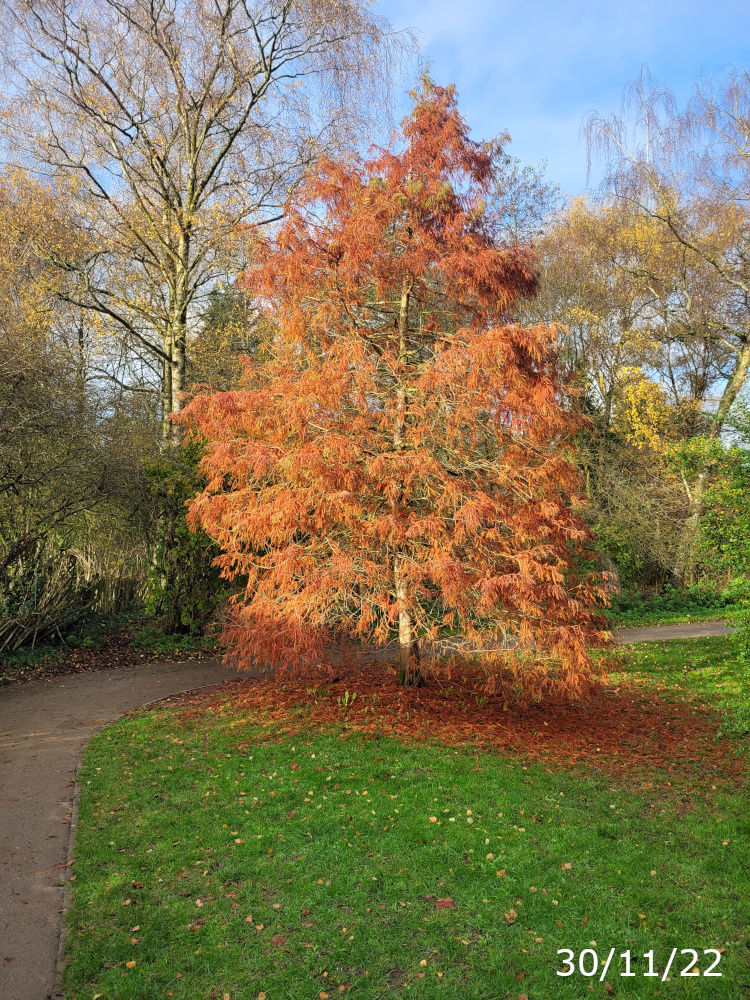
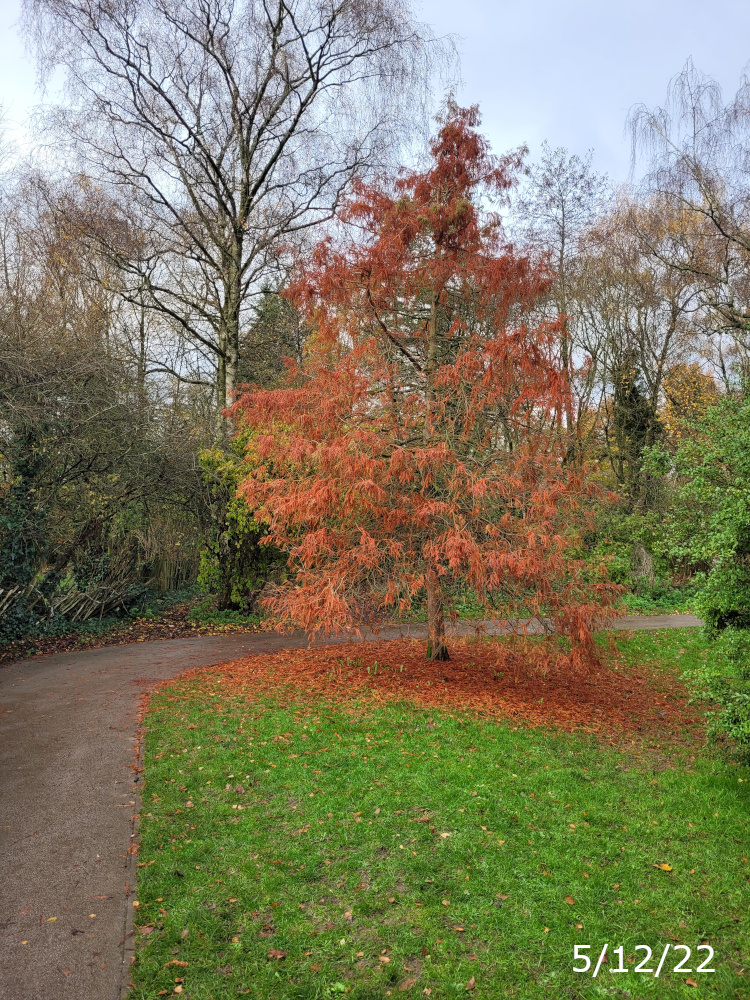
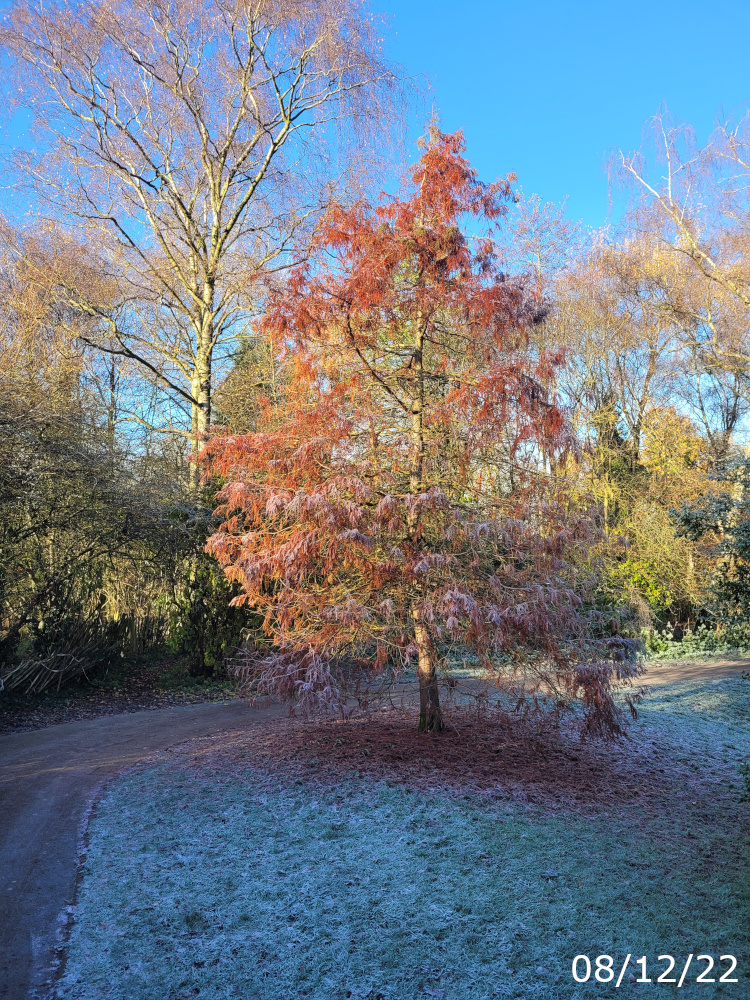
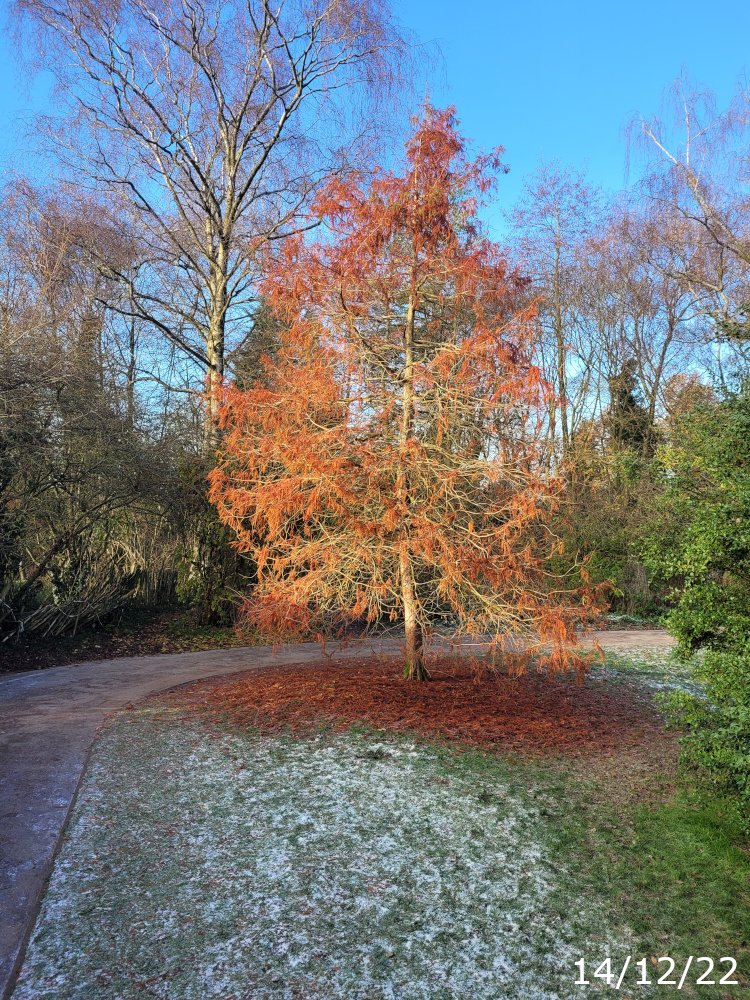
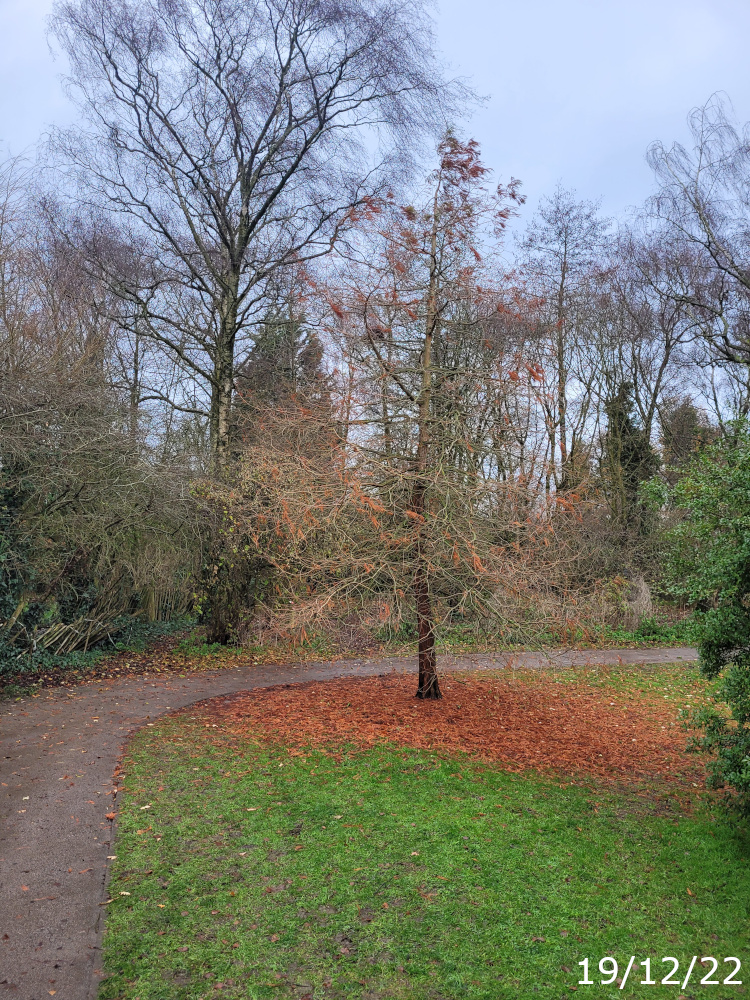
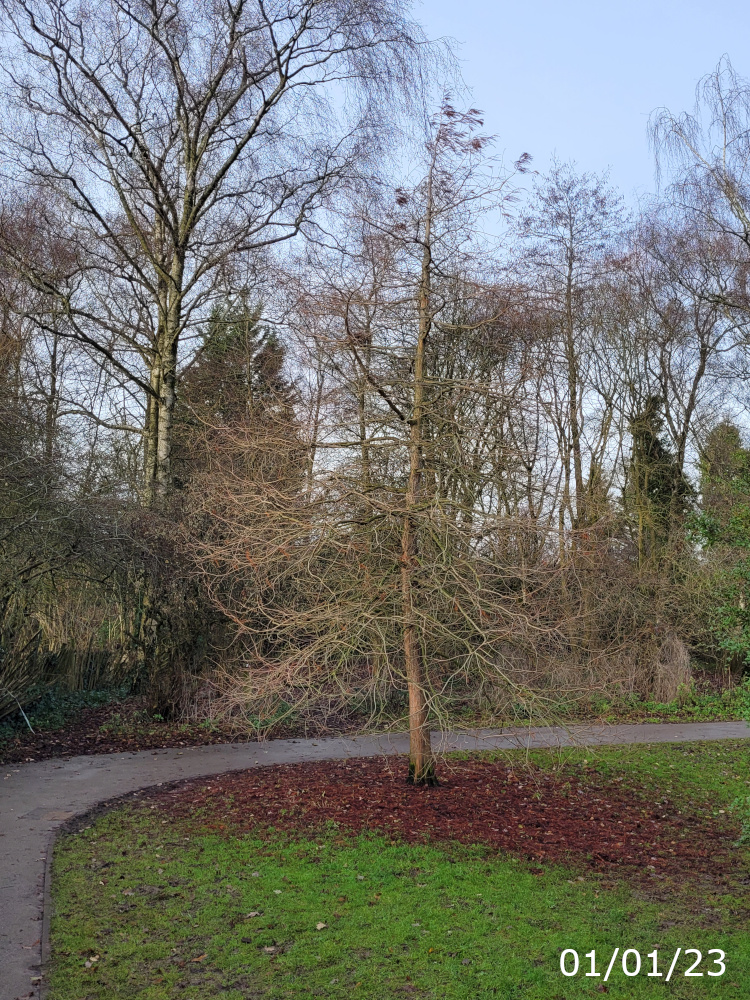
There are two swamp cypresses in the park. Their name, Taxodium distichum does not do justice to their elegance. Their leaves are flat needles arranged alternately along the stalk and like the Dawn redwood they are shed each autumn. The leaves turn a rich copper colour before they fall.
The swamp cypress is a native of South-eastern United States, growing in wetlands of Mississippi and Louisiana. The trees are monecious, having male and female cones on the same tree.
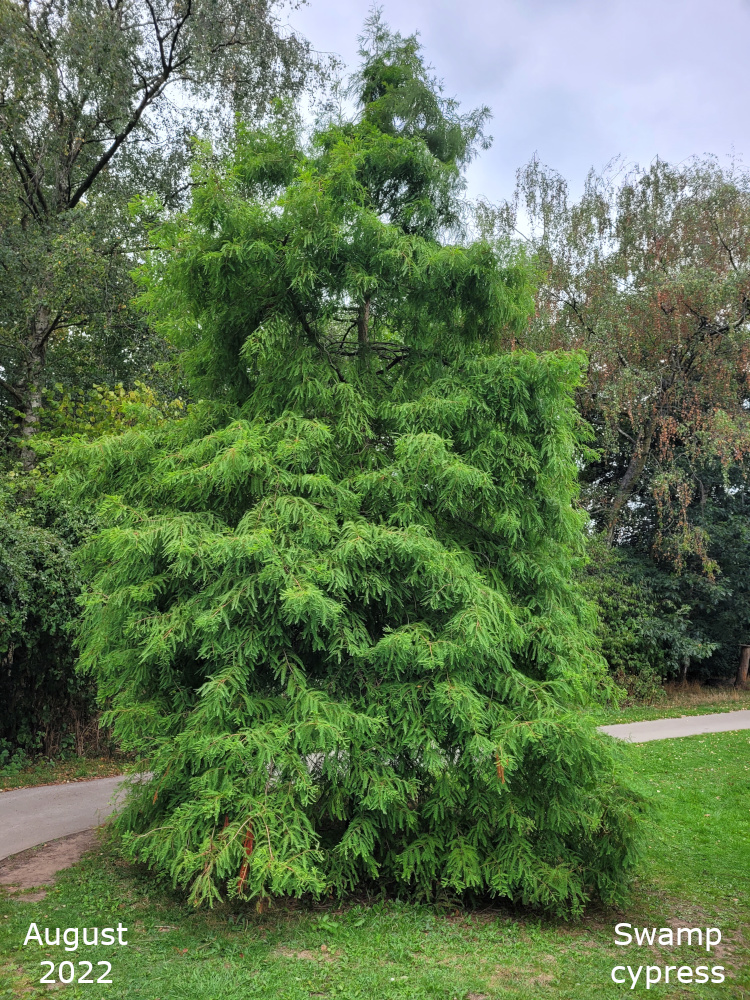


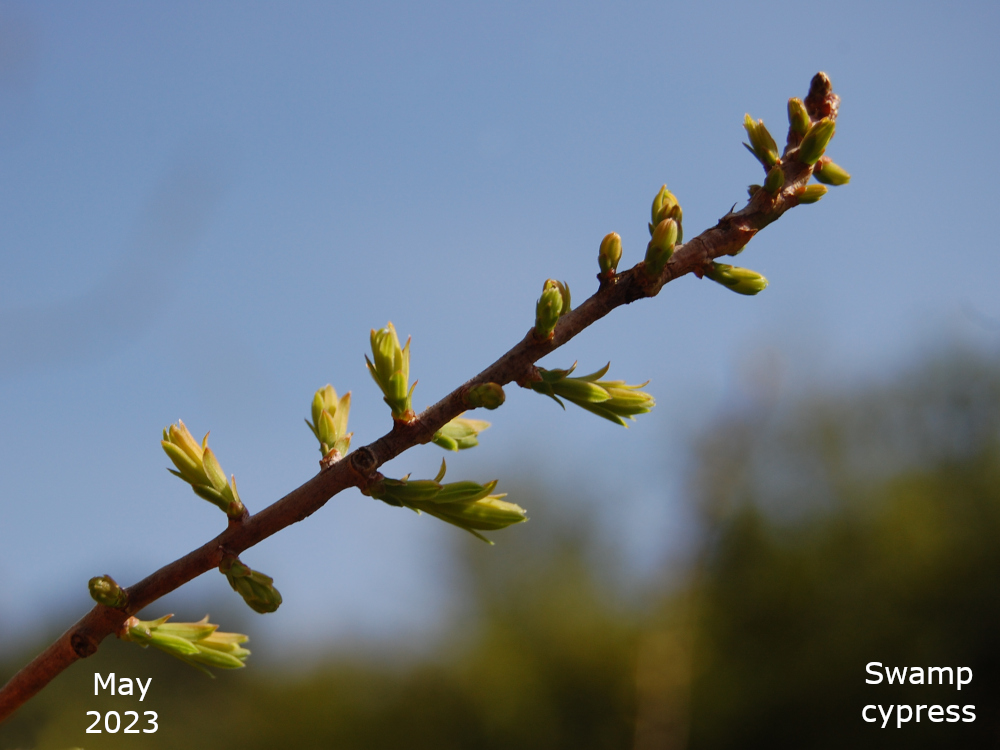

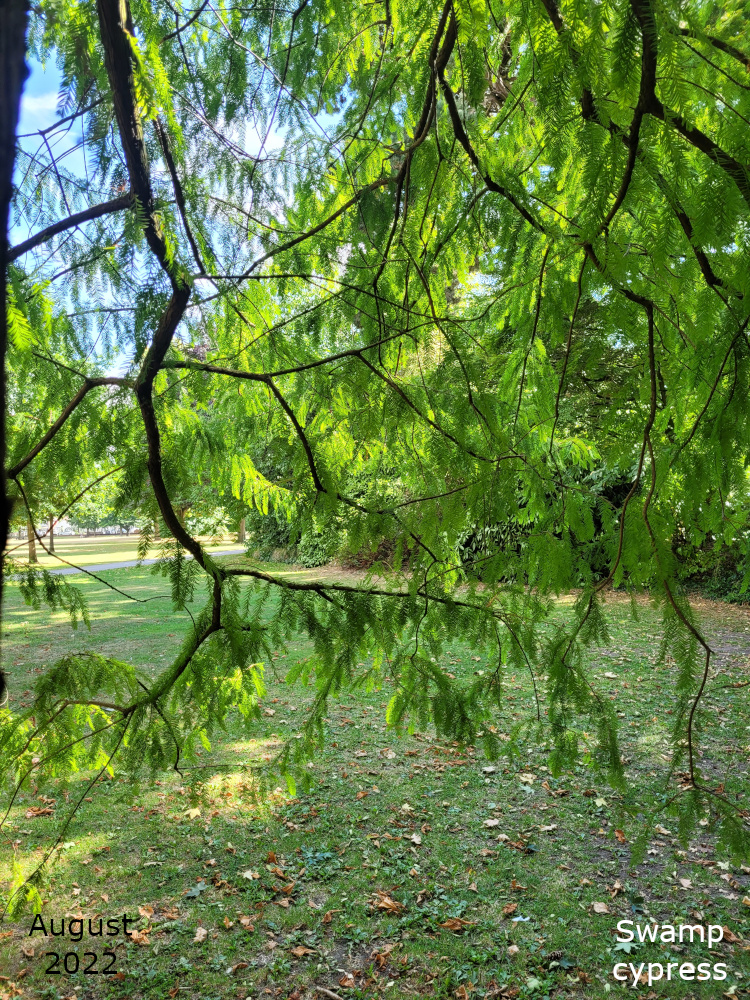
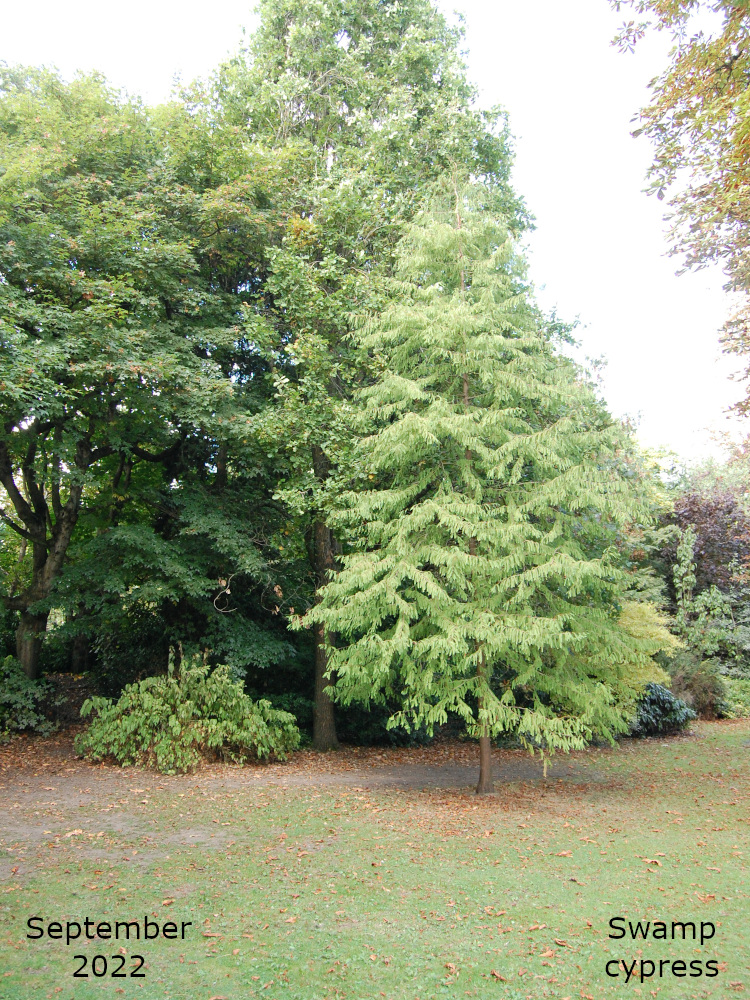
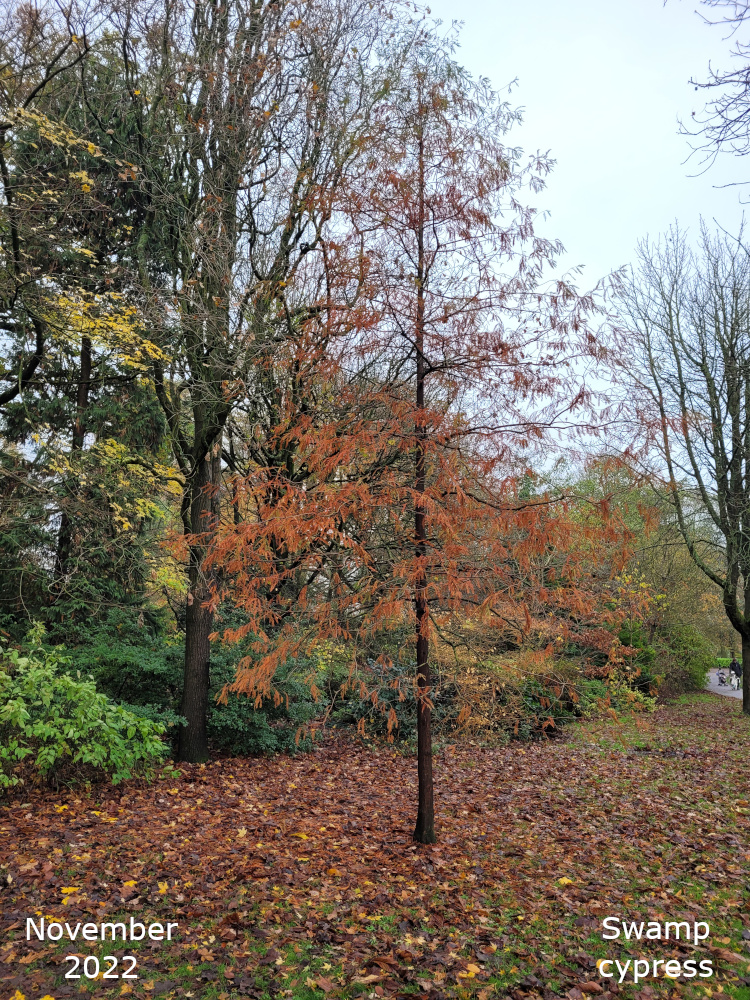
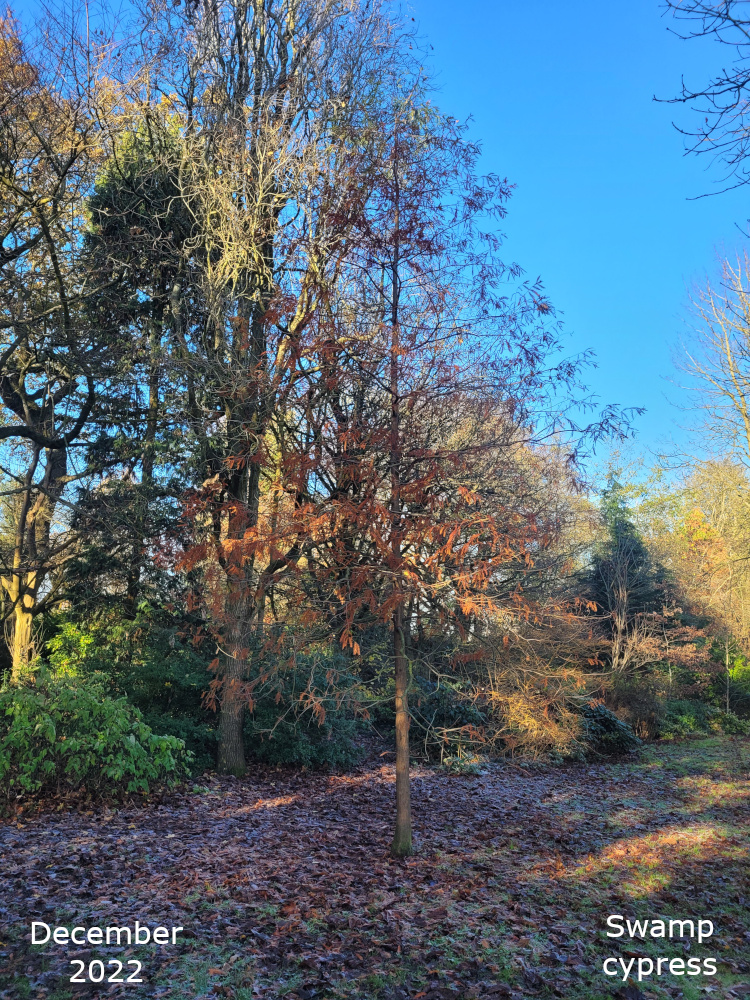
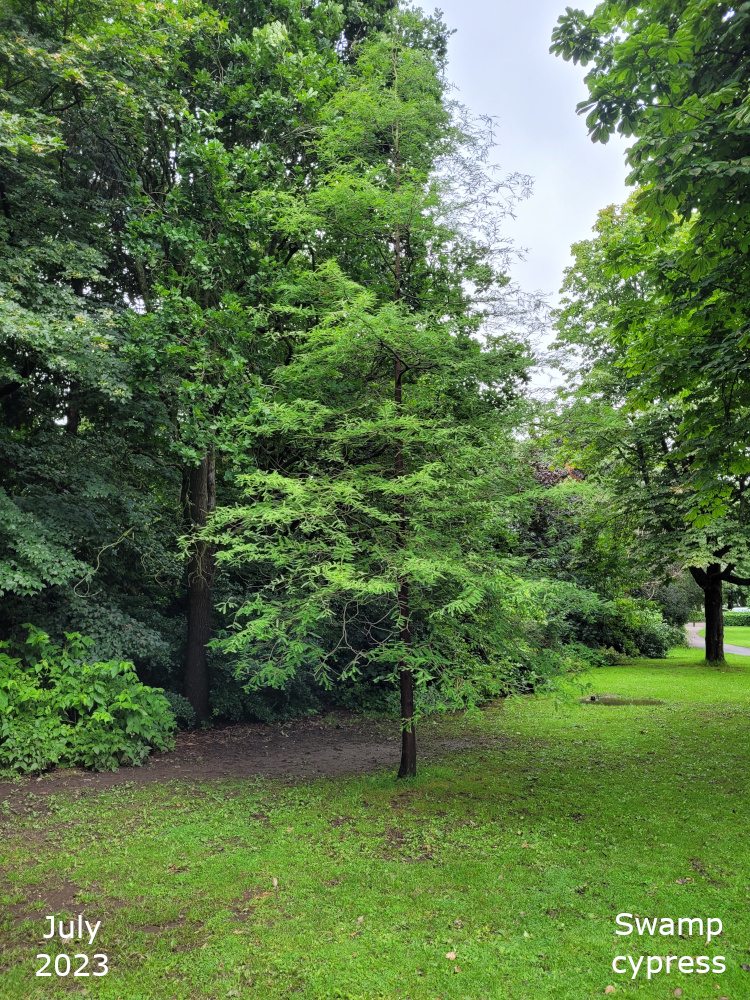
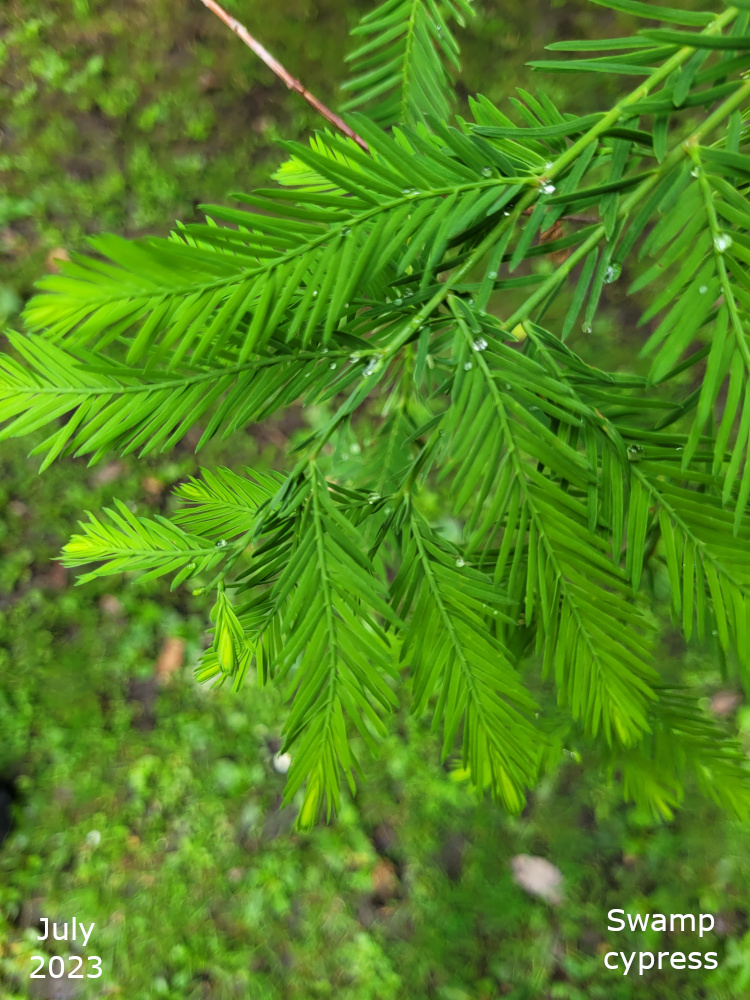

The following slideshow shows a progression of colour change as the swamp cypress, at the bottom of the park, gradually loses its leaves.




Hinoki cypress
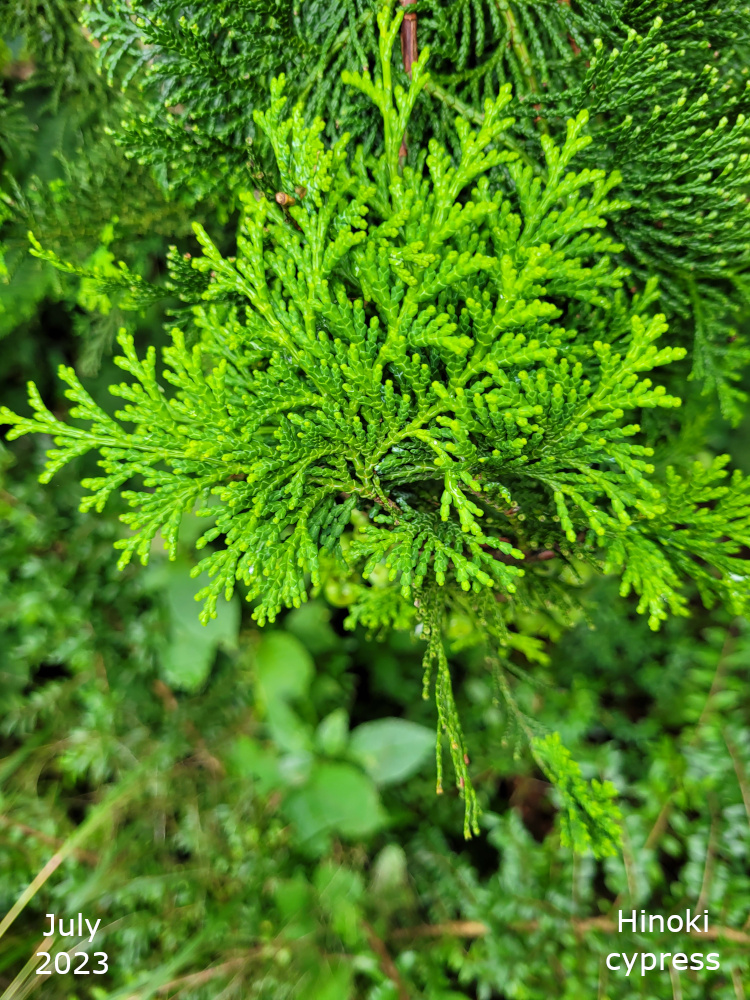
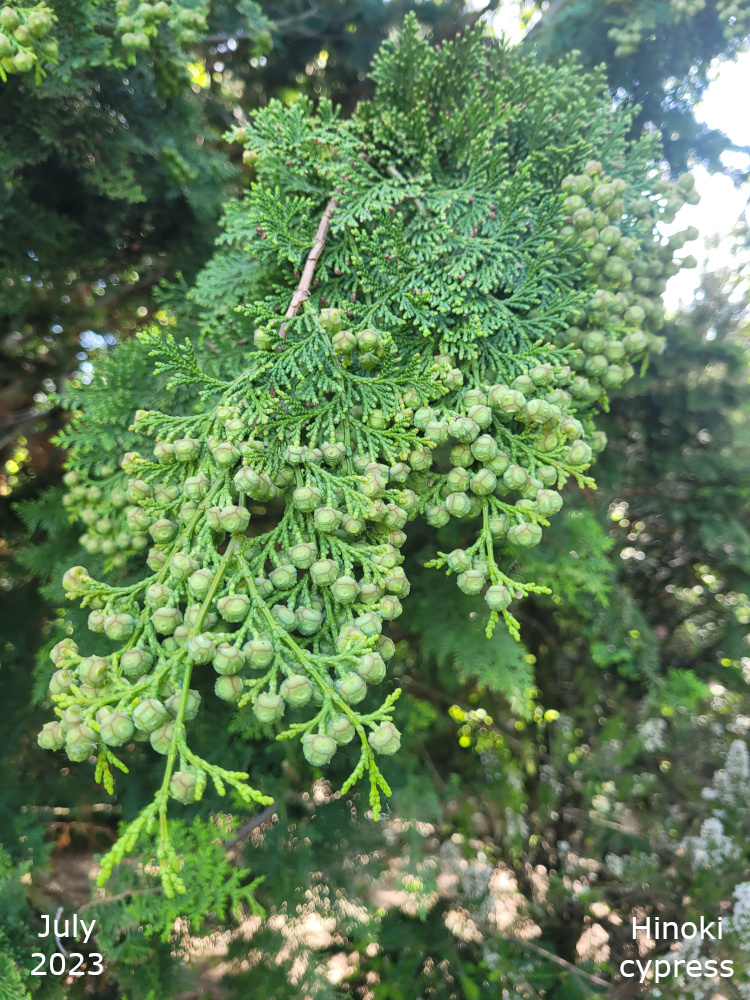
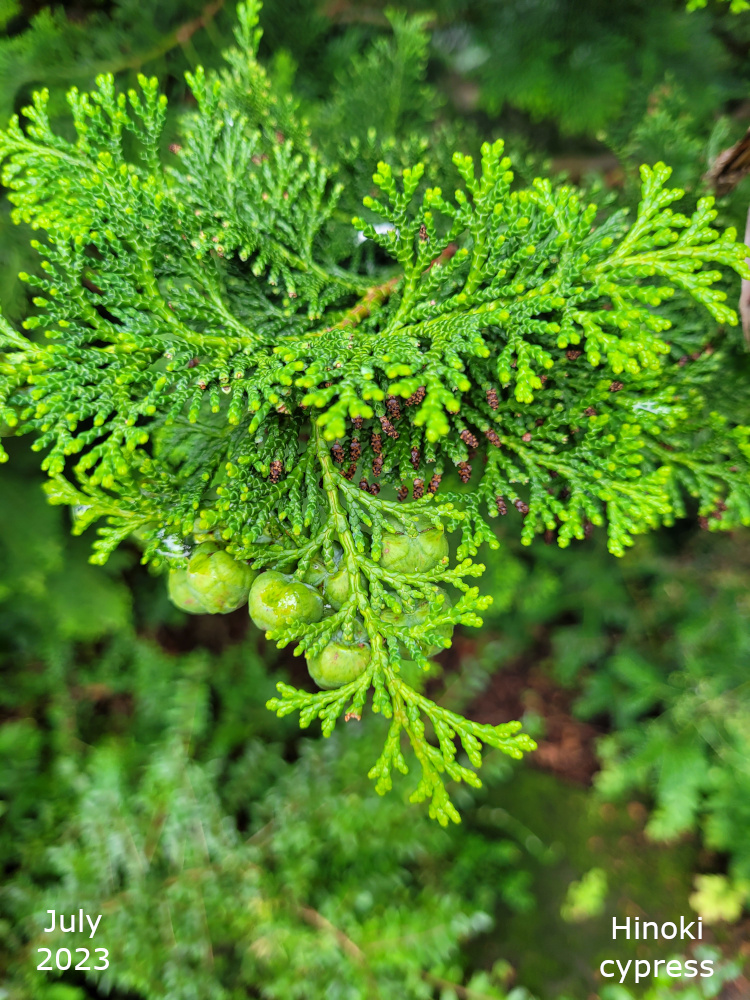
As far as I know, there is only one Hinoki cypress, Chamaecyparis obtusa, in the park. It is a false cypress but still in the Cupressaceae family. It is in the area of the heather beds opposite the bowling green. It is also known as the Japanese cypress and is widespread in Japan, where its pollen is a major cause of hay fever.

Sawara cypress
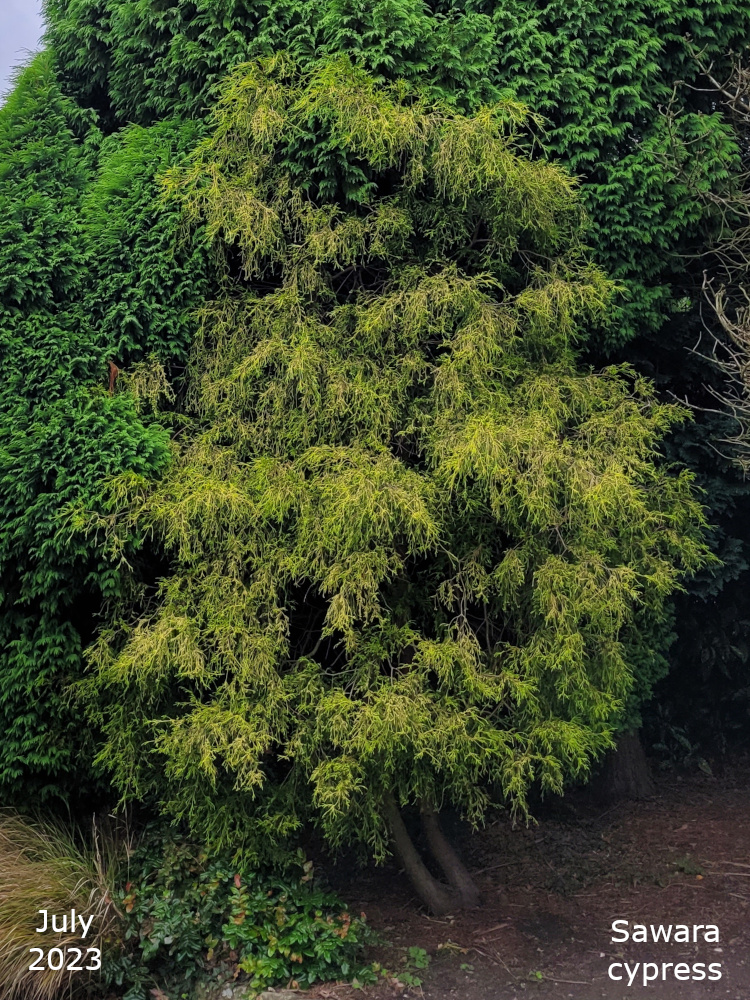
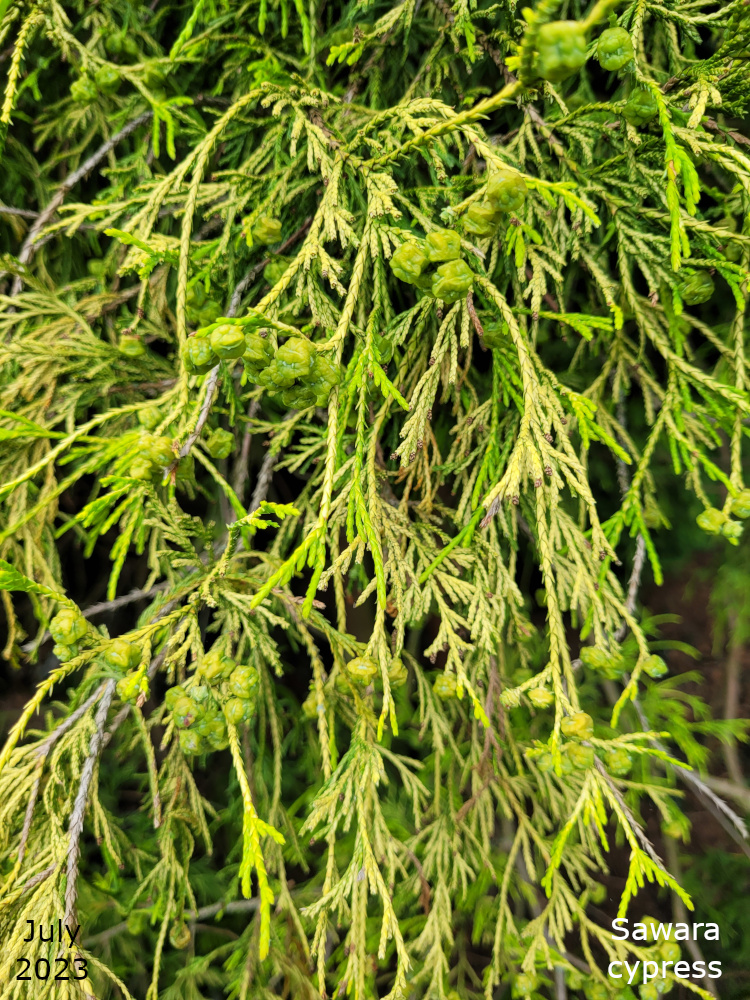
There is only one Sawara cypress, too, which is related to the Hinoki cypress and also a native of Japan. The Sawara cypress, Chamaecyparis pisifera, has more pointed leaf tips than the Hinoki cypress and slightly smaller cones.

Arizona cypress
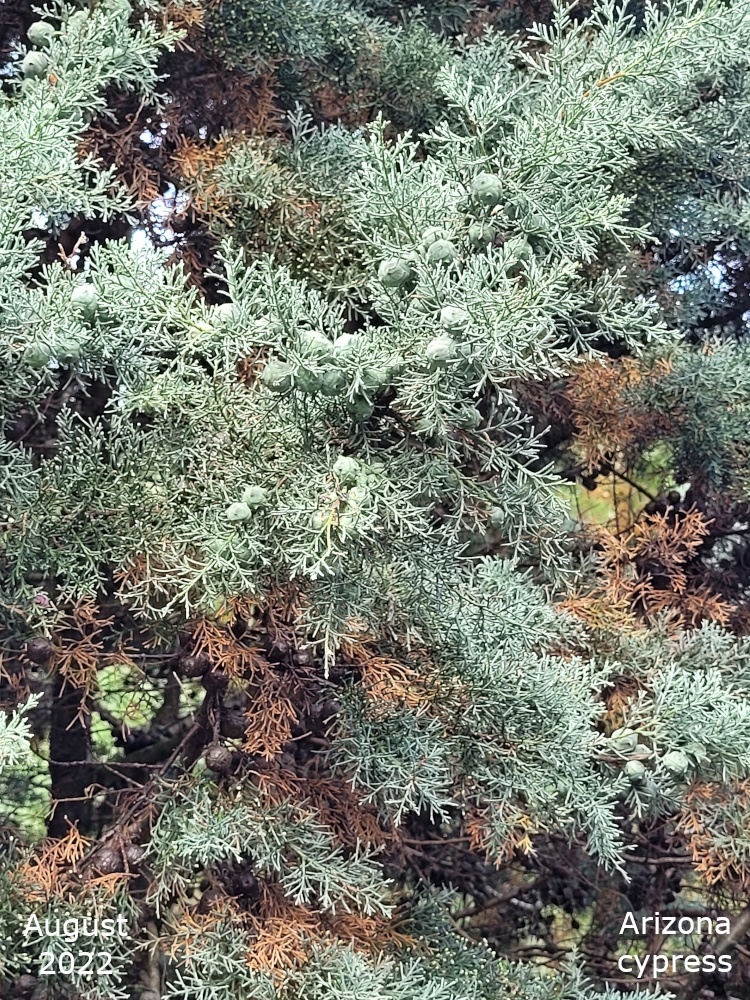
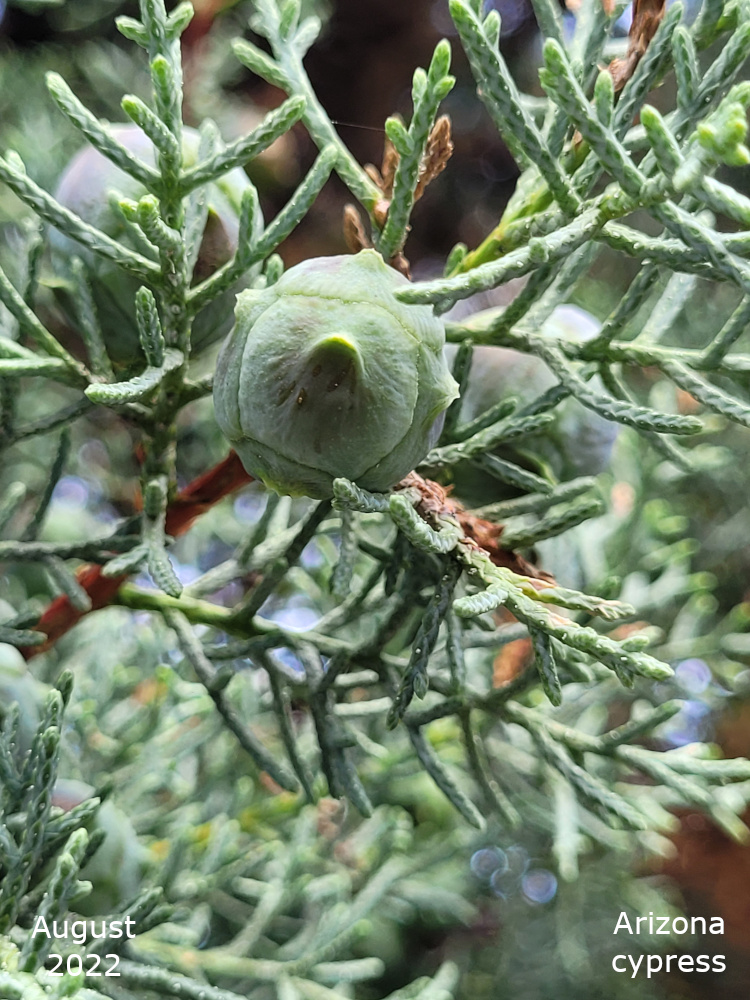
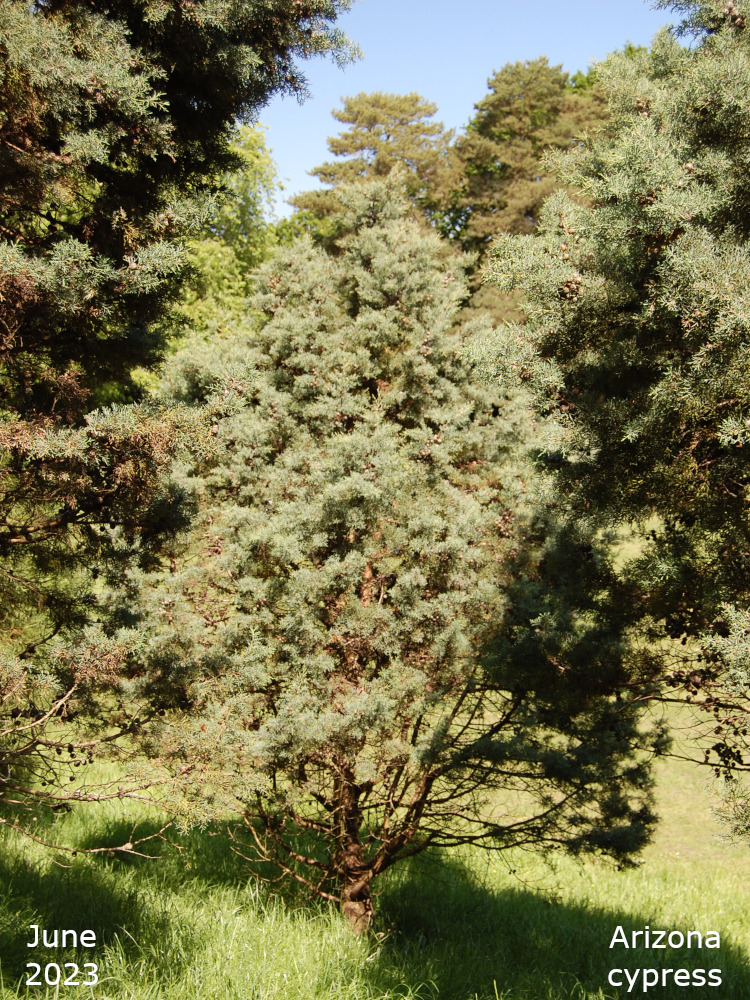
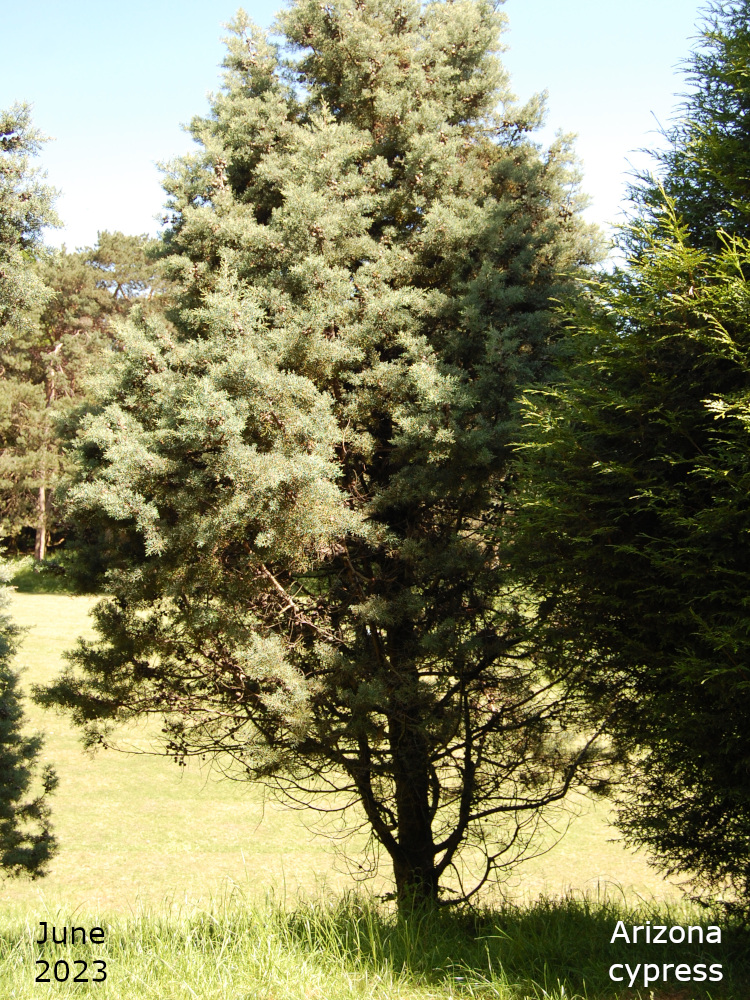
There are three Arizona cypress trees grouped together, with three western red cedars and a giant sequoia, at the bottom end of the park. The Arizona cypress, Cupressus arizonica, has blue-green foliage and is a native of the south-western United States and Mexico. The leaves are scaly and produce round shoots compared to the flattened shoots of many other cypresses. The round cones are 15 to 30 mm in size and stay green for some time, turning brown when they mature. The cones only release their seed after the branch holding them is killed in a fire or in some other way. A fire would leave bear ground for the seeds to germinate in and new plants to colonise. The Giant sequoia has also evolved this strategy.



Western red cedar
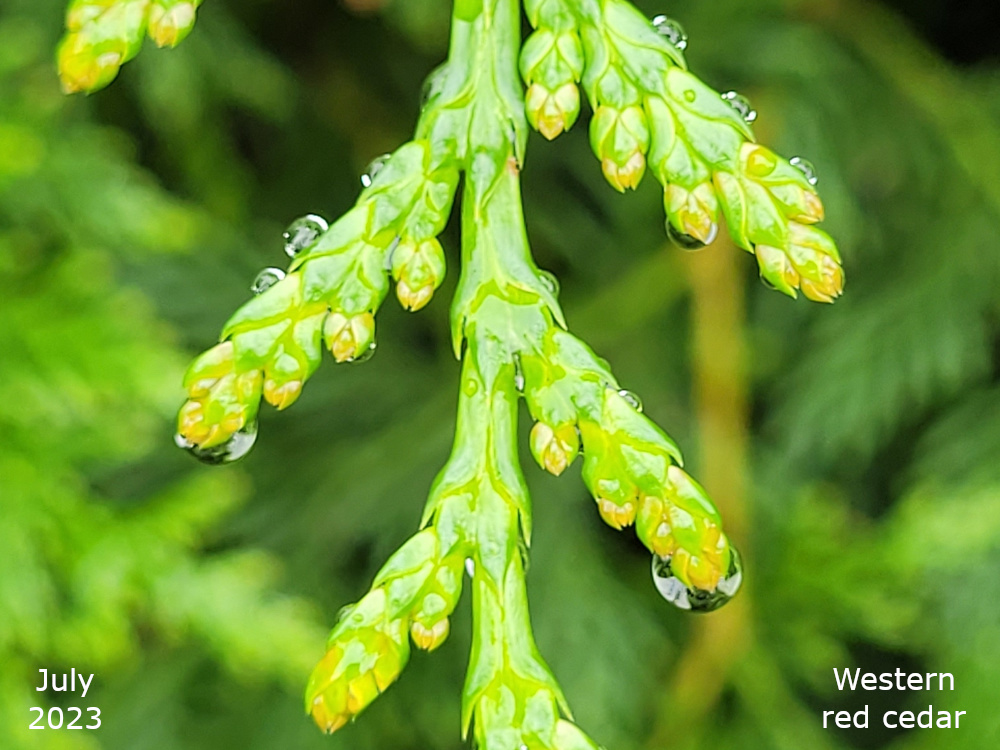
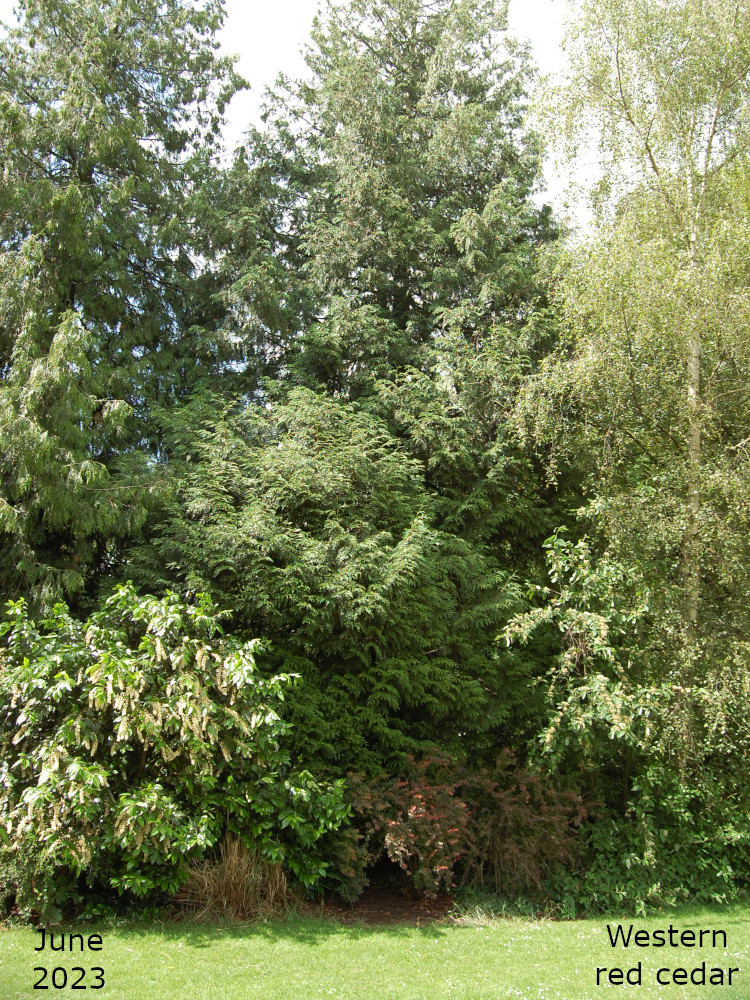
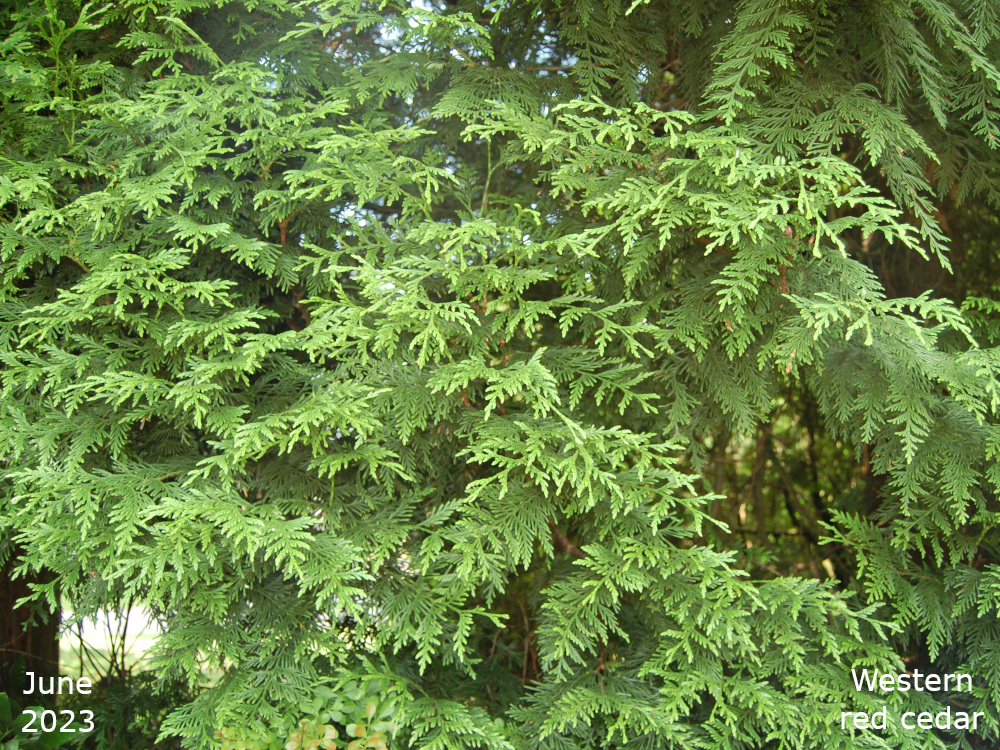
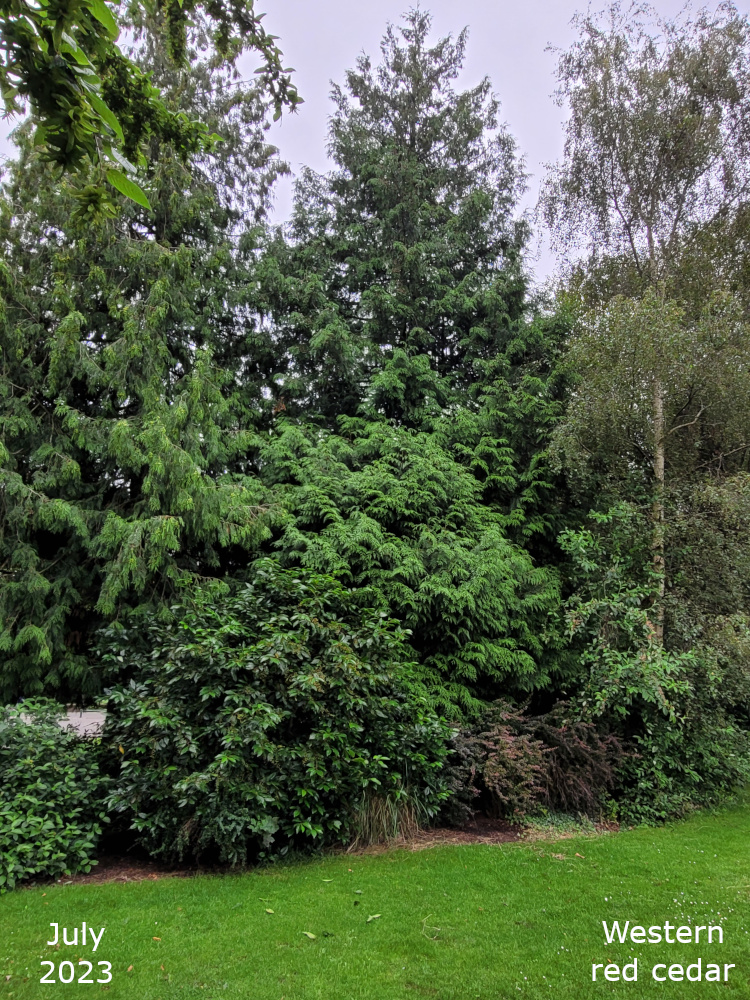
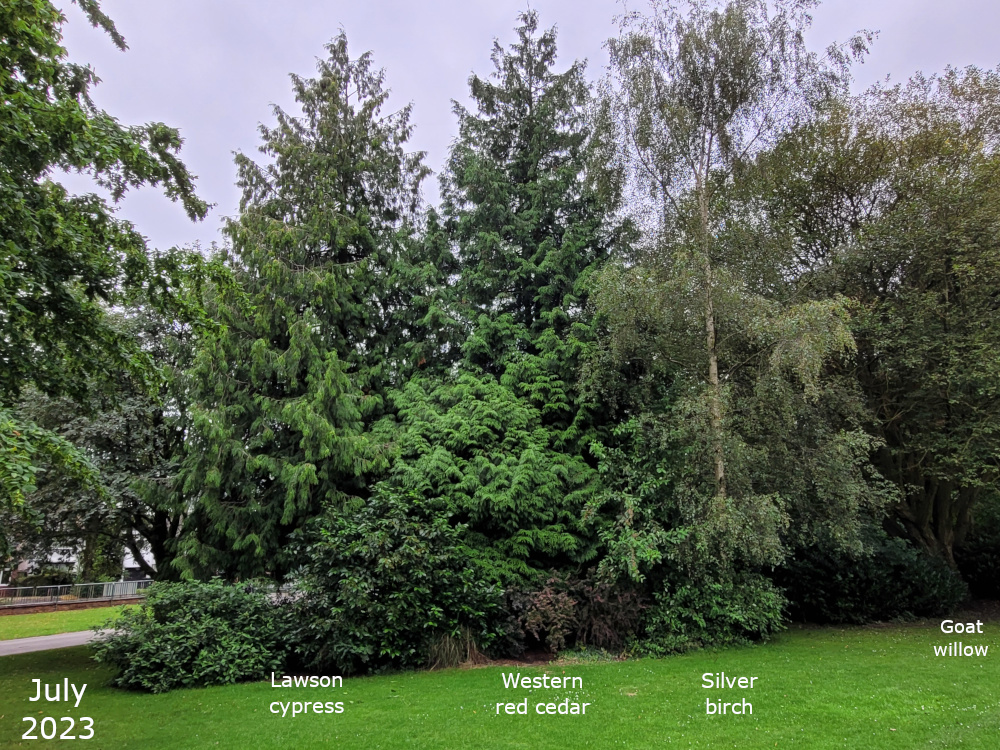
Western red cedar, Thuja plicata, is also known as Pacific red cedar, Western arborvitae or Shinglewood. It is not a true cedar as it is not a member of the genus ‘Cedrus’ but in its native region of the Pacific North-west of America that is how it is known. Its scale-like leaves form flat sprays or fronds with the leaves in opposite pairs at 90 degrees to each other. When the leaves are crushed they give off a scent of pineapple. Having tried this, the aroma is certainly zesty somewhat like pineapple / lemon / pine, but no other cypress smells like it.
These three trees are at the bottom end of the park.
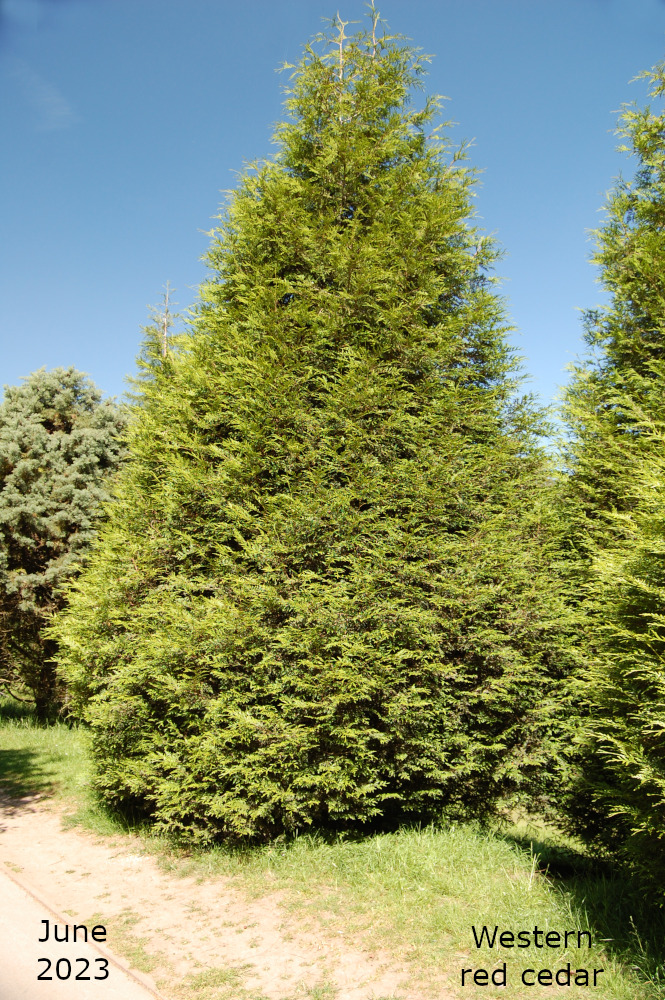
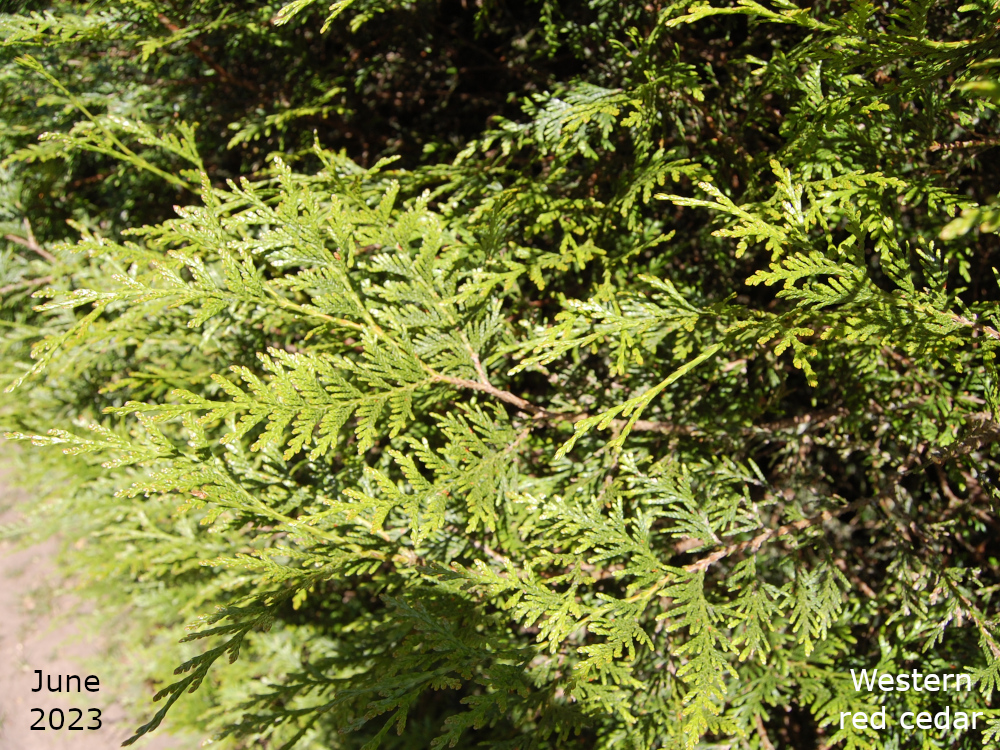
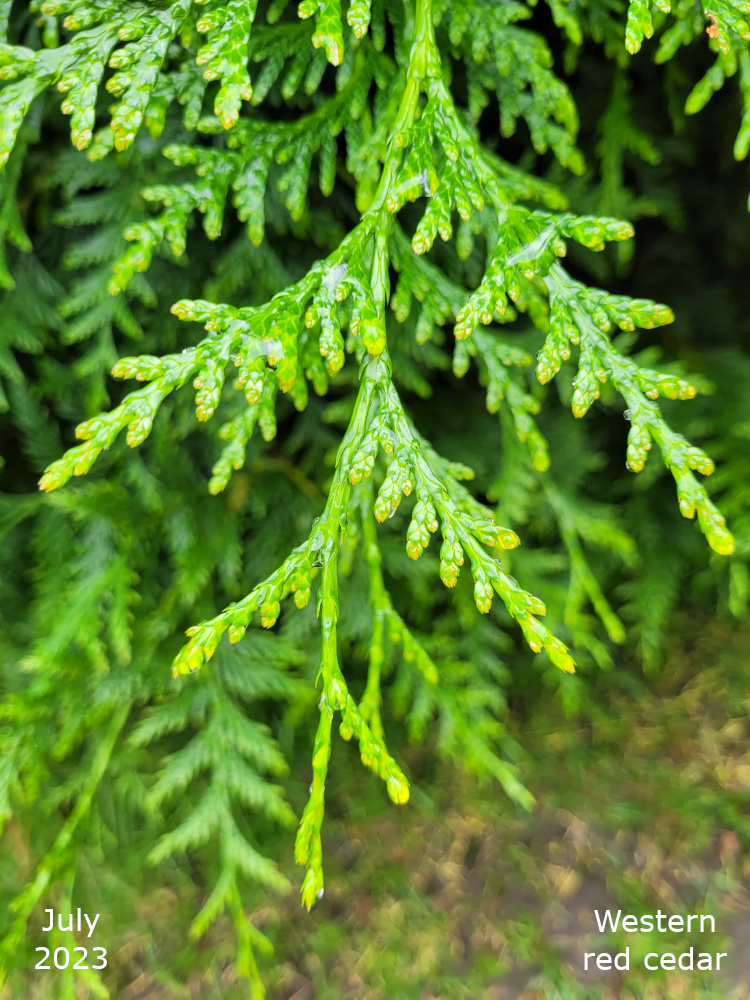
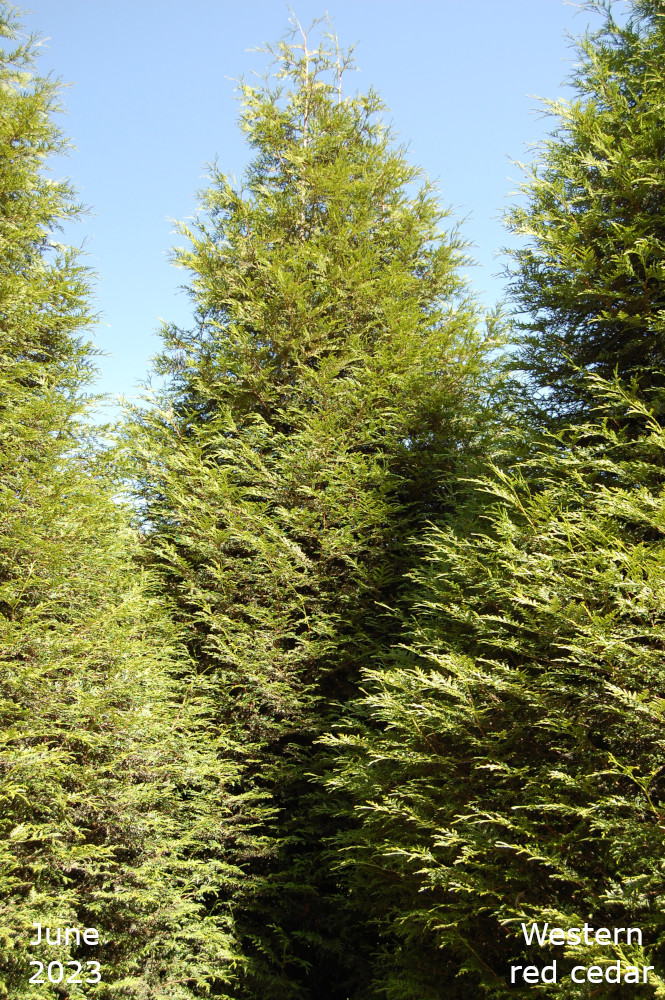
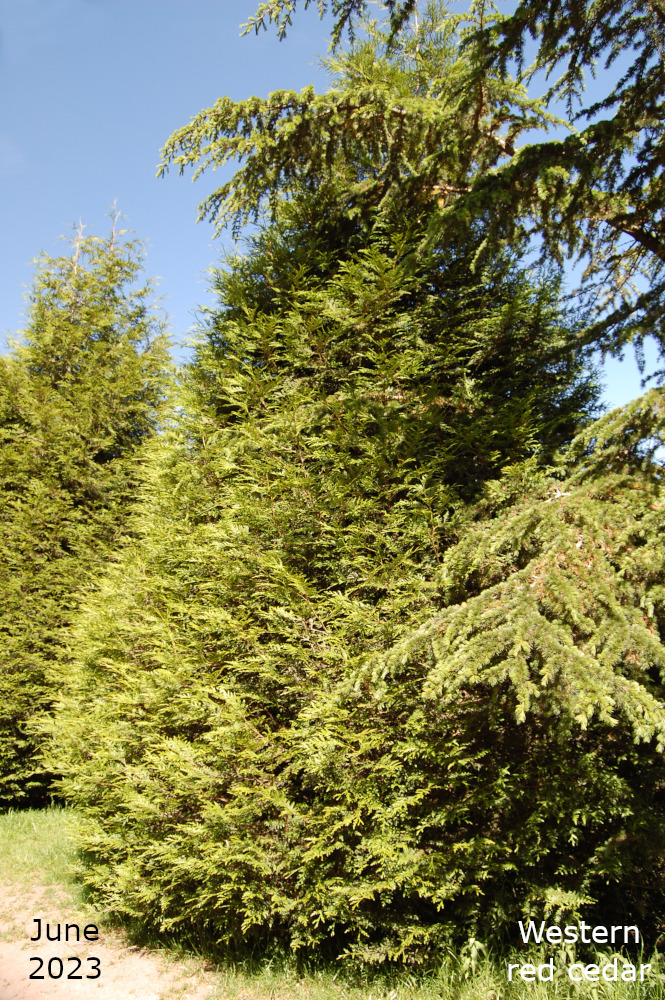
These two trees are in or near the colour garden.
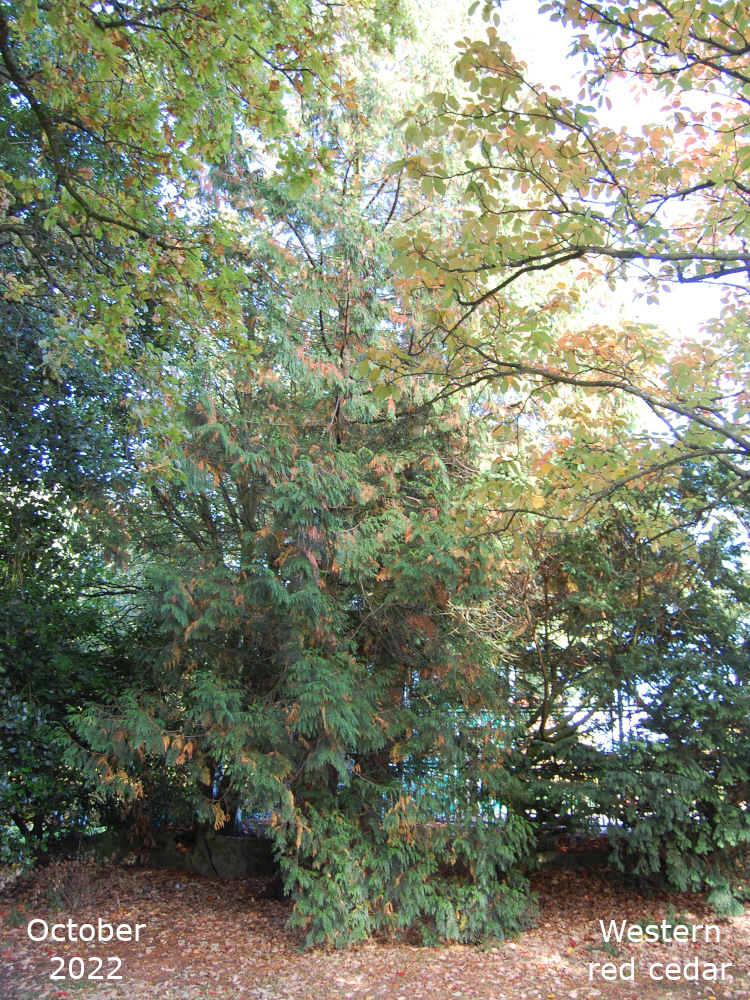

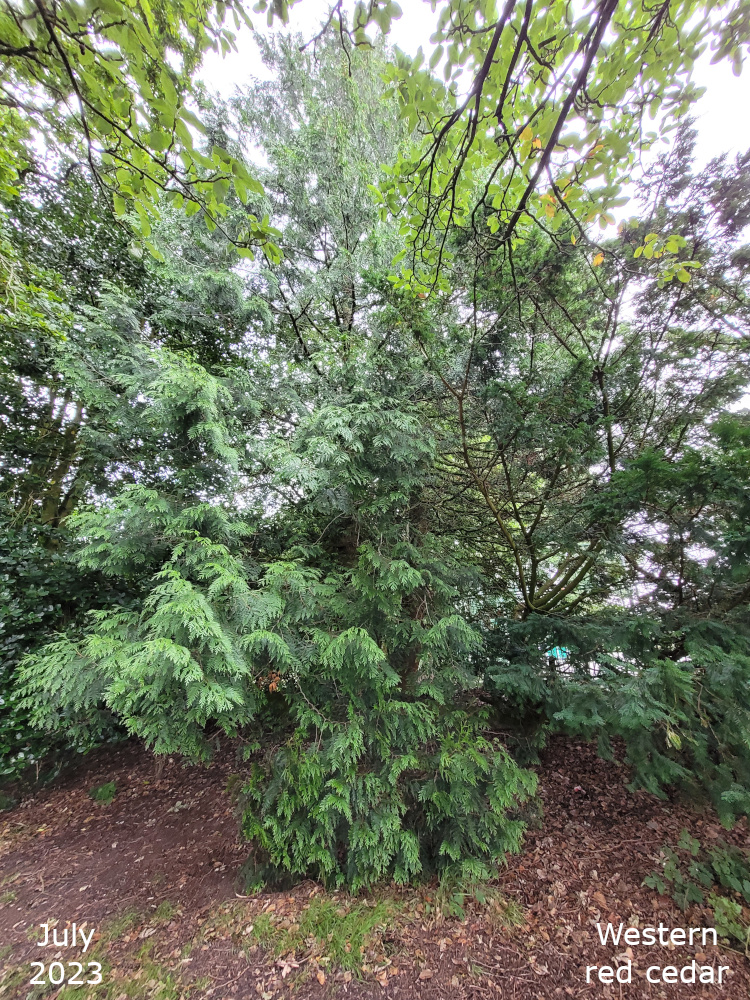
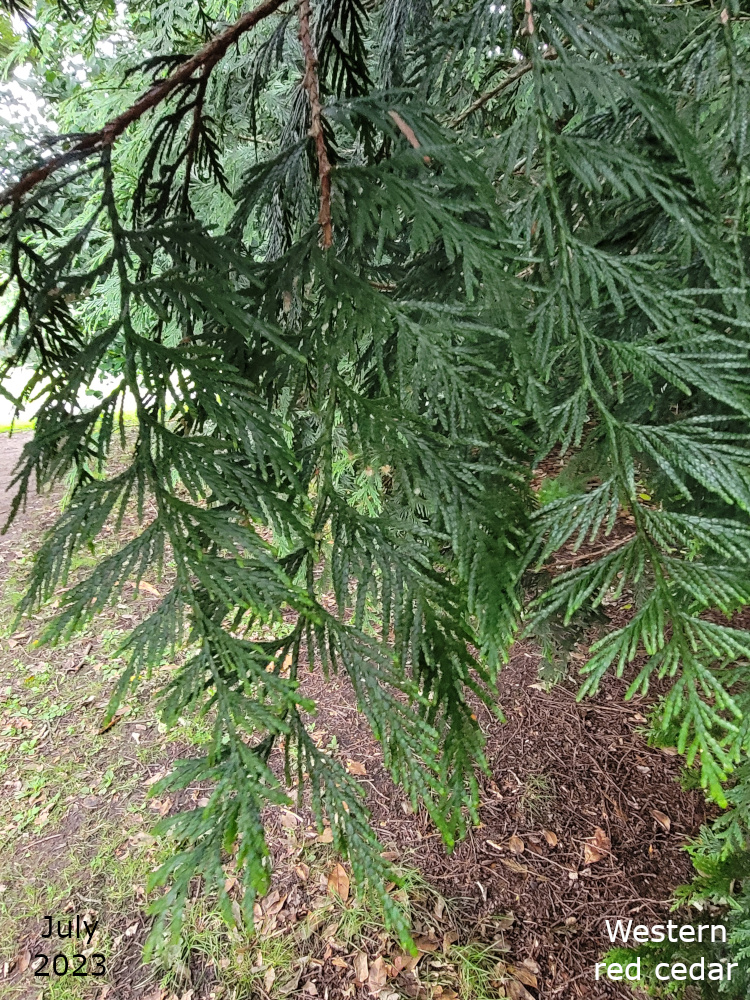
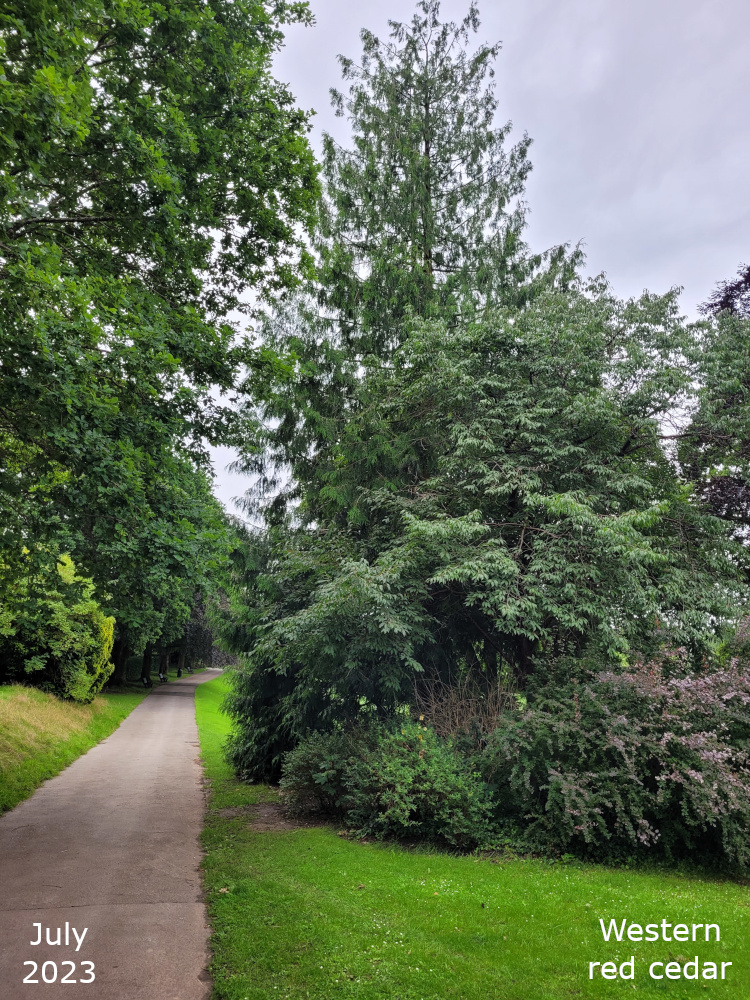
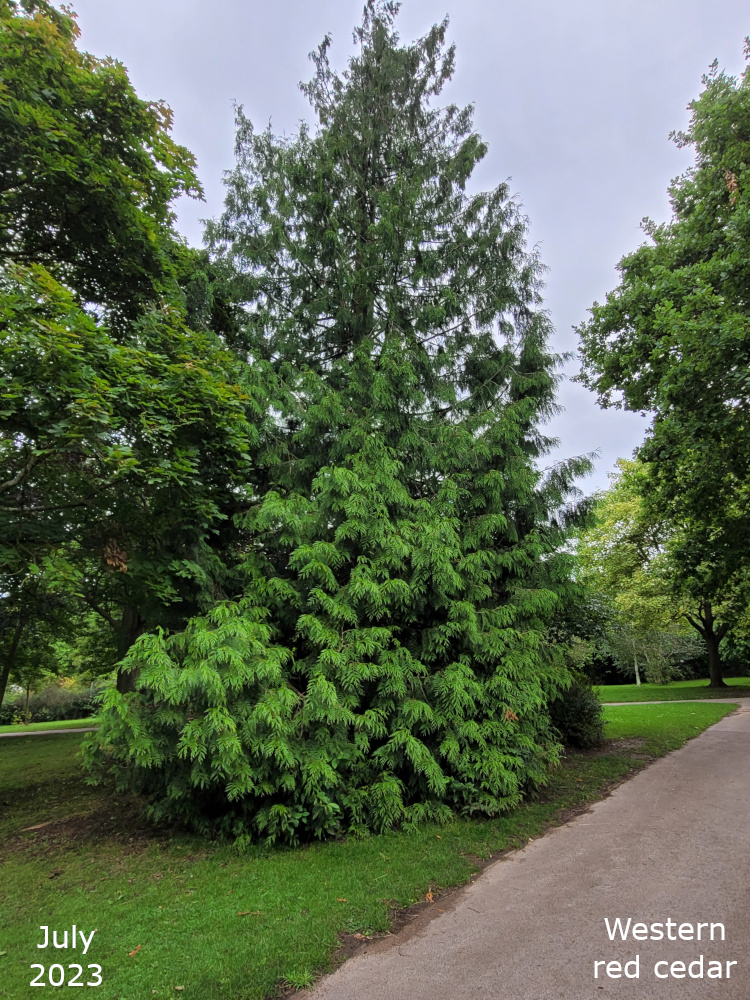
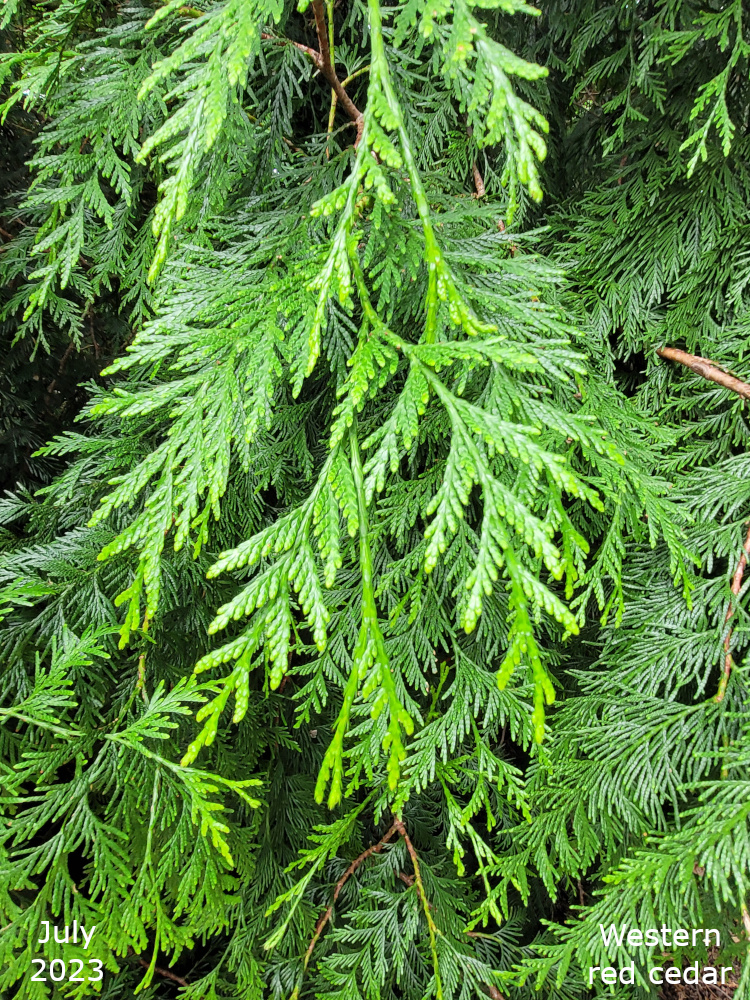
This one is at the front of the park at the back of a group of trees on the corner of the field nearest the vehicle entrance.
China fir
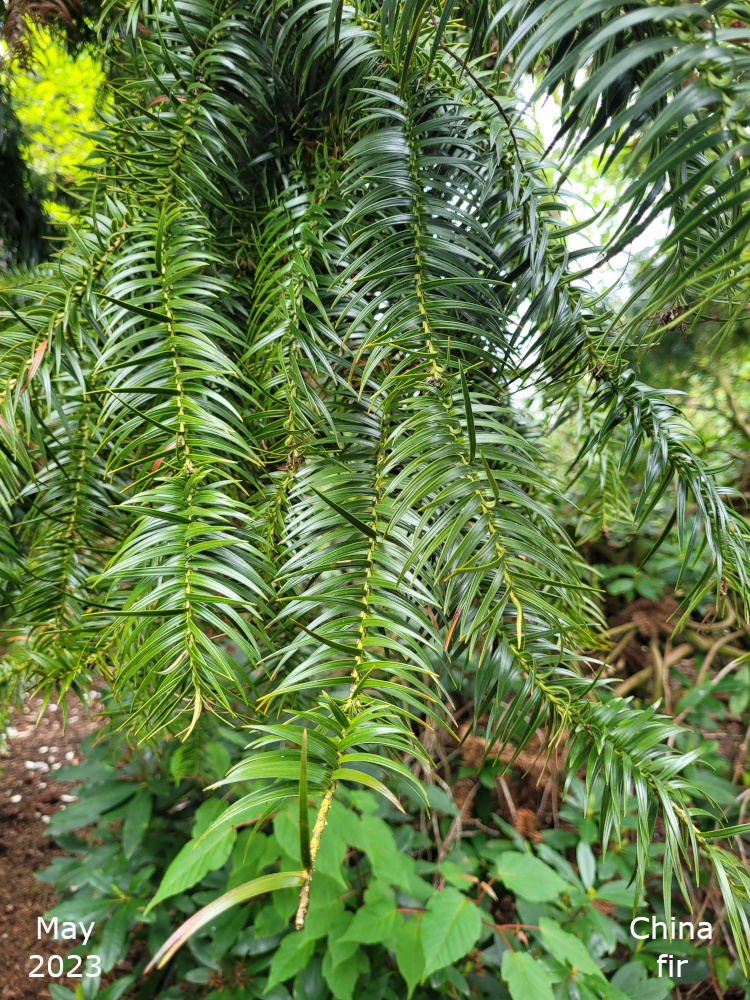
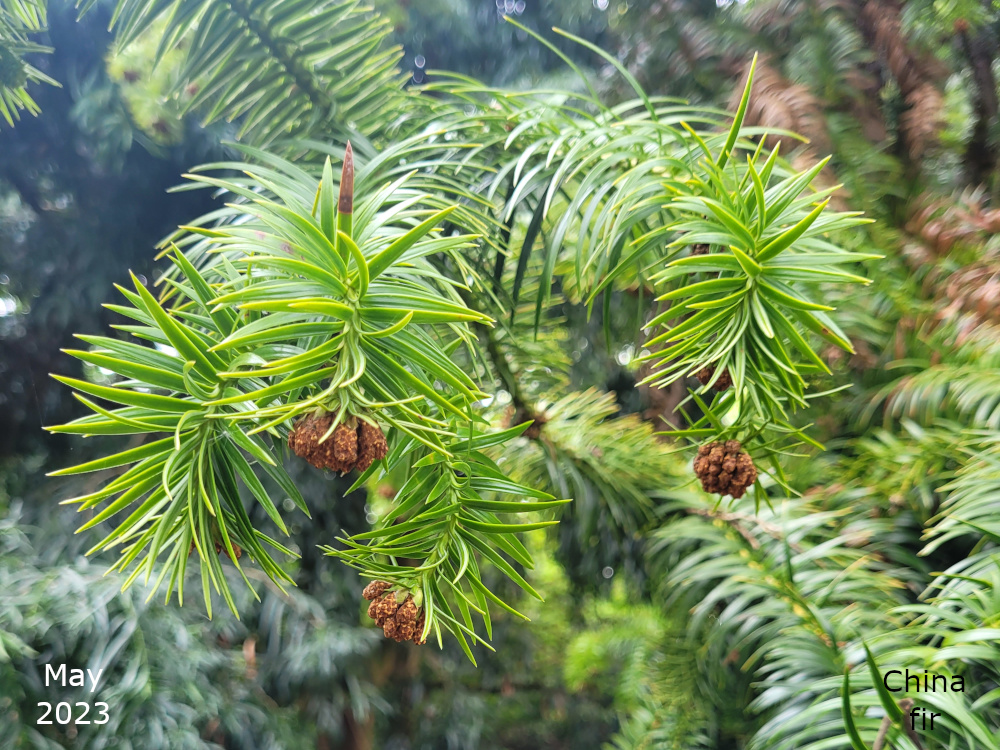
The China fir, Cunninghamia lanceolata, is not a fir and is generally known as Cunninghamia. It is a native of China and North Vietnam.

Lawson cypress
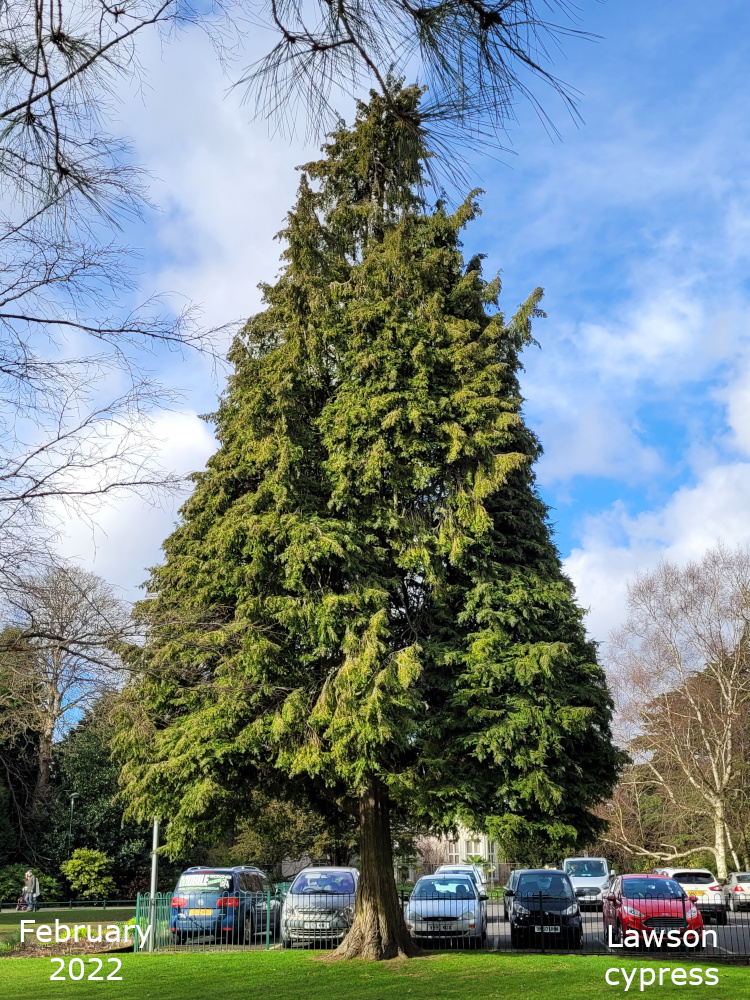
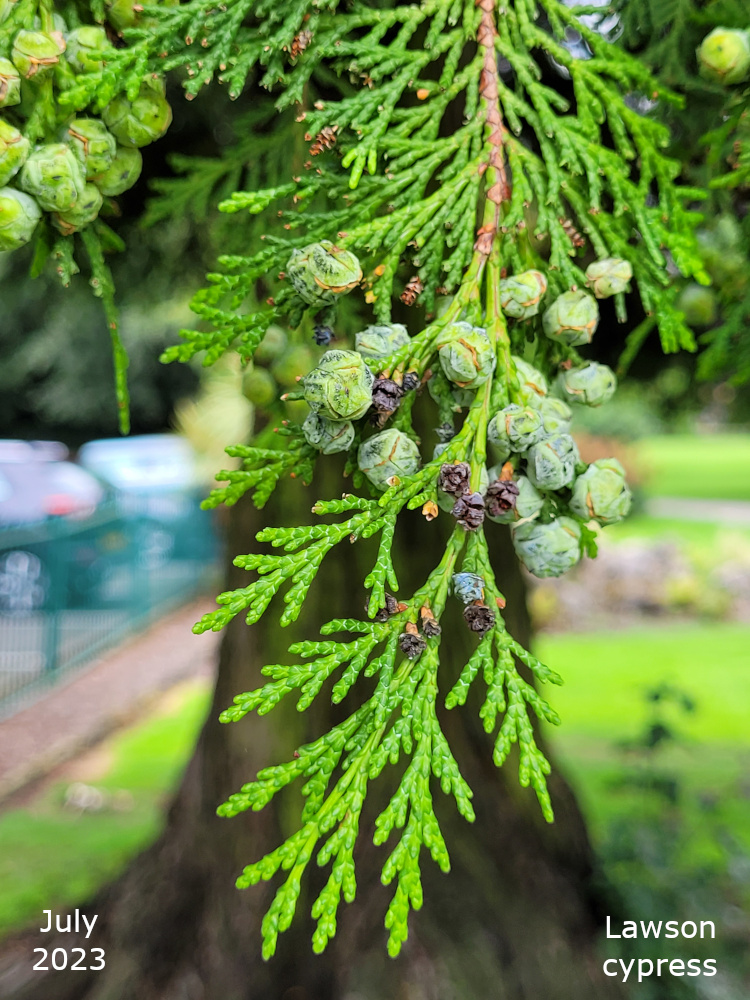
There are a number of Lawson cypress, Chamaecyparis lawsoniana, around the park, one of the most notable ones is against the fence of the main car park, next to the rockery. The tree is a native of South Oregon and North California, where it is known as Port Orford cedar.

 Kings Heath Park Trees