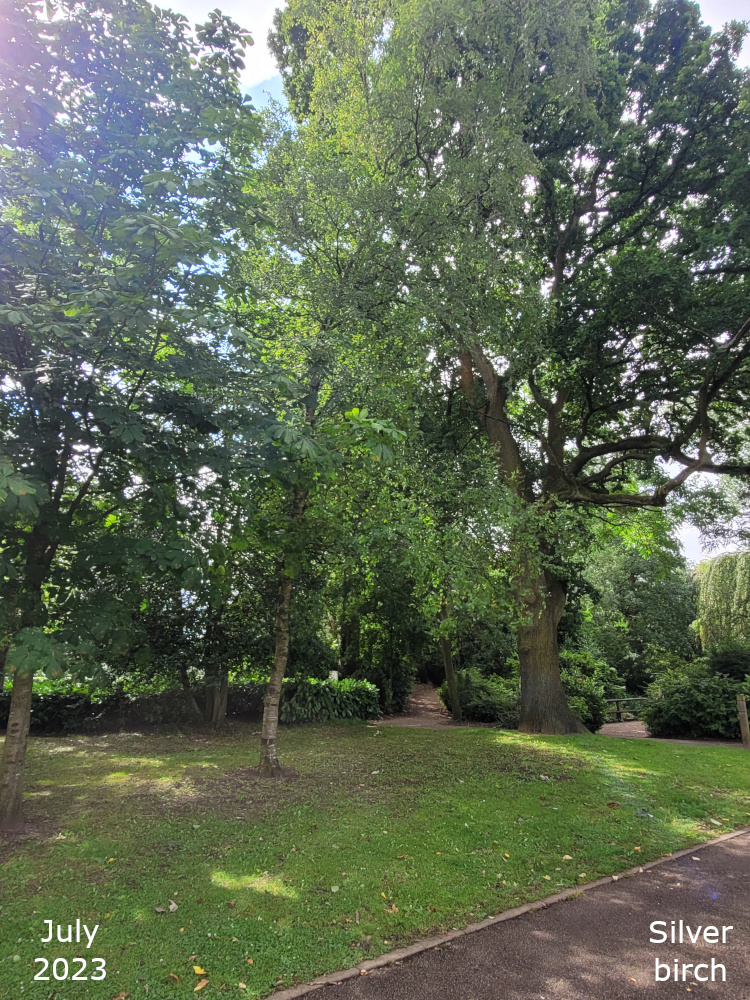
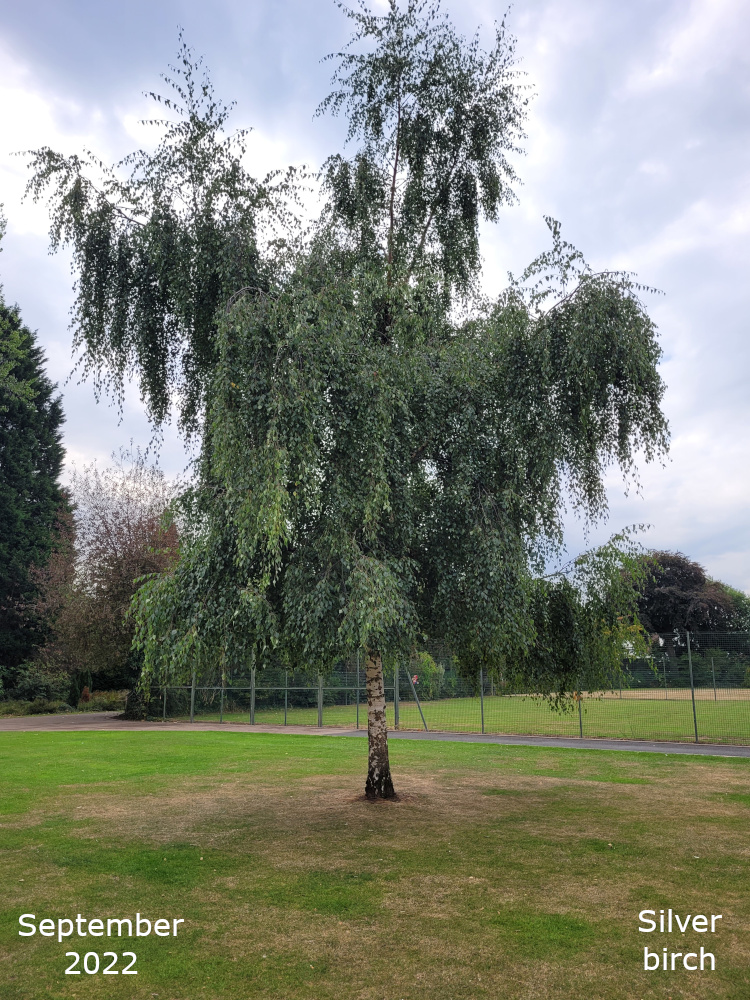
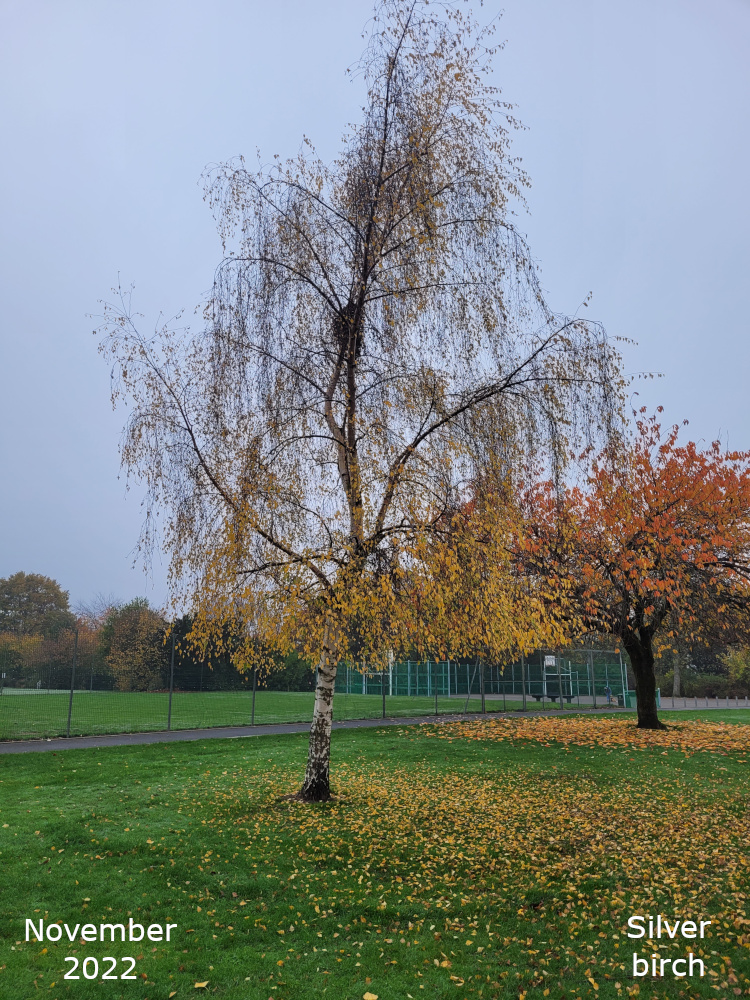
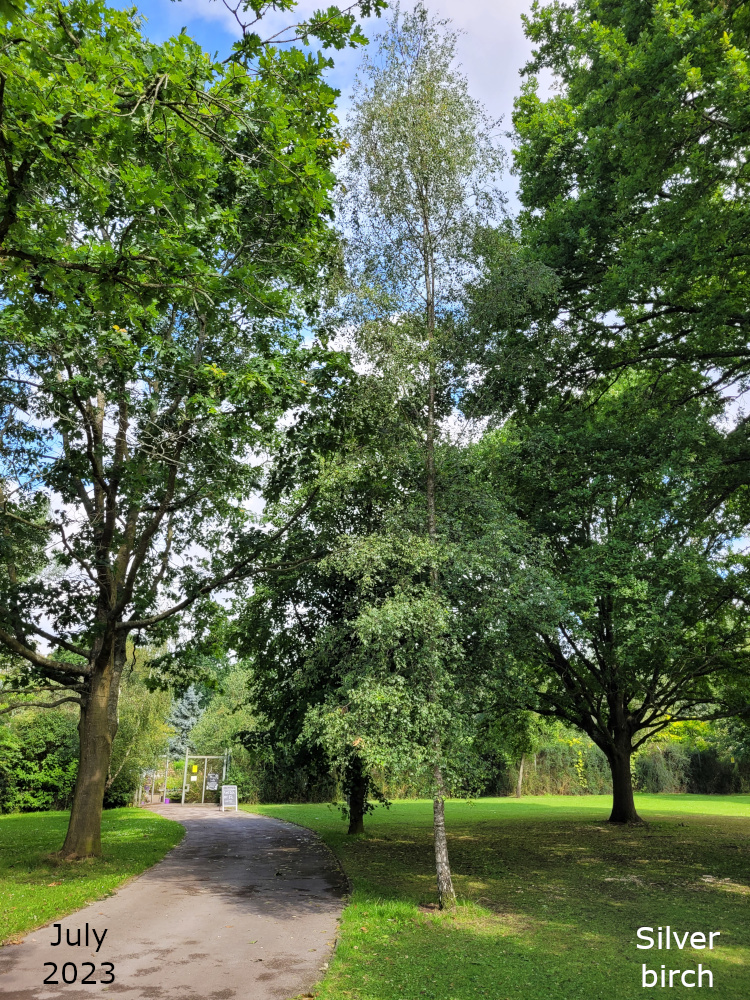
There are many Silver birches within the park but there are also Weeping birch, Himalayan birch and Black river birch.
Bottom of the park
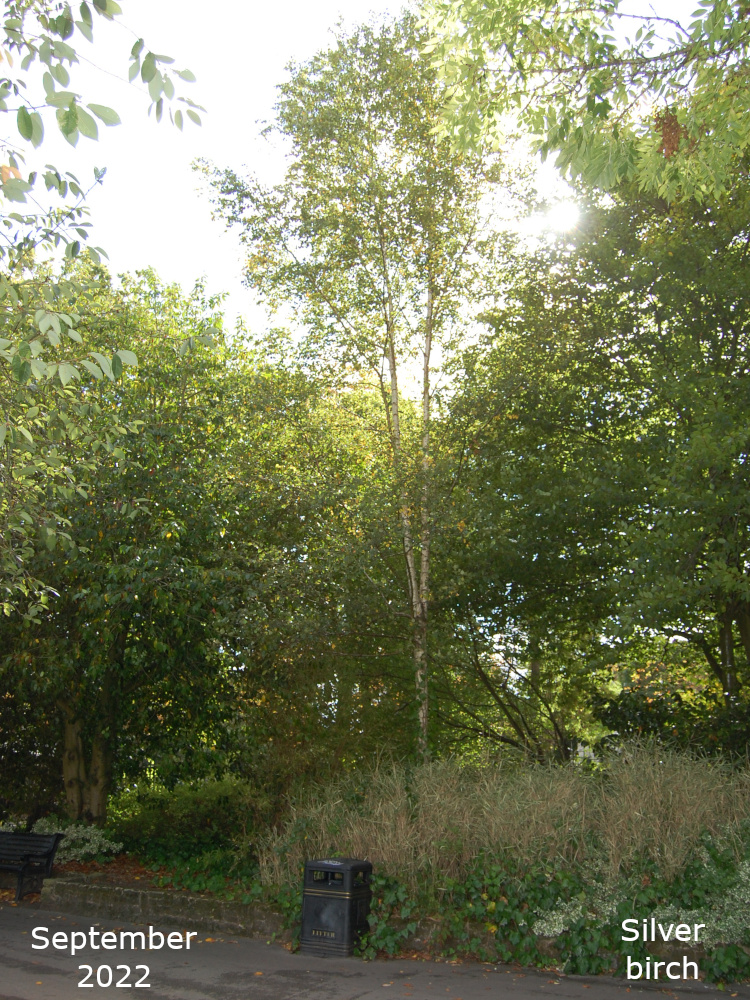
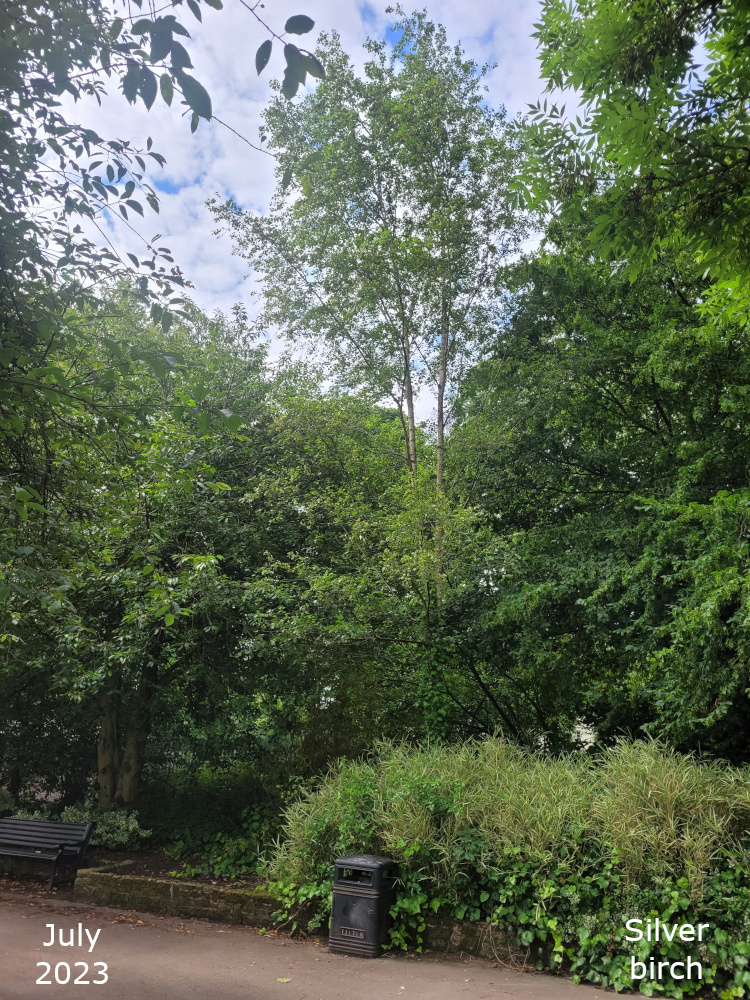
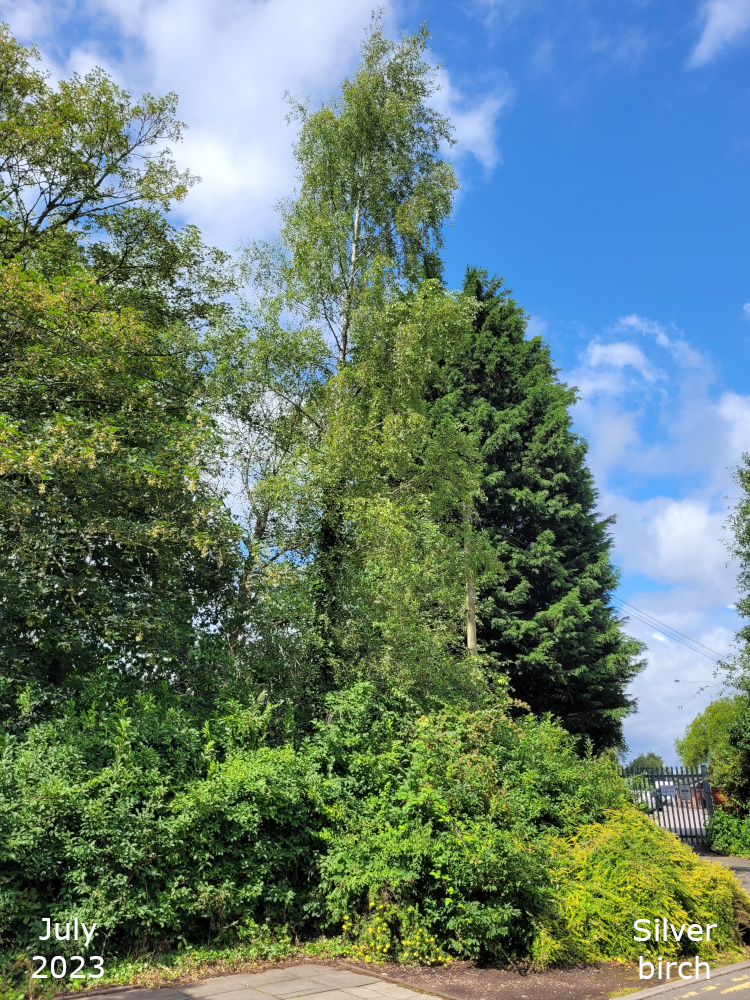
There are several Silver birch standing together in an impressive group at the bottom of the park, in the space between the path and the fence to the railway line.
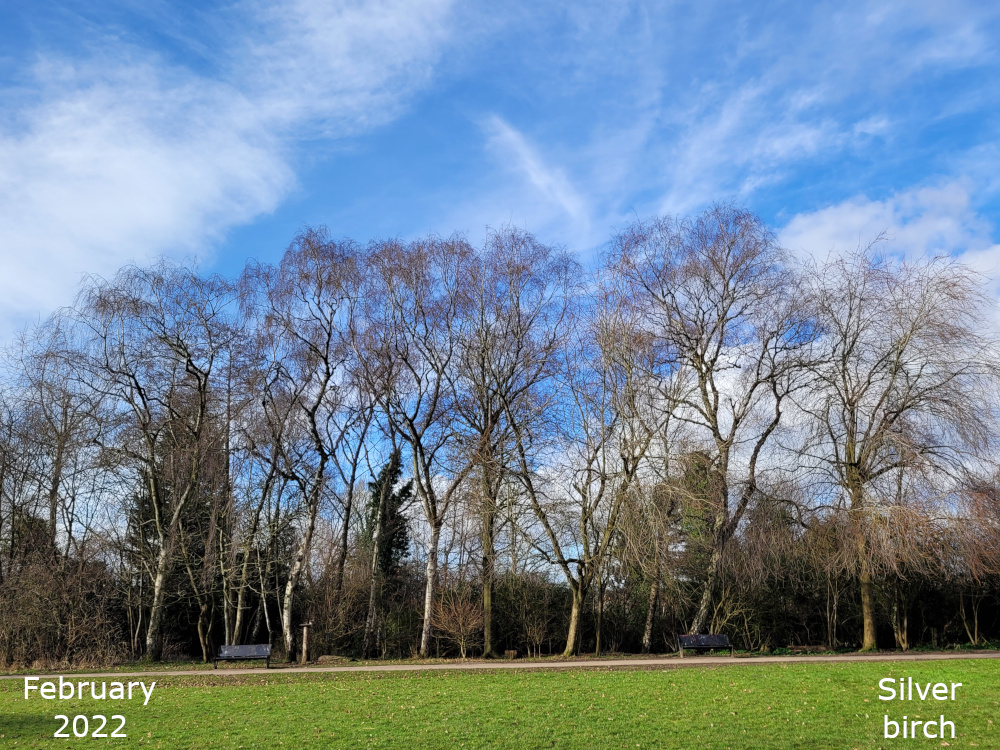

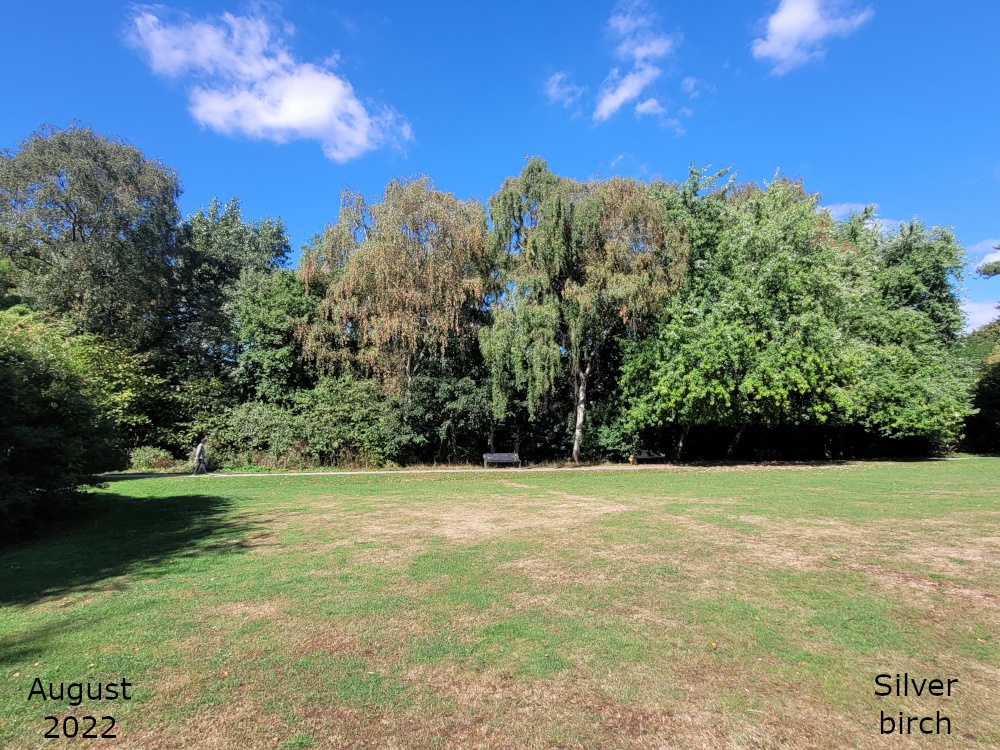
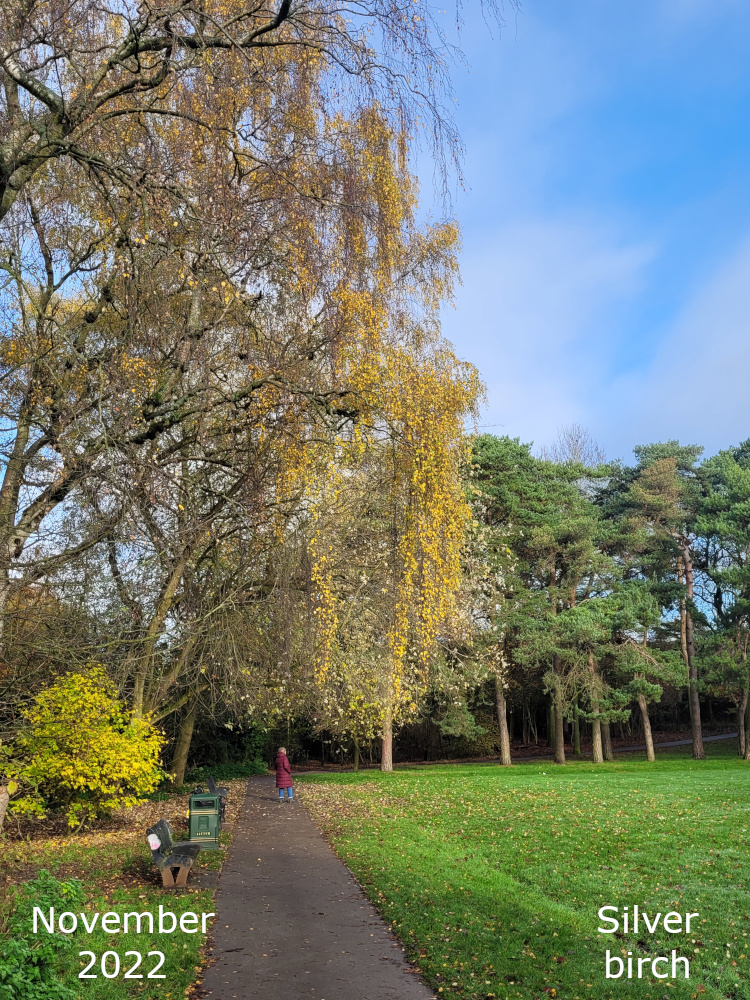
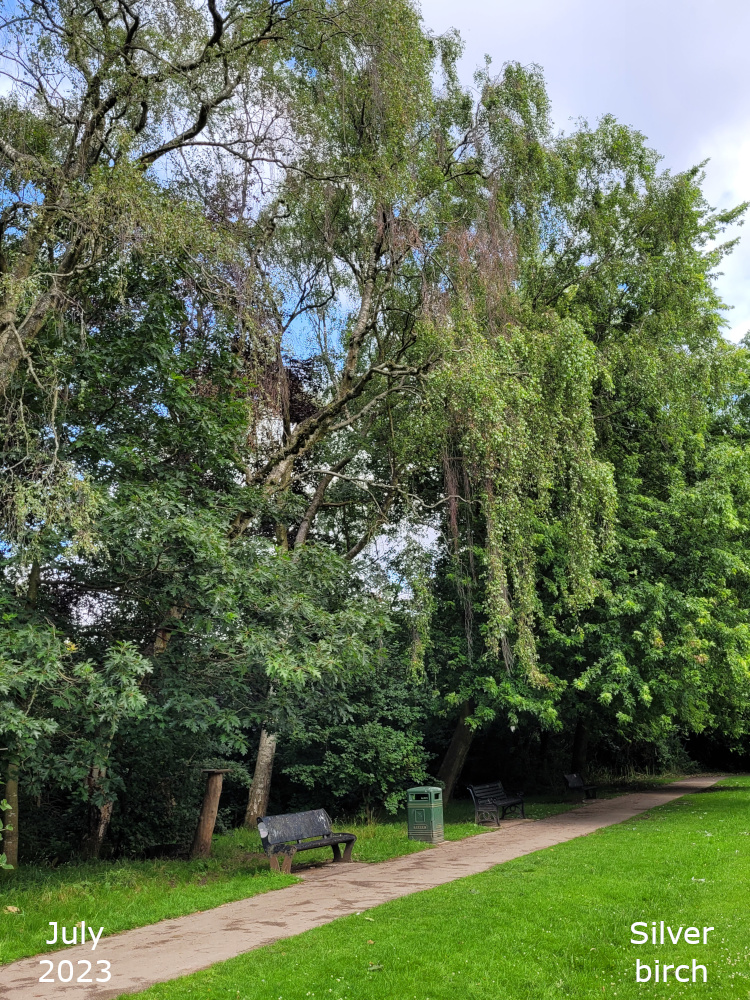
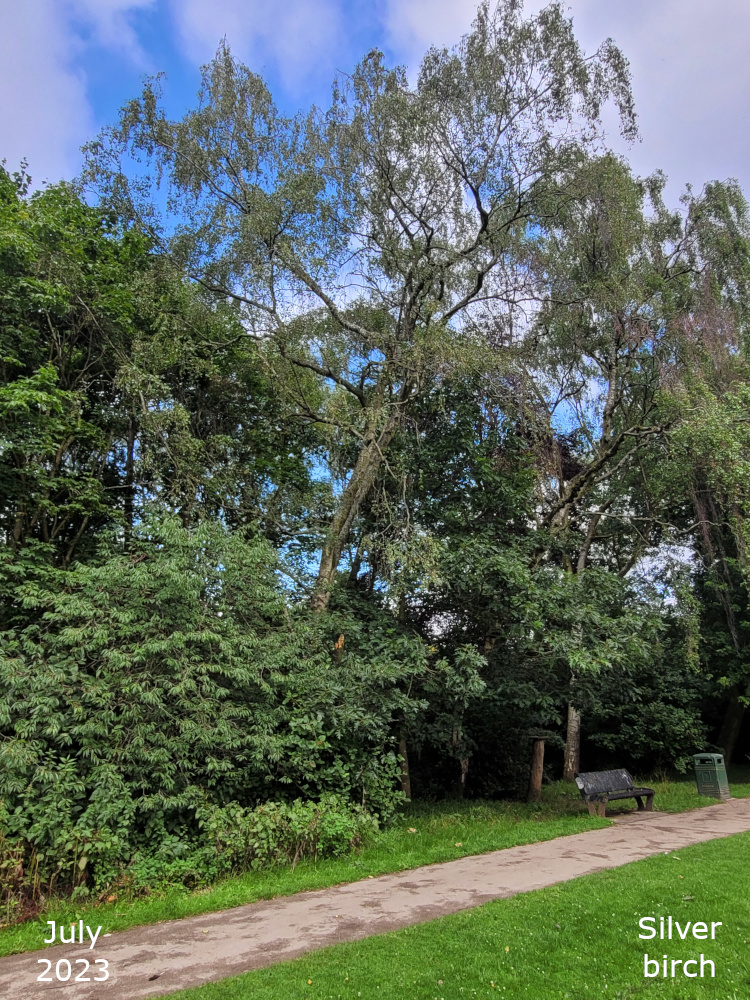
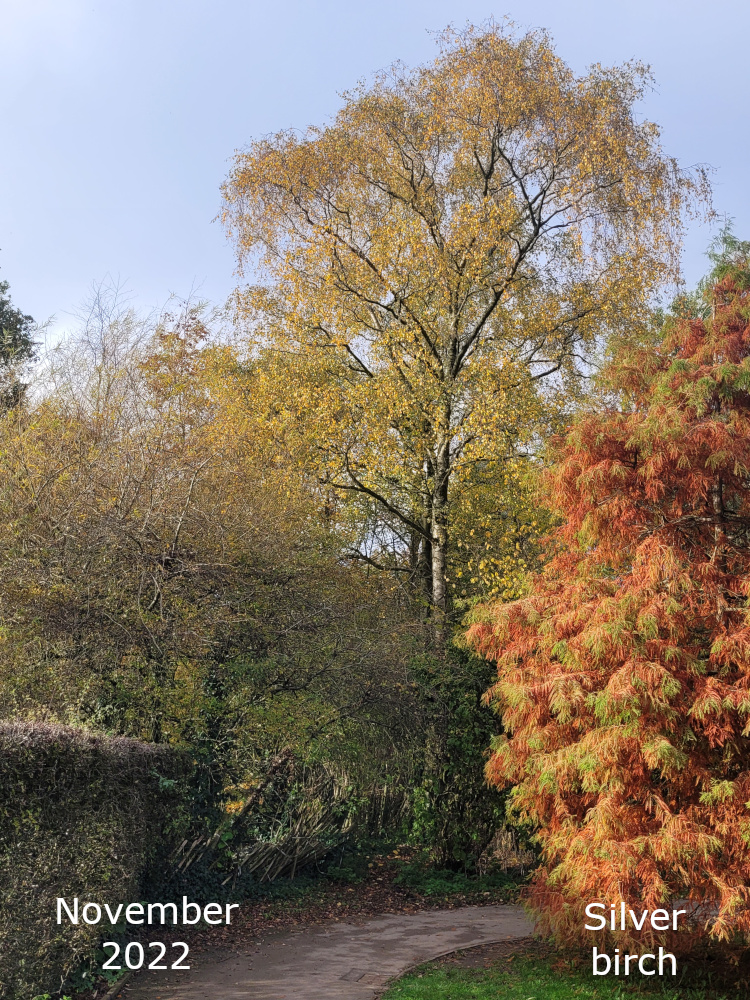
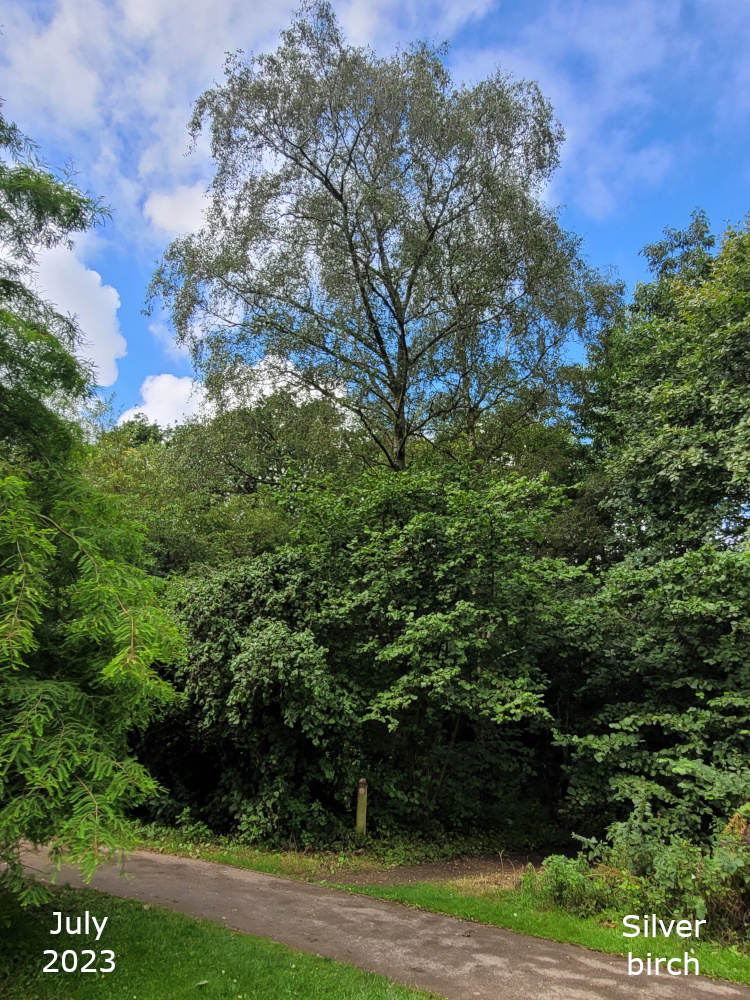
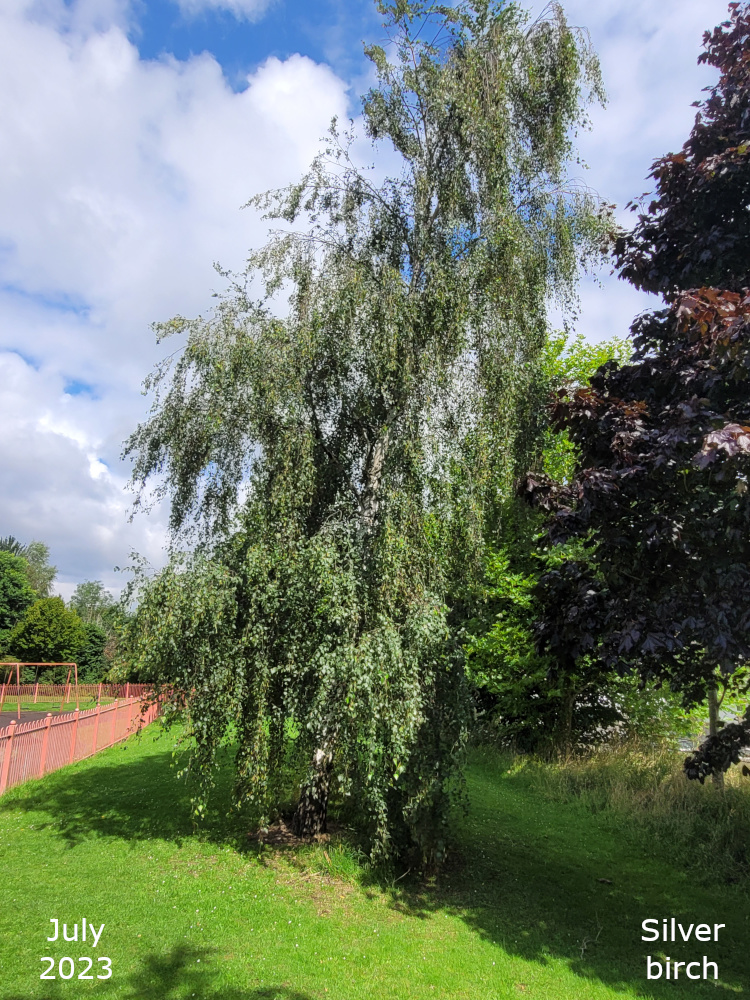
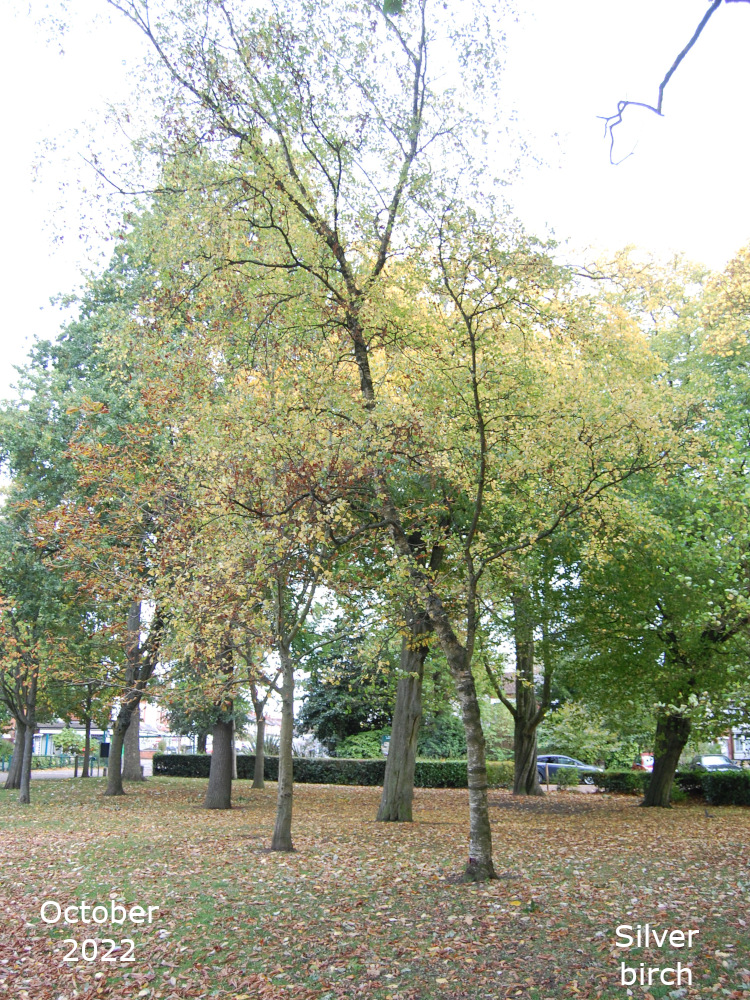
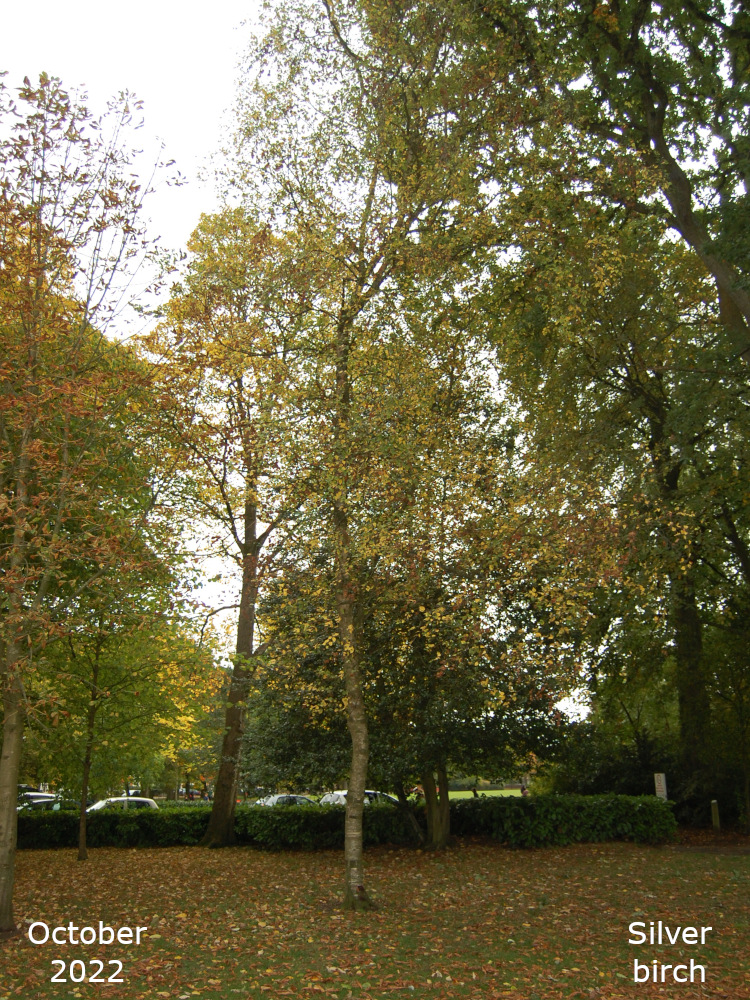
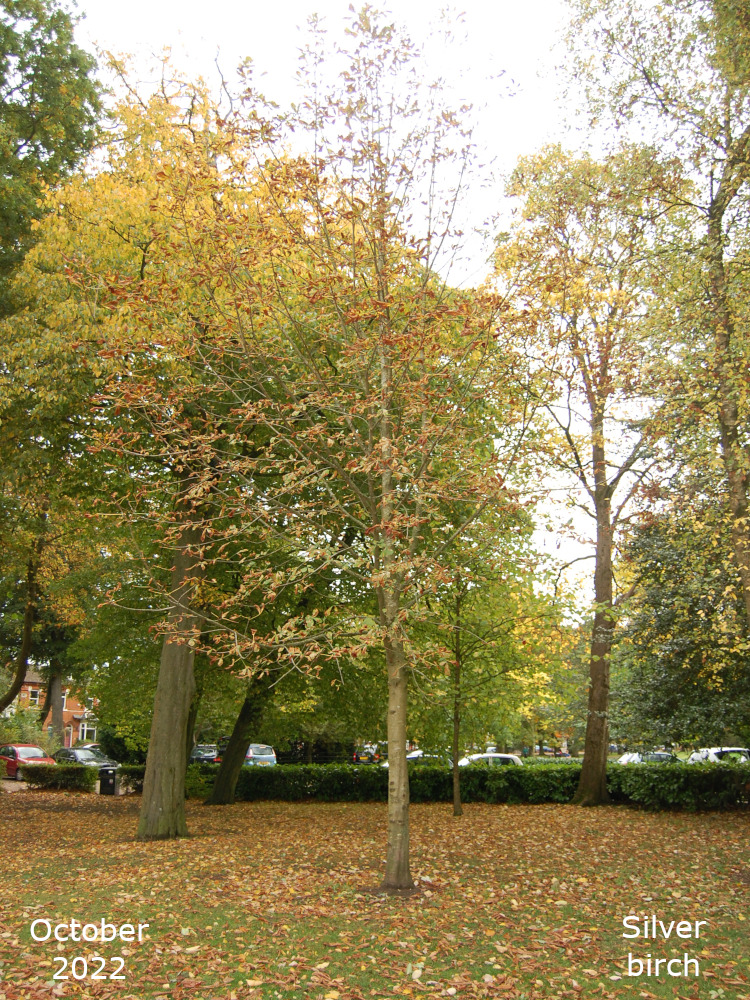
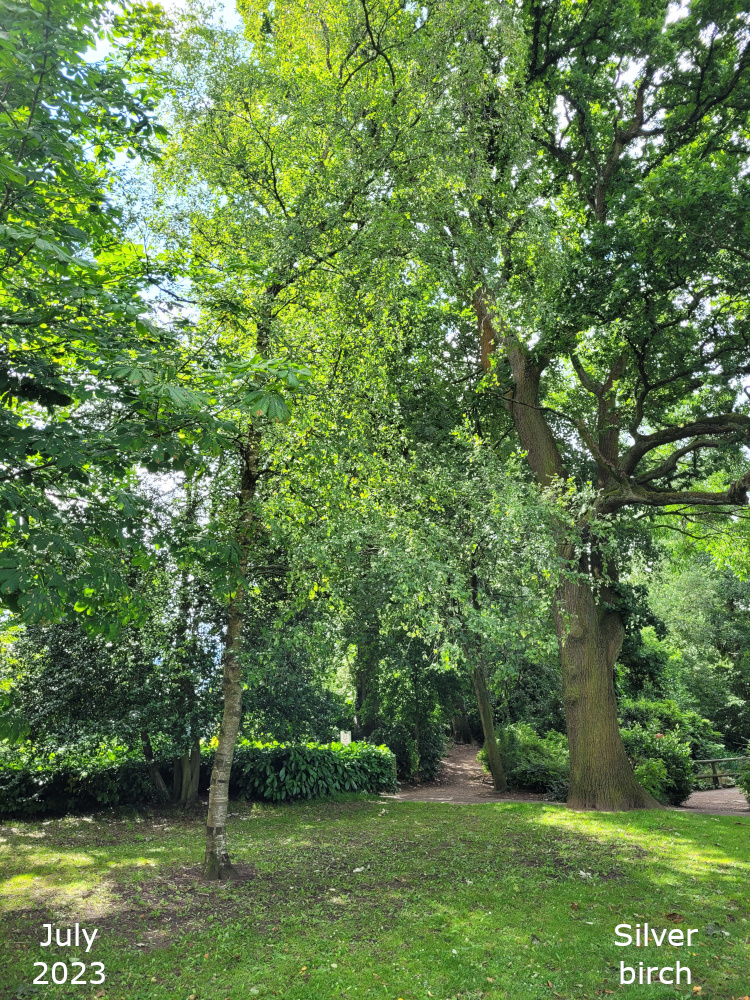
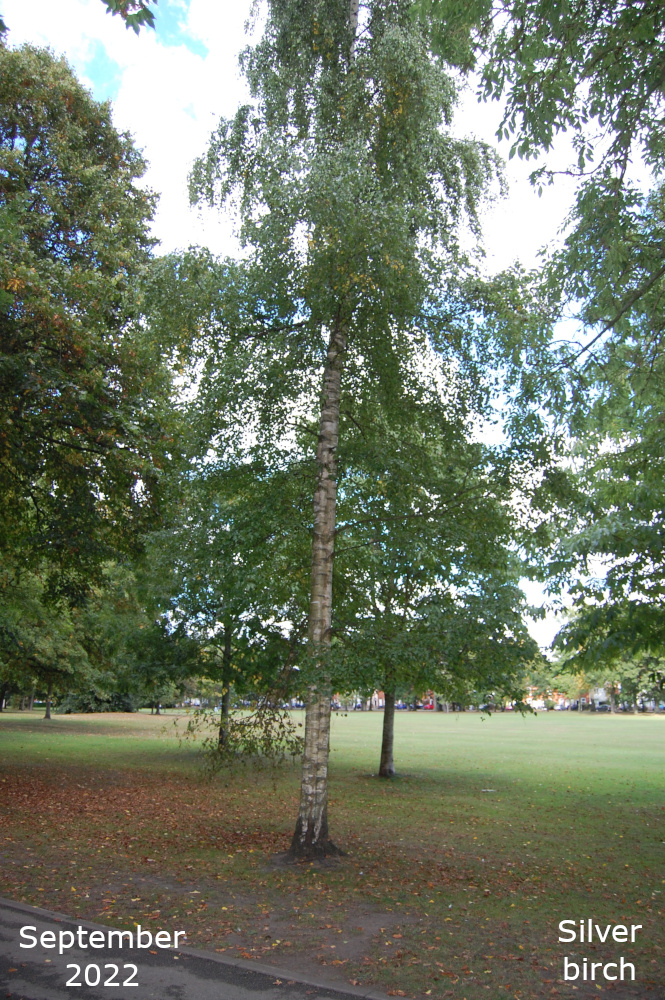
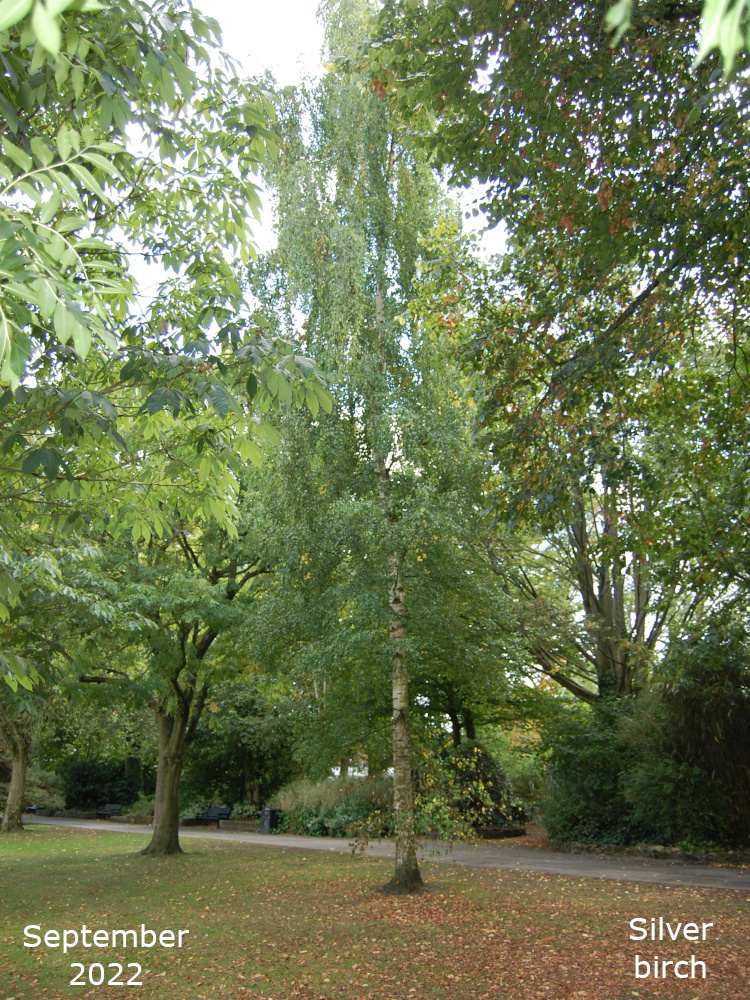
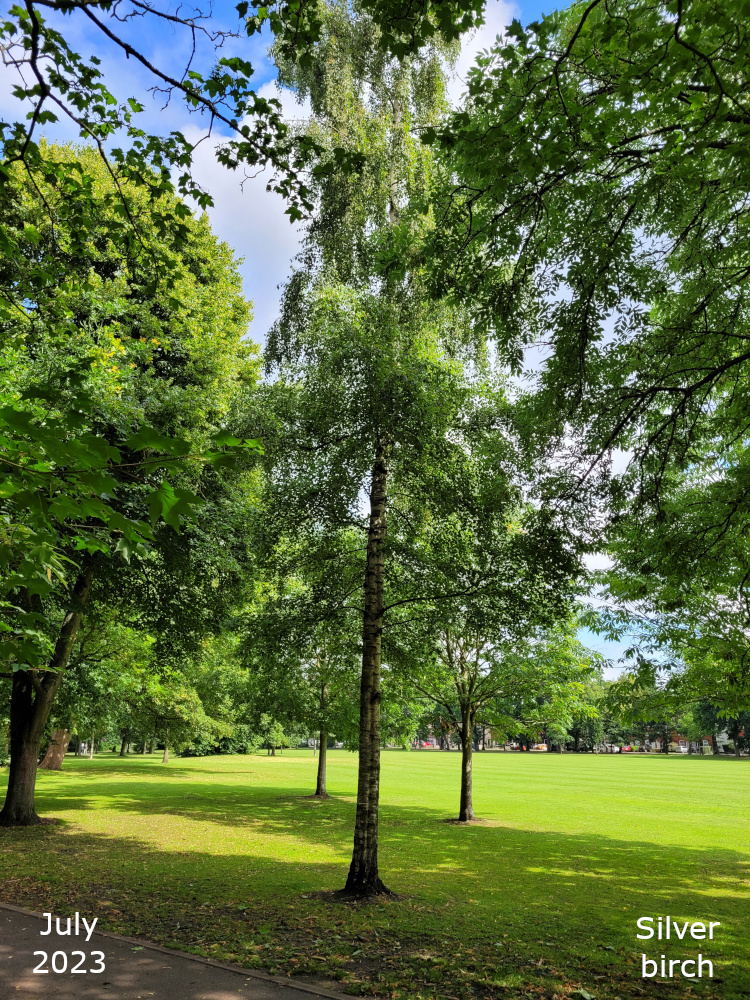
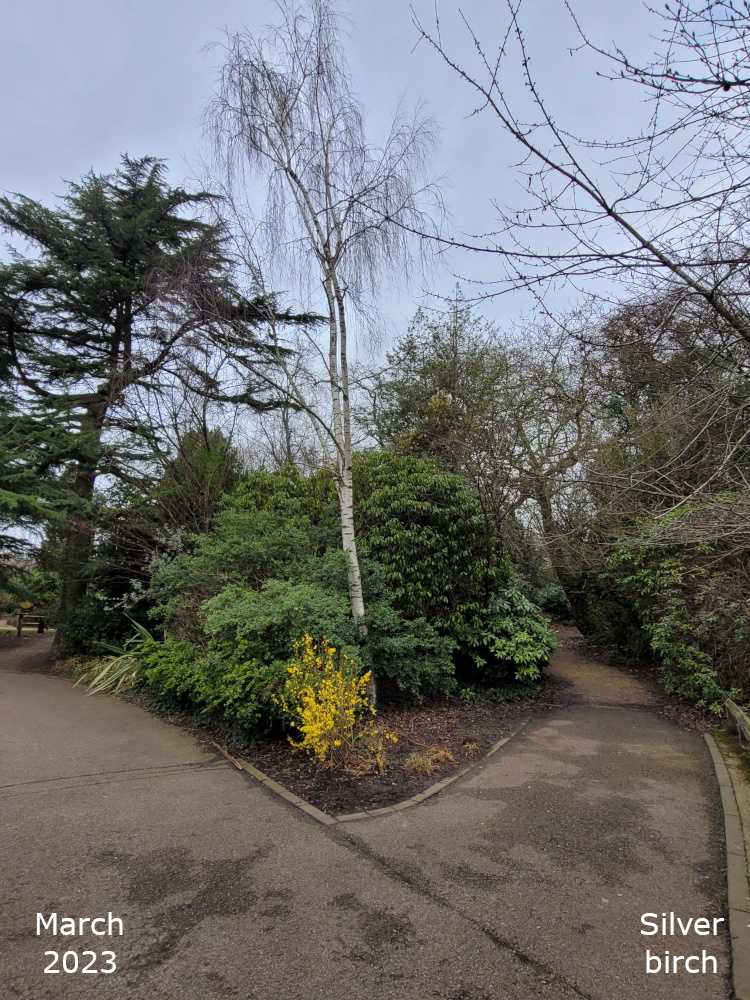
Now, I know that not all of those trees are Silver birches, but the ones that are are easily picked out by the bright white bark on their trunks. Two of the trees on the right are Silver maples which shows up in the summer picture, contrasting to the two Silver birches, with weeping branches, in the centre. These may be Betulus pendula Youngii. The other Silver birches have a more upright growth.
Avenue Road
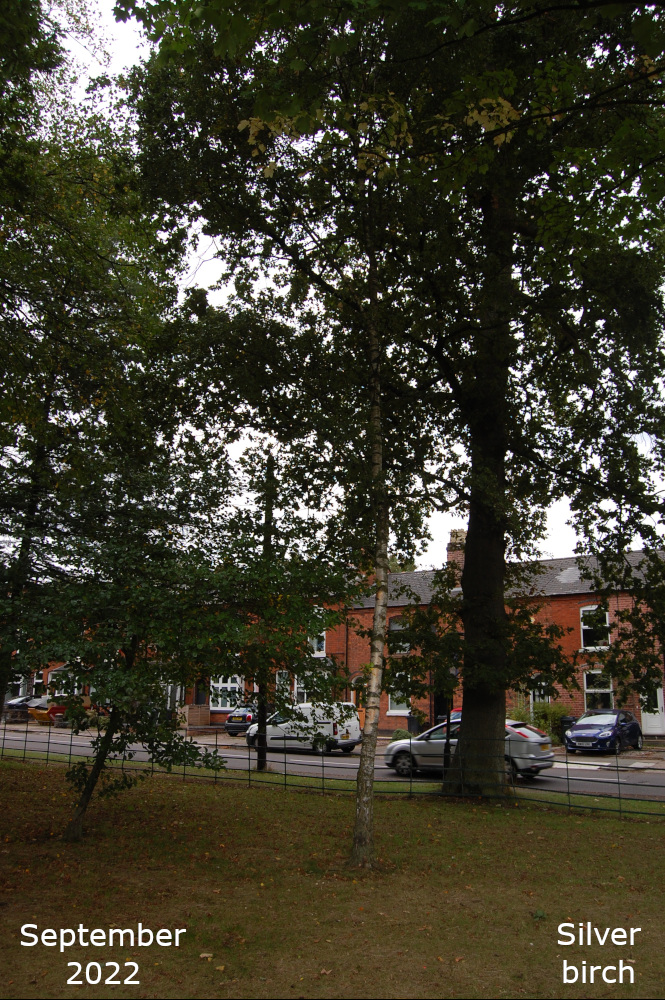
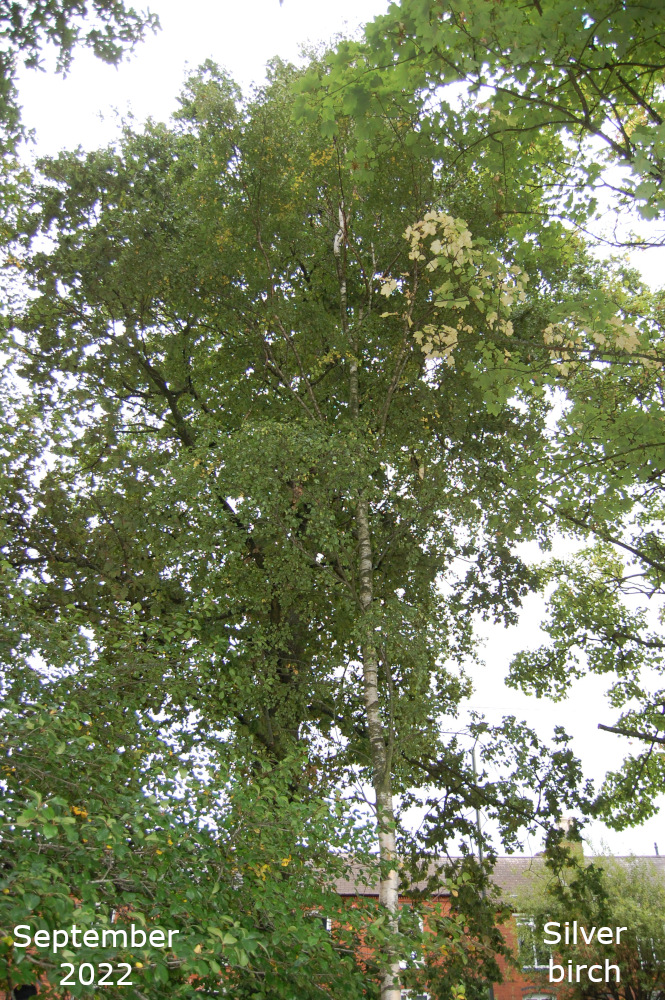
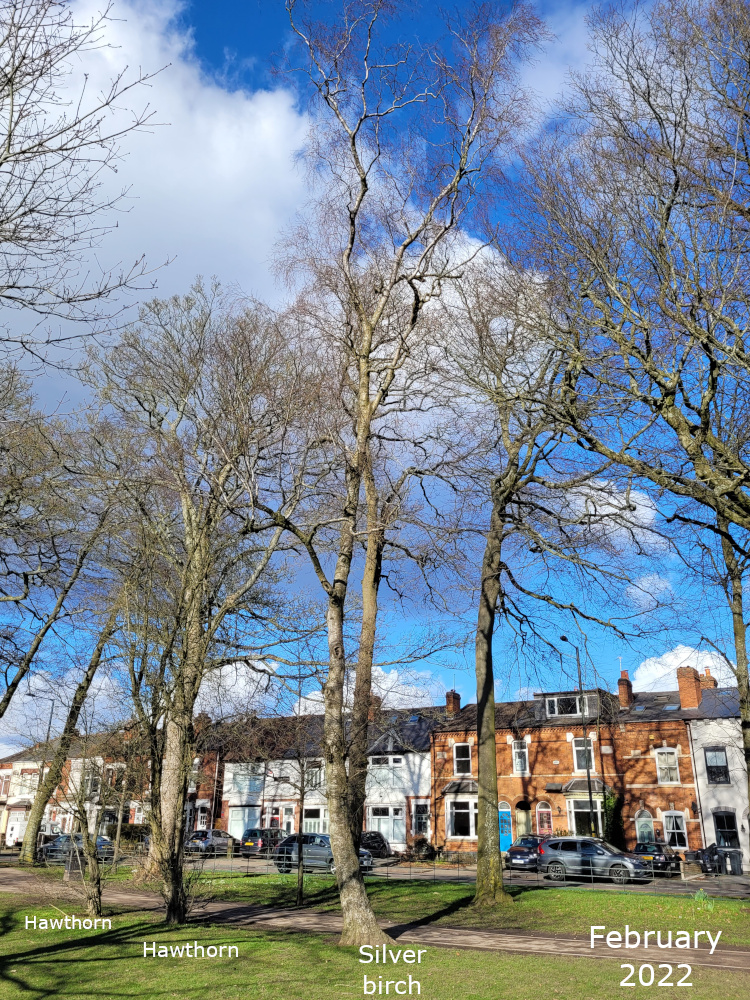
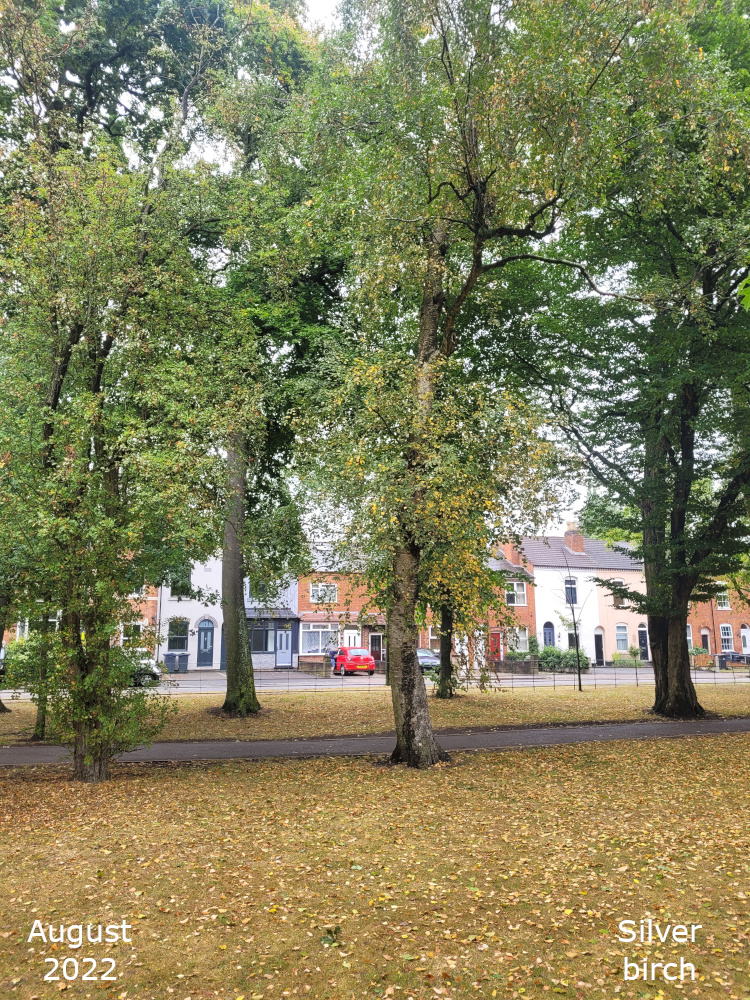
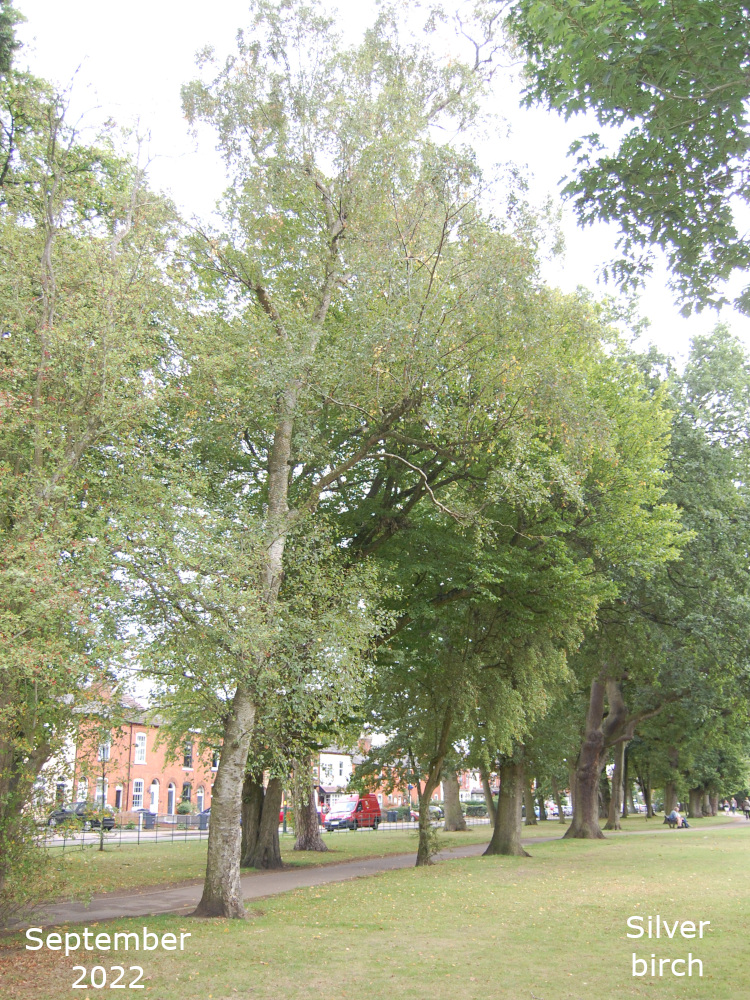
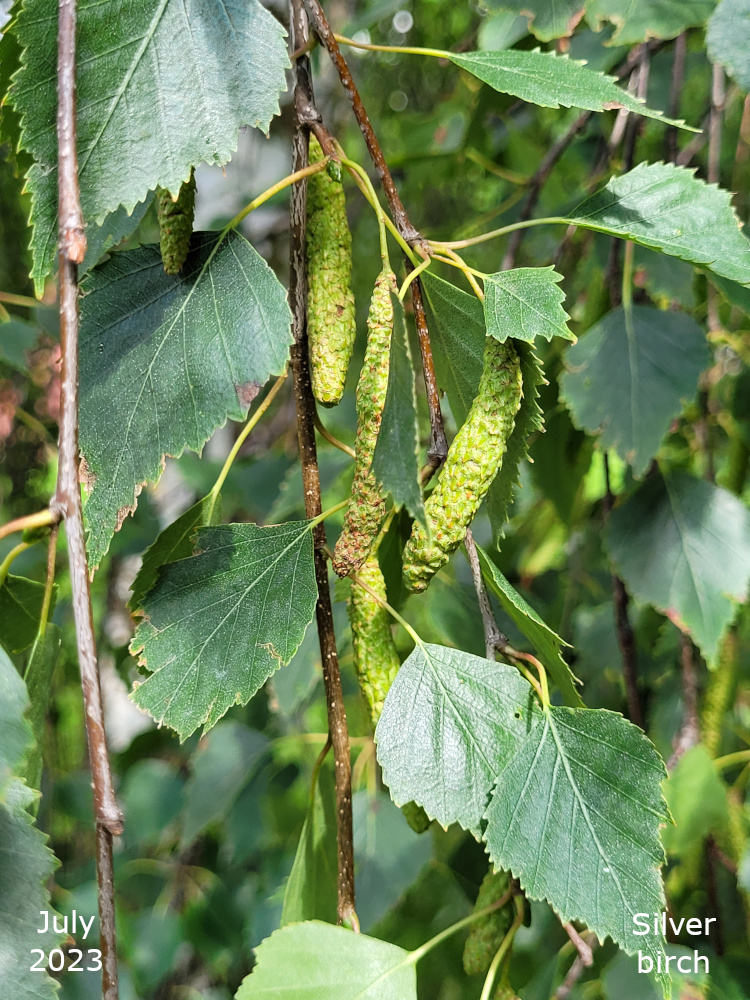
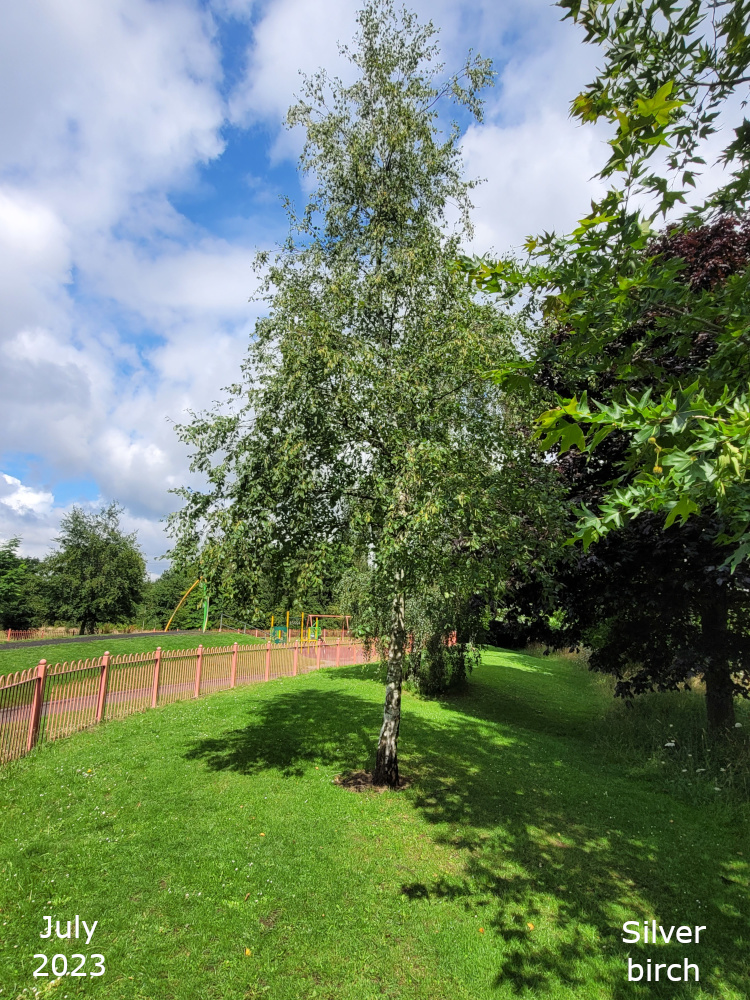
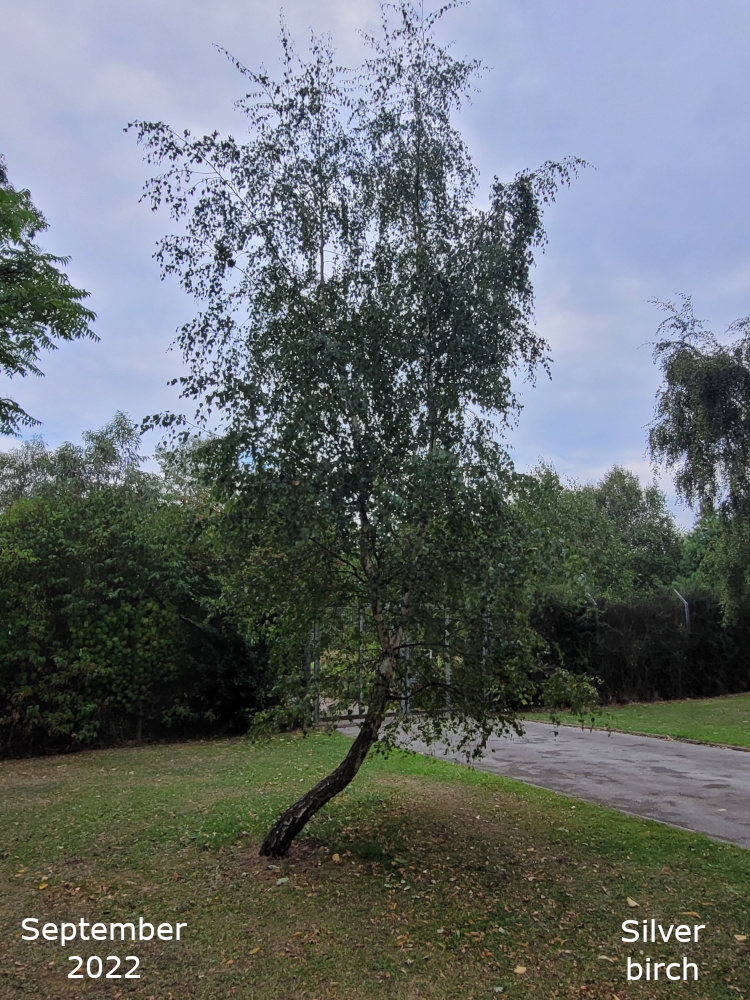
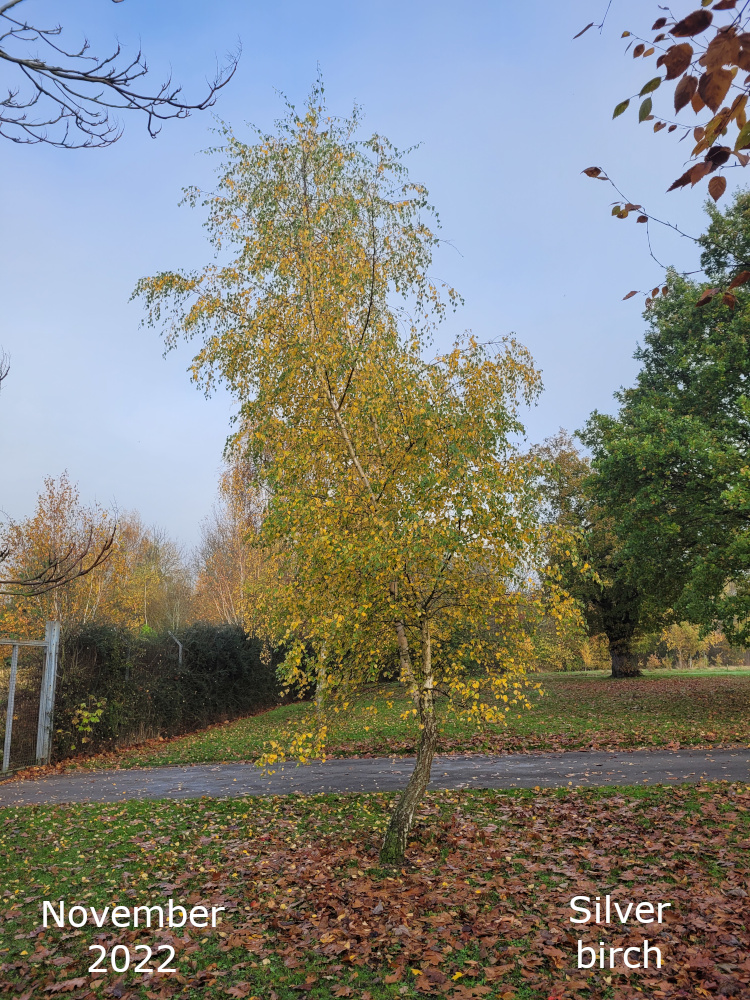
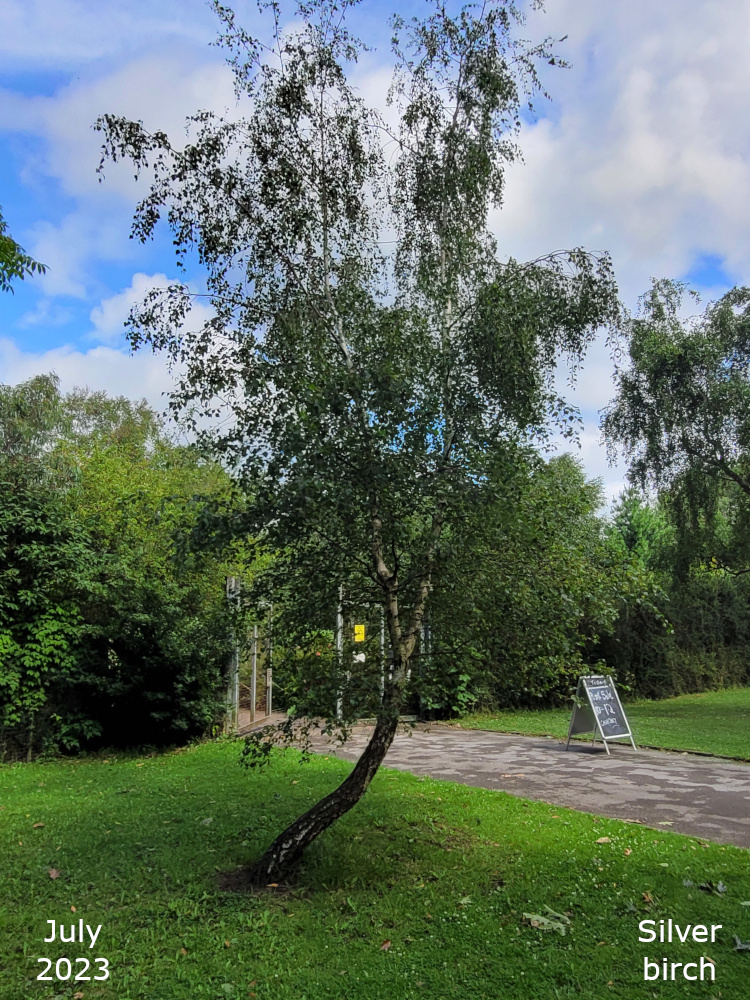
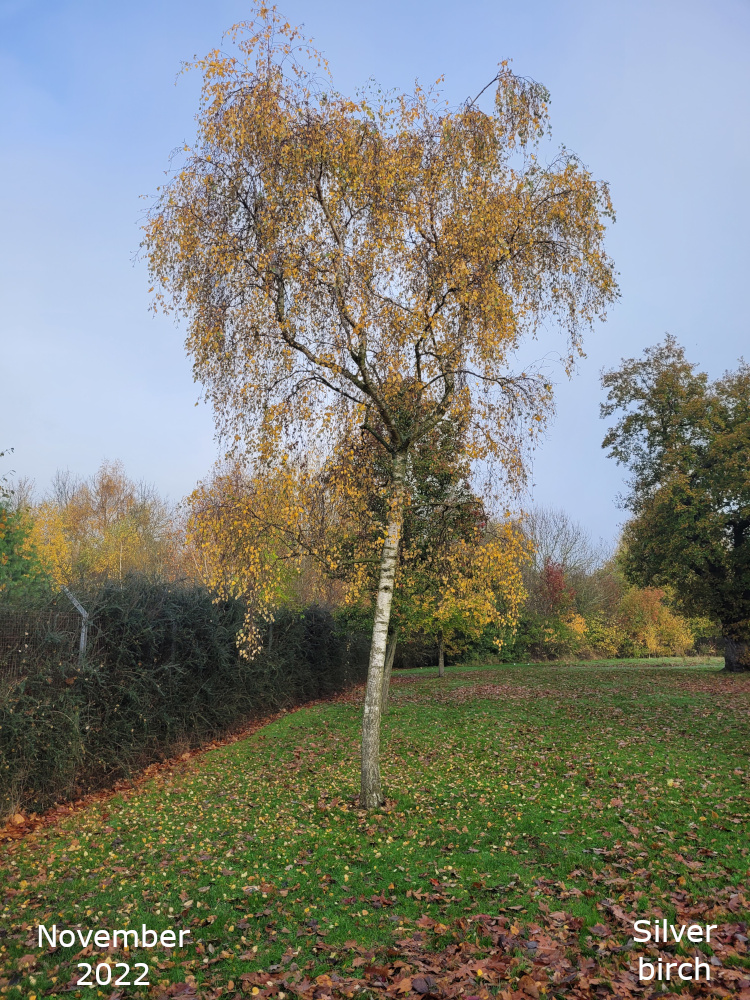
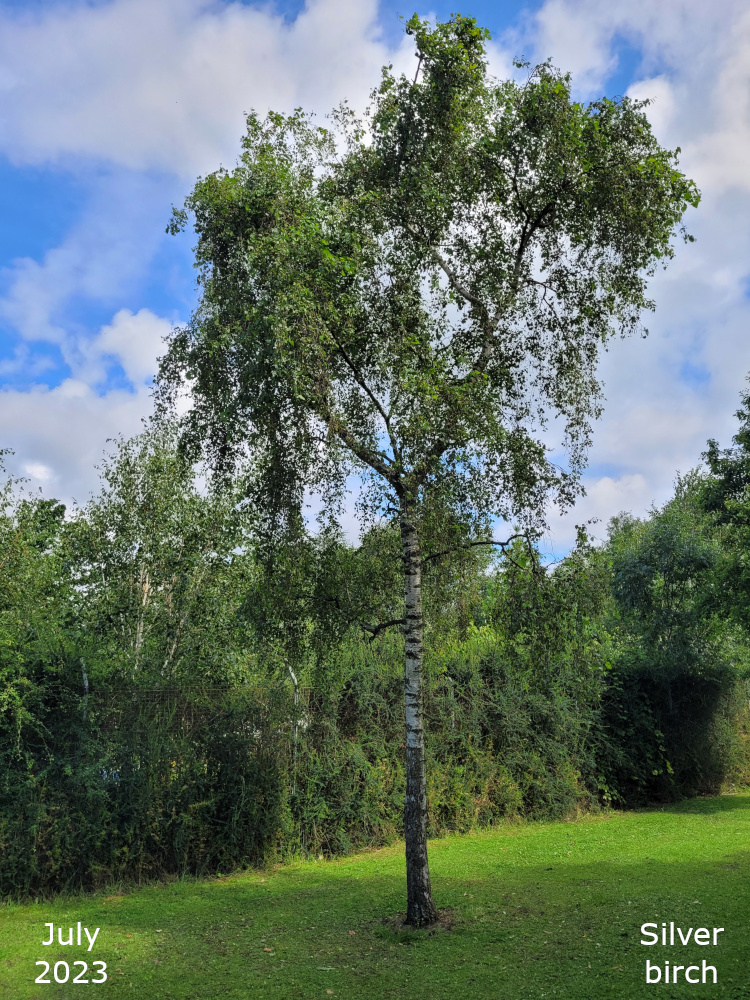
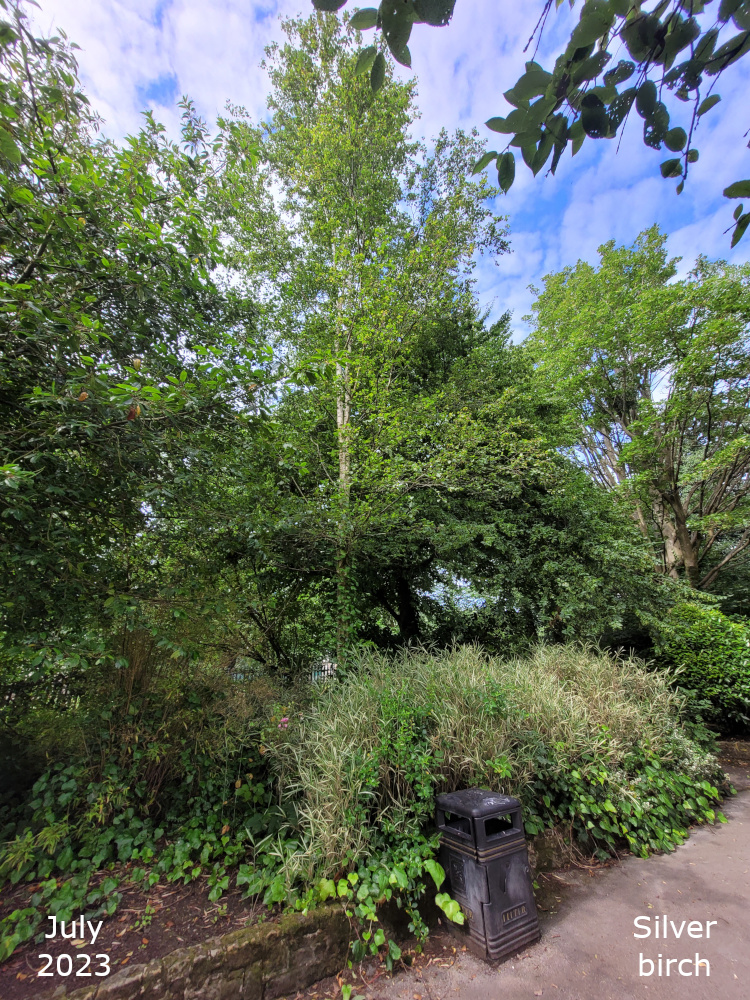
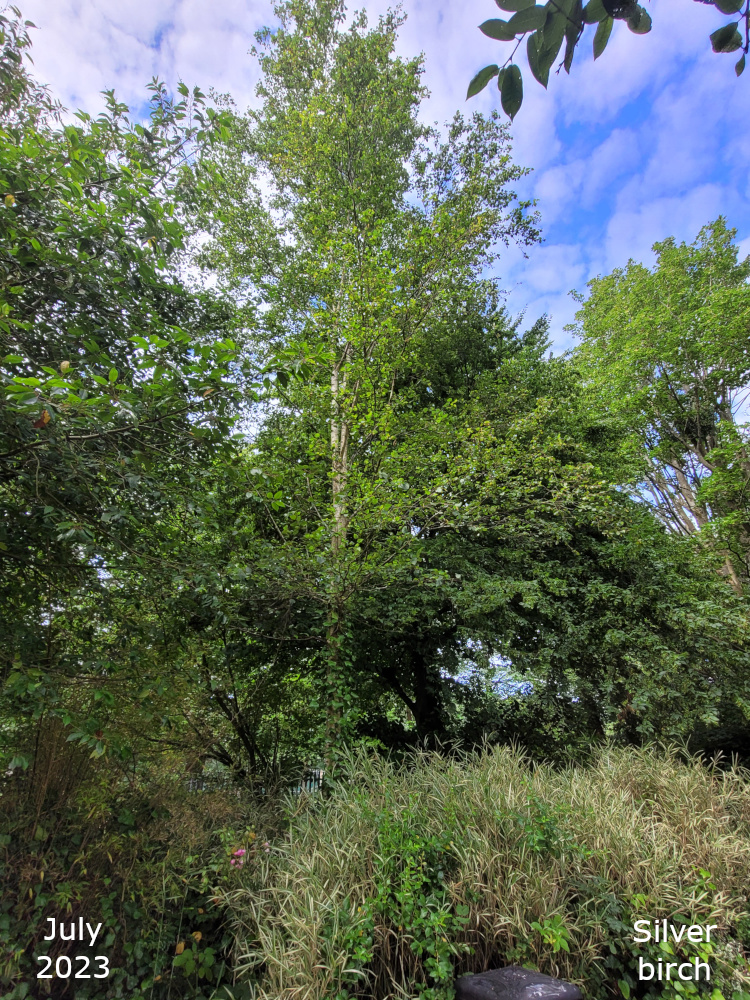
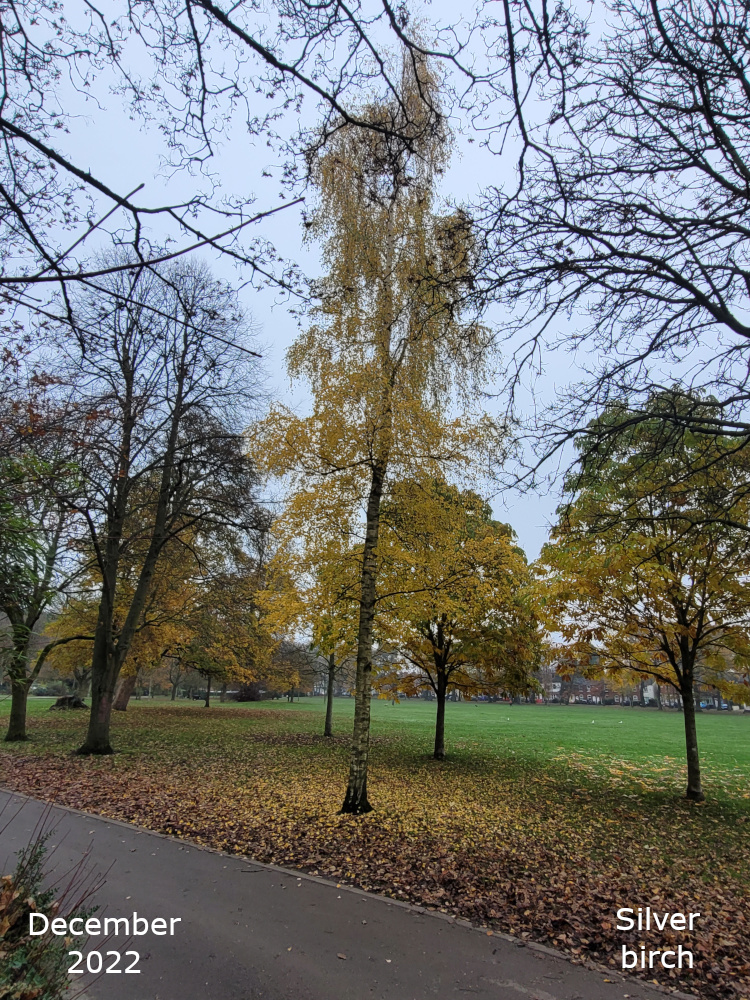
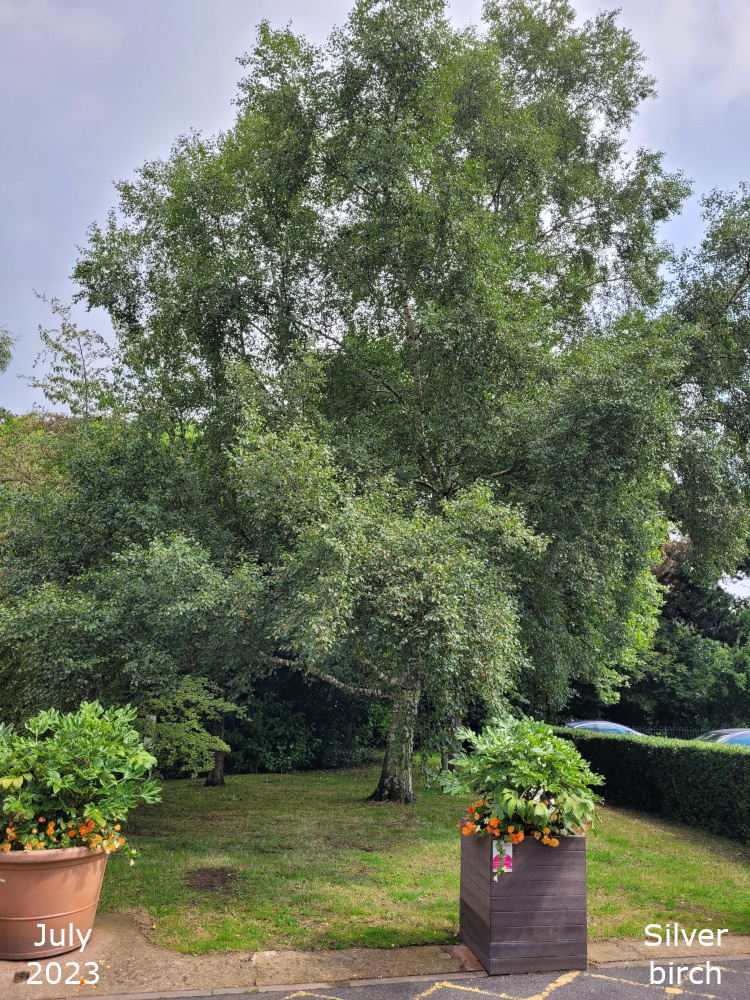
There are four Silver birches stretched out along the length of the park alongside Avenue Road. The first is near the small playground, next to the fence. The next one is at the top end of the path going towards the car park, just before the path forks of to the left. It’s in a group of three trees, on the edge of the path, with two Hawthorns. The last two are together, between Avenue Road and the large playground. Photos of one of these gives some idea of what a typical Silver birch leaf looks like. Their leaves are oval with a toothed margin and a pointed tip and are about 1¼ to 2¾ inches long. They turn bright yellow in Autumn. One photo also shows newly developing fruit. After the female catkins have been pollinated, by wind-borne pollen, they thicken and will eventually dark crimson and produce masses of seed which will be dispersed by the wind.

Car park to Thrive garden
The small wooded area between the car park and the path has a Silver birch at one end. Just over the path, beside the old tennis courts, there is another Silver birch looking a bit like a scarecrow. Following that path towards the Thrive garden there are three more Silver birch near the end.




Drive
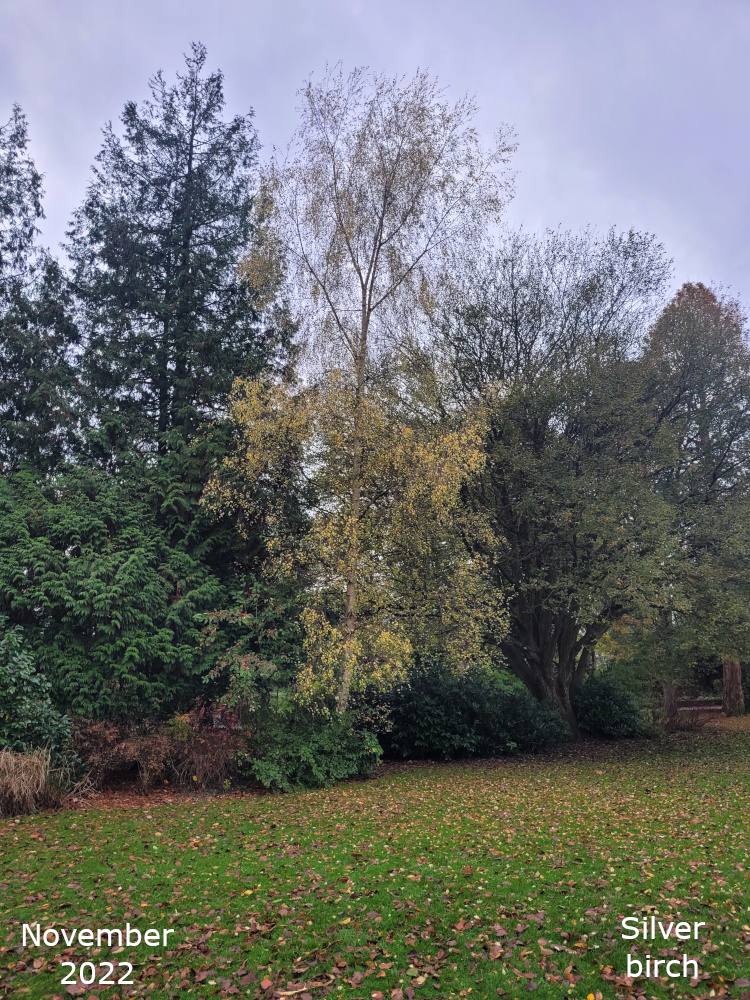
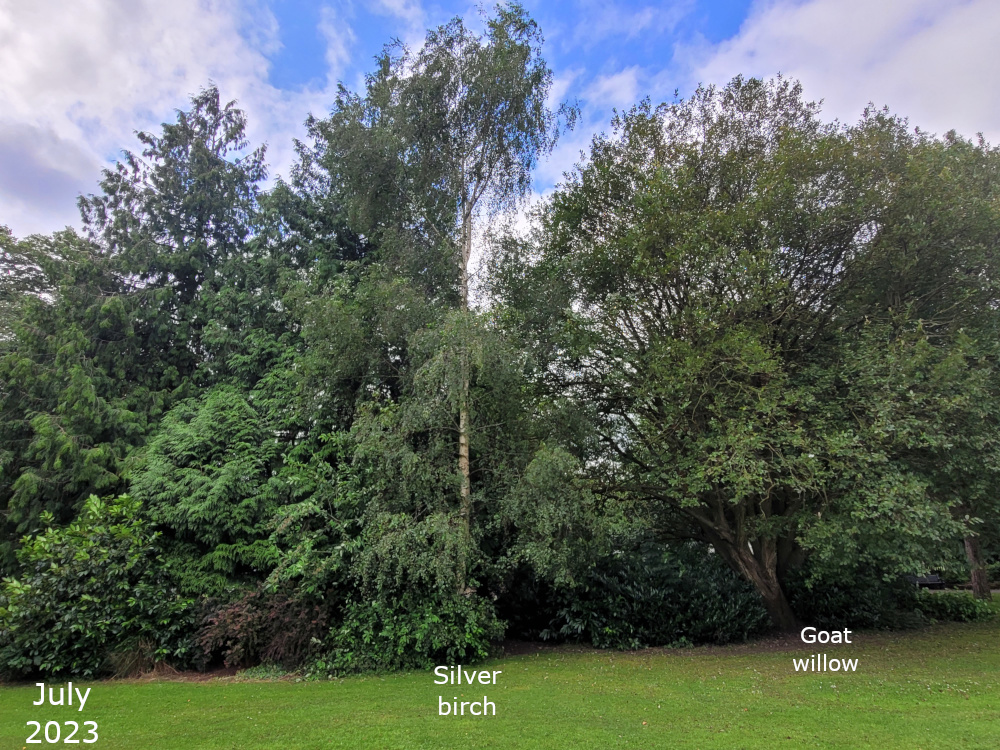
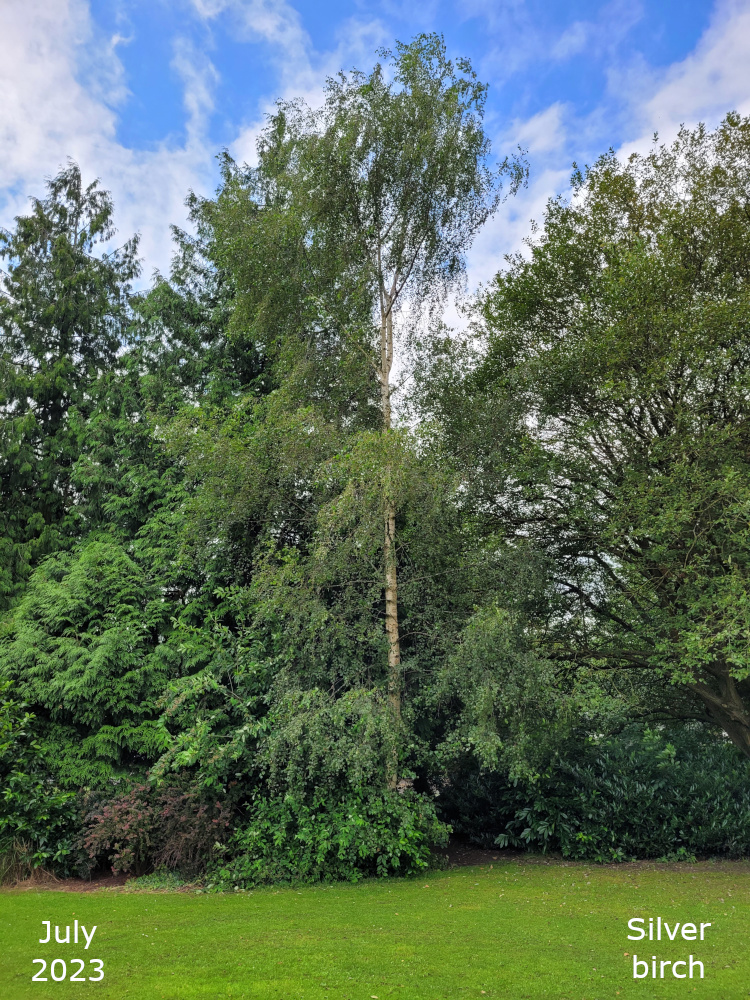
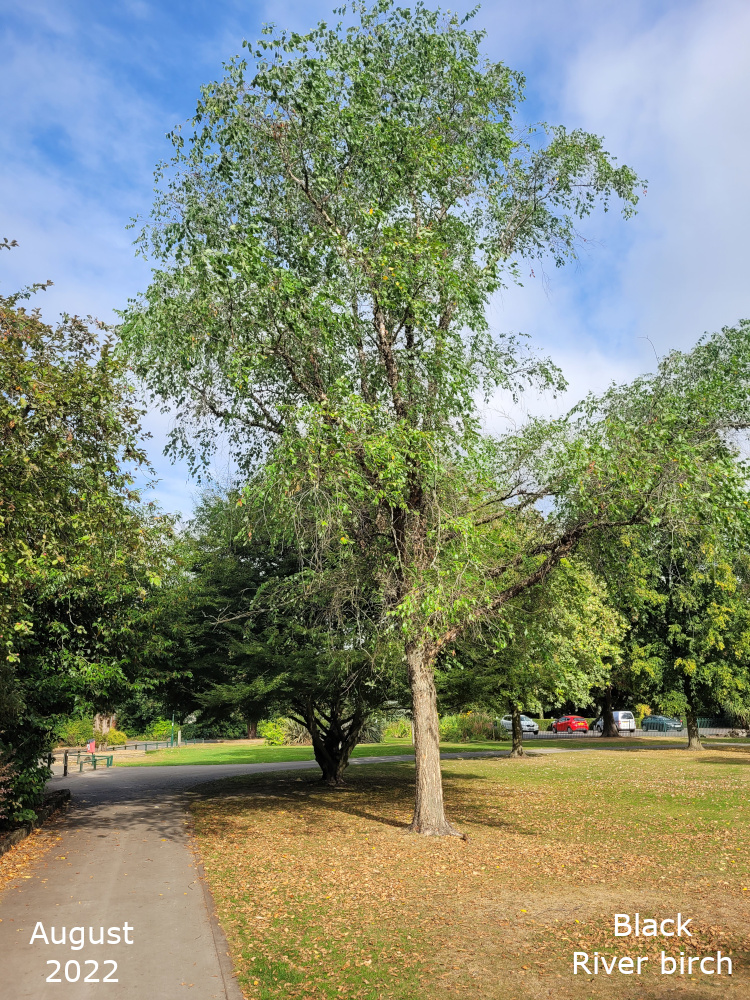
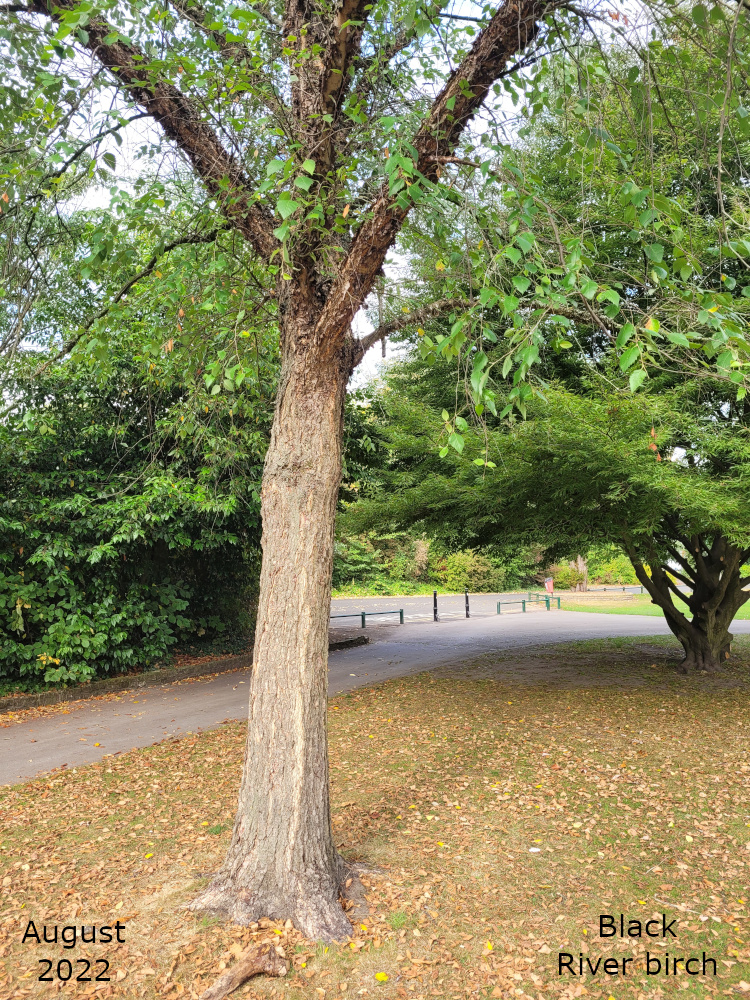
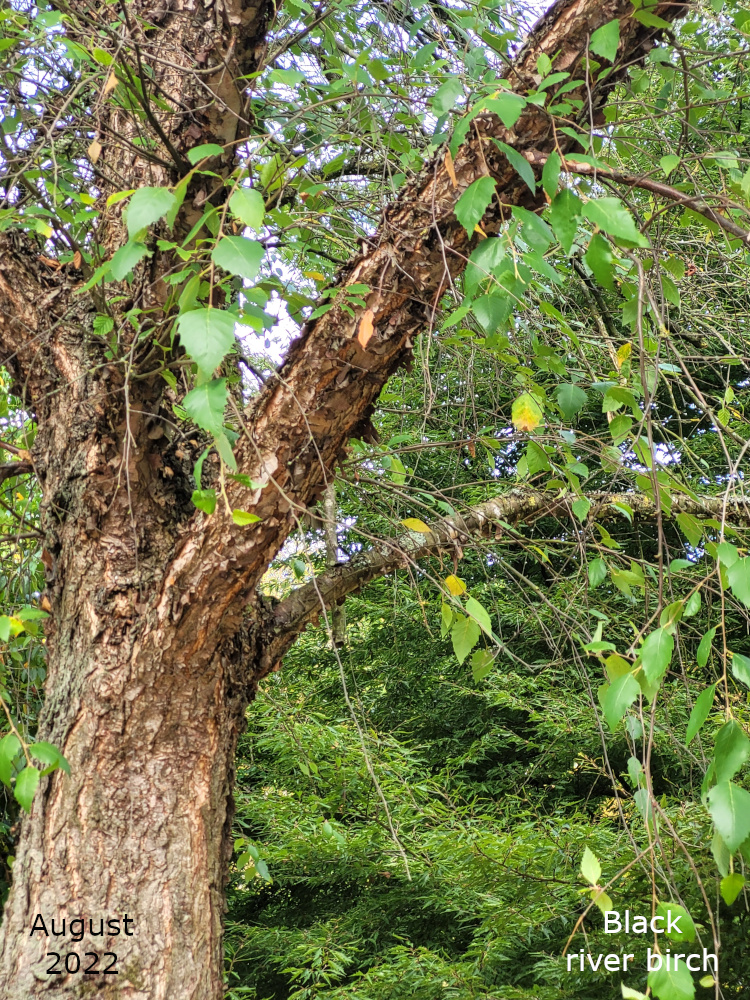
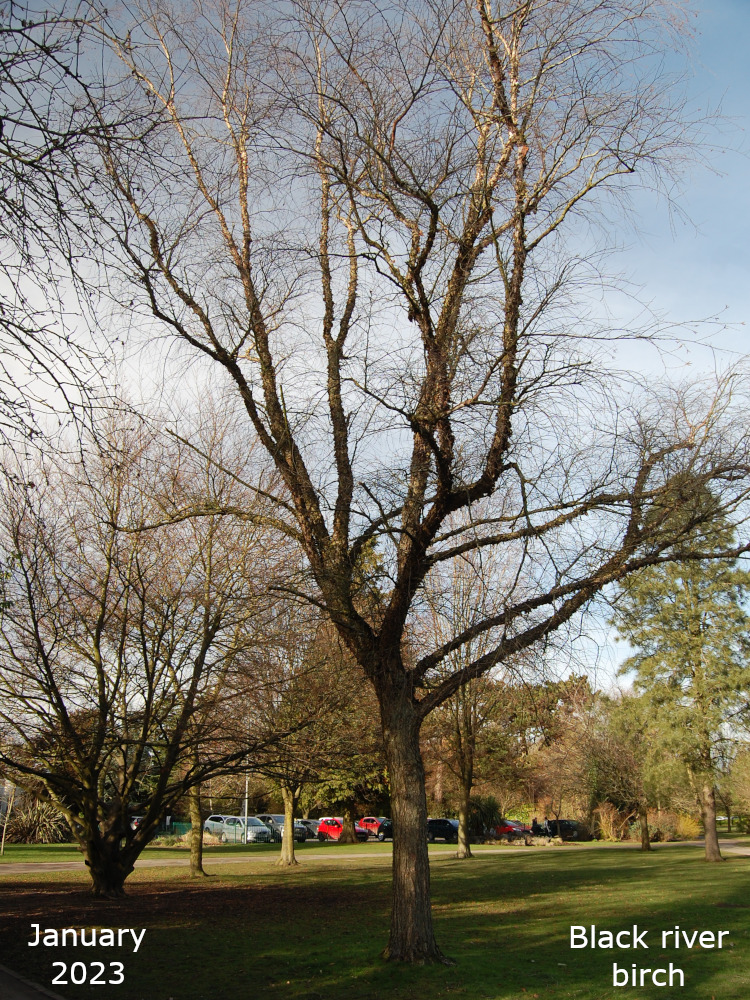
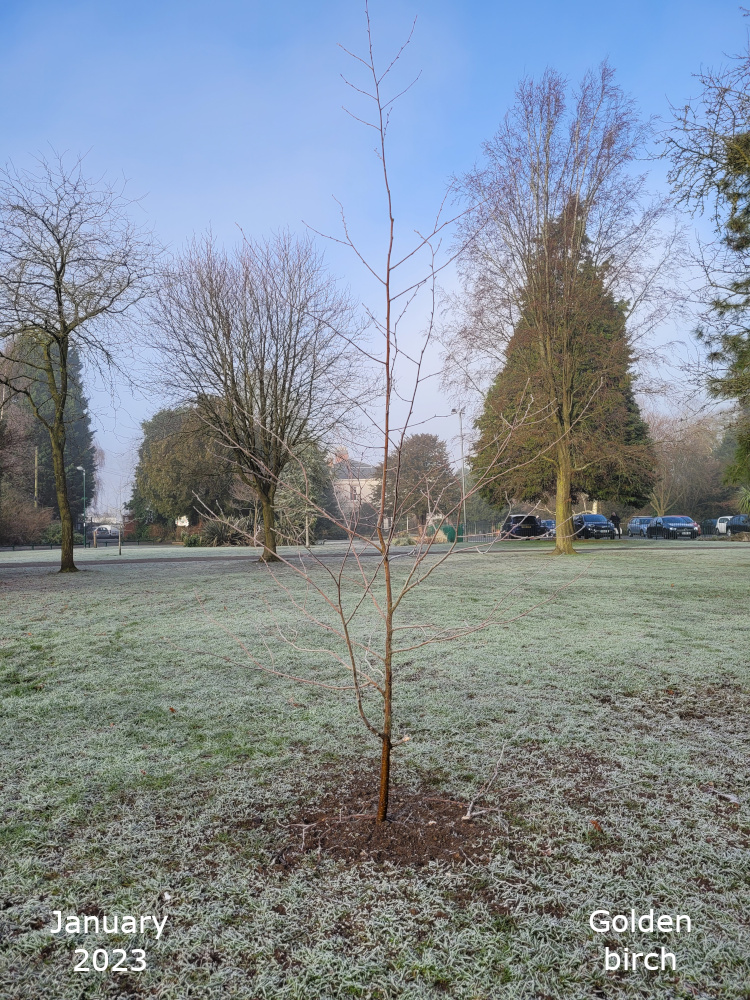
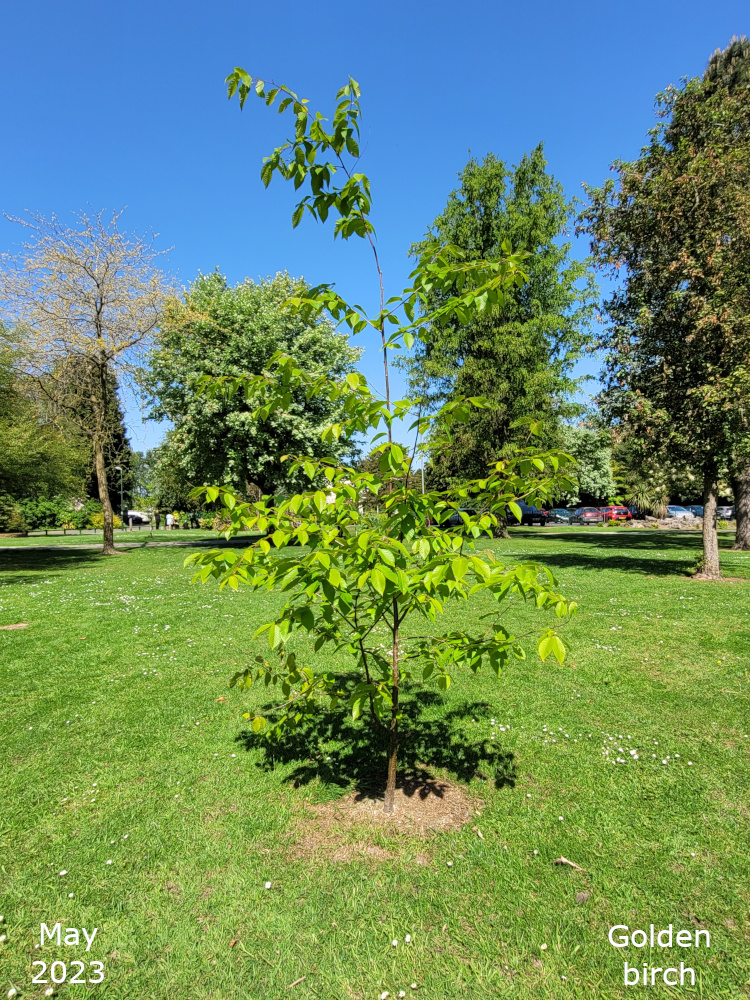
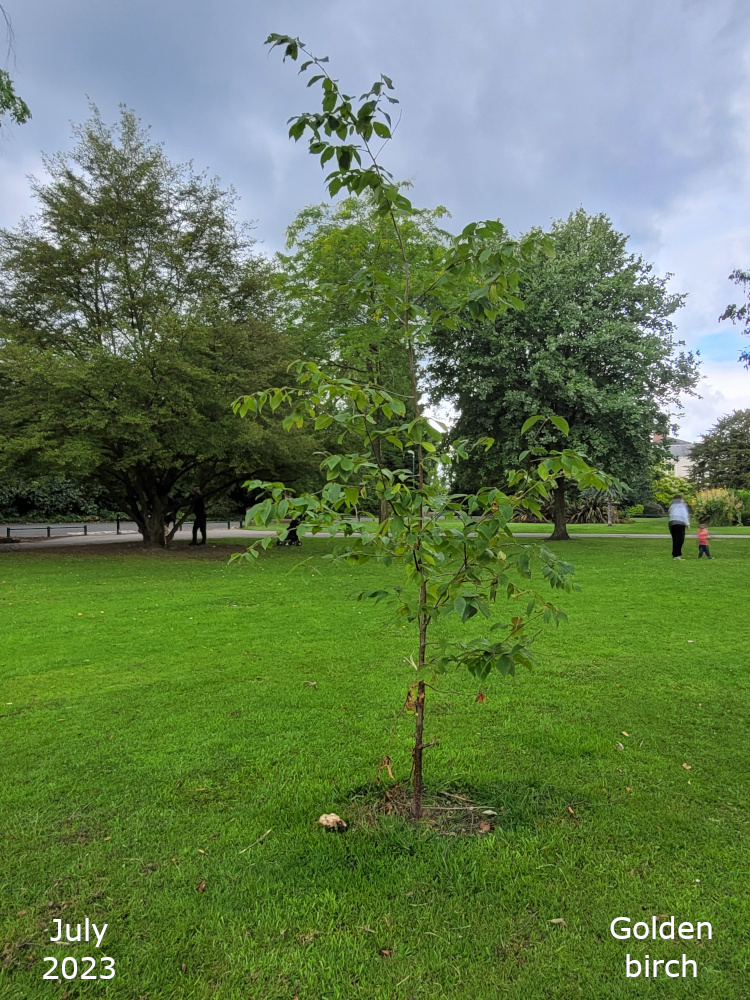
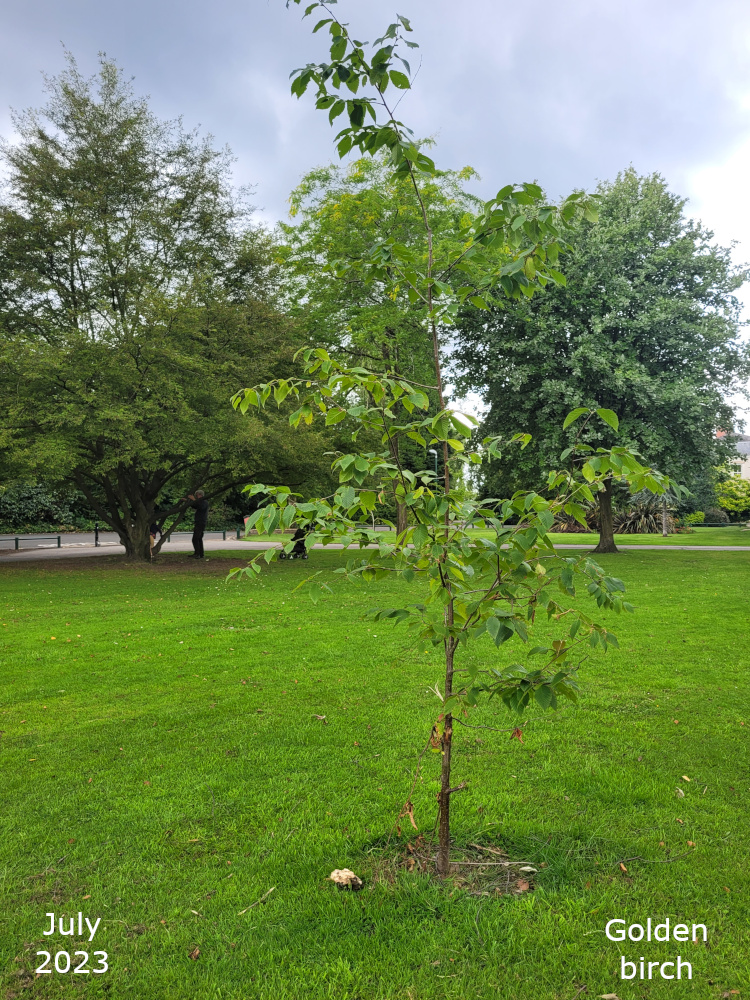
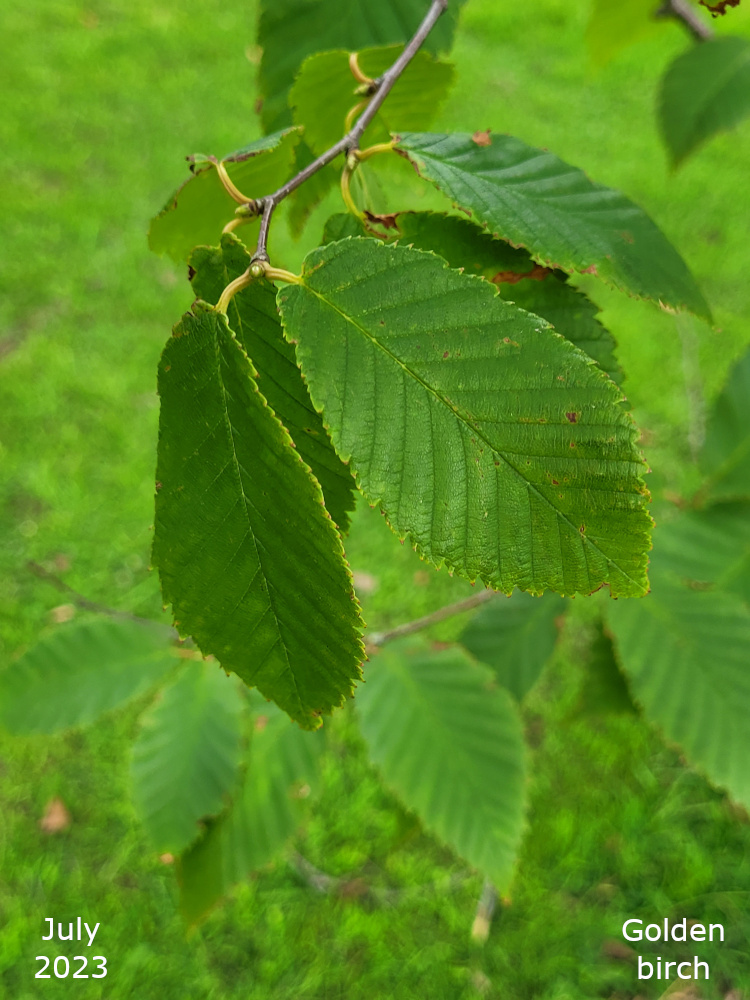
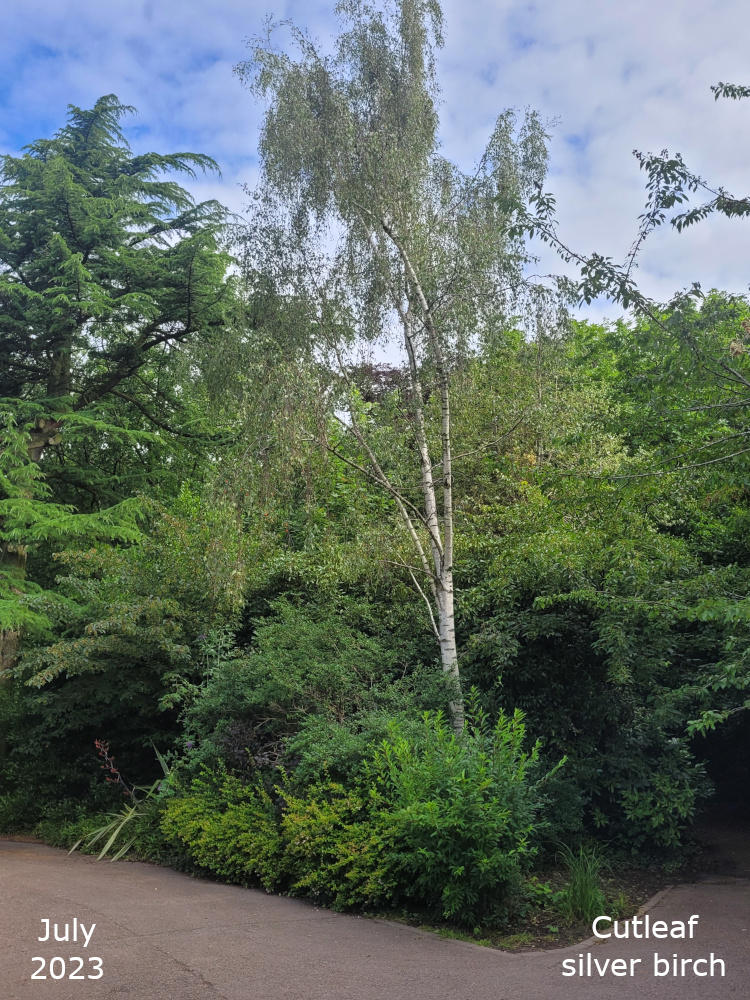
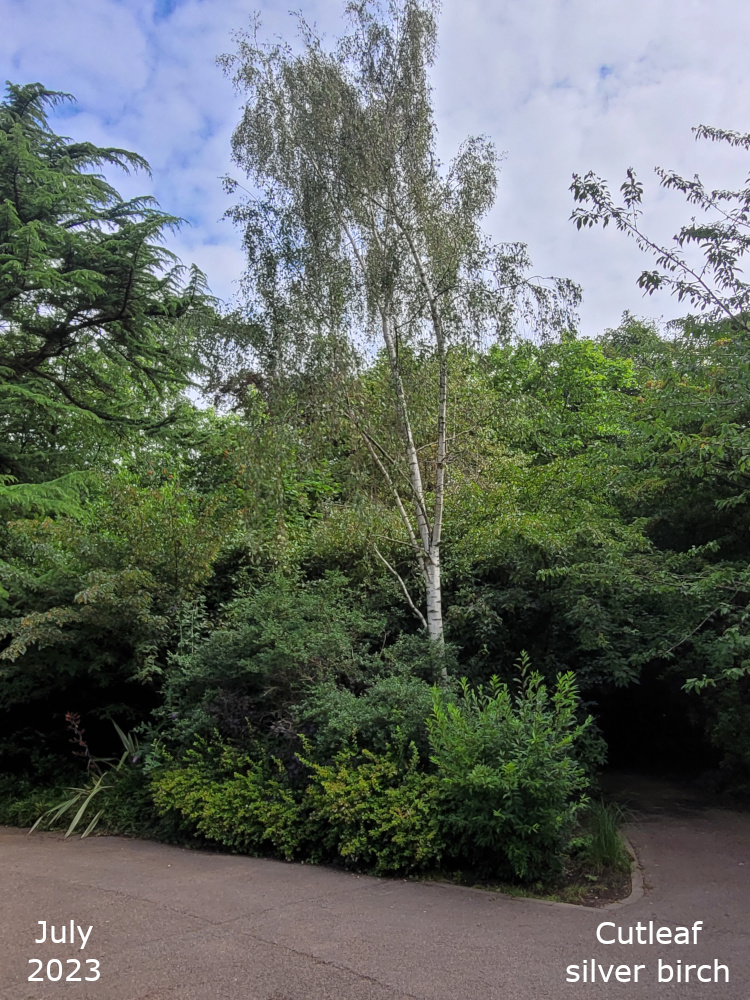
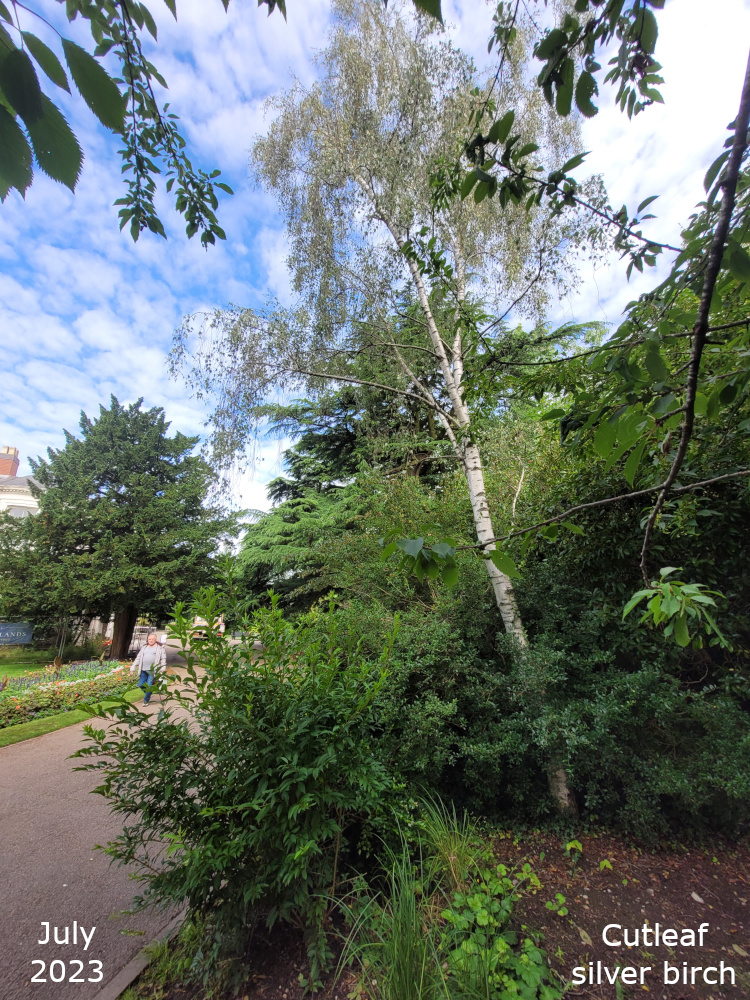
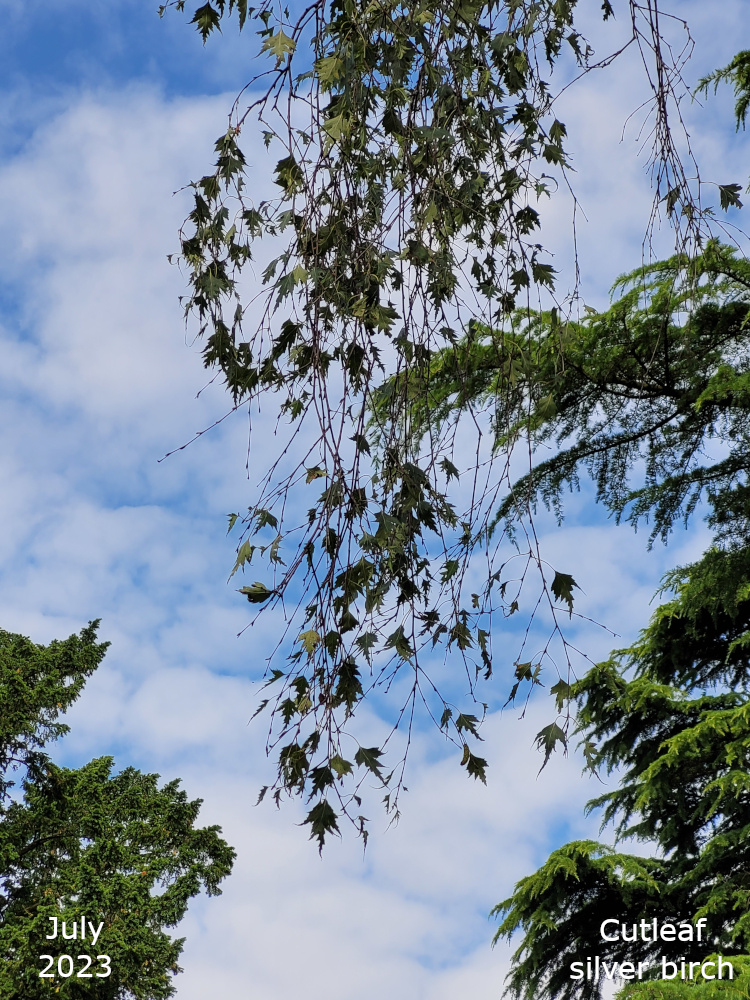
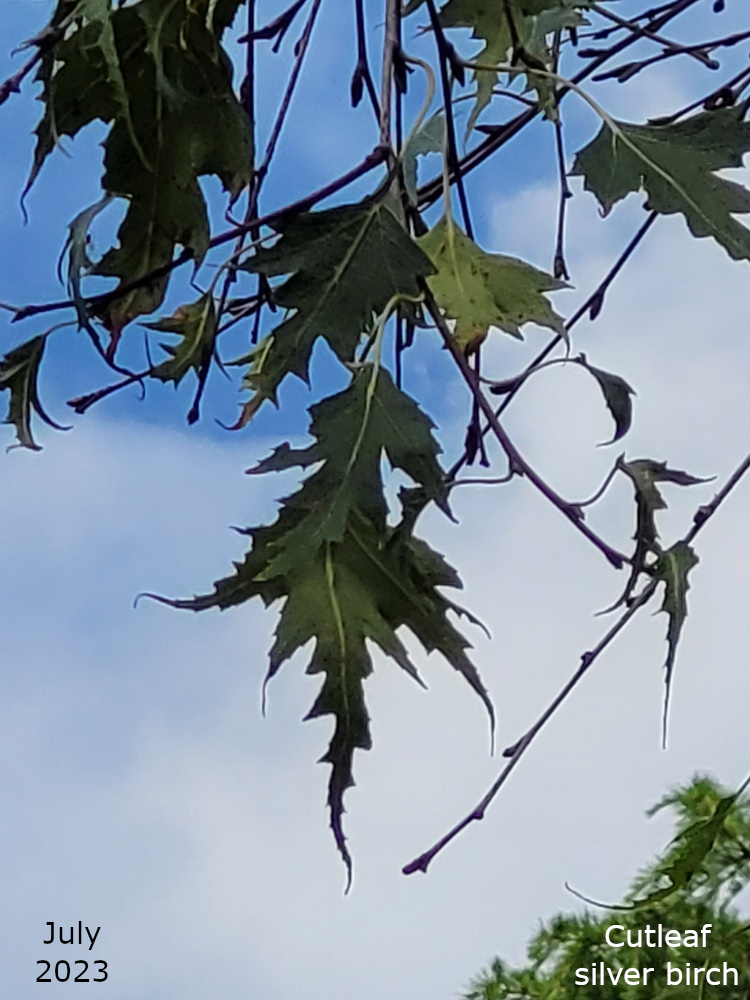
There are several birch along the path running parallel with the drive from the main entrance, all the way up to the white house. One is behind a group of trees on the corner of the field. Two more are close by alongside the path. The fourth is a Black river birch, Betula nigra, and is in the triangular area, not far from the car park. On the opposite side of that triangular area there is a newly planted Golden birch, Betula alleghaniensis. It’s only a very small tree still. There is a Silver birch on the drive next to the little parking bay just before the entrance to the yard and another one near the entrance to the car park. The final tree is the other side of the car park, on the corner of the path where it goes into the pond area. It is not an ordinary Silver birch as its leaves are different, it’s a cut-leaf birch, Betula pendula Laciniata.

Thrive triangle
This is a small area between the Thrive garden fence and the path going down the hill towards the railway lines. All the birch trees in this area are Himalayan birches, Betula utilis.
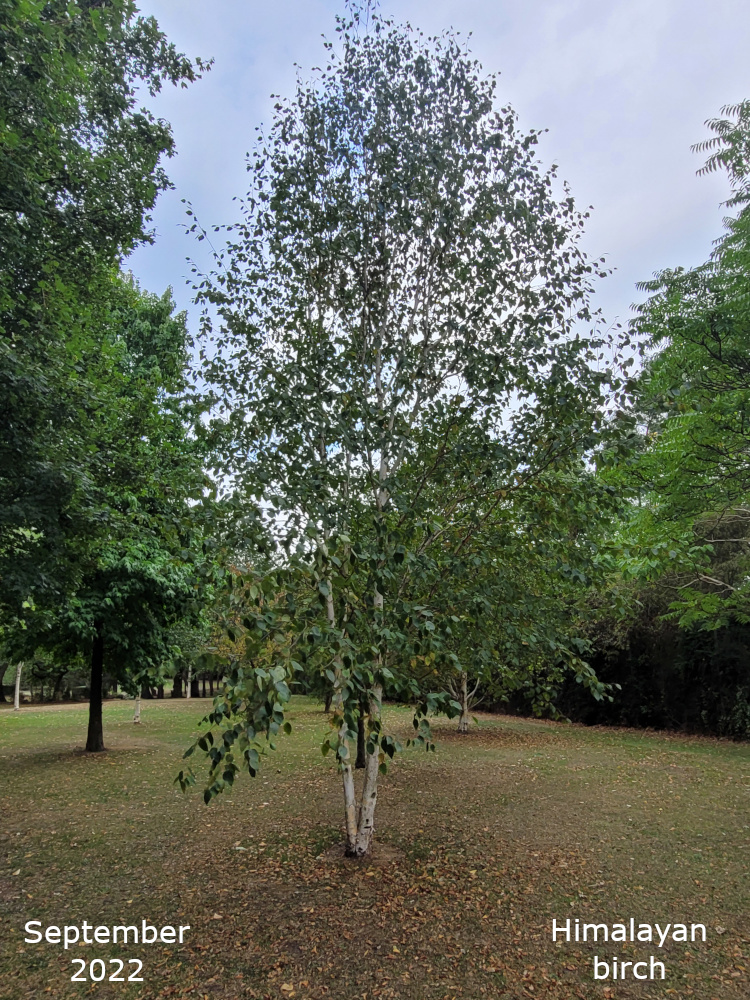
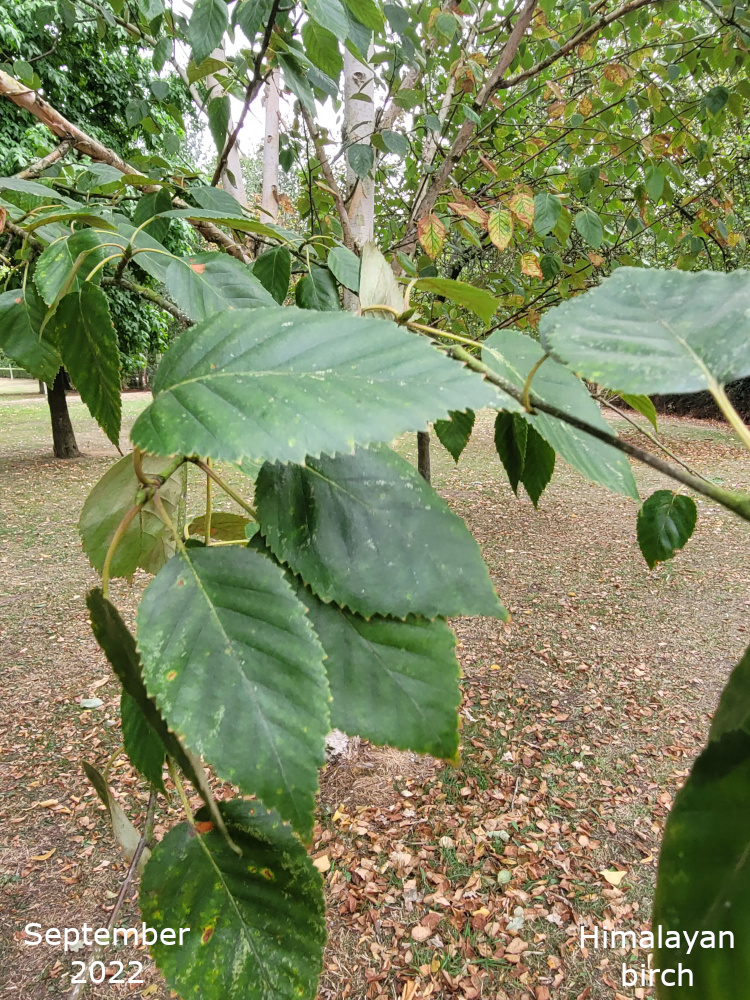
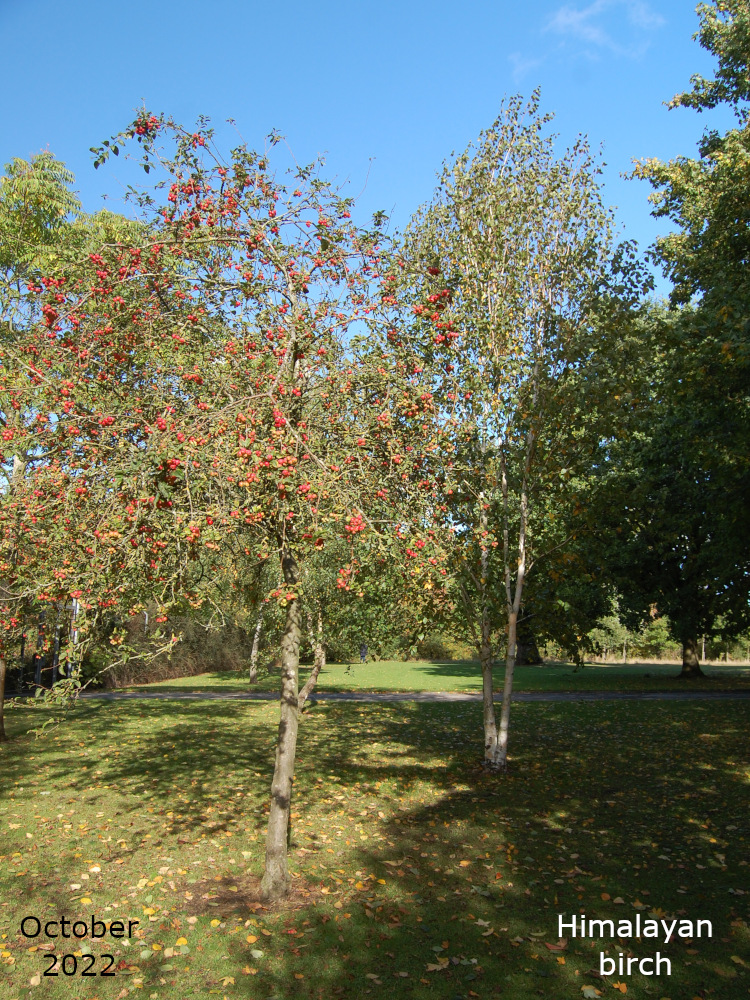
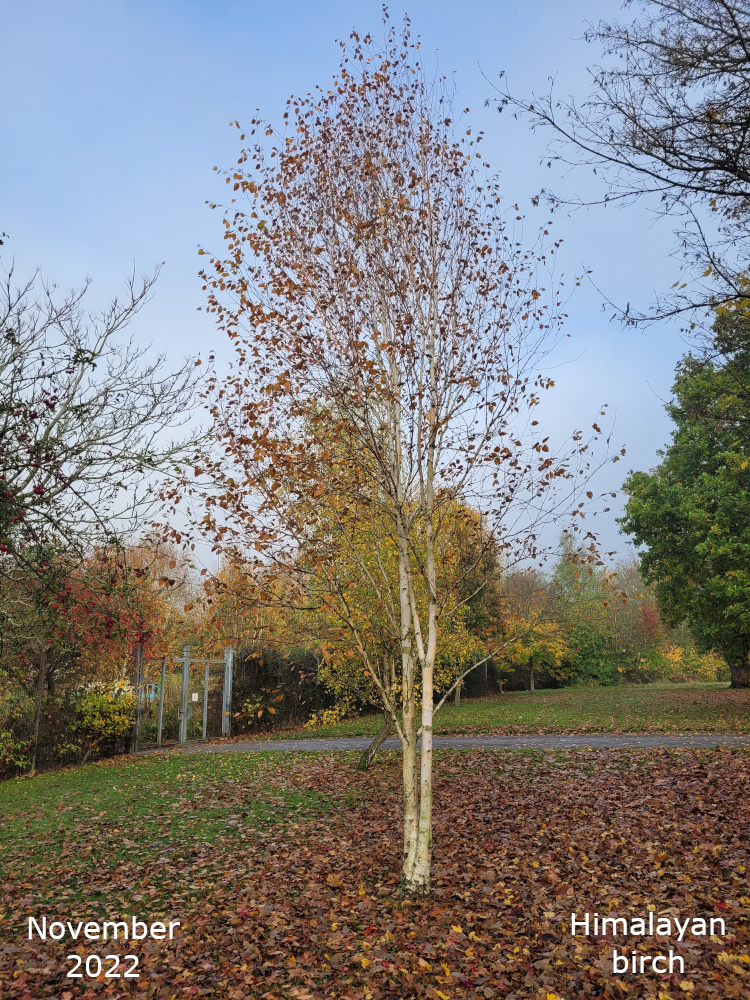

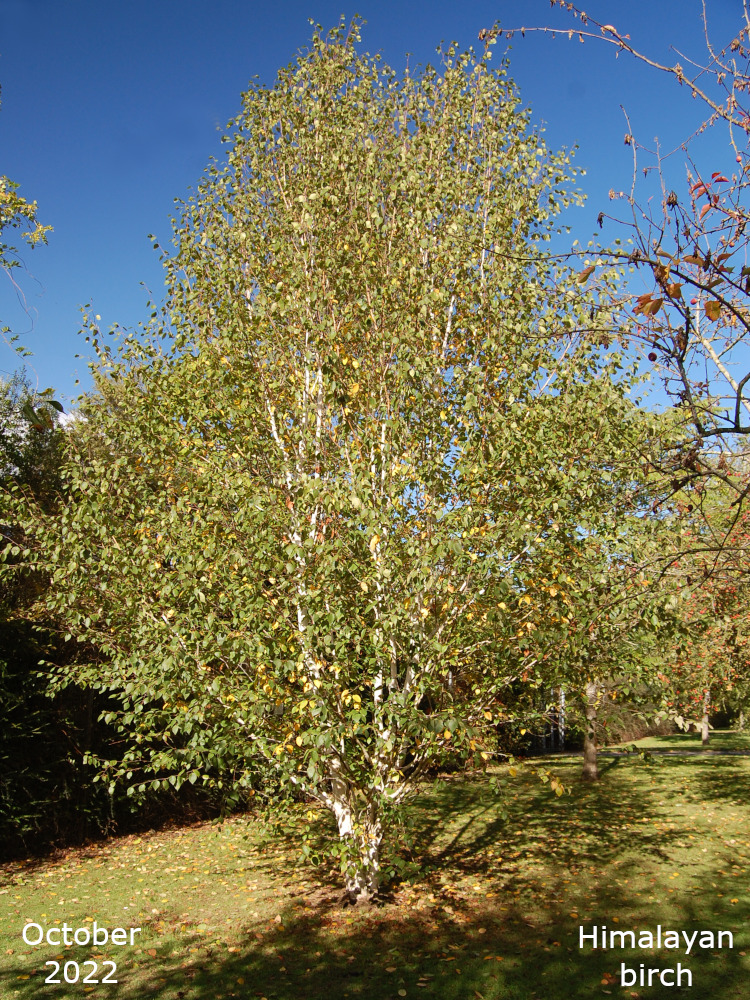

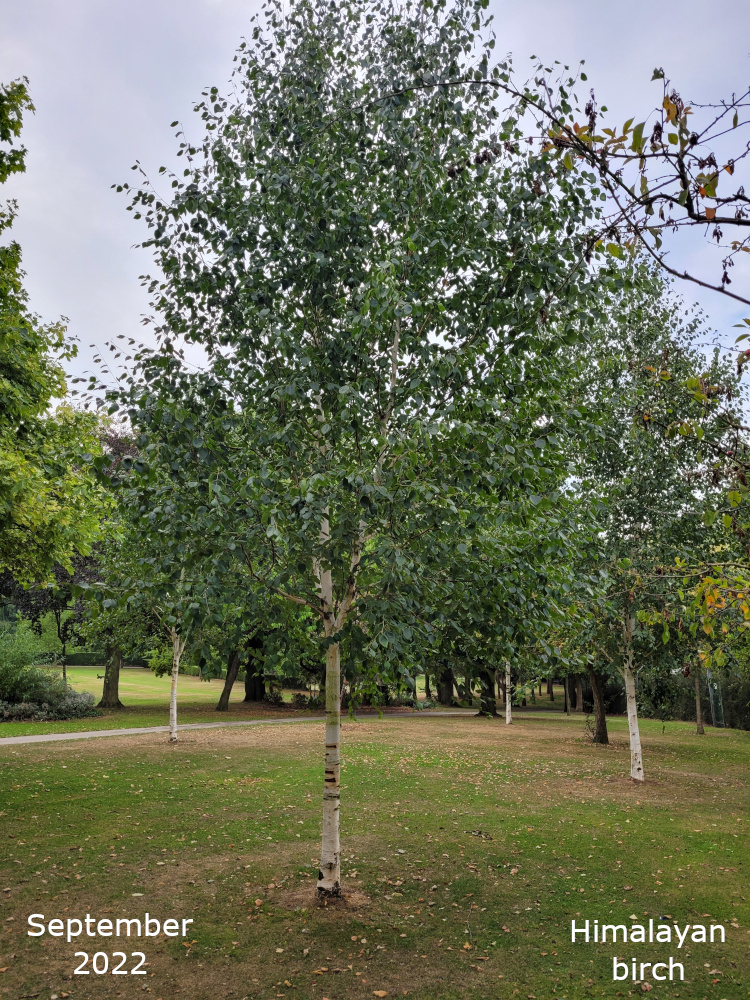
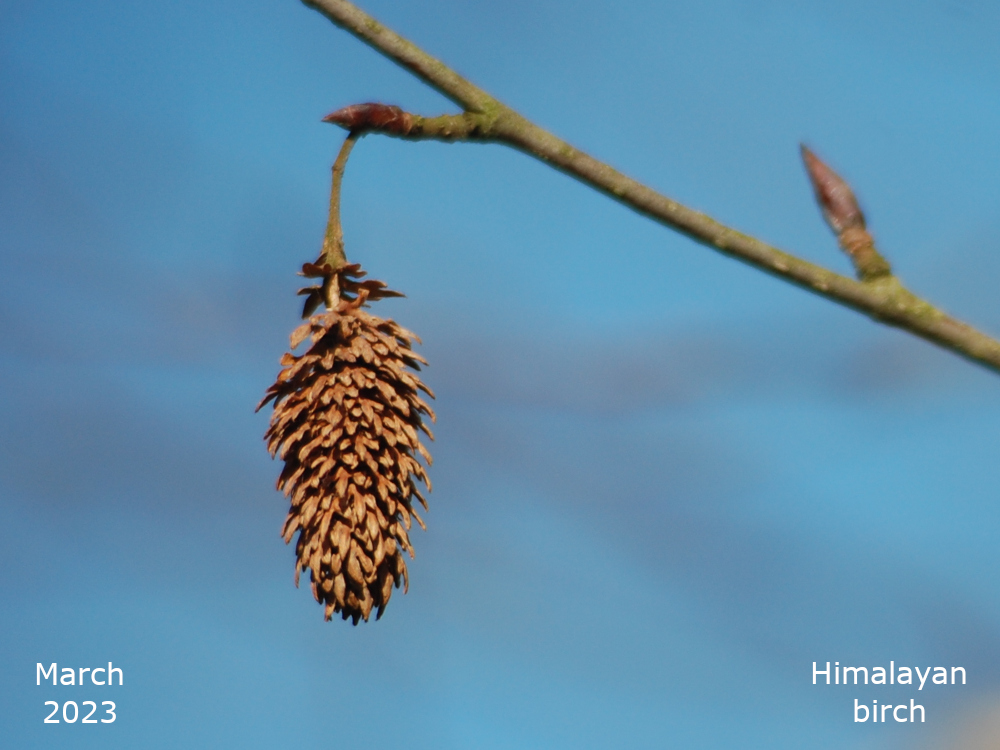
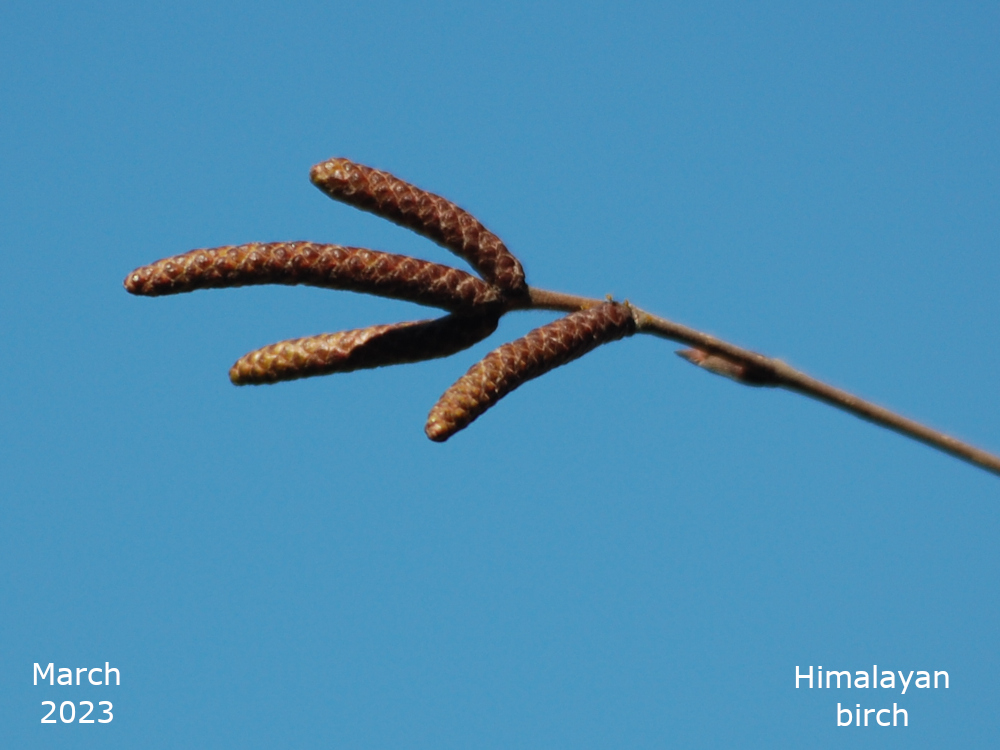
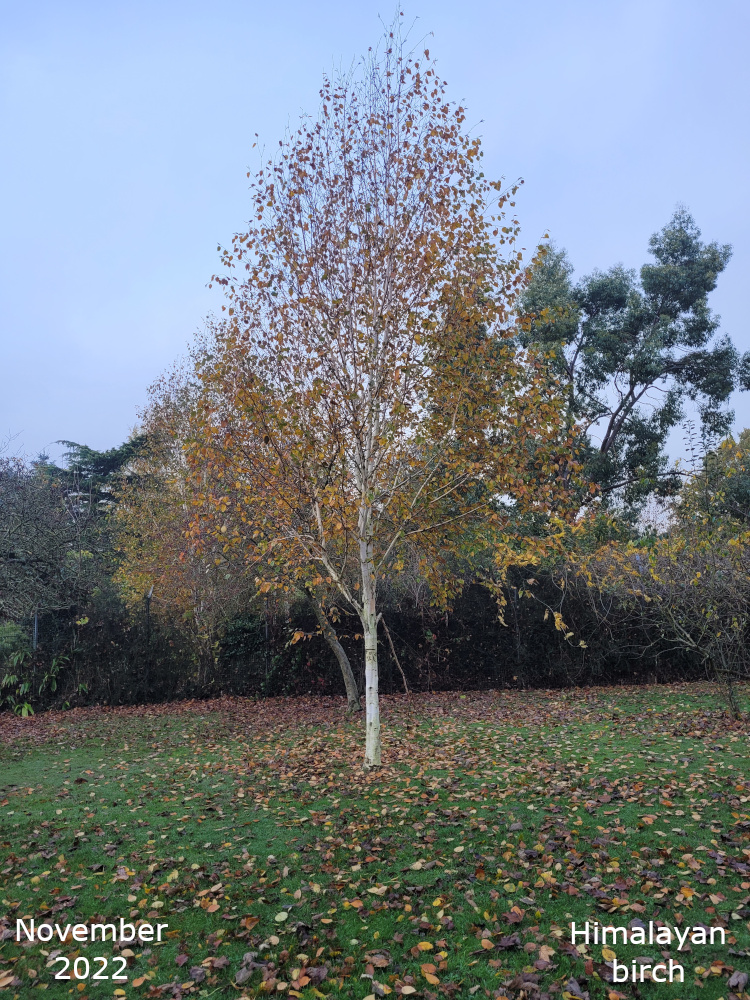
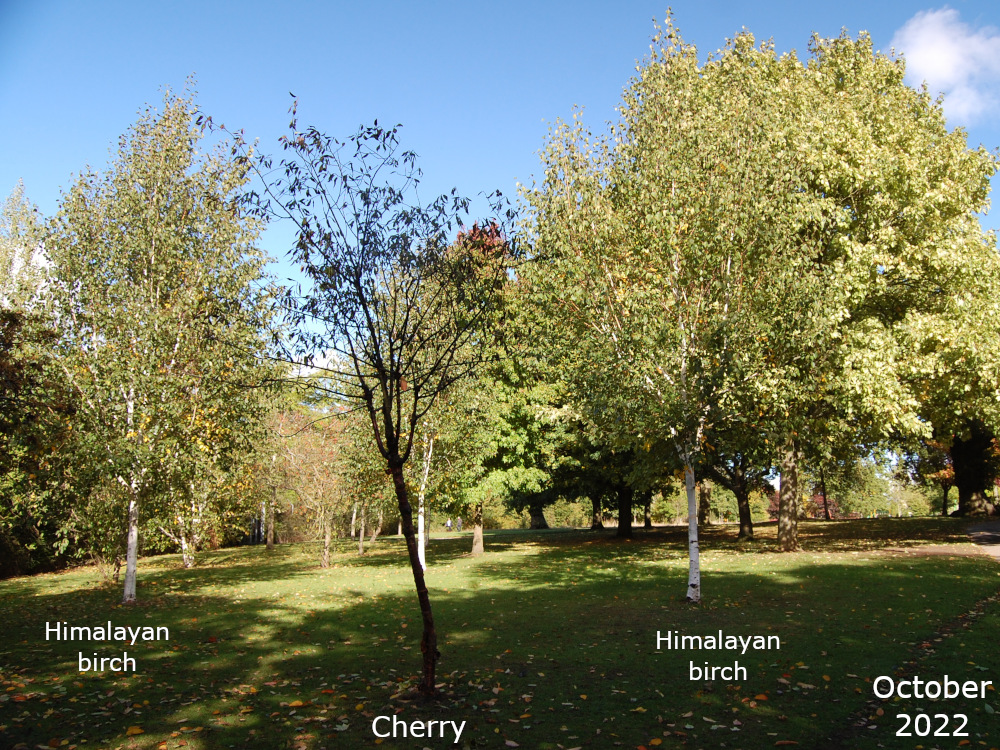
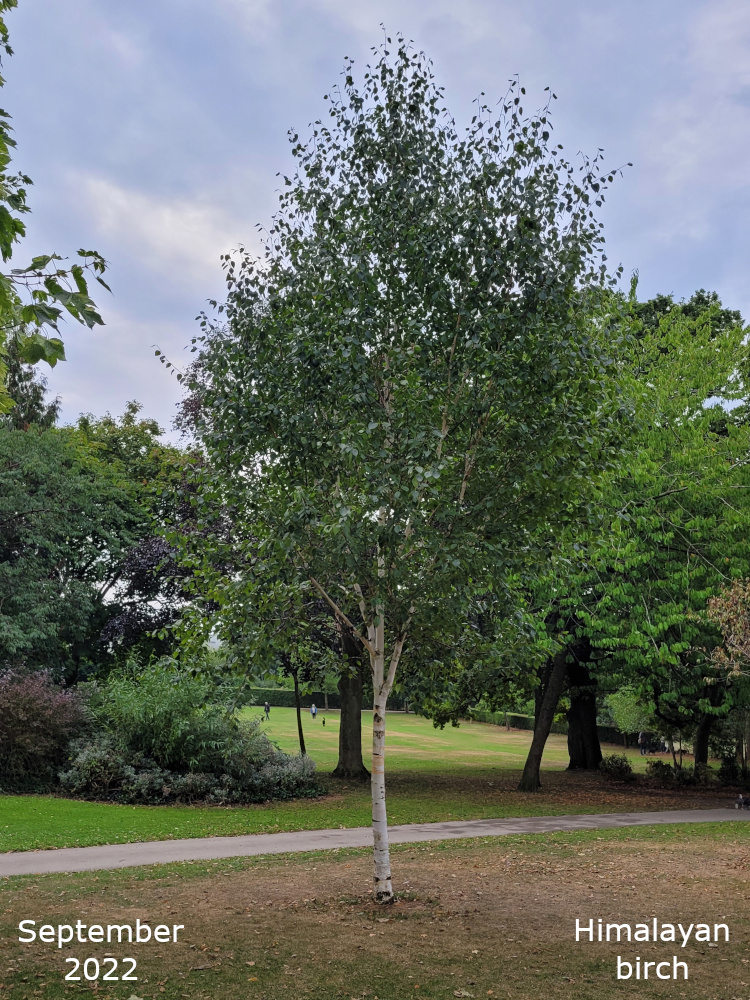
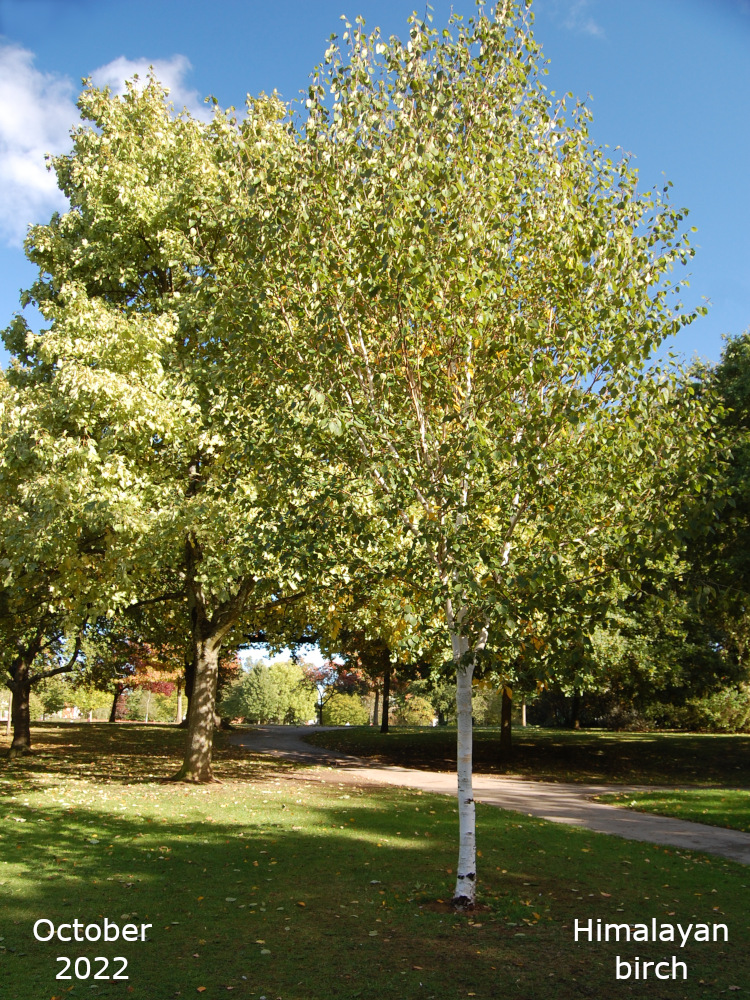
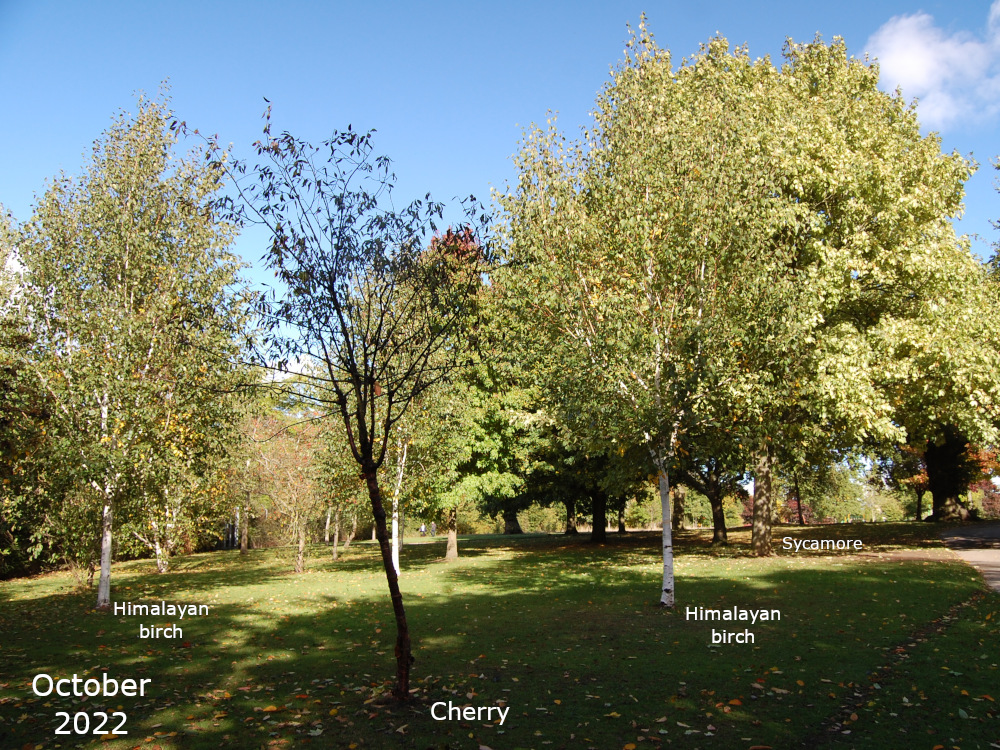
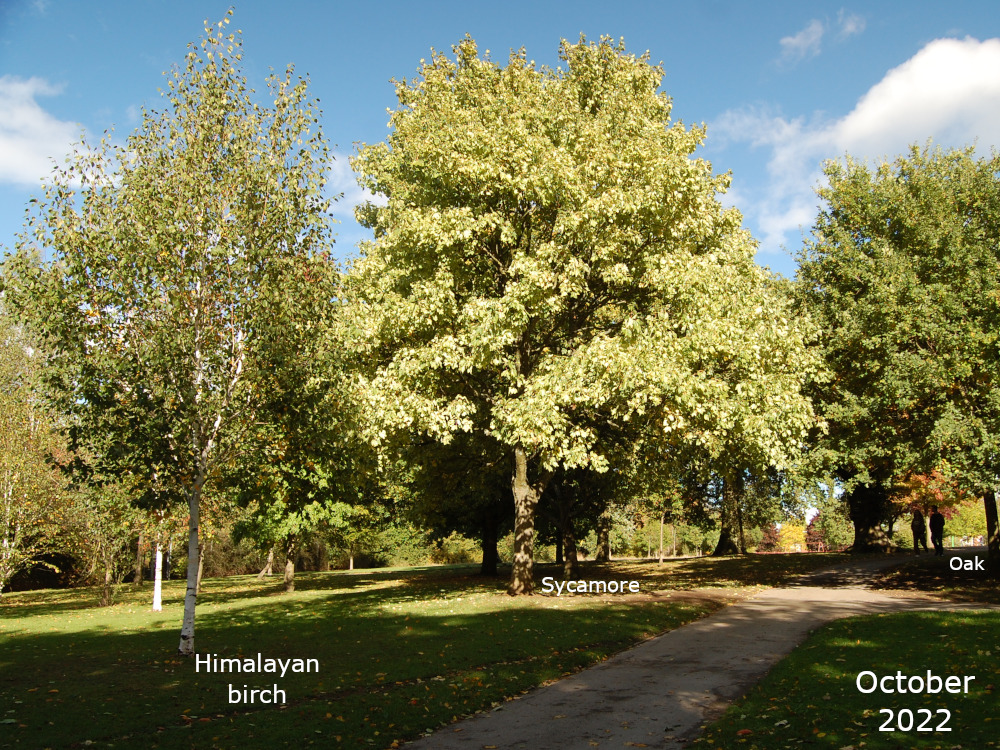

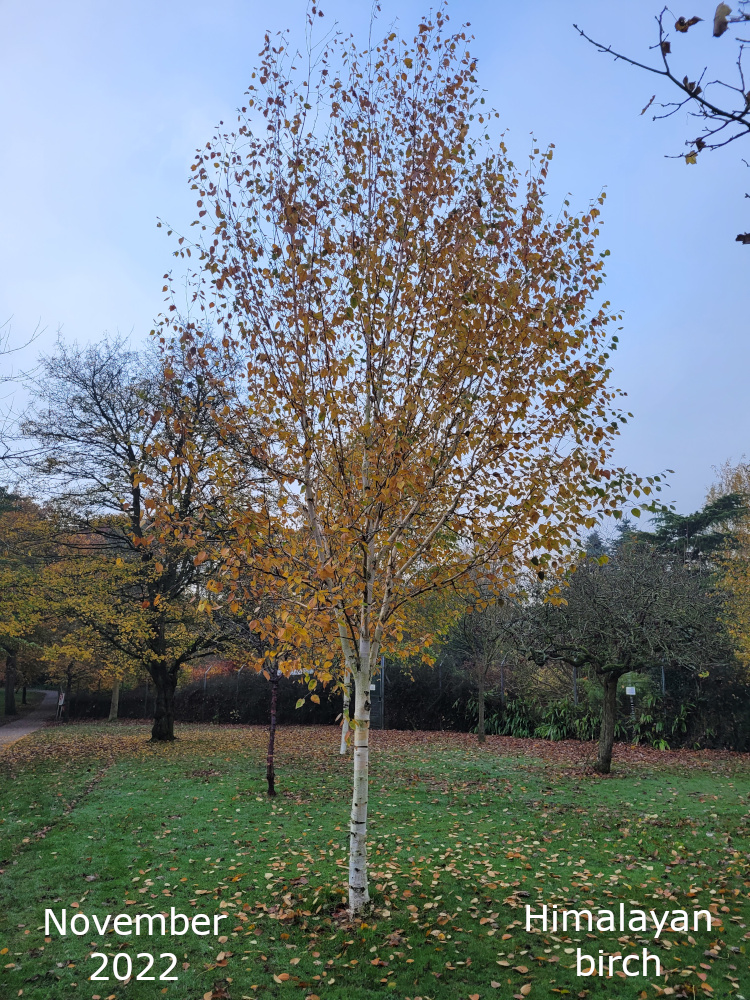

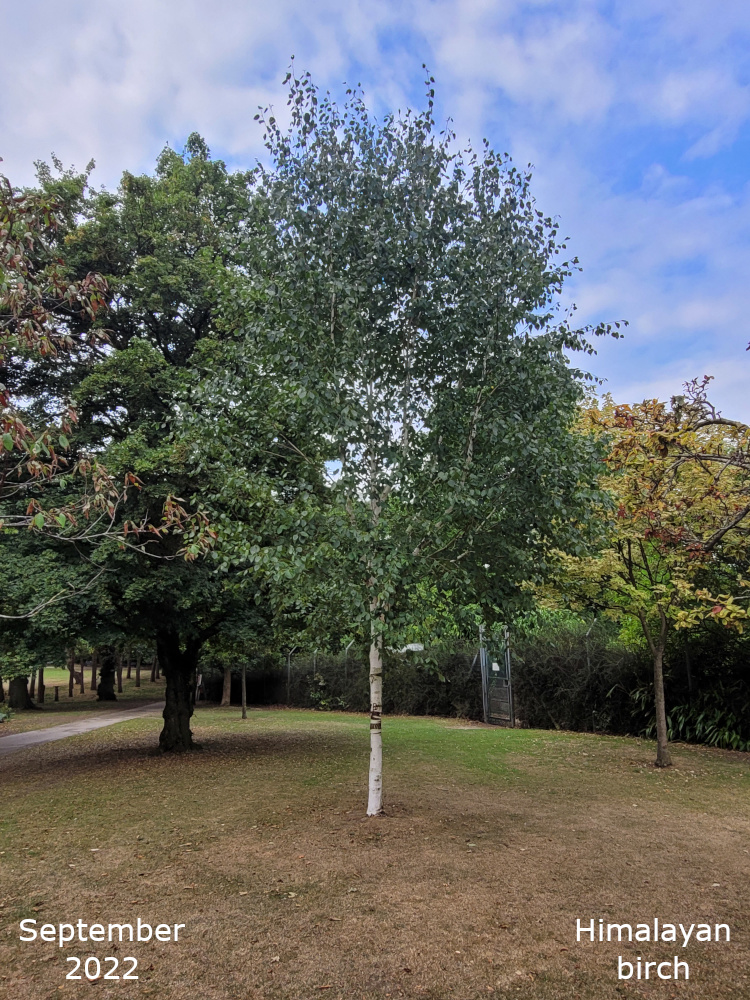
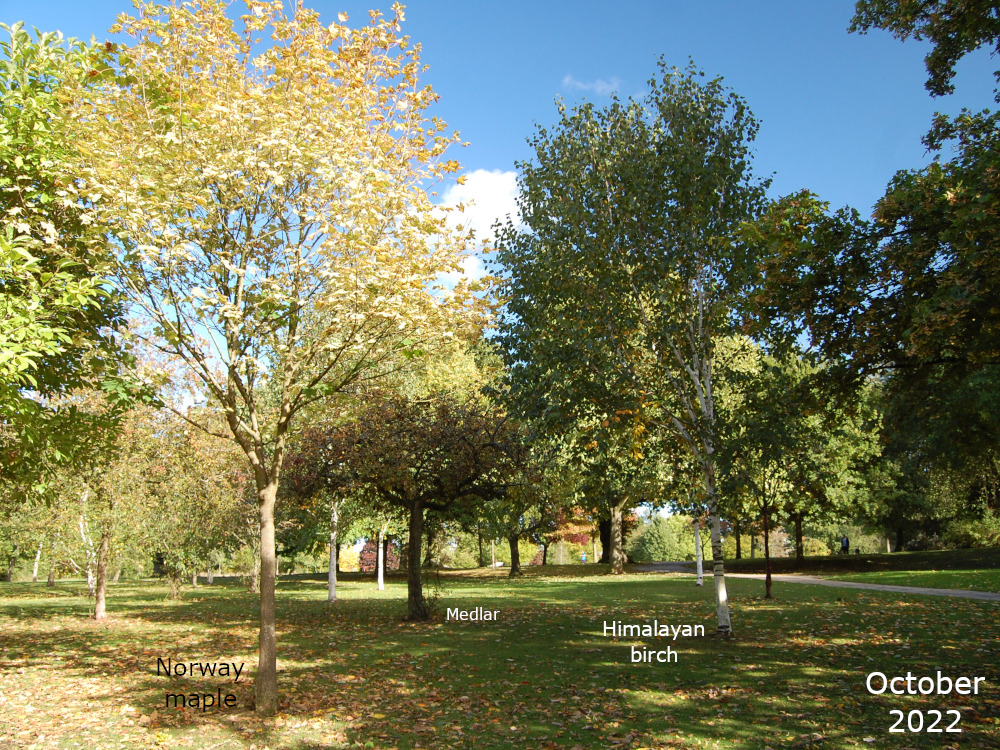
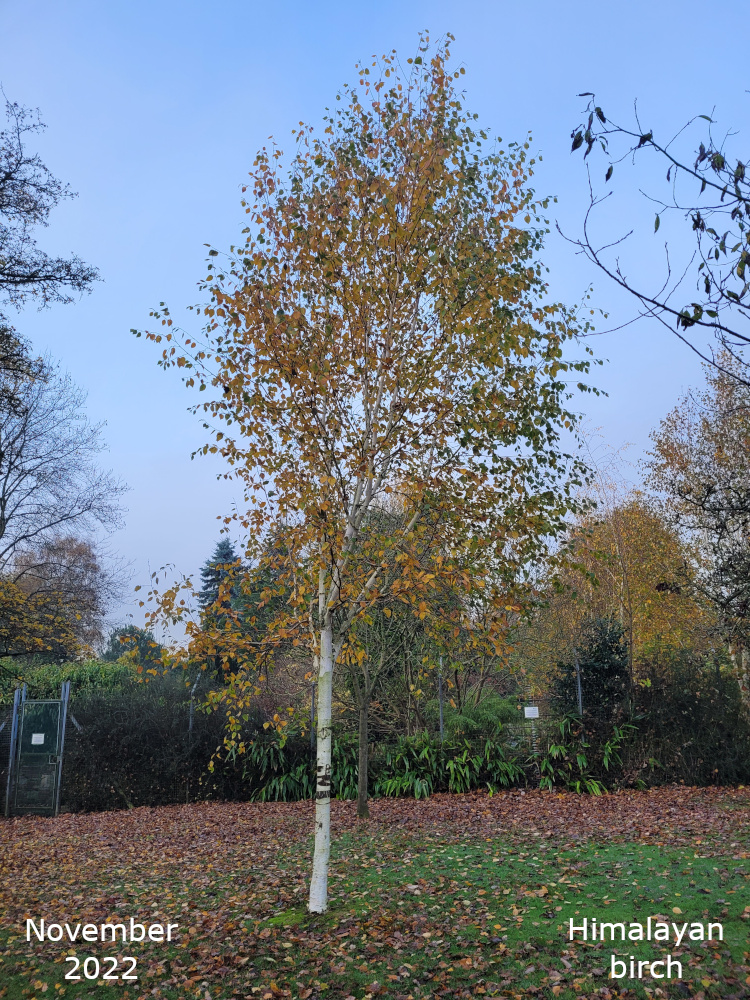
The Himalayan birches are recorded as being a variety called Betula utilis Jacquemontii and several are recorded as being multi-stemmed. This variety is noted for its particularly white, peeling bark. The name ‘utilis’ is given to the birch as the tree has many uses. In its native region of the Western Himalayas its bark is widely used for packaging material, roof construction, umbrella covers, bandages, and more. The wood is used for bridge construction, and the foliage for fodder. The most widespread use is for firewood, which has caused large areas of habitat to be eliminated or reduced.
 Kings Heath Park Trees