Beech and Chestnuts are both in the family Fagaceae and so go well together, here. There are two other trees I have included here that belong in the family Nothofagaceae, the Southern beeches. They are different but there are only two of them in the entire park and they are not that different to Fagaceae compared to other families.
Beeches are up first, the fourth most common tree in the park . .
- Pond area
- Bowling green
- Avenue Road, top end
- Avenue Road, middle to bottom
- Vicarage Road
- Drive
- Playground & Thrive
- Colour garden
- Bottom of the park
- Sweet chestnuts
Pond area
This extends from the banks of the pond to all the woodland around.
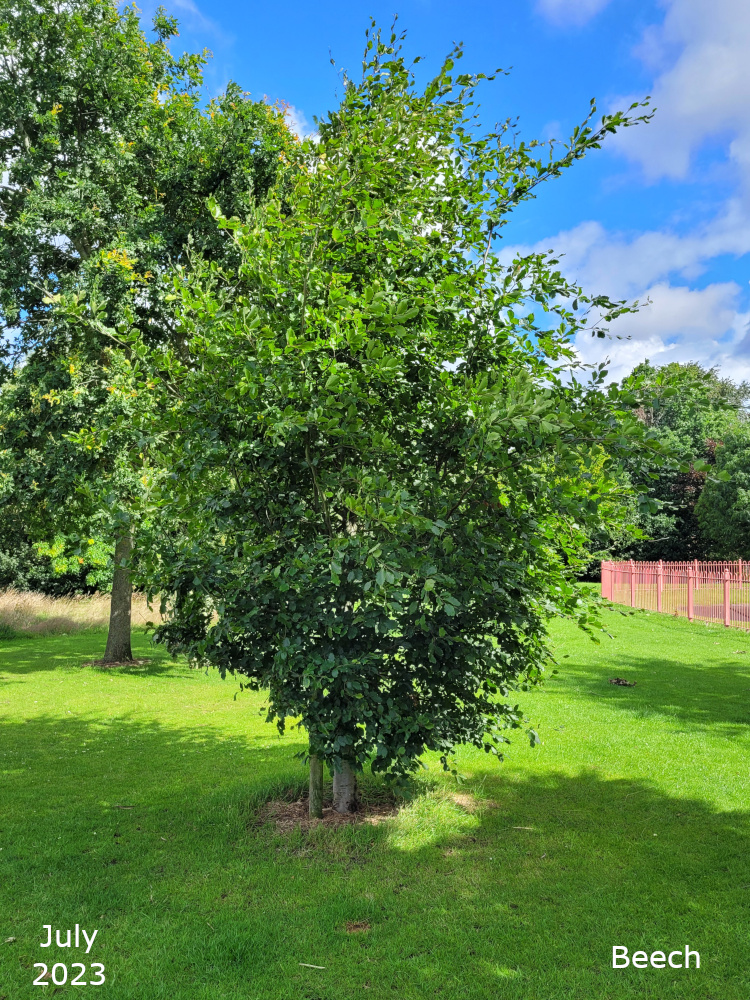
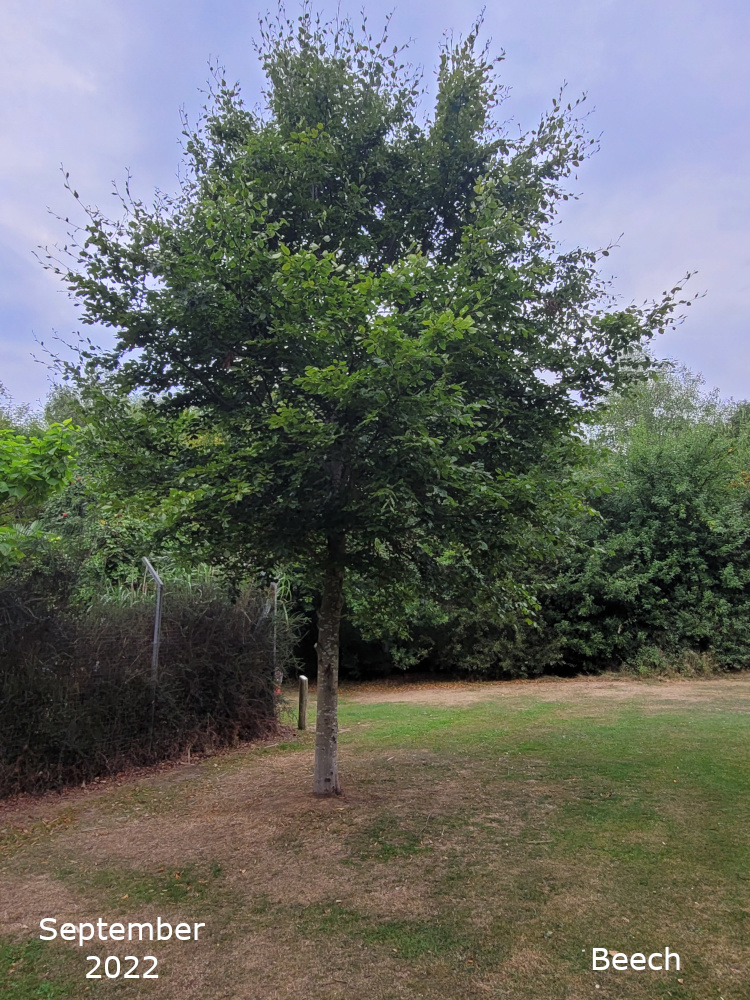
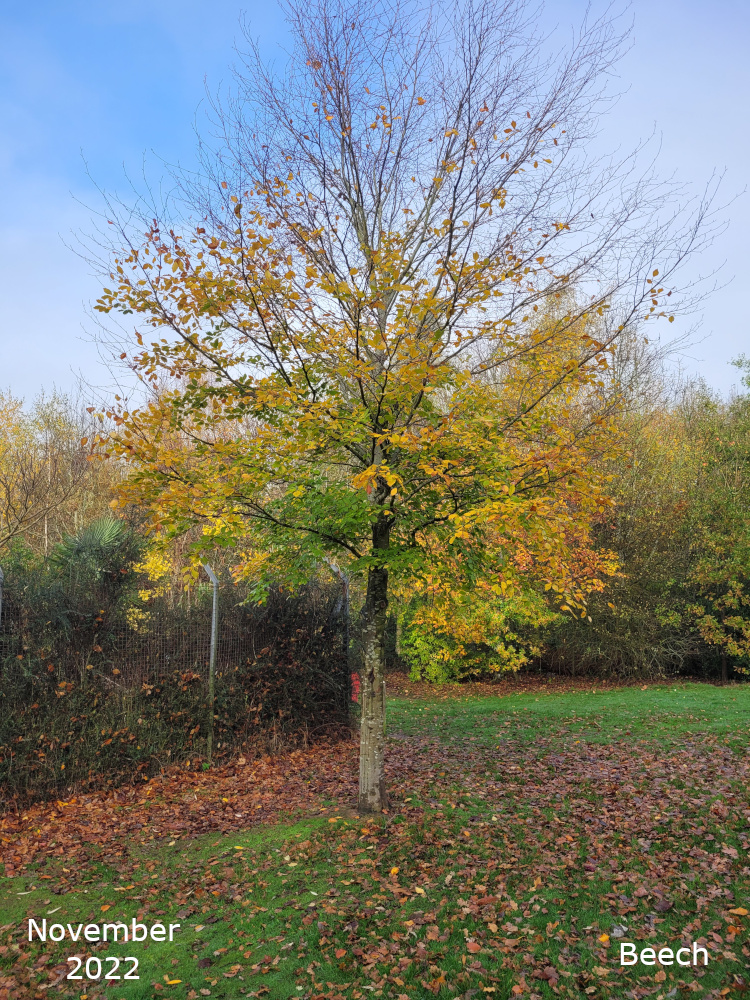
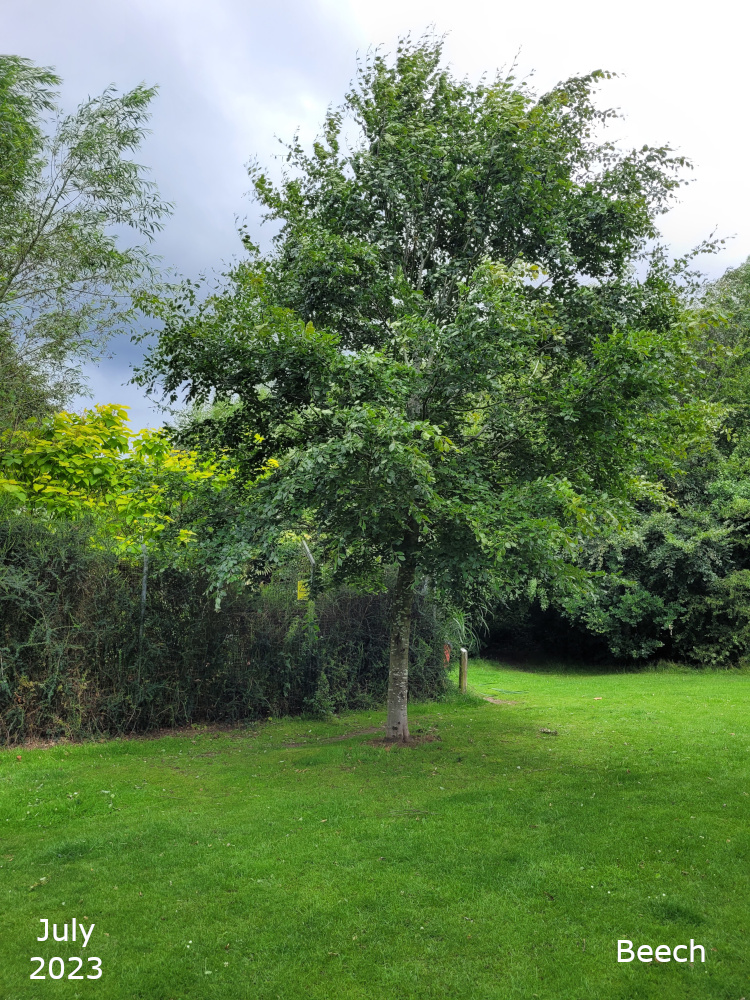
Two common beeches (Fagus sylvatica) near to the pond are near the Grange Road car park end. On is just off the path where it comes out of the car park. The other is at the end of the car park, where the path passes through. A third Beech is found if you walk along the path that goes diagonally across the park from the car park by the white house, towards Grange Road; turn off just by the big Horse chestnut tree. Go into the wooded area towards the ponds and this big beech tree is leaning over just off the path.

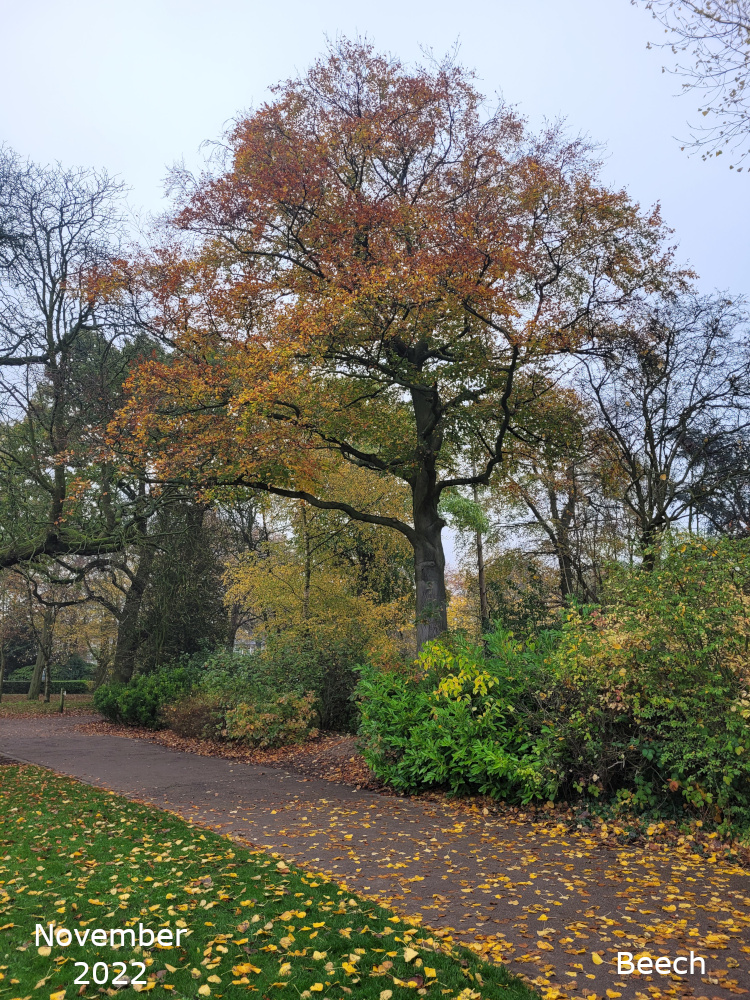

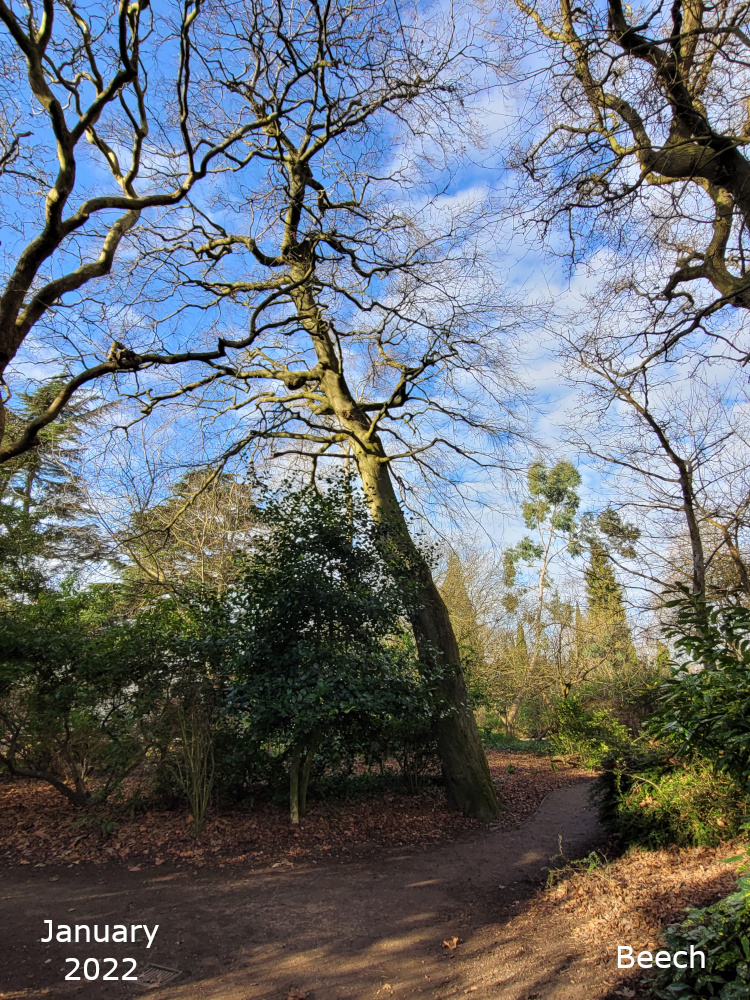

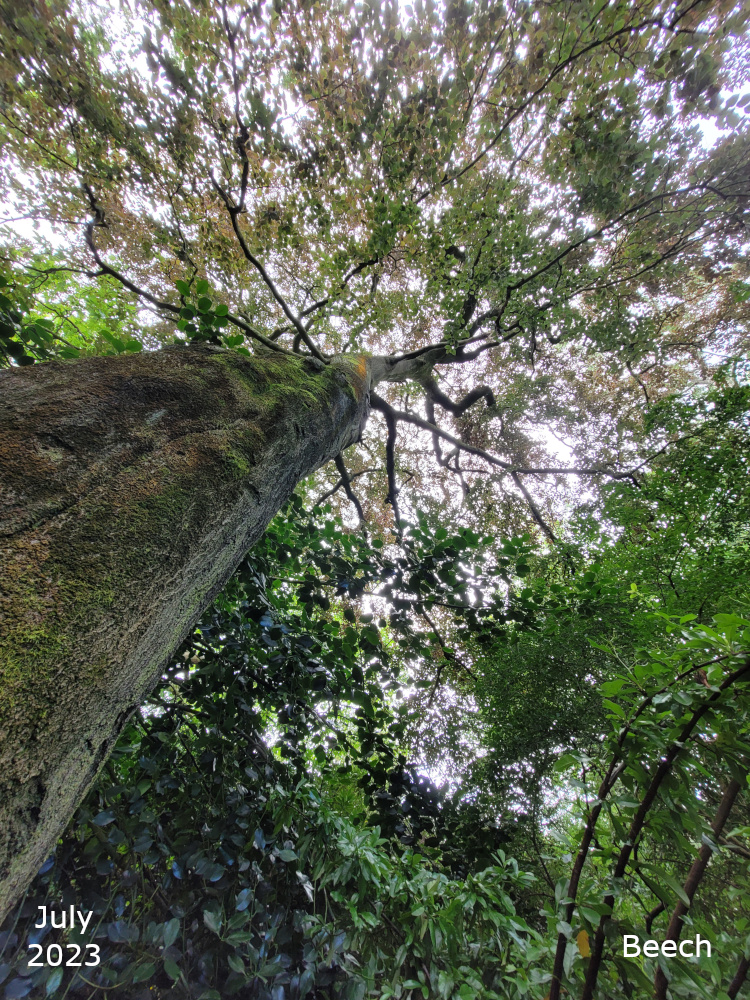
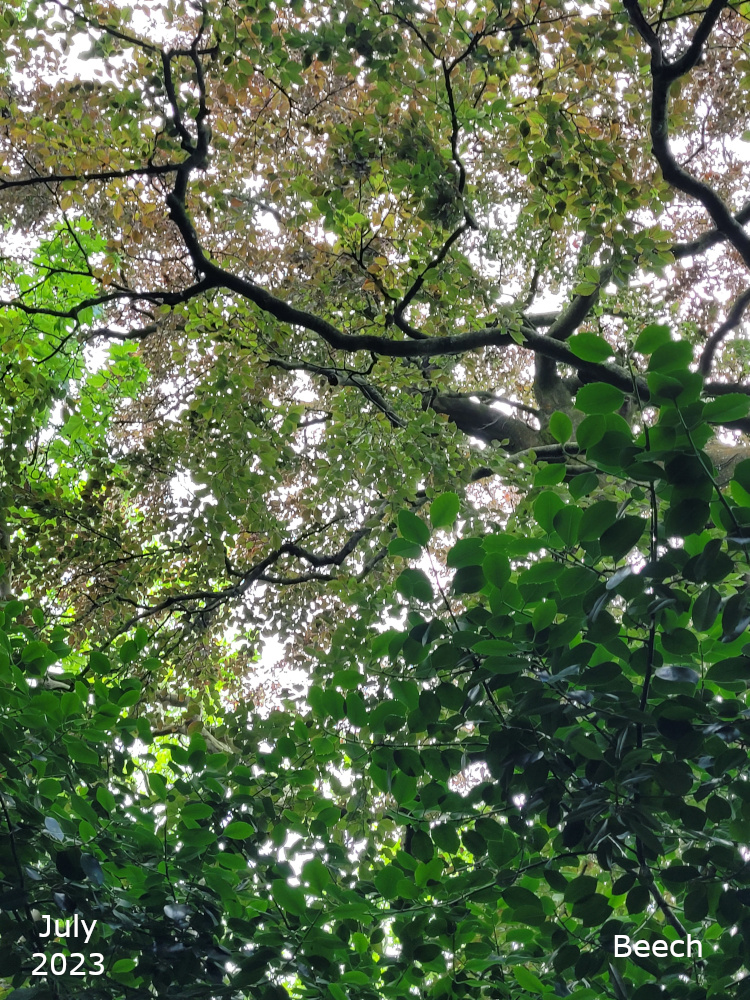
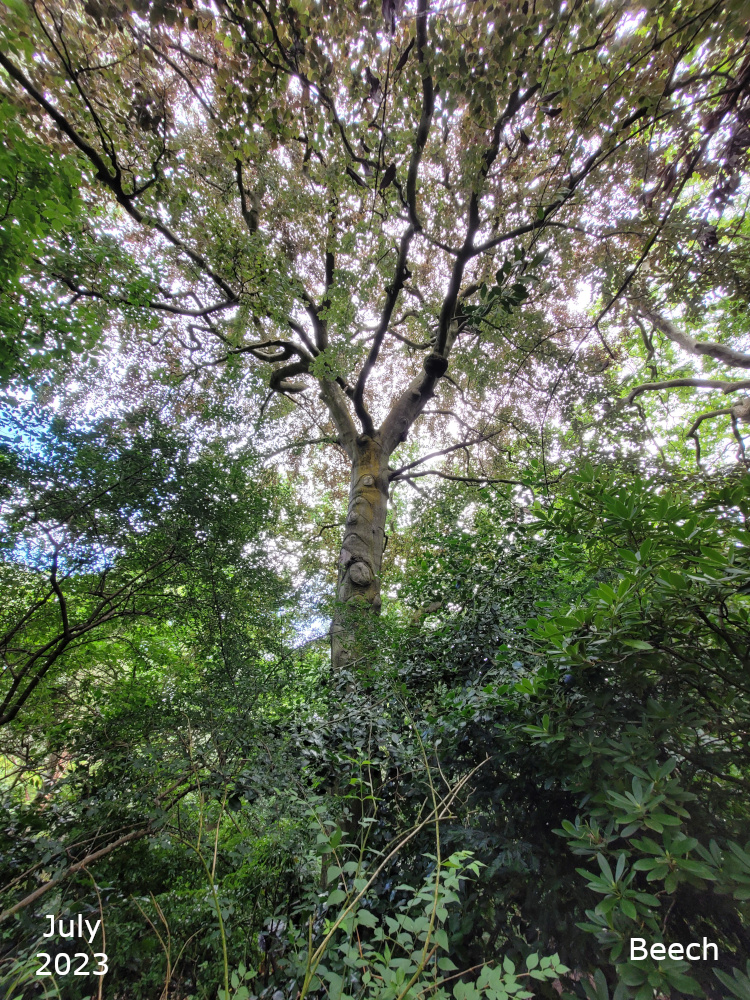
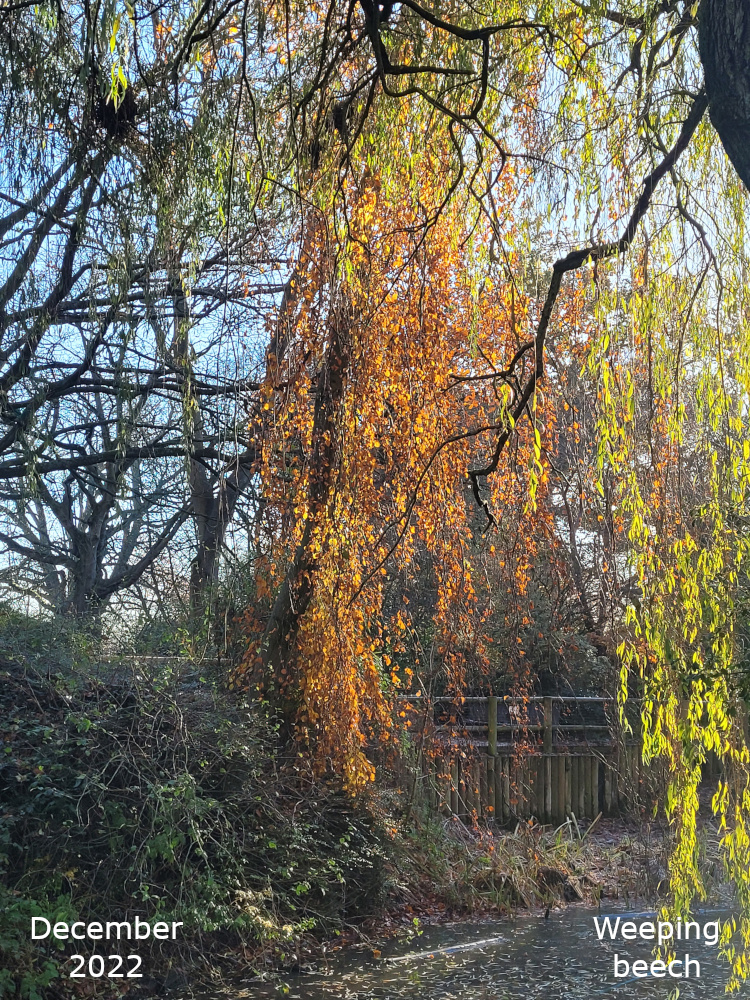
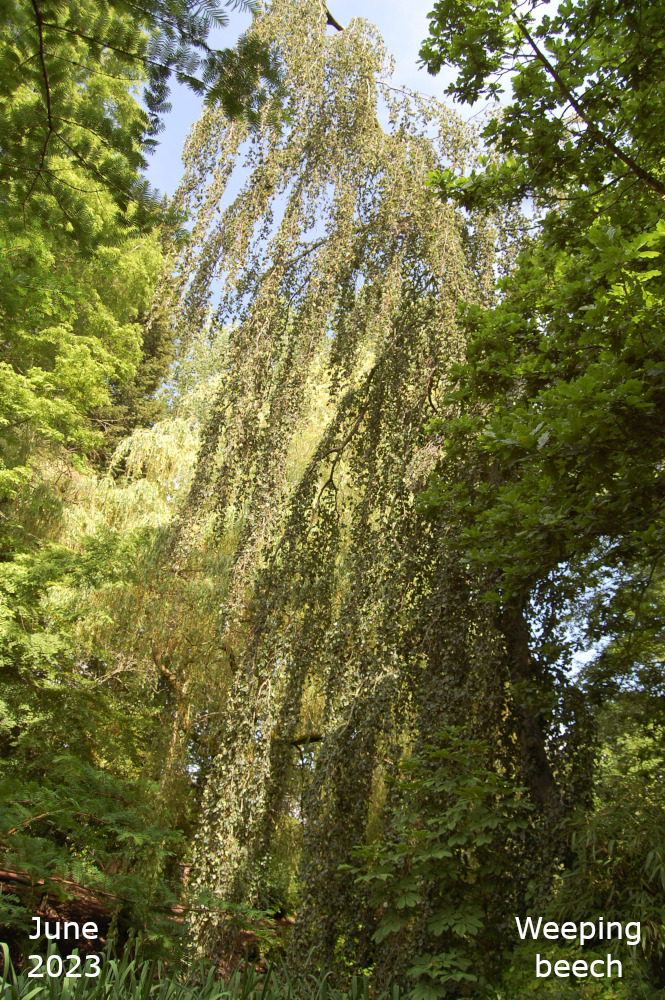
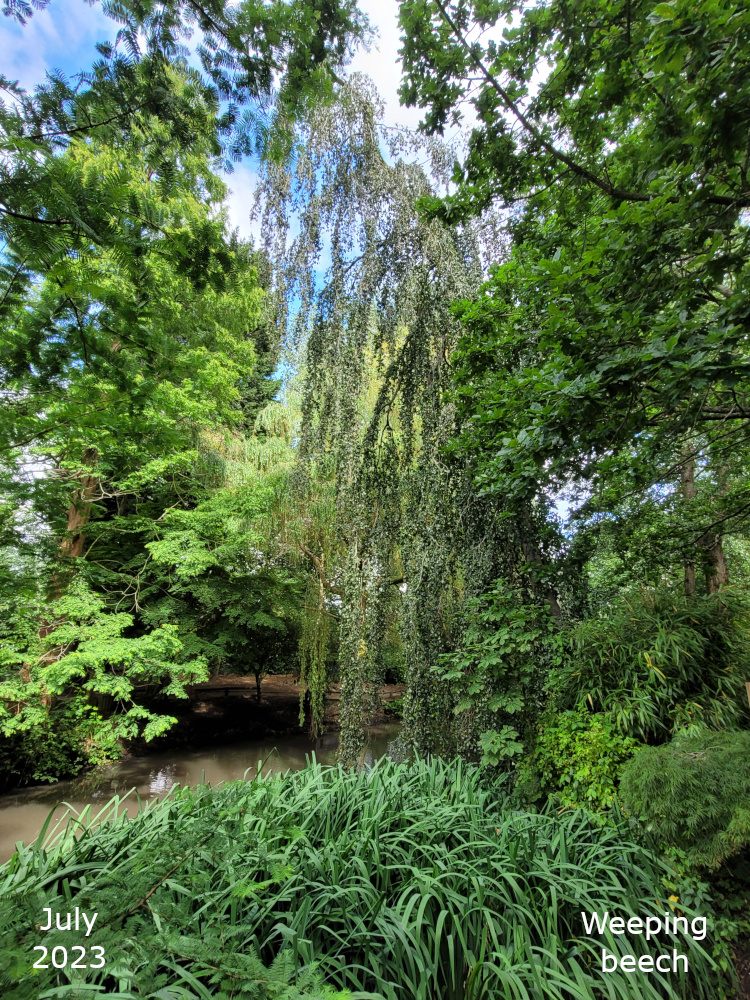
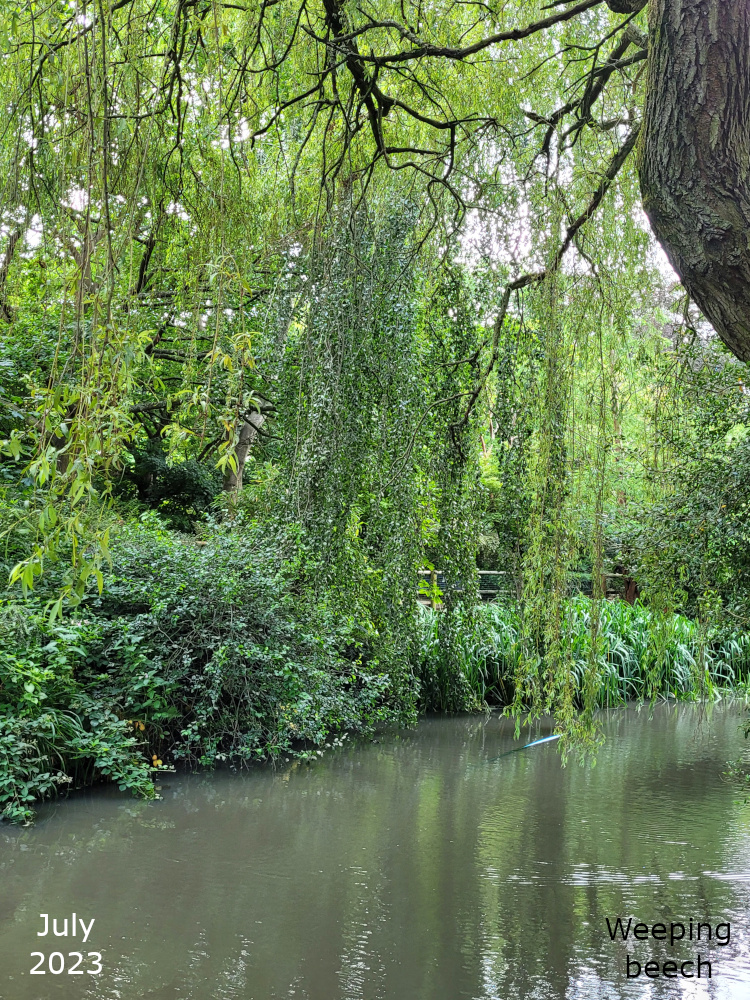
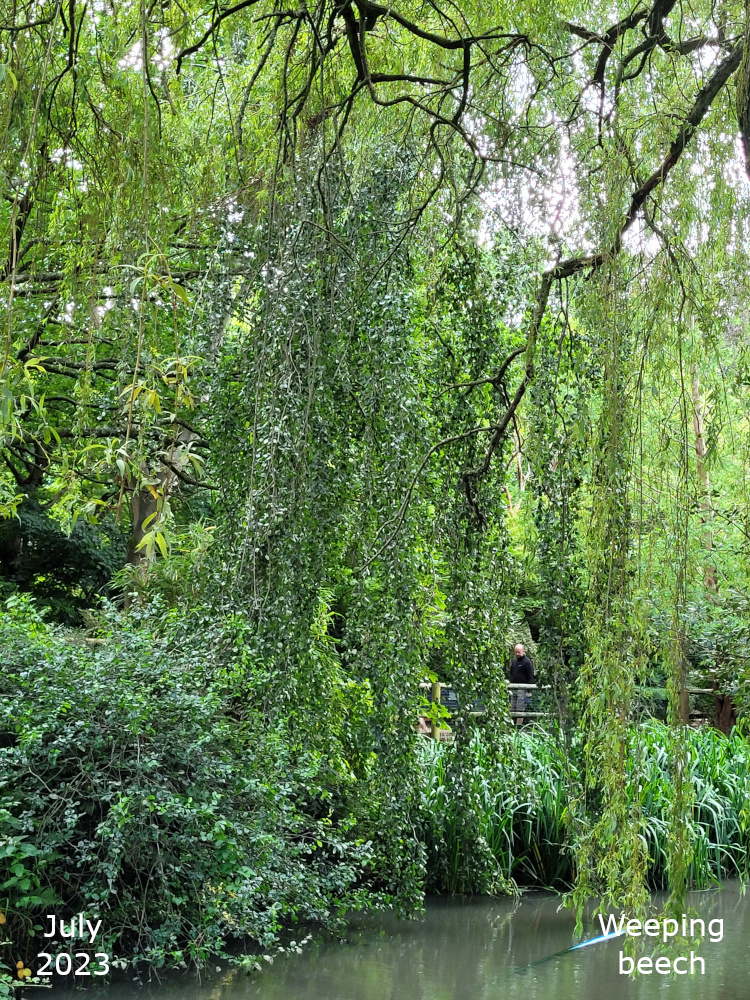
There are two beech trees right on the banks of the pond, sort of diagonally opposite each other. The easiest one to see is nearer grange Road car park. It’s not far from the weeping willow and both of them hang well over the pond. The one nearer the white house seems to be more crowded by the trees around it and it’s at a narrower part of the pond so it doesn’t get to hang over very far.
Bowling green
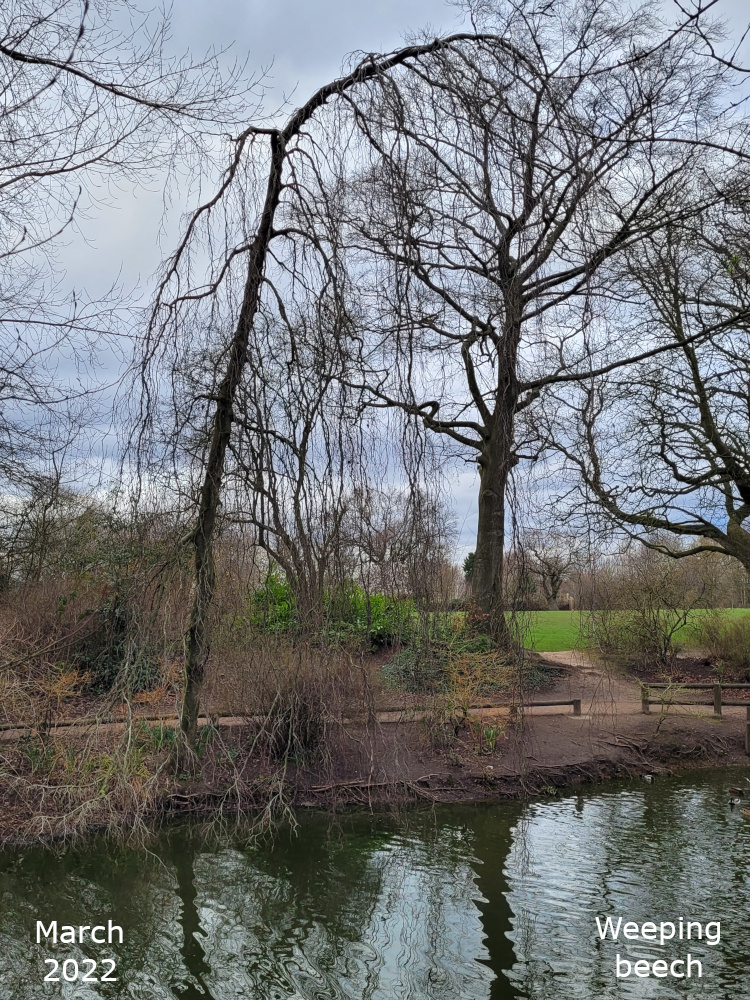
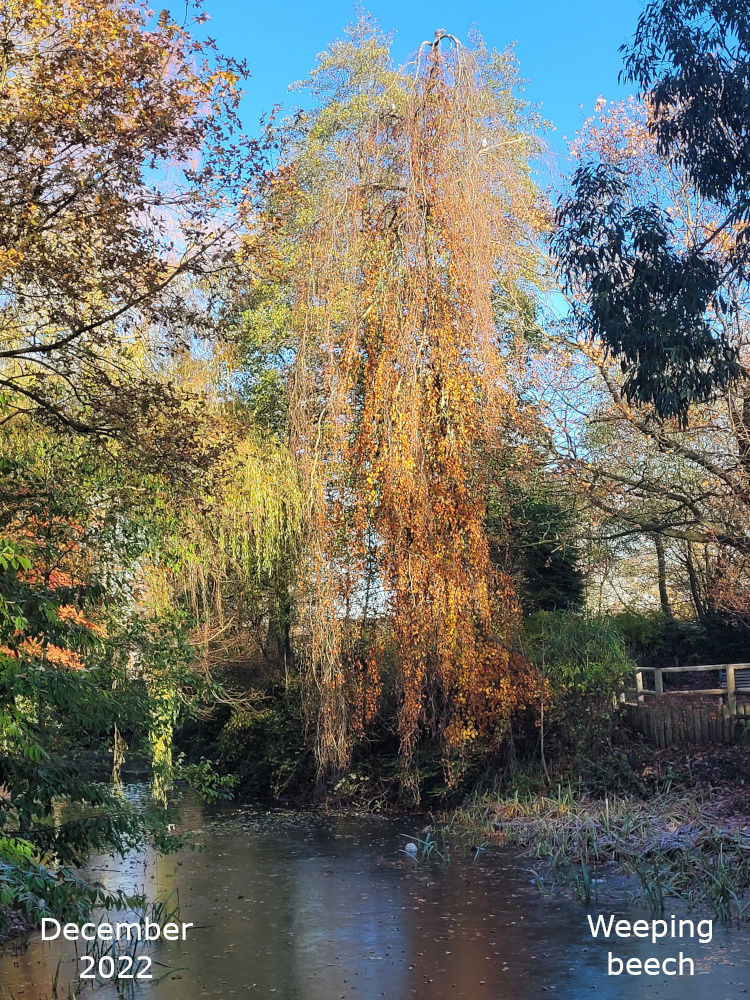
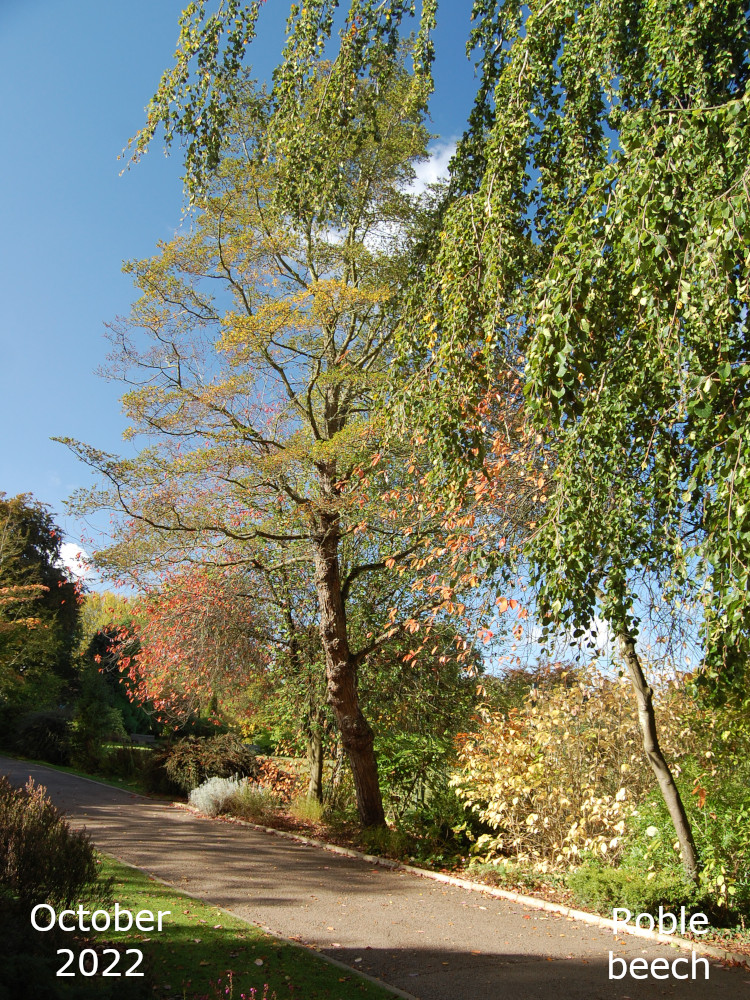
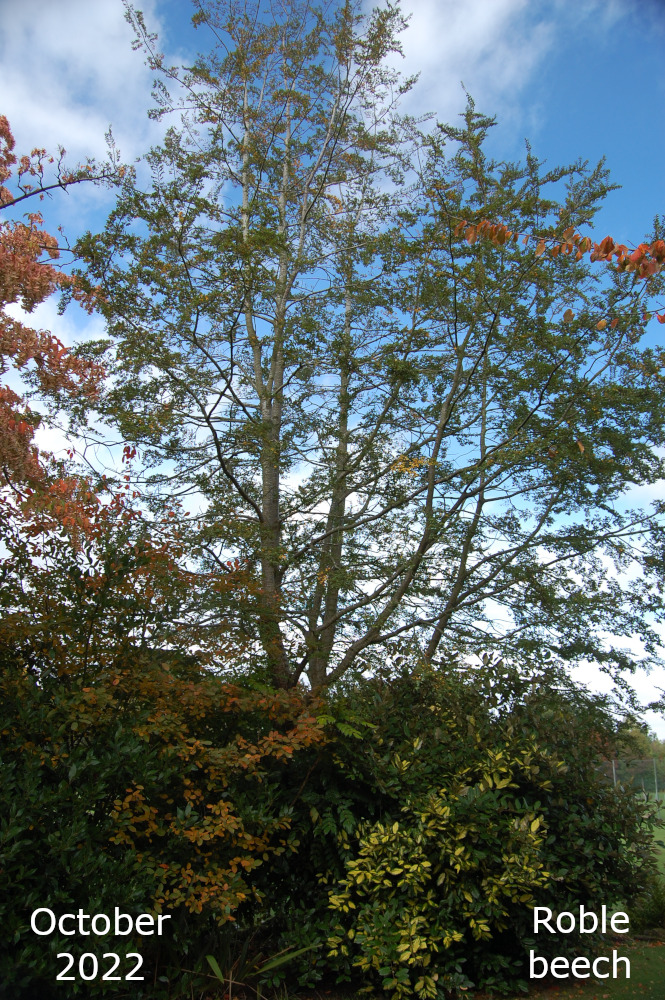
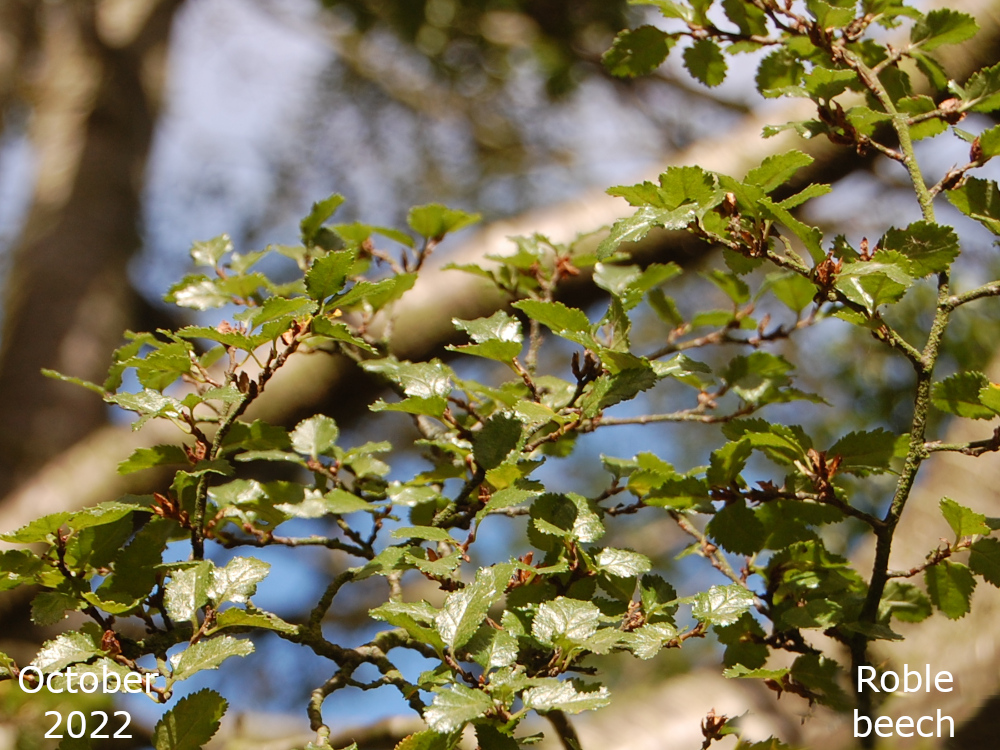
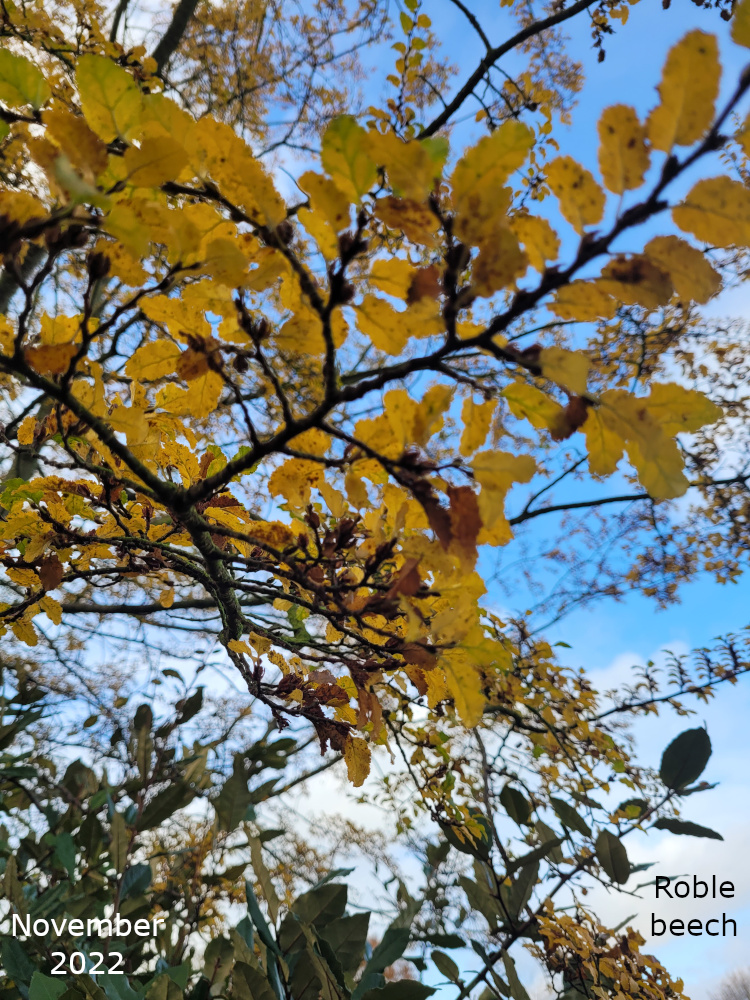
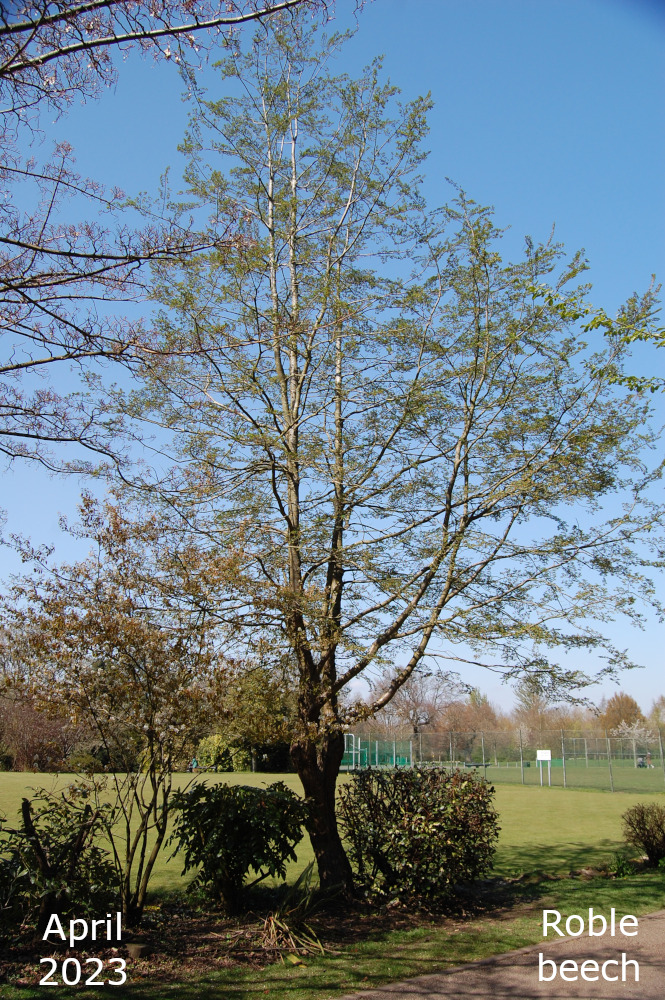
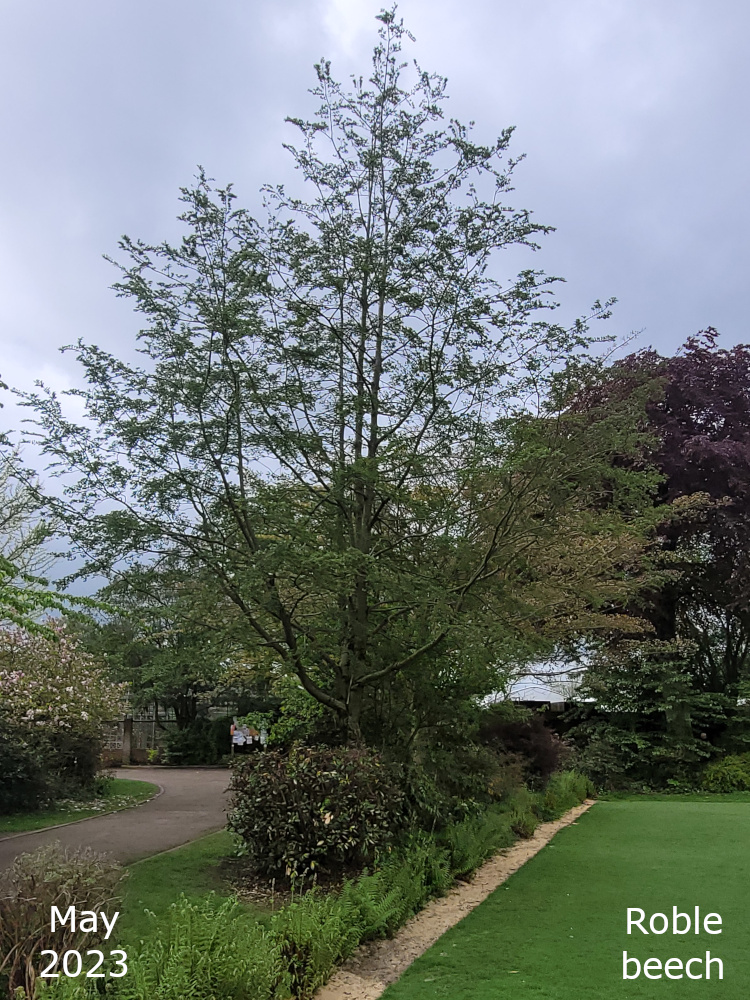
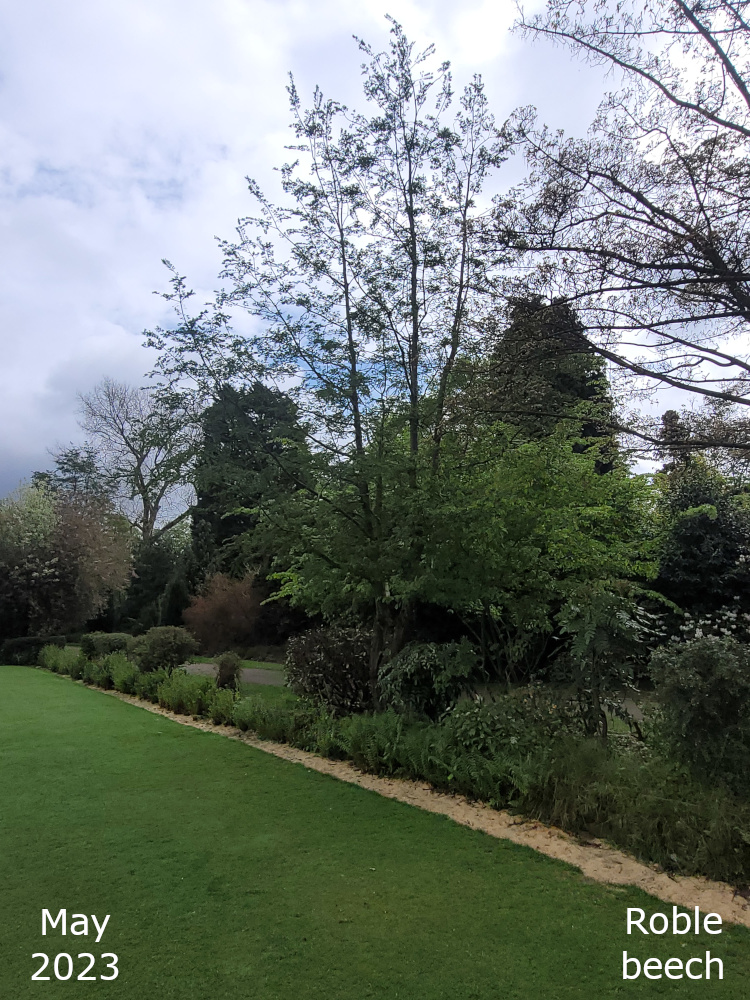
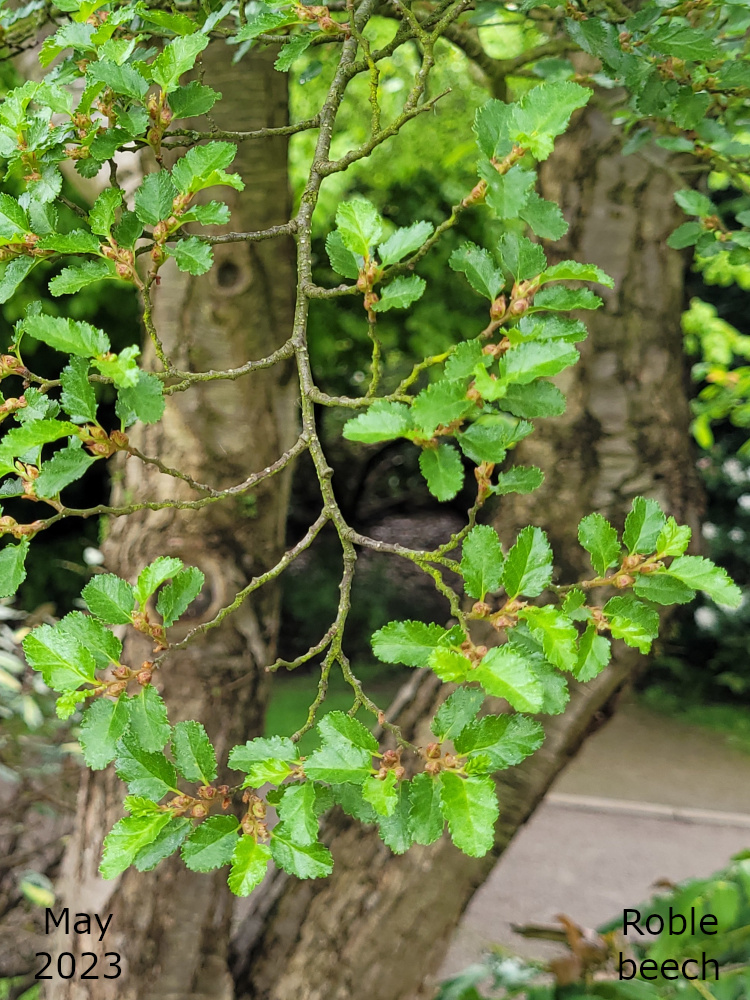
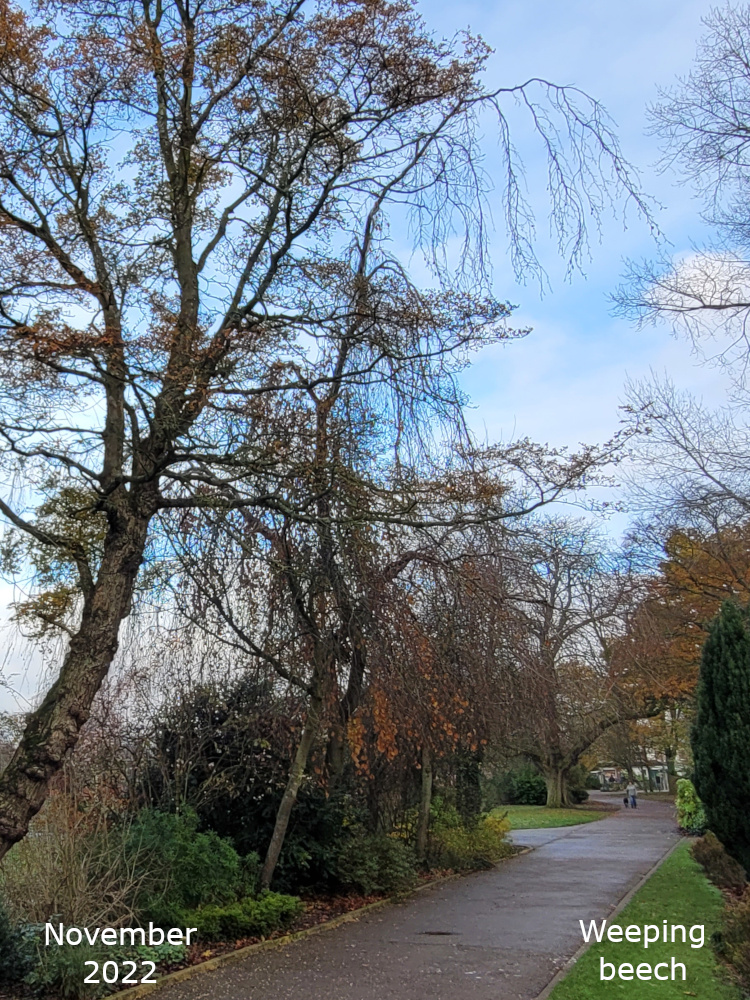
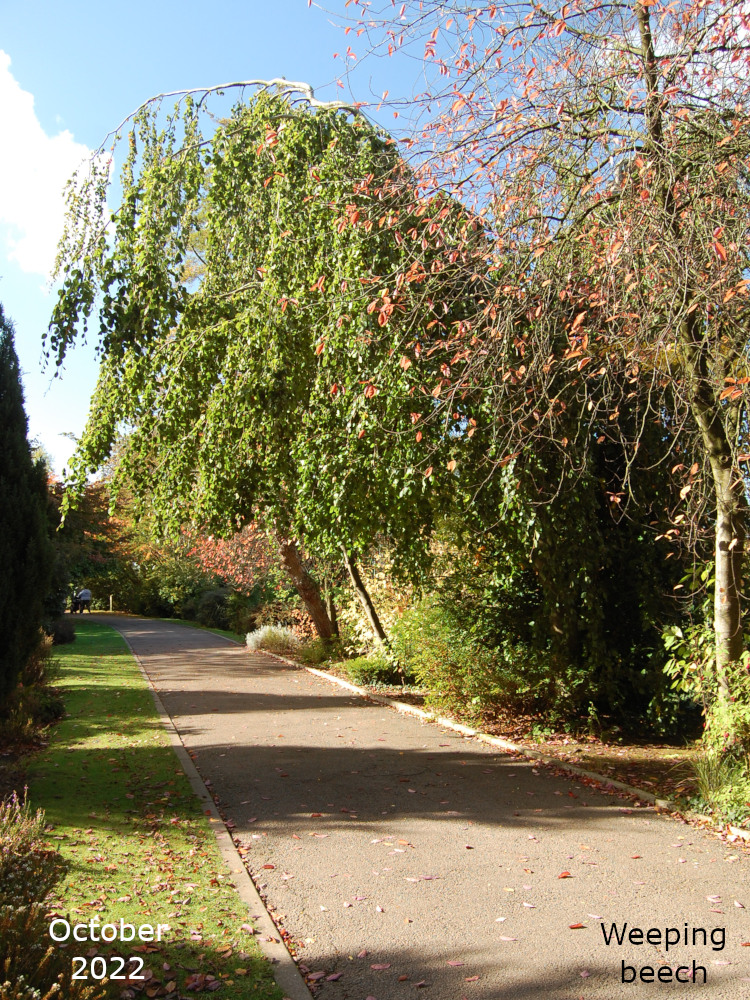
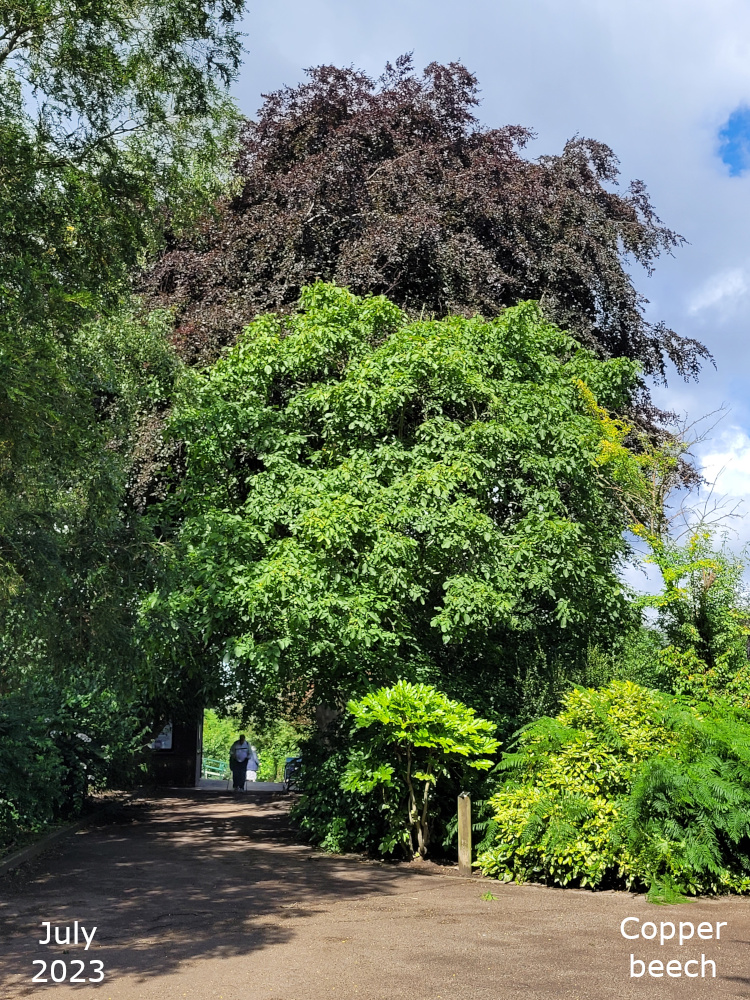
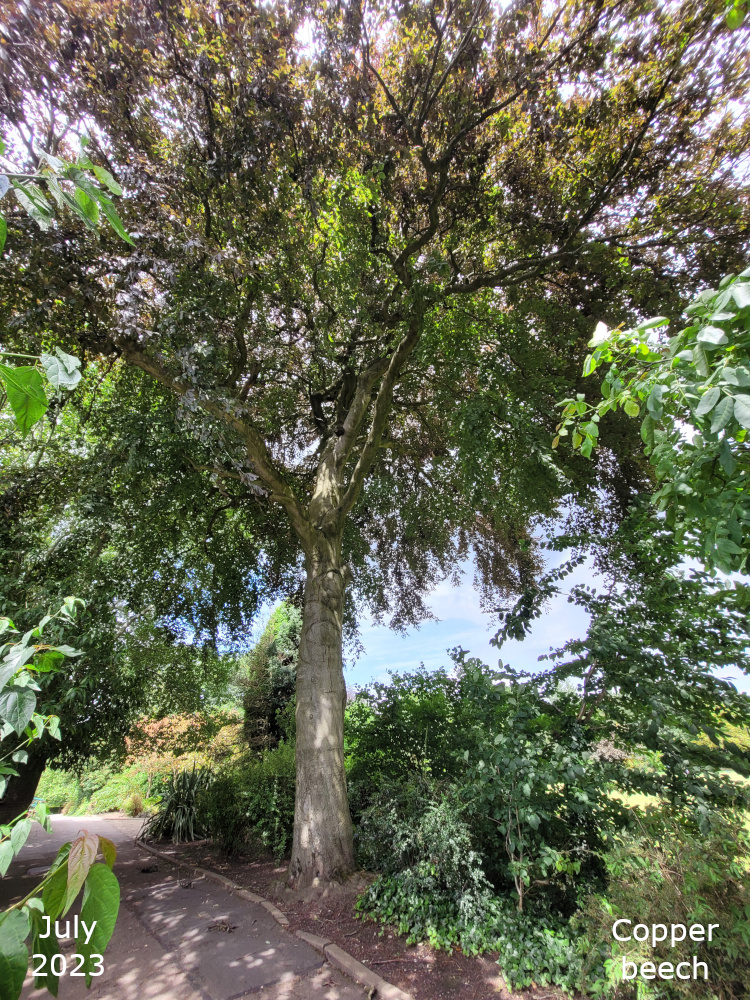
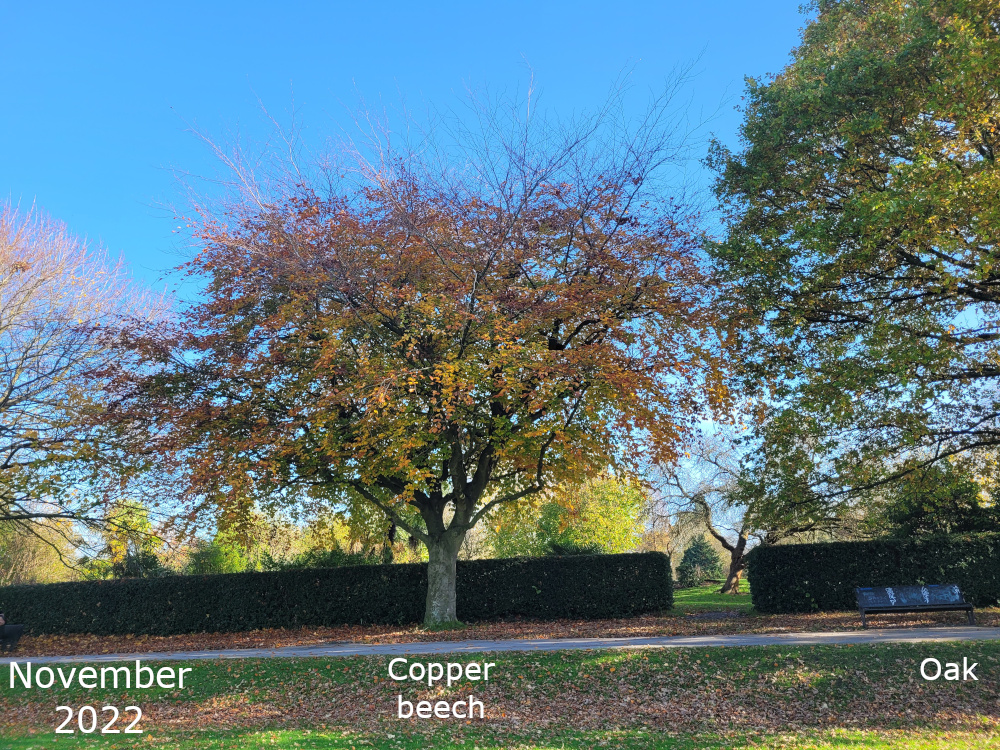
There are two ‘beeches’ on the path alongside the bowling green that are not regular beeches. They are Roble beeches, Nothofagus obliqua, and so are a different genus to all the other beeches. They are sometimes called Southern beeches but are also called Pategonian oak. They originate from Chile. Their leaves look like Beech leaves in miniature. Next to one of the Roble beech there is a Weeping beech, hanging over the path. Just round the corner from these three, on a different side of the bowling green, is an ordinary beech. Although it’s not that ordinary as it comes complete with fairy door and is in fact a Copper beech but it doesn’t always appear so.









Avenue Road, top end
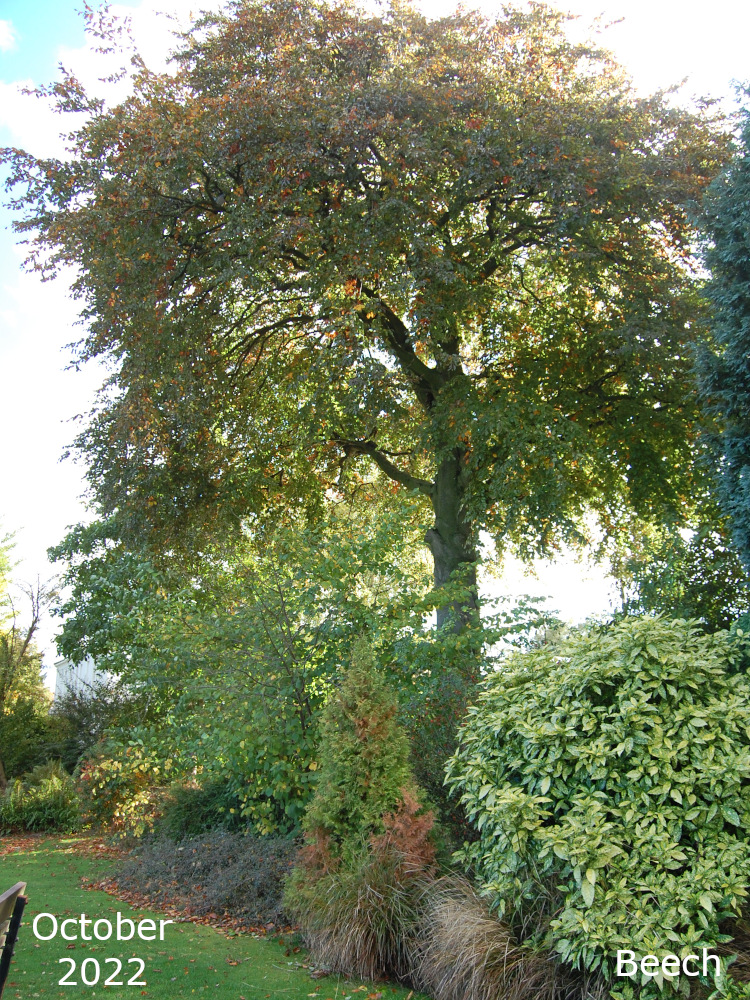
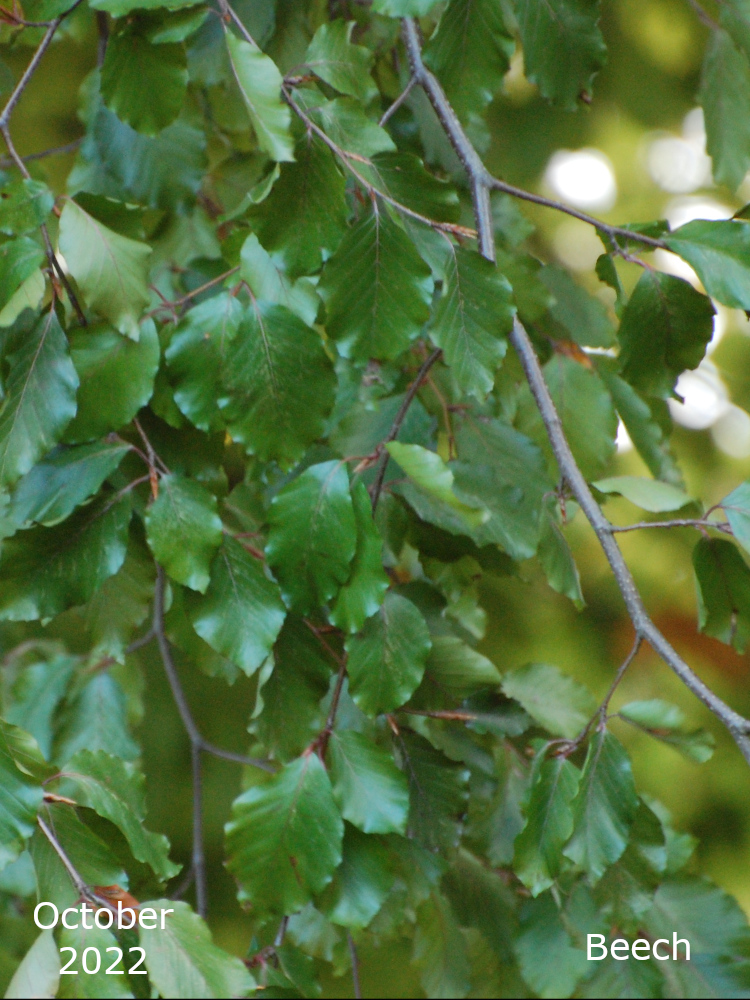
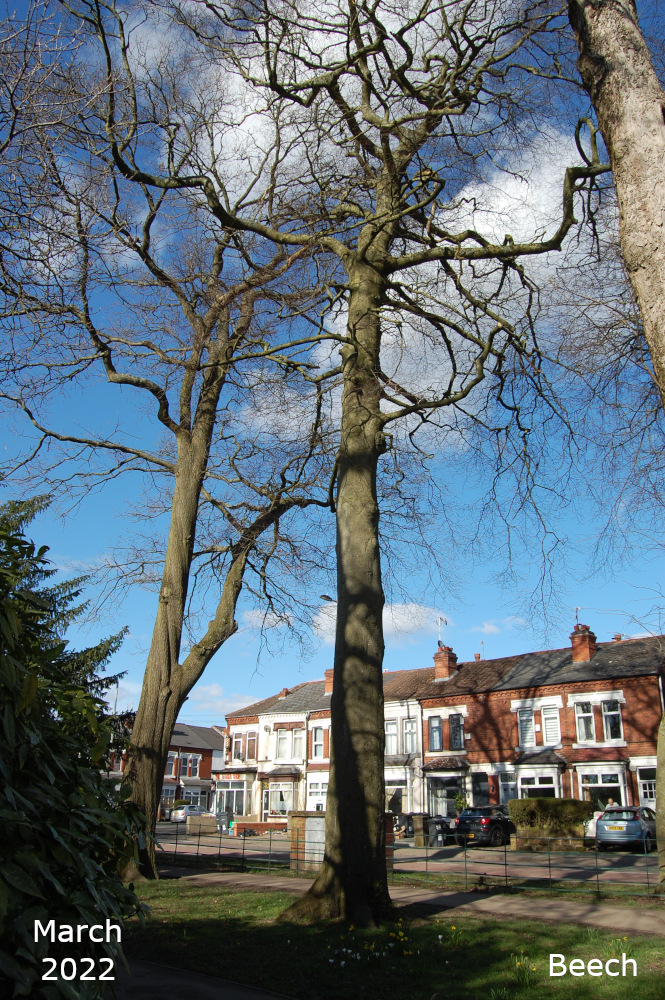
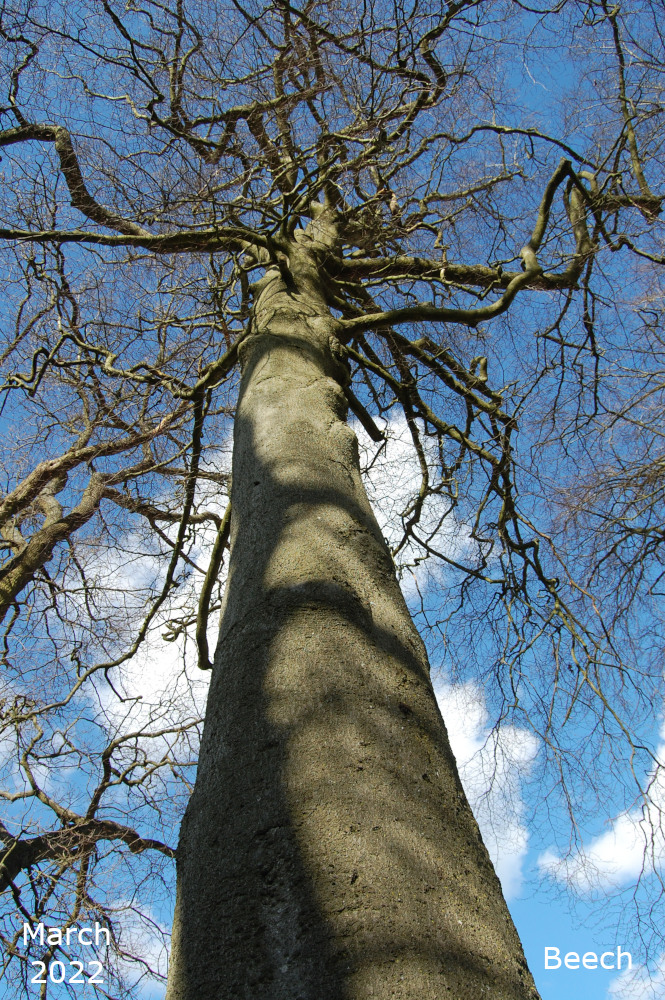
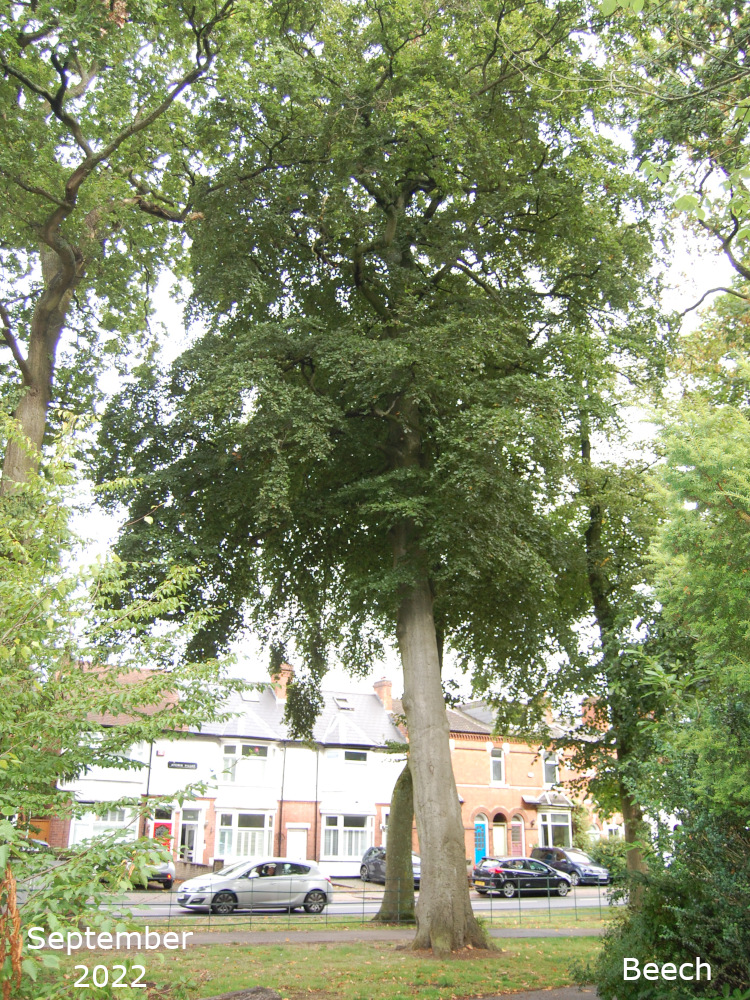
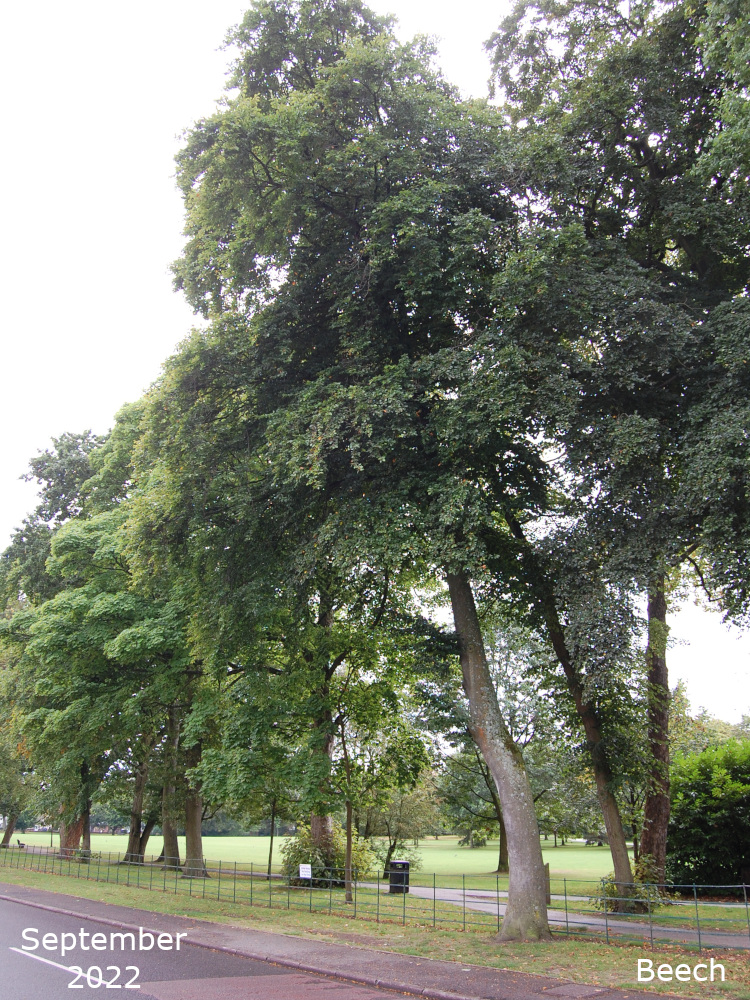
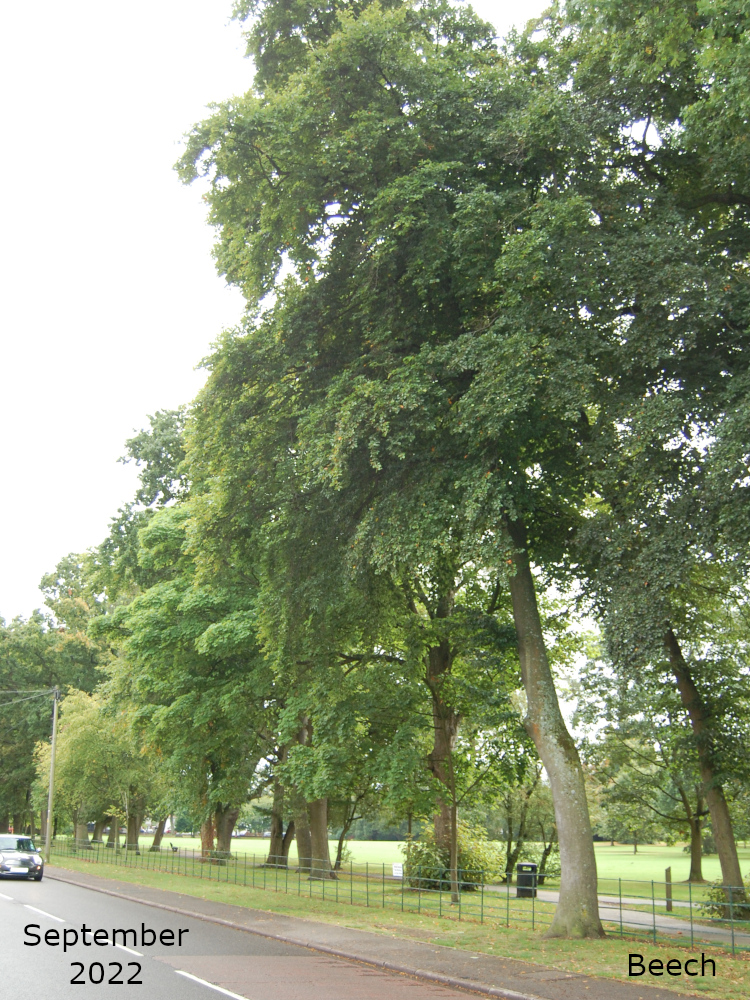
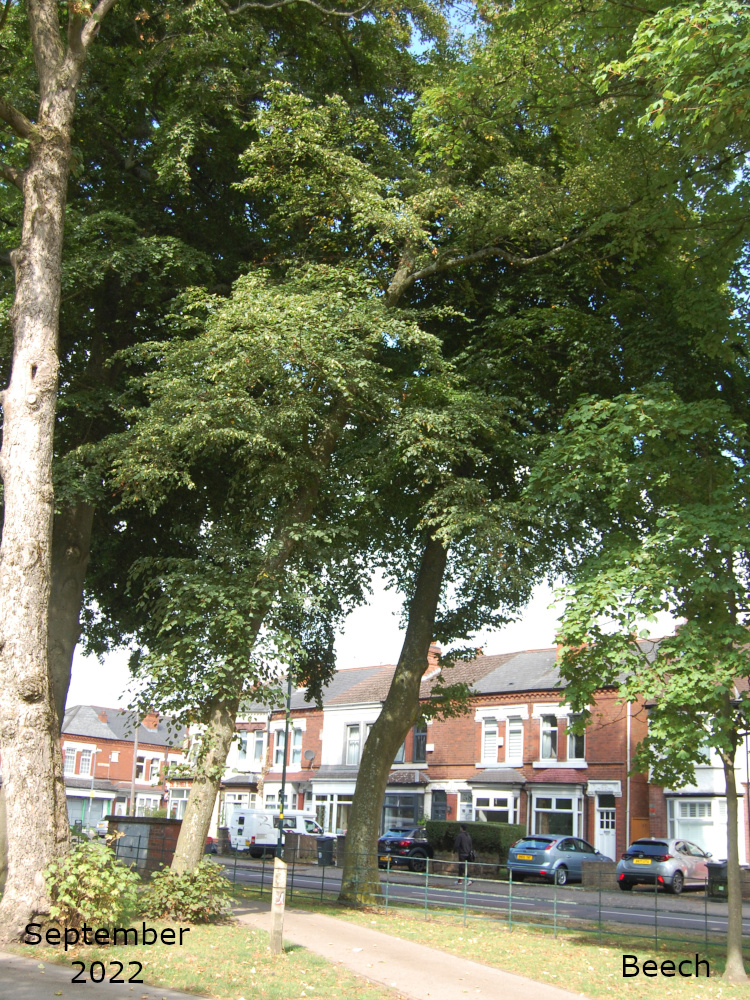
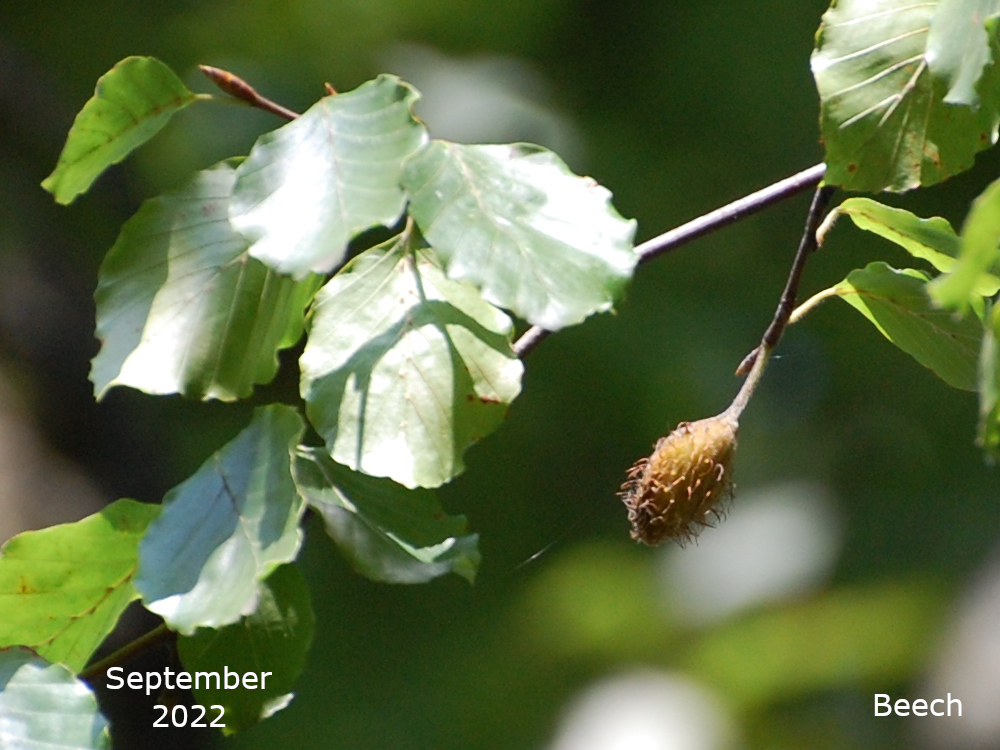
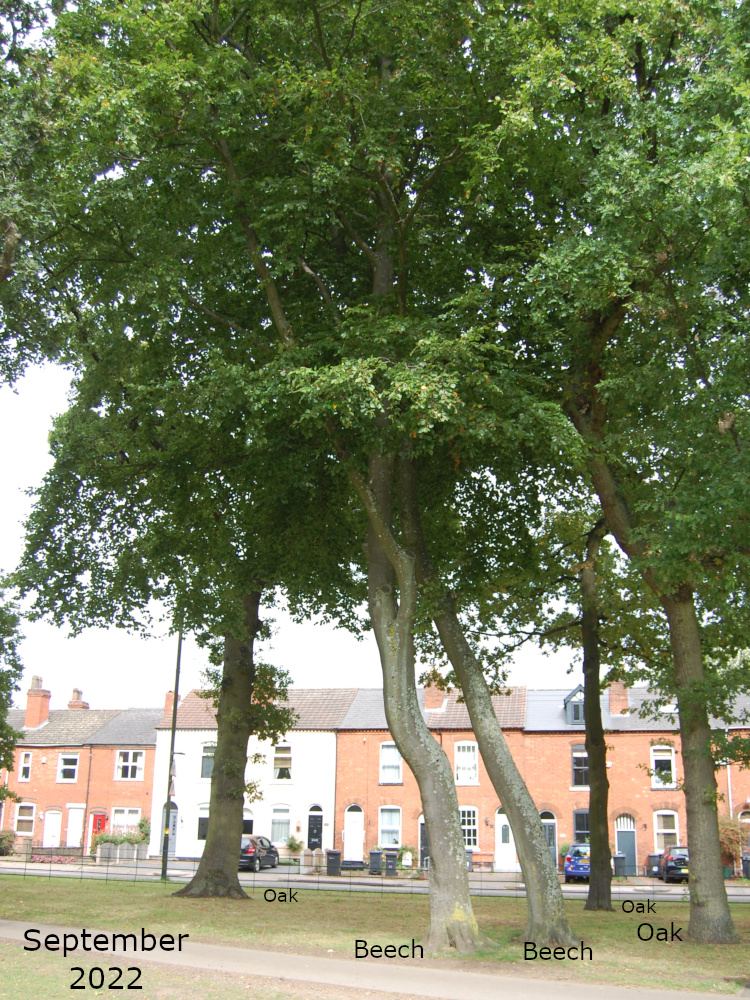
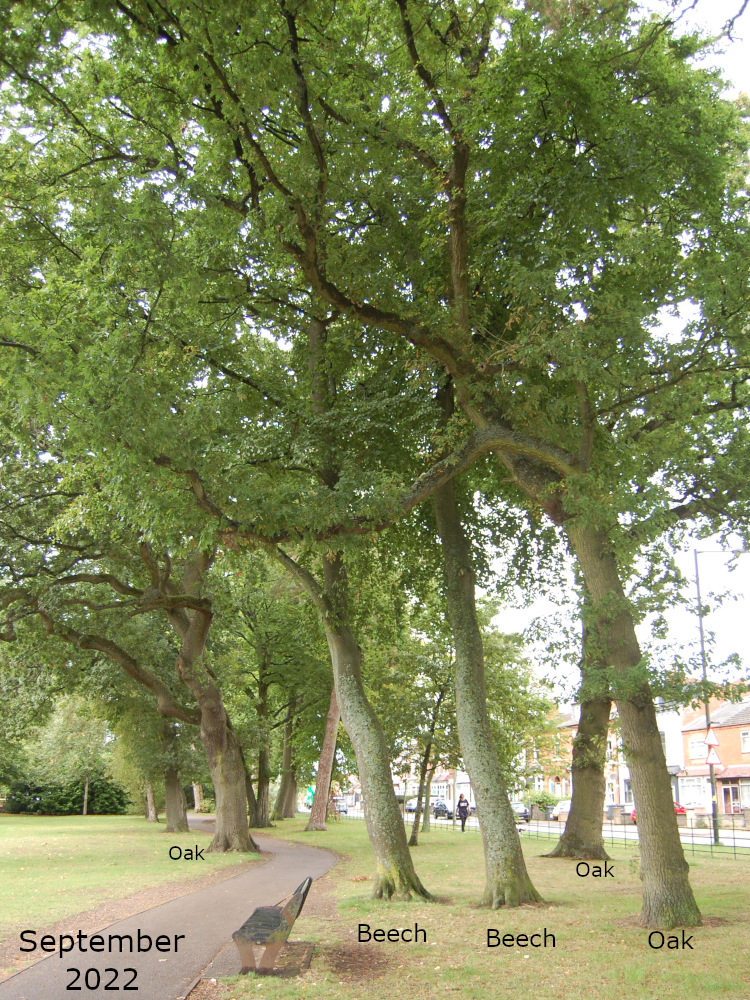
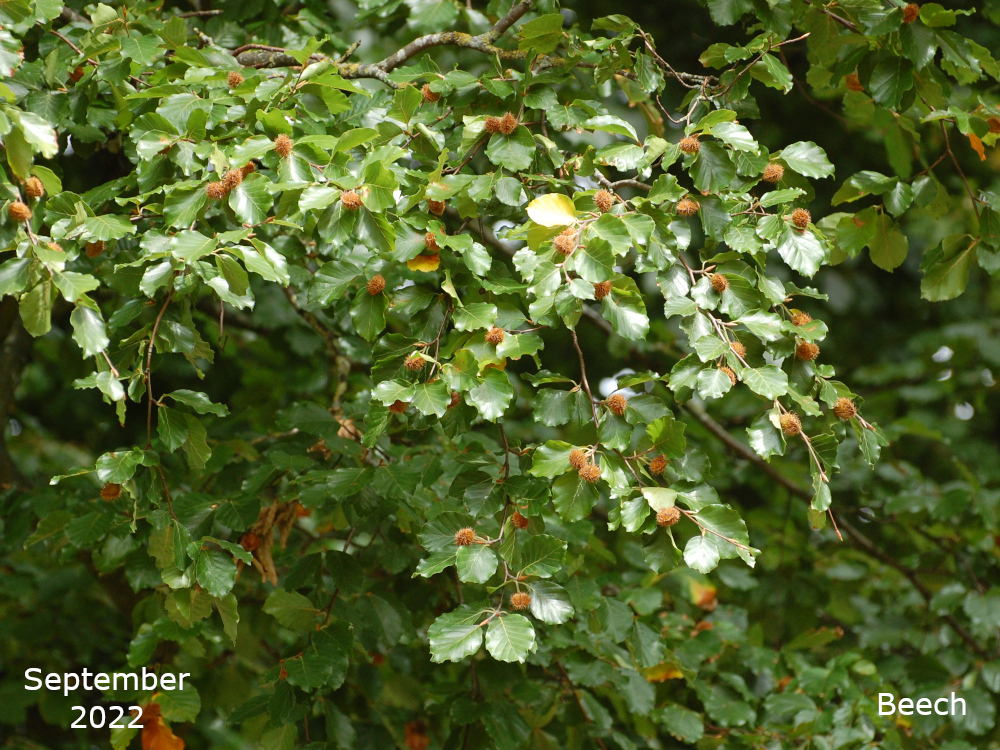
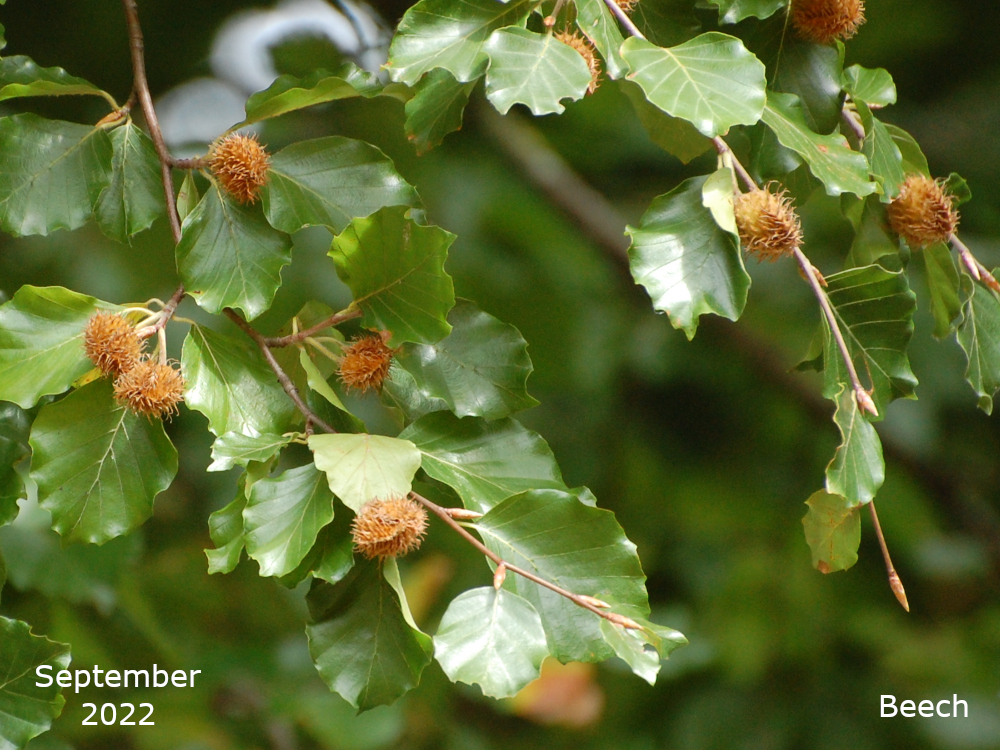
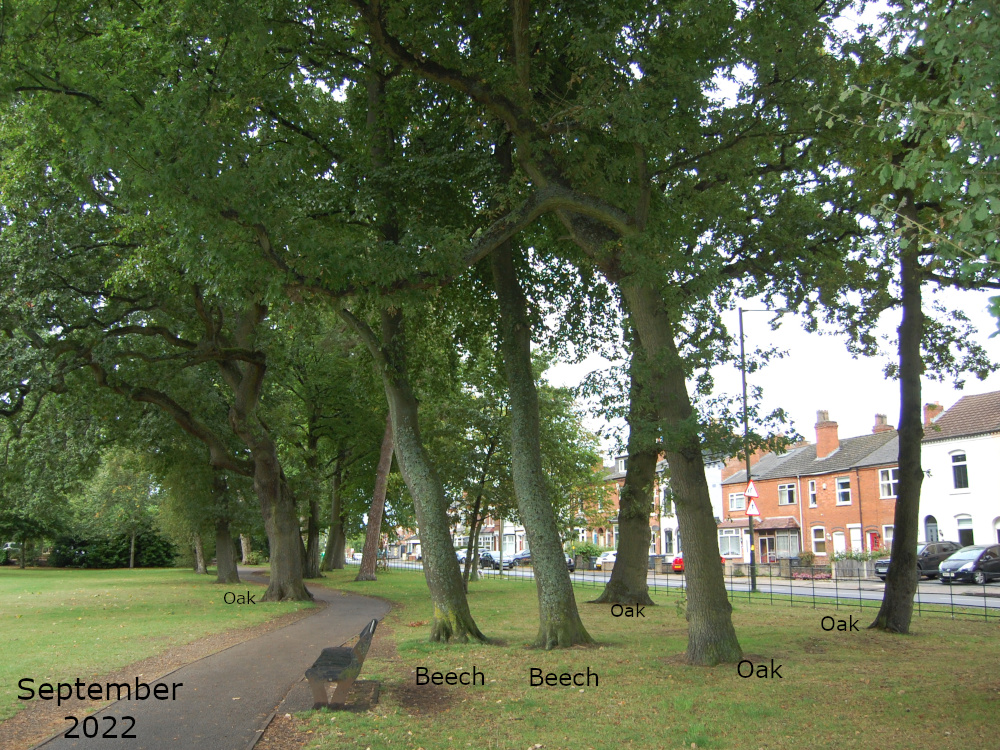
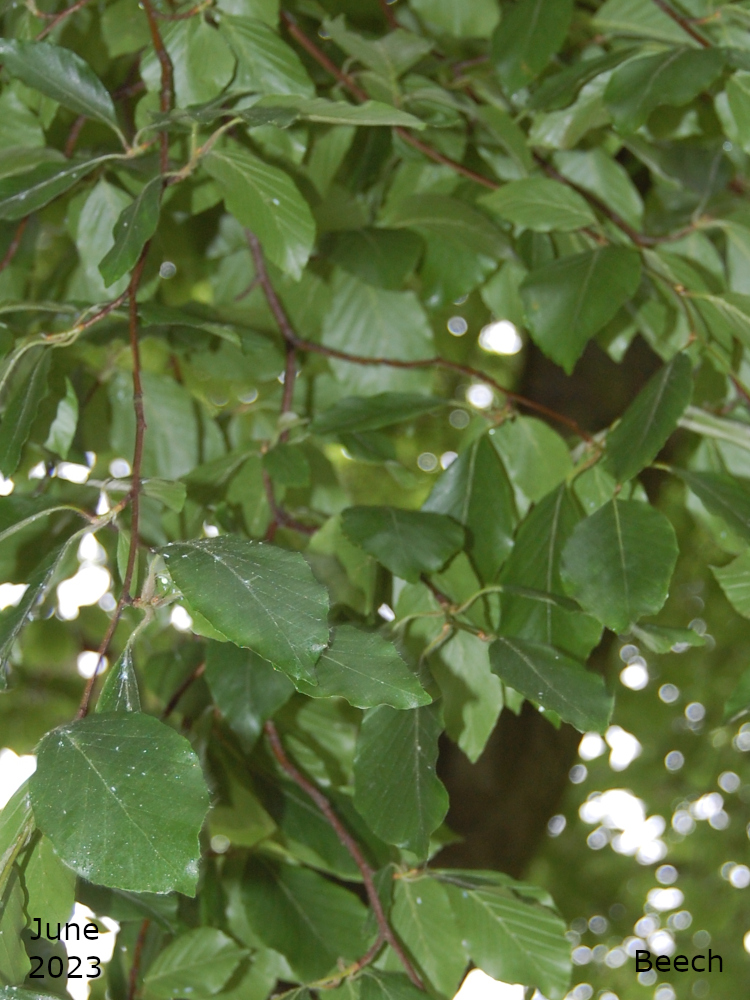
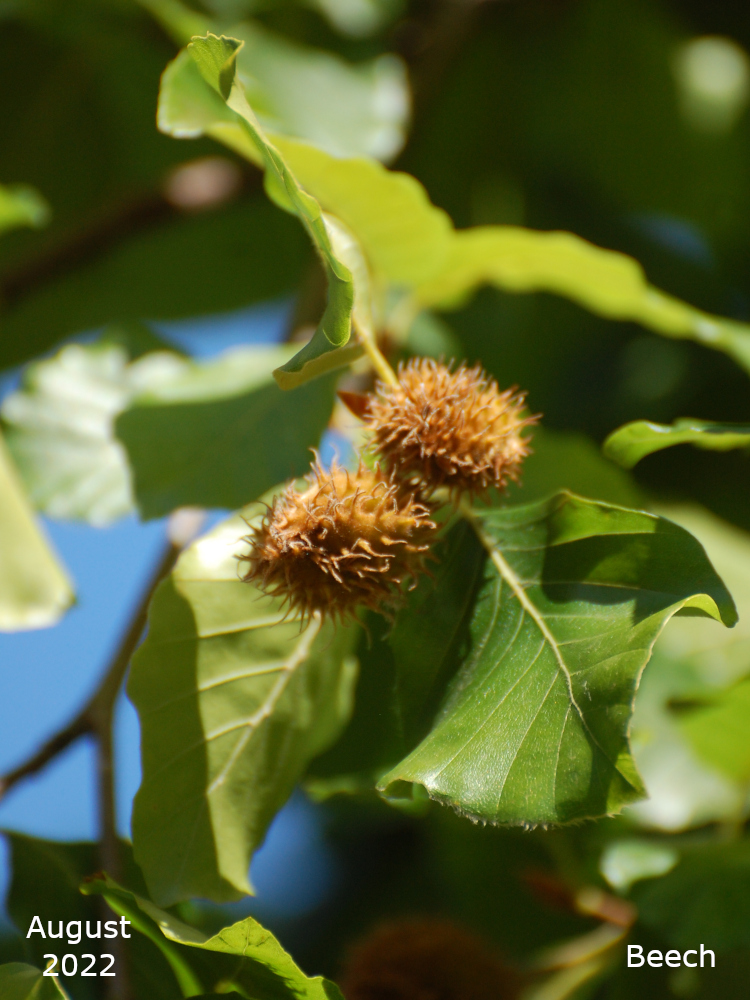
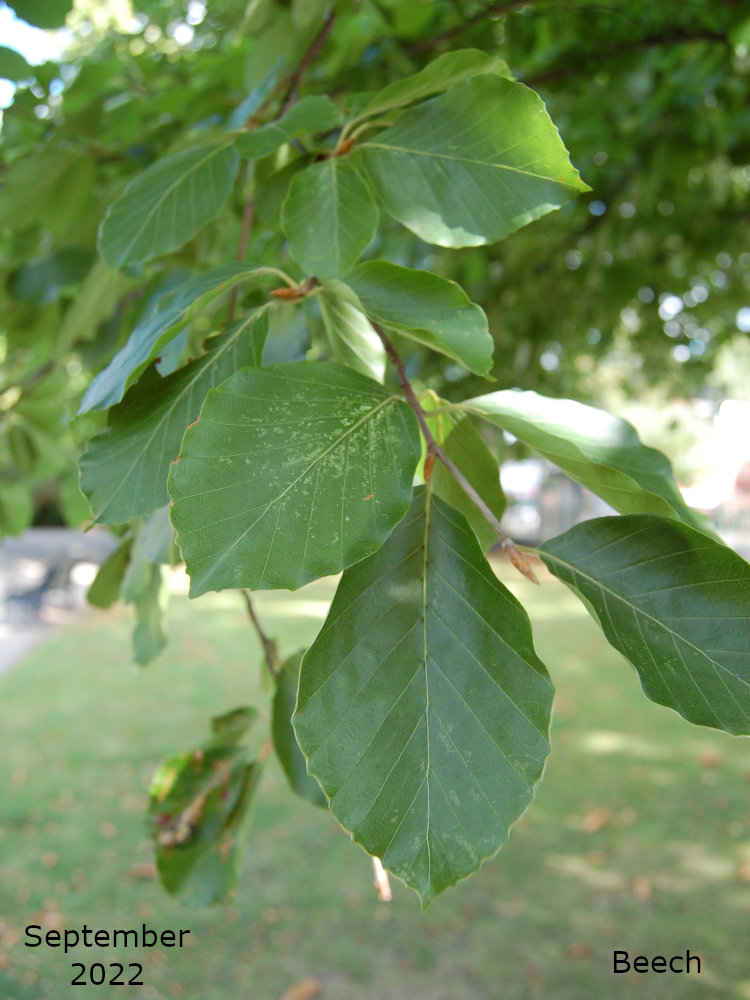
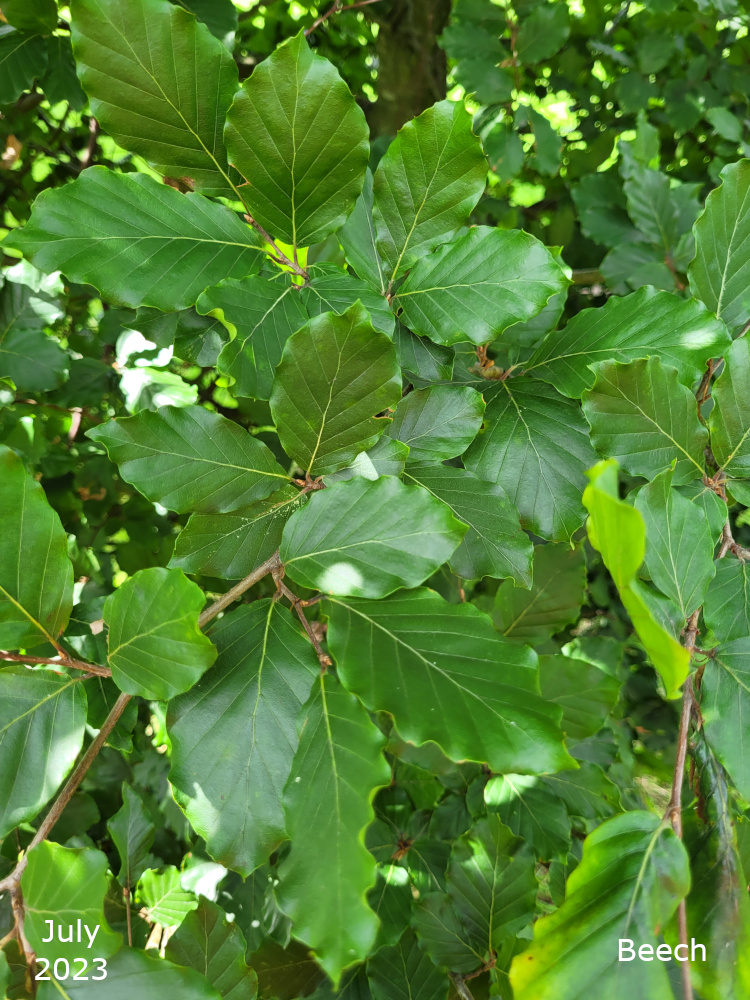
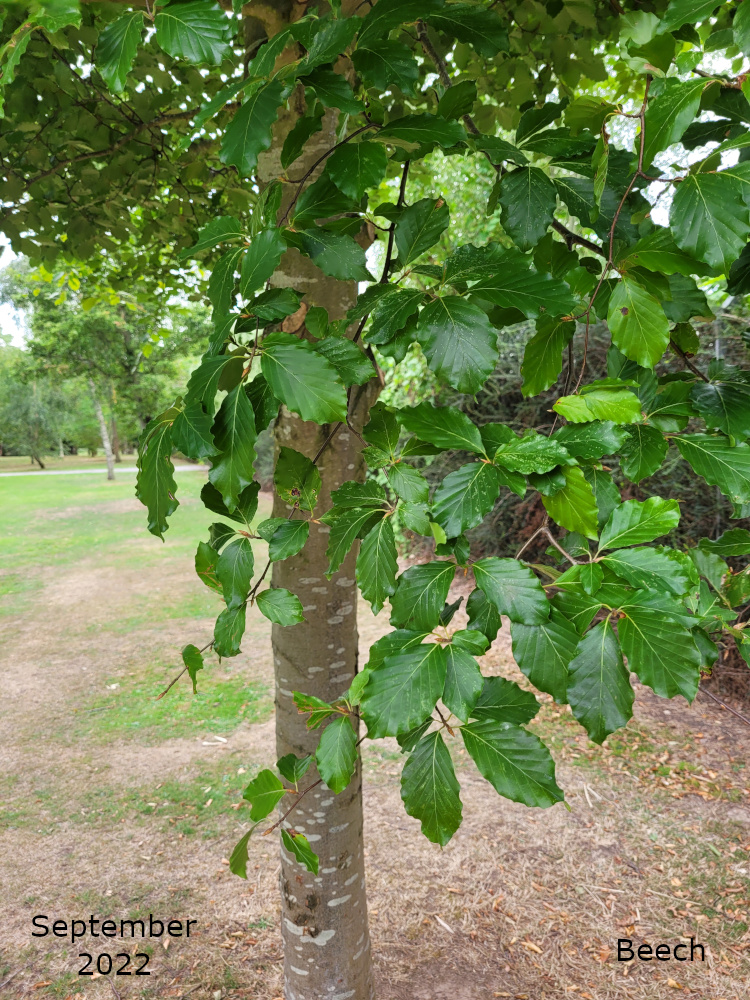
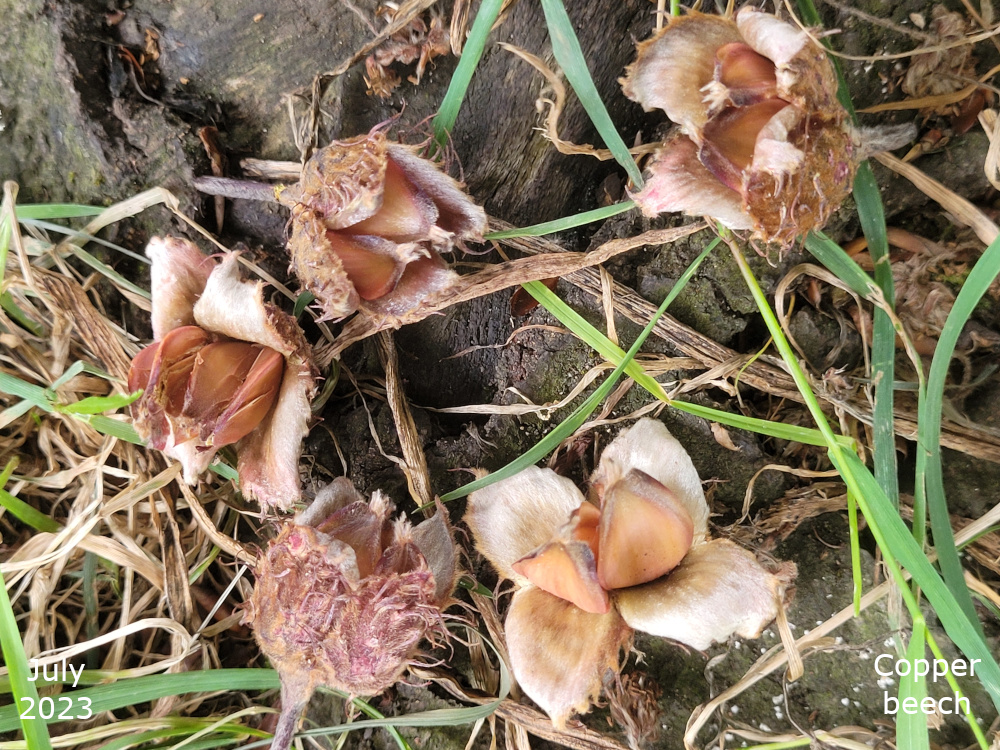
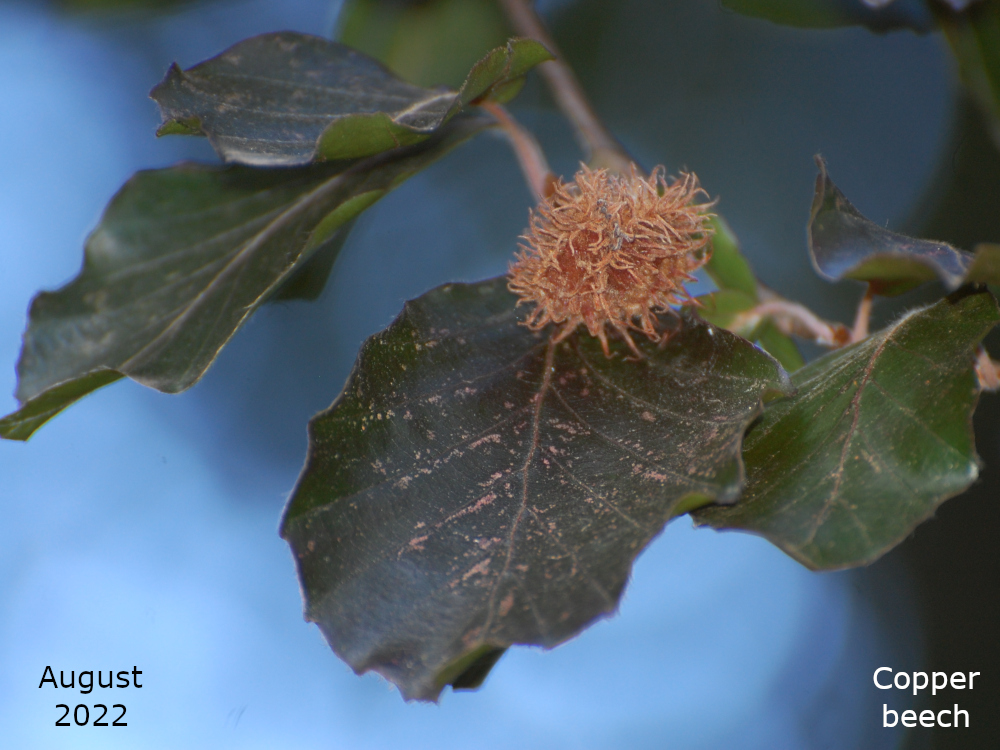
As you walk out of the car park towards Avenue Road there is a large Beech tree in the space between the two paths. There is another one just over the fence. A short walk down the path and there is a sizeable Beech opposite some Hawthorns, then just before one of the benches two more beeches, together, on the edge of the path. The Beeches should be recognisable by their smooth bark, smooth oval leaves with pointed tip and from mid summer onwards brown spiky masts. Often the masts will split and fall to the ground and the pyramid shaped nuts are then revealed – if the squirrels haven’t had them.


Avenue Road, middle to bottom
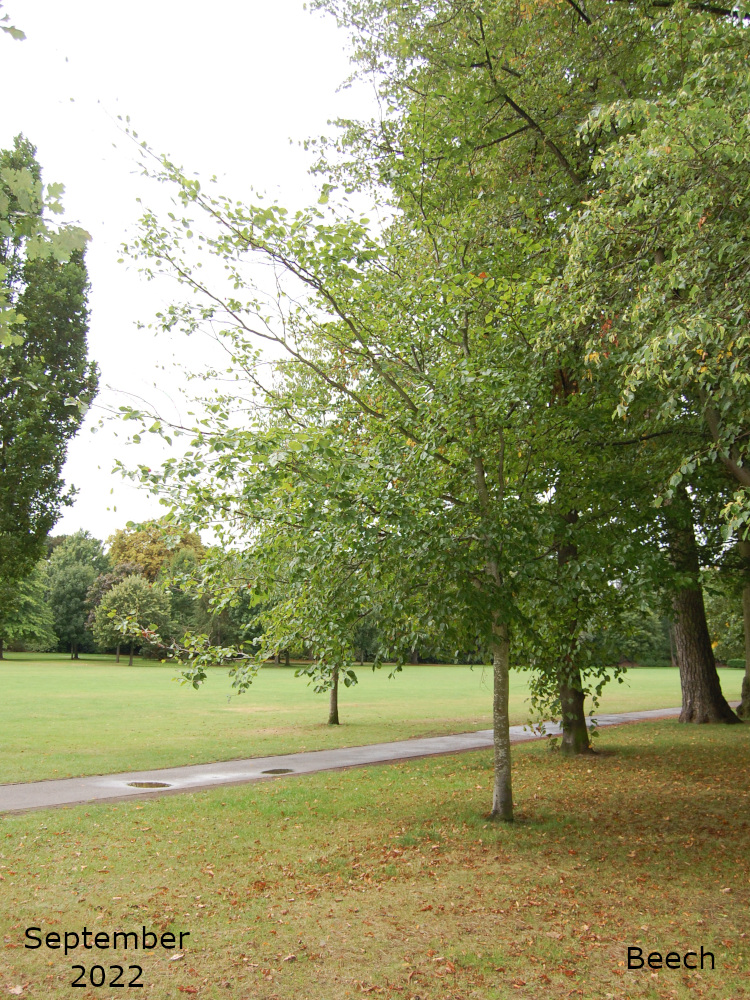
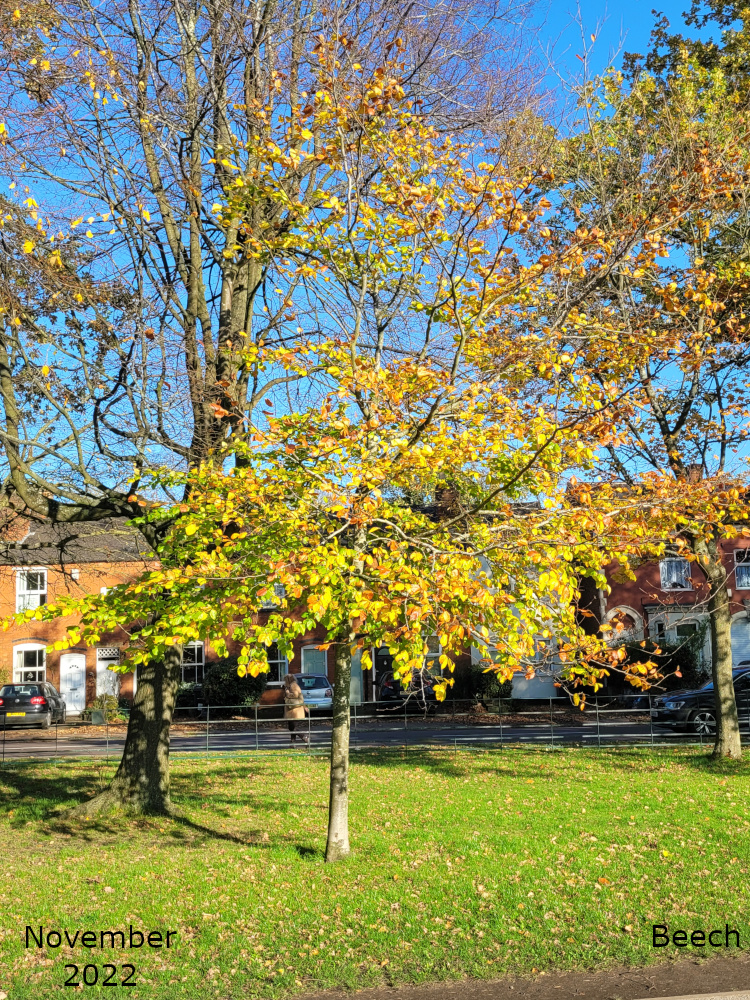
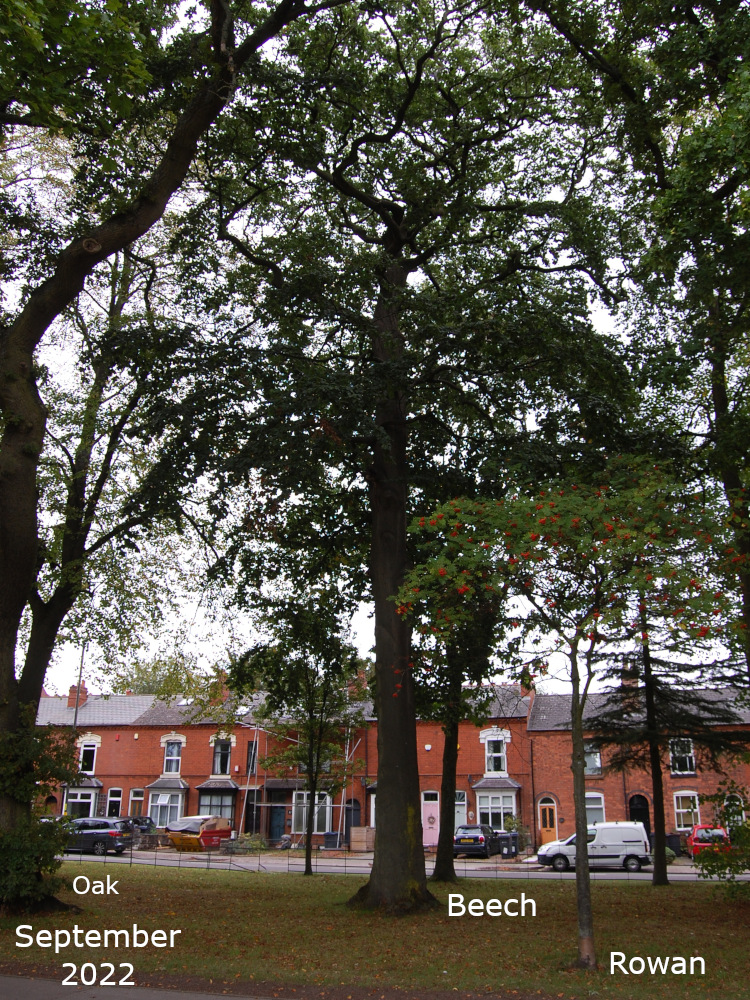
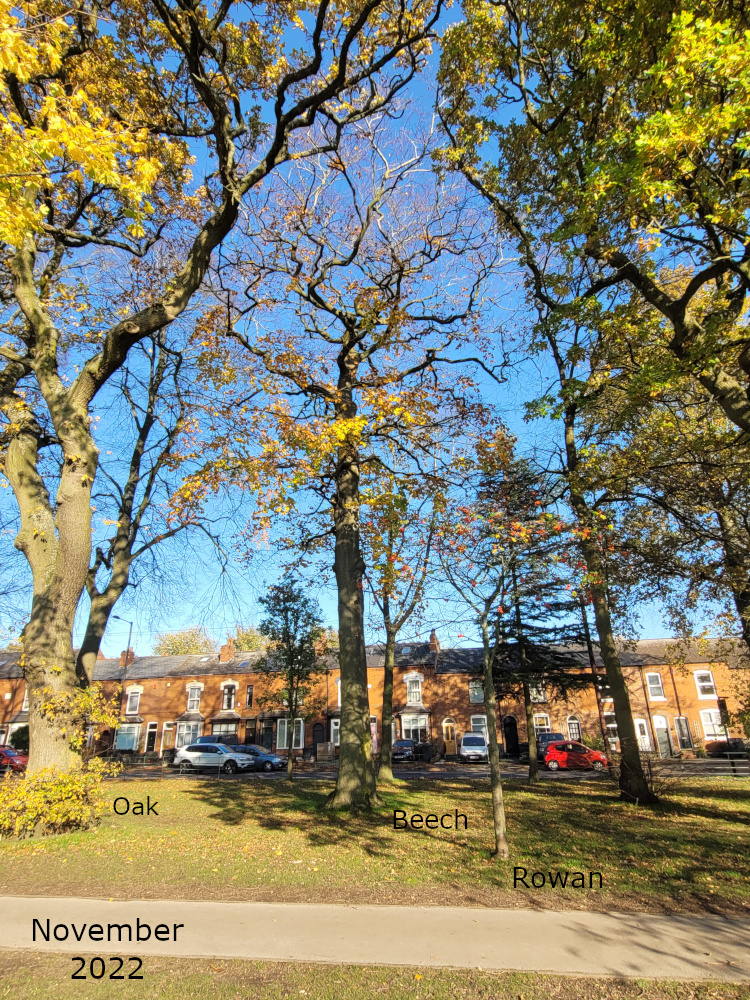
About half-way along the path there is a Cypress oak on the field side of the path and opposite that there is a small Beech tree. Keep walking down the grassy area and almost at the end you get level with an evergreen tree by the fence – a Deodar cedar. Between that tree and the Small Rowan, by the path, is a tall, twisted Beech. The last Beech in this section is a bit further along, about level with the slide, in the playground.


Vicarage Road
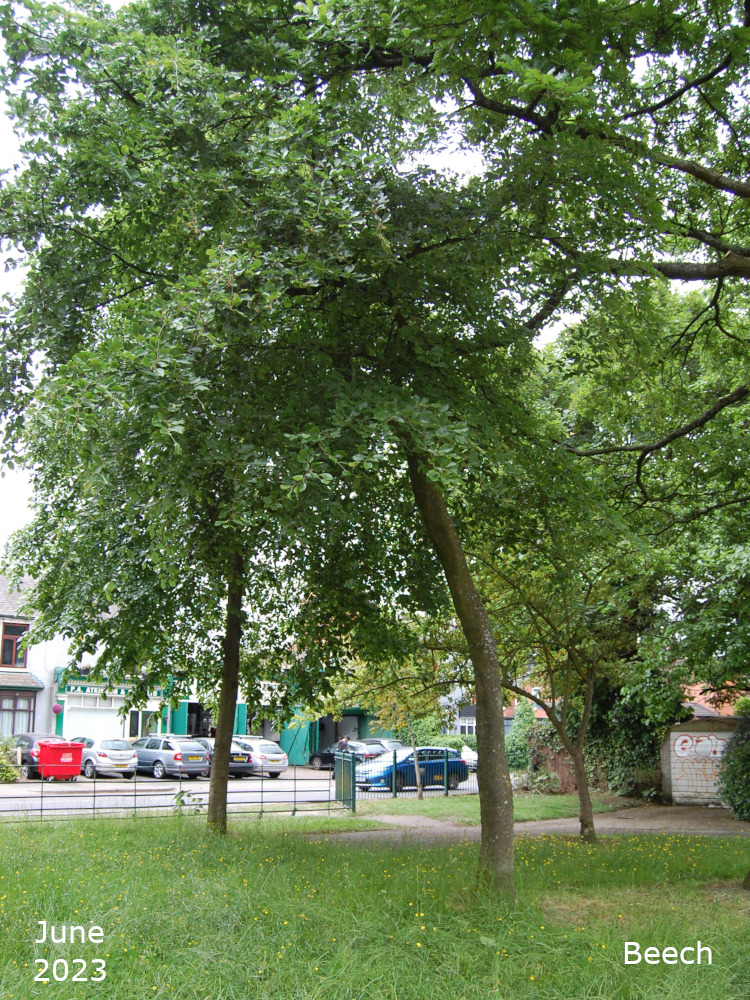
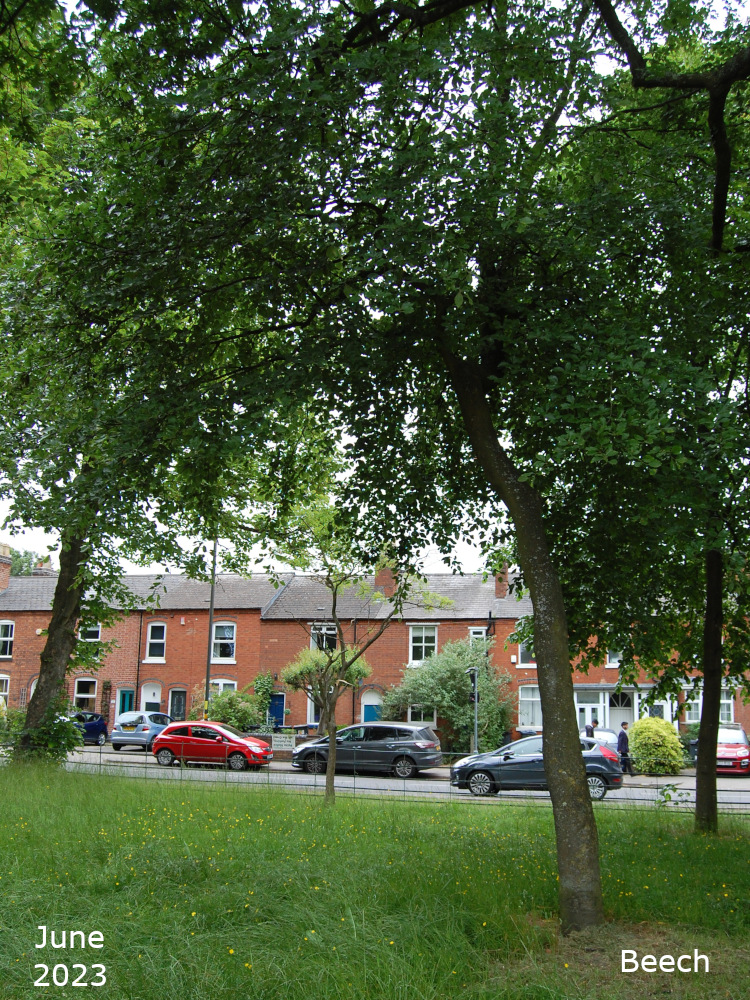
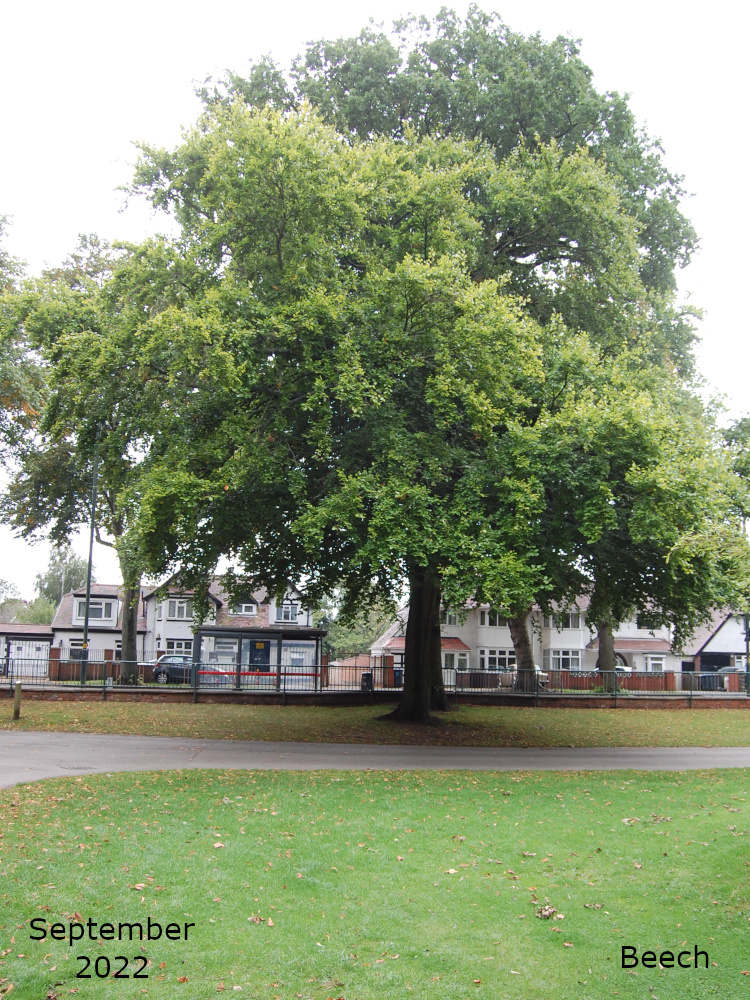
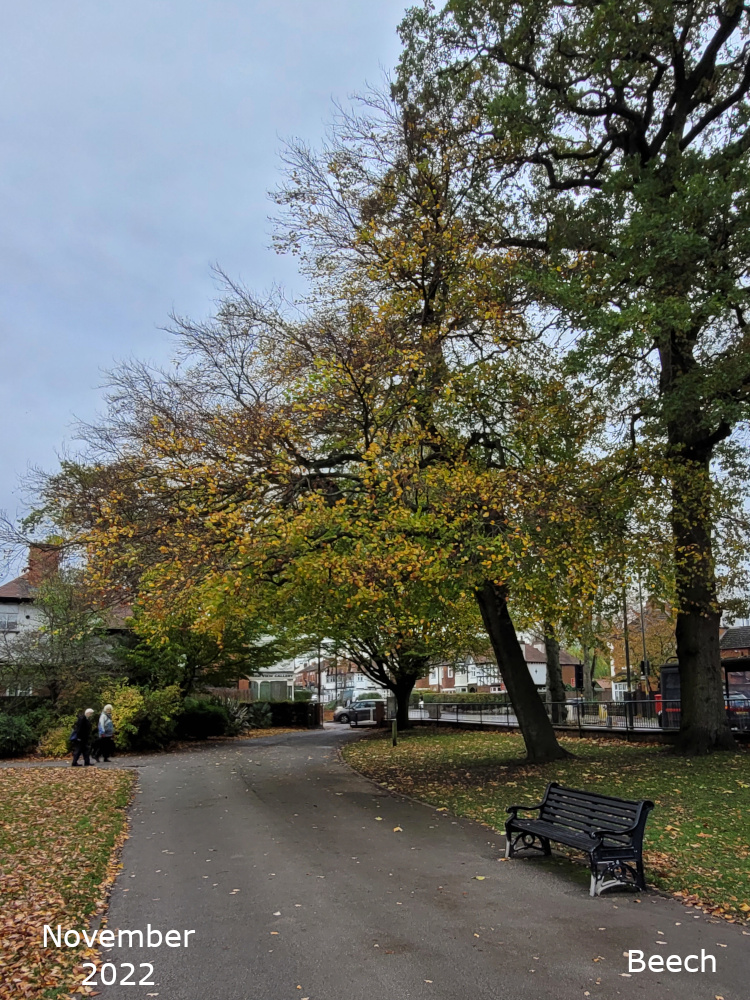
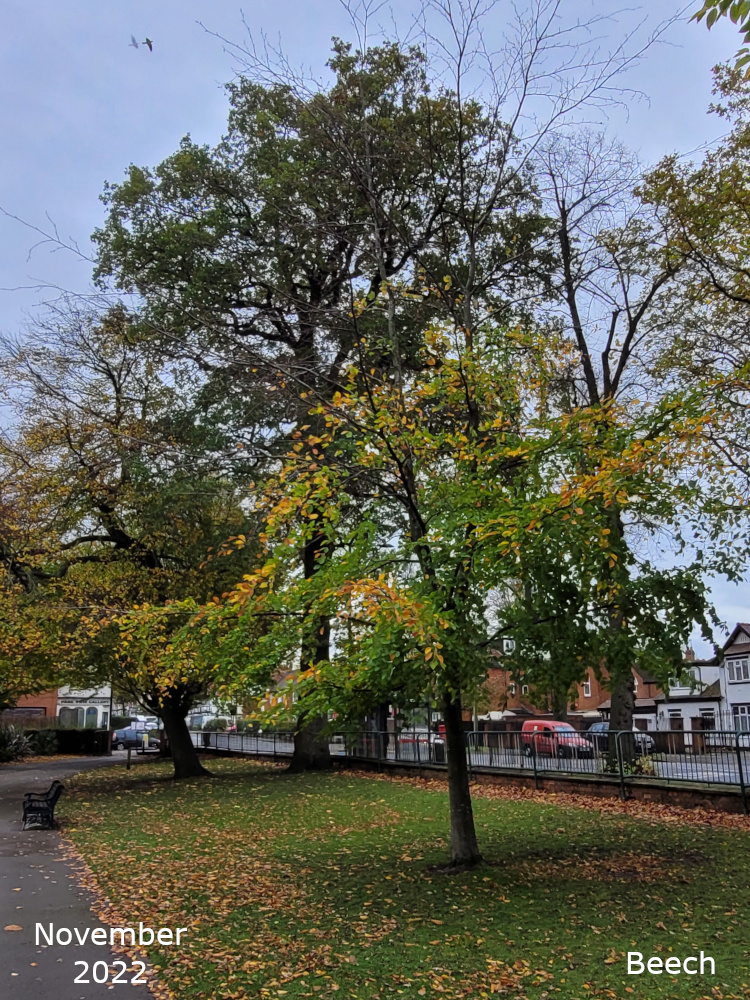
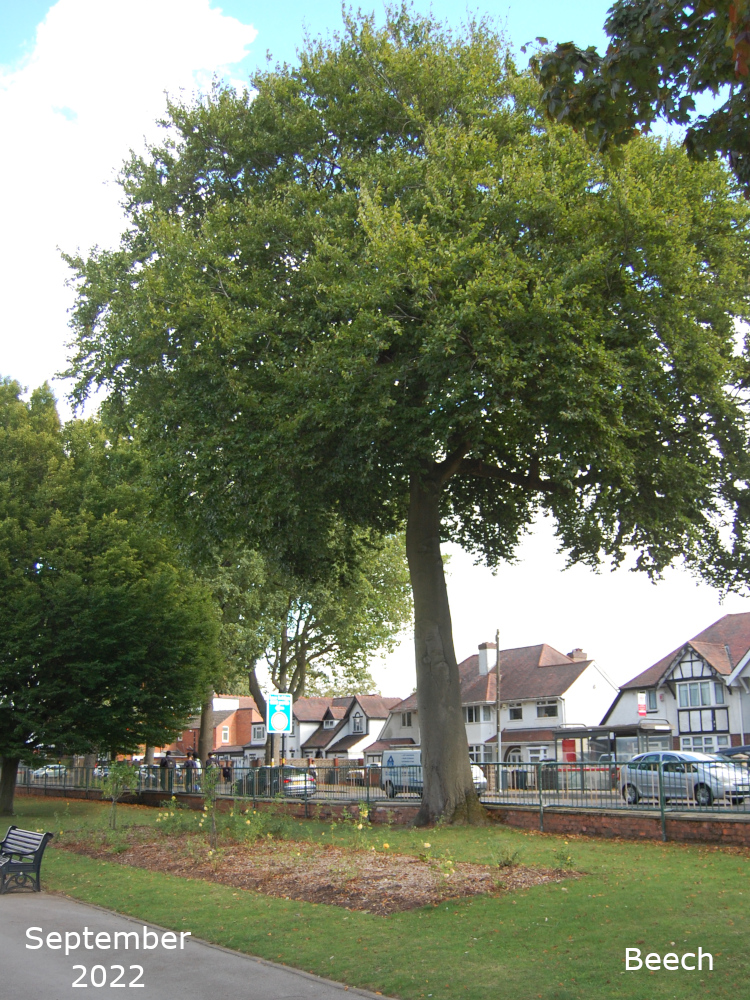
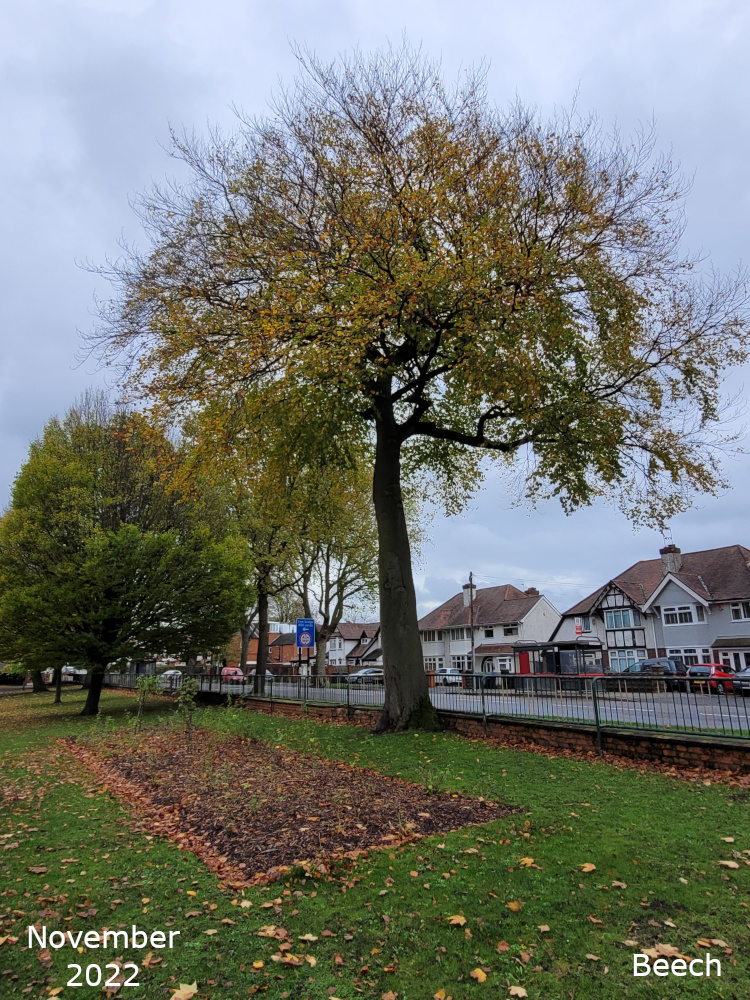
There are three beech trees at the front of the park, along the path parallel with Vicarage Road.



Drive
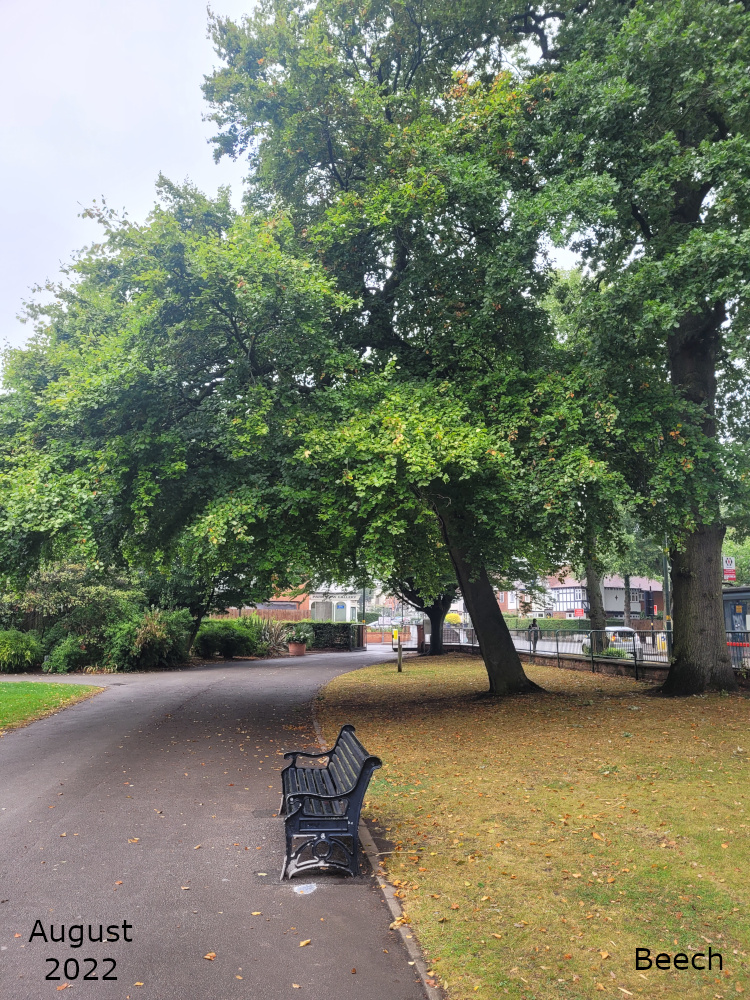
There are two Beech trees, together, in the space between the drive and the path, at the front of the park. One is a large tree and the other one, much smaller, just below it.
One of the slides shows the buds in Spring which have a characteristic cigar shape, another way of recognising Beech trees.
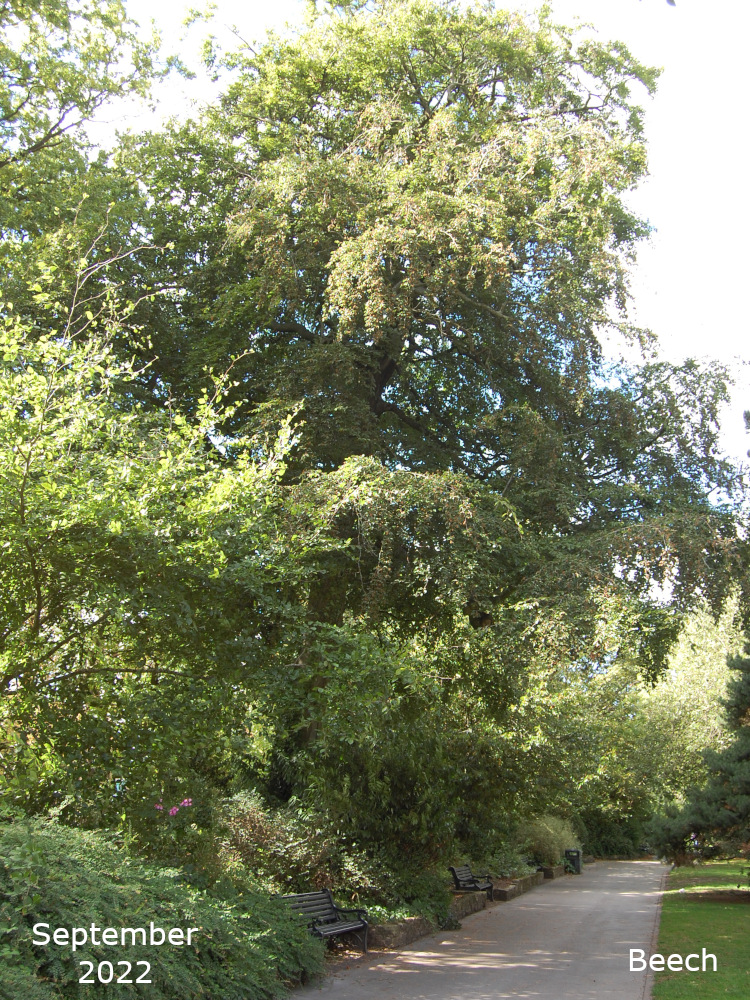

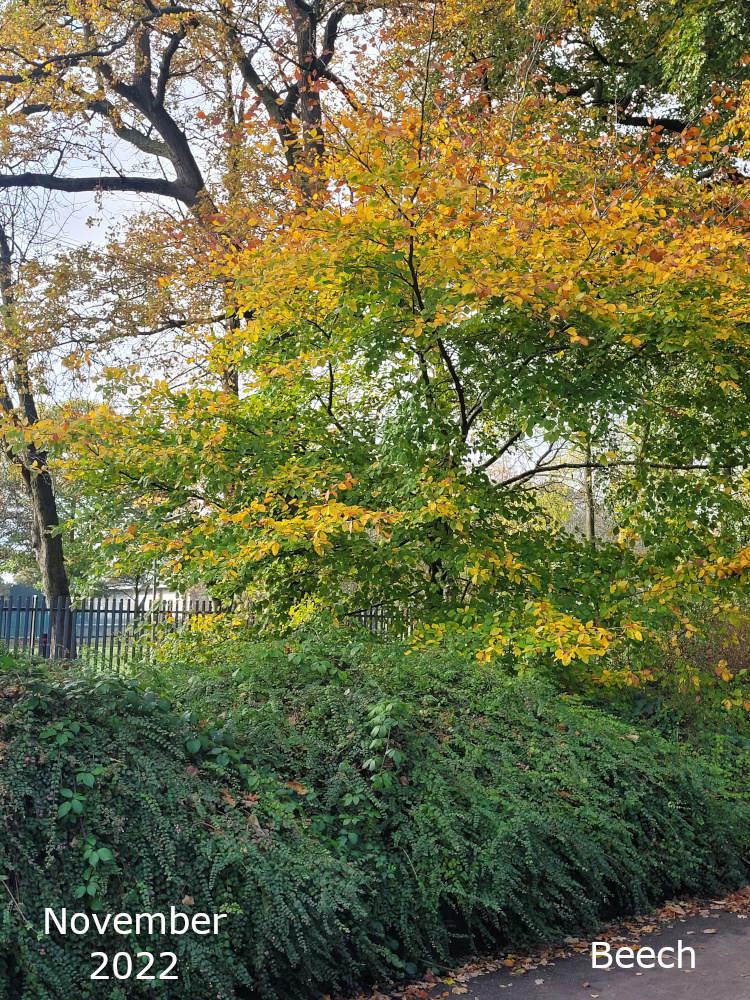


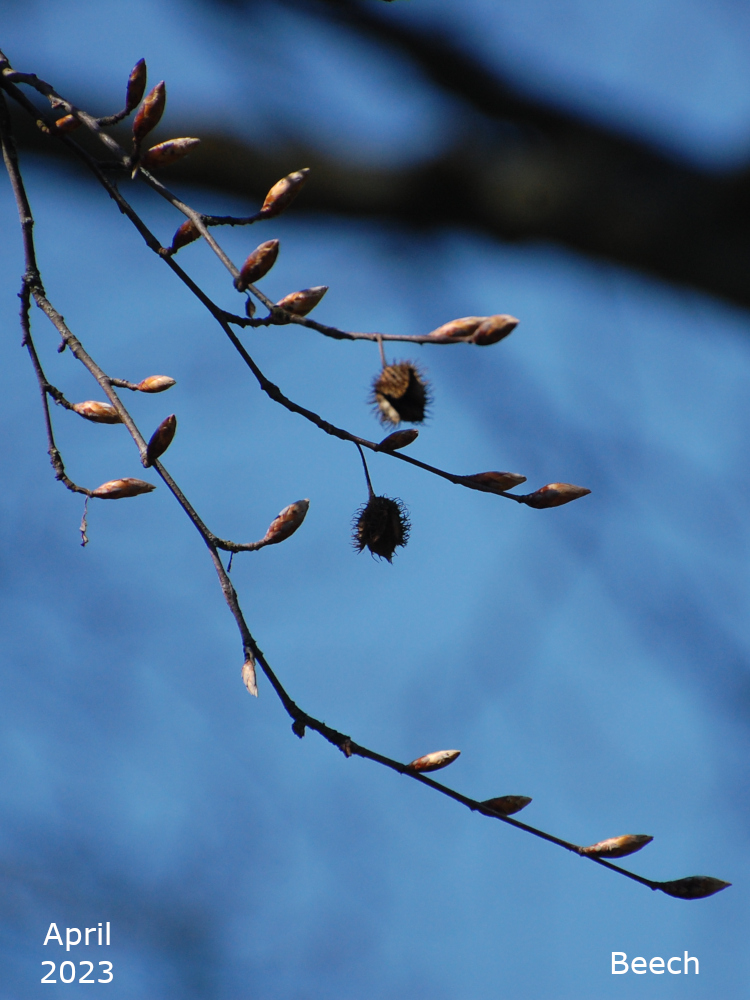
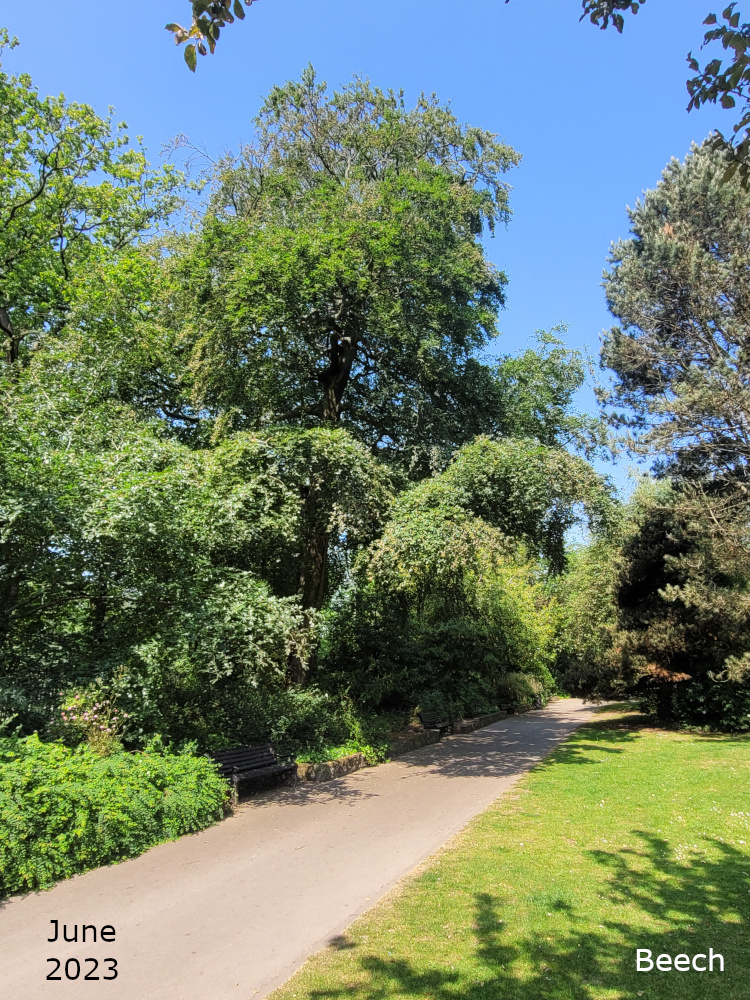

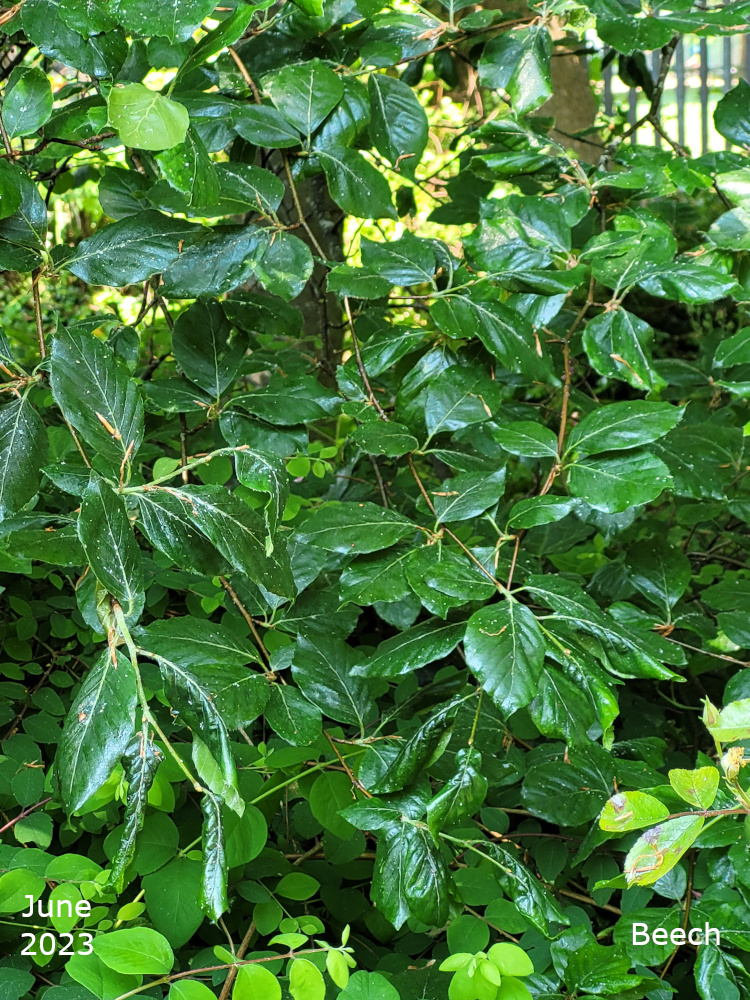
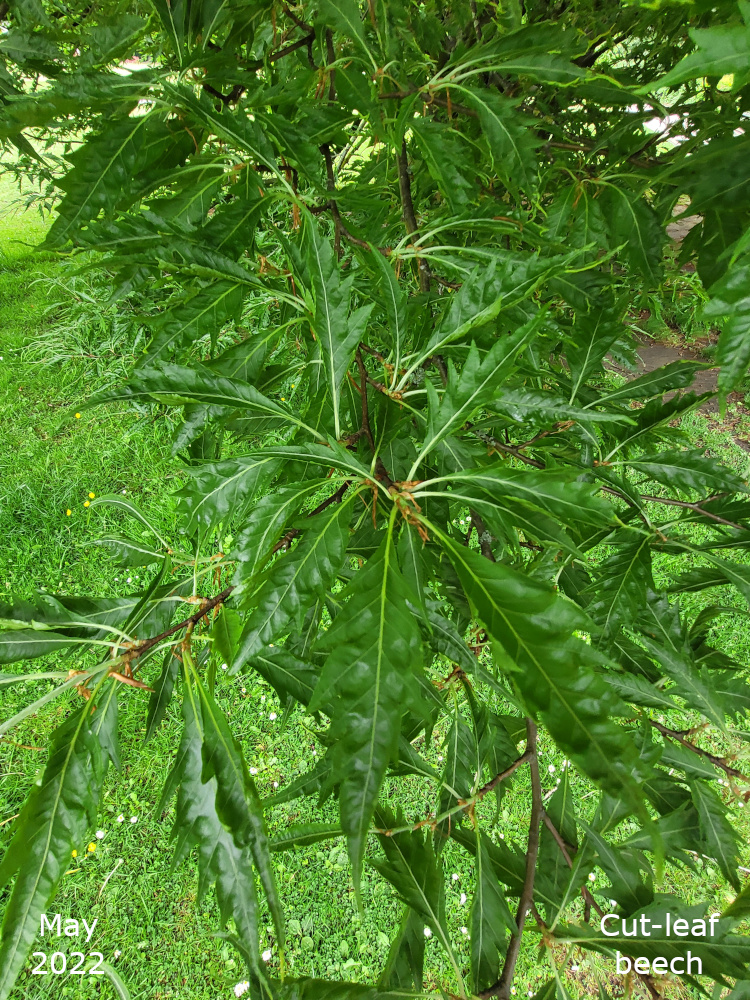
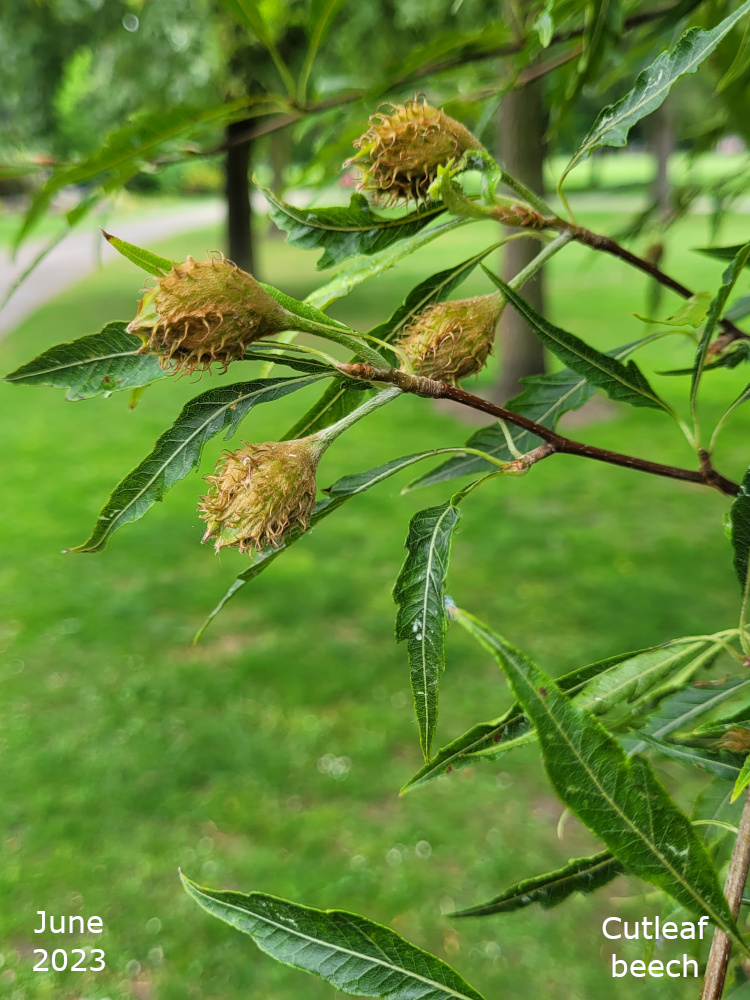
Further up the drive, if you take the left fork, in the path, alongside that triangular area of grass, there is a Beech tree that often has children climbing in it. It is a multi-stemmed tree and perfect for climbing. It also has unusual leaves as they are notched or cut. It is a cut-leaf beech, Fagus sylvatic ‘laciniata’. Just over the drive, from there, there is a small common Beech tree.


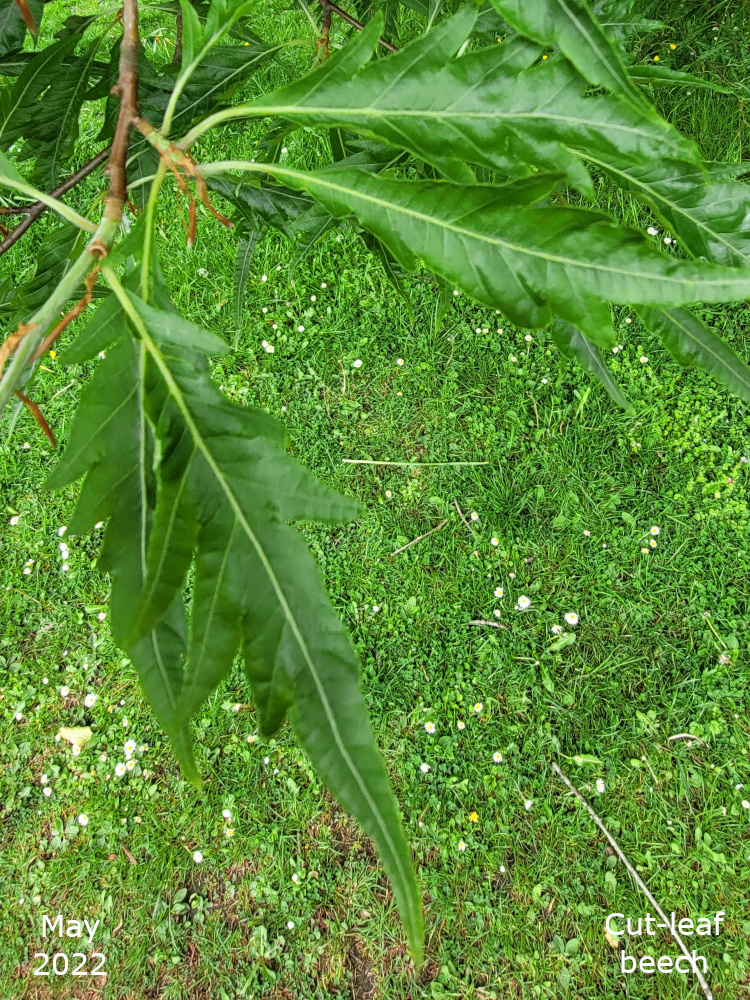
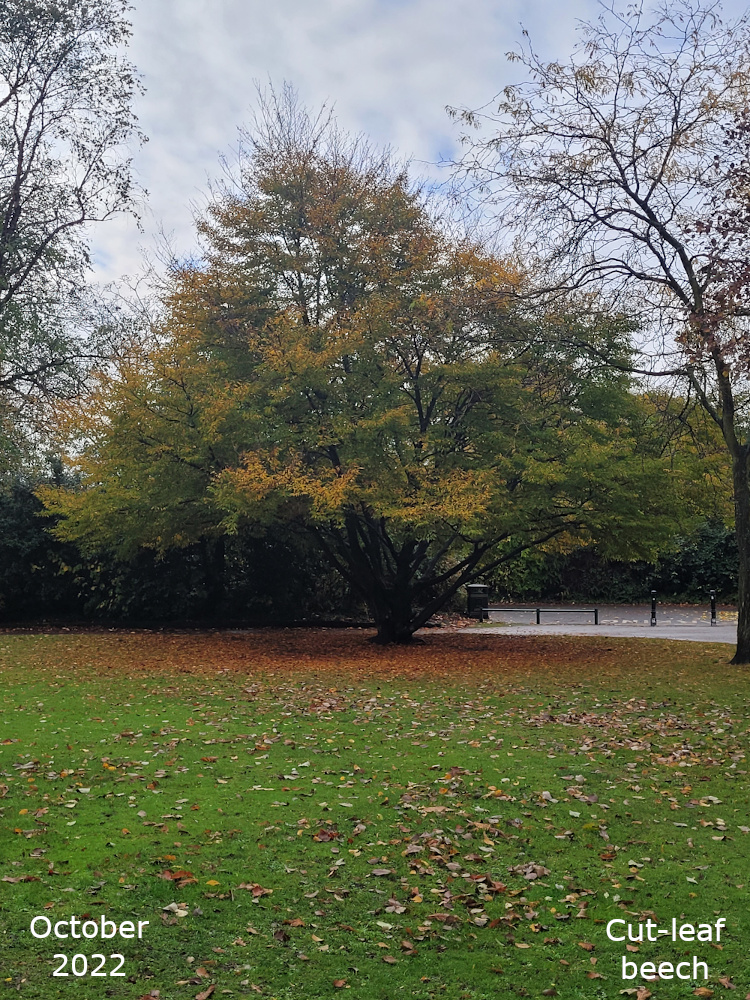
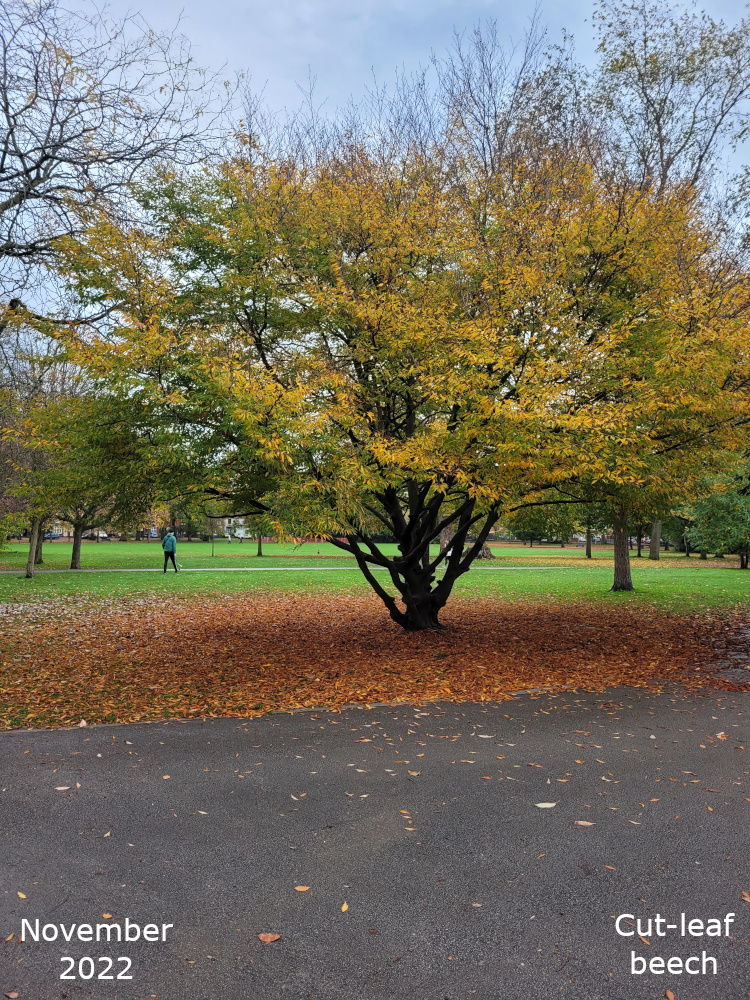

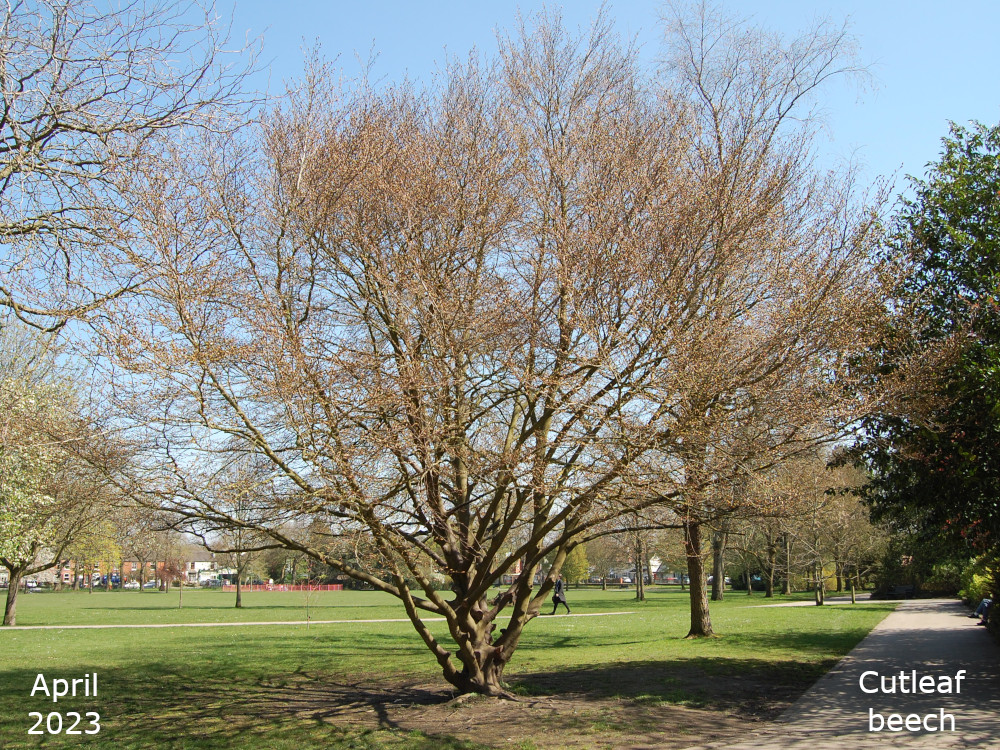

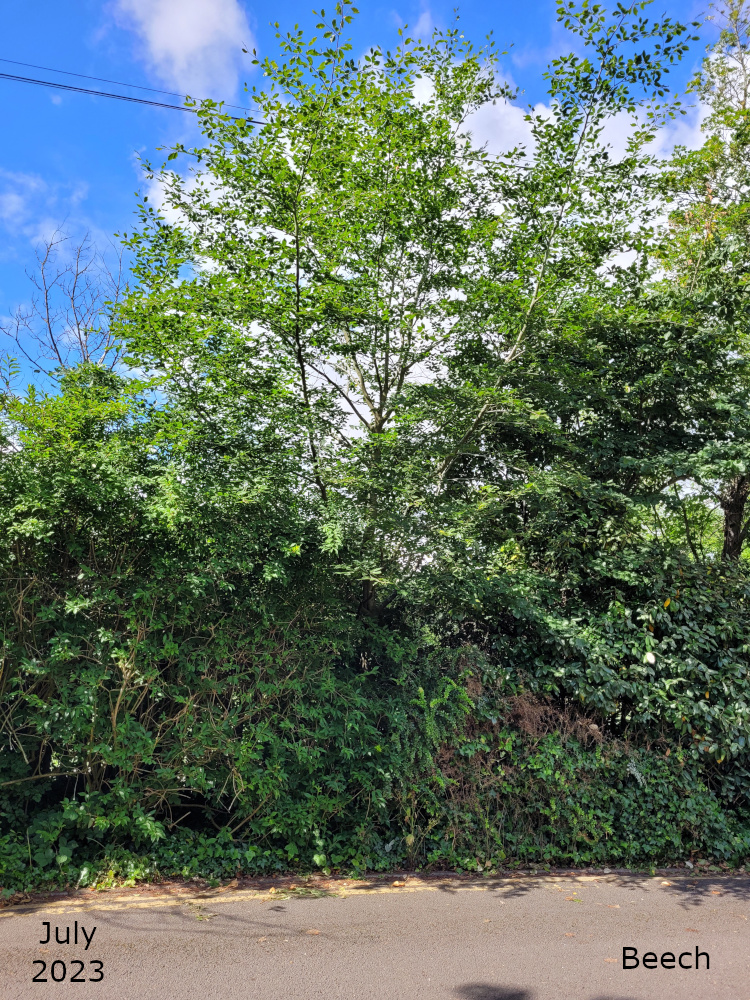
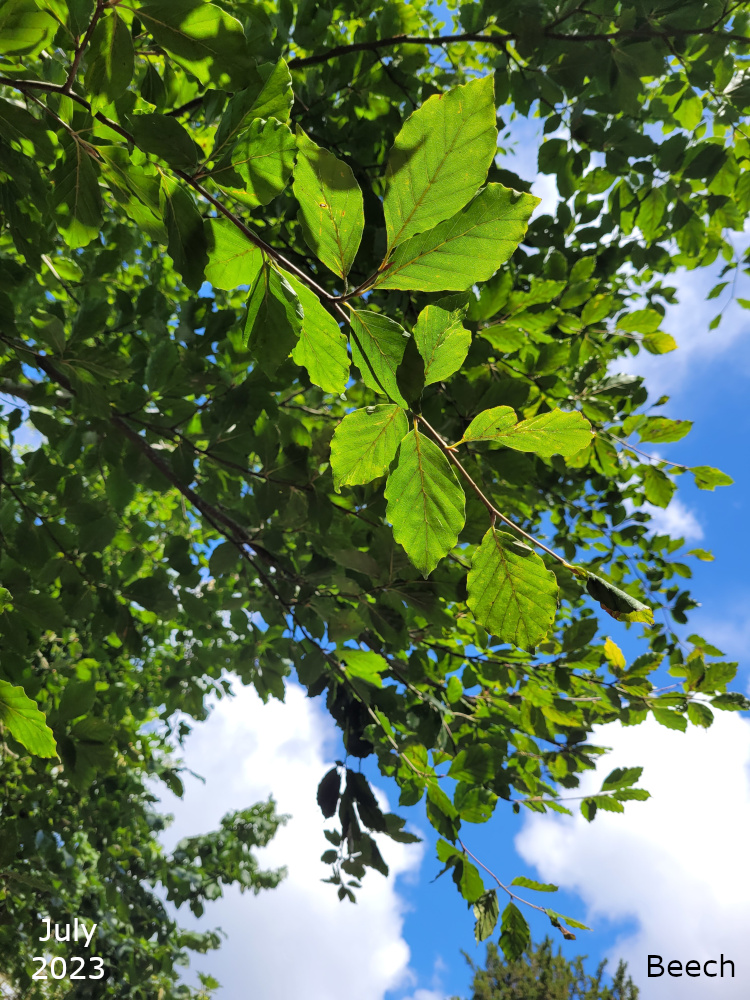
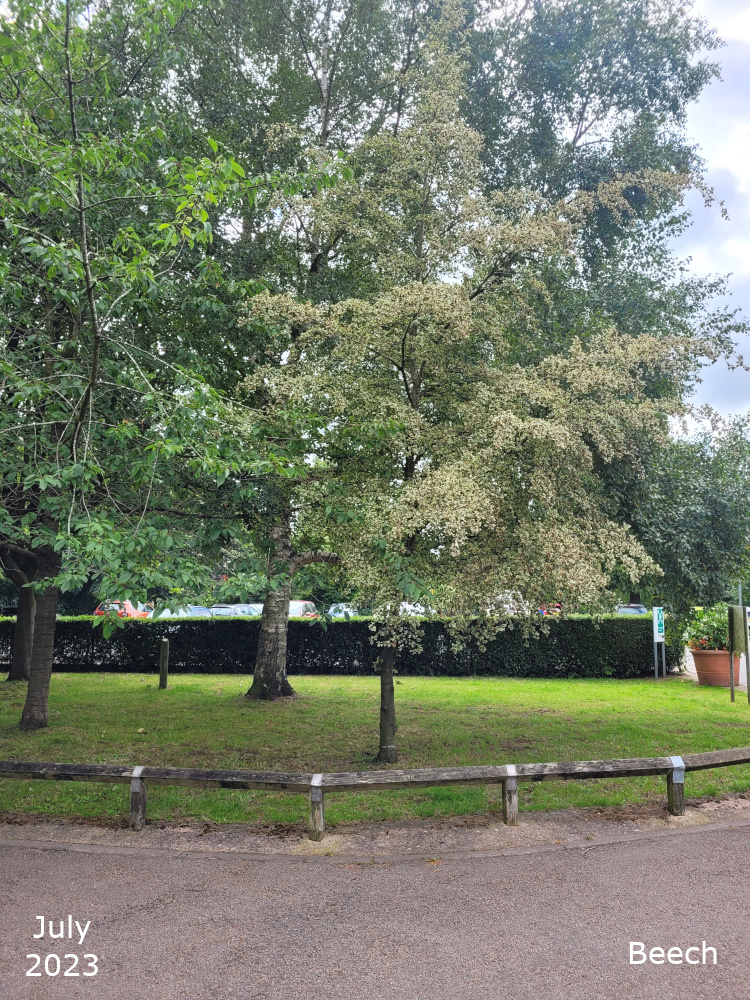
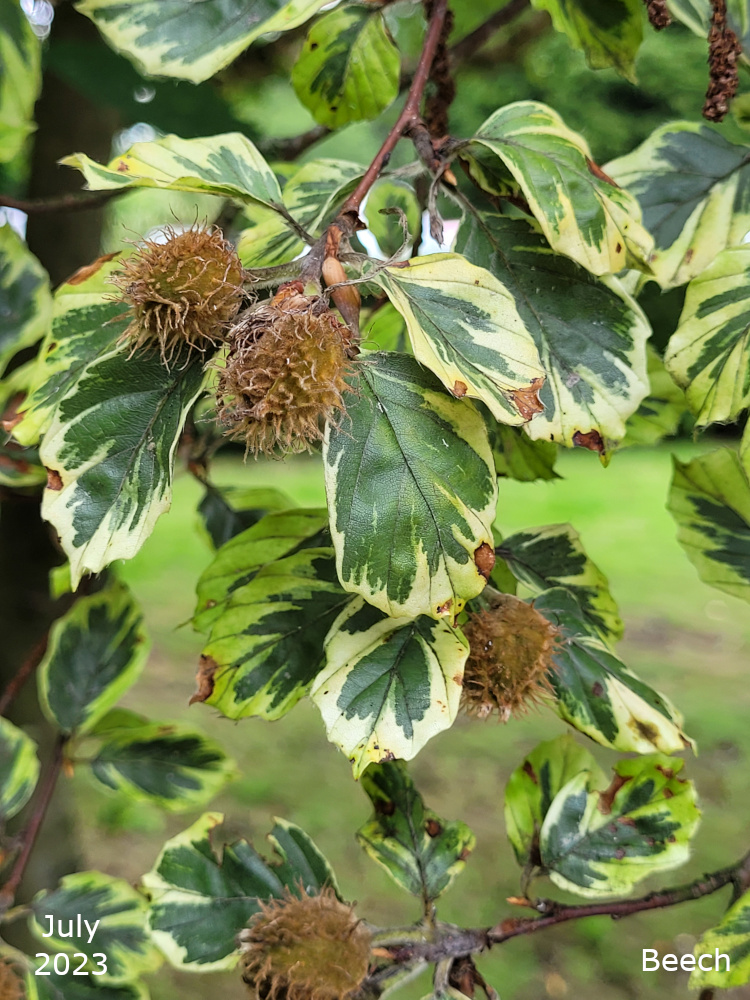
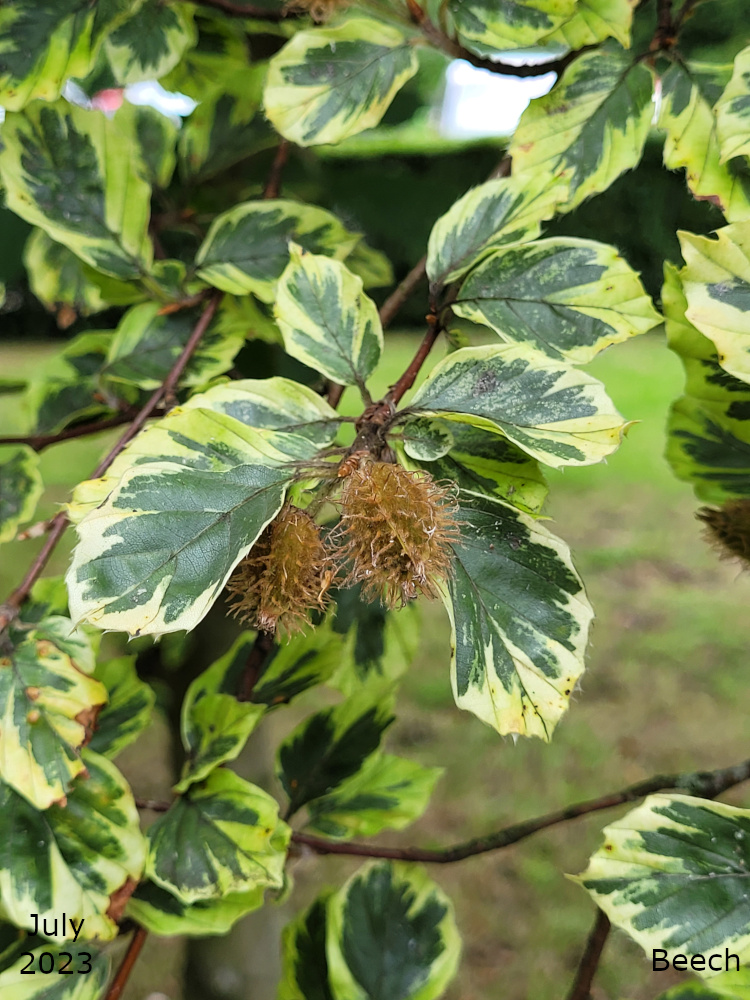
Another beech, on the drive, is near the car park entrance. It is only a small tree but it is different in that its leaves are variegated.


Playground & Thrive
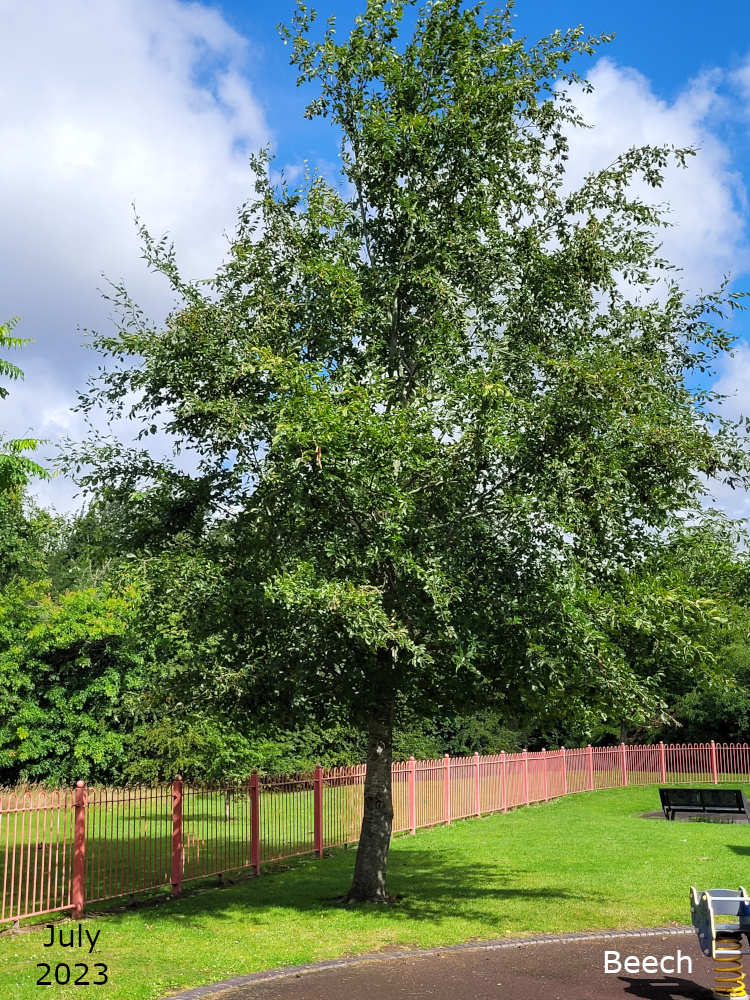
There are four beech trees spread from the large play area and then over towards the Thrive garden. One is inside the play area, a common beech and a second common beech is just outside the fence in a row of other trees. They are both quite small trees. A third common beech is on the corner of the Thrive garden fence, where the track leads into the woodland area. The fourth tree is a Copper beech and is off the path going down the hill. It’s just below the corner of two paths.



Colour garden
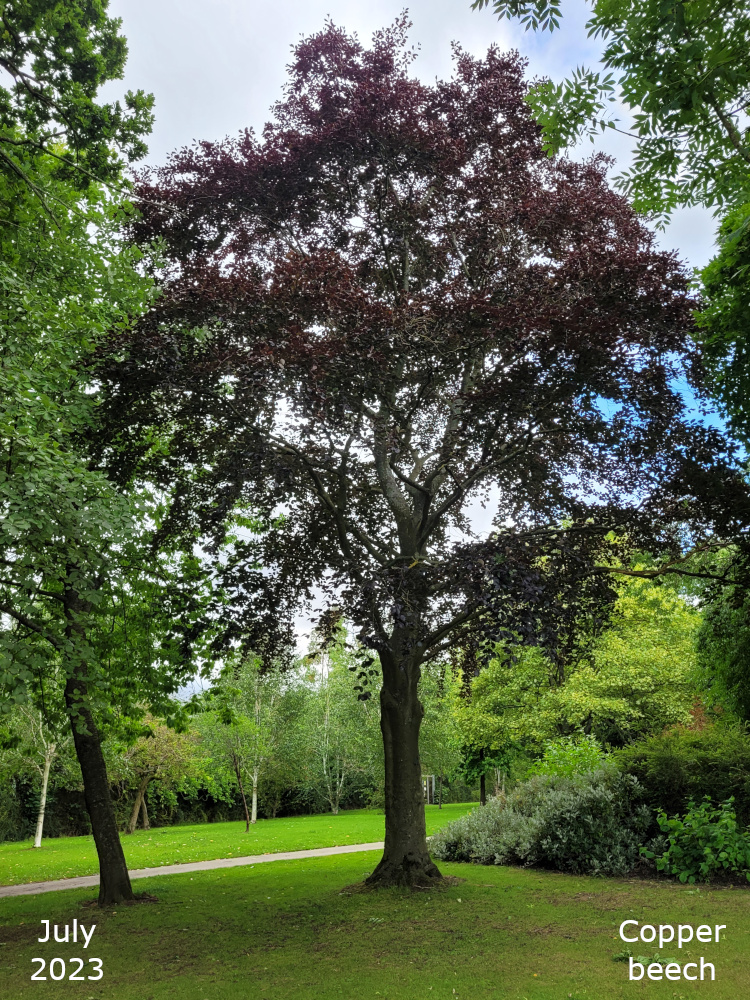
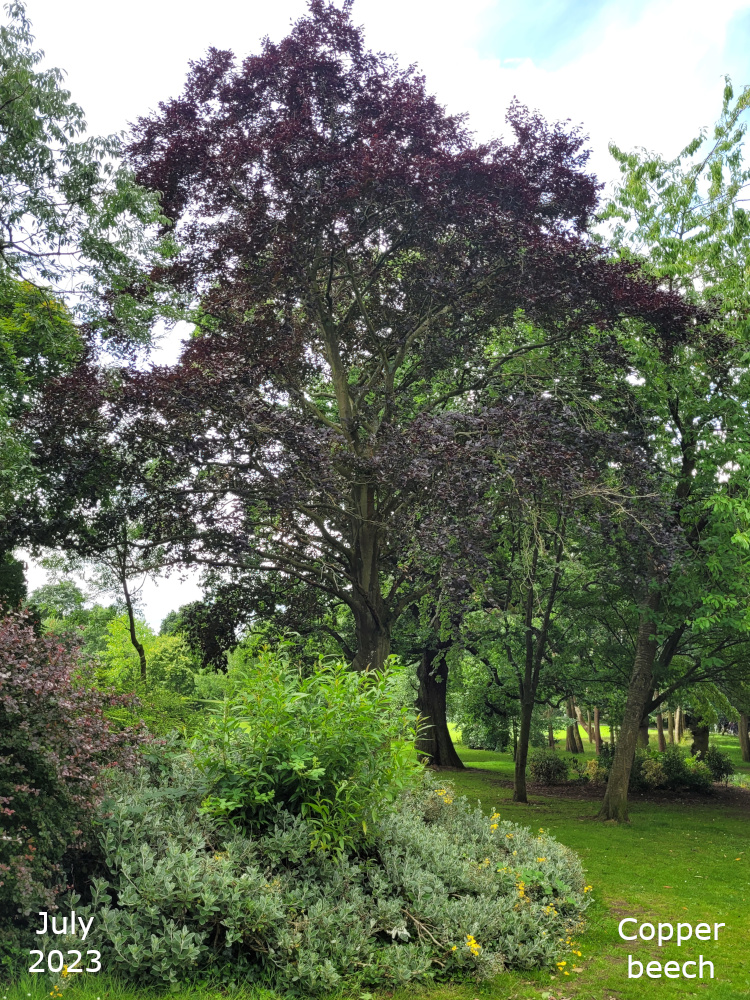
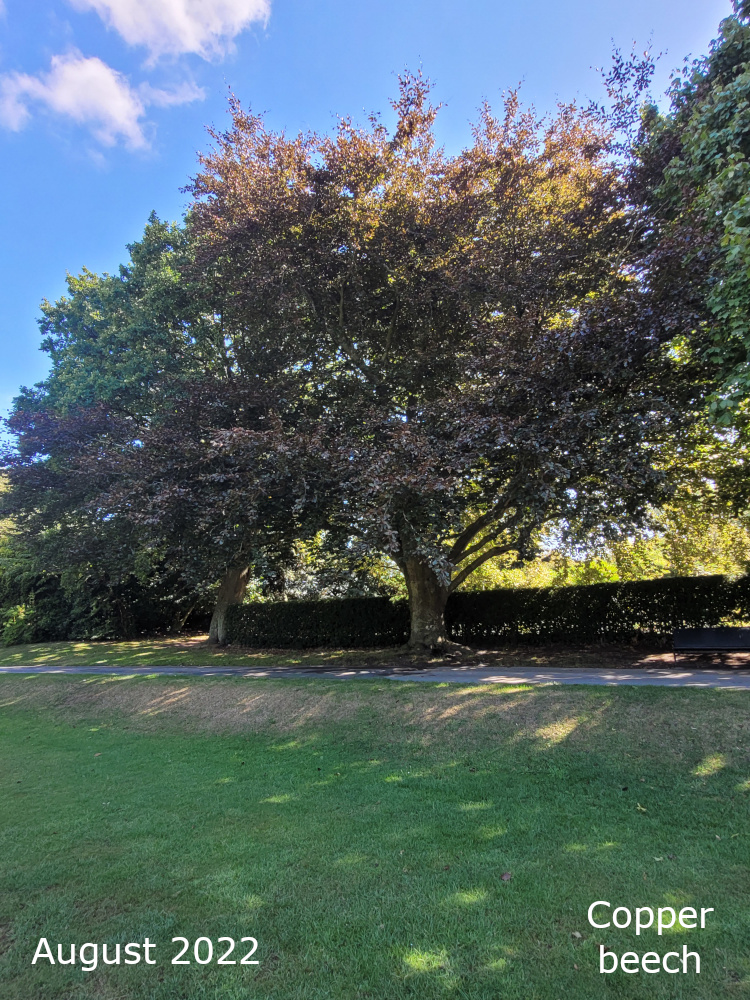
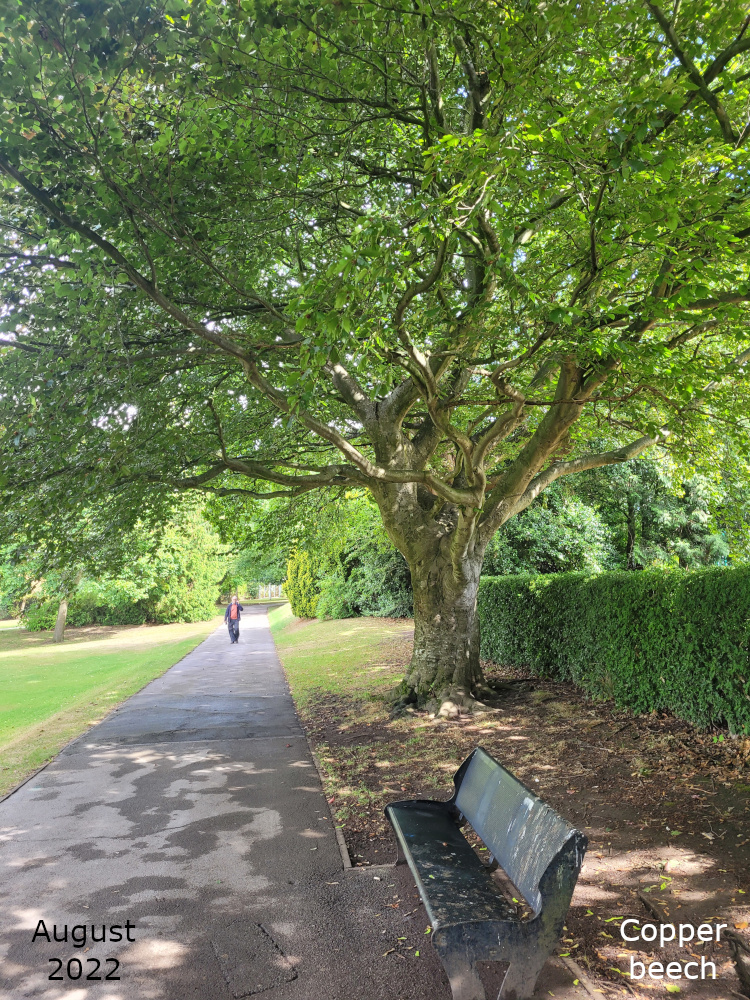
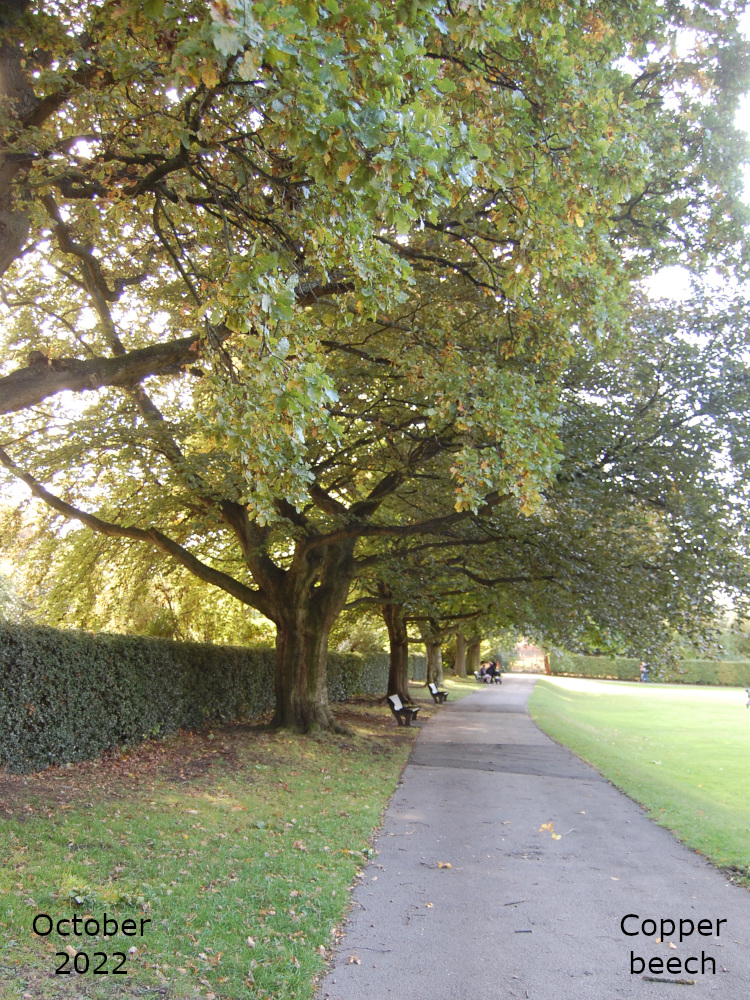
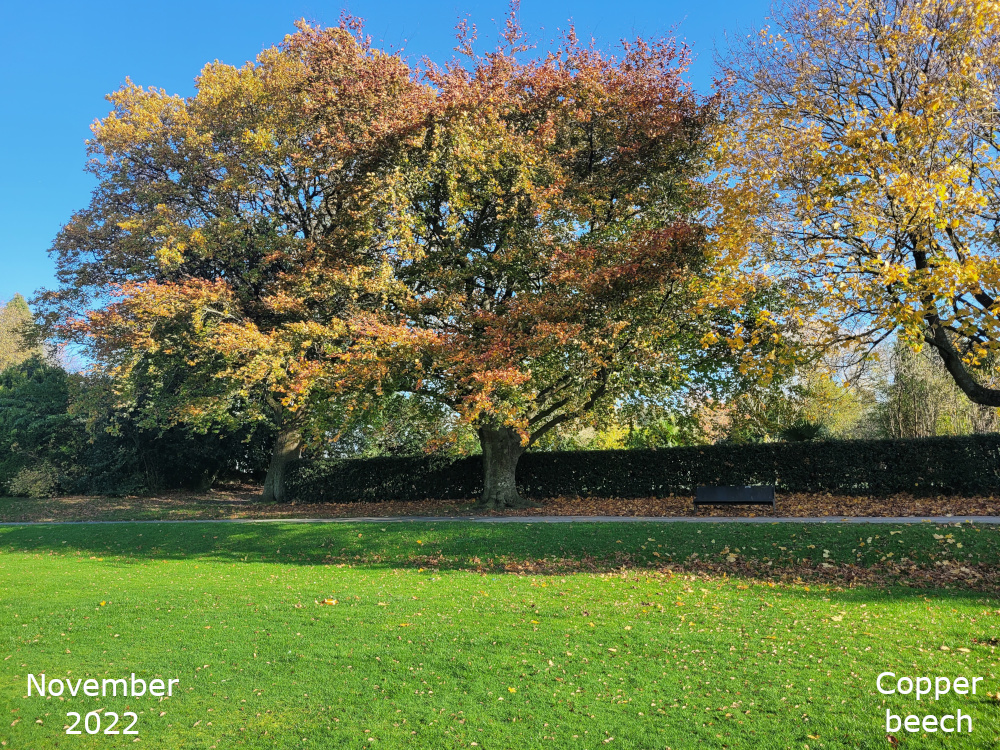
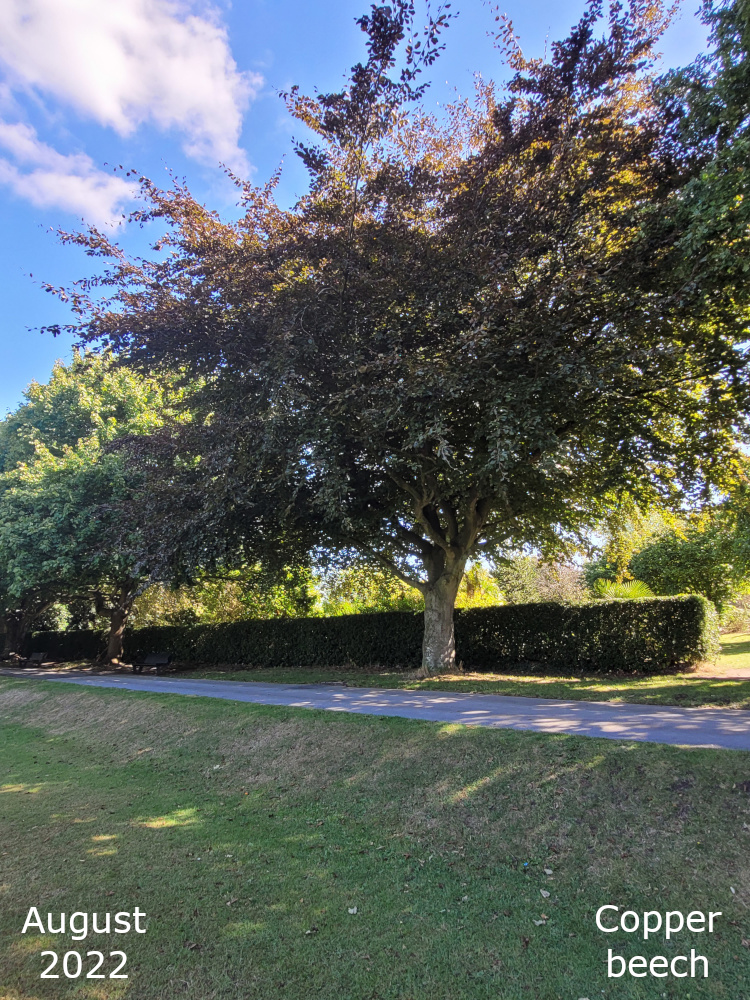
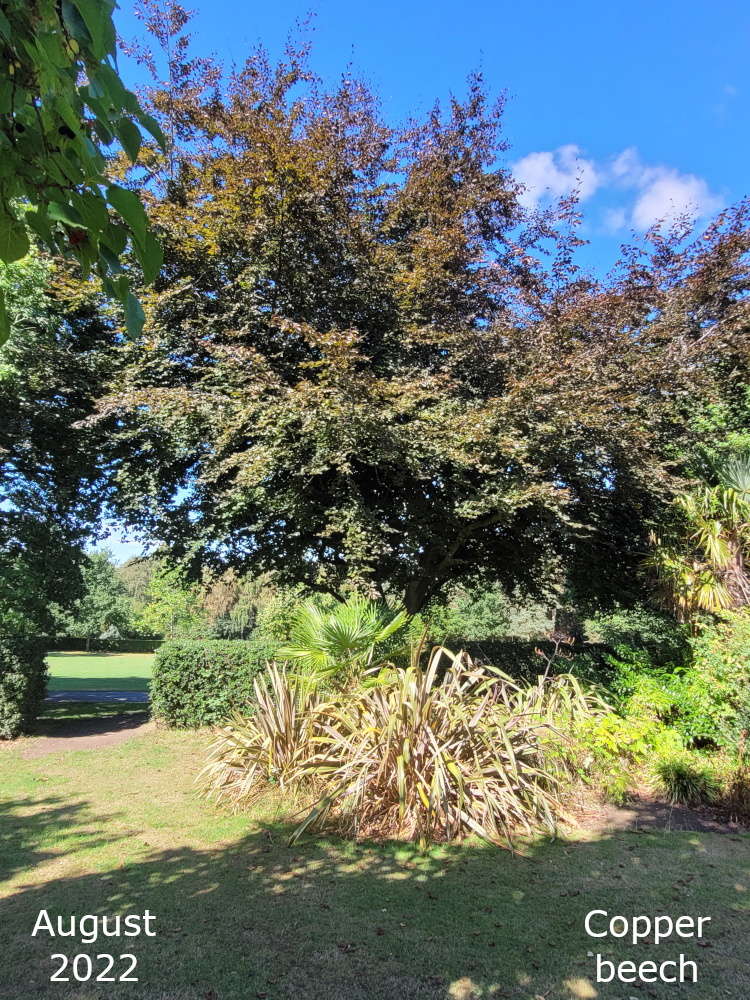
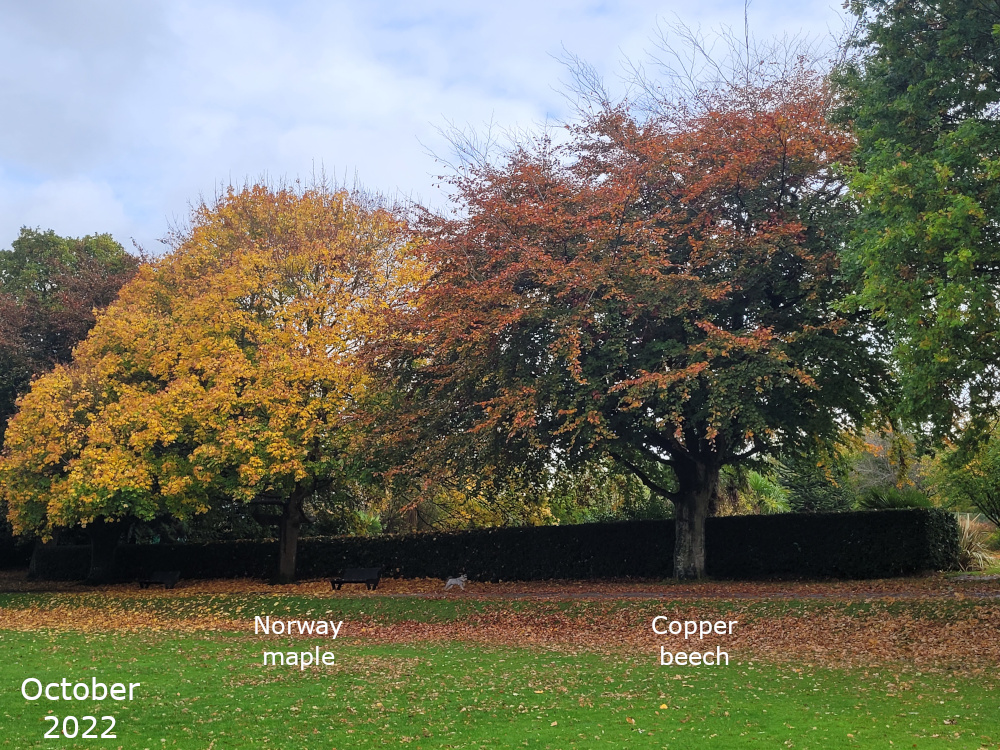
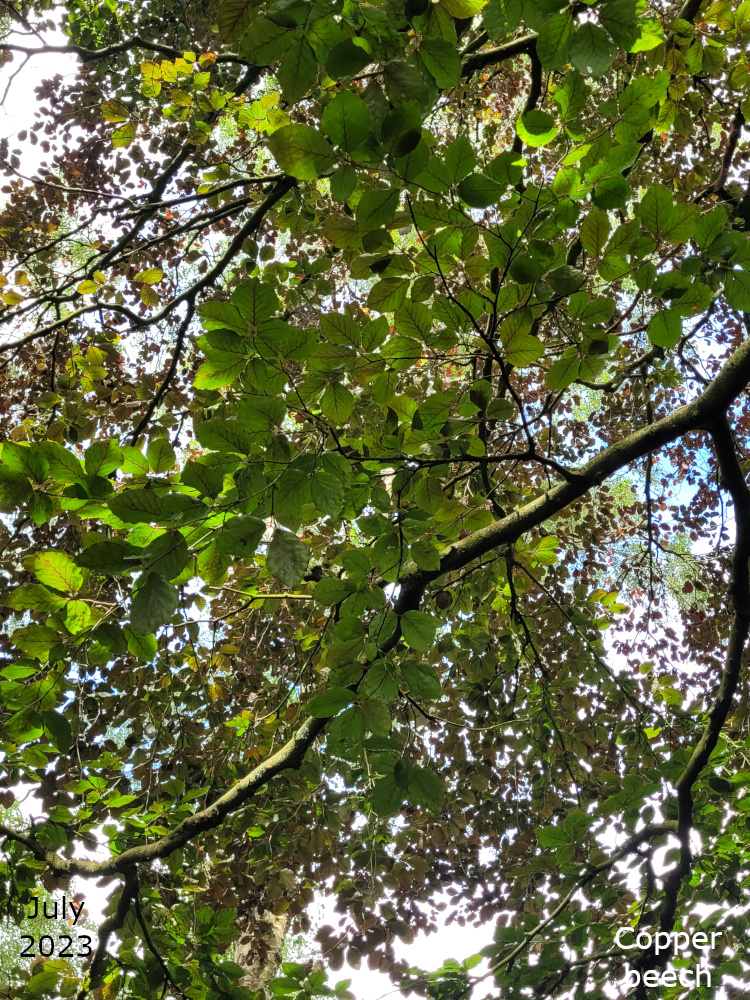
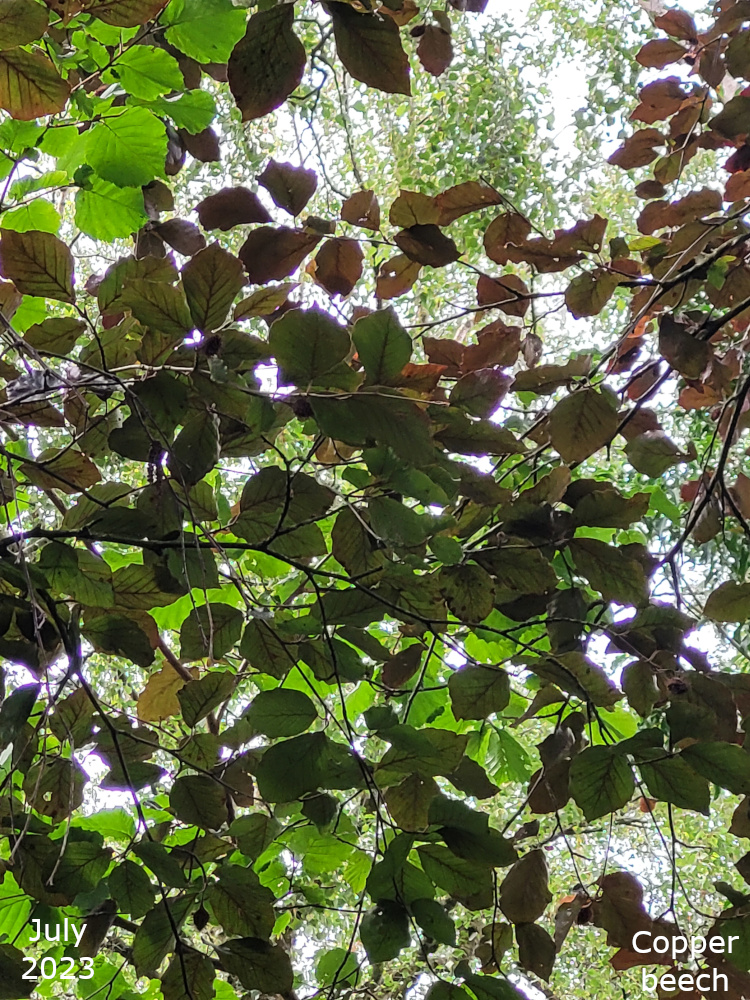
One of my favourite paths to walk along, in the park, is the one just below the colour gardens. The colour gardens are just below the bowling green, so the path in question goes roughly from the Thrive garden more or less North to South. It joins the two downhill paths. Anyway there are seven big trees along there, six of them all close together sharing a continuous canopy that goes right over the path. Two of those trees are Copper beeches.





Bottom of the park
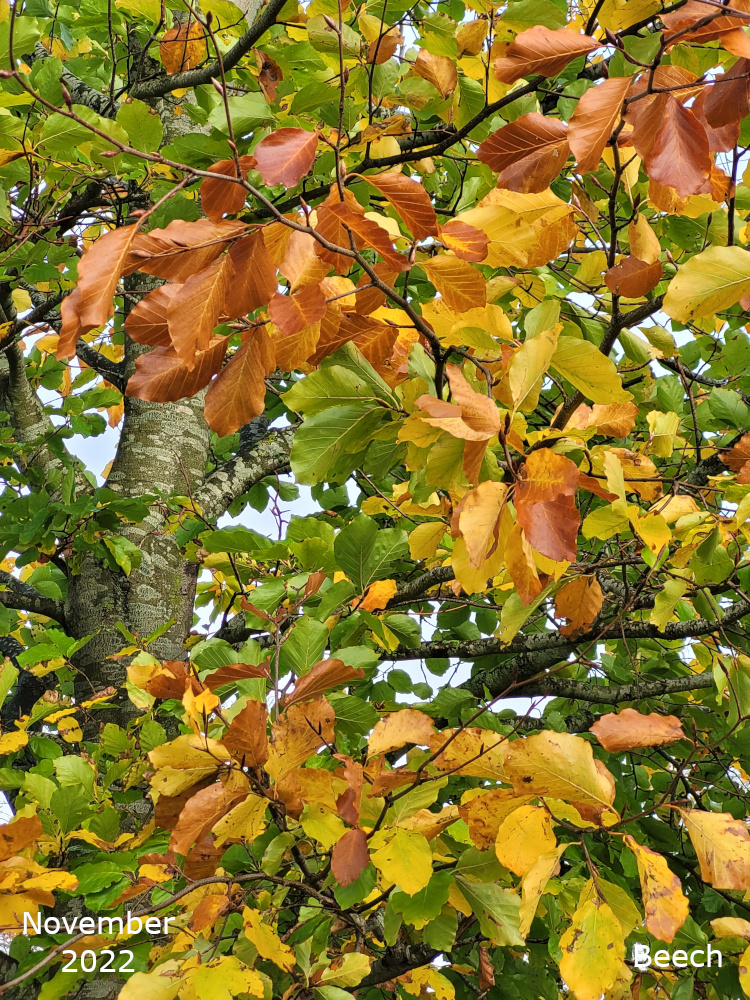
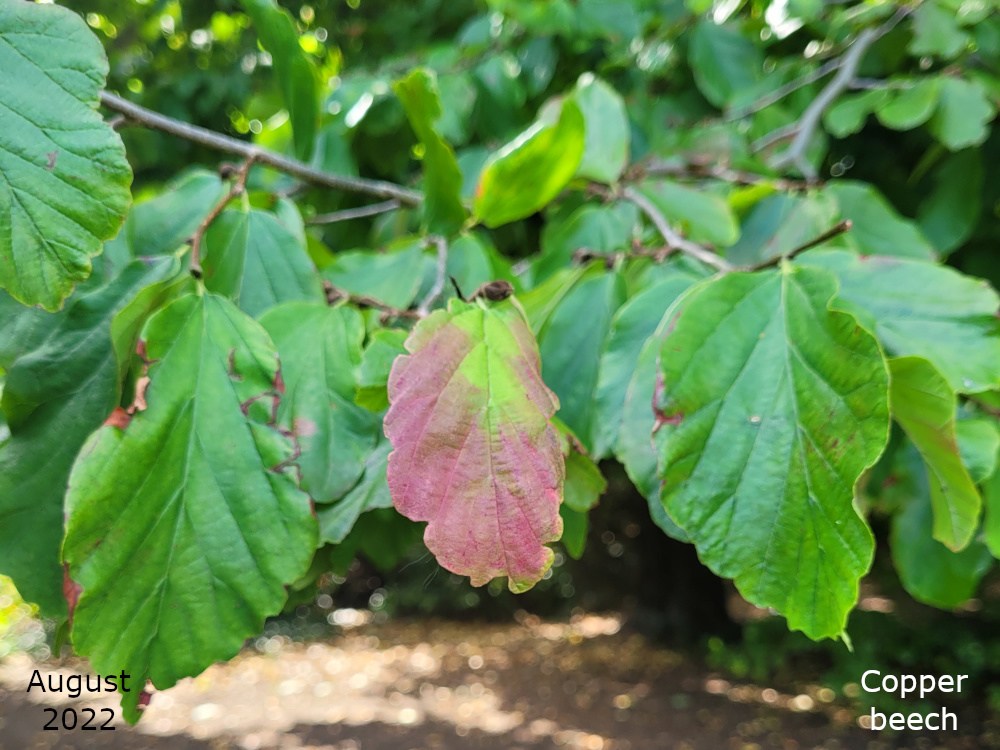
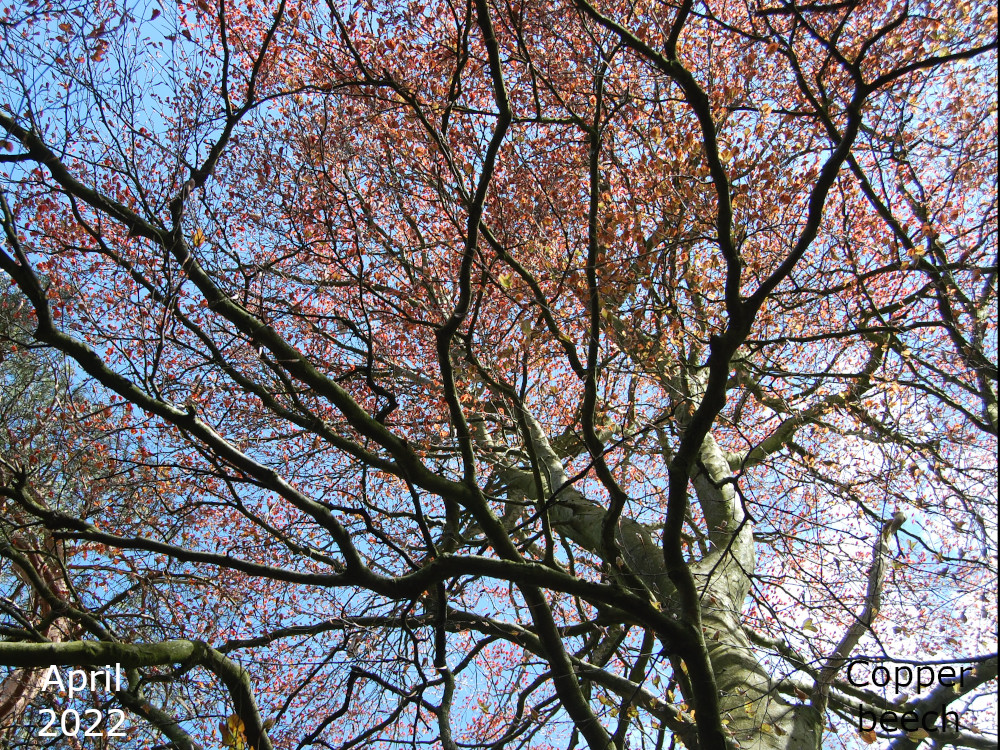
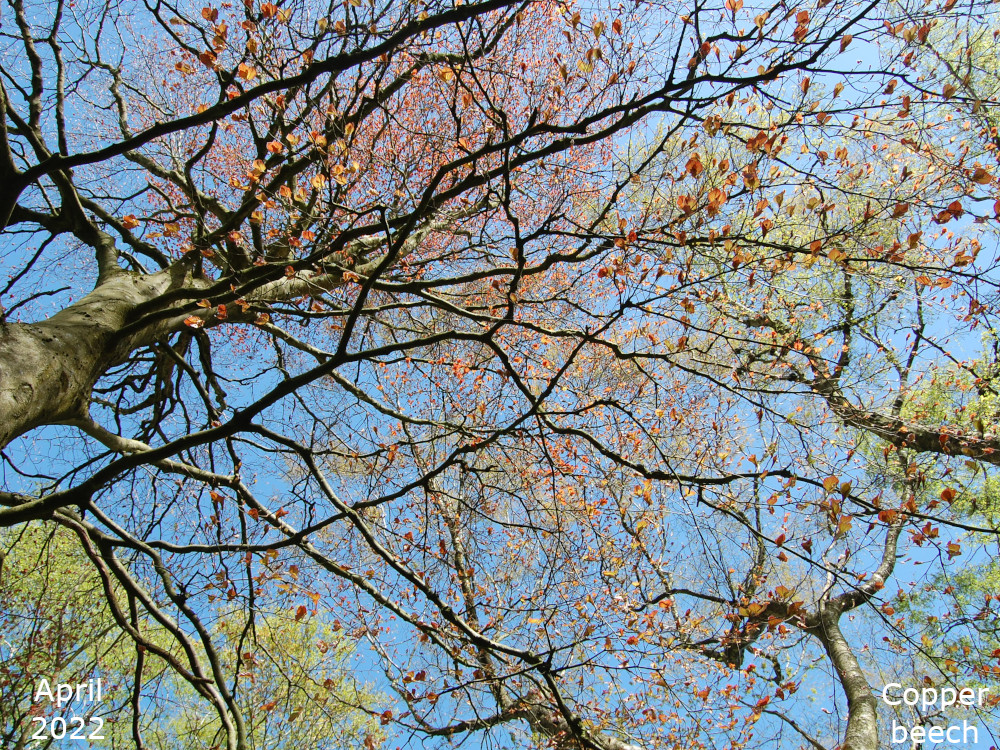
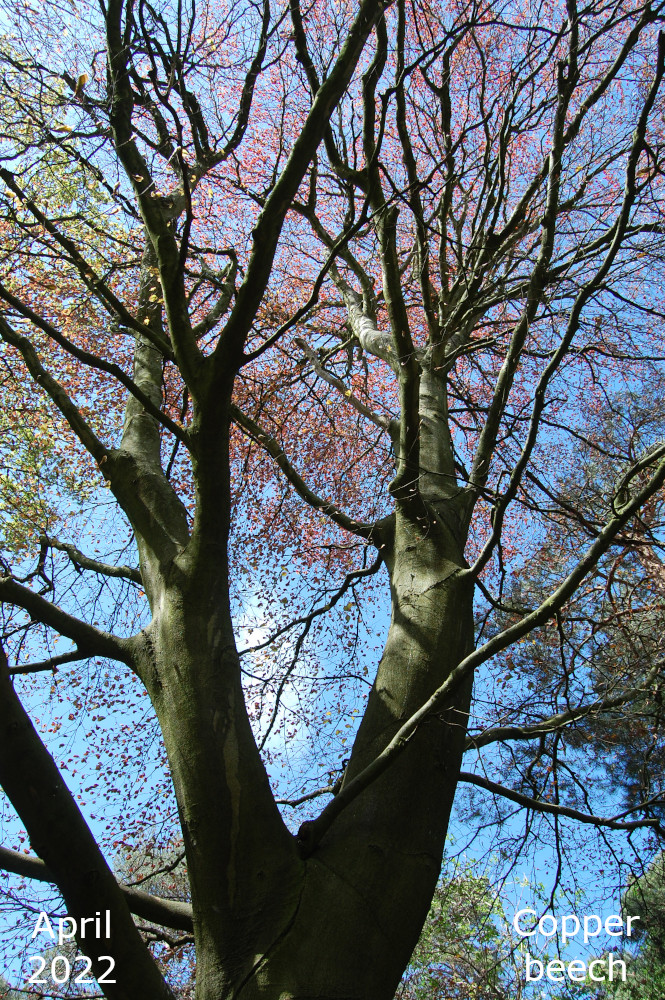
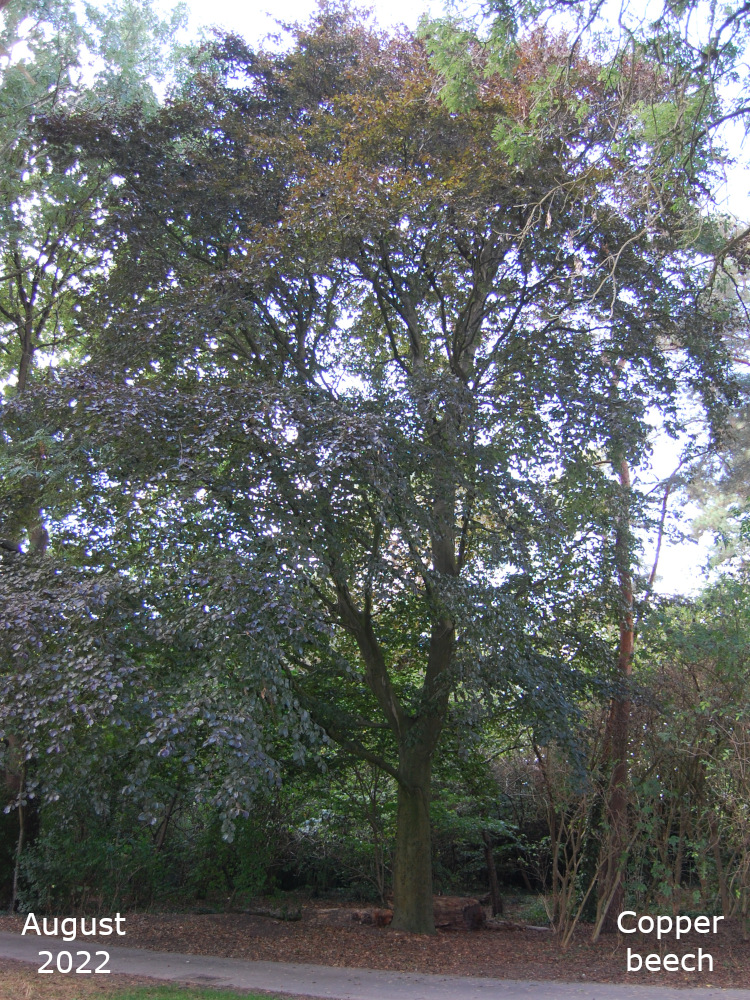
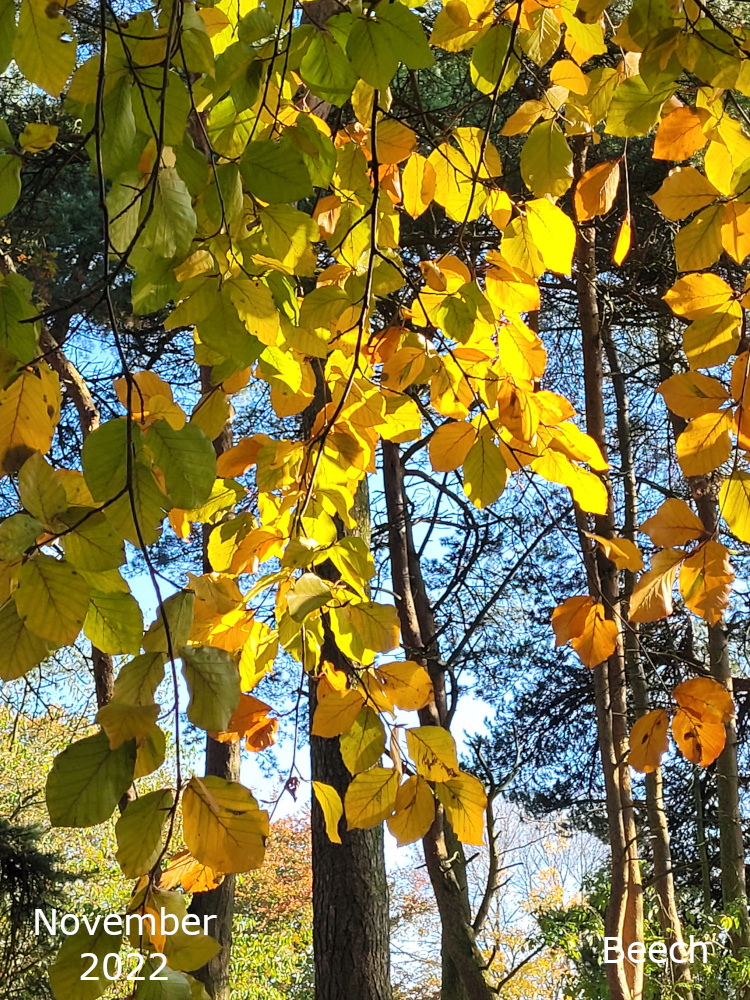
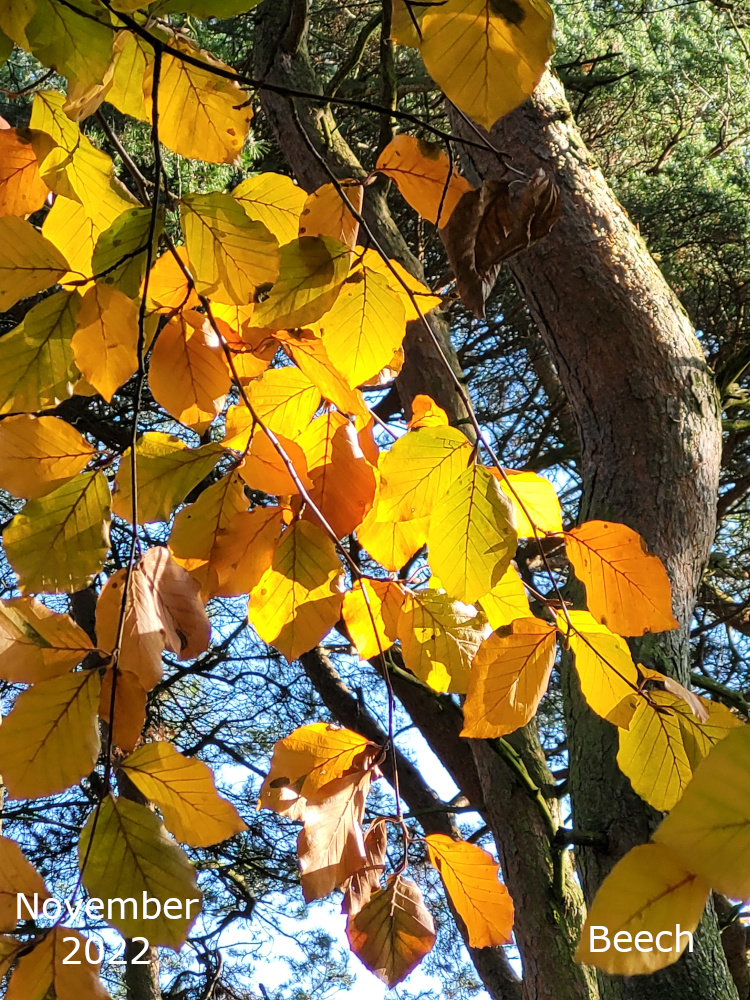
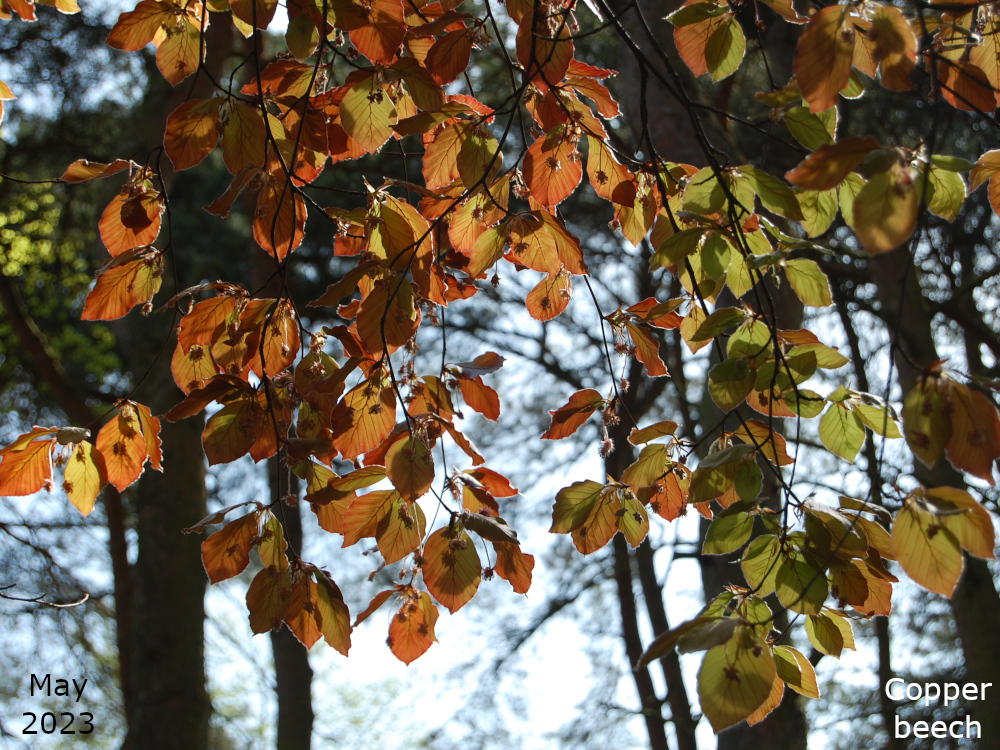
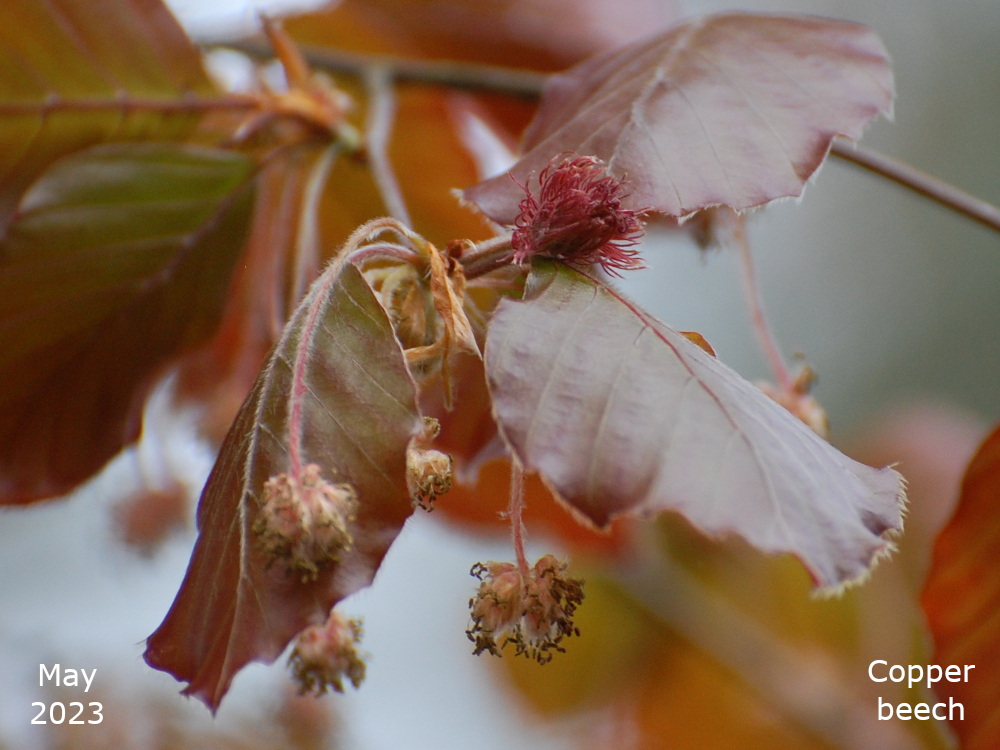
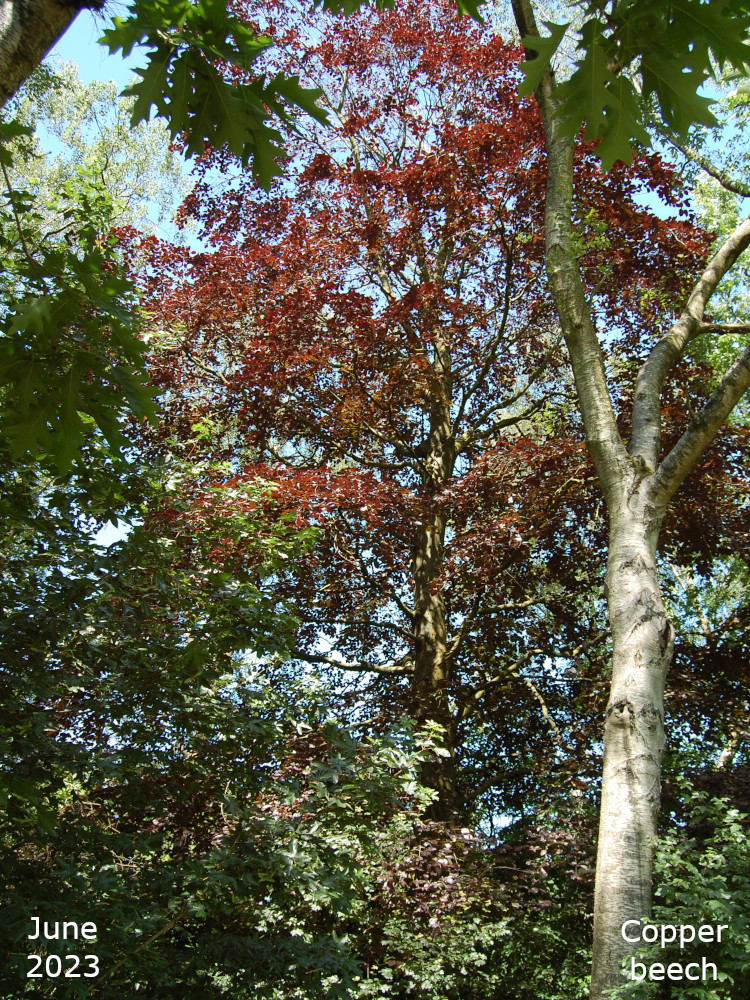
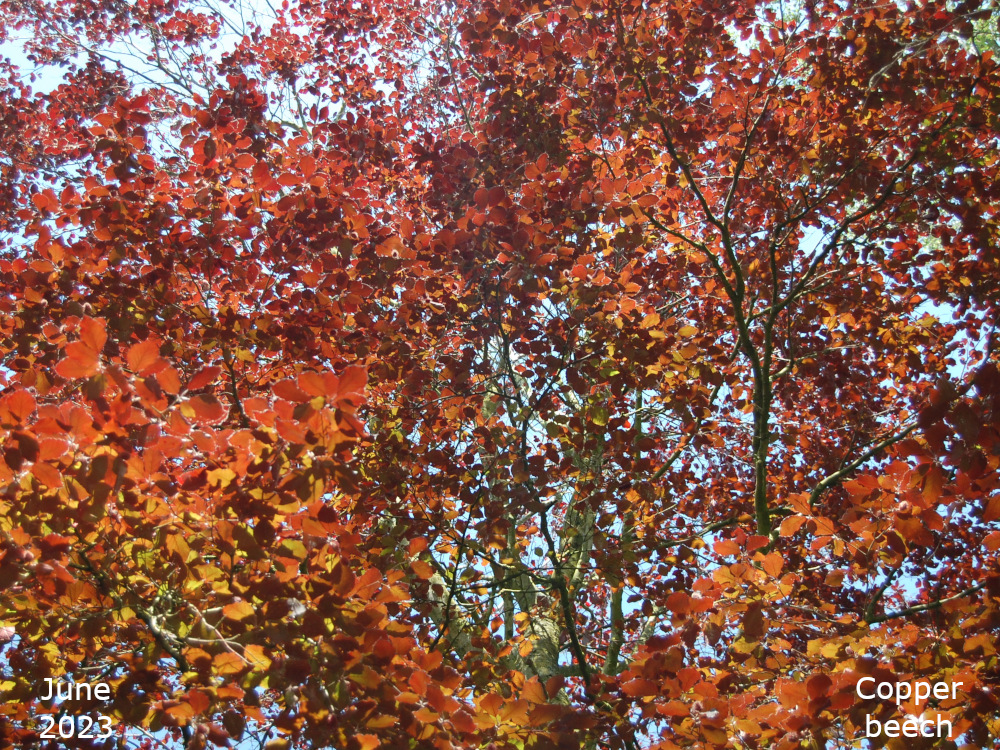
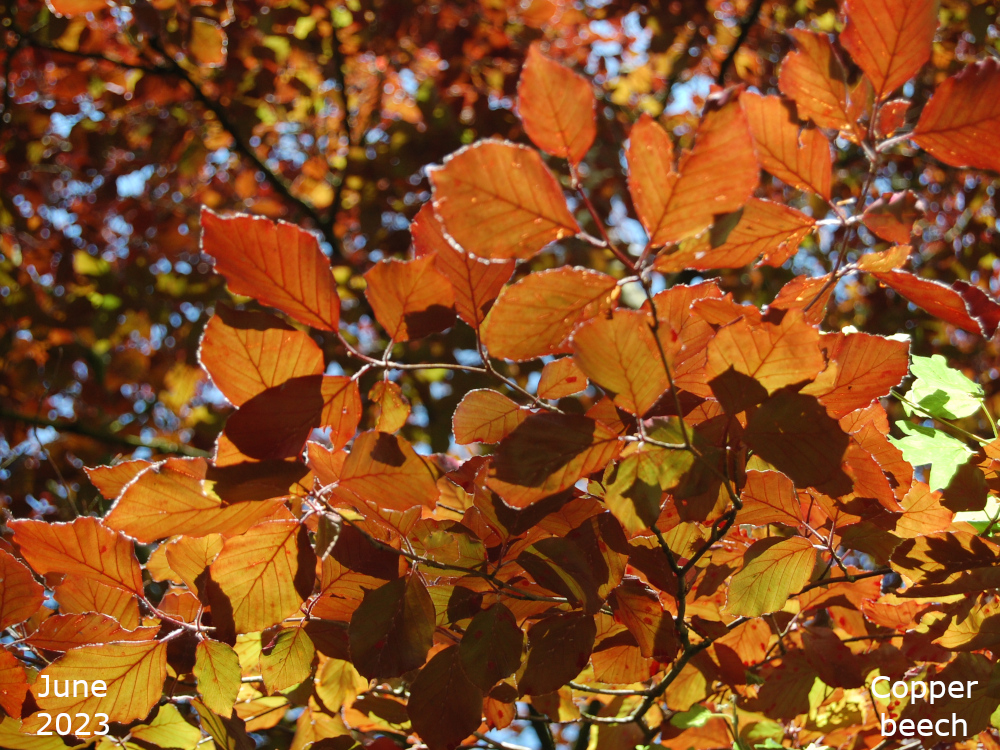
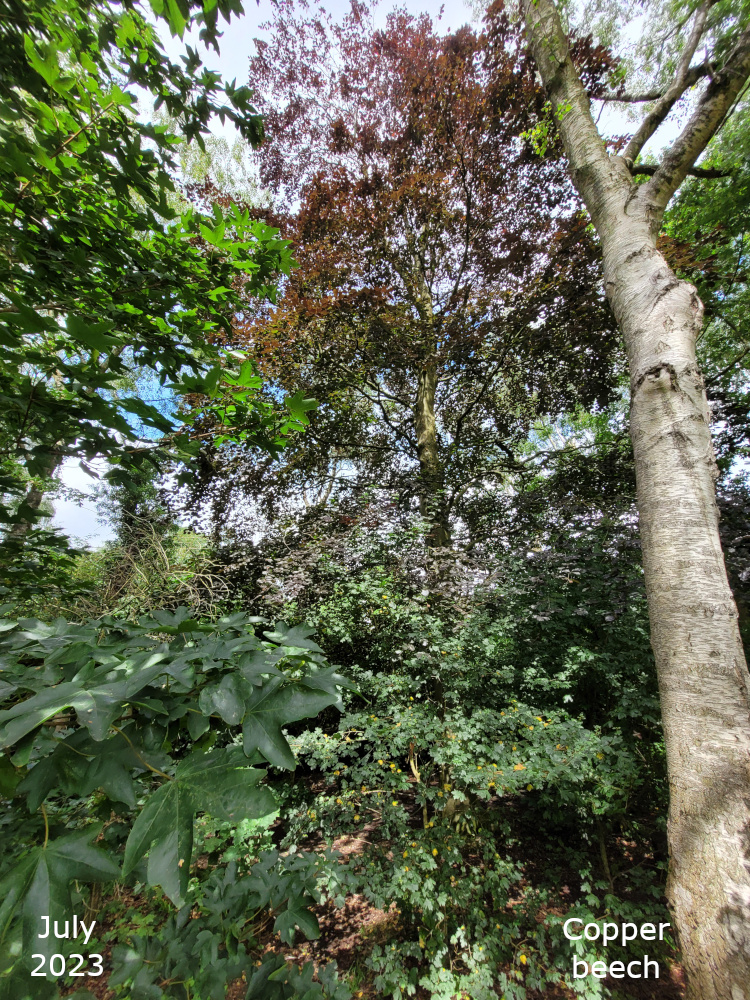
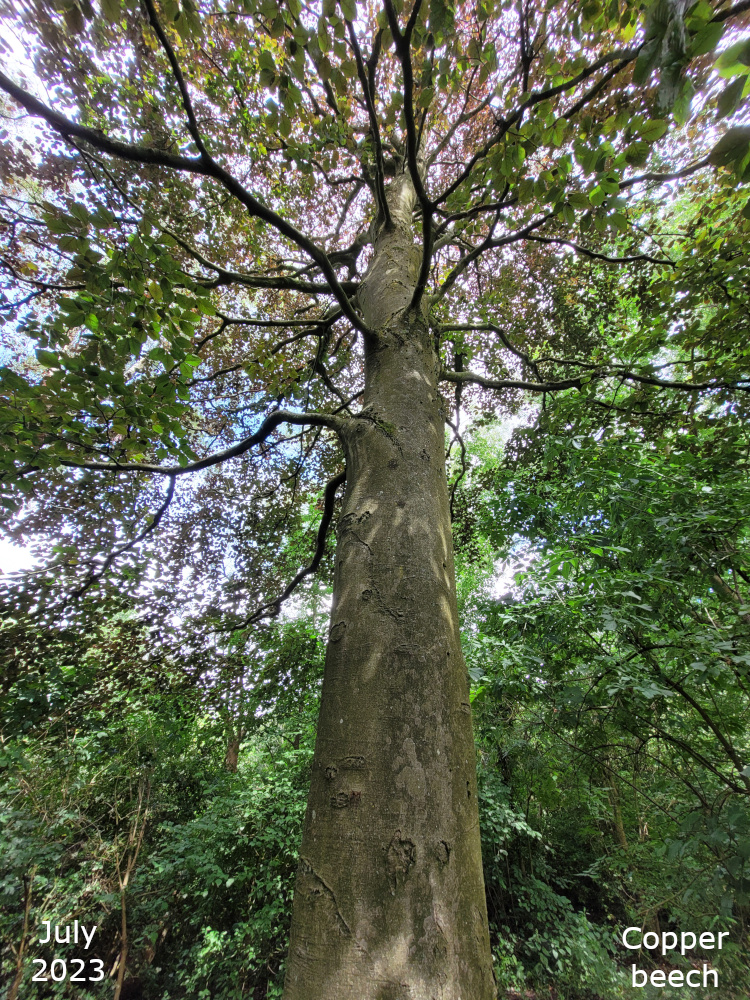
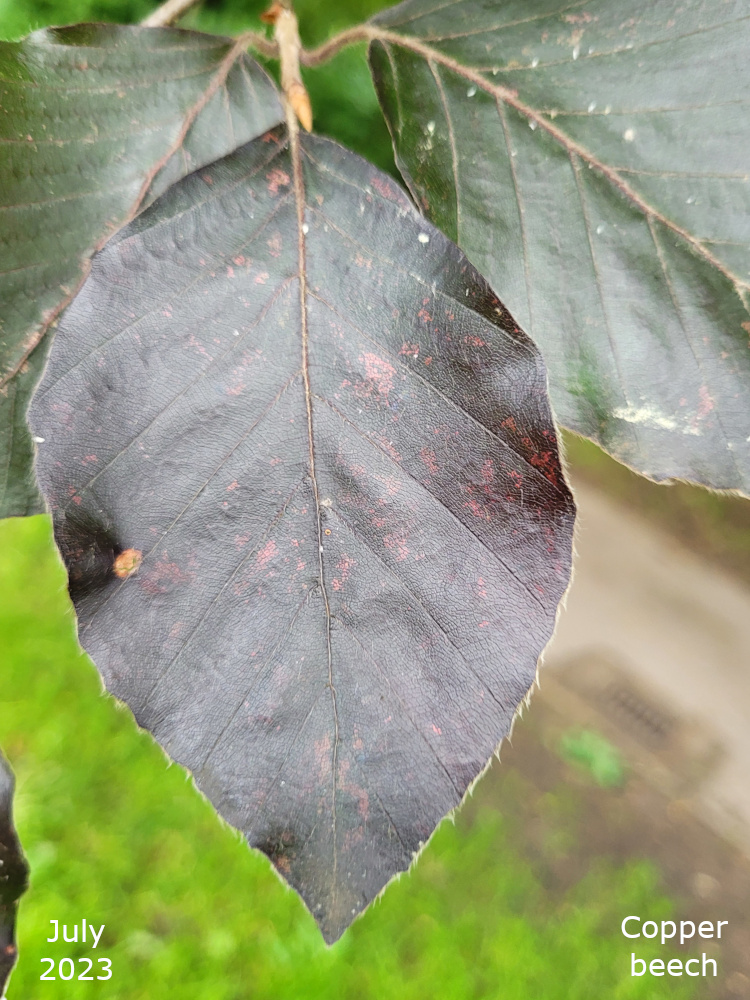
When you walk down the hill, past the Thrive garden, towards the railway lines, there is a small wooded area on the right. In that area, close to the path, there is a large Copper beech tree. This Spring, there were a host of flowers in the tree silhouetted against the leaves, lit up by the sunshine. There is another Copper beech in amongst the Silver birch in the wooded area between the bottom path and the railway lines. The bottom-most leaves appear greener than the top leaves and the underside of the leaves appear greener. The leaves also seem to change colour over the growing season.






Sweet chestnuts
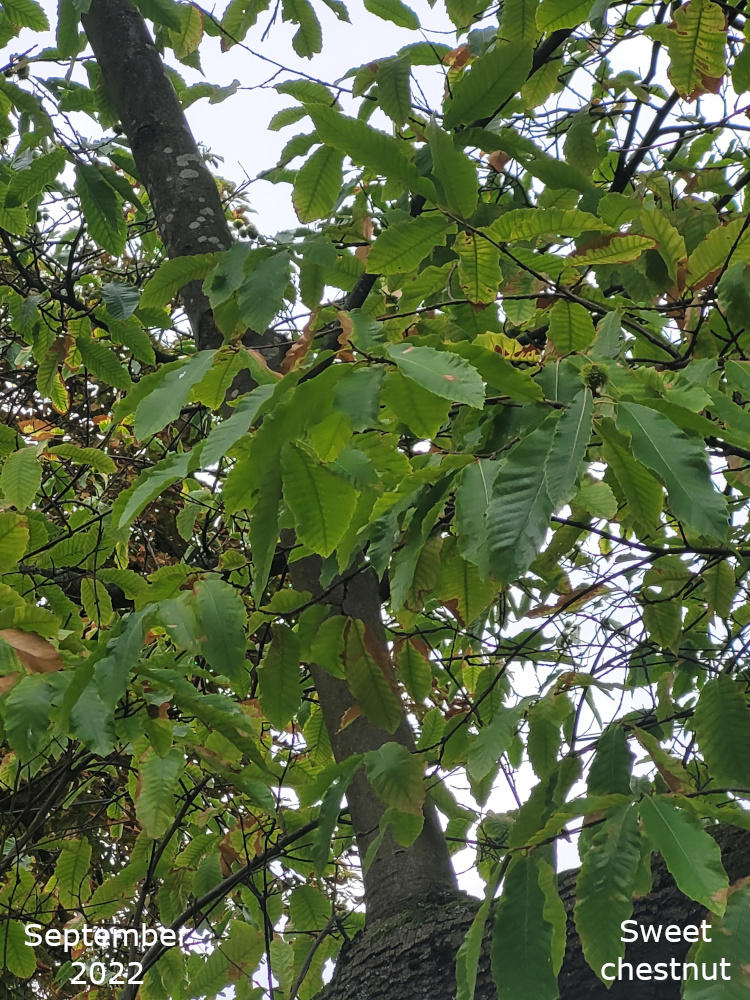
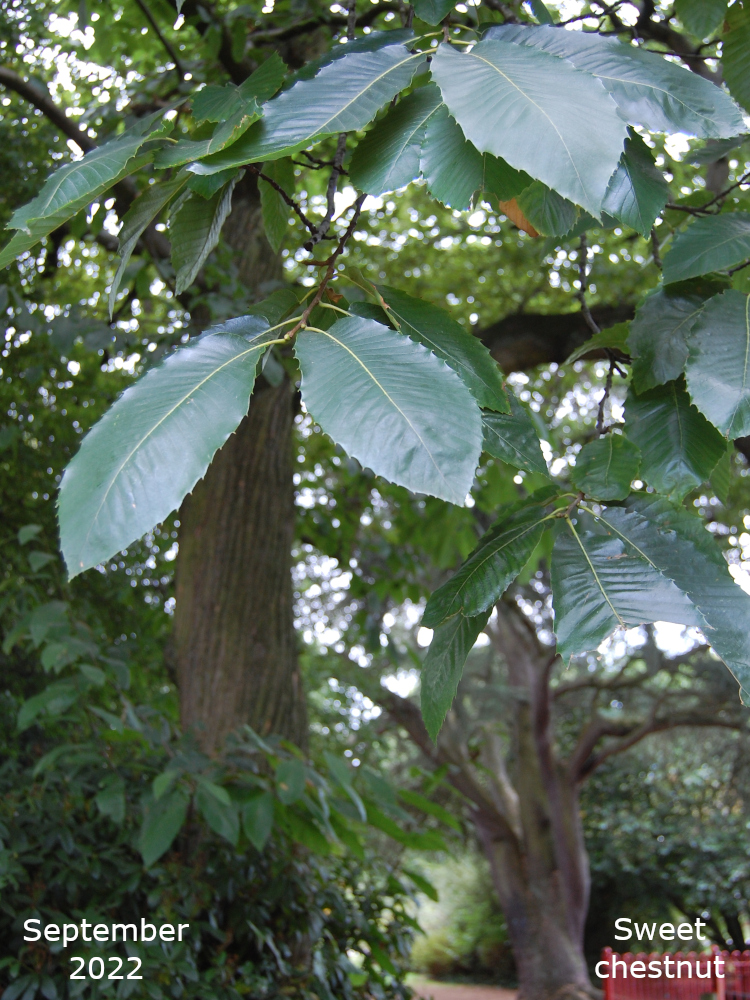
Sweet chestnuts, Castanea sativa, are included with the beech because they are both members of the Fagaceae family, as are Oaks. Horse chestnuts are not included here because they are in the Sapindaceae family and have more in common with Maples.
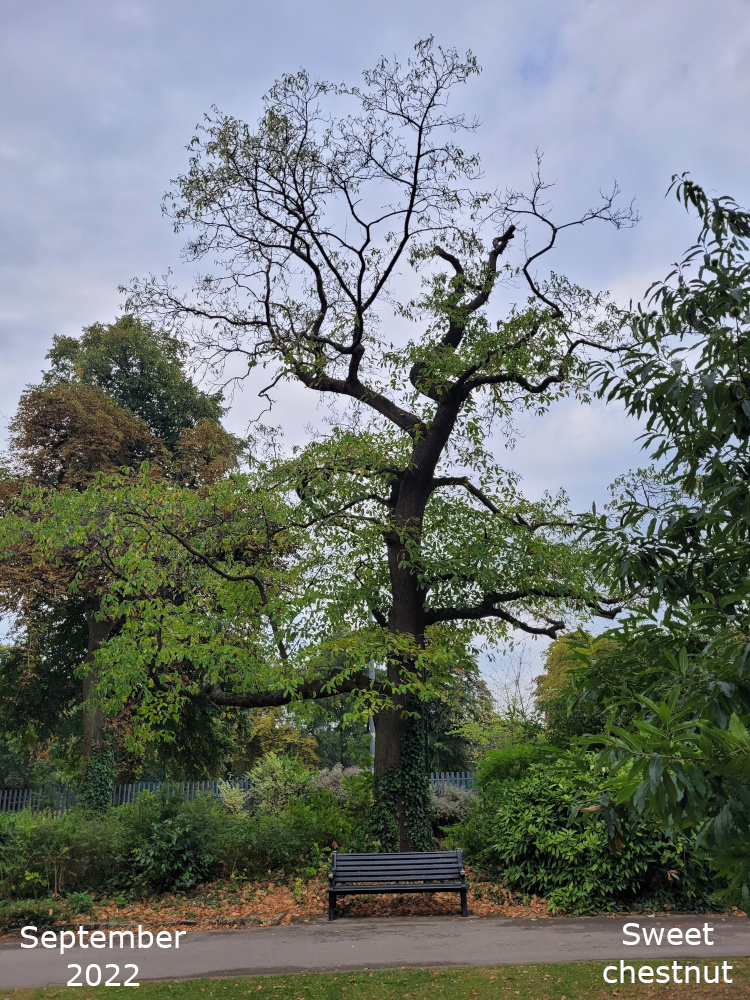
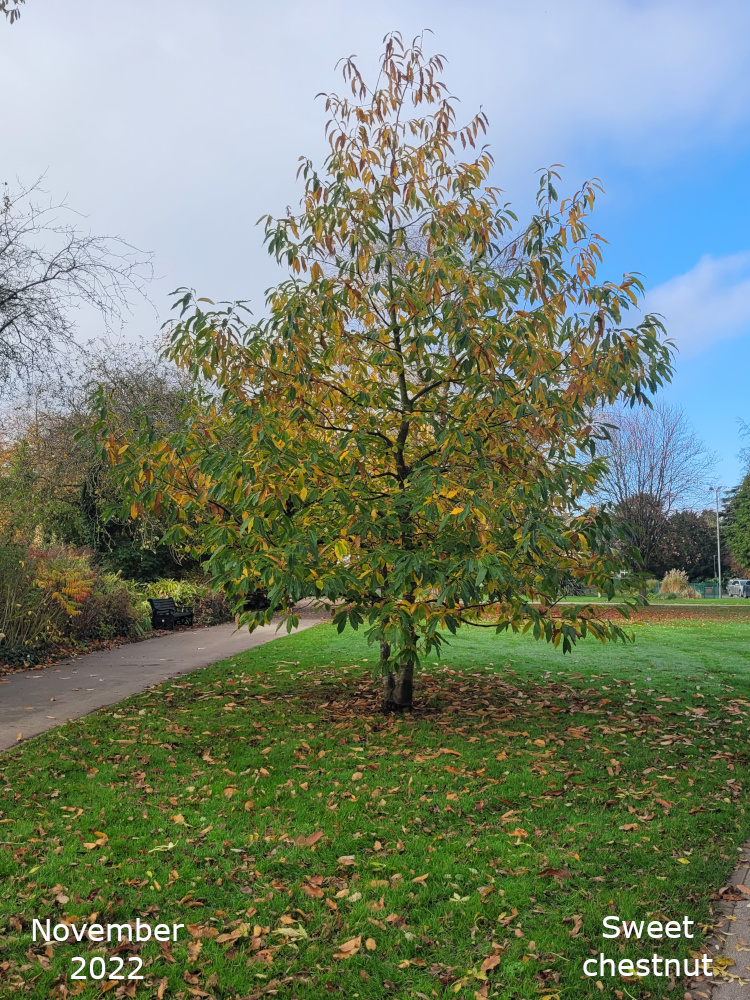
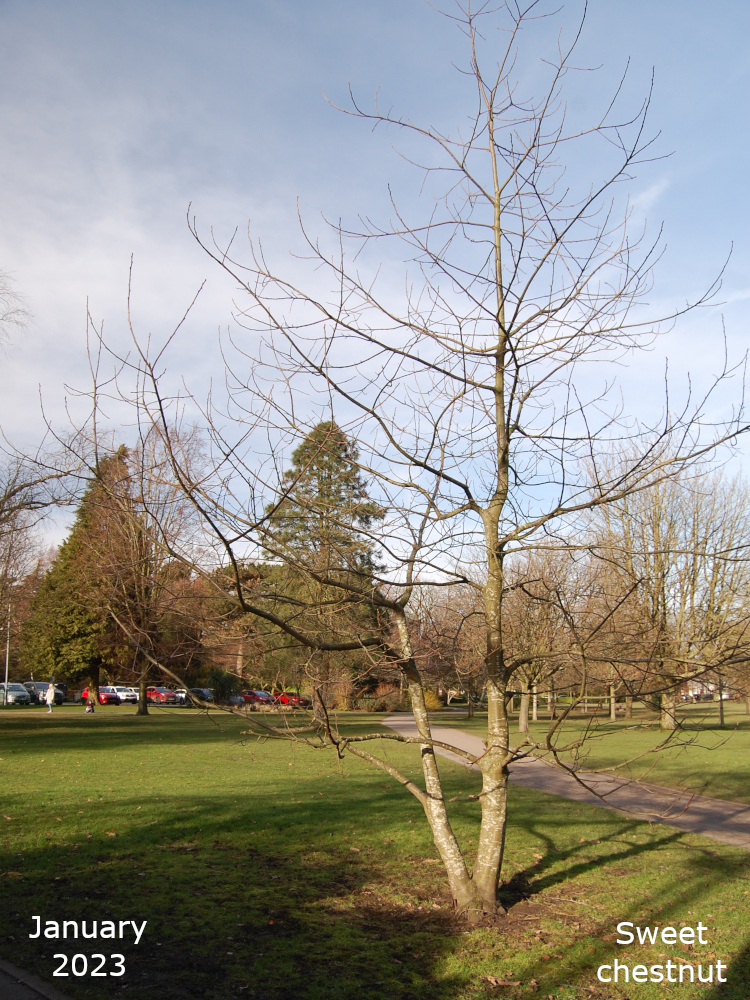
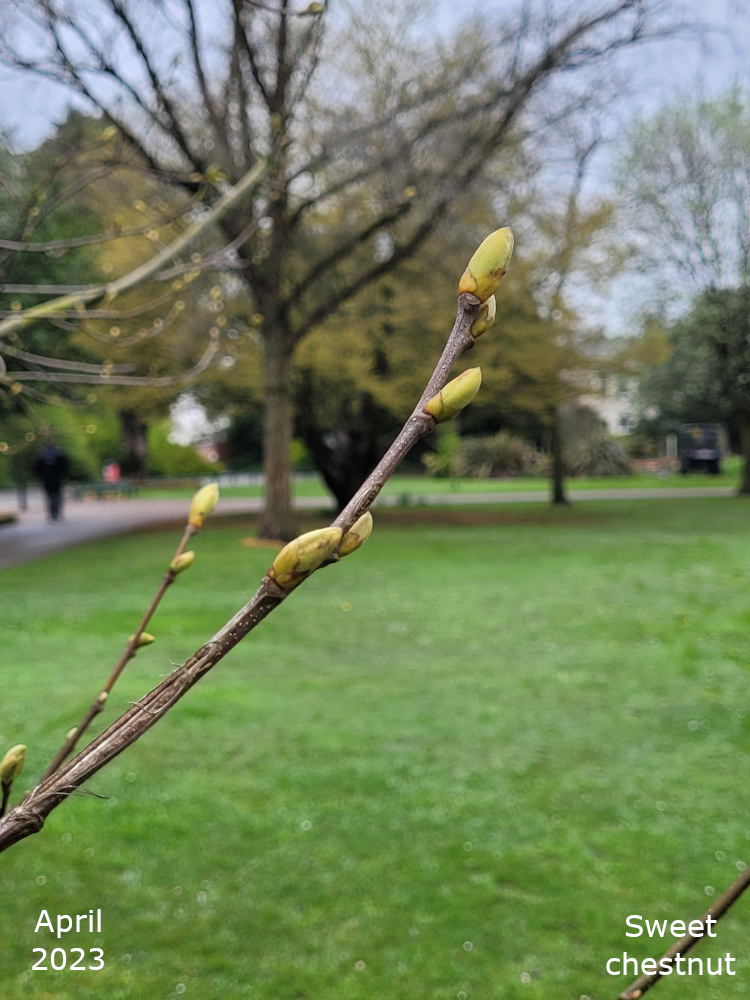
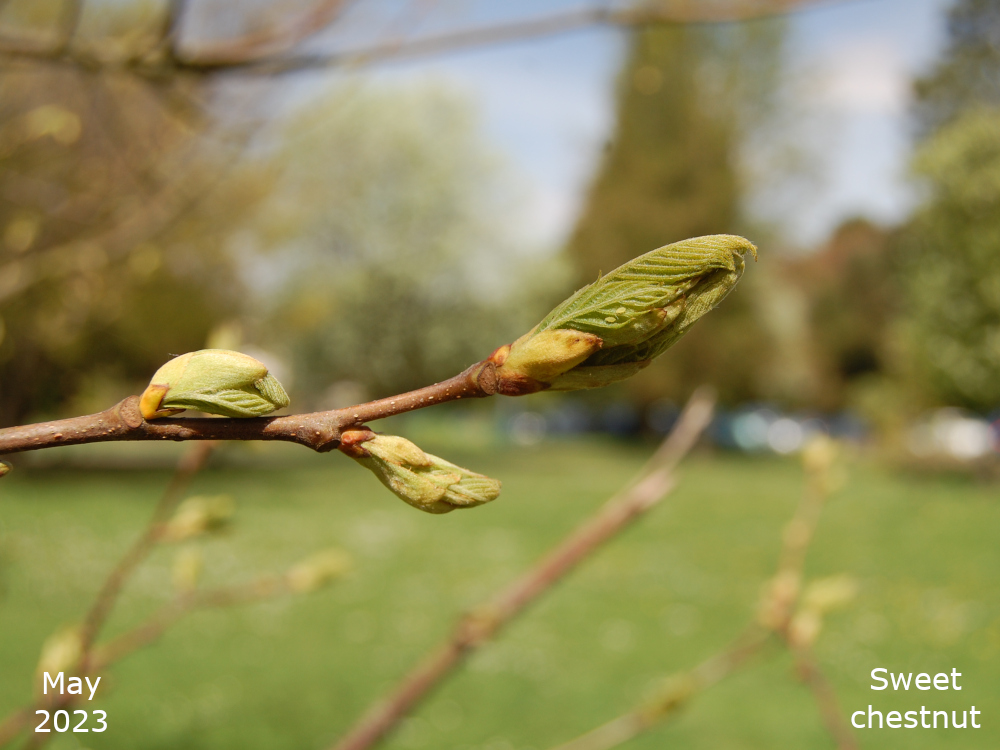
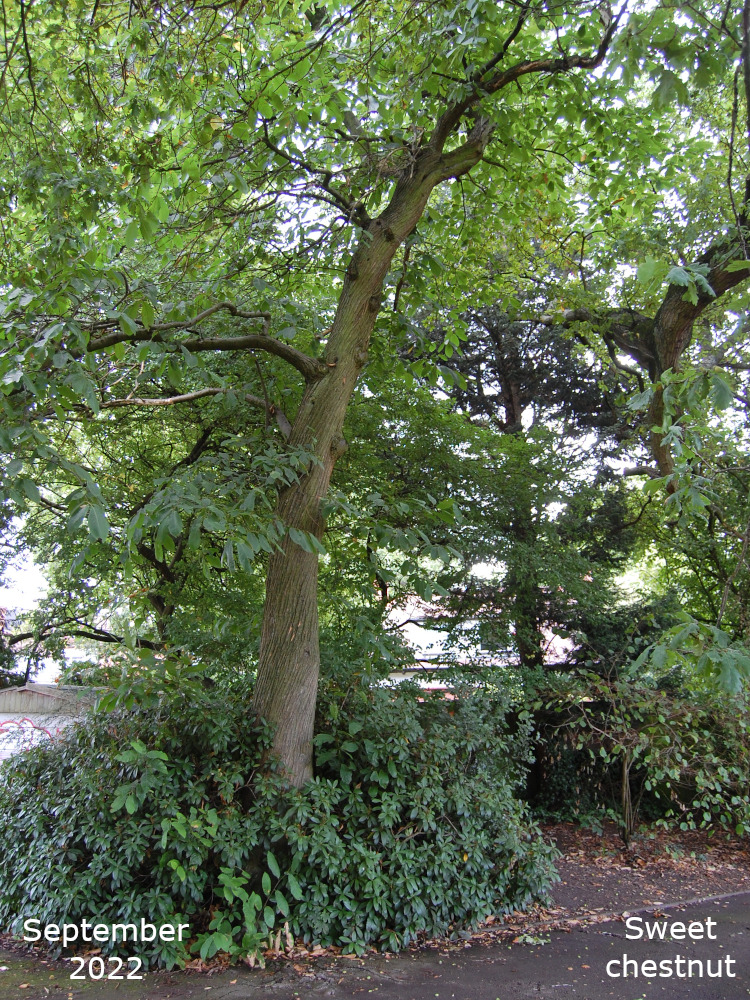
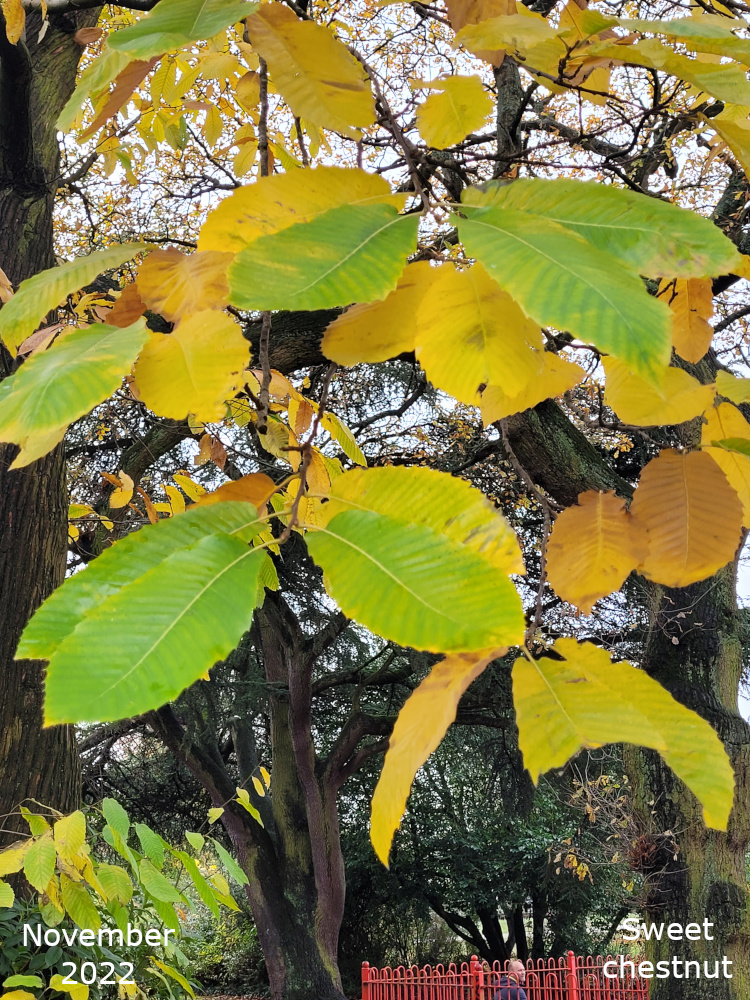
I only know of three Sweet chestnuts in the park. Two are together, just off the drive. One is a large tree in the space between the drive and the path and the other small tree is at one end a triangular patch of grass. The third one is near the small playground where the path goes round towards a garage.
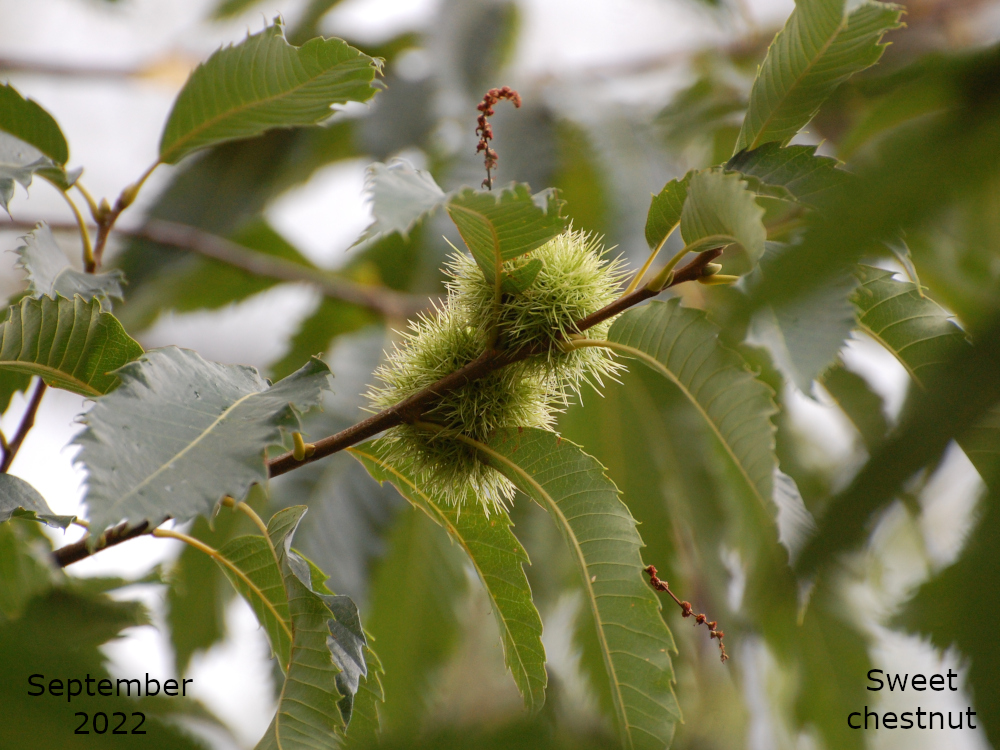
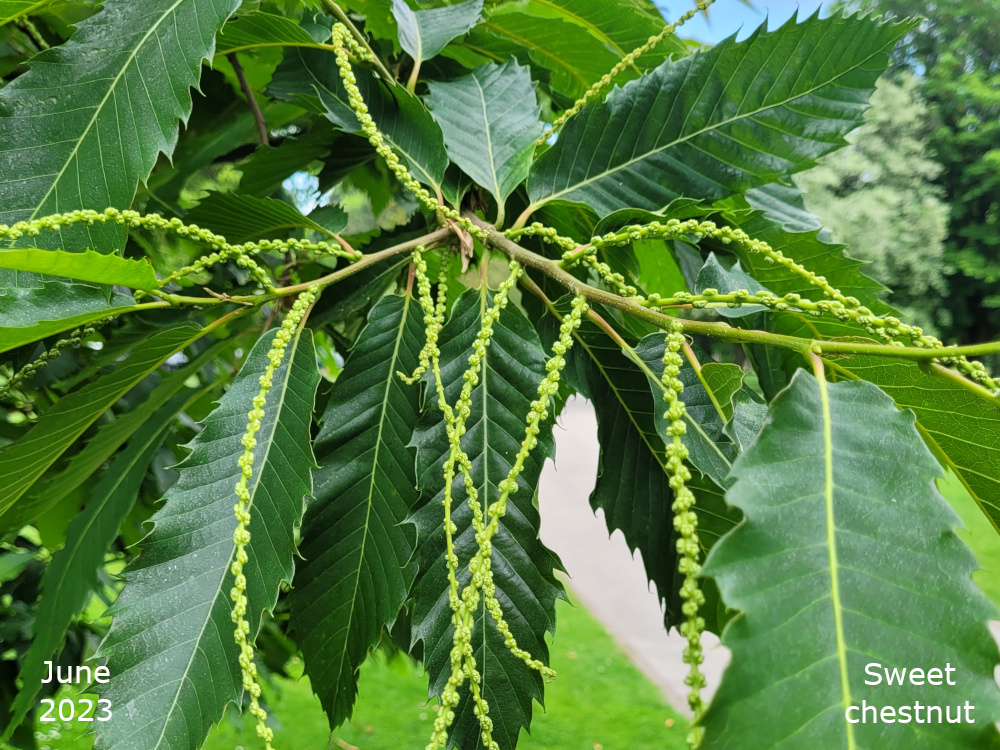
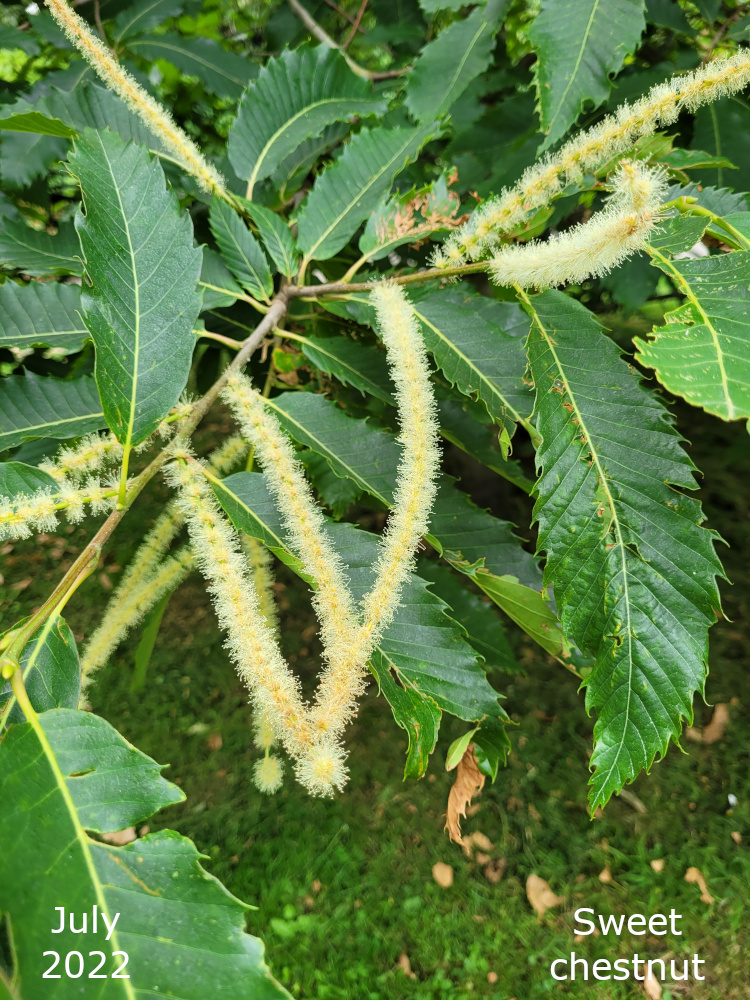
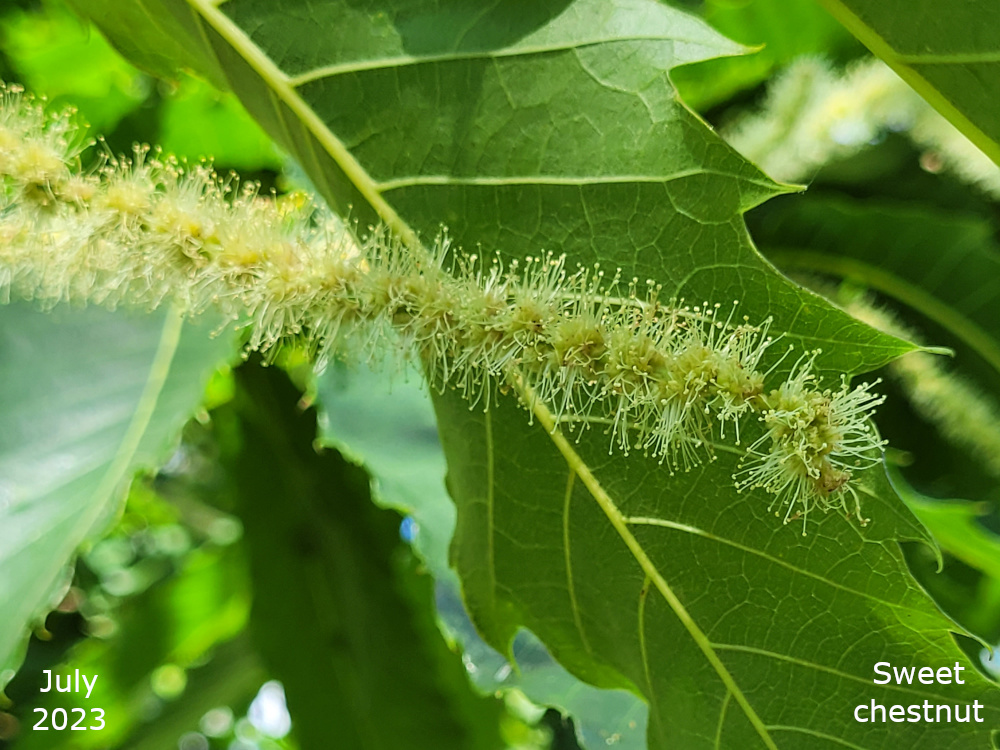
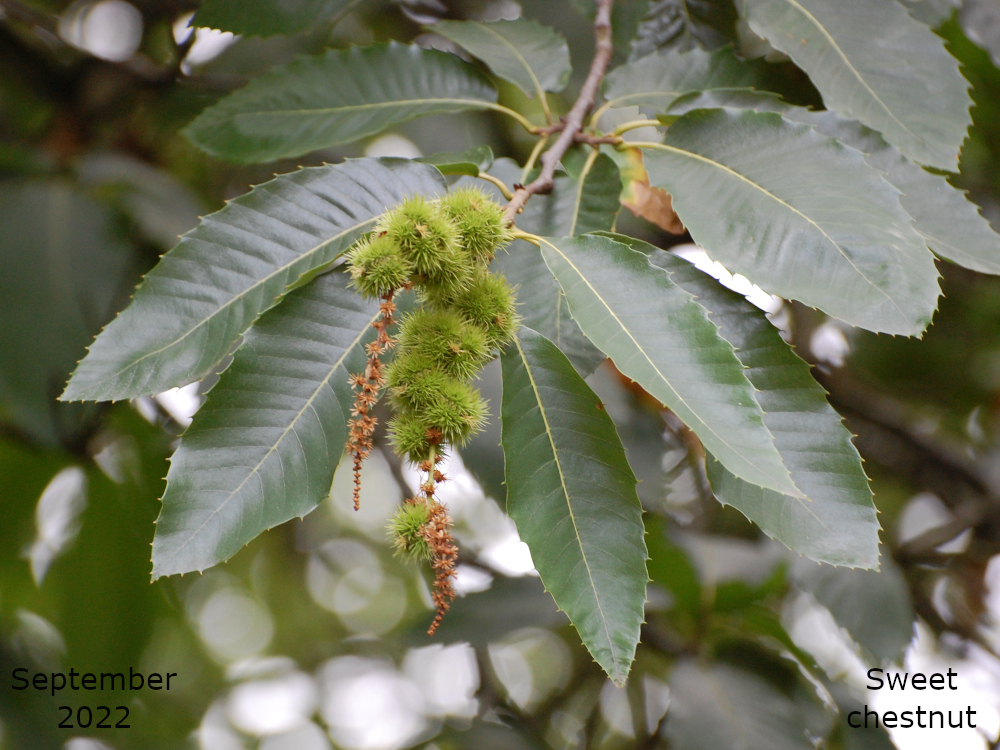
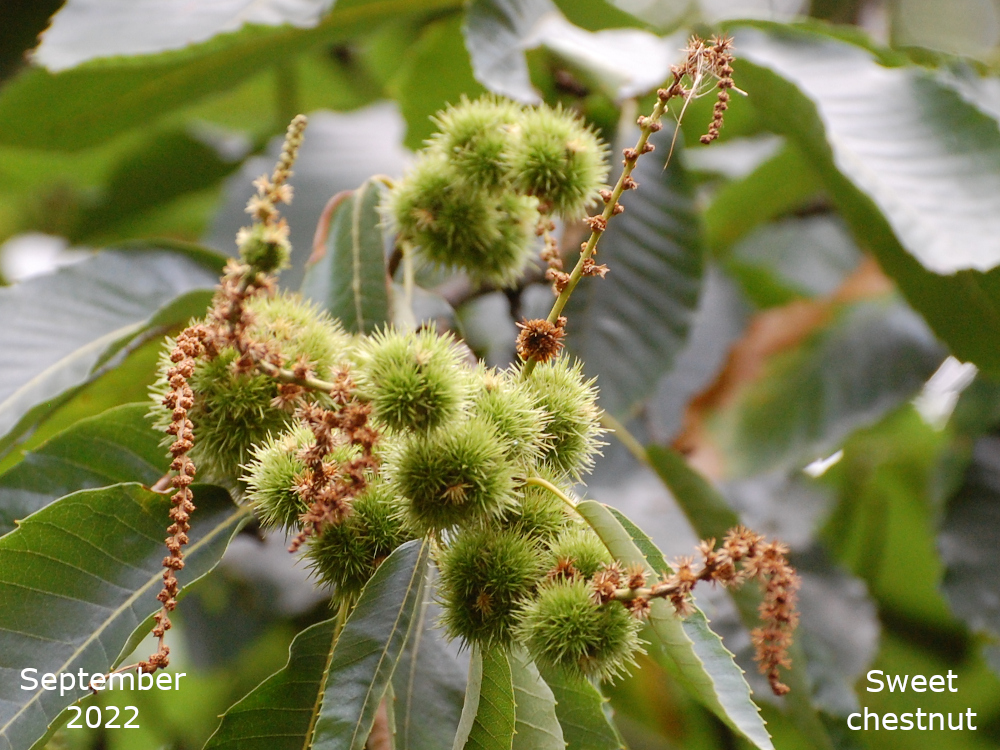
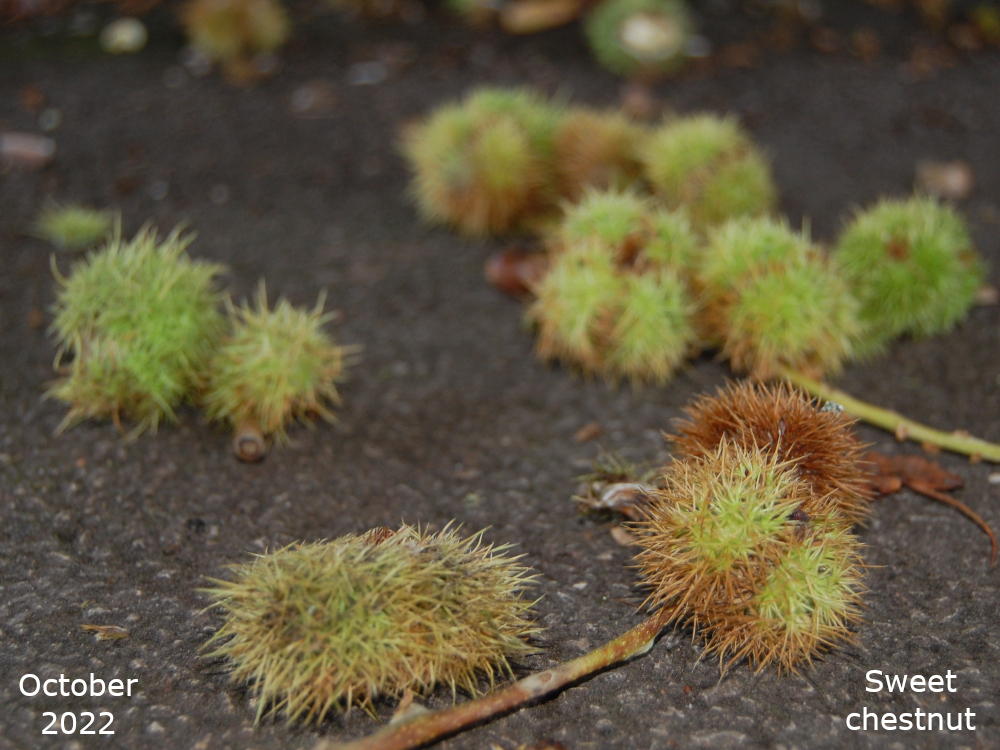
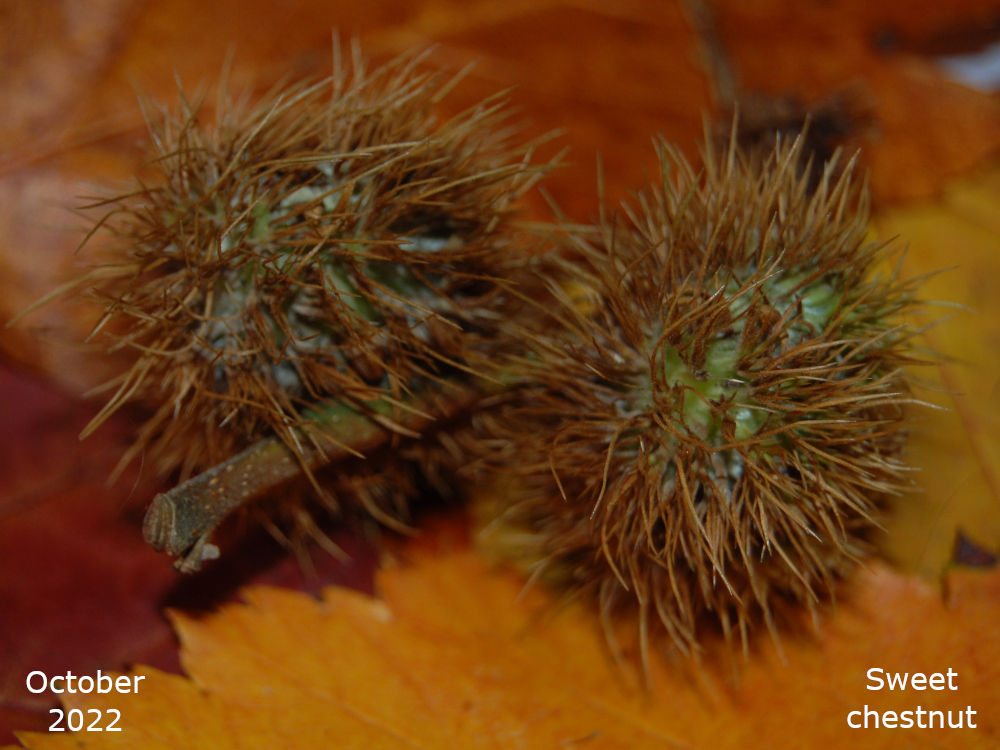
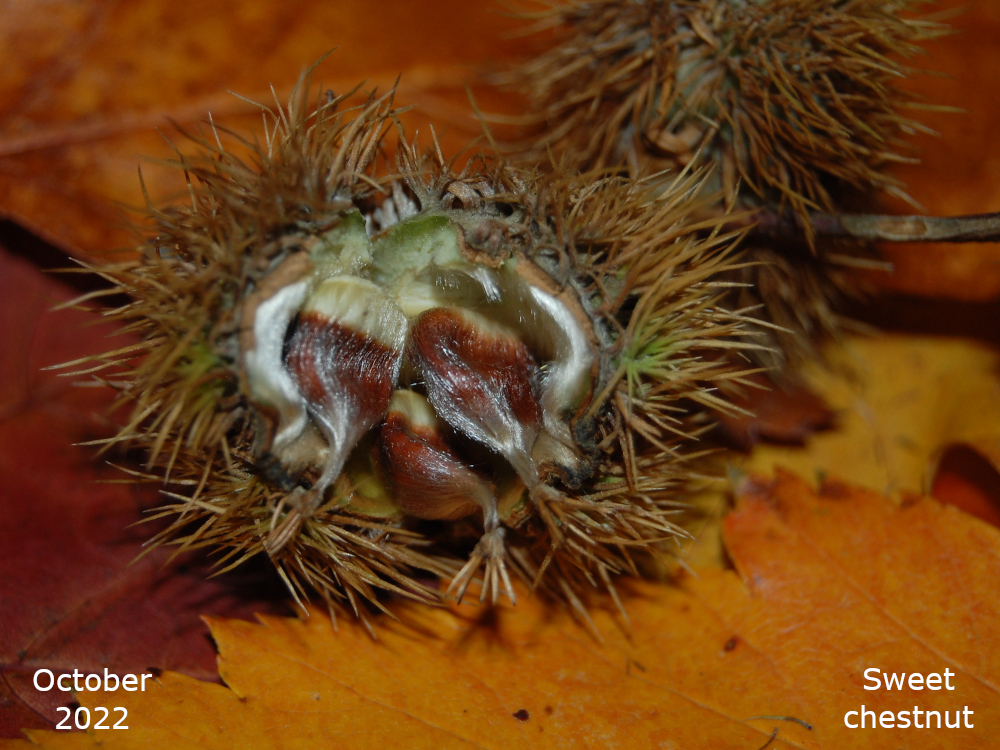
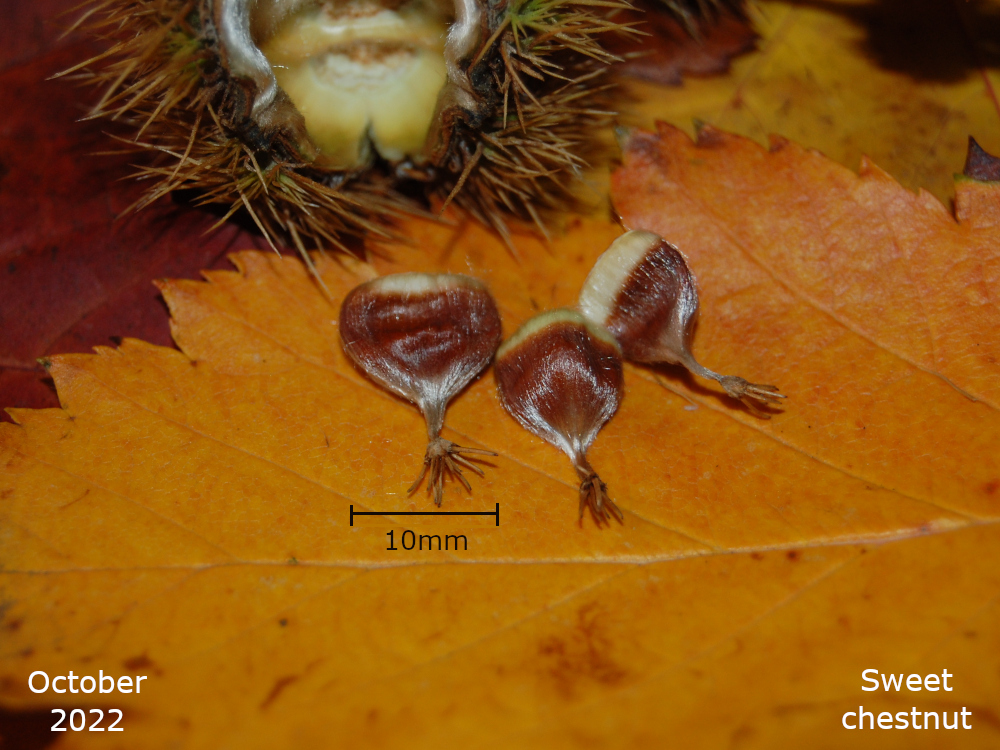
The trees produce spikes of flowers in July which are catkins with male flowers in the upper part and female flowers in the lower part. They can not self pollinate so it just as well there are three separate trees near to each other. the female flowers form the spiny covering of the cupule, with one to three seeds, in the form of a nut, inside. The nuts are ready by October but I’ve not seen any of a decent size yet. The growing time, from July to October, does not seem all that long given the vagaries of a British summer.




 Kings Heath Park Trees